
Music is the universal language
“Glory to God in the highest heaven, and on earth peace to those on whom his favor rests.” - Luke 2:14
Premier Guitar


ESP’s Ryan Dominguez: Crafted by Fate

Ryan Dominguez’s path to becoming ESP USA’s shop manager, master painter, product/color developer, and, now, Director of USA Manufacturing Operations, was cast by fate. It was his last year of high school, and he knew he wanted to do something with art as a career. He floated the idea of becoming an animator, but everyone kept telling him there was no money in art. Little by little, he began feeling lost. “I didn’t really know where I wanted to go in life,” Dominguez tells PG. “One day I was walking home through the alleyway where my friends and I used to do alleyway things. In the gutter there was this brochure for Guitar Craft Academy, and I read through it and thought, ‘That’s a pretty cool way to blend art and music.’”
Dominguez went home and talked it over with his grandparents, who were willing to let him give it a shot. “It honestly could have been clown college, as long as it led to work,” he jokes. “They were cool with whatever direction I decided to go in.” It paid off. About two weeks after graduating Guitar Craft Academy, Dominguez landed a job at ESP as a tech. He has since spent most of his adult life with the company, clocking in around 20 years collectively so far.
ESP, short for Electronic Sound Product, was formed in Tokyo in 1975 as a repair shop and replacement parts maker. They later built guitars for the Japanese market under the ESP and Navigator brand names. By 1983, ESP parts were available in the U.S. market. The company’s ascent coincided with the rise of the Sunset Strip metal scene in the ’80s, where bands tried to out-glam one another through heavy makeup, bold fashion, and big hair. ESP seemed to perfectly match that aesthetic, creating guitars with exciting graphics and unusual body shapes.
The turning point for ESP happened in the mid-’80s when George Lynch was on tour with Dokken in Tokyo. He had a very specific idea for a guitar build and heard that ESP made fully custom instruments, so he set up a meeting. At first, they discussed specs for a neck that Lynch wanted them to make, but over the course of a few hours, they collectively designed Lynch’s “Kamikaze” guitar. That instrument, which features vivid military-themed graphics and a reverse headstock, would become ESP’s first signature model. Lynch’s equally famous “Tiger” guitar would also be released by ESP as part of its Signature Series. The unforgettable visuals of “Kamikaze” and “Tiger” quickly made ESP a household name among guitarists.
“[W]e know what people expect when they see ‘ESP’ on a headstock. We always want ESP USA to live up to that legacy.”
The timing of Lynch’s signature models coincided with ESP’s move to New York City, where they operated out of a loft on 19th Street, before moving to Manhattan's then-famous music row on 48th Street in 1989. After landing in the Big Apple, ESP started making guitars for NYC-based artists like Vernon Reid, Page Hamilton, and Bruce Kulick. Then the company made the move west in 1993, relocating its U.S. headquarters to Sunset Boulevard in Hollywood, California. That was the place to be for metal at the time, and ESP quickly became a major player—for decades since, ESP’s artist roster has been a who’s who of metal guitarists. In addition to Lynch’s guitars, ESP has crafted many of the genre’s most distinct instruments—including Kirk Hammett’s “The Mummy,” “Ouija,” and “White Zombie,” James Hetfield’s “Snakebyte” and “Truckster,” and Akira Takasaki’s “Random Star,” to name a few. In 1996, ESP introduced their affordable—and highly popular—LTD line, which helped put their guitars into the hands of budget-conscious players.
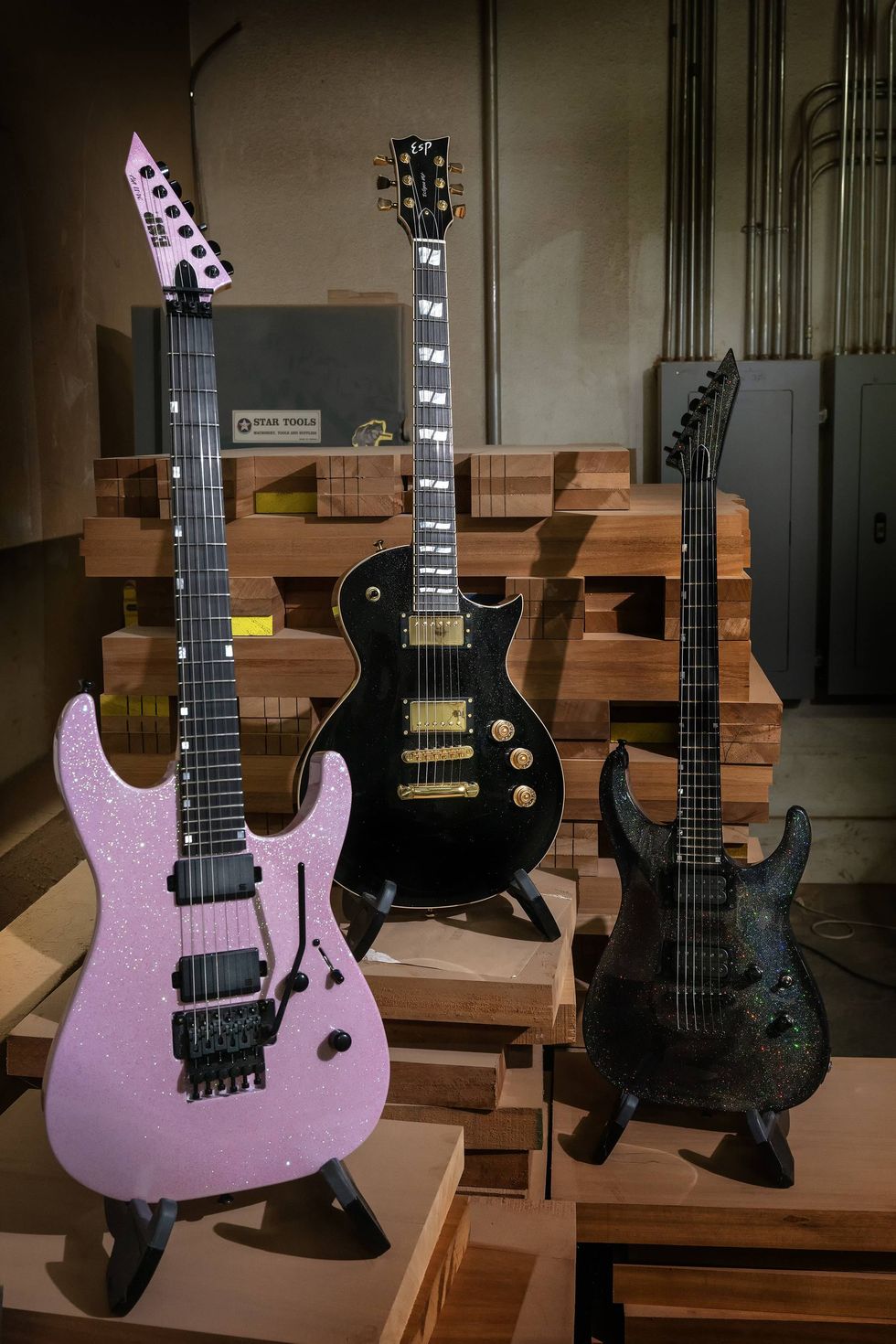
ESP’s unique designs are a perfect match for Dominguez’s creative and musical inclinations. Since he was young, the self-taught artist has always had a sketchbook and pencils in hand. “I used to love opening up a skateboard magazine or a surfing magazine or a music magazine, and drawing something from the pages—especially if it was a Reef girl,” he says. Dominguez also played guitar as a kid, starting on a 3/4-scale acoustic his mom got him when he was around nine. She also signed him up for guitar lessons, but he admits that he “didn't really take it too seriously.” In fact, in one of his lessons, Dominguez had stopped paying attention to the teacher and instead used his pick to carve an anarchy sign into the back of his acoustic guitar. “I’m pretty sure that was the last lesson my mom took me to,” he chuckles.
By around 8th grade, he wanted to pick up the guitar again. He asked for an electric for Christmas and, this time around, started taking it seriously, even forming a pop-punk band with some friends. “I think every kid that has a guitar kind of dreams of being some sort of a rock star, or at least for being able to play or write a song or something,” he says. “I entertained the idea. I was probably a little bit of an emo kid in high school and thought I could write songs and play the acoustic, that sort of thing. But it was never really something that I tried to actively pursue.”
“Sometimes I feel like a kid who snuck into a candy store that someone forgot to lock up for the night.”
Instead, Dominguez entered the world of guitar building. When he first joined ESP in 2004, he started off doing set-ups before eventually moving on to the repair department. After about a year and a half, he left the job and moved to Arizona to attend the Roberto-Venn School of Luthiery, aiming to explore the acoustic side of guitar building. Roberto-Venn also had a month-long course on guitar repairs, and Dominguez was interested in learning how to do heavier repairs, like neck resets. “My original intention was to be a builder. I had gone to Roberto-Venn to kind of expand on that,” he says. “And when I graduated, I had a little bit of money left over from the student loans, so I bought a bunch of tools to go out and build some guitars in my garage and go down that path.”
During that time, Dominguez also took on work painting cabinets for a company in Arizona. This proved to be beneficial, as he developed a considerable amount of his painting technique over the approximately two years he was employed there. Unfortunately, once the recession hit, everyone got laid off.
Dominguez called his old boss Todd Binder—now president of ESP—to see if he could get his job back. “That was on a Friday in August, 2008—I packed up my little car that weekend and started on Monday,” he says. “When they decided to open the USA Shop in 2013, they knew I had experience painting and asked if I wanted to try it out [there]. I said ‘no,’ but then Todd called me out and said, ‘Well, you know, sometimes we just gotta step up and do what’s asked.’
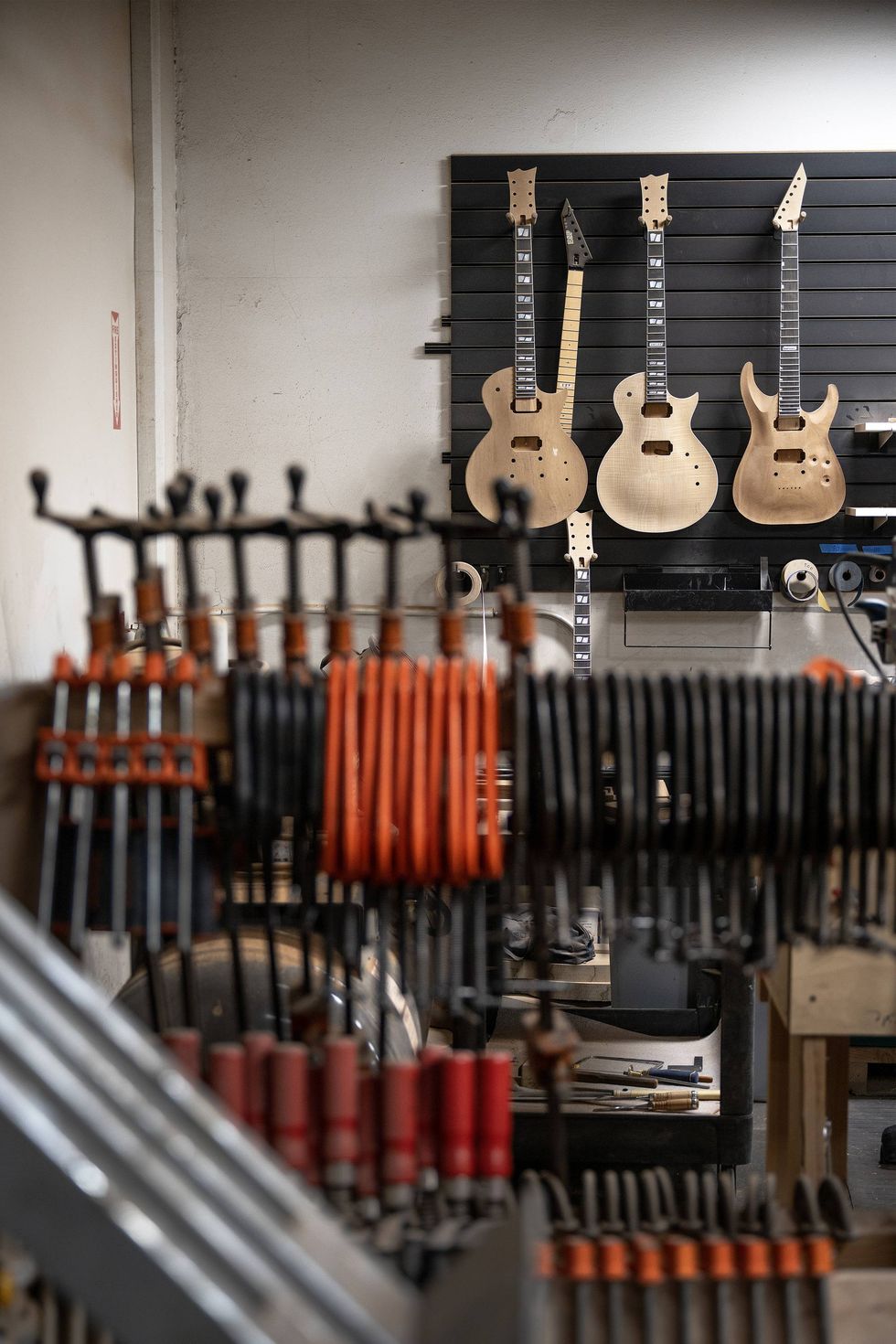
“When I first moved over to the USA Shop, I was doing a little bit of everything,” he continues. “Everyone was—woodworking, assembling, building, painting. My role within USA has changed quite a bit over the years. I’ve shifted mostly from doing paint stuff to managing the shop, working with the woodworkers on processes. ‘How can we make this faster?’ ‘What kind of pain points are you guys seeing out there?’ A lot of it entails what we’re going to be offering on the year as far as products and finishes: working with suppliers to find unique woods to be able to use for limited-edition builds; coming up with all the limited-edition models that we’re going to be offering; and a lot of managerial, sitting-behind-the-computer stuff, too, like creating SKUs and entering things into the system—part numbers, all that stuff.”
Typically, Dominguez goes through about three to four guitars a day—the sweet spot where he can still keep a close eye on quality control. “We don’t build as fast as some shops do, but we know what people expect when they see ‘ESP’ on a headstock,” he says. “We always want ESP USA to live up to that legacy.”
ESP USA and ESP’s Japanese Custom Shop, Original Series, and Signature Series are the elite tier of the company’s brands. (There's also an LTD version of the Signature Series.) Each serves a different purpose but shares the common goal: delivering the absolute best ESP products. “There’s definitely been a collaboration going on between USA and Japan. If I have a question like, ‘Hey, how’d you do this finish?,’ or ‘What’s your process for doing the side of the headstock?,’ they’re more than willing to work with us on any questions that we have. They’ll show us different processes and procedures, different ways of doing things,” he says. “They’ve come to me as well with, ‘How do you get this finish?,’ and, ‘What's your technique for this?’
“I just want to be clear that all of our custom guitars and artist Signature Series guitars from ESP are built at the ESP Custom Shop in Japan, not at the USA Shop,” he adds, hoping to clarify some common confusion. ESP USA isn’t like the ESP Custom Shop in the sense that you can customize every single detail of a build like body shapes or unique graphic designs. Rather, it’s a ”select shop” where you can personalize some aspects by choosing from a curated list of shapes, tops, finish types, and pickups. However, ESP’s Custom Shop won’t take every single request thrown at them. “Have they ever turned down a request?,” Dominguez says. “Yes, but probably not because they couldn’t do it. They have super high standards and won’t put the ESP logo on just anything. At the USA Shop, I can’t recall turning down a request. We try to be as accommodating as possible, and I do like a good challenge.”
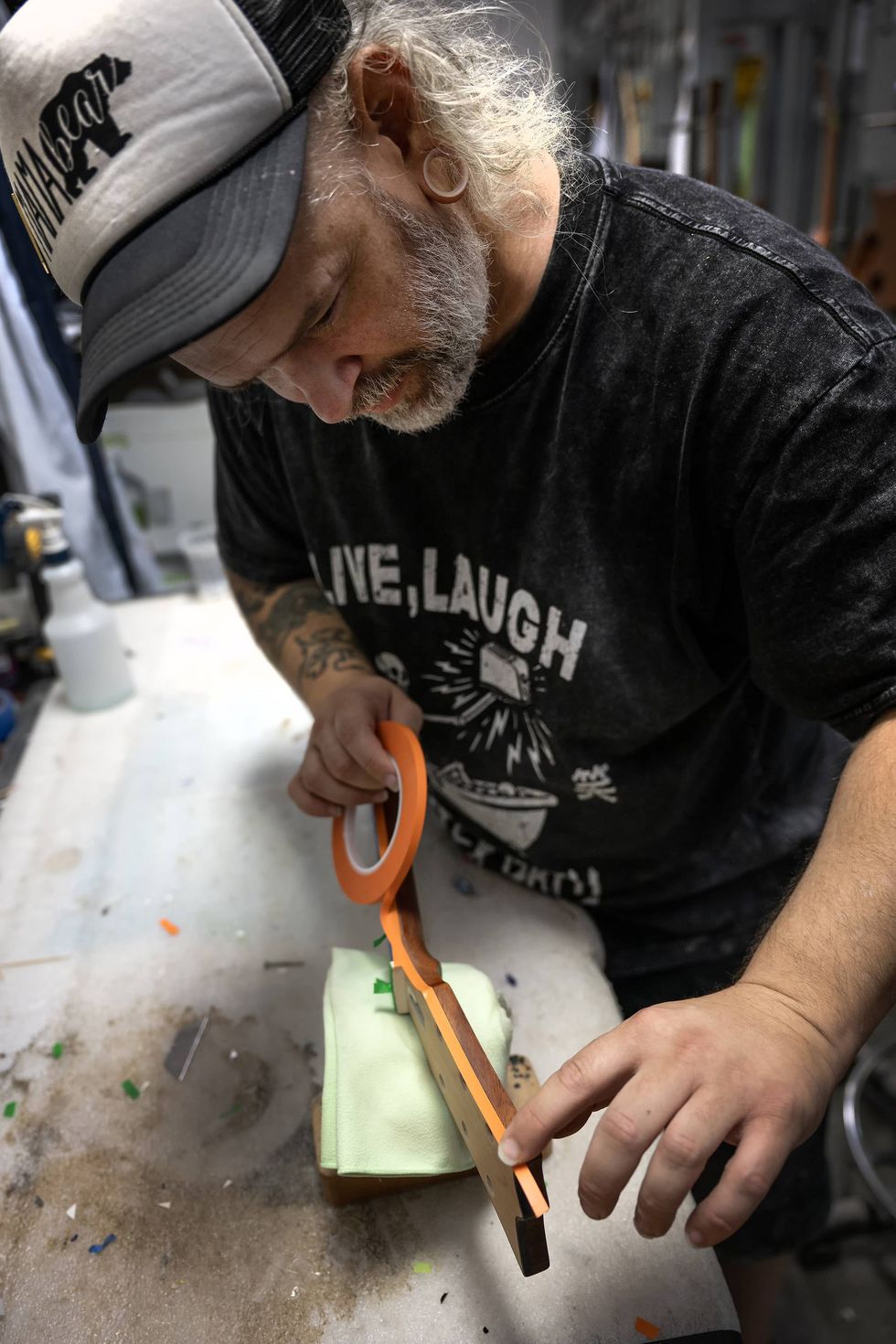
One perk of Dominguez’s job at ESP is the amount of free rein he’s afforded with his artistic explorations. “Sometimes I feel like a kid who snuck into a candy store that someone forgot to lock up for the night,” he admits. “I almost feel guilty about the amount of creative freedom I have. Almost. I’d like to think that I’ve been with ESP long enough to understand the company’s design philosophy, aesthetic standards, and, most importantly, what our players expect from the brand. I think that’s what has given me some confidence and relieved a lot of the guilt in the freedom I have to experiment. That, and failures. I’ve failed enough times behind the scenes to realize that another idea will come … sometimes when you least expect it. Sometimes it even wakes you up at 3 AM.”
Dominguez’s Instagram handle, @spongebrick, encapsulates everything about his work ethic and desire to build ESP guitars to the highest standards possible. “What Spongebrick, the person, represents, I’d like to think, is tenacity and dedication to a craft,” he explains. “It would have been really easy to throw in the towel for a dust-free environment and some air conditioning at a place where the stakes don't feel as high. Building guitars with ‘ESP’ on them—and the expectations people have as a result—can be constant high pressure.”
But, he continues, “there’s that little voice that’s constantly nagging me to be better—and to not blow that tiny mistake completely out of proportion until I can see it again the next day to realize it’s actually okay. That voice wouldn’t let me walk away. If I did, it would nag me about that, too.”
Skid Row's Scotti Hill and StewMac Create New Hooligan Boost Pedal Kit
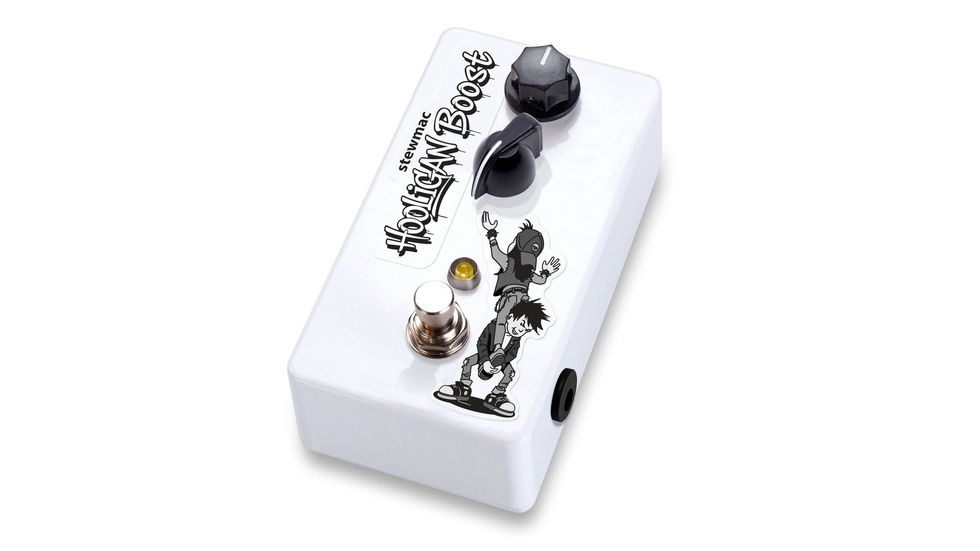
StewMac has teamed up with Scotti Hill, lead guitarist of rock band Skid Row, to introduce the Hooligan Boost Pedal Kit—a DIY guitar effects pedal designed with Hill's own approach to guitar tone in mind.
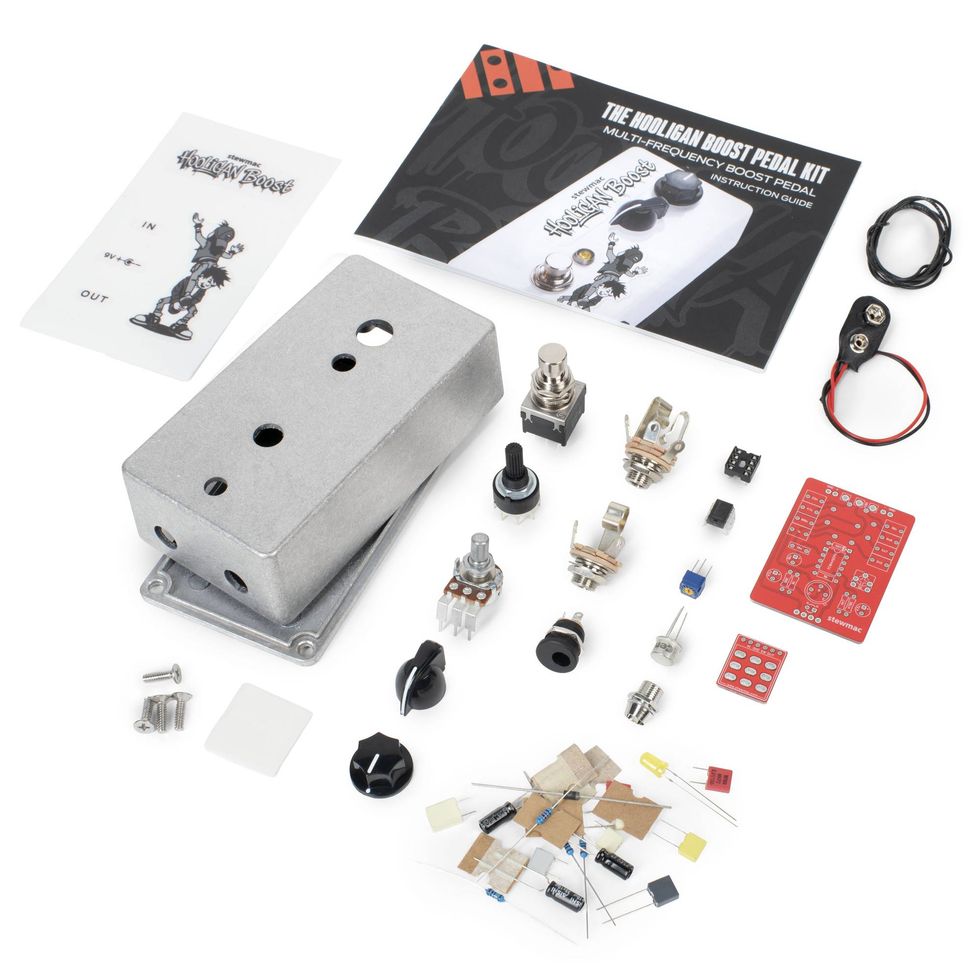
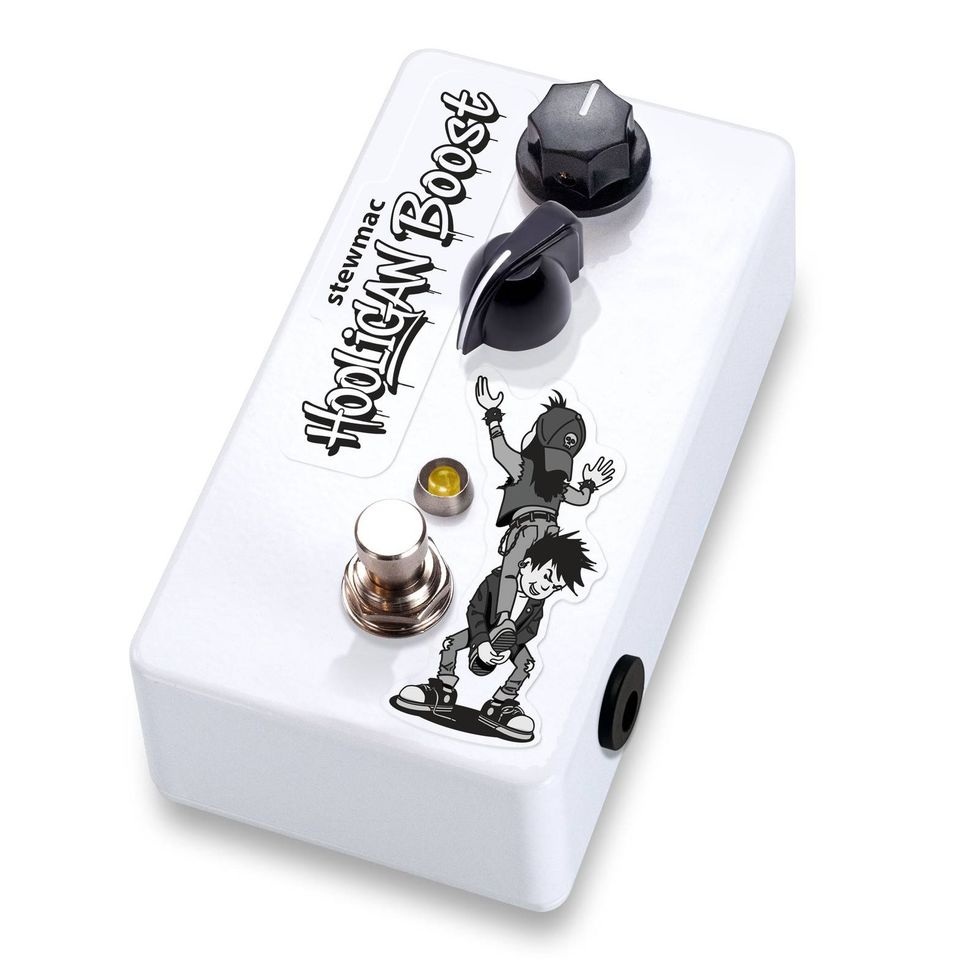
Inspired by the classic Dallas Rangemaster circuit, Hill and StewMac spent over a year creating the Hooligan, dialing in just the right components and selecting an enclosure that would be easy to use and not take up too much room on your pedal board. An eight-position Range selector allows players to move through different frequency ranges, while the Volume control can take the sound anywhere from clean boost to full-on overdrive. Hill's preferred starting point is positioned at 11 o’clock on the range switch, which provides a balanced foundation for exploring the pedal's range.
The Hooligan Boost is versatile enough to be used as a volume boost for solos, or an always-on pedal to define your core guitar tone.
See the demo video here:
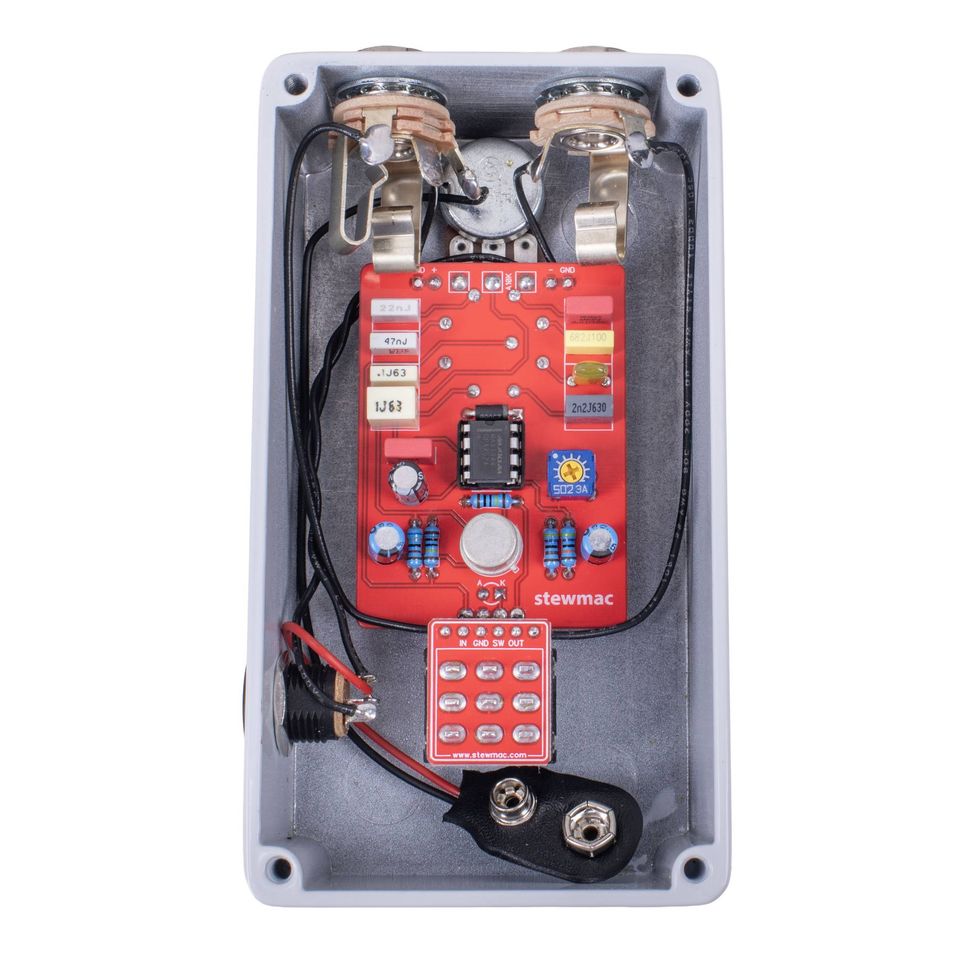
Key features include:
- Classic boost circuit inspired by the legendary Dallas Rangemaster.
- Eight-position Range control lets you tailor the boost's cutoff frequency to your amp. Go from bright, cutting boost to full-frequency boost with plenty of low end.
- Volume knob controls overall output level, ranging from clean treble boost to full frequency overdrive.
- Powered by a 9-volt power supply with a 2.1mm negative-center barrel, available separately.
- Step-by-step instructions written for the first time builder.
- Top quality, high tolerance components from resistors to switches. Road-worthy, rugged metal enclosure with all holes pre-drilled.
- Available in either bare or powder coated white finish.
- 9-volt operation – can use battery or external DC power supply
- Input and output jacks are rear mounted for easy cable routing
- Custom printed labels
- True bypass switching
The collaboration brings together two sides of Hill's career: his decades of experience chasing the right guitar tone on stage and his love for building his own pedals. The result is a versatile boost pedal that puts a reimagined classic circuit into the hands of guitarists and DIY builders.
"I've been searching for the ‘perfect’ tone since I first picked up a guitar," says Hill. "It’s elusive. Lots of ideas would come and go, but I kept coming back to boosts again and again. So, when StewMac and I started bouncing around ideas for a pedal kit, I knew we should start with a REALLY good boost pedal."
The pedal's personality extends beyond its circuit. The Hooligan's artwork draws inspiration from Hill and his friends as young troublemakers—a nod to the rebellious spirit and rock 'n' roll attitude that have followed him throughout his career. "Back when we were young, we definitely got into our share of mischief," says Hill. "So, Hooligan seemed like the right fit."
The collaboration also has a personal connection for Hill. Before working with StewMac on the Hooligan, he had already built one of the company's pedal kits himself. "I wanted to be sure we came up with something that was not only practical, but not too complicated to build," Hill says. "I thought it would be a great way to get people started in pedal building. In fact, a StewMac kit was what got me started in pedal building!"
The Hooligan Boost Pedal Kit is designed to give builders the experience of assembling their own effects pedal while ending up with a practical piece of gear that belongs on a working guitarist's pedalboard. The Hooligan combines the hands-on satisfaction of a DIY project with the versatility of a pedal designed by a professional touring and recording guitarist. Whether it's being used to push an amp into breakup, add bite and presence, or simply become an always-on part of a player's rig, the Hooligan is built around one of Hill's most enduring lessons: good tone starts with finding what works for you.
The Hooligan Boost Pedal Kit includes everything needed to build the pedal electronics and enclosure, along with Scotti Hill-inspired artwork and a detailed StewMac instruction guide.
The Hooligan Boost Pedal Kit is available from StewMac for a street price of $109.99. For more information, visit StewMac.com.
Hooligan Boost Pedal Kit
StewMac has teamed up with Scotti Hill, lead guitarist of rock band Skid Row, to introduce the Hooligan Boost Pedal Kit—a DIY guitar effects pedal designed with Hill's own approach to guitar tone in mind.
Stompboxtober 2026 Day#1: Line 6

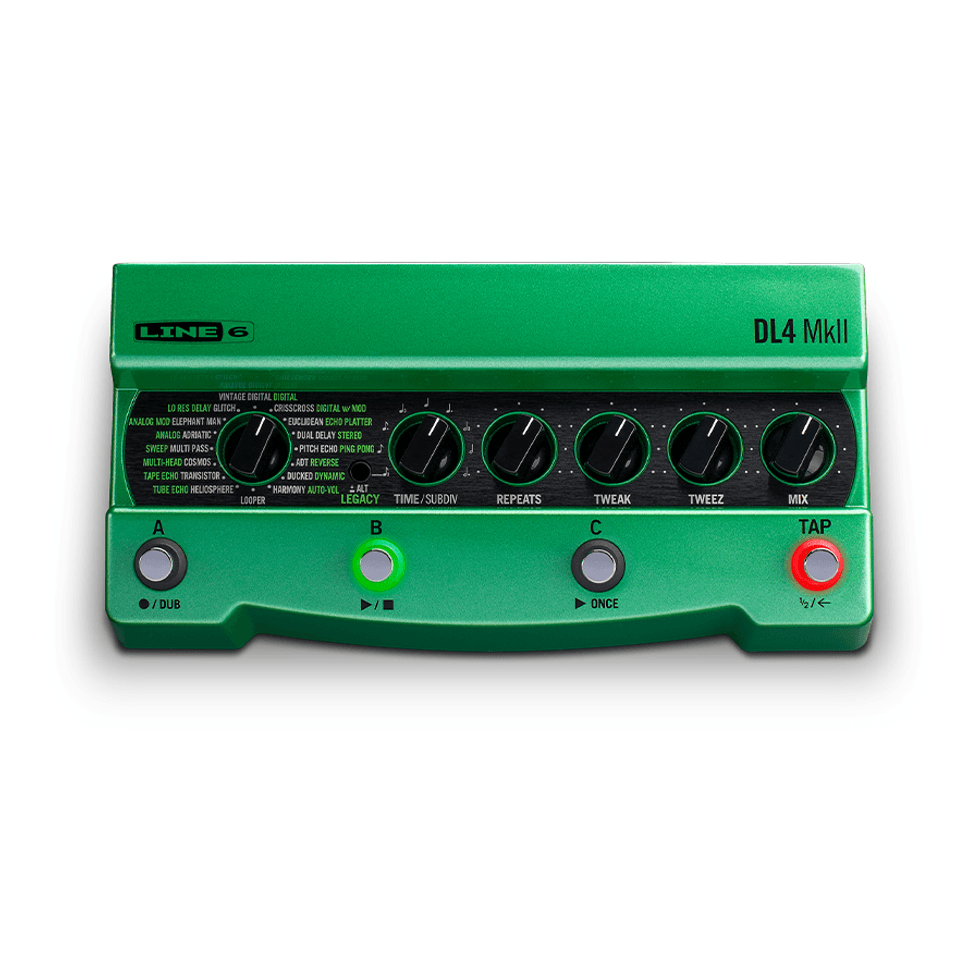
Stompboxtober Is back for 2026! Come back every day during October for your chance to WIN your new favorite effects pedal or accessory. Today's featured pedal is form Line 6. Enter to win the DL4 MkII!
Stompboxtober 2026 - Win Pedals All Month Long!
DL4 MkII
The DL4TM Delay Modeler has remained one of the most widely used delay pedals in the world for more than two decades. The DL4 MkII includes all the sounds and features of the original, while introducing new sounds and features. The 15 new MkII delays were drawn from our HX® family of amp and effects processors and the 4-Switch and 1-Switch looper types offer up to 240 seconds of record time (expandable to several hours using an optional microSD card). There's an XLR microphone input, MIDI In and Out/Thru connectors, heavy duty footswitches, three bypass options, and a jack for connecting an optional expression pedal or two footswitches. The DL4 MkII is also smaller and lighter than the original, making it an even more appealing choice for modern musicians.
MESA/Boogie's 90s Triple Rectifier Standard Returns With 150 Watts of Rectifier Power
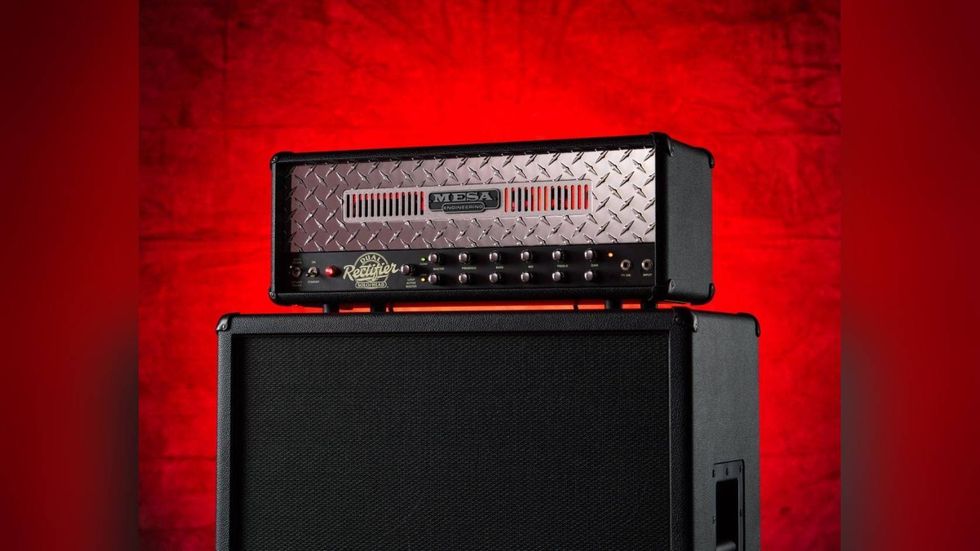
Following last year's return of the 90s Dual Rectifier Standard, MESA/Boogie is reissuing its 150-watt sibling, the 90s Triple Rectifier Standard. Like the original, it's built by hand in Petaluma, California.
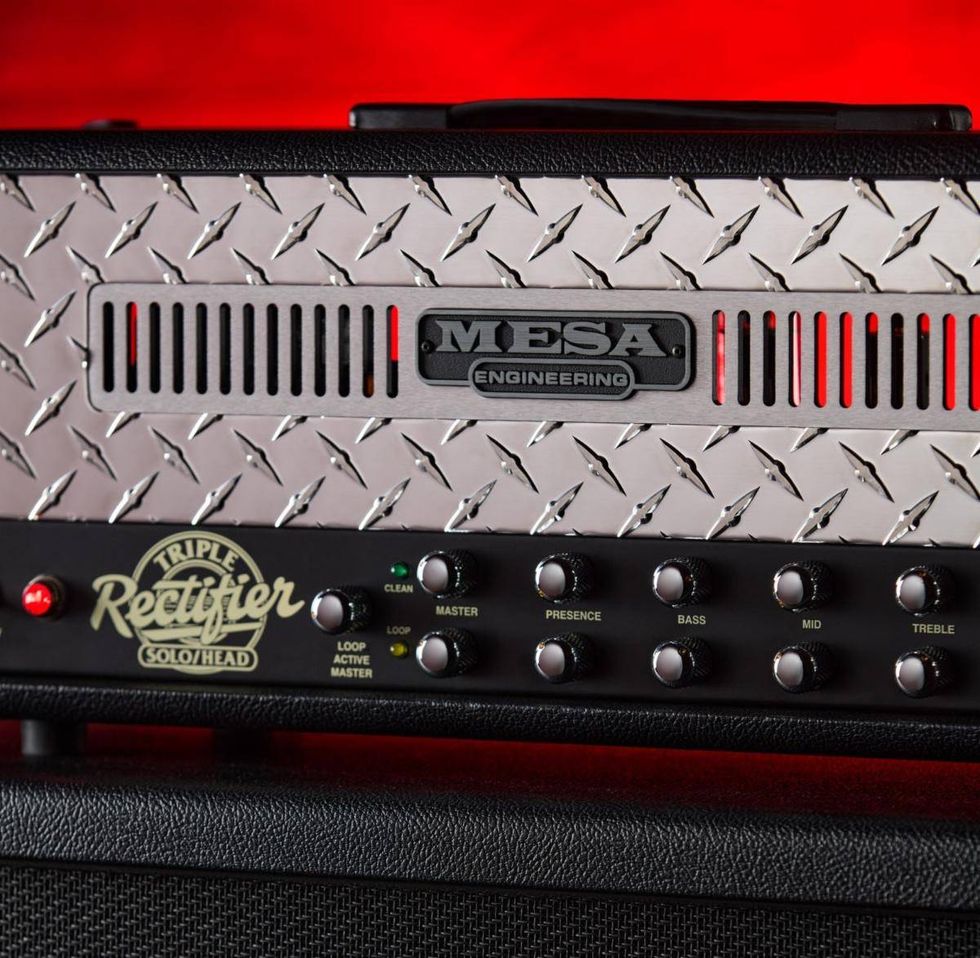
The Triple Rectifier arrived in 1992 alongside the Dual Rectifier Solo Head, scaling the design up to six power tubes and three rectifier tubes. It became a staple of '90s heavy music, especially among players using low tunings. The reissue comes in the original Standard Dress: black chassis, chrome knobs, Black Bronco vinyl, black leather corners, and a polished aluminum Diamond Plate grille.
"For players who tune low and play loud, the Triple Rectifier delivers the massive, unmistakable high-gain sound that changed the way heavy music sounded—and continues to define it today," says Andrew Ladner, MESA/Boogie's marketing manager.
The amp uses the early Rectifiers' two-channel layout. Channel 1 offers Clean and Vintage high-gain (Orange) modes and can be switched to the Modern (Red) voicing. Channel 2 defaults to Modern and can be switched to Vintage, and it adds a Normal/Tight switch for low-end control. Each channel has its own gain, treble, middle, bass, presence, and master controls.
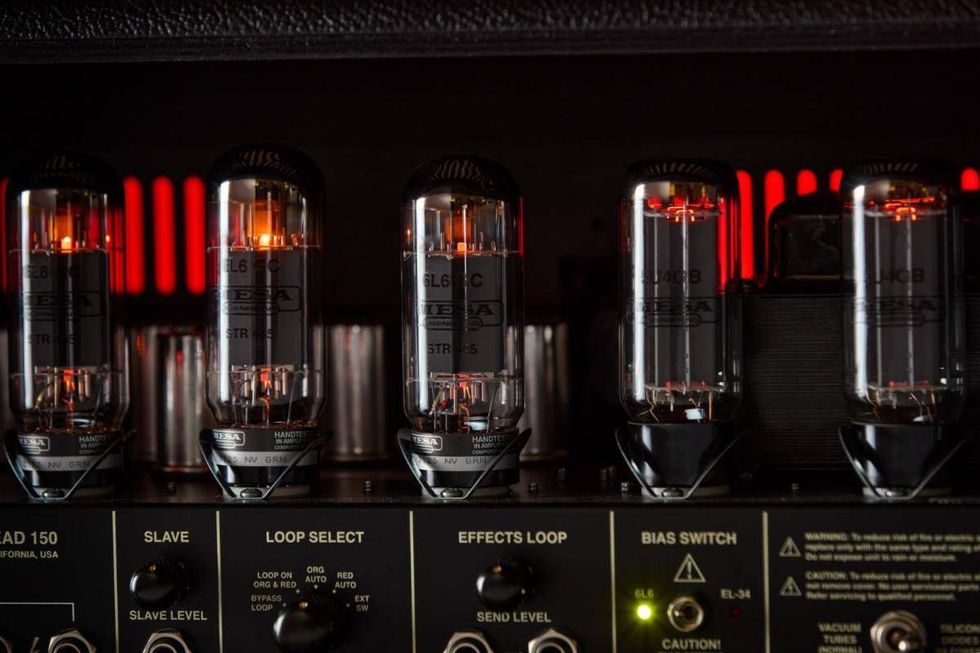
Six 6L6s drive the Class AB power section, and a rear-panel bias switch accommodates EL34s. Players can choose between three 5U4GB tube rectifiers and silicon diode rectification, and a Bold/Spongy switch alters the power section's response. Five 12AX7s run the preamp.
Key features:
- Dual channel simplicity – Simple, straightforward design (as compared to the current three-channel 2010 model), delivering killer tones and ease of use
- Channel Style/Cloning – Allows “cloning” of the mode voicings of either channel
- Patented switchable rectifiers – Tube or silicon diode rectification to tune the sound, character, and feel
- 150-watts of robust Class A/B tube power – Bias Select for stock 6L6 or a swap to EL34 tube types
- BOLD/SPONGY “Variac” switch – Reduced voltage setting for increased harmonics and elastic feel
Other features include a tube-driven series effects loop with a global output level control, external switching jacks, a slave output, and five speaker outputs (one 16-ohm, two 8-ohm, and two 4-ohm). The head is housed in a Baltic birch cabinet with a cooling fan, measures 10" x 25 1/2" x 9 7/8", and weighs 48.6 lb. It ships with a one-button footswitch, a slipcover, and a five-year warranty.
The 90s Triple Rectifier Standard head carries a street price of $3199. For more information visit mesaboogie.com.
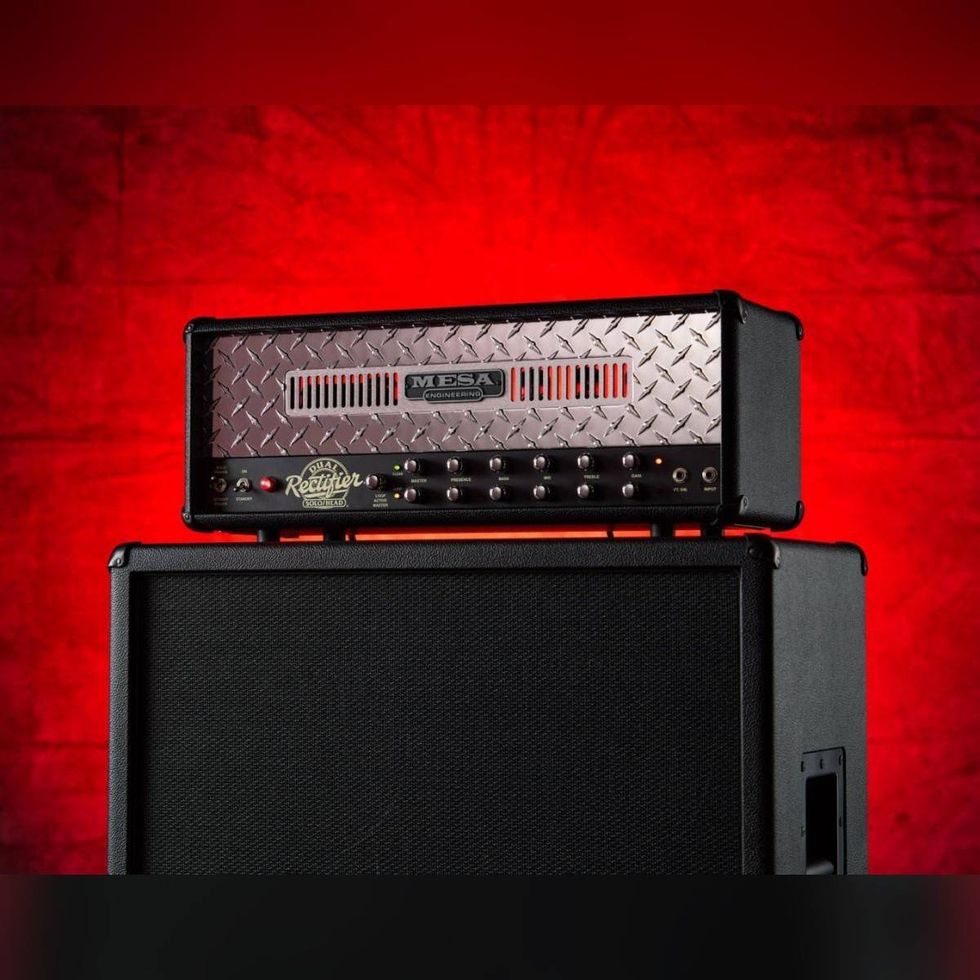
90s Triple Rectifier Standard
Following last year's return of the 90s Dual Rectifier Standard, MESA/Boogie is reissuing its 150-watt sibling, the 90s Triple Rectifier Standard. Like the original, it's built by hand in Petaluma, California.
Esoterica Electrica: Why I Quit Making, and Playing, Guitars
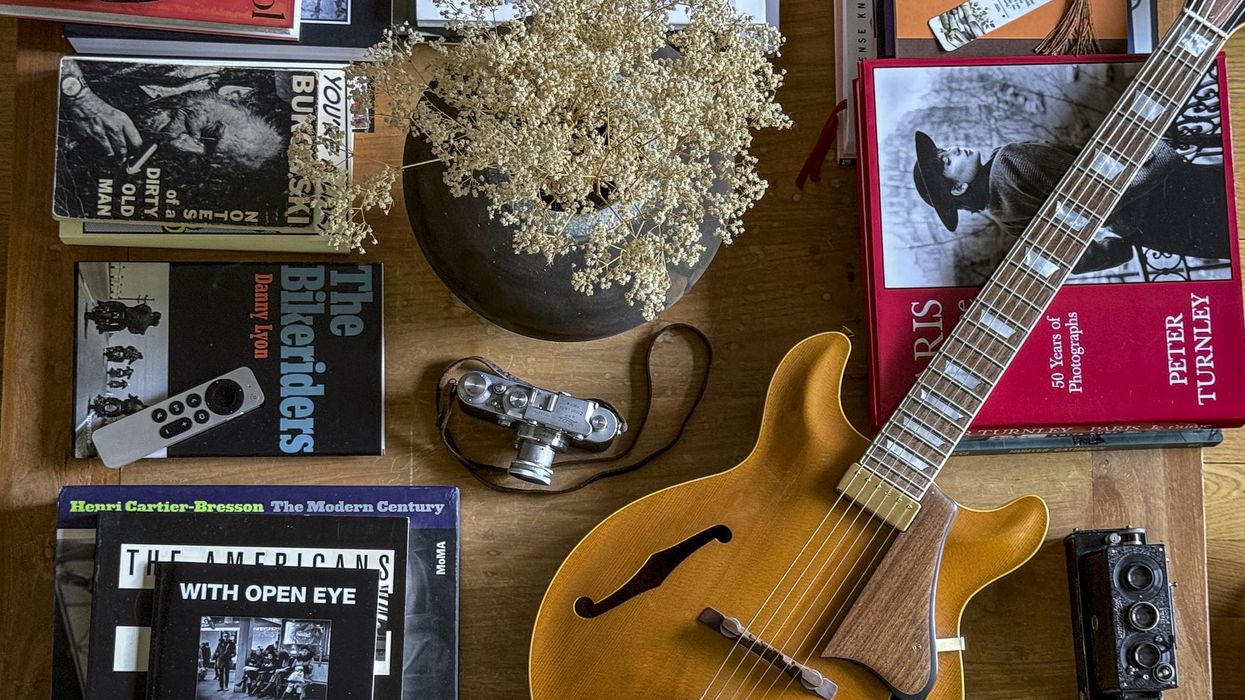
Have you ever wanted a reset? Not exactly a clean slate, total erase, and start over, but maybe a window into a fresh perspective? Most of us want to get better at what we do, and expand our vocabulary within our craft. You can double down on your work or spend more time reading, watching, practicing, and experimenting with your artistry. Those are the building blocks of mastery, but sometimes you get stuck. Inadvertently, I found something that broke the cycle of repetition both in my playing and my building. I stopped.
I wasn’t planning to quit, but a series of events conspired to allow me to pause two of the practices closest to my heart. Going on vacation was the most obvious of breaks, but even before wheels up, I had stepped away from playing and making guitars, something I’ve done almost every single day of my life for six decades. It wasn’t a conscious decision—it happened slowly and almost invisibly. I was just tired, mentally and physically. I’ve written previously about creative block (“Jump Start,” in the October 2019 issue), but this was something totally different, closer to indifference. I felt guilty about it. I have to confess that, as puzzling as it was, it also felt like relief. What I hadn’t known was that there are actually names and tactics for doing what happened organically for me—I’d become a “reframer.”
In psychology and skill development, the name for this action is known as a strategic reset, or sometimes habit unbundling. I don’t care much for bullshit jargon, but the theory is legit. Playing an instrument or almost any other pursuit for a long time, your brain develops deep neural pathways. Over time you naturally plateau and/or pick up habits that are difficult to abandon. Stepping away for an extended period completely forces your brain to forget, or at least diminish automatic and stale routines. When you begin again, you can rebuild skills more consciously, sort of like from the ground up.
“The distance reminds you why you fell in love with music in the first place, which injects soul back into your own playing later.”
Refraining from the actual act of your pursuit is also called de-coupling. It can be done for short periods—or, as in my case, months. This doesn’t necessarily mean you shouldn’t enjoy listening to music, but there are some strategies to employ. Guitarists naturally pick out the guitar track in any recording, just as drummers and bass players have a tendency to focus on their own instrument’s role in any song. This unconscious habit is what I call “player brain.” Musicians tend to automatically translate the sounds they hear into the physical actions required to make them, which is natural, but can also make you deaf to the total ecosystem and emotion of the music. It can be intimidating as well because it focuses on technique. Turning off the “player brain” allows you to feel the raw tension, release, and mood of a track. That’s why stepping away can be important. The distance reminds you why you fell in love with music in the first place, which injects soul back into your own playing later.
Interestingly, the time I’d spent immersing myself in the world of guitars had also been a reset. I found that my retreat from guitar and my workshop bench opened up time to rekindle other passions that had laid dormant. Before I made guitars I went to school for photography, but life happened and playing and making instruments became my focus. When I picked up my camera again, it felt like the first time I played an electric guitar to make beautiful sounds and express myself. So instead of playing and building, I buried myself in photography, and surrounded myself with books, and doubled down on museums. It is a world that feels new, yet deeply familiar, in a satisfying way.
Lately I’ve returned to the guitar with a newfound appreciation for sounds beyond my old go-to licks and patterns. I’m no Allan Holdsworth, but I’m happy to make noise again. The workshop bench now beckons with the old feeling of getting to the end of the day and having something rewarding to show for it. In my case, it wasn’t a planned abeyance, but that doesn’t mean it can’t be. I hope that, if you are in need of a reset yourself, you’ll find the chance to join me in walking away—and returning to find more than what you left.
Rig Rundown: Mr. Phylzzz
Chris Kies met up with Clinton Jacob of Mr. Phylzzz at the Cobra in East Nashville, where the two-piece was touring behind Fear the Lord. His rig is built to survive a player who squeezes guitars to death and plays anywhere that’ll have him—including, once, a public restroom. Have a look at some quick highlights below, and tune into the new Rig Rundown for all the details.
Brought to you by D’Addario.
Buzz Told Him So
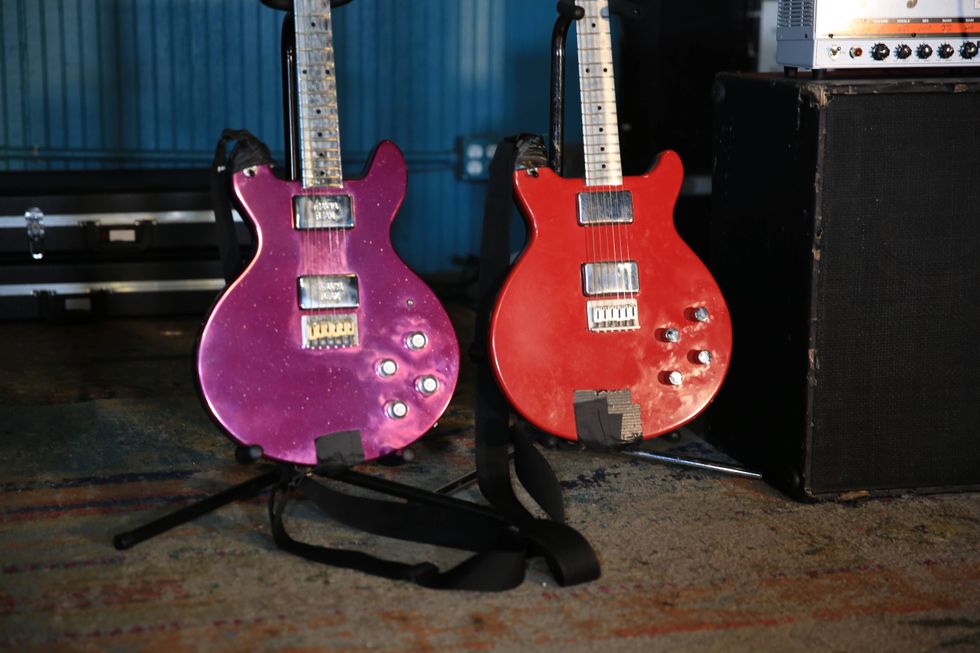
On the Twins of Evil tour with the Melvins and Boris, Clinton watched King Buzzo go almost 40 nights without adjusting a thing on his guitar, while his own guitars kept cracking and breaking. Buzzo’s pitch: you’ll get one, you’ll hate it, then you’ll love it. Clinton ordered an Electrical Guitar Company King Buzzo model, hated the paper-thin neck, and two weeks later couldn’t imagine playing anything else. It’s hollow with a plastic back, it’s a tank, and the strap locks are a wad of gaffer tape.
Hannah Montana Purple
The newest EGC arrived the night before the shoot. Clinton asked for something the builder had never done before, then handed the color chart to his partner, who picked it. It’s got a side-mounted toggle and the same pickups as the original Travis Beans, which run hot. Two things here aren’t standard: the hollow plastic back, done because Clinton wants his guitars light, and the slim neck, since this model normally comes with a chunky C.
Wood Tones
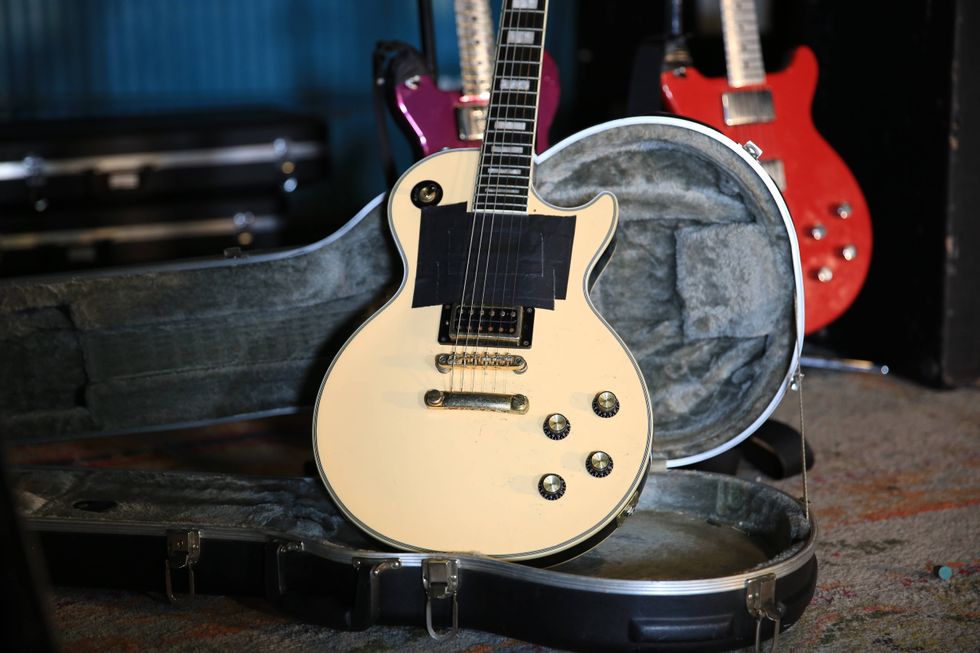
This Epiphone is named Chase—a gift from Clinton’s partner in Texas after he snapped the neck off an earlier one—and it was his main guitar for years before the EGCs arrived. It’s been “dumbed down” to a volume knob and the bridge pickup. Now it’s what saves him from getting electrocuted: an EGC is metal all the way through, so a ground tester is mandatory equipment, and any venue with an open ground means wood or nothing.
Both On, All Night
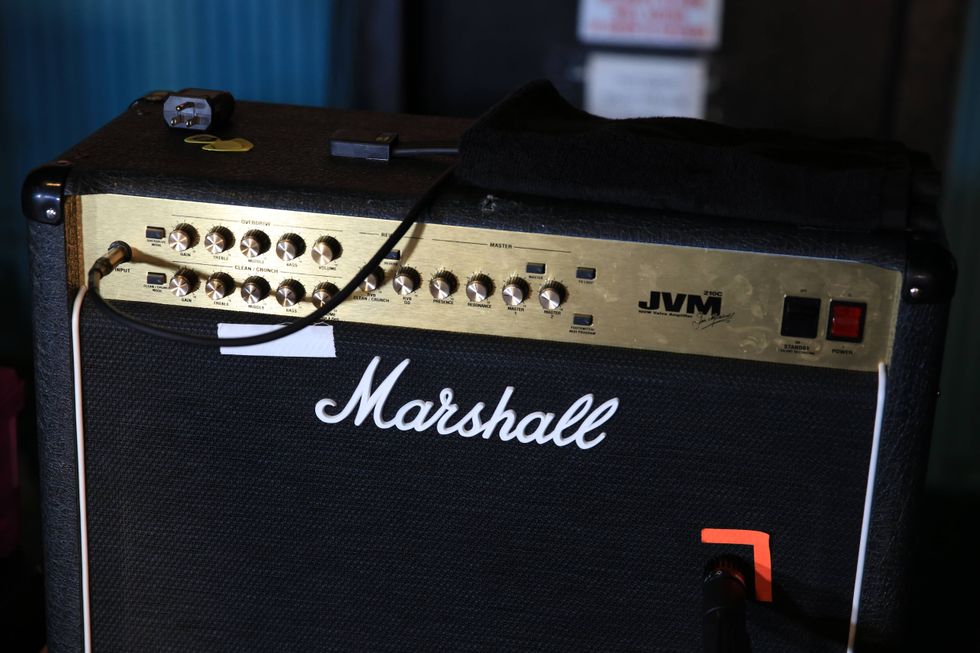
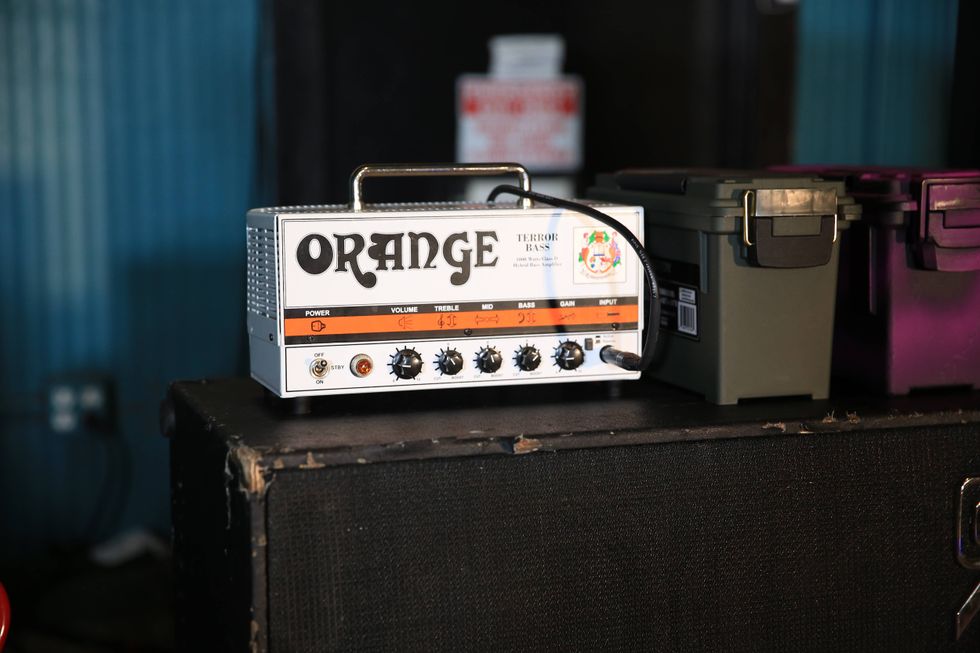
A Marshall JVM410 combo and an Orange Terror Bass run at the same time and never get switched off. He keeps it on one channel at three and watches for the green light. The Orange is dialed darker to offset how bright the aluminum guitars are, and both run clean—the guitars are nasty enough on their own. Cabs are a 2x12 and a 4x10.
Mr. Phylzzz’s Pedalboard
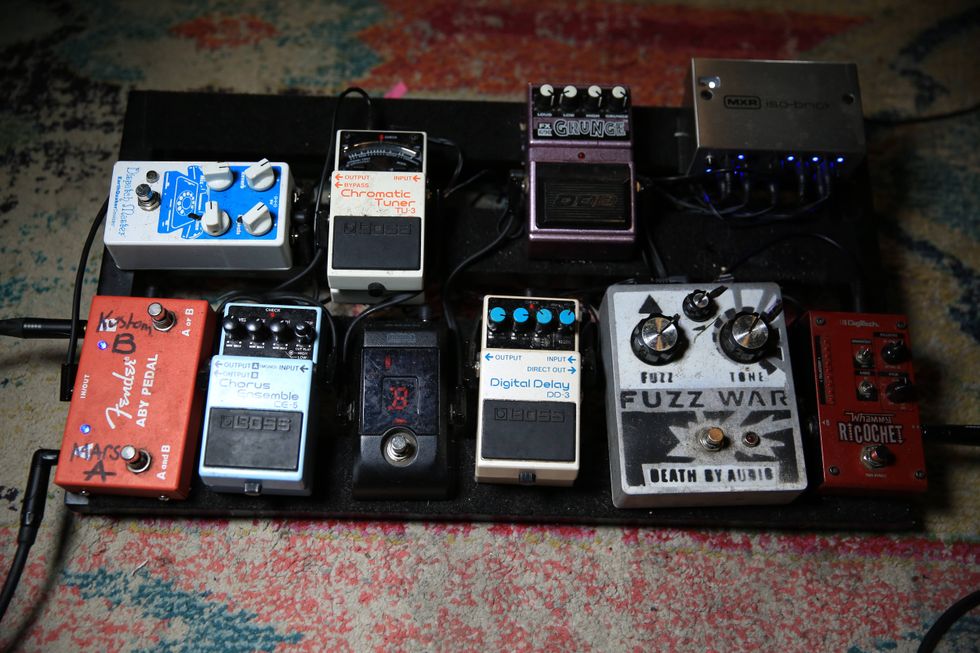
The Death by Audio Fuzz War is the whole tone, with everything set at 2 o’clock and marked so it stays there. A DOD Grunge, everything peaked, supplies a thin AM-radio nastiness for dynamic drops. A Boss DD-3 holds the wall of noise out longer before he cuts it, an EarthQuaker Devices Dispatch Master handles the haunted-house material, a Boss CE-5 Chorus Ensemble adds a little color for “Emma Draws a Dog,” and a DigiTech Whammy Ricochet covers dive bombs.
Warm Audio Announces Mod Series Pedals, Including Black Keys Peach Fuzz
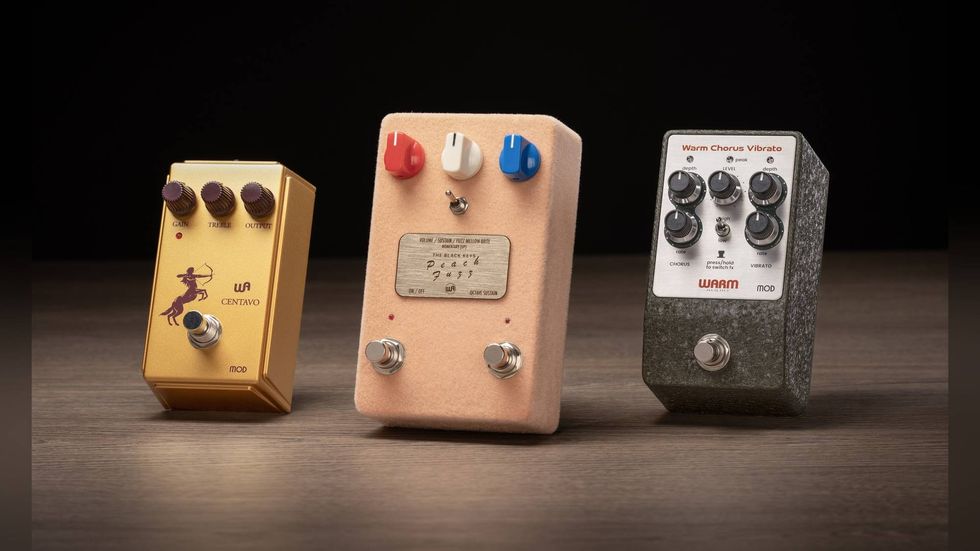
Warm Audio has introduced the Mod Series, a new line of guitar pedals that redesigns select Warm Audio recreations with slimmer, more pedalboard-friendly footprints and added features on select models.
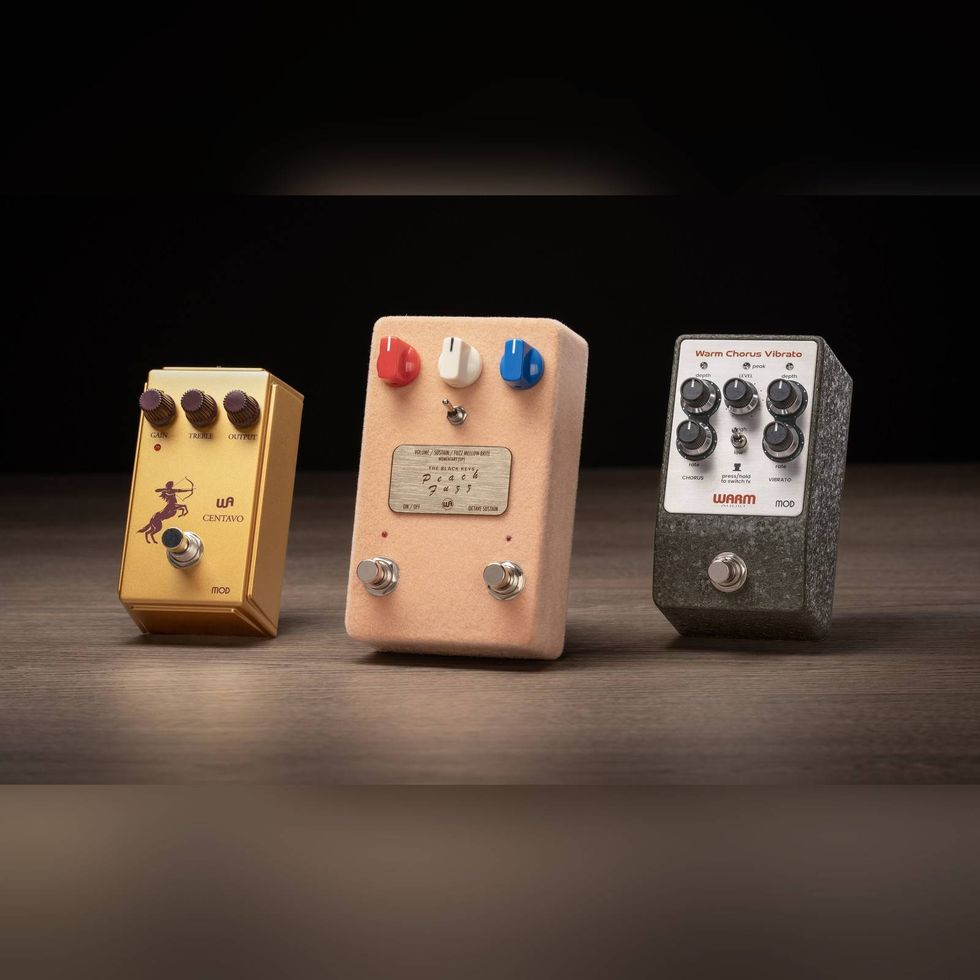
The Mod Series debuts with three modified pedals, establishing a new and expanding lineup within the Warm Audio pedal family:
- Centavo Mod | A slimmer, pedalboard-friendly design of Warm Audio’s recreation of the most sought-after golden overdrive, while preserving the same vintage-accurate circuit and premium components.
- WA-C1 Mod | A compact design of Warm’s faithful recreation of the celebrated all-analog chorus and vibrato circuit, now with an added preamp bypass.
- The Black Keys Peach Fuzz | Developed in collaboration with Dan Auerbach, guitarist for The Black Keys, a pedalboard-friendly version of Warm Audio’s vintage-inspired ’70s Foxy-style fuzz and octave circuit, customized with selectable momentary or latching octave-up control.
Centavo Mod: Compact High-Headroom Professional Overdrive Pedal
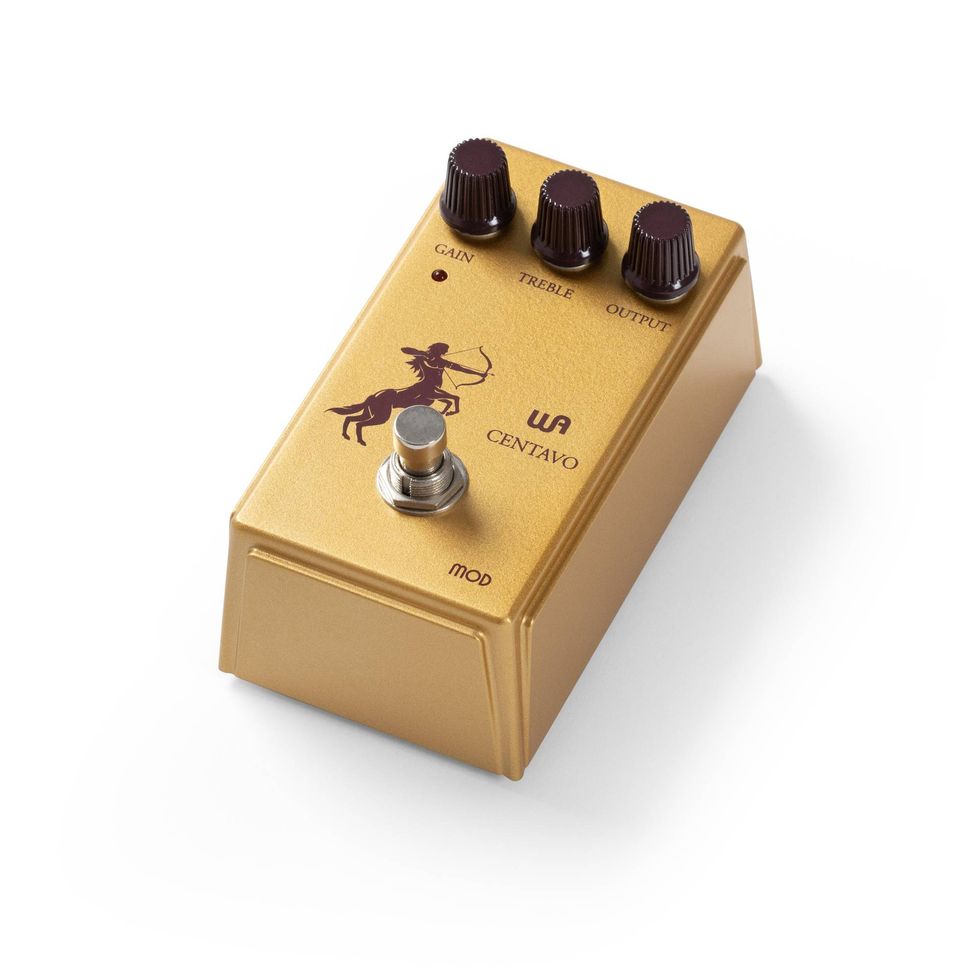
The Centavo Mod delivers the same vintage-accurate circuit and premium components as the full-sized Centavo in a slimmer design with top-mounted jacks for easier pedalboard integration. Built for everything from clean boosts and transparent overdrive to pushing an already-driven amp, it retains the familiar gain, treble, and output controls along with the MOD switch from Warm Audio’s original recreation, which extends low-end response for a fuller, throatier character on the lower strings. Inside, carefully selected components including TL072 op amps and premium diodes preserve the signature clean boost, edge-of-breakup, and hard-clipping tones of the original circuit.
Enjoy the videos and music you love, upload original content, and share it all with friends, family, and the world on YouTube.
WA-C1 Mod: Compact Stereo Chorus & Vibrato Pedal With Added Preamp Bypass
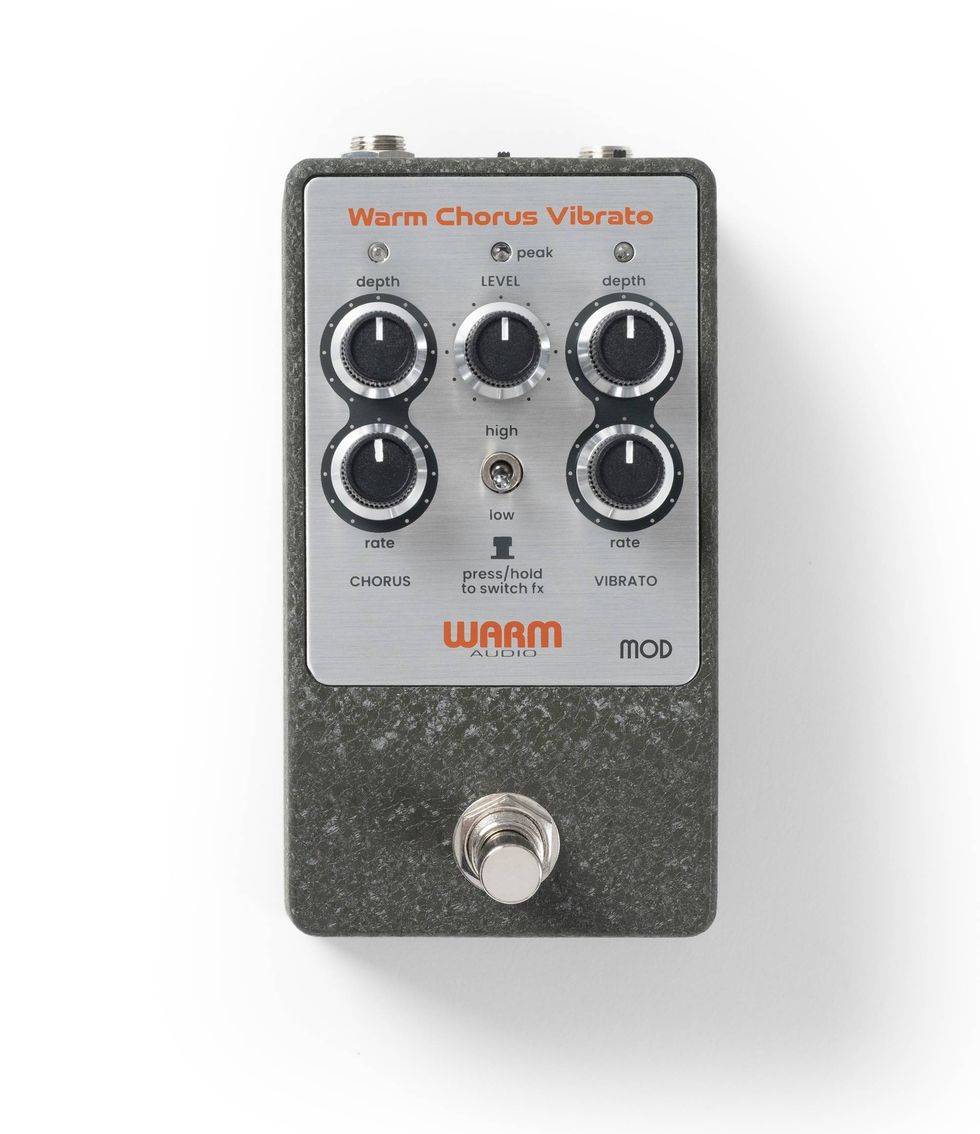
The WA-C1 Mod preserves the rich, all-analog chorus and vibrato character of Warm Audio’s original recreation in a slimmer, more pedalboard-friendly design with top-mounted jacks. New to the Mod version, the celebrated analog preamp can now be bypassed for greater control over gain staging in complex signal chains. The WA-C1 Mod retains the expanded control of Warm Audio’s original recreation, including independent chorus depth and rate controls, selectable Hi-Z impedance, wet/dry stereo outputs, and the lush BBD chorus and three-dimensional vibrato at the heart of the legendary circuit.
Enjoy the videos and music you love, upload original content, and share it all with friends, family, and the world on YouTube.
The Black Keys Peach Fuzz: Fuzz FX Pedal With Selectable Octave-Up Hold
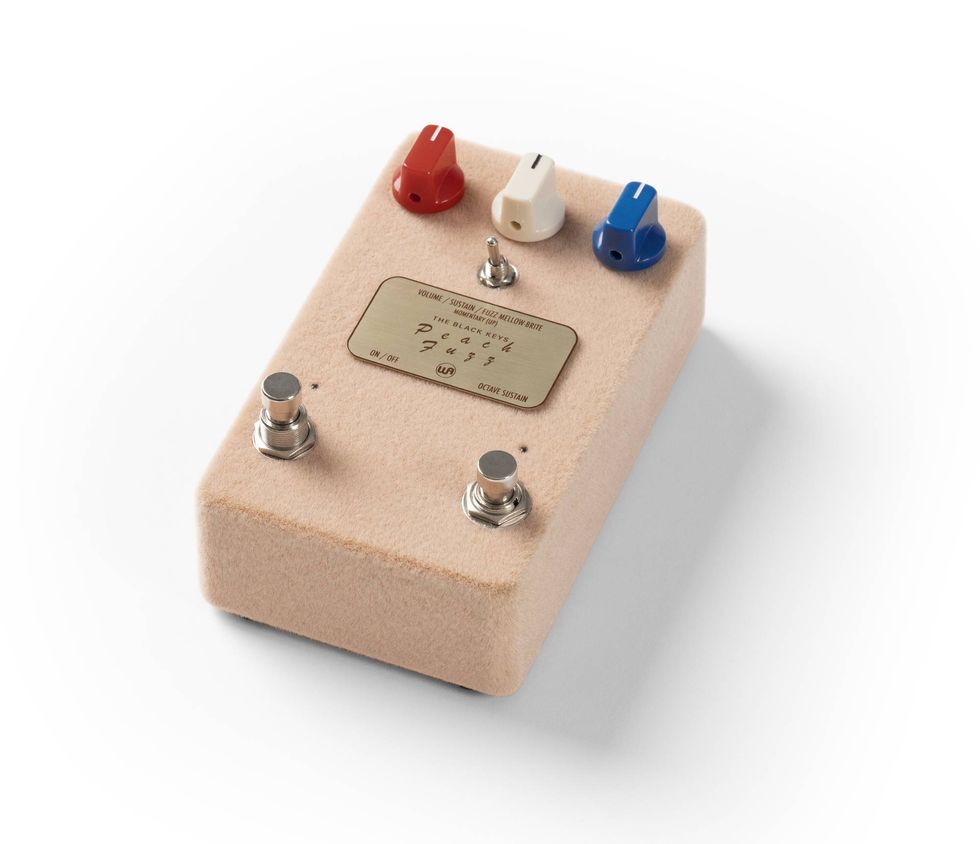
A collaboration between The Black Keys and Warm Audio, the limited-edition Peach Fuzz delivers Warm Audio’s vintage-inspired ’70s Foxy-style fuzz and octave circuit in a new slimmer design, with the searing saturation and octave-up solo magic that define the original. Covered in thick flocked velvet in a special peach color celebrating The Black Keys’ 2026 release, Peaches!, the pedal moves from mellow fuzz and gritty crunch to huge, saturated tones and soaring octave leads. Working closely with The Black Keys guitarist and frontman Dan Auerbach, Warm Audio added a selectable momentary/latching octave-up hold switch, making it easy to kick in octave tones for riffs, solos, and creative studio moments.
Like all Warm Audio gear, the Mod Series pedals are meticulously hand-tested and inspected and come with a 5-year warranty.
Enjoy the videos and music you love, upload original content, and share it all with friends, family, and the world on YouTube.
The Warm Audio Mod Series pedals carry the following street prices:
Centavo Mod — $189 USD | €219 inc. VAT | £189 inc. VAT
WA-C1 Mod — $199 USD | €229 inc. VAT | £199 inc. VAT
The Black Keys Peach Fuzz, Limited Edition — $199 USD | €229 inc. VAT | £199 inc. VAT
Mod Series
Warm Audio has introduced the Mod Series, a new line of guitar pedals that redesigns select Warm Audio recreations with slimmer, more pedalboard-friendly footprints and added features on select models.
Strymon Unveils La Brea Analog Tape Drive
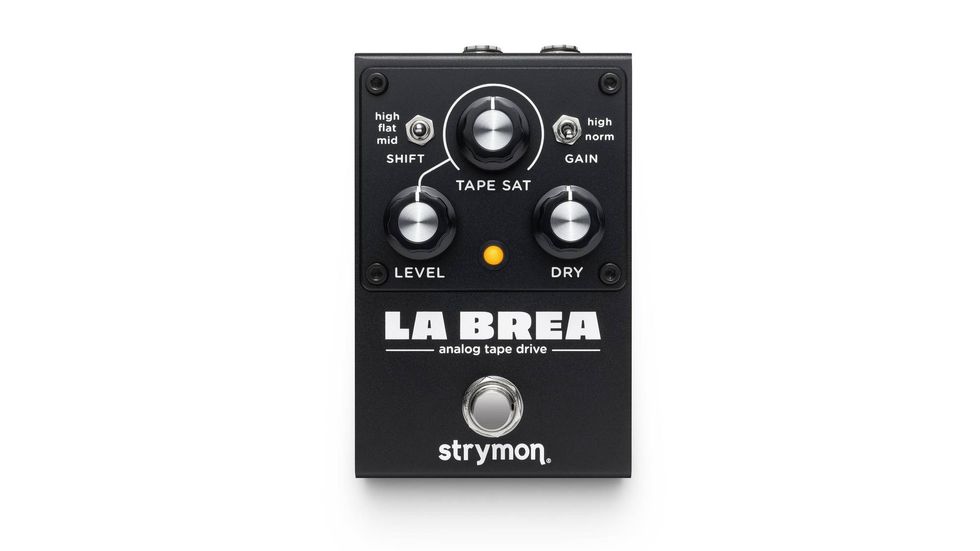
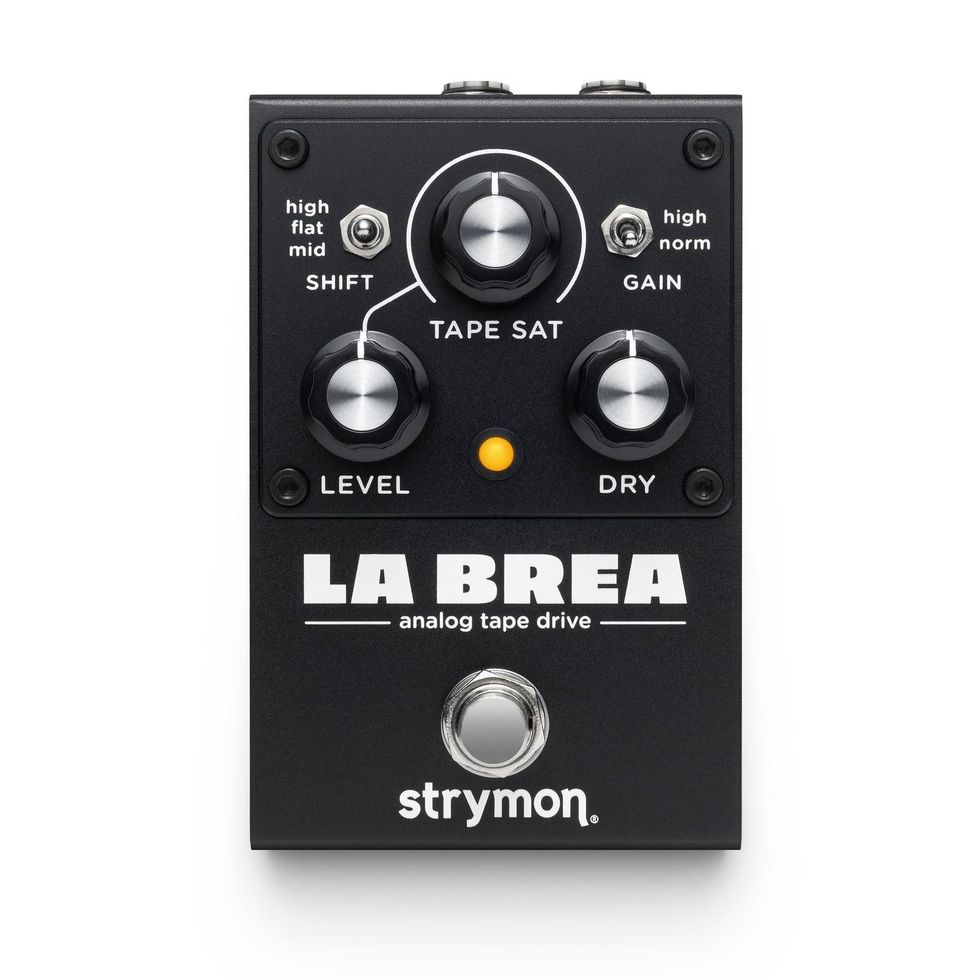
Strymon Engineering (www.strymon.net), has introduced a new analog tape drive pedal called La Brea.
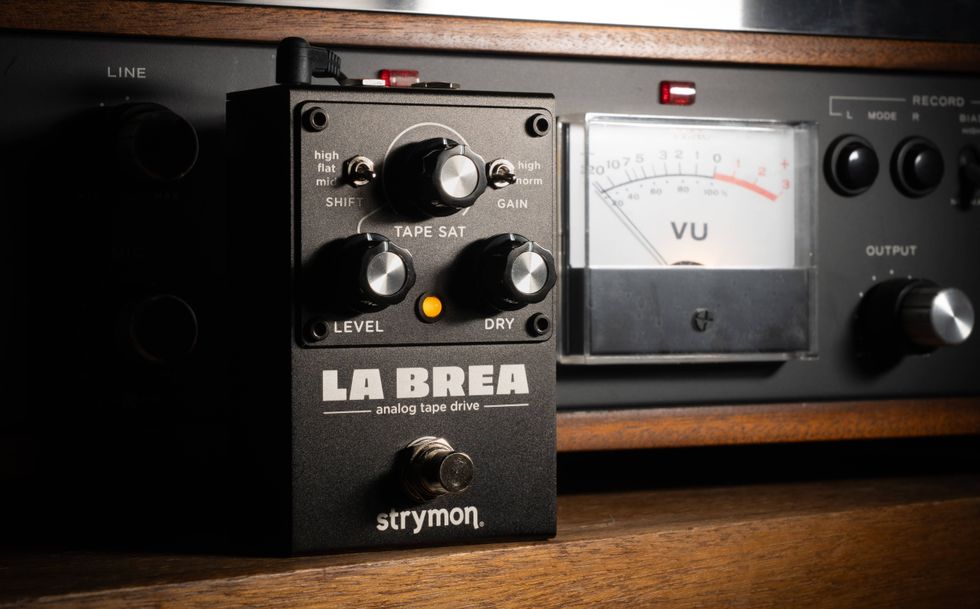
Incorporating multiple stages of analog gain using techniques learned from studying vintage tape machines, La Brea delivers a wide range of saturation from a simple interface. The pedal never sounds harsh even at extreme settings, and piling on the gain just makes things fatter and more saturated without getting crispy or painful to listen to, just like a real mastering tape deck.
Initially inspired by the white paper that co-founder Pete Celi wrote on the development of Strymon’s iconic Deco pedal, analog engineer Josh Forbes aimed for true tape behavior in a fully analog design.
In addition to the tape saturation side, La Brea also features a fully discrete dry path, giving the pedal two distinct personalities that players can use to craft personal sounds. The dry path always stays in phase with the saturated output, meaning you can add a little or a lot with no comb filtering or other artifacts. The discrete operation also means that it can be used as a pure clean boost, or a clean boost that allows you add saturation (as much or as little as desired) to fatten up single notes and chords.
As tape has a tendency to saturate high frequencies first as the gain increases (making them less prevalent), La Brea also features a three-position Shift switch that allows the player to add some of those high frequencies back in to the output. One position concentrates on adding high frequencies only, and the other adds upper midrange frequencies to the high boost to help notes poke though the mix. It’s a powerful tool that can help wake up dark humbuckers, add bite to older strings or make setting up a rig even easier.
“It’s crazy to think that Josh read Pete’s whitepaper on the making of Deco over twelve years ago, which was before he even worked here”, said CEO and chief analog guru Gregg Stock. “He’s been thinking about how to recreate tape behavior purely in the analog domain ever since, so it’s great that we now have the Series A line of analog pedals to showcase these great ideas our guys come up with. La Brea is a drive pedal with a unique voice and response, so it fits really well with the other pedals in Series A.”
“It’s quickly become the favorite drive pedal for a bunch of people at the office”, said Sean Halley, Strymon’s marketing guy. “The fact that it’s based on tape means that it never gets harsh, never gets strident, and mates really well with all different types of amplifiers. I’ve had one on my gigging board since the beginning of the year in disguise, so I’m excited to take the tape off and finally let people see what it is!”
La Brea carries a street price of $199 US. For more information visit Strymon.net.
La Brea
Strymon Engineering (www.strymon.net), has introduced a new analog tape drive pedal called La Brea.
Factory Tour: Keeley Electronics
John Bohlinger gets an in-depth tour from founding mod scientist Robert Keeley who peels back the curtain to show how his Oklahoma City facility can turn an idea into a pedal within a week. As you'll discover during the video, Keeley handles the majority of all manufacturing inside their OKC headquarters, including production of enclosures, procuring onsite prototype tests, populating circuit boards, component testing, painting cases and adding custom graphics, overseeing quality control, and conducting repairs. Check out how they shape your guitar tone!
Factory Tour: Keeley Electronics
John Bohlinger gets an in-depth tour from founding mod scientist Robert Keeley who peels back the curtain to show how his Oklahoma City facility can turn an idea into a pedal within a week. As you'll discover during the video, Keeley handles the majority of all manufacturing inside their OKC headquarters, including production of enclosures, procuring onsite prototype tests, populating circuit boards, component testing, painting cases and adding custom graphics, overseeing quality control, and conducting repairs. Check out how they shape your guitar tone!
MXR Textures Granular Synth Engine Review
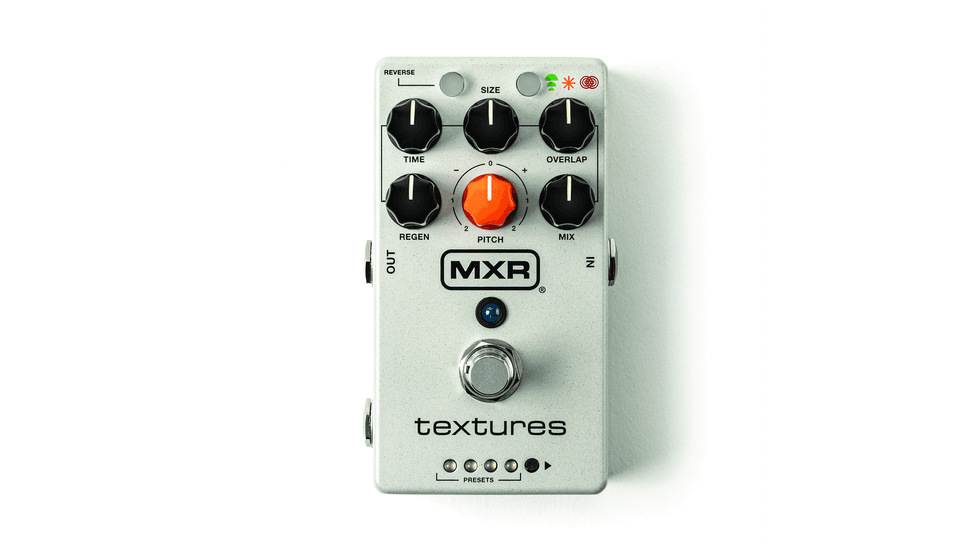
Experience your guitar in the fifth dimension.
Every so often a pedal shows up that doesn’t just add a new flavor to your rig, it quietly rewires your understanding of what a stompbox is for. The MXR Textures Granular Synth Engine is one of these. On paper, it’s a humble delay pedal—record the signal, play it back, repeat. In practice though, Textures takes that lineage and does to it what a jazz musician does to a standard: keeps the bones but discards the obligation to play it straight.
Grains, Not Repeats
Granular synthesis has been kicking around since the mid-20th century—originally achieved with tape loops sliced into fragments by composers patient (or masochistic) enough to do it by hand—and it’s taken guitar pedals an embarrassingly long time to catch up to what modular synth heads have known for decades. MXR’s approach chops your incoming signal into tiny audio “grains,” then hands the controls over to you to stretch, reverse, pitch-shift, and reassemble those grains into something your original note never asked to become. Think less in terms of “digital delay” and more like “your guitar tone, run through a very articulate blender, with the blender’s speed and blade angle fully in your control.”
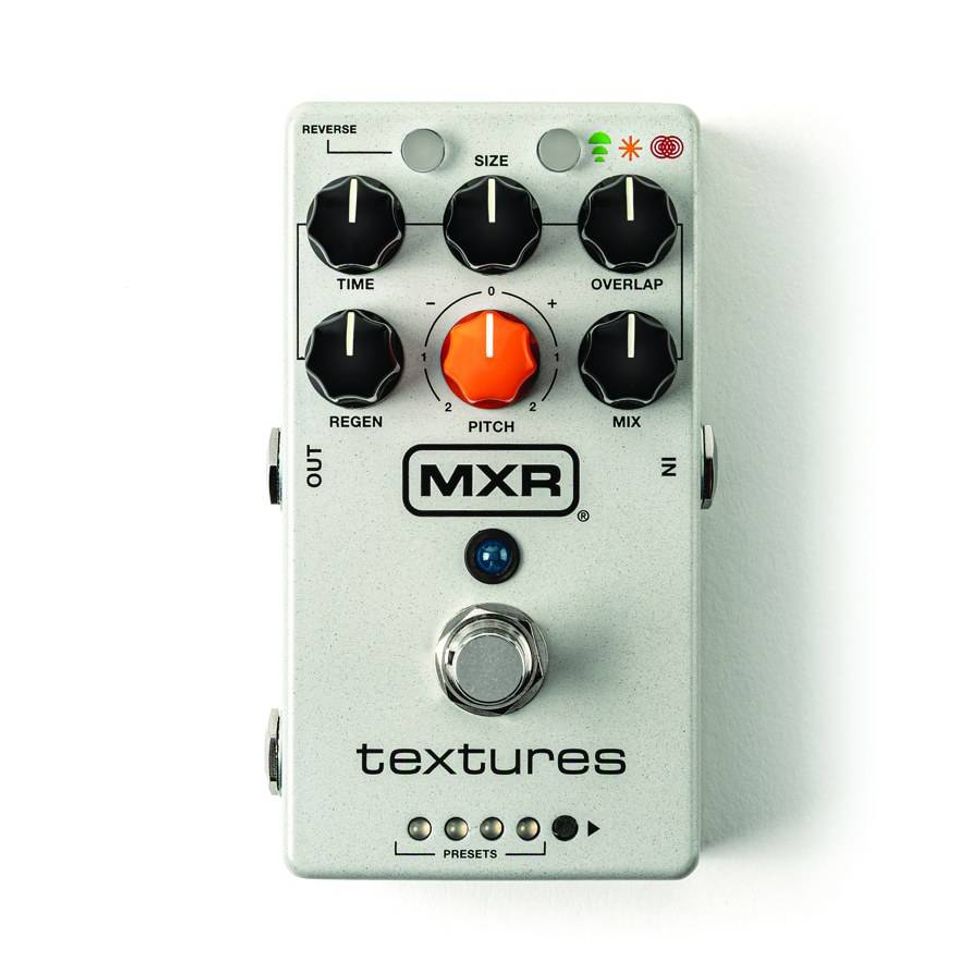
Three modes anchor the experience—delay (green), auto-freeze (orange), and layers (red)—and each one reframes what the same core engine does. Delay mode is the pedal’s most familiar face: granular rhythmic repeats that can range from clean and delay-like to smeared and shimmering, depending on how aggressively you mangle the size, overlap, and regen controls. Auto-freeze is where things get genuinely magical. The pedal listens for what you play, grabs it, and sustains it into a lush, evolving wash. Put another way, you can hold one chord and let Textures turn it into an ambient soundtrack, leaving your hands free to do something else. Layers, meanwhile, samples up to four notes or chords, and each takes on its own fade characteristics. It essentially lets you build a tiny orchestra out of whatever you just played.
The Controls, Demystified
Time, size, and overlap set the length, density, and stacking behavior of your grains. Pitch and reverse handle playback speed and direction. Dial the pitch through the pedal’s +/- 2 octaves and you can cover everything from subtle chorus-like shimmer to full-on alien transmission. Delay and regen govern how those grains move and feed back through time, and mix (the great equalizer of any effect pedal) moves between bone-dry signal and granular soup. Built-in reverb, filter, and vibrato round things out, along with randomization options for players who’d rather let the pedal surprise them than try to manage every parameter by hand. (Certainly, there’s something almost meditative about hitting the randomize function and just seeing what Textures decides to do.)
Eight factory presets across two banks get you playing immediately, which matters: A pedal this deep can easily intimidate a player who just wants a cool sound now, and MXR clearly understood that. Full stereo I/O, expression pedal compatibility, and MXR’s split + tap ecosystem round out a spec sheet built for players who take their signal chain seriously.
“Think less “digital delay” and more “your guitar tone, run through a very articulate blender, with the blender’s speed and blade angle fully in your control.”
Who’s This For?
Ambient and post-rock players are the obvious audience, anyone chasing the cavernous, cascading textures of Michael Brook, David Torn, or Christopher Willits at their most exploratory, or the wall-of-sound shimmer that shoegaze and dream-pop guitarists have been building toward since Kevin Shields decided a whammy bar could be a compositional tool.
But Textures isn’t limited to reverb-drenched noodling. Layers mode alone opens doors for composers and sound designers scoring film cues, and the granular-glitch textures achievable in delay mode will appeal to anyone building the kind of unsettling, fragmented soundscapes that modular synth players will feel comfortable with. Even a straight-ahead rock player looking for one genuinely weird moment in a set—a solo breakdown that sounds like it’s dissolving into static and light—will find real utility here.
Incidentally, I ran Textures through both a clean Vox/Marshall-style amp and a Line 6 Helix modeler, and the difference in character was substantial. Through the clean amp, the grains retained more organic edge and pick-attack definition, while the modeler smoothed things into denser, more synth-like pads. Either way, this is not a pedal that requires distortion or effects loops of other units to sound complete. It’s a remarkably self-contained universe all its own.
The Verdict
At a street price of $269 Textures won’t be an impulse buy for most. But it’s genuinely deep, playable, and unique compared to other granular-synthesis pedals. Where a lot of weird pedals trade usability for strangeness, MXR found a smart middle path: three clearly defined modes, sensible presets for instant gratification, and a control set deep enough to reward the players willing to actually dig in.
Is this a pedal for everyone? No. If your board is built entirely around tight, traditional tones, Textures will sit there mostly unused, a strange and expensive houseguest. But for the ambient explorer, the film composer, the noise-curious rock player, or anyone who’s ever wondered what their guitar might sound like if it forgot what a guitar was supposed to sound like, this is a genuinely rare device: a pedal that expands your musical vocabulary rather than just adding another voice to your existing diatonic dialect.
MXR Textures Granular Synth Pedal
Slipknot Announce Worldwide (sic)est Stadium Tour

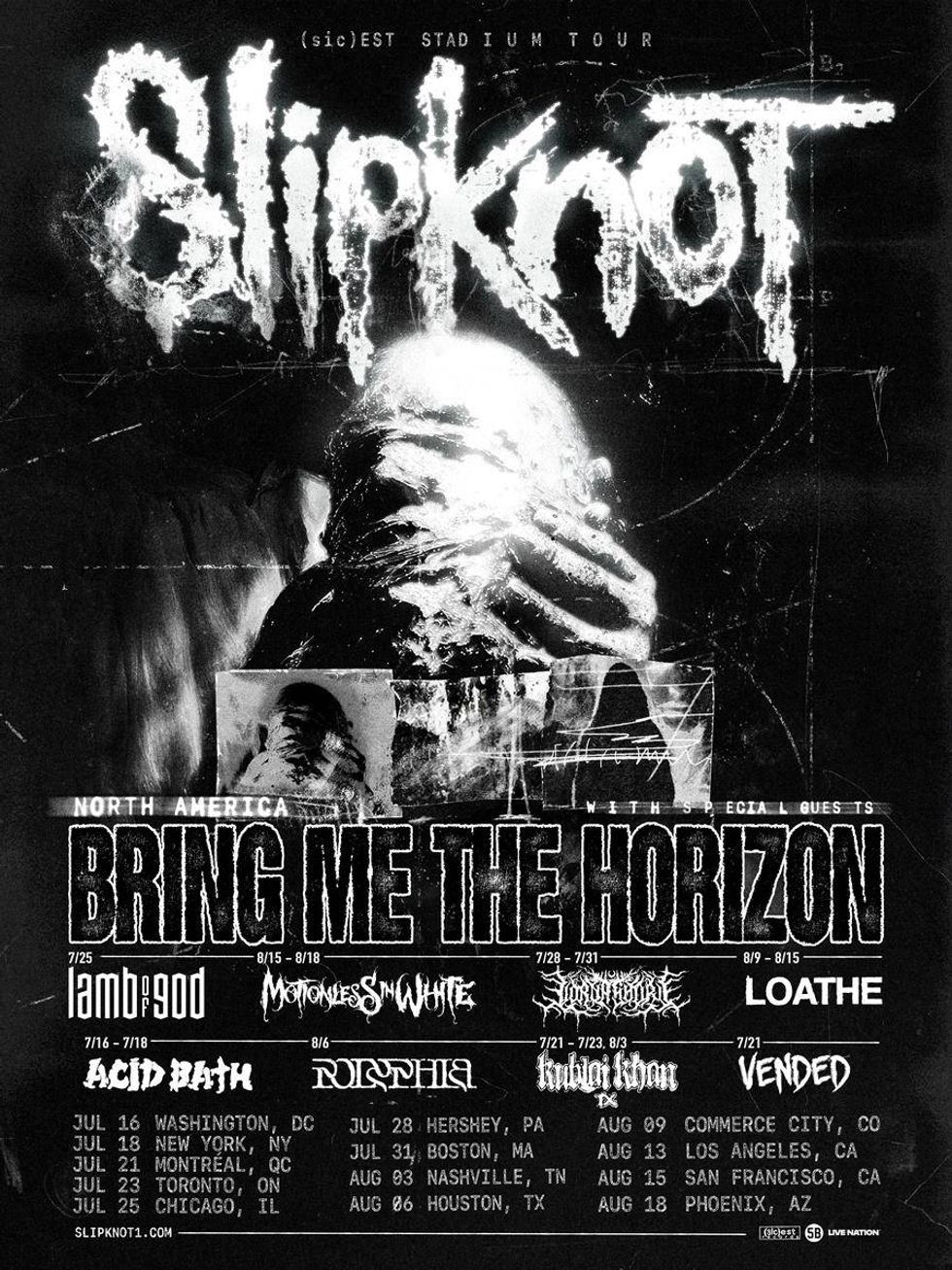
Slipknot have announced their (sic)est Stadium Tour, crossing the globe Summer 2027. The tour, produced by Live Nation, launches July 3 at London’s historic Wembley Stadium connected by EE, in a UK and Europe exclusive. On July 16, Slipknot touch down in D.C.’s Nationals Park to kick off their North American jaunt, which includes performances at Citi Field in Queens, New York, Chicago’s Soldier Field, Boston’s Fenway Park, Los Angeles’ SoFi Stadium, San Francisco’s Golden Gate Park and more. The tour wraps with five South American performances in Brazil, Argentina, Chile, Peru and Colombia.
Tour Launch Events Tonight in London and Los Angeles
Featuring earliest access to tickets, exclusive merch, free giveaways, and a flaming 30 foot high Slipknot Tribal S symbol!
Artist Presale Starts Tuesday, September 29 at 10AM Local Knotfest Presale Starts Tuesday, September 29 at 12PM Local Here Public On Sale Friday, October 2 at 10 AM Local Here
New Single / Video “Arsenal” Out Now
Featuring a brand new set, new staging and a setlist spanning across their career, these shows will be the ultimate Slipknot experience to date. The band are joined by Bring Me The Horizon as direct support on all North American dates with a rotation of special guests along the way including: Acid Bath, Lamb of God, Motionless In White, Lorna Shore, Kublai Khan TX, Polyphia, Loathe, and Vended. Marilyn Manson, Lorna Shore and Hatebreed support Slipknot in London for the tour kick off. Manson and Hatebreed rejoin them in South America in September along with local support to warm up the crowd.
In case you missed it, Slipknot have uncovered massive projections and snipes across the world hinting at tonight’s epic (sic)est Stadium Tour Launch experience. Fans are encouraged to meetup at London’s Wembley Stadium (5-9PM) and SoFi Stadium in Los Angeles (5-9PM) to grab whichever tickets they’d like for each respective show before the rest of the world, ahead of all presales and general onsale to the public. Each event will feature a pop-up shop with exclusive, very limited merch items, and the first 500 ticket purchasers will receive a free event poster with exclusive art. Each event is first come, first served. At sunset, fans are encouraged to gather around a 30 foot high, iconic flaming Slipknot Tribal S symbol. See details for each location below:
(sic)est Stadium Tour Launch experience London, U.K. at Wembley Stadium:
Address: Wembley HA9 0WS, United Kingdom. For help planning your trip to Wembley please check out - wembleystadium.com/plan-your-visit/getting-to-wembley
Box Office: Open from 5-9PM BST. Tickets will be available for sale at the Wembley Stadium West Ticket Office located at the top of the Olympic Steps.
How To Buy Tickets On Site: You can only purchase tickets at the box office window. Cash sales are not accepted, all tickets must be purchased on a mobile device via the Ticketmaster website / app. Tickets will not be printed, they will be emailed digitally. 8 tickets maximum per person. Ticket Options + Seating Map: VIP Packages and all ticket price levels will be available. VIP perks include early entry, access to private Slipknot-themed lounges, exclusive items signed by the band, and more. Packages will be available for purchase with each ticket. For more information on VIP packages, visit slipknot1.com/VIP
For more info and the most up to date London launch event, go HERE.
(sic)est Stadium Tour Launch experience Los Angeles, CA at SoFi Stadium:
Address: 3919 Pincay Dr, Inglewood, CA 90305 Parking: Opens at 3PM, Free parking is located right by the tribal S in Lot C. Located on Pincay Drive, please use the above address to be routed directly to the lot.
Box Office: Open from 5-9PM PST – Tickets will be available for sale at the Entry 5 Box Office
How To Buy Tickets On Site: You can only purchase tickets at the box office window. Cash sales are not accepted, all tickets must be purchased via a debit or credit card. Tickets will not be printed, they will be emailed digitally. 8 tickets maximum per person.
Ticket Options + Seating Map: VIP Packages and all ticket price levels will be available. VIP perks include early entry, access to private Slipknot-themed lounges, exclusive items signed by the band, and more. Packages will be available for purchase with each ticket. For more information on VIP packages, visit slipknot1.com/VIP
For more info and the most up to date Los Angeles launch event, go HERE.
TICKETS: Slipknot’s Artist Presale kicks off on Tuesday, September 29 at 10AM Local. Knotfest Presale starts at 12PM Local Tuesday, September 29 at 12PM Local HERE and is followed by additional presales throughout the week. The general on sale begins Friday, October 2 at 10AM Local HERE. For more information and tickets, visit slipknot1.com. Please check local listings for full presale and onsale details, as ticketing timelines vary by market.
Earlier this month, Slipknot surprised fans with their anthemic offering “Arsenal” – the band’s first new track in over three years. The single arrived alongside its eerie and imaginative music video directed by M Shawn Crahan - (clown) and starring Jackson White. On “Arsenal”, Slipknot sound sharper than ever, the direct result of their commitment to the music, first and foremost. The track is an undeniable statement of strength in the face of diversity, and a new marker for the world to deal with and wonder how Slipknot was always - and still remains - so dynamic and modern.
The culture of Slipknot has spread much farther than anyone could have predicted when nine guys from Iowa put on masks and uniforms, and began challenging the globe to keep up. The band’s influence can now be seen and felt in the underground, in those artists headlining rock and metal festivals across the world, and virtually everywhere in between. Across genres and subgenres, artists the world over are following in footsteps that have led out of the Midwest and onto stages around the world. And all without an ounce of compromise, to anyone. That authenticity has lauded them billions of streams, a Grammy award and several nominations, multiple RIAA certifications, and most recently prior to now, a completely sold-out global anniversary tour across some of the largest stages around the world (London’s O2 Arena, Madison Square Garden, LA’s Intuit Dome, etc). And they’re not letting up.
Nearly three decades in, it's evident that Slipknot still summon the drive, creativity, and band camaraderie required to make music like this. Their rise to becoming one of the greatest and most influential rock bands of the 21st century is marked by hardship, having weathered enormous personal tragedies and facing them head on, a drive that has earned them respect from their fans and naysayers alike. Through it all, they’ve kept a fighting spirit that’s allowed them to keep innovating, and keep testing the ragged edges of their sound to see how much further they can push it.
Slipknot (sic)est Stadium Tour Dates:
- JUL 03 | London, UK | Wembley Stadium connected by EE #!
- JUL 16 | Washington, DC | Nationals Park ~%
- JUL 18 | Queens, NY | Citi Field ~%
- JUL 21 | Montréal, QC | Parc Jean Drapeau ~^@
- JUL 23 | Toronto, ON | Rogers Stadium ~^
- JUL 25 | Chicago, IL | Soldier Field ~$
- JUL 28 | Hershey, PA | Hersheypark Stadium ~!
- JUL 31 | Boston, MA | Fenway Park ~!
- AUG 03 | Nashville, TN | FirstBank Stadium ~^
- AUG 06 | Houston, TX | Daikin Park ~+
- AUG 09 | Commerce City, CO | Dick's Sporting Goods Park ~=
- AUG 13 | Inglewood, CA | SoFi Stadium ~=
- AUG 15 | San Francisco, CA | Golden Gate Park ~&=
- AUG 18 | Phoenix, AZ | Chase Field ~& SEP 04 | São Paulo, Brazil | The Town
- SEP 08 | Buenos Aires, Argentina | Estadio Huracán #
- SEP 12 | Santiago, Chile | Estadio Nacional #
- SEP 14 | Lima, Peru | Estadio Nacional #
- SEP 16 | Bogotá, Colombia | Vive Claro #
- Welcoming support from:
- # w/ Marilyn Manson, Hatebreed ~ w/ Bring Me The Horizon % w/ Acid Bath ! w/ Lorna Shore ^ w/ Kublai Khan TX @ w/ Vended $ w/ Lamb of God + w/ Polyphia = w/ Loathe & w/ Motionless in White
- Non-Live Nation Date
U2 Announces New Studio Album Carnaval De Luz, Out November 13; New Track “Silencio” Out Now
Interscope Records today announces the release of Carnaval De Luz - the 16th studio album from U2 and the first album of new material from the band in nine years - out on November 13th, 2026. The news comes with a brand-new track titled “Silencio,” available now, accompanied by a music video.
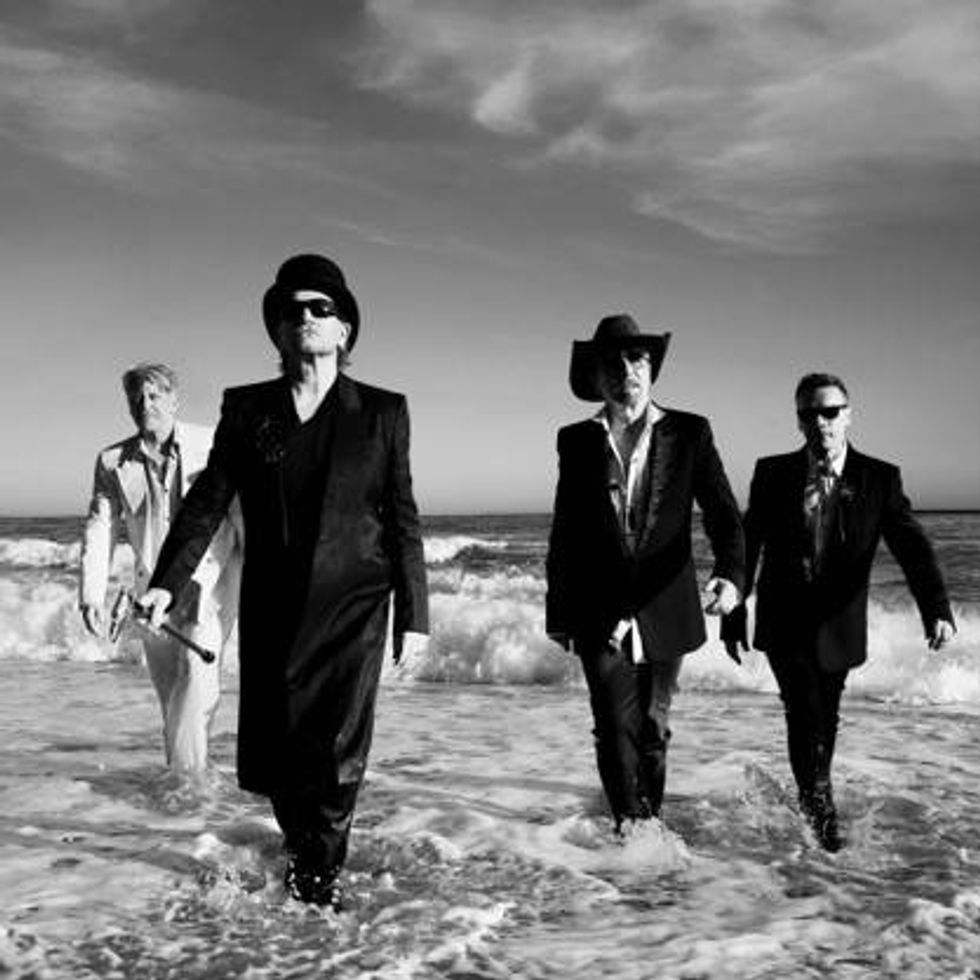
In the week that marks 50 years since Larry Mullen Jr. pinned a handwritten note to the noticeboard of Mount Temple Comprehensive School on the Northside of Dublin in September 1976, “Drummer Seeks Musicians To Form Band,” comes a body of work that sees Bono, The Edge, Adam Clayton, and Larry Mullen Jr. still finding new dimensions and possibilities within their creative process.
Recorded all over the place and produced by Jacknife Lee, Carnaval De Luz is a collection of 12 songs exploring themes of spirituality, friendship, freedom and endurance in the face of dark, encroaching forces. Sonically, there are echoes of the band’s most experimental work combined with some strict songwriting in the shape of “The Greatest Show On Earth,” “Glorify,” and “Midnight Sunshine,” as well as the 2mins 35second homage to early surf-punk insolence that is “Silencio.”
The roots of Carnaval De Luz can be traced directly to U2’s two surprise-released and critically acclaimed six-track EPs of early 2026, recorded during the same creative period as the new album. Those releases, Days of Ash and Easter Lily, followed the liturgical calendar, and so Carnaval De Luz sits, stands, and dances before them in timeline. Carnival, a celebration of the flesh, “carne,” before the denial that is Lent, a period of reflection, and the rebirth of Easter. The song connecting the album and two EPs is the final track on the new album, “Torn,” a duet between Bono and the late, great Dolly Parton, in what has sadly turned out to be her last recorded vocal performance. Co-written by U2, Parton, and Johnny McDaid, it’s a tender country song detailing broken family ties that holds wider resonances.
Carnaval De Luz is released in the band’s 50th year, 2026, one in which U2 will have released 24 new songs. The album also sees collaborations from Brian Eno (co-writing and synthesizers on “Go (Carnaval De Luz),” “The Greatest Show on Earth,” and “Can’t Stop Us Now”), Martin Garrix (co-writing on “Glorify”), and Daniel Lanois (playing pedal steel on “Torn”); with additional production from Ryan Tedder on “Silencio.”
The Edge said - “It’s a messy, provocative, sacred collection of songs — and features the first-ever use of flat-wound strings on a U2 recording. Just saying.”
Bono said - “Roll up, roll up, roll up! Bring your purple socks, your broken hearts, your rose-tinted naivety… oh be amazed in the hall of mirrors. There will be loud guitars, deep bass, some ecstatic rhythms and, yes, some silver tears will make an appearance!
'Cause in the near distance just outside our carnival of light there are all kinds of creatures… the same imagination that brings us our creativity can also bring us monsters. So we make the drums louder. We build a bigger fire. We make our stories wilder and funnier. We make the melodies sweeter and the songs, they better shine, because if the world is in darkness we better not be.”
The music video for “Silencio” was shot in Mexico City earlier this year and is directed by Cliqua, the Mexican-American directing duo Pasqual Gutiérrez and Raúl "RJ" Sanchez.
“Street of Dreams,” the first song to be taken from the new album, was released in July. Listen to “Street of Dreams” HERE, watch HERE .
The track listing for Carnaval De Luz is:
- 1. Go (Carnaval De Luz) 2. La Reina 3. Street Of Dreams 4. The Mirror Maker (Rosalía) 5. Superficiality 6. If The World Is At War We Better Not Be 7. Silencio 8. The Greatest Show On Earth 9. Glorify 10. Midnight Sunshine 11. Can’t Stop Us Now 12. Torn (Feat. Dolly Parton)
Carnaval De Luz will be available in formats including: Limited Edition Deluxe Vinyl & CD Boxsets, Various Limited Edition Coloured & Bespoke Vinyl variants, Standard CD, Standard Vinyl, Digital Download. Pre-order, pre-save HERE .
“Silencio” is available now as a digital download, as well as on DSPs.
Charlie Worsham: From Nashville Sideman to Solo Star
The Nashville fixture shares his long journey from a bluegrasser in Mississippi to Music City fixture that's included studio time alongside Lainey Wilson, Luke Combs, and Carrie Underwood, touring in bands fronted by Vince Gill & Dierks Bentley. He tells John Bohlinger about his struggle from band member to band leader and details the ultimate honor when Vince Gill invited him to join the Grand Ole Opry in August 2026. Twenty years into his stay in Nashville, Charlie Worsham isn't going anywhere but up.
Sponsored by Stewmac: https://stewmac.sjv.io/APO2ED
Mr. Black Introduces the CAT Distortion Pedal
Renowned pedal firebrand Mr. Black has introduced the CAT distortion pedal, a unique take on one of the world’s most beloved – and bruising – circuits.
One look at the CAT and you will see the inspiration; one look inside the CAT reveals an entirely new circuit, with some clever tricks slipped in to reduce noise, strengthen tone and push high-gain: hard.
The CAT Distortion doles out heaps of saturated harmonic-laden gain, while maintaining low noise, cleaning up via the guitar’s volume knob and pumping out powerful low-z output, very well equipped to drive long cables and large effects chains with authority.
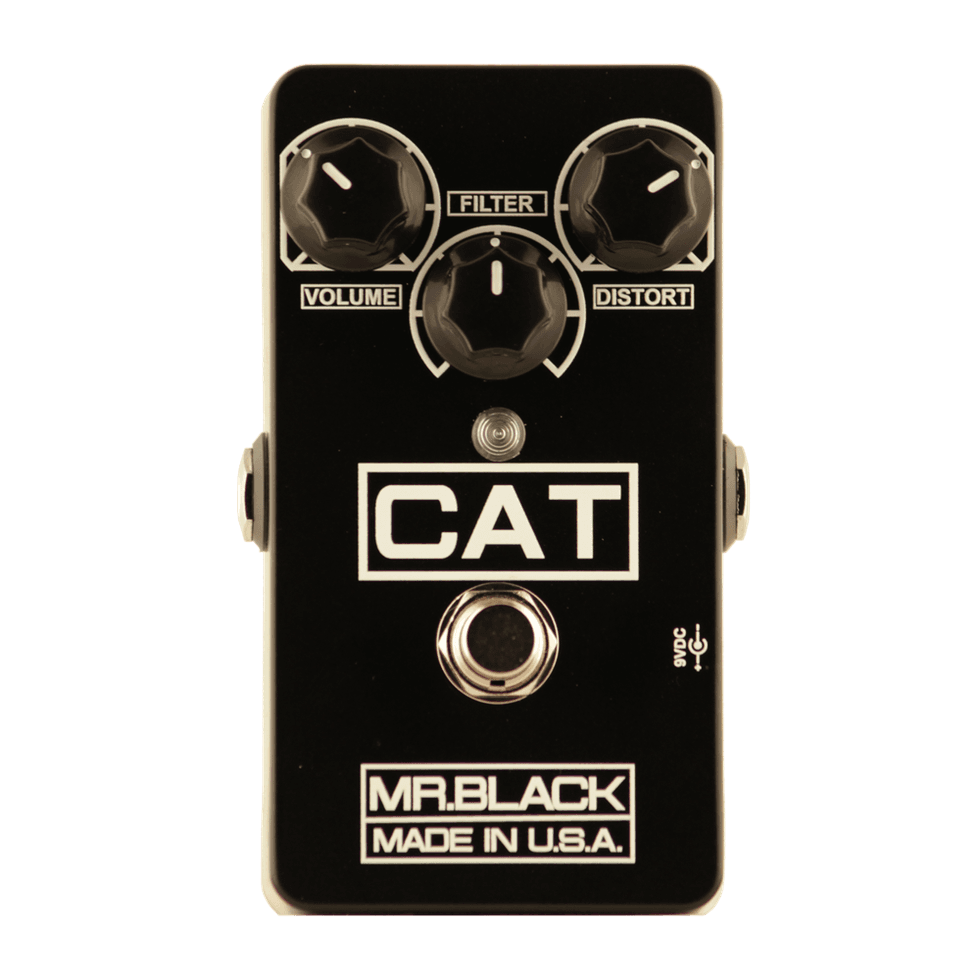
Hand built one-at-a-time in Portland, Oregon U.S.A. the CAT Distortion doesn’t just growl, it hunts.
Key features:
- 100% pure-analog high-gain distortion
- Classic vintage tone with fully re-engineered circuitry
- Loads of volume on tap with tuned low-z output
- Powered by “Industry Standard” 9VDC or internal 9V
- Gentle 9mA current draw
Mr. Black’s CAT Distortion carries a street price of $149.95. For more information visit www.mrblackpedals.com.
Joe Satriani and Steve Vai: Full Circle
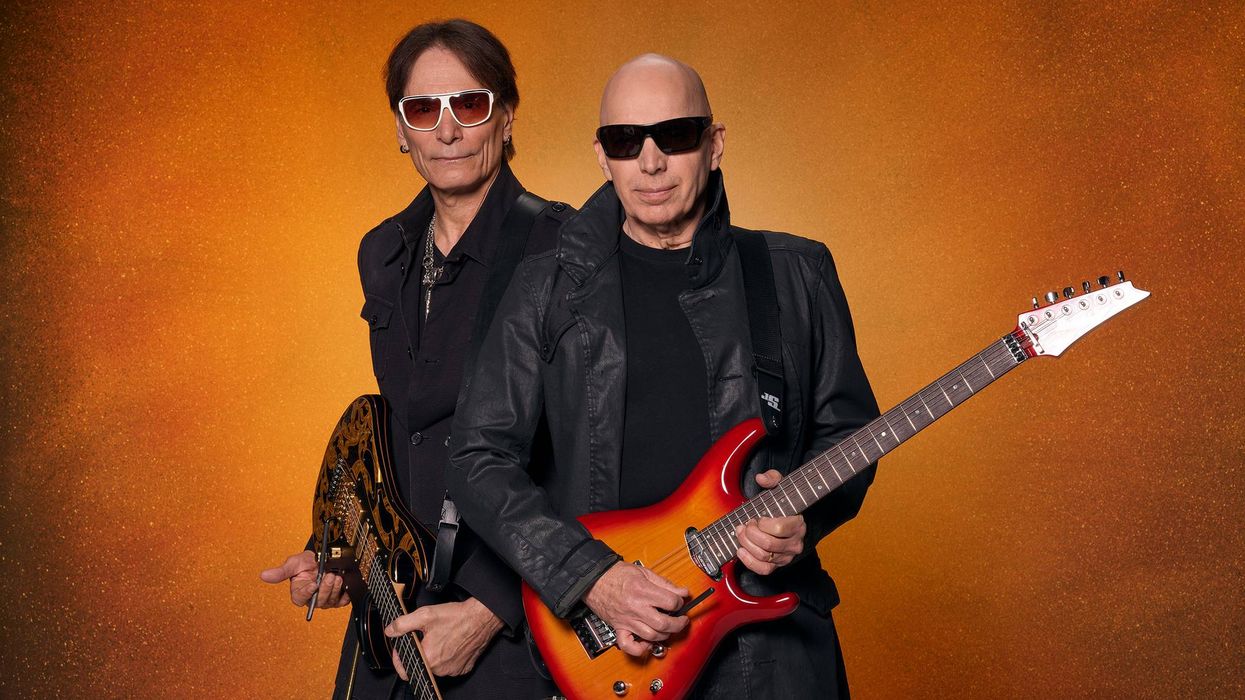
Joe Satriani and Steve Vai have been in each other’s orbit for half a century—as teacher and student, tourmates, and friends. With The Sea of Emotion, they've finally made an album together.
The last song on Joe Satriani and Steve Vai’s first album together begins with the oldest thing on it, a recording made in a teenage Satriani’s bedroom in Carle Place, Long Island, sometime in 1973. More than 50 years later, neither of them can tell you who’s playing what on it.
“The recording is pretty flat,” Satriani says. “There’s no low end, there’s no high end. And there’s a lot of personality in those areas. You can tell the way people play. But it’s just this sort of midrange thing going on.”
The 1973 recording is called “Reflections on a Year and a Half,” the year and a half in question being how long Vai had been playing guitar at the time it was made. He was still turning up weekly for lessons from Satriani, a few grades ahead of him at Carle Place High and also his guitar teacher, in a bedroom that he describes five decades later with the reverence of a 13-year-old.
“It was a glorious teenage bedroom,” Vai says. “It had all the greatest posters and albums stacked up all over the place.” In one corner was a two-track, reel-to-reel tape machine. “I would just ogle at it.”
“I think it was a Sony,” Satriani says.
“It was a Sony,” Vai continues. “And then one day Joe said, ‘Hey, let’s record.’ So Joe showed me this riff, and he was playing with some chords…”
“…every time I hear it, I still can’t figure out who’s who,” Satriani says with a laugh.
Fifteen years or so after the fact, Satriani mailed the reel to Vai, who transferred it and then did nothing further with it for a very long time. What brought it back out was this new album, and specifically an email from Satriani containing two pieces of music, which eventually became two new Satriani-Vai songs, “The Sea of Emotion, Pt. 1” and “The Sea of Emotion, Pt. 2.” Vai had an idea for a third. “I just got the idea, oh, I’m gonna take this little snippet of us both playing when we were kids, basically, and start the song and embellish the riff,” Vai says. “Try to make a song out of it.”
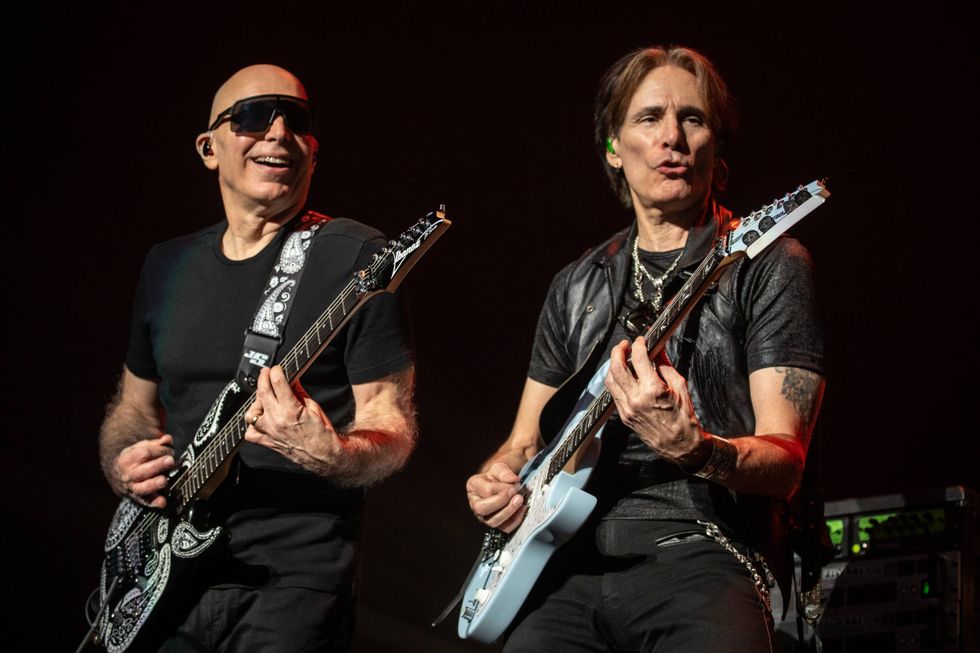
The song that resulted is “The Sea of Emotion, Pt. 3: Reflections on a Year and a Half,” and it closes the new record, which is also called The Sea of Emotion, and is officially credited to SatchVai. All of which means that an album made better than half a century into one of the most thoroughly documented friendships in the history of the instrument starts its final track with two Long Island kids and a tape machine that neither of them can identify himself on—and then builds the rest of the song out of what they were playing.
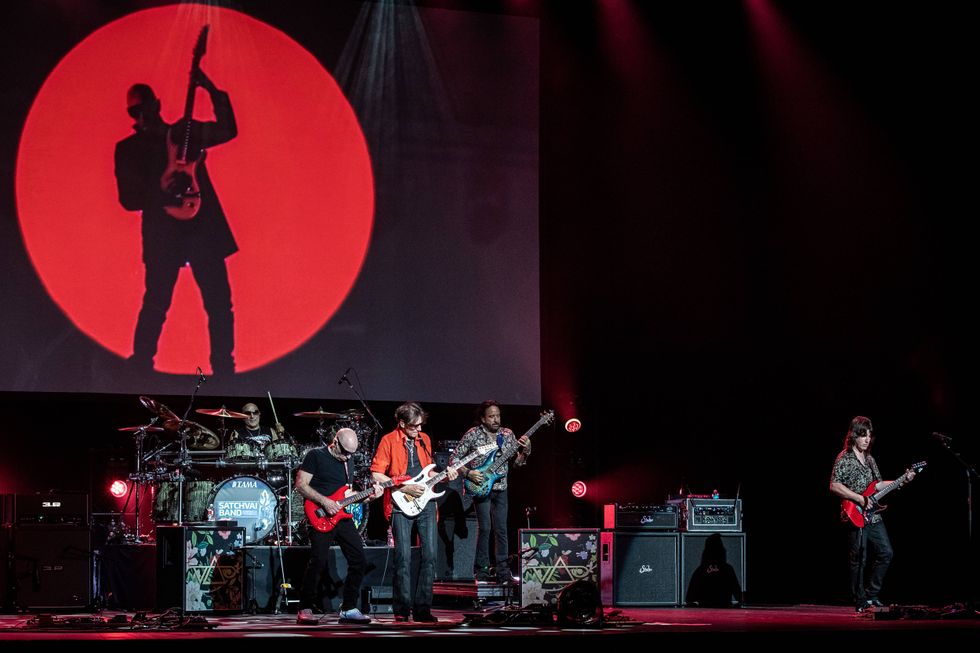
The Sea of Emotion is the first album Satriani and Vai have made together, which is a strange thing to consider given these two players’ careers have been entangled since one of them was 12 years old (the other was a ripe old 16). They’ve toured together, on and off, for three decades under the G3 banner, turned up on each other’s records, and shared magazine covers going back to the 1980s, but until the formation of the SatchVai Band—the two of them plus guitarist Pete Thorn, bassist Marco Mendoza, and drummer Kenny Aronoff—they had never actually been in a group together. And until now, they had never written an officially-released song together as adults.
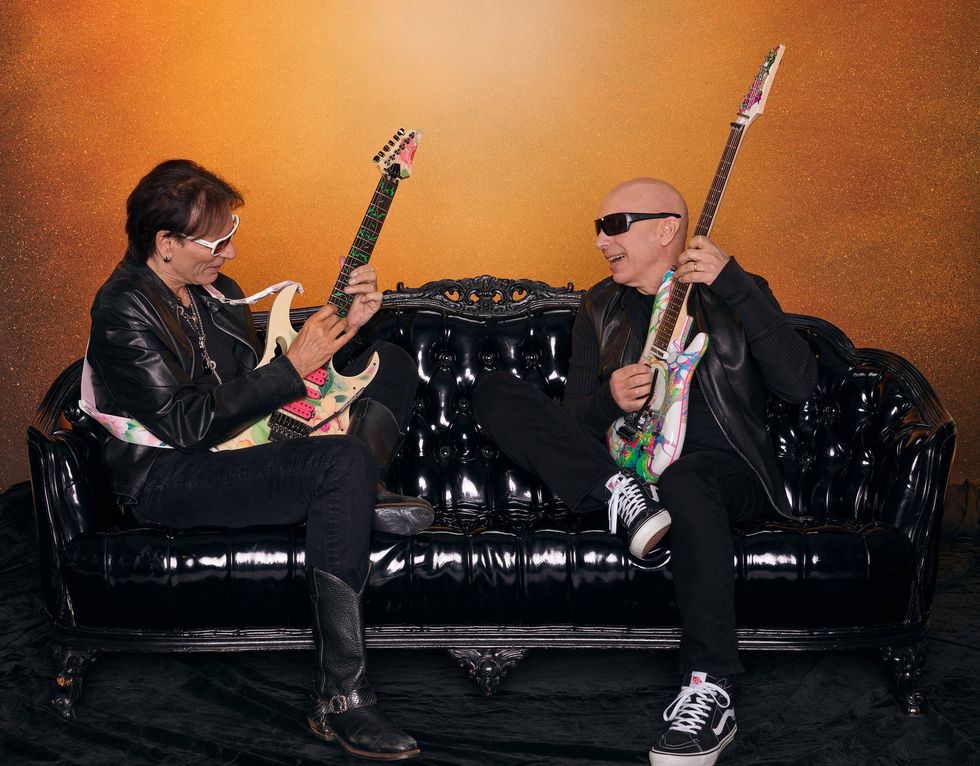
While the SatchVai Band is a touring proposition, the record itself was cut with a rotating cast of musicians drawn from both players’ inner circles, with Gregg Bissonette, Jeremy Colson, Aronoff, Matt Chamberlain, and Mike Mangini trading off behind the kit and Billy Sheehan, Bryan Beller, Philip Bynoe, Matt Bissonette, Mendoza, and Henrik Linder handling the bass. The album takes its title from a field on the Carle Place school grounds where Joe and Steve used to go after dark to talk, memorialized in the suite that takes up the final three tracks. By the time The Sea of Emotion hits streaming services and store shelves, Satriani and Vai will have spent a spring playing a good deal of it live, on a 40-date North American run that also featured openers Animals as Leaders. (We’re talking backstage at one of the stops, in Durham, North Carolina, a few hours before doors open.)
Arguably, none of this would have happened without Satriani’s filmmaker son, ZZ, who called him a few years back about documenting what was then the 25th anniversary of the G3 tour, an idea that turned into a reunion tour with Satriani, Vai, and Eric Johnson—the same three who had headlined the inaugural G3 run in 1996. Afterward, Joe and Steve decided to keep going, with nothing more ambitious in mind at that point than maybe cutting a track together and playing some shows.
“We were so busy,” Satriani says. “We had finished the G3 reunion, and then we realized we weren’t going to be able to continue with G3, and we decided, well, Steve and I’ll go out. And the idea was to also do a track. But we still had work that was booked immediately, so we were either on the road with somebody else, or we were at home in our studios going, ‘I’ve got eight hours to come up with something and send it to the other guy.’”
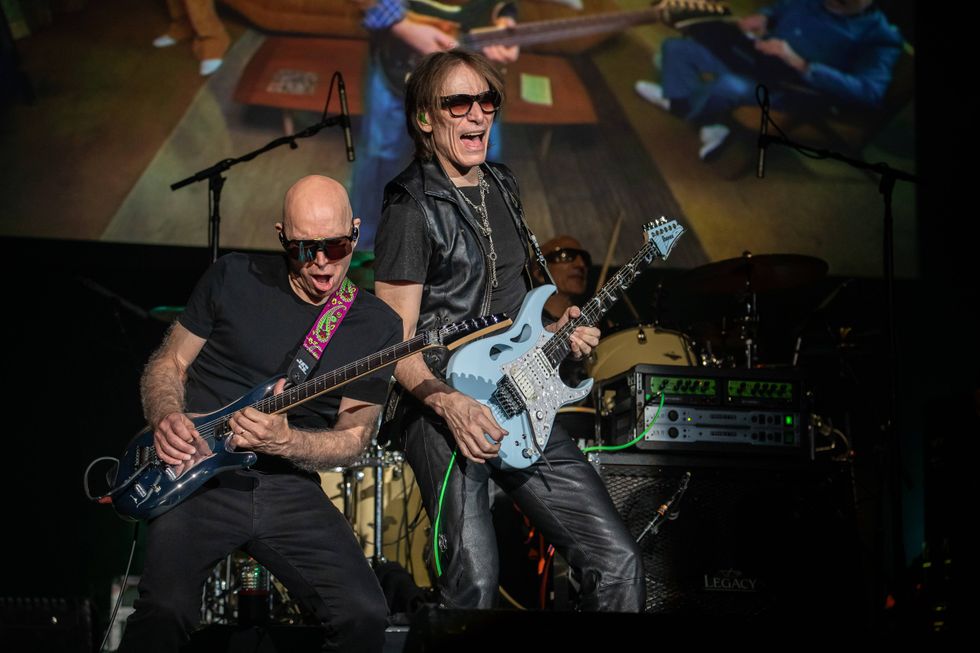
Despite the time crunch, the ideas started flowing. To the point, eventually, where they found themselves working on an album. “We had probably 17 relatively roughed-out ideas,” Vai says. “And then it comes that time where you’ve gotta cut off one of your toes, you know? And you just start hacking at the songs. But it went very seamlessly. We kind of resonate similarly like that—’How does this record feel? What is it missing?’”
Before they could answer those questions, they hit the road together as SatchVai—first in America and then across Europe. These runs were, as far as the album was concerned, a hiatus. “I like a bit of solitude to get away from influences,” Satriani says. “And when you’re on tour, it’s just nothing but influences—especially our tour, because we’re improvising onstage every night. You can’t be locked into your own writing mode.”
“It’s remarkable to me how Joe has just been a profound figure in my life through my whole life.”—Steve Vai
Once they were home, they approached the material with fresh ears, and with the experience of having played together night after night. “We’re slowly going, ‘Oh, that song’s not gonna work. It’s the wrong character.’ That kind of thing,” Satriani says. “And then there were other songs that started to get written and sort of snowball, and you go, ‘Wow, that song that we didn’t think was a winner is just turning into this huge thing.’ So that was a nice surprise.”
Co-writing isn’t something Vai does much of, and he says so himself. “I usually don’t do that. I like being the master and commander of my own ship. But Joe has such a great ship.”
For 50 years he had been listening to Satriani’s playing as a fan, but what changed here is that there were now stakes attached. “Okay, we gotta get down to business,” Vai recalls. “We have to impress each other. And we have to raise our bar the best we can. And for us, that means better, more effective melodies. And of course you want to try to up the technique game. But the real fun for me was when the emails would come in…”
One song, “The Feeling I Know,” started as a voice memo on Vai’s phone of some chord changes he liked, which he sent over and got back with what he calls “this beautiful samba-esque Lydian thing” on top of it. “And then we went, ‘Oh, chop this up here.’ ‘What about a melody there?’ ‘Okay, you do that melody there, I’ll put the harmony and then I’ll do this here.’ And it was very seamless. I’ve never had an experience like that,” Vai says.
“And what I also noticed was, yes, we are different musically. We reach for different [sorts] of notes at times. But there was almost an intrinsic understanding—yes, this will work. No, this won’t work. It got to the point where I would go to think about doing something and I would have an instinct whether he was going to like it or not. And my only fear was that he would say yes to something that he actually didn’t like. But then, I know Joe better than that. He’s not that—”
“—nice,” Satriani cuts in.
“No,” Vai says with a laugh. “He’s not that guy.”
Which tracks, given that this is the same teacher who once sent a 13-year-old Vai home early from a lesson for not memorizing the notes on the fretboard—and still made Steve pay for the session.
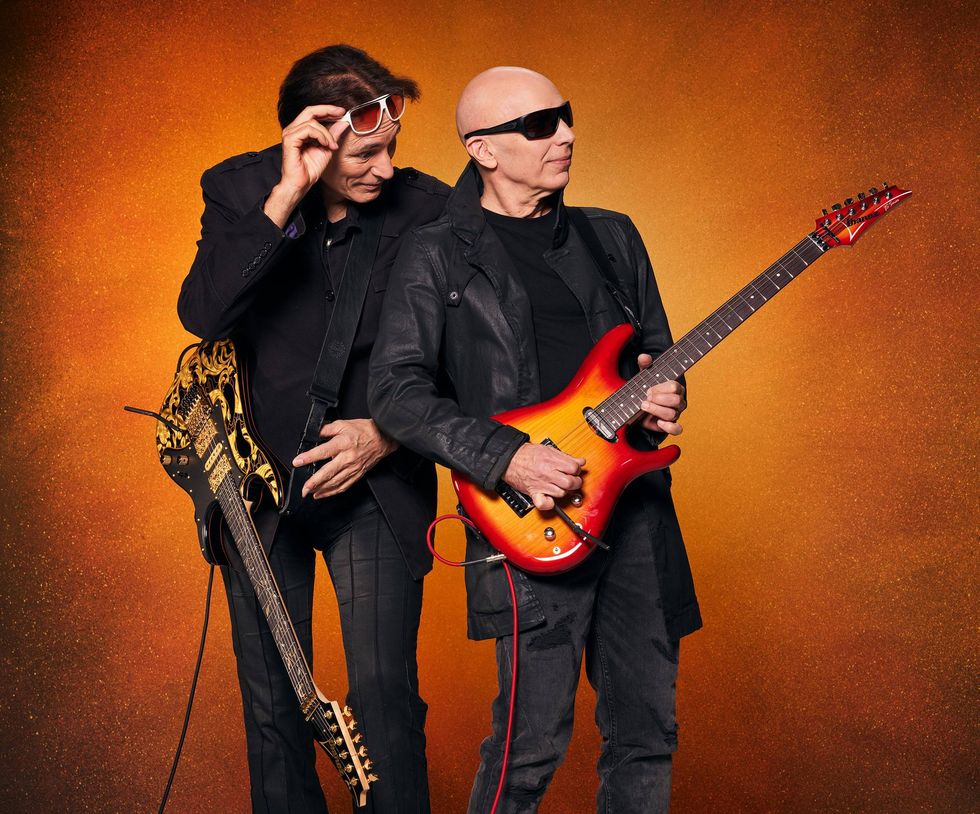
At one point Vai sent Satriani a video of the Italian singer-songwriter Paolo Conte performing “Dancing,” a song the two of them went on to cut for the record. “That [song] is something I would never do,” Satriani says. “I’d probably hear it walking down the hallway somewhere and never stop to say, ‘Who is that?’ But knowing Steve, I thought, well, he wouldn’t be attracted to it unless he heard something really outrageous. And sure enough, when the session arrives and I hear 15, 20 guitars playing all those horn parts, that’s when I know—ah, he did have a vision. He’s not crazy.” Satriani laughs. “He’s not totally crazy.”
Vai also sent over “Bronco Freight Train,” but was unsure of where it was heading. Satriani had no such doubts. “As soon as I heard it, I thought, well, this has to be on the record,” he says. “And he sent it like, ‘I don’t know about this thing, this isn’t really a song yet.’ And I’m like, are you crazy? Don’t call me, ’cause I’m working on it right now.”
“I liked the core, I liked the guitar effect, and I liked the bridge,” Vai says. “And Joe just whacked the whole rest of the song and rebuilt the parts. I finally had somebody that I could really co-create with. And I’m sure there’s other people out there, but I never bothered to find them.”
The other key voice on the record belonged to producer and keyboardist Eric Caudieux, whose suggestions could be unusual, but tended to make the songs better. “He could just do the craziest things with these demos that we would send him,” Satriani says. “Changing whole passages that were in minor keys to major keys, and just assaulting our brains.” He was also the one who cut those guitar-generated horn parts out of “Dancing,” telling Vai they weren’t authentically him. Vai pushed back, but ultimately wound up agreeing it was better that way.
“Knowing Steve, I thought, well, he wouldn’t be attracted to it unless he heard something really outrageous.”—Joe Satriani
The rest of the record covers a lot of ground. Opener “Mayhem” came from Satriani, built on a riff he wrote in his home studio and sent over half-apologizing for how adolescent it was, and which Vai answered by doubling his own lines alongside Satriani’s solo. “Zoot Suit Riot,” with Mike Keneally on keys, was something of Vai’s that he thought had an “odd groove,” and had been sitting around for a while until Satriani helped finish it. The riff on “Old Sins Have Long Shadows” was Satch’s as well, with a groove inspired by Buddy Miles’ drumming on Hendrix’s “Machine Gun.”
Guitar-wise, Satriani primarily stuck to his signature Ibanez JS models on most of the record, while Vai’s workhorses were two signature Ibanez Jems: FLO, which is slightly scalloped and equipped with a Fernandes Sustainer unit, and REVO, which he says is wired similar to a standard Jem. Both are loaded with DiMarzio Evolutions in the neck and treble positions. Interestingly, Satriani cut all his guitars direct, via TONEX, SansAmp, and Brainworx SE100 plugins, and Vai used plugins for most of his parts, too—a variety of Neural DSP Archetypes, a prototype Neural DSP Vai plugin, and a SansAmp. The one exception in the amp department is “The Sea of Emotion, Pt. 3,” where Vai used his live touring rig.
On paper, what Satriani and Vai have in common is technique—fast, difficult, incredibly complex playing. But go back to the two kids in Carle Place and the thing they actually shared was composition. Both of them were writing music, and thinking seriously about writing music, at an age when most kids just want to play riffs and solos—and look cool doing it.
Both credit the same man for it: Bill Westcott, their music theory teacher at Carle Place High who, as Satriani puts it, could “make anything sound like Bach or Chopin or Gil Evans.”
“I have great memories of him just sitting down at the piano with me and saying, ‘Now, Joseph, listen to this,’” Satriani says. “And he put one hand here and he goes, ‘You hear those two chords? They can go together. And when they go together, you add up the notes, and then those are the notes you can use to play on top of the chords.’”
“Jazz was born,” Vai says.
Westcott also told them each something they still go back to. “He specifically said it to me one day, ‘Your brain will keep developing as a musician after all these points where you figure out that maybe your hands don’t do this, and your fingers won’t do that, and you’re not hitting these technical milestones that you thought you were gonna hit. Don’t worry about it. It’s all what happens up here [in your head]. So learn to write away from your instrument,’” Satriani recalls. “And we both got that. Whenever he told us separately, we both agreed and said, ‘He’s right, we’re gonna follow that.’”
There wasn’t much precedent for what the two of them would go on to do with any of it. Instrumental rock songs existed, but instrumental rock artists—players whose catalogs were instrumental and categorized as rock rather than, say, fusion—weren’t really a thing. The closest thing was Jeff Beck, and Beck had made his name in bands, playing three-minute songs. Vai dates the start of it precisely, and not to himself.
“It wasn’t until Surfing with the Alien,” he says. “And I wasn’t surprised when I heard it, because I knew that Joe had a pull toward pop, simple pop. I would listen to the Squares [Satriani’s late ‘70s/early ‘80s power-pop trio] tape that he sent me when he was in the band, and it was this intense, raging guitar being played in a pop format. There wasn’t anything to stack it against. And then when I heard [Satriani’s 1986 full-length solo debut] Not of This Earth, I said, ‘Okay, something is really forming here.’”
He continues. “And once Surfing came out, it felt like the perfect amalgamation between Joe’s polished, classical musical ear, the culmination of an evolution of guitar technique in the fingers, and a sense of the absurd coupled with pop sensibility. It was a perfect storm. And that was really, to me, the first instrumental rock guitar record.”
Vai also thinks some younger guitarists draw the wrong lesson from it. “A lot of young players feel that there was a time when instrumental rock guitar was popular and you could get signed, but it’s not now. ‘You were lucky, I’m not.’ But they’re missing the point. He created it. It’s not because it sits under the moniker of instrumental rock guitar. It sits under the moniker of inspired melodic energy.”
For Vai, all of it goes back to the field behind the school and the bedroom with the Sony in the corner. “It’s remarkable to me how Joe has just been a profound figure in my life through my whole life,” he says. “Joe always represented excellence. Just excellence. Like, this melody is written by an inspired person. Everything I hear, everything I see. Now, it could be from my perspective as a kid that was ogling at his teacher. But now it goes beyond that. I had many teachers. I’ve seen many guitar players, I’ve played with a lot.”
What’s most striking about The Sea of Emotion, in the end, are those inspired melodies. It isn’t the speed, it isn’t the near-impossible feats of agility, it isn’t the technical dazzle—it’s that the record is musical.
“It has to be,” Vai says. “If it isn't, you’re a novelty.”
Joe Satriani Gear
Guitars on The Sea of Emotion:
Ibanez signature JS Series models (JS1CR, GD, Paisley, MCR)
1958 Fender Esquire
Taylor 714ce-N nylon-string acoustic
Guild F-512 acoustic
Jerry Jones Electric Sitar
1972 Fender Precision Bass
Amps on The Sea of Emotion:
All guitars recorded DI with plugins:
IK Multimedia TONEX
Tech 21 SansAmp
Brainworx Suhr SE100
Effects on The Sea of Emotion:
Vox Joe Satriani JSWH Big Bad Wah
Roger Mayer Voodoo-Vibe
Live Amps and Effects:
3rd Power DRGN 100 Custom Shop heads
3rd Power DRGN 412 cabinets
Fender Tone Master Pro
Vox Joe Satriani JSWH Big Bad Wah
MXR EVH117 Flanger
Voodoo Labs Proctavia
TC Electronic Sub ’N’ Up
Strings:
D’Addario EXL110 and EXL120
Picks:
D’Addario Joe Satriani Satch Grip, Extra Heavy
Steve Vai Gear
Guitars on The Sea of Emotion:
Ibanez Jem “FLO” (slightly scalloped, older Fernandes Sustainer)
Ibanez Jem “REVO” (standard Jem spec, DiMarzio Evolutions in neck and treble positions)
Ibanez Jem “EVO”
PRS Dave Navarro signature (for rhythm tones)
Fender Custom Shop ‘57 Stratocaster reissue
Ibanez custom doubleneck “Glorious” (lower fretless neck with Sustainer; used for fretless part on “Old Sins Have Long Shadows”)
Amps on The Sea of Emotion:
All guitars recorded with plugins, except “The Sea of Emotion, Pt. 3: Reflections on a Year and a Half,” which was cut using live touring rig.
Neural DSP Archetype: Nolly X
Neural DSP Archetype: Gojira X
Neural DSP Archetype: Plini X
Neural DSP Archetype: Abasi
Neural DSP Vai (prototype)
Tech 21 SansAmp
Live Guitars:
Ibanez Jem “REVO”
Ibanez Jem “FLO”
Ibanez Universe UV7BK “J.R.” (drop A, .009–.056; for “Zeus in Chains”)
Ibanez Universe “Bruno” (drop A, .009–.056; for “Zeus in Chains”)
Ibanez JSM100, refinished and dipped by David Bonvillain
Ibanez PIA77BON2 Gold Filigree (black and gold baroque-style gold leafing)
Ibanez LACS (Los Angeles Custom Shop) PIA, Olympic White (slightly scalloped, Sustainiac)
Live Amps and Effects:
Synergy SYN2 preamps with Steve Vai VAI and BMAN modules
Fractal Axe-Fx III Mark II Turbo
Fryette LXII power amps
3rd Power 4x12 cabinets
Celestion Vintage 30 speakers
MIDI Solutions T8
Furman power conditioners
Dunlop 95Q Cry Baby Auto Wah
Ibanez Jemini Distortion
DigiTech Whammy DT
MXR Phase 90 (script logo)
Xotic EP Booster
Strings:
Ernie Ball Paradigm Slinky (.009-.042 and .010-.046)
Straps, Pickups, Pots, & Cables:
DiMarzio
Picks:
InTune GrippX (1.14mm and 1.5mm)
Guitar Center Honors PRS Guitars Founder Paul Reed Smith with Rockwalk Induction
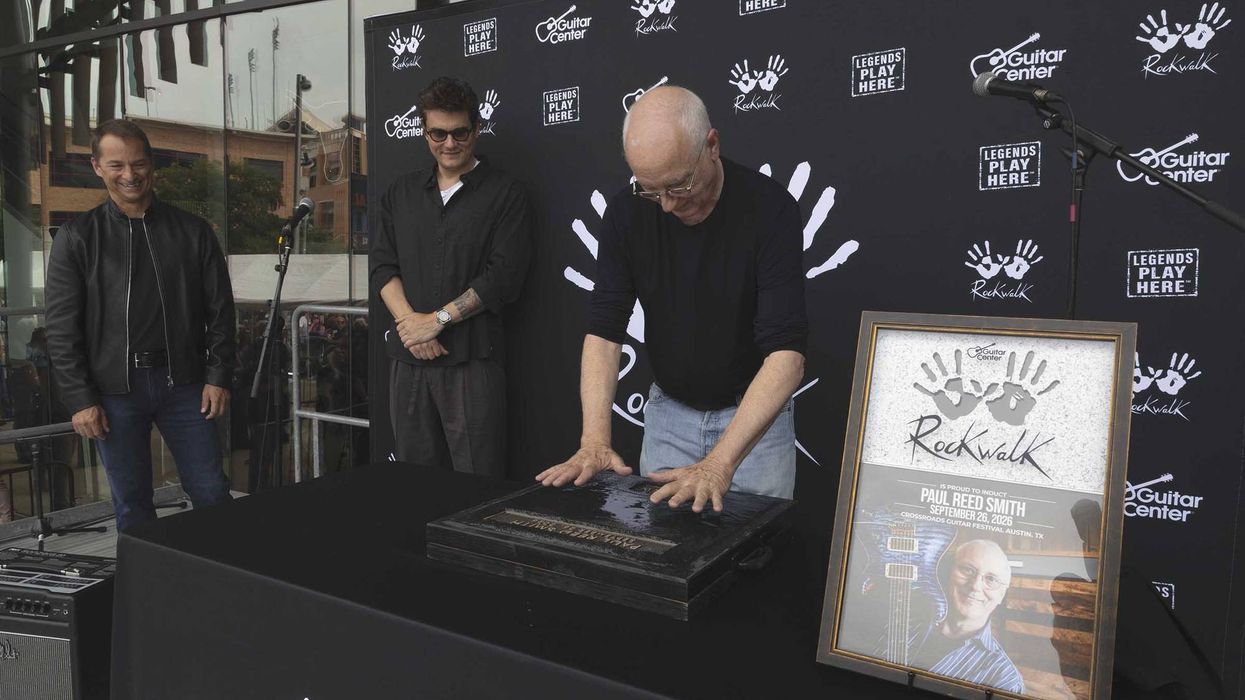
Guitar Center honored Paul Reed Smith, founder and managing general partner of PRS Guitars, with an induction into the famed Guitar Center Rockwalk on Saturday, September 26, during Eric Clapton’s Crossroads Guitar Festival 2026 in Austin, Texas. The honor recognizes Smith’s five decades of craftsmanship and innovation as a guitar maker, from his early work building instruments for artists including Carlos Santana and Peter Frampton to founding PRS Guitars in 1985 and building it into one of the world’s leading guitar manufacturers.
Founded in 1985, PRS Guitars has grown from Smith’s one-man pursuit into the third-largest electric guitar manufacturer in the United States, establishing a modern guitar company with its own unmistakable identity, design philosophy and following. Along the way, PRS instruments have become part of the musical identities of influential players across generations and genres, including Carlos Santana, John Mayer and Mark Tremonti. Smith remains actively involved in designing and developing instruments today, continuing to experiment and challenge assumptions about what a guitar can be.
Smith’s journey embodies what Guitar Center’s Rockwalk was created to celebrate: musicians, innovators and industry pioneers whose talent, ingenuity and contributions have changed the trajectory of music and made a lasting impact on music culture.
“Paul is obsessive about building the perfect guitar—and I mean that as the highest compliment. He has spent his life questioning every assumption about how a guitar should sound, feel and perform, and then doing the hard work to make it better. That obsession has materially moved the electric guitar forward and raised the bar for the entire industry,” said Gabe Dalporto, CEO of Guitar Center. “Paul is a living legend whose influence spans generations of musicians and instrument makers, and we’re proud to honor him with a place in Guitar Center’s Rockwalk.”
The induction took place at the Dell West Plaza on the Rockwalk Stage during Eric Clapton’s Crossroads Guitar Festival 2026, beginning with a live performance by Isaac Holmes. Guitar Center CEO Gabe Dalporto opened the ceremony before John Mayer introduced Smith for his induction. Smith then addressed the audience and commemorated the honor by placing his hands in cement as part of Guitar Center’s traditional Rockwalk ceremony. Smith’s handprints will travel back to Hollywood, where they will be permanently installed in Guitar Center’s Rockwalk outside its flagship store on Sunset Boulevard.
Holding the induction during Crossroads celebrated the full ecosystem of guitar culture, bringing together builders, players and fans around a shared appreciation for the guitar and the people shaping its future. Smith’s career has been deeply connected to working musicians, from Carlos Santana’s early support of PRS to his longstanding collaboration with John Mayer and other influential players. Mayer’s role in the induction reflected that relationship and Smith’s approach to guitar making: listening closely to musicians and working with them to rethink what an instrument can be.
“This is a truly special day. I am thankful to Gabe and the entire team at Guitar Center for presenting this. The Rockwalk is an iconic part of our industry, and to be part of that history is an honor,” said Paul Reed Smith. “There are many hands that have been involved in the journey. I’d like to thank everyone at PRS Guitars, past and present, along with the extraordinary musicians that continue to inspire and drive us every day. To have our longtime collaborator John (Mayer) give such a moving speech just made it all the more exceptional."
Smith’s induction continues Rockwalk’s tradition of honoring not only performers, but pioneering builders and innovators including Les Paul, Jim Marshall and Robert Moog, whose innovations gave musicians new ways to create, alongside legendary artists such as Eric Clapton, John Lennon, Stevie Wonder, Aerosmith, Jimi Hendrix and Johnny Cash.
Founded in 1985, Guitar Center’s Rockwalk is dedicated to honoring the musicians and industry pioneers whose exceptional talent, innovation and creative ingenuity have shaped the evolution of music. Located at Guitar Center’s flagship Hollywood store, Rockwalk has recognized more than 150 legendary artists and innovators.
The Edge's Sound Without the Edge's Rig: Amps, Delay, Drive & Pick Tricks
You don't need a stadium rack to sound like the Edge. PG Contributor @TomButwin breaks U2's guitarist down to the pillars of his sound: a cranked Vox, dual delays running into the amp's front end, a transparent overdrive, a Gibson Explorer, and a right hand that doesn't miss.
Instead of trying to clone The Edge's rig, which changes constantly and is far bigger than most of us will ever run, he builds the foundation.
The Vox AC15 Hand-Wired does most of the work, set to the top boost channel. The Eventide H9 Harmonizer Gen 2 handles both delays and runs into the amp's front end, the way the Edge does it. A Mr. Black Deuce Coupe drives the amp without coloring the tone, and it cleans up off the guitar's volume knob. Then Tom gets to the '70s Explorer, (thanks @sweetwater !) the accuracy the Edge's parts demand from your picking hand, and a pick trick you'll want to steal.
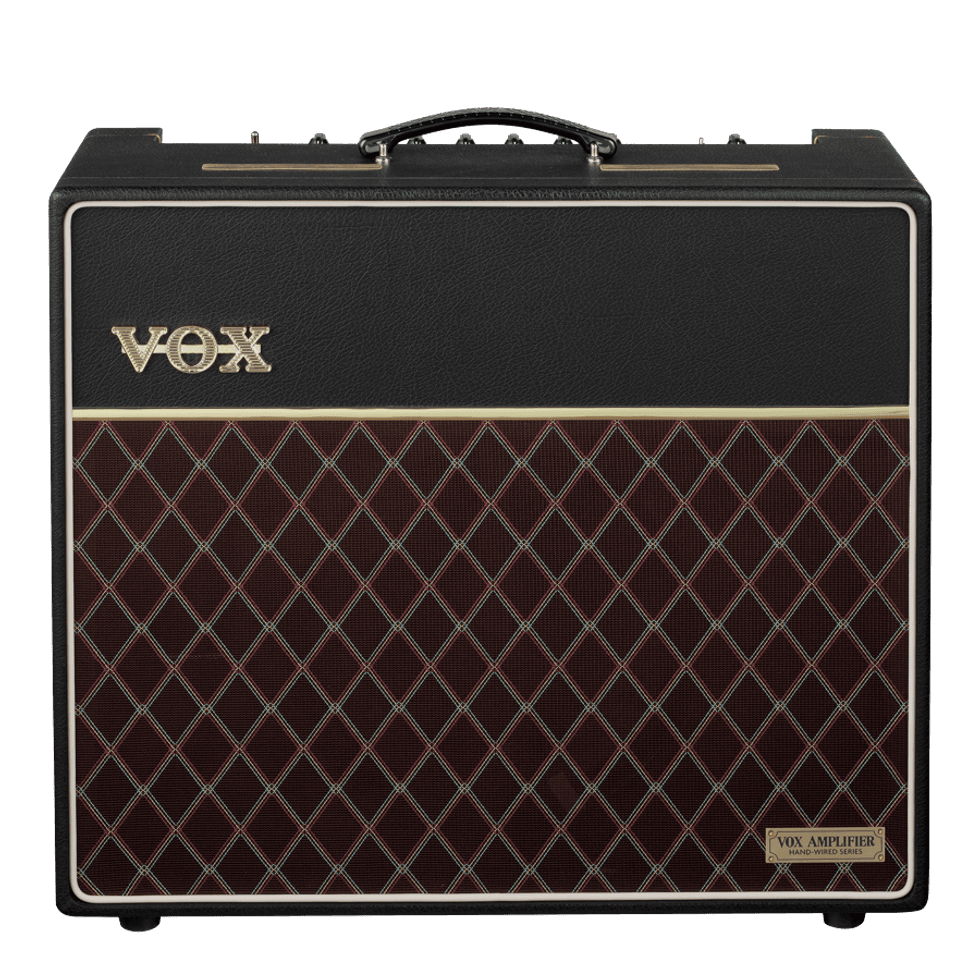
AC15HWR1X
Few amplifiers have shaped music history like the VOX AC15. With the AC15 Hand-Wired, that legacy lives on – reborn with painstaking attention to vintage accuracy and updated with modern refinements that make it stage- and studio-ready.
This is more than a reissue. It's a complete reconstruction of a vintage legend – hand-wired and fine-tuned to bring the '60s sound back to life. Featuring hand-wired circuitry, custom transformers, and vintage-accurate cabinet construction, this amplifier aligns classic British tone with modern necessities including bypass-able master volume, a transparent effects loop, and custom-voiced spring reverb.
Now, the unmistakable sound of a vintage VOX is finally within reach. Built for vintage enthusiasts, aficionados, and modern players alike. The AC15 Hand-Wired delivers the unmistakable voice of VOX!
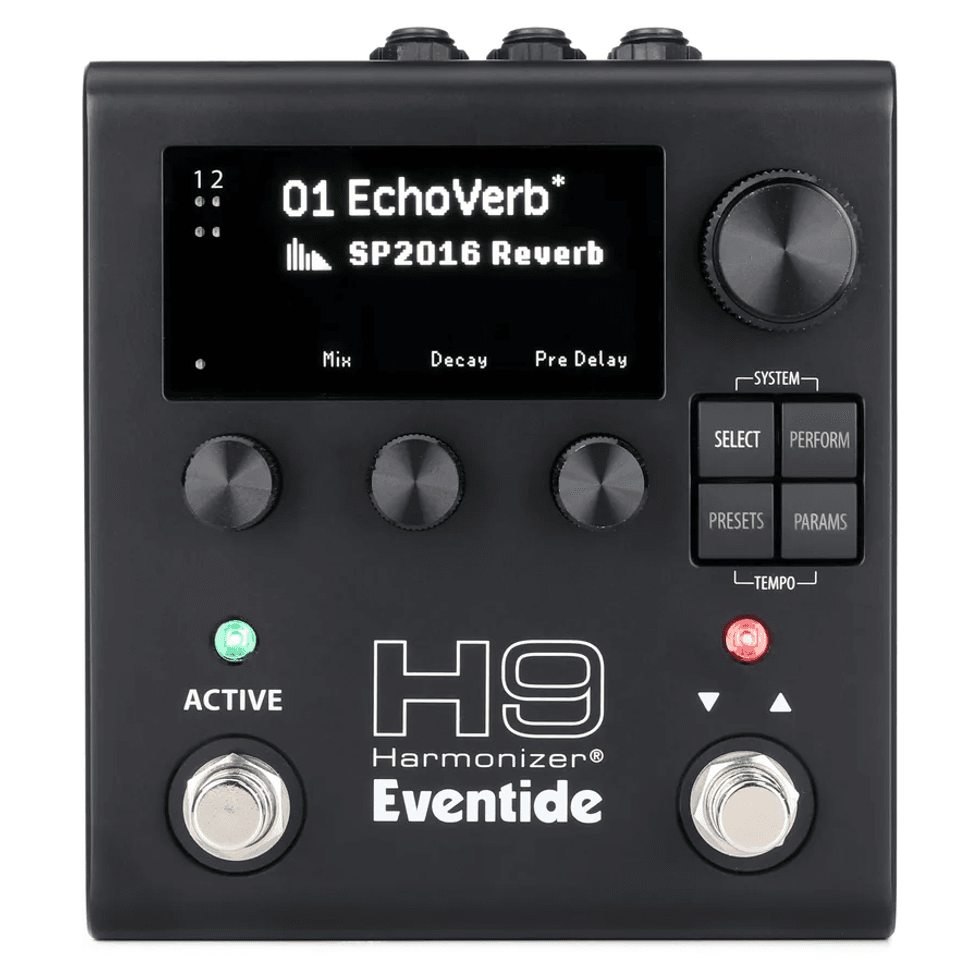
H9 Harmonizer® Gen 2
The H9 Harmonizer Gen 2 brings Eventide’s iconic multi-effects pedal into a new era, delivering studio-quality sound and creative flexibility in a compact, performance-ready format. Building on everything players loved about H9 Max, it expands the platform with the full H90 algorithm lineup, modern ARM processing, and a faster, more intuitive workflow for stage and studio rigs. It includes the full 74 algorithm lineup found in the H90, including all 5 2 original H9 Max algorithms, spanning delay, modulation, reverb, pitch shifting, granular, Harmonizer+ vocal FX, looping, and much more.
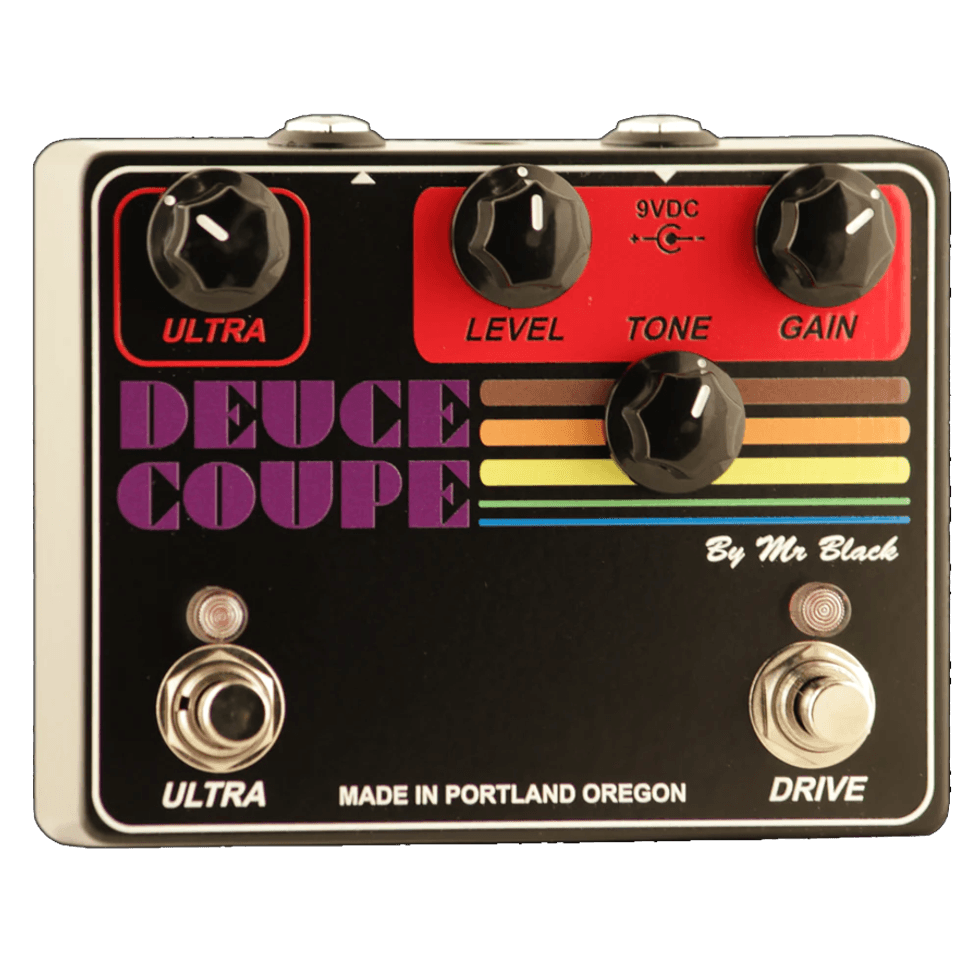
Deuce Coupe
From its initial release in late-2011, the Deuce Coupe shattered what was to be expected in an overdrive pedal, fully delivering on the promises of “amp-like response”, “incredible dynamic content”, “detailed articulation”, “high head-room”, and “uncolored tone.”
Unique and novel topology, meticulous tuning and calculated, deliberate electronic design practices granted Jack Deville the ability to create and deliver what became a true cult-classic. While many overdrive pedals sound good, and some even great, very few offer the astonishing clarity, natural feel, and dynamic response that the Deuce Coupe so effortlessly delivers.
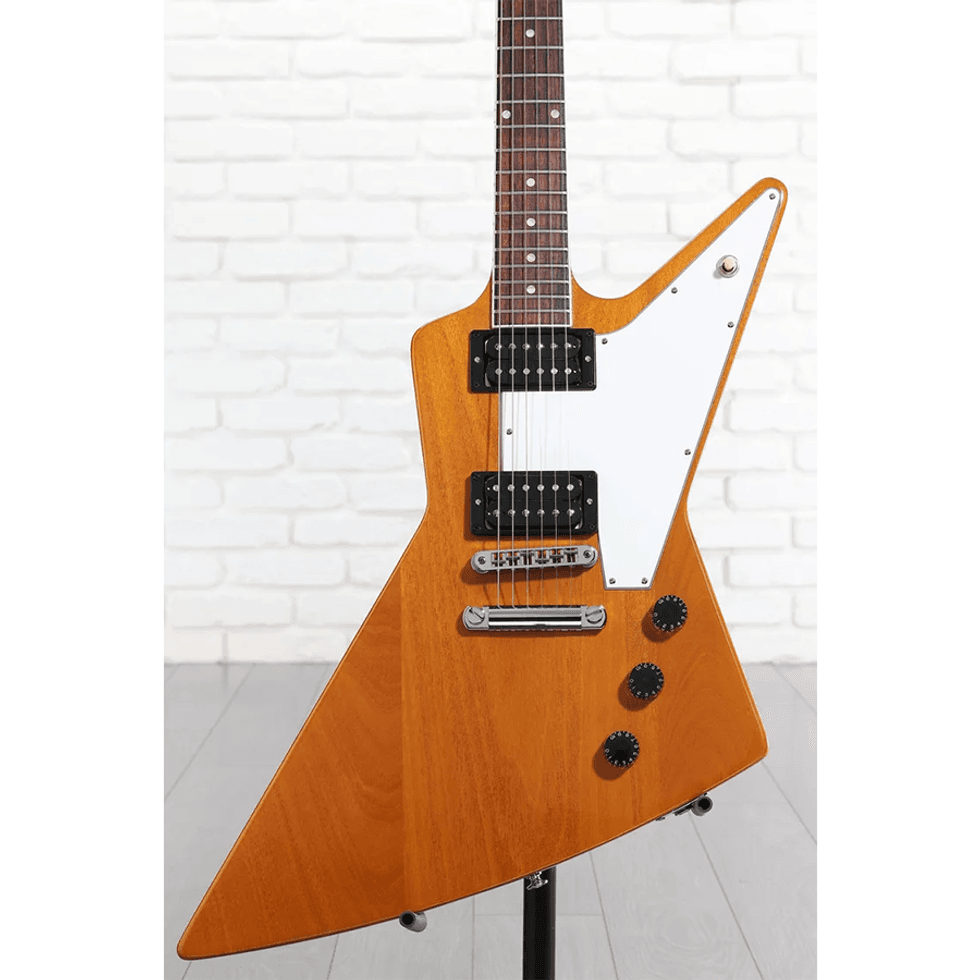
70s Explorer
Armed with an iconic angular body and eye-grabbing hockey-stick headstock, this Gibson ’70s Explorer re-creates the trail-blazing axe that rocked a million stadiums. The Explorer’s resonant mahogany body and comfortable rosewood-topped SlimTaper mahogany neck offer a memorable playing experience night after night. Under the hood, twin ’70s Tribute Burstbucker pickups deliver a tight low end, complex midrange, and sweet highs to cater to rock and well beyond. To top it off, small touches like black speed knobs and chrome hardware give this solidbody electric guitar an arena-ready look. Add in the beautiful Classic White finish, and this Gibson '70s Explorer will be a great addition to any guitar collection!

Nexadyne 5
The Shure NXN5 guitar amp microphone is poised to change not only how engineeers mic guitar amps onstage, but how performers hear themselves in the mix. The secret? Shure's patented Revonic dual-engine transducer technology. This inventive technology utilizes two precisely matched transducers that provide an enormous range of acoustic optimization, maximizing specific frequencies and minimizing handling noise and mechanical vibration. This is how your amp was always meant to sound onstage! To boot, the integrated signal processing of the NXN5 produces a stronger output than traditional single transducer designs, thus eliminating the need for a traditional shockmount and corrective audio editing. It all equates to an ingeniously designed guitar amp mic that puts the playing characteristics of the performer first — a strategy that guitarists here at Sweetwater fully appreciate.
Graph Tech Introduces Two New 7-String Un-Lock Nuts
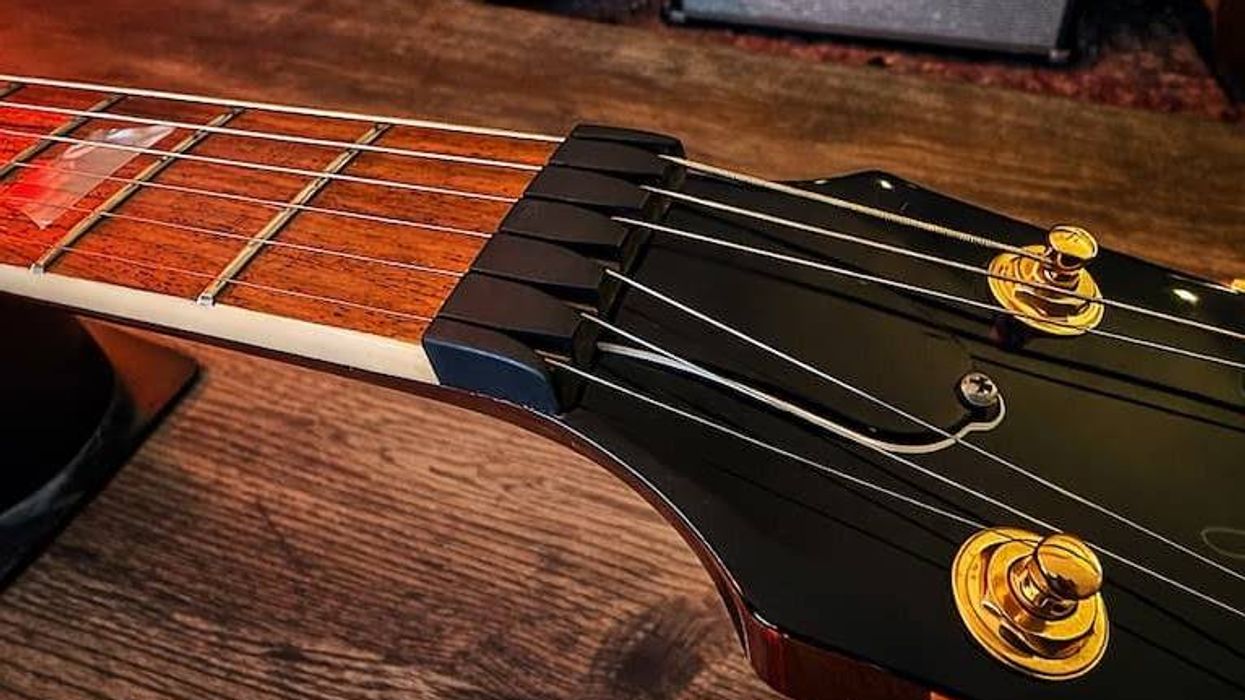
Graph Tech Guitar Labs has expanded its innovative Un-Lock Nut line with two new models designed specifically for 7-string electric guitars. The new Un-Lock Nuts replace traditional metal locking nuts with a pre-slotted, triple-lubricated Black TUSQ XL nut, eliminating the clamps, hex keys, added weight and everyday hassles associated with a conventional locking nut.
Designed for guitars equipped with double-locking tremolo systems, the 7-string Un-Lock Nut gives players excellent tuning stability while keeping the machine heads fully accessible. Players can tune normally, make quick tuning tweaks, and change a broken string quickly without unlocking clamps or reaching for an Allen key.
“Seven-string players often use different tunings and string gauges, so being able to tune at the machine heads and change strings quickly is a real advantage if they are using a tremolo stabilizer,” said Dave Dunwoodie, founder of Graph Tech Guitar Labs. “The Un-Lock Nut removes the unnecessary hardware and hassle at the headstock while giving players the tuning performance, tone and playability they expect from Graph Tech.”
The weight reduction is substantial: a traditional metal locking nut weighs roughly the same as four AAA batteries, while the Un-Lock Nut weighs about the same as one AAA battery.
Made from Graph Tech’s triple-lubricated Black TUSQ XL, the Un-Lock Nut features advanced slot geometry that helps the strings move smoothly through the nut. Its extended ramps distribute string stress more evenly, while the accurately matched radius and individually adjustable string heights allow for a precise setup. Players also benefit from smoother, easier string bending in the lower fret positions.
Both models are pre-slotted, accommodate most common string gauges and install without permanent modification to the guitar. As with any replacement nut, minor fitting and height adjustment may be required for the individual instrument.
The new Graph Tech 7-string Un-Lock Nuts are available now for $24.95 USD each through Graph Tech and authorized Graph Tech dealers.
King Buffalo Releases "Doomsayer" On December 4
King Buffalo releases Doomsayer, the Rochester-based band’s seventh album, on Dec. 4. via King Buffalo (North America)/Stickman Records (UK/EU).
A preview of the seven-song album arrives with today’s release of “The Slick and The Dead”
“Doomsayer originated in early 2026 out of many hours of jam sessions in our new studio space, playing around and seeing where it took us,” explains guitarist/vocalist Sean Roa, who also produced and mixed the album. “We didn’t really have an end goal in mind of what we were going for. We were simply exploring ideas and seeing what ended up speaking to us the most. So much has happened, both as a band and in our personal lives since our last record, that ended up becoming the inspiration to many of the lyrics on Doomsayer. I think as a result, this is some of our most upfront, direct and riff-driven work to date. We are incredibly proud of it and can’t wait for it to get out into the world.”
Four years on from Regenerator, King Buffalo returns with a record shaped by years of international touring and a deepening confidence in their own sound. Recorded in the new studio the band built themselves, Doomsayer finds the trio continuing to reach into the unknown, while bringing a greater sense of focus and intention to their sound. The experience they have gained on the road is evident throughout the album, both in the poise of the material and the confidence of their delivery. Like the pandemic trilogy that preceded it, Doomsayer was made at home, but the band’s new surroundings have given them the freedom to continue exploring and finding new ground, with a maturity they have earned one stage at a time.
Album pre-orders begin Friday, Sept. 25 at 12 noon eastern via Kingbuffalo.com. 50 test pressings of the 43-plus minute collection will be available, as well as a Deluxe Edition, limited to 750 copies on translucent emerald vinyl and including a hand-numbered insert, download code and polybag. The standard edition, limited to 1750 copies, arrives on purple opaque vinyl and includes a download code and polybag.
The band had previously announced a North American tour, kicking off on Oct. 29 in Boulder with support from L.A. Witch (Oct. 29 to Nov. 21, except Los Angeles), Doom Gong (Dec. 3 to 5 and Dec. 18), and Handsome Jack (Dec. 8 to 12). A European trek was announced this morning with Spirit Mother opening on all dates. The EU/UK leg is on-sale this Friday at 10 a.m. local time. Ticket links are available at Kingbuffalo.com/tour.
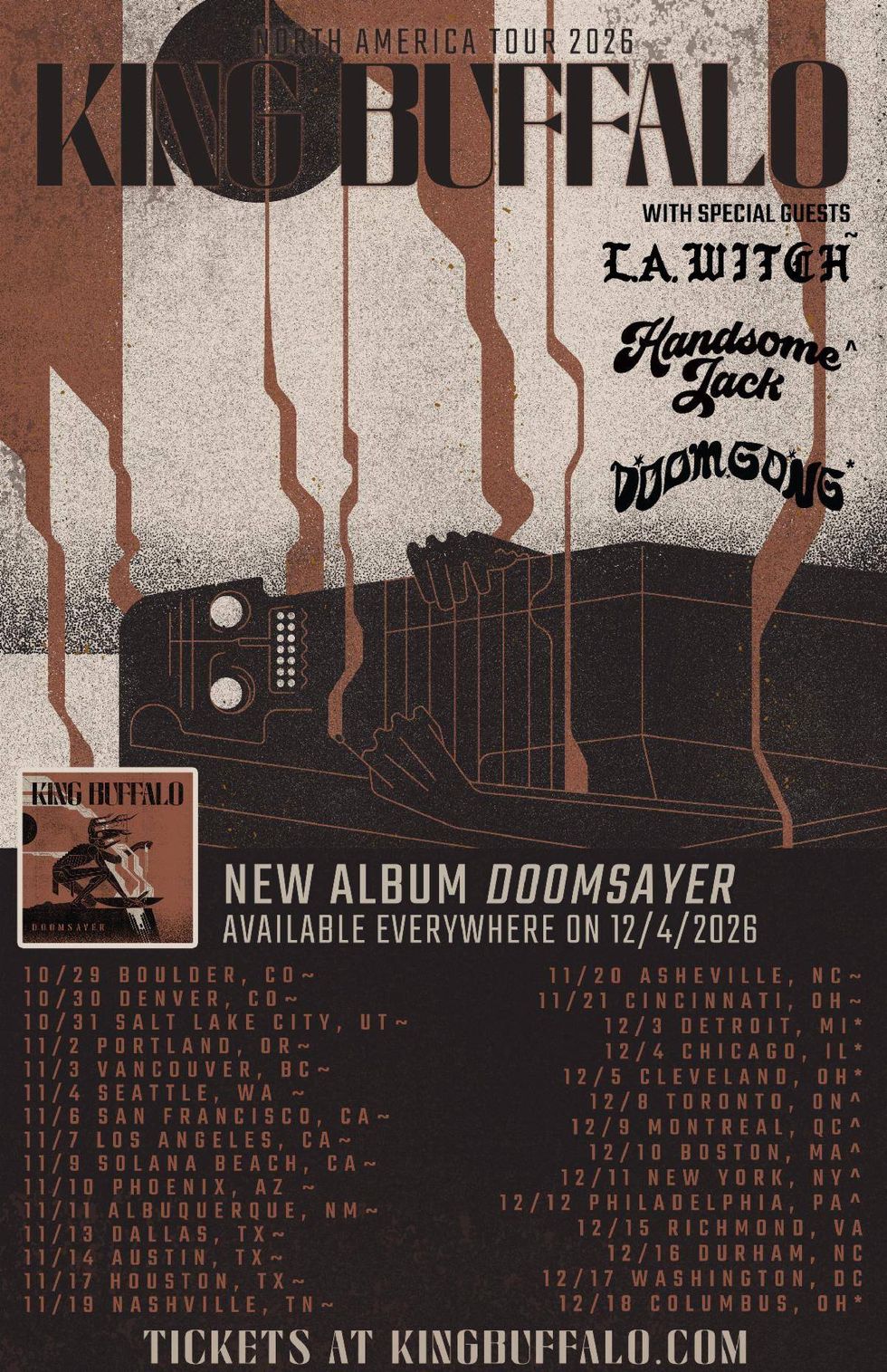
October 29 Boulder, CO Fox Theatre
October 30 Denver, CO Bluebird Theatre
October 31 Salt Lake City, UT Urban Lounge
November 2 Portland, OR Aladdin Theatre
November 3 Vancouver, BC The Pearl
November 4 Seattle, WA Neumo’s
November 6 San Francisco, CA The Independent
November 7 Los Angeles, CA Lodge Room
November 9 Solana Beach, CA Belly Up
November 10 Phoenix, AZ Crescent Ballroom
November 11 Albuquerque, NM Sister
November 13 Dallas, TX AM/FM
November 14 Austin, TX Mohawk
November 17 Houston, TX Bad Astronaut
November 19 Nashville, TN Basement East
November 20 Asheville, NC The Grey Eagle
November 21 Cincinnati, OH Woodward Theatre
December 3 Detroit, MI El Club
December 4 Chicago, IL Thalia Hall
December 5 Cleveland, OH The Roxy
December 8 Toronto, ON The Mod Club
December 9 Montreal, QC Theatre Fairmount
December 10 Boston, MA Brighton Music Hall
December 11 New York, NY Le Poisson Rouge
December 12 Philadelphia, PA Underground Arts
December 15 Richmond, VA The Broadberry
December 16 Durham, NC Motorco
December 17 Washington, DC Black Cat
December 18 Columbus, OH Skully’s
Doomsayer cover featuring artwork by See Machine
1.Battling The Mystagogues
3.Vagabond
4.Hell or High Water
5.Into the Foundry
6.Ether on the Dark Side
7.Doomsayer