
Music is the universal language
“Glory to God in the highest heaven, and on earth peace to those on whom his favor rests.” - Luke 2:14
Premier Guitar


Rig Rundown: Muse
PG’s John Bohlinger caught up with Muse at Lakewood Amphitheater outside Atlanta, where Matt Bellamy’s tech Chris Whitemyer and Chris Wolstenholme’s tech Jon Ashworth walked through a pair of rigs built on custom instruments, retired parts stockpiles, and a lot of MIDI. Have a look at some quick highlights below, and tune into the new Rig Rundown for all the details.
Brought to you by D’Addario.
Number One
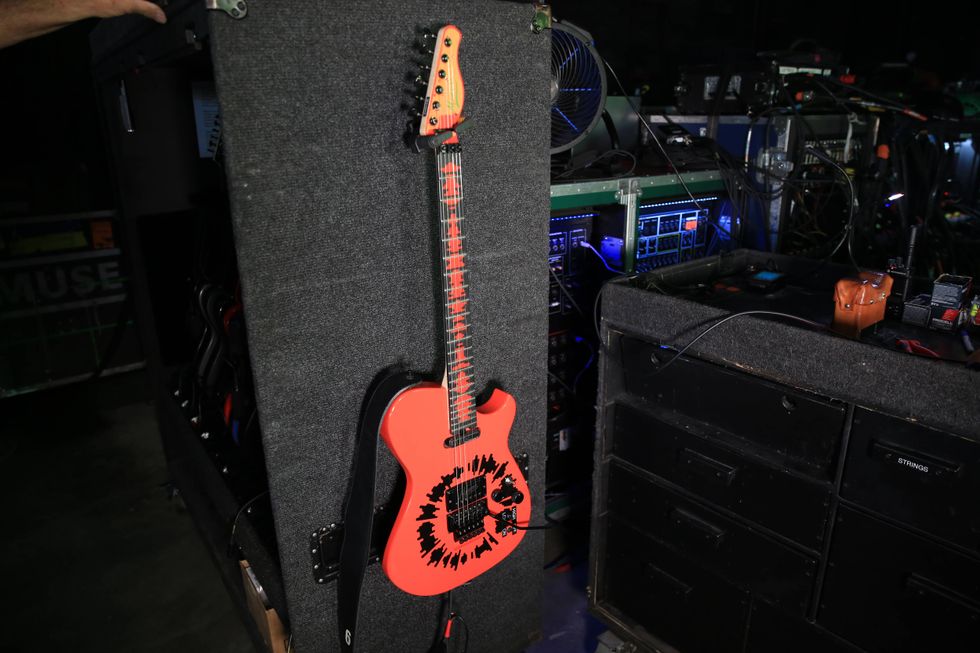
Bellamy’s main Manson MB gets played at least half the show—ash body, maple neck, rosewood board, with a Manson humbucker at roughly PAF output and a Sustainiac. Strings are Ernie Ball .009–.048 in standard tuning, and Whitemyer labels the controls so Bellamy doesn’t have to think about anything but singing. The bridge is a Floyd Rose Low Pro, long out of production: this one came off a 2008 guitar, and when Floyd Rose wound the model down the crew bought up the last of the parts.
Plug In Baby
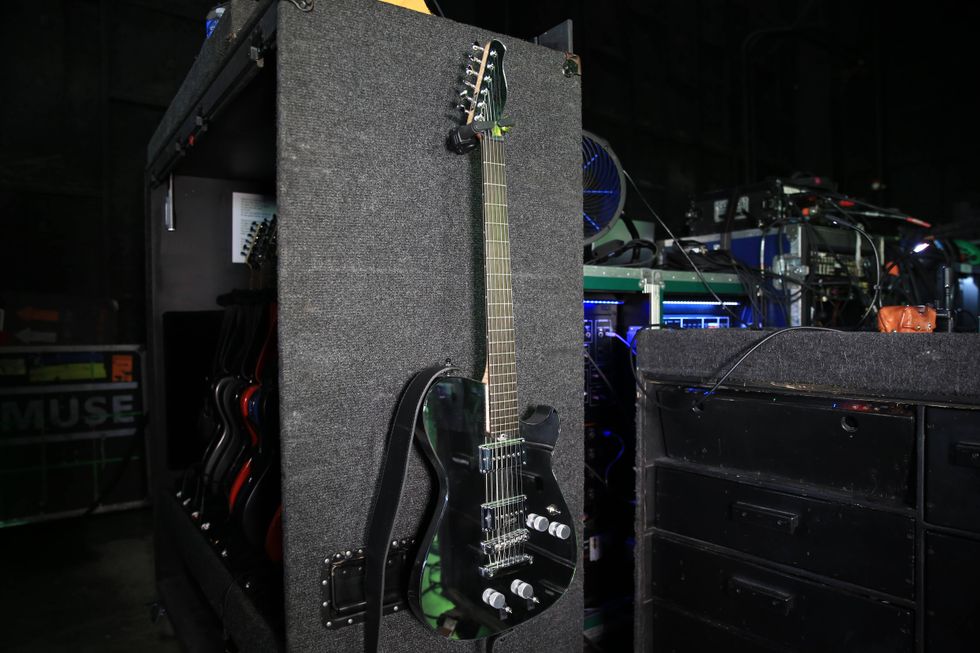
Bellamy’s custom Manson mirror guitar has an MXR Phase 90 and a ZVex Fuzz Factory built in, with no external controls—the Phase 90 lives at about 11 o’clock, set from the back. The Fuzz Factory’s gate and volume are onboard, so Bellamy can pitch it like a whammy. It runs single-coils, which suit the fuzz better, and two 9-volts, one per circuit.
The Kaoss Truth
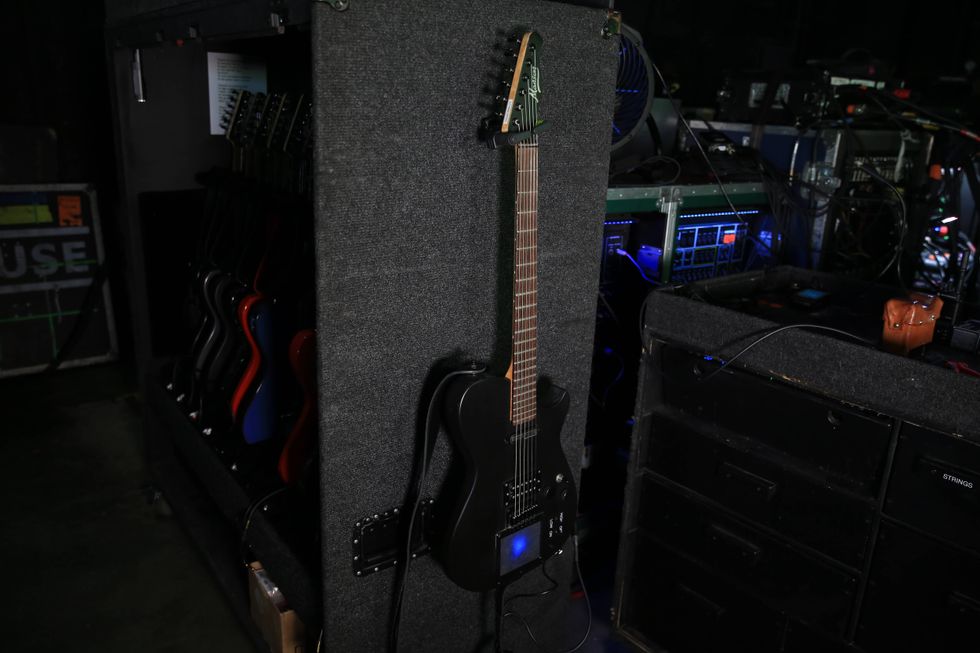
Everyone assumes there’s a Kaoss Pad in this Manson. There isn’t—it’s the controller only, sending MIDI to a Kaoss Pad in the rack for pitch-shifted synth textures blended with the guitar. Whitemyer buys every model that turns up on eBay. It also carries a Sustainiac, a humbucker, volume, tone, and a hardtail bridge.
Lower Than Vai
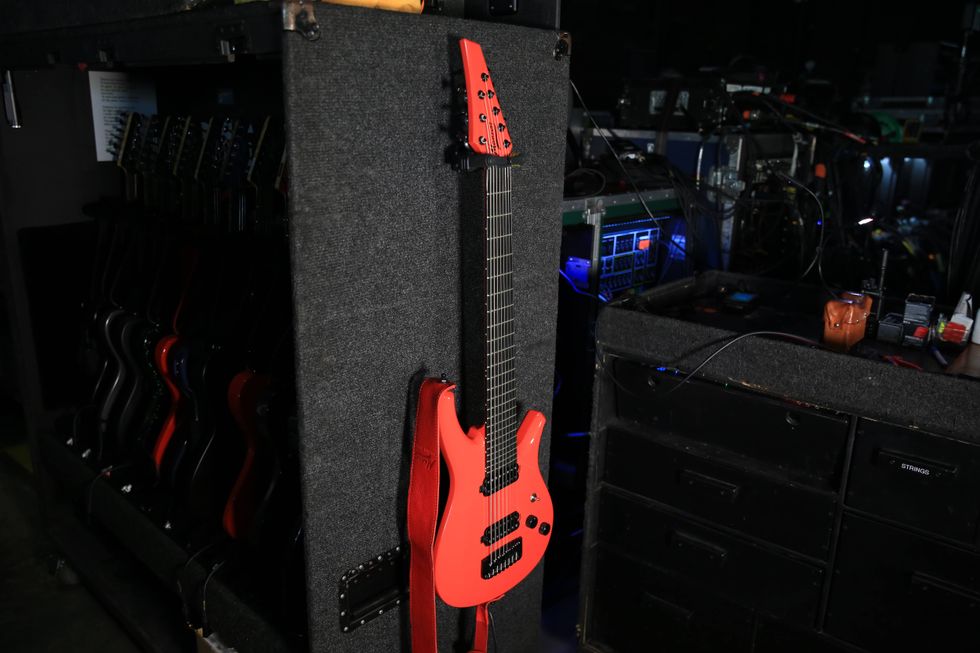
New for this tour: an 8-string Manson tuned E, B, then standard E–A–D–G–B–E. Basically, a guitar with two bass strings underneath it. No Sustainiac, no bender, nothing fancy; it comes out for two songs: “Unravelling,” and a new one.
Amps in a Box
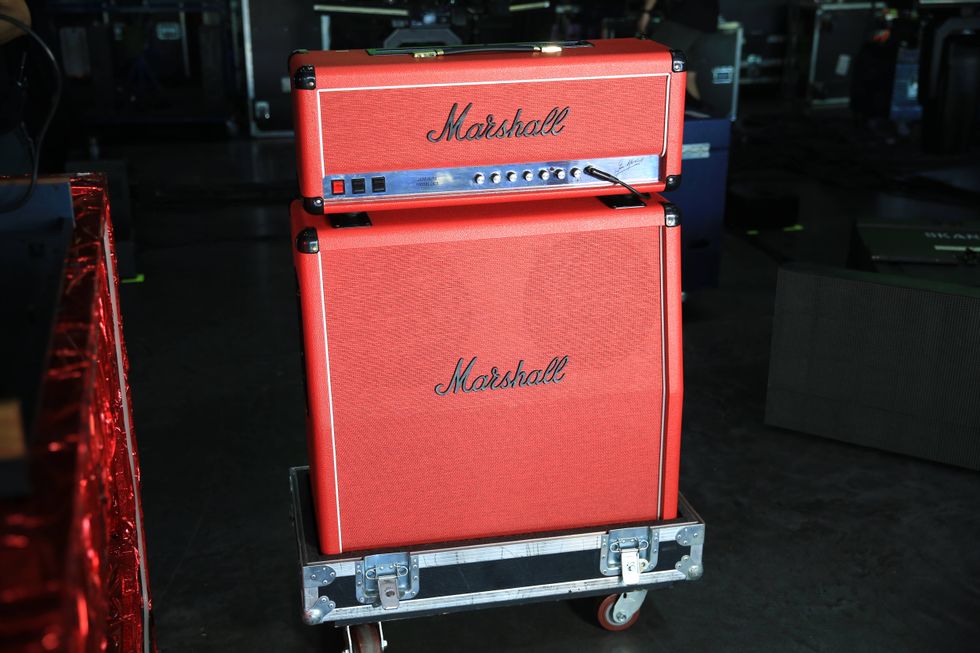
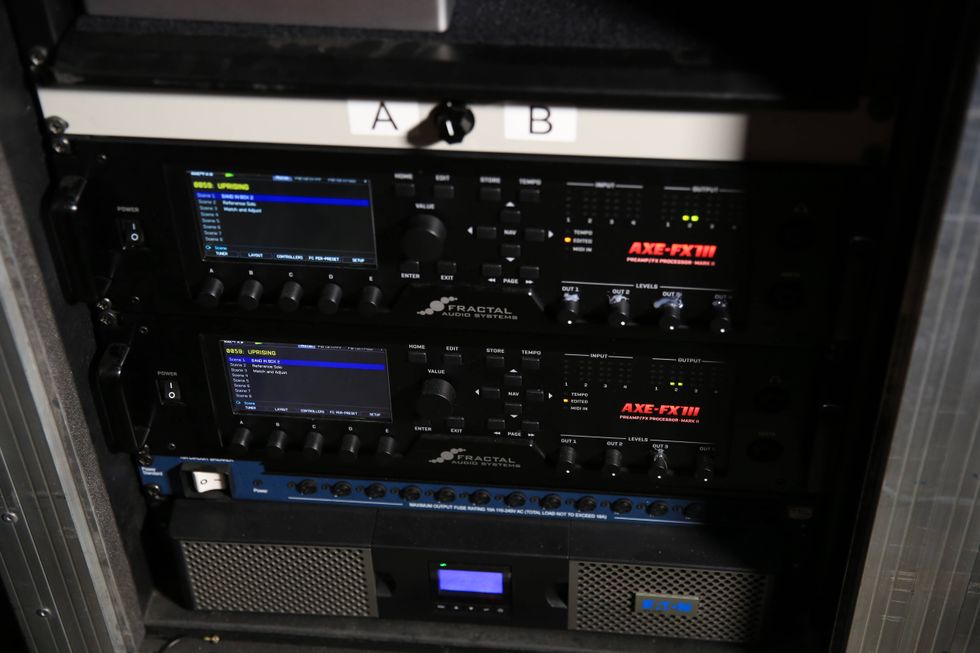
There’s a Marshall JCM 25/50 Model 2225 onstage, but it’s there so Bellamy has something constant behind him while he sings. Everything else runs Fractal Axe-Fx III, fed from Shure wireless through a custom selector and an “effect gizmo.” Bellamy wanted his own amps and nobody else’s, so Whitemyer spent 63 days capturing roughly 35 of them, including Vox, Diezel, Laney, Orange, vintage Fenders, and an old 1938 Gibson. They’re almost always run in combination.
Outboard Holdouts
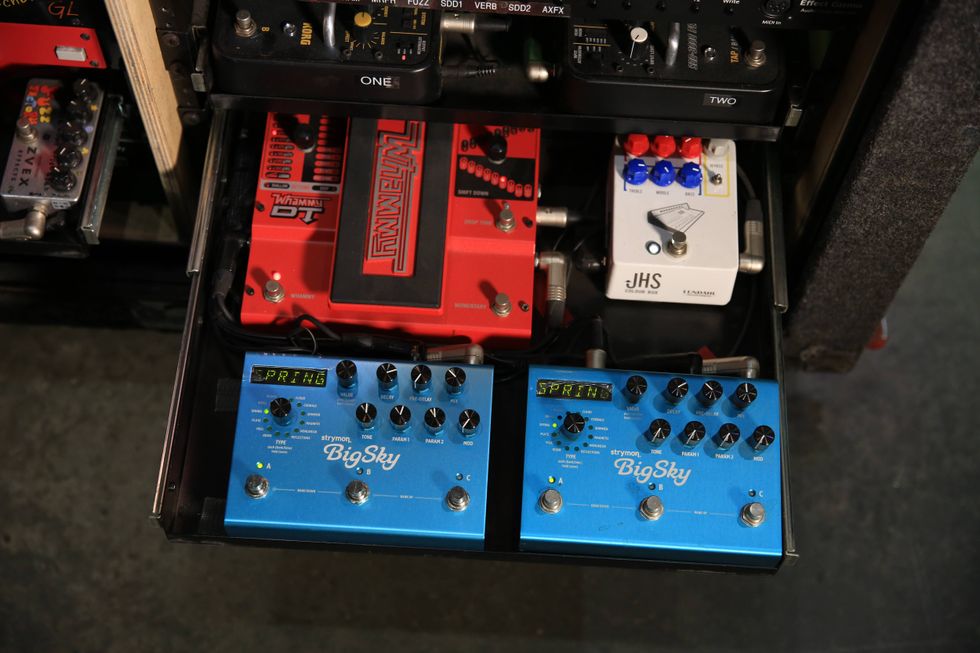
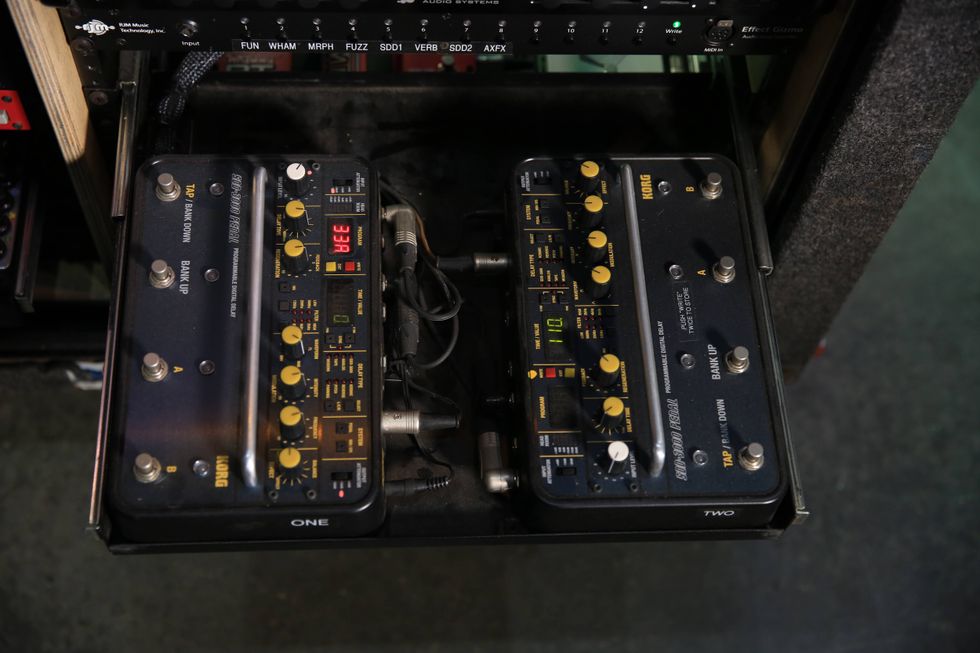
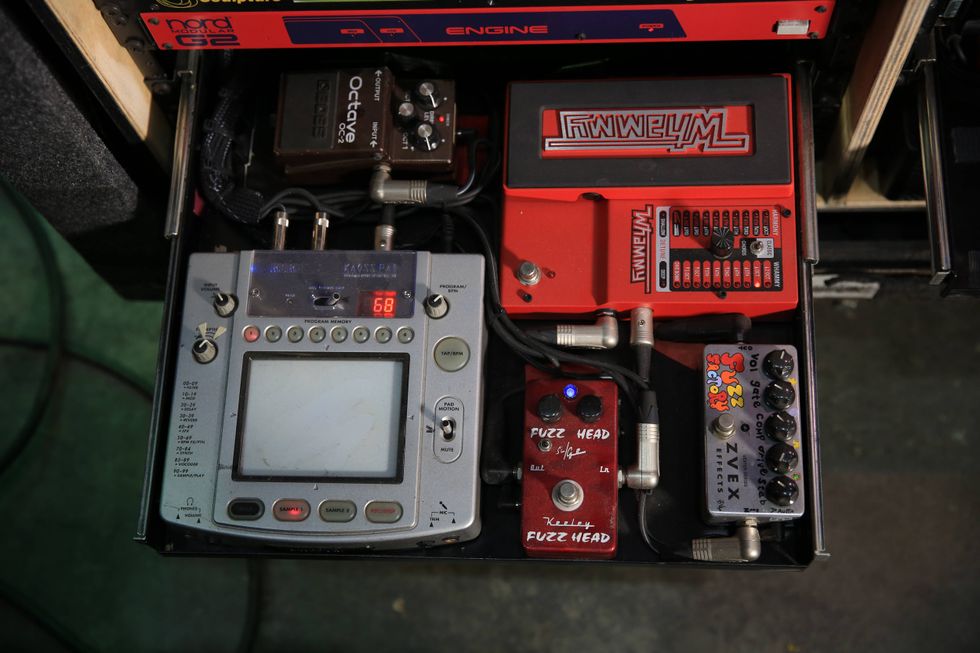
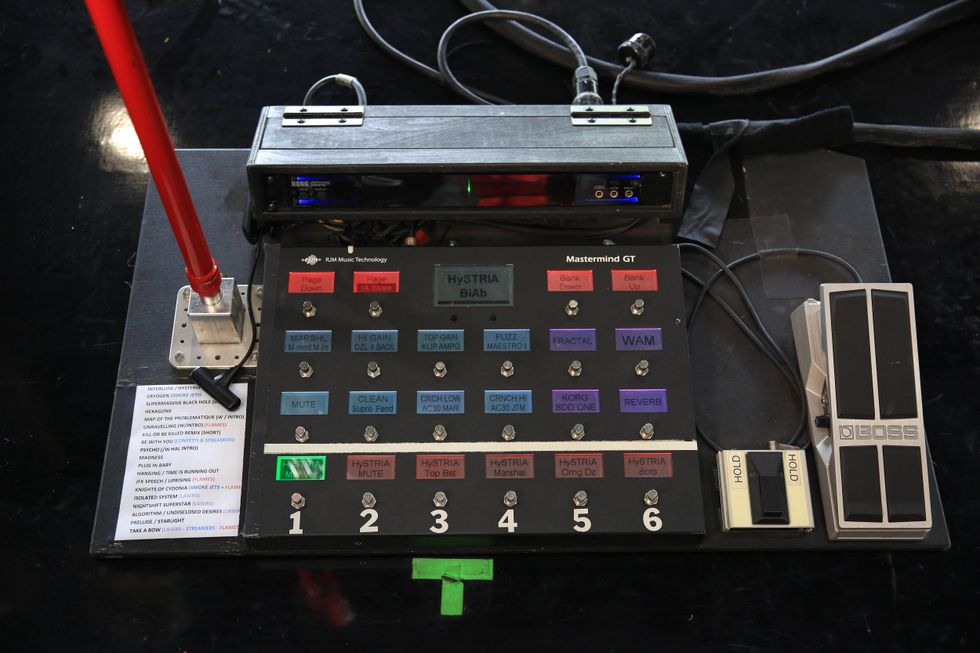
Only a few things live outside the Fractal: two Korg SSD-3000 delays in one drawer, another with two Strymon BigSkys, a DigiTech Whammy DT and a JHS Colour Box, and a third with a Boss OC-2, a DigiTech Whammy, a ZVex Fuzz Factory, a Keeley Fuzz Head, and a Korg Kaoss Pad. There’s also a Nord Modular G2 Engine, which handles the synth on “Map of the Problematique.” An RJM Mastermind GT sits above it all.
None More Red
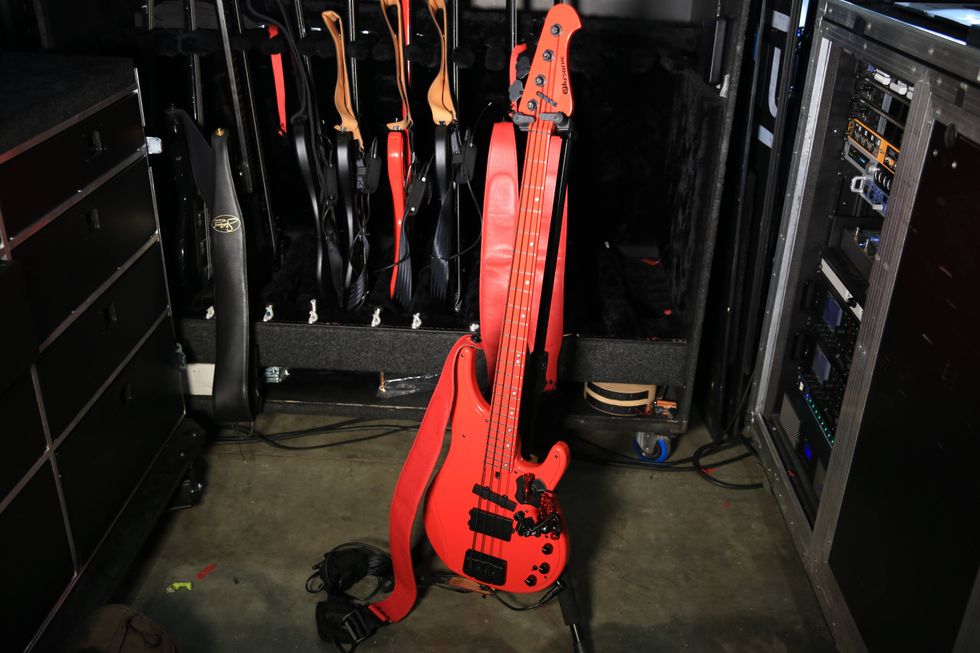
Wolstenholme’s new Alusonic basses replace the Statuses he’d played for over a decade. The signature CW model boasts a roasted maple neck, sassafras body, and carbon fiber top and fretboard, with Hipshot hardware and everything else made in-house in Italy. The pickups are Alusonic’s own—a Stingray-style humbucker and a single-coil across five switch positions, four of which get used in a show, all level-matched well enough to swap mid-song.
Madness, Mark III
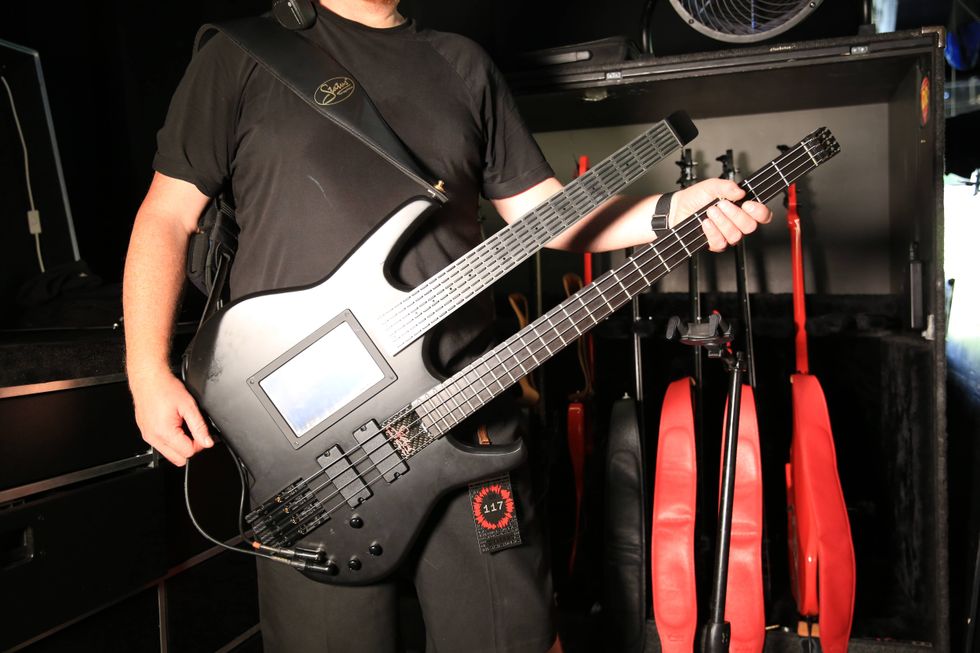
The “Madness” Status bass is on its third build. It started as a Misa Kitara grafted into a Status by Rob Green, moved to a Starr Labs iPad-based version, and now runs a Mosi Nova neck built into a Manson-engineered instrument with an XY pad, a MIDI merger, and a PC computer the size of a card deck inside it. Ashworth powers it up three songs early to let Windows boot.
Wolstenholme’s Rig
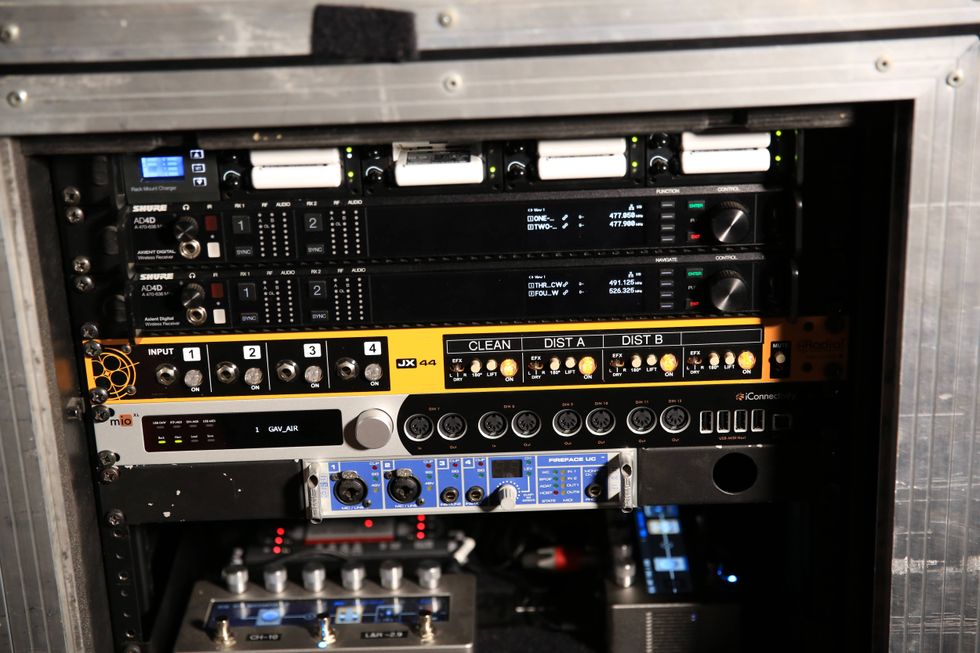
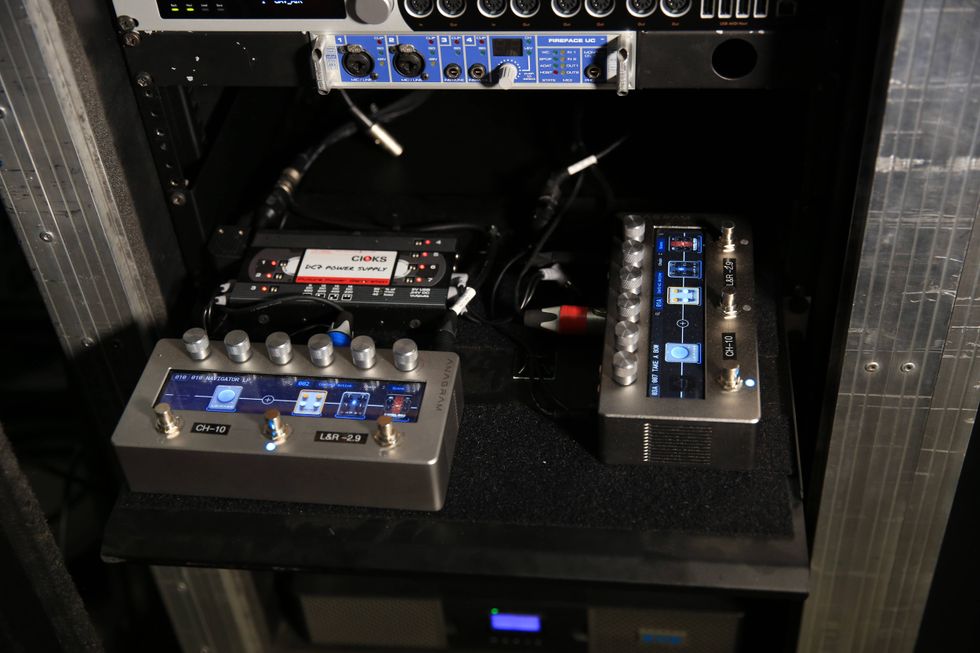
Wolstenholme’s bass goes out on Shure AD4D Axient Digital wireless system—four channels across two dual units—into a Radial JX44, which routes to a pair of Fractal Axe-Fx IIIs, one live and one as backup. The JX44 also feeds a stage tuner, so Ashworth can tune without unplugging anything. The whole rig comes down to four channels: a clean DI that goes straight to front of house untouched, a clean amp sound, and two different distortions. The Fractal only runs two amp models at once, so the distortions moved out to a pair of Darkglass Anagram pedals. Ashworth switches between sounds by turning outputs on and off rather than changing presets.
Two Keys, One Harp
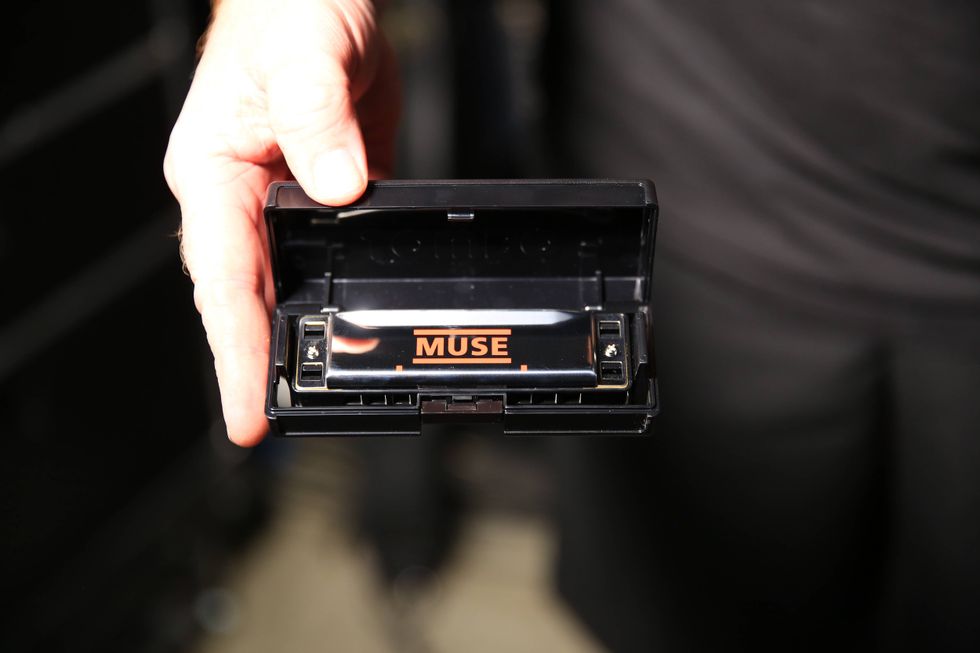
The “Knights of Cydonia” intro is played on custom Lee Oskar harmonicas built with two keys in one, so Wolstenholme doesn’t have to switch mid-part. They’re made in limited-edition colors each season, and he throws them into the crowd when he’s done.
Question of the Month: How Important Is an Effect Pedal’s Looks?
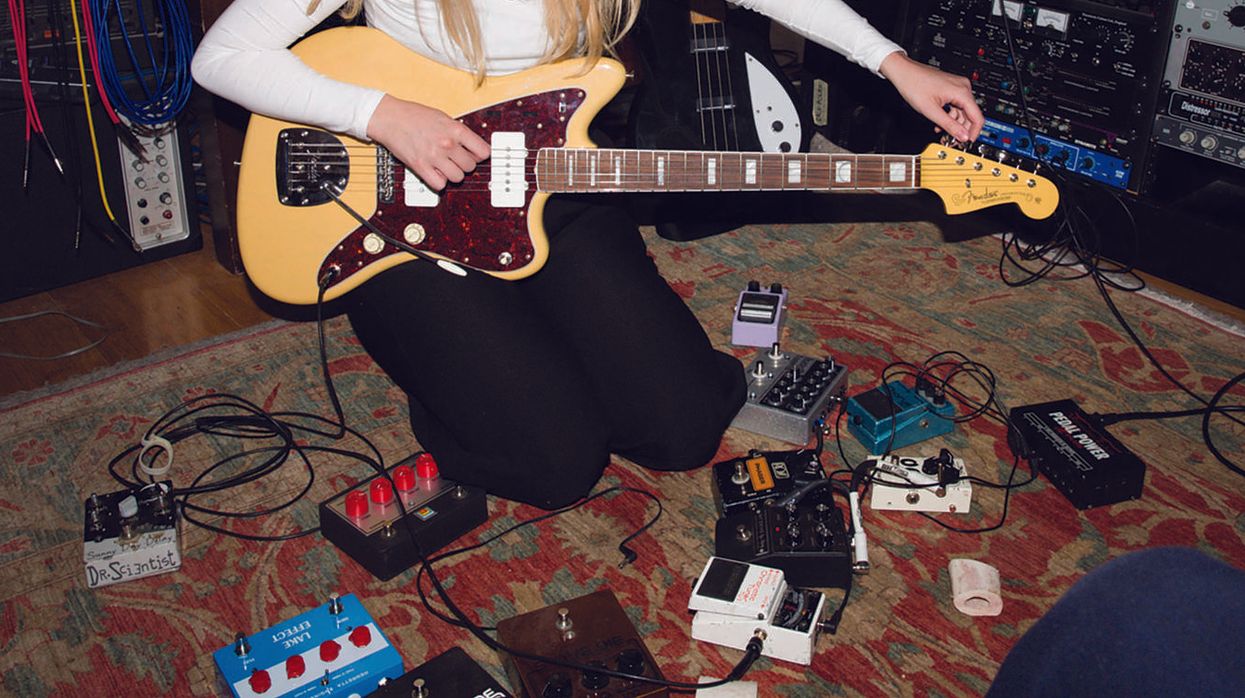
Question: How important is an effect pedal’s looks?
Linnea Siggelkow (Ellis, Ethel Cain)
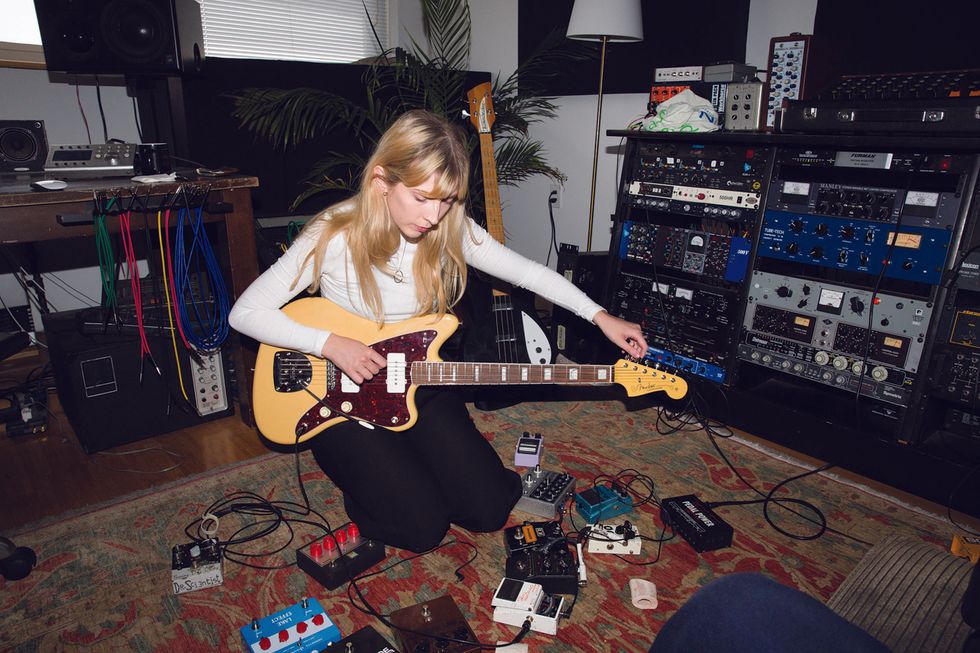
A: Ultimately, not important. I was just debating between two different overdrive pedals and ended up going with the less-cool-looking one, because it functioned the way I needed it to. But the truth is that if it had been really ugly, I probably wouldn't have bought it, so actually, ultimately kind of important.
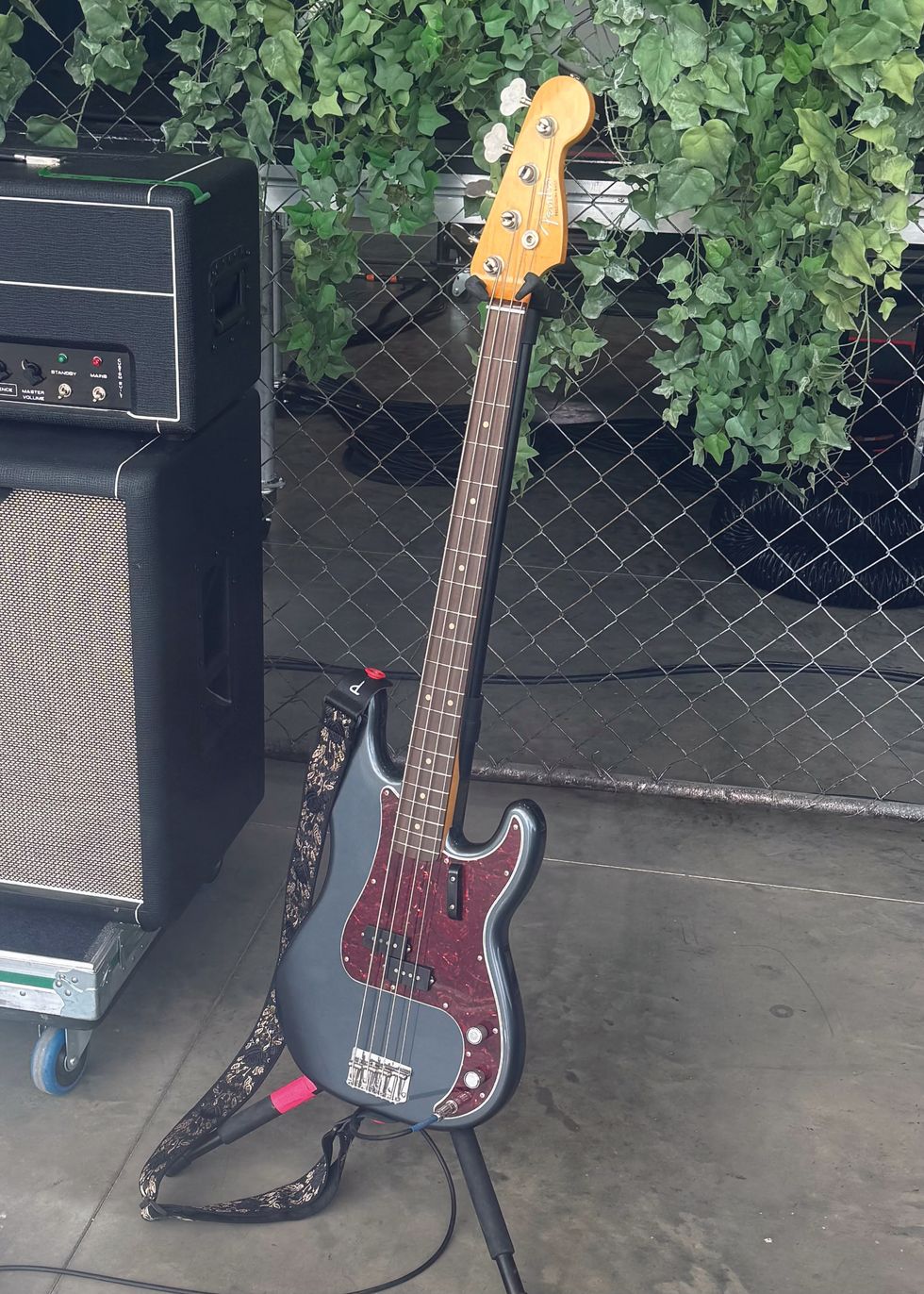
Obsession: Though I’ve been playing guitar for most of my life, more recently I’ve mainly been playing bass. I’m currently obsessed with this Fender Vintera II ’60s P Bass that I’ve been lucky to get to play on tour this year!
Luke Viertel, Director of Digital Publishing

A: As the guitar-effect form factors and functions become more ubiquitous each year, I find that how an effect pedal looks and feels on your board is more important than ever. A proper and beautiful design indicates attention to detail and usually bodes well for the eventual quality of the product. Plus, music is art, and that should rightfully extend to the tools used to create it!
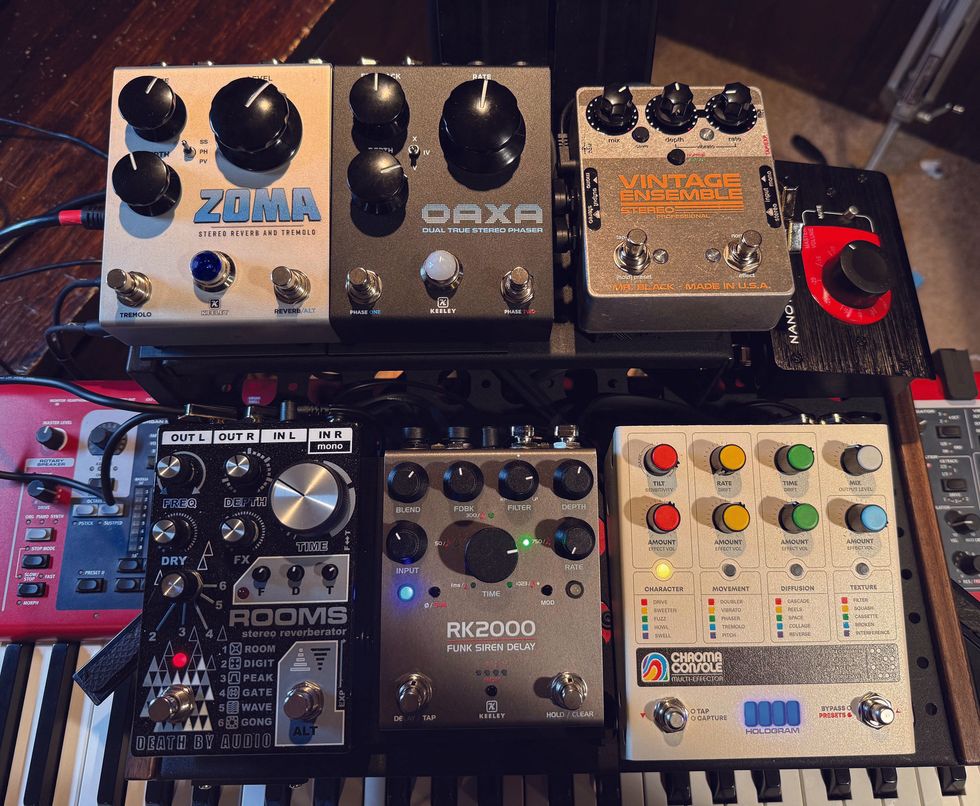
Obsession: After playing keyboards steadily in jam and improvisational bands for 15-plus years, a recent relocation has my gear in storage and cases while we get settled. So, I’m finally doing the Phish deep-dive I’ve been planning for ages. Call me weird, but at least go listen to ’97 at The Spectrum first.
Charles Saufley, Gear Editor
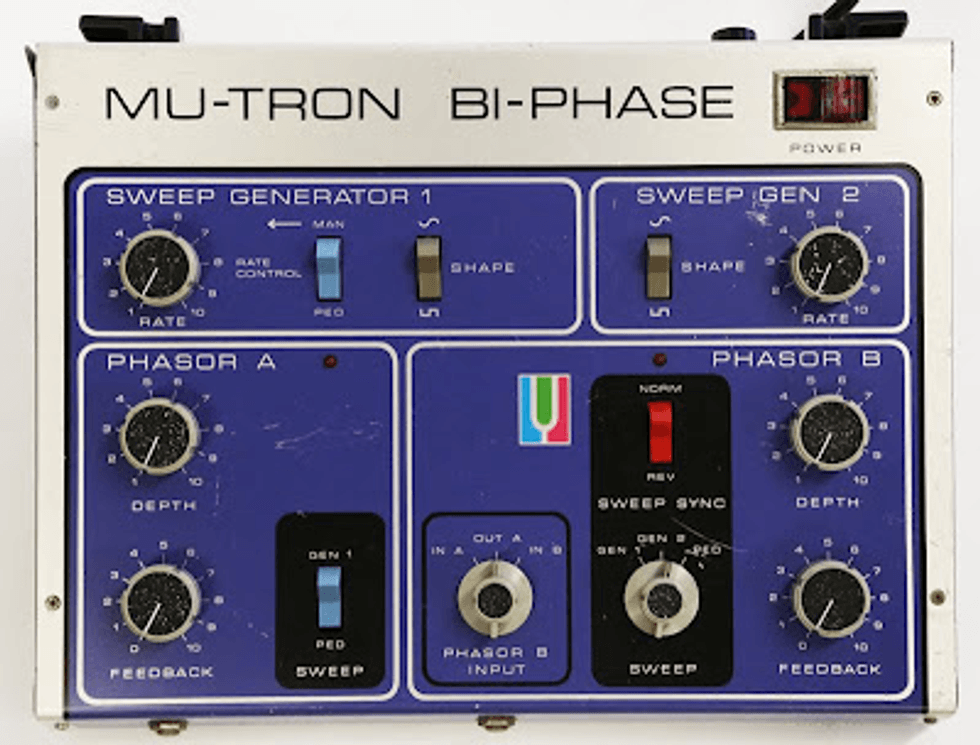
A: Style in design is vital. And to the extent that it can inspire joy, which can inspire creativity—yeah, a stylish pedal is very important. That doesn’t mean I don’t love functionality. Functionality brings happiness, too—especially when your stuff doesn’t break on tour. But when I’m in a studio and I get to plug in something that looks cool and sounds amazing, there’s an extra thrill. Over the years, Mu-Tron, Colorsound, EHX, and Death By Audio have all produced visionary devices that broke the rules in sonic terms, and are beautiful to behold.
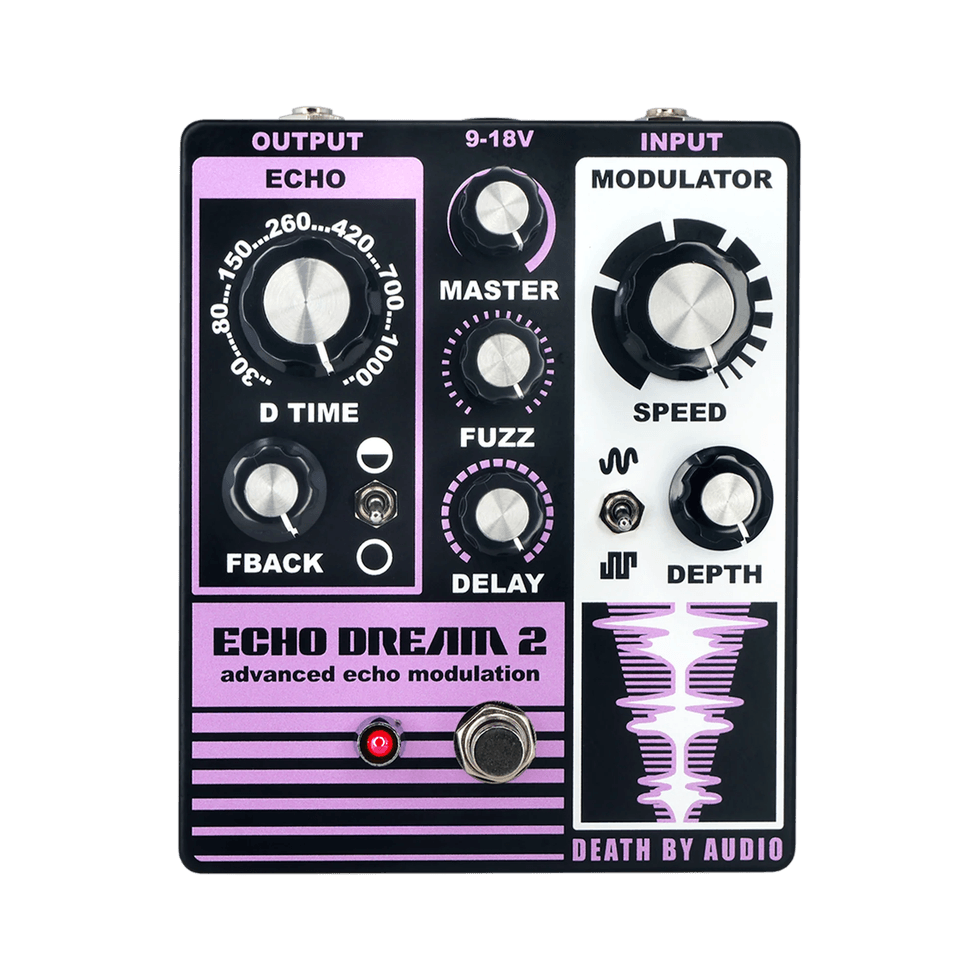
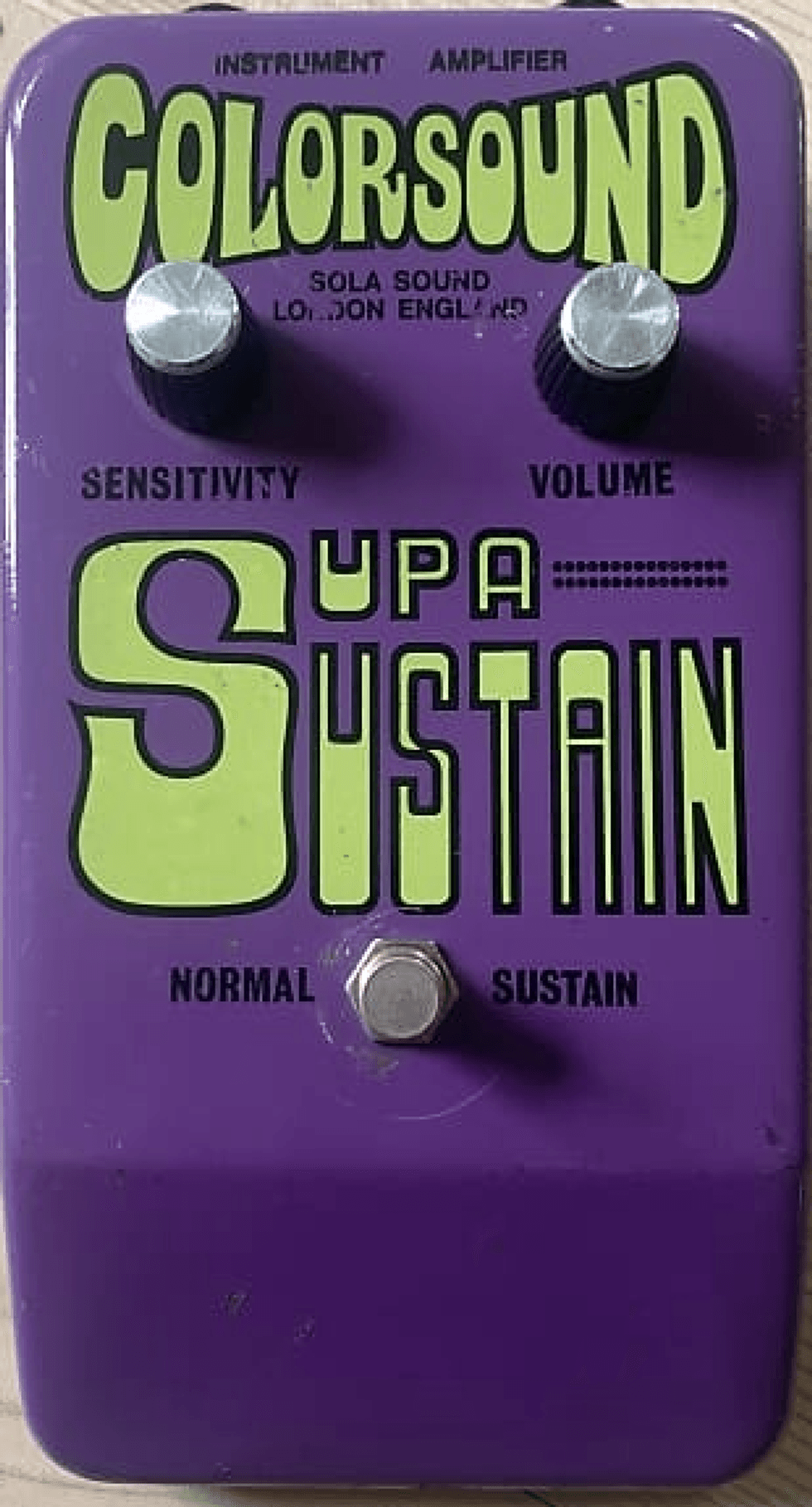
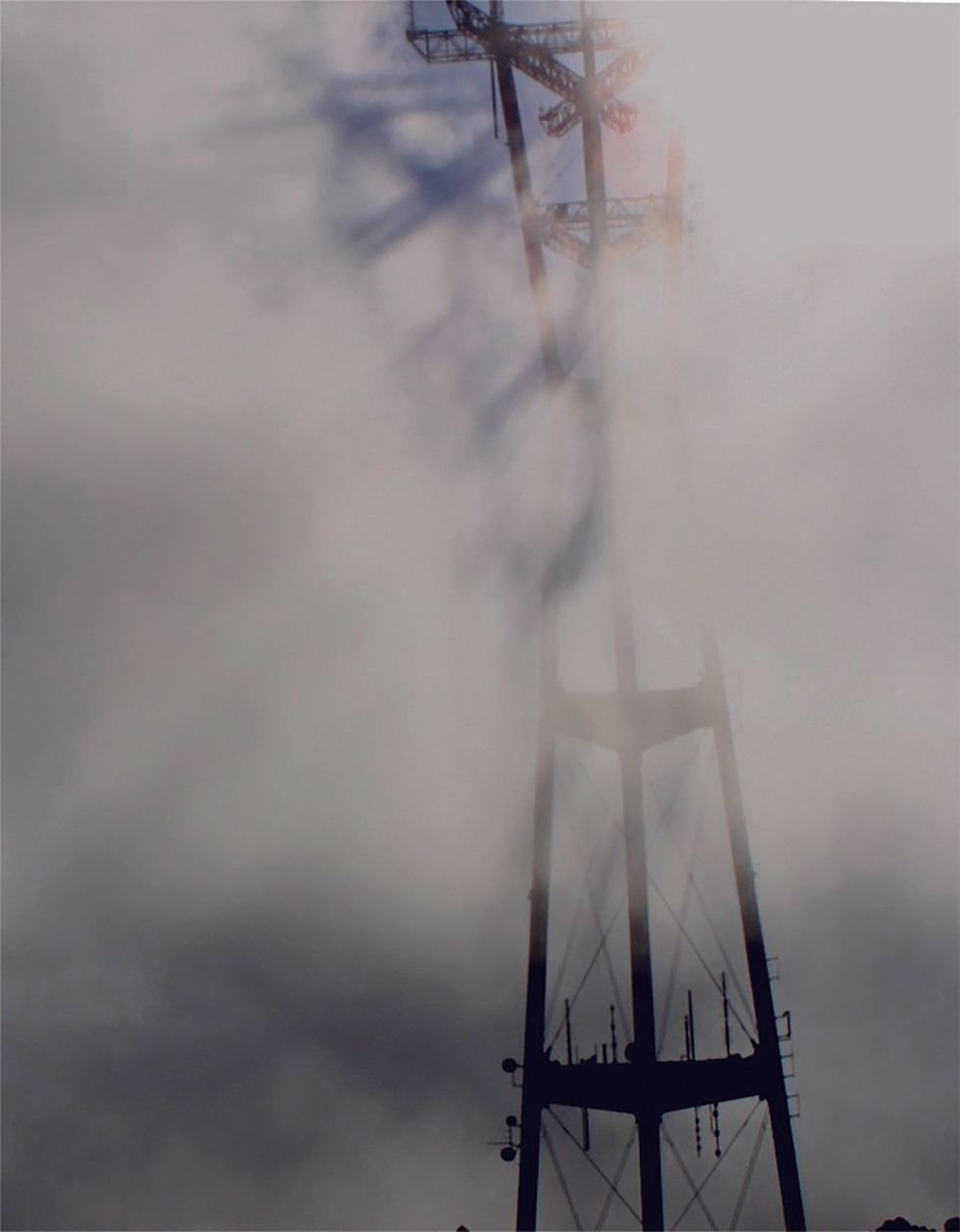
Obsession: Eeriness. It’s fog season where I live, and I’ve had a lot of run-ins with the uncanny of late. I keep waiting for special agents Mulder and Scully to appear out of the corner of my eye. It’s weird, but good for writing music!
Positive Grid Announces Spark PEDAL
Positive Grid has introduced the Spark PEDAL, a compact amp and effects pedal that also adds a built-in looper and smart tone creation. This gig-ready rig makes it easy to bring the tone and power of Spark amps to live performances, rehearsals, home practice and recording sessions. Designed for electric, bass and acoustic players, it incorporates into any setup for fast, intuitive tone building with no learning curve.
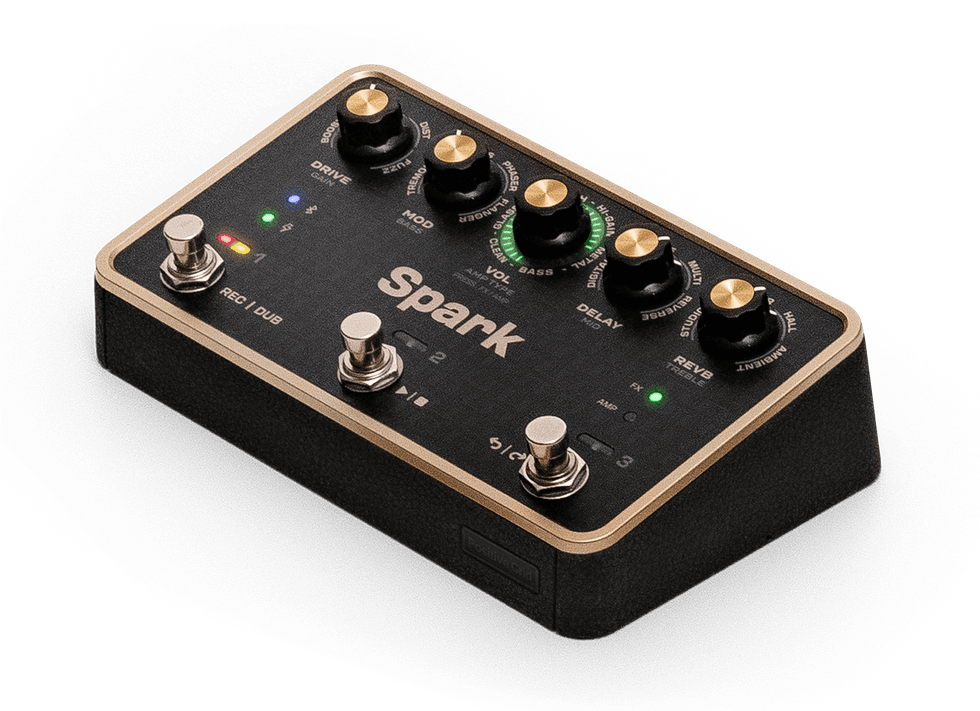
The all-in-one amp and effects pedal can adapt to a wide range of playing scenarios: add it to an existing pedalboard to bring a full amp and effects rig into a current setup; connect directly to a PA system for a streamlined full rig setup; or use it as an audio interface for desktop recording.
Players who have a preferred amp can bypass Spark PEDAL’s amp modeling to use it as an effects processor in front of their existing rig. Guitarists can also play or practice silently using the stereo headphone out or jam along with their favorite music via a mobile Bluetooth™ connection.
Compact and lightweight, Spark PEDAL is also powered by rechargeable battery (up to seven hours per charge) and can be slipped into a gig bag to use anywhere, even at a moment’s notice.
Spark PEDAL runs on Positive Grid's HD Tone Engine, the same high-definition DSP architecture found in the flagship Spark 2 smart guitar practice amp. It delivers 33 amp models and 43 effects, plus access to more than 100,000 tones through Positive Grid’s online ToneCloud community. Players can easily load or use any of their previously saved presets from other Spark family products.
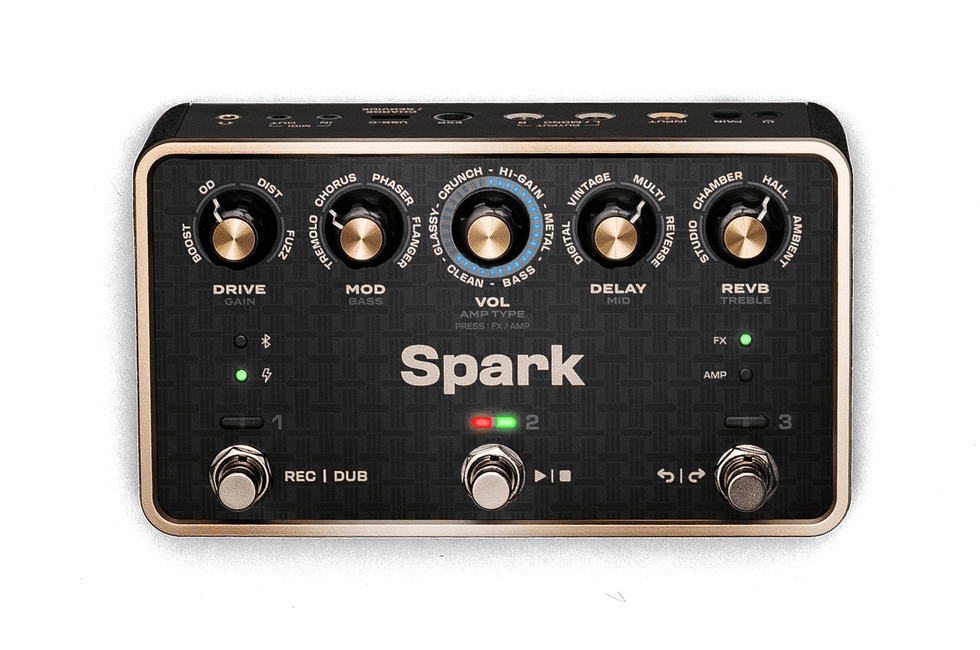
Multifunction knobs and heavy-duty footswitches offer easy amp and effects control. In Amp Mode, the knobs adjust Gain, Bass, Mid, and Treble. In FX Mode, they offer control over Drive, Modulation, Delay, and Reverb depth. Holding down the center multifunction knob will activate the built-in tuner. Users can also store six presets across two banks via the footswitches. Bright, color-coded LEDs indicate mode, preset and looper status plus battery level.
The footswitches also let musicians use Spark PEDAL’s 60-second built-in looper to record, overdub and undo loops without having to navigate menus during a looping session.
The free Spark app extends Spark PEDAL's capabilities. Text to Tone allows the user to describe a phrase, song, artist or feeling and receive matching tone suggestions to tweak or save. The Build Your Rig feature lets players construct a signal chain from a library of amps, cabinets, and effects and fine tune them. Auto Chords displays guitar chords in real time as a song plays through the app, and ToneCloud provides access to tones shared by musicians worldwide. If desired, users can also control the built-in looper using the app.
Spark PEDAL is available for a street price of $199 at www.positivegrid.com/pages/spark-pedal, authorized music retailers and Amazon.
Mannheim Rosengarten is Turning Into A Guitar Lover’s Paradise

From September 26–28, 2025, the Mannheim Rosengarten once again transformed into Europe’s hub of guitar culture. The GUITAR SUMMIT 2025 – now in its seventh edition – exceeded all expectations, drawing 14,600 visitors, more than ever before. The share of international guests rose once again, and around 30 percent of attendees experienced the Guitar Summit for the very first time.
The audience was as diverse as the guitar scene itself: curious newcomers, active musicians from every genre, and seasoned players who have witnessed decades of music history. Autograph hunters got plenty of signing sessions – with long lines and a warm, welcoming atmosphere.
The exhibition floors on all levels were packed throughout the weekend. The booths reflected the state of the art: over 614 brands from more than 50 countries showcased the full depth of the market – from finely curated boutique instruments and hand-wired amps to cutting-edge solutions in digital amplification, effects, and software technology. Here, classics and innovations stood not in opposition but side by side.
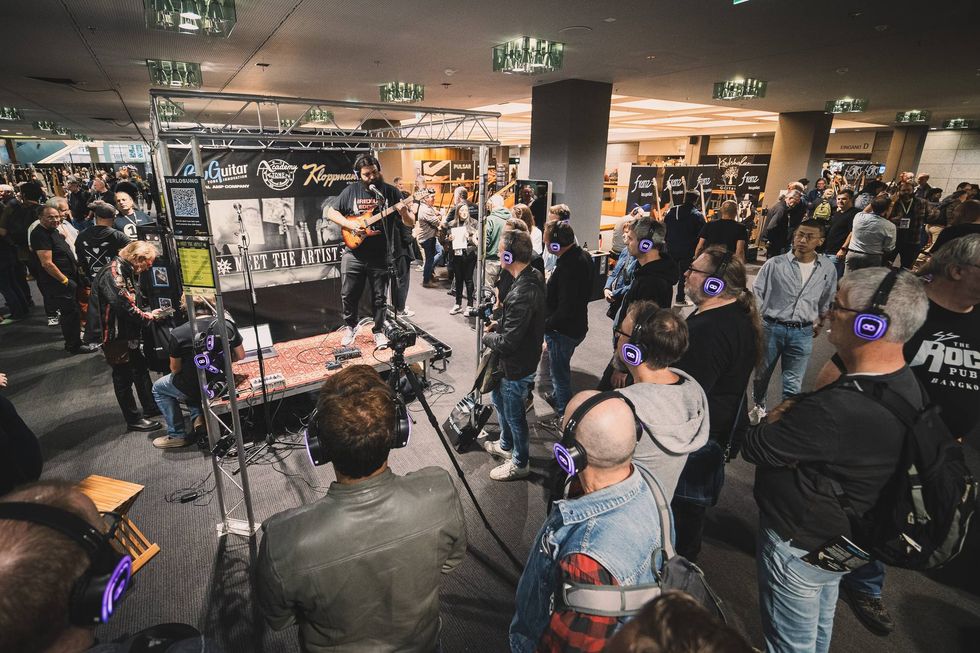
A hallmark of the Guitar Summit is its workshops and masterclasses – and this year’s lineup delivered an unprecedented level of intensity and quality. Across 7 stages, there were 113 workshops and interviews, while the 25 exclusive masterclasses were mostly sold out in advance – giving fans the chance to experience international top artists up close. Notable guests included Tosin Abasi, Billy Sheehan, Philip Sayce, Misha Mansoor, Dweezil Zappa, Plini, Andy Timmons, Chris Buck, Petteri Sariola, Andy Wood, Martin Miller, Alex Skolnick, Kaki King, Rabea Massaad, The Bros. Landreth, and many more.
On the Rock Antenne Stage, renowned figures of the scene gathered for inspiring talks in a relaxed setting. The conversations – hosted in part by “Captain” Lee Anderton – were streamed live, reaching an even broader audience beyond the Rosengarten’s walls.
The concerts in the Mozartsaal marked the musical high points of the weekend. Friday’s program opened with Sophie Chassée, followed by standout performances from Petteri Sariola & Mike Dawes, Chris Buck & Cardinal Black, Kaki King, and The Bros. Landreth –
an evening that showcased masterful songwriting and dynamic range. Saturday brought a captivating contrast in moods: Wallis Bird with boundless energy, Yolanda Charles & Instra_Mentals delivering world-class groove, funk, and fusion, Philip Sayce setting the stage ablaze with raw blues-rock power and a signature tone – culminating in the Allstar Jam led by Andy Wood alongside Andy Timmons, Billy Sheehan, Frank Bello, Alex Skolnick, Martin Miller, Chris Buck, Ben Eller, and more − spontaneous, virtuosic, and real.
The GUITAR SUMMIT remains the ultimate platform, where the full picture of the instrument, genuine interaction with artists, and a true sense of community are not just expected, but deeply felt.
The next GUITAR SUMMIT will take place from September 25–27, 2026, once again at the Mannheim Rosengarten. Don’t miss it – limited Early Bird tickets are on sale now! www.guitarsummit.com
Take a Thrill Ride with Keeley’s Tube Drive
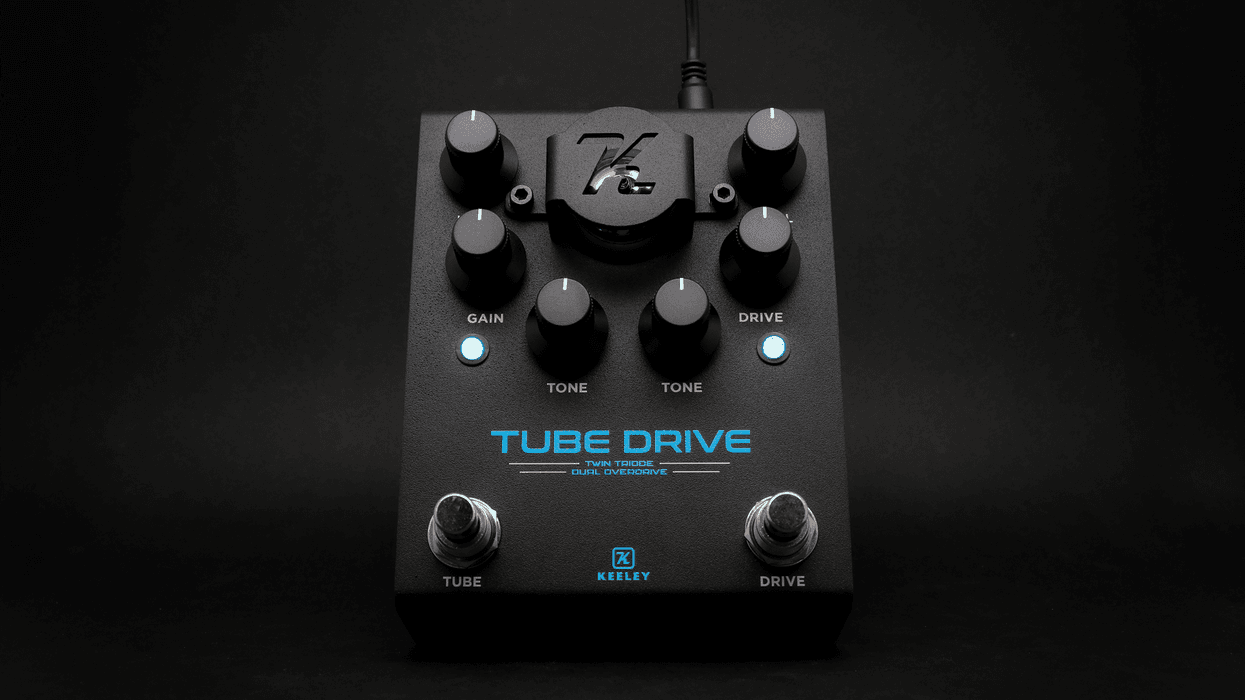
If you’re the kind of guitarist that craves highly responsive overdrive—something that instantly responds to your pick attack and volume knob, like a well-tuned sportscar that hugs the road when you touch the wheel—Keeley Electronics’ new Tube Drive might be the vehicle of your dreams.
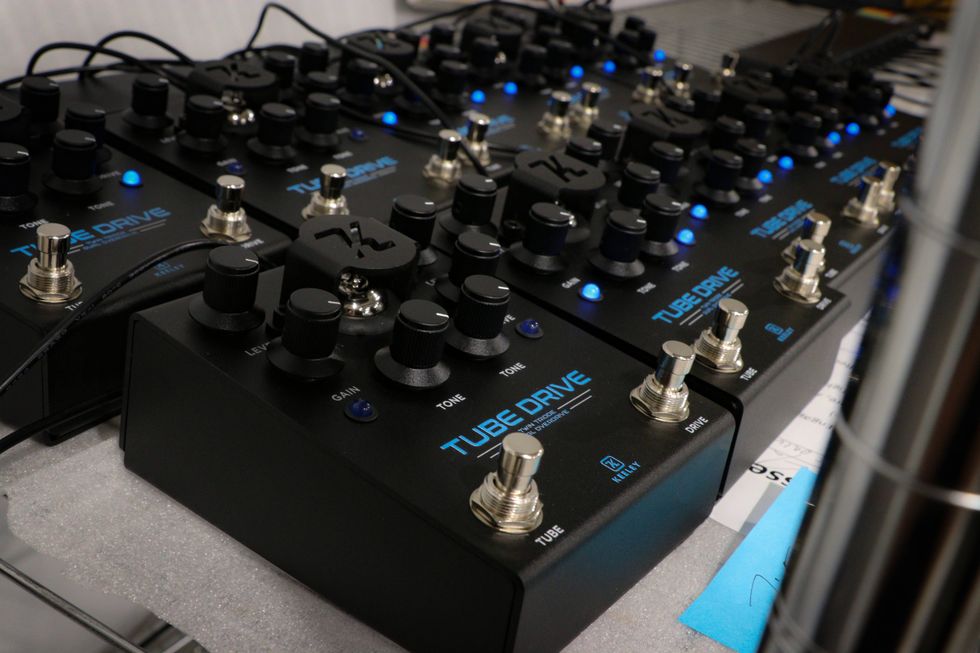
The powerful dual-overdrive pedal packs two distinct voices into one rugged, smart-looking enclosure. On one side, you get a genuine high-voltage (168V) vacuum tube overdrive featuring a 12AX7 tube. On the other side, Keeley’s iconic Super Phat Mod—a beefed up take on the beloved blues driver circuit.
You can use one circuit at a time or combine them for even more crazed fun. And with a simple foot gesture, you can switch effect order on the fly. “So, the pedal truly has four different sounds,” says Robert Keeley. “You have the tube channel, the drive channel, and then—depending on the order you choose—you have two other stacked-drive sounds. And this thing is just a dynamics monster,” he laughs. “It feels and sounds so natural when you control the dynamics with the volume on your guitar.”
Buckle Up and Blaze Away
Built from start to finish in the company’s Oklahoma City headquarters, the Tube Drive is Keeley’s very first tube pedal, and it explores an intriguing new direction as the company celebrates its 25th anniversary.
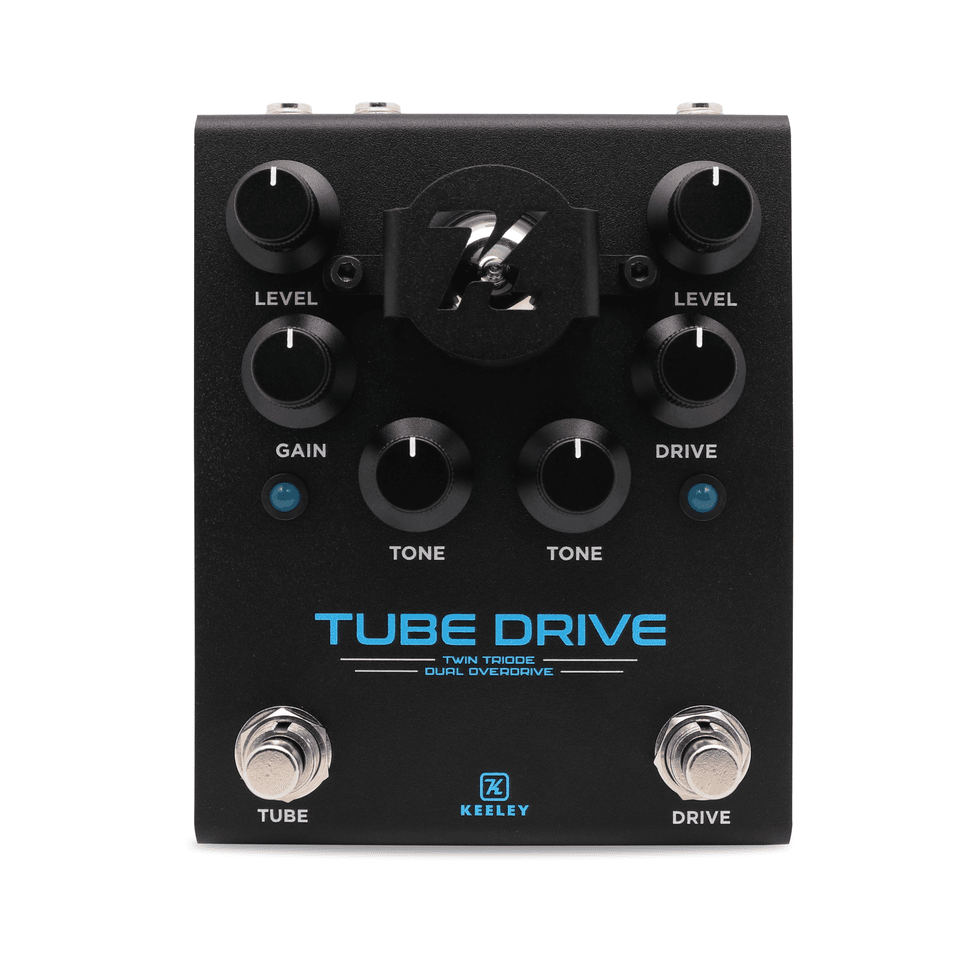
The new pedal delivers a gargantuan array of tones—ranging from subtle, edge-of-breakup overdrive to full-throttle fury—via a highly approachable control set. Each channel is activated by a dedicated footswitch and offers three control knobs: output level, gain, and tone. It’s all super intuitive, with no need to do a deep dive in an instruction manual—just plug in and start riffing.
With its straightforward layout and specially voiced circuitry, it’s strikingly easy to find your sound. It only takes a few minutes to dial in everything from warm, touch-sensitive tube grit to uber-thick, stacked overdrive tones. “We carefully picked the resistors to shape the bass response in such a way that it keeps all of your low notes nice and tight,” Keeley notes. “We wanted something well defined that wouldn’t get muddy. That is so important to the whole charisma of this pedal.”
About that single tone knob: “Yeah, it is a double-edged sword,” Keeley says. “On one hand, you have to make it simple so that people don’t have control-knob phobia. And you need to make sure that you offer enough range, so they can brighten their tone without making it shrill, but also make it nice and warm if you want. It’s a balancing act.”
Like a high-powered sportscar, the Tube Drive offers a streamlined, stripped-down aesthetic that emphasizes performance over posturing, while still benefitting from important hallmarks of the Keeley line—there are rugged construction and modern touches, such as soft switching and the ability to easily choose between true bypass and Keeley’s silent buffered switching.
Designed By Ear
As the company’s first tube pedal, the Tube Drive marks a milestone in the company’s expanding line of overdrive pedals created by Keeley Electronics’ design team. Craighton Hale (lead designer and engineer), Aaron Pierce (the “golden ears” of the team), and Aaron Tackett were all involved in the development of this pedal—a meticulous process even by Keeley’s exacting standards.
“Yes, it took us a long time,” Keeley nods. “We've been working on it for two-and-a-half years, largely due to all the tuning that we did by ear.” The company has eagerly embraced analytic audio measuring instruments in the design and building process, and for this reason Keeley’s lineup of pedals maintains a remarkably consistent tone and quality.
But there is no substitute for the most important element in pedal design: the human factor.
So, through multiple iterations and modifications, the team painstakingly nailed the Tube Drive sound. Keeley admits it was a challenge, but the results have paid off. “One, it has a huge dynamic range. And two, we tuned it by ear instead of by designing something very conventional. You’ll get the best results by focusing not just on what sounds good in your mind, but on what sounds good when you build it and put it together.”
And of course, there’s the added challenge of creating an entirely new design/build approach around the organic, sometimes unpredictable vacuum tube.
“Yes, the world of tubes is very strange,” Keeley laughs.
Gentlemen, Start Your Tubes!
At the center of every Tube Drive pedal is a premium Keeley-branded 12AX7 tube, carefully burned-in, fully tested, and proudly displayed behind a custom tube shield brandishing the stylized “K” of the Keeley logo. Keeley has invested in machines to systematically test each tube and ensure that each pedal sounds just right.
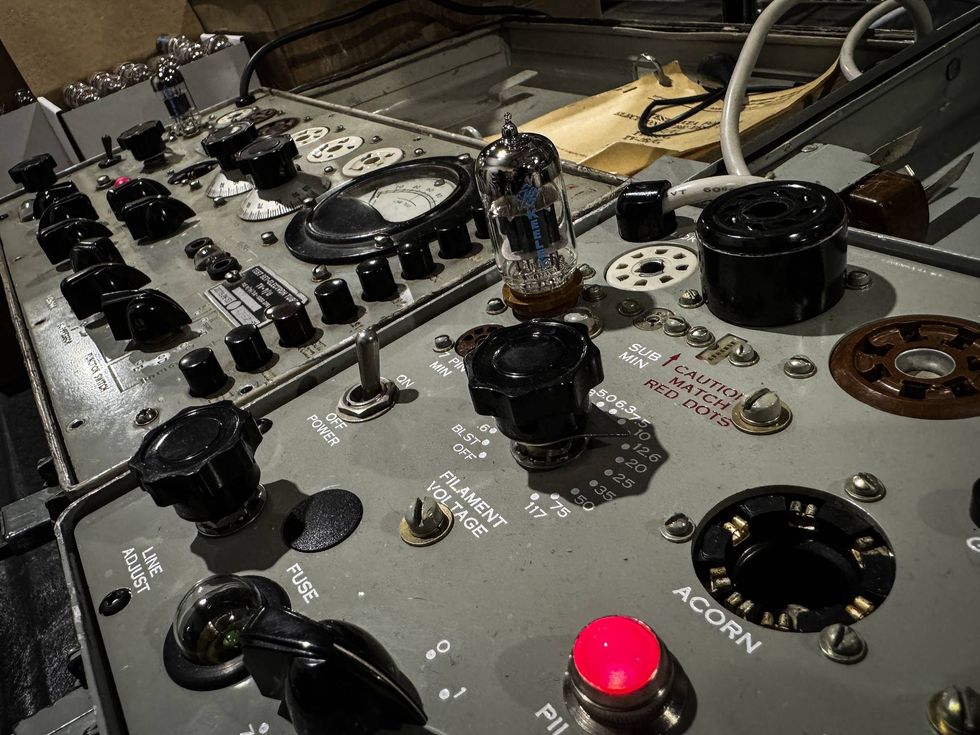
The high-voltage internal circuit—168 volts—is a key factor in the pedal’s sound. As Keeley puts it, “You have to get the tube properly cooking for it to do its magic. At that voltage it creates a whole different world of distortion. You’re going to get improved response and dynamics. So, by moving up to such a significantly higher voltage, that puts us in a much different class than most pedals. I think you get a unique tone print that’s very satisfying.”
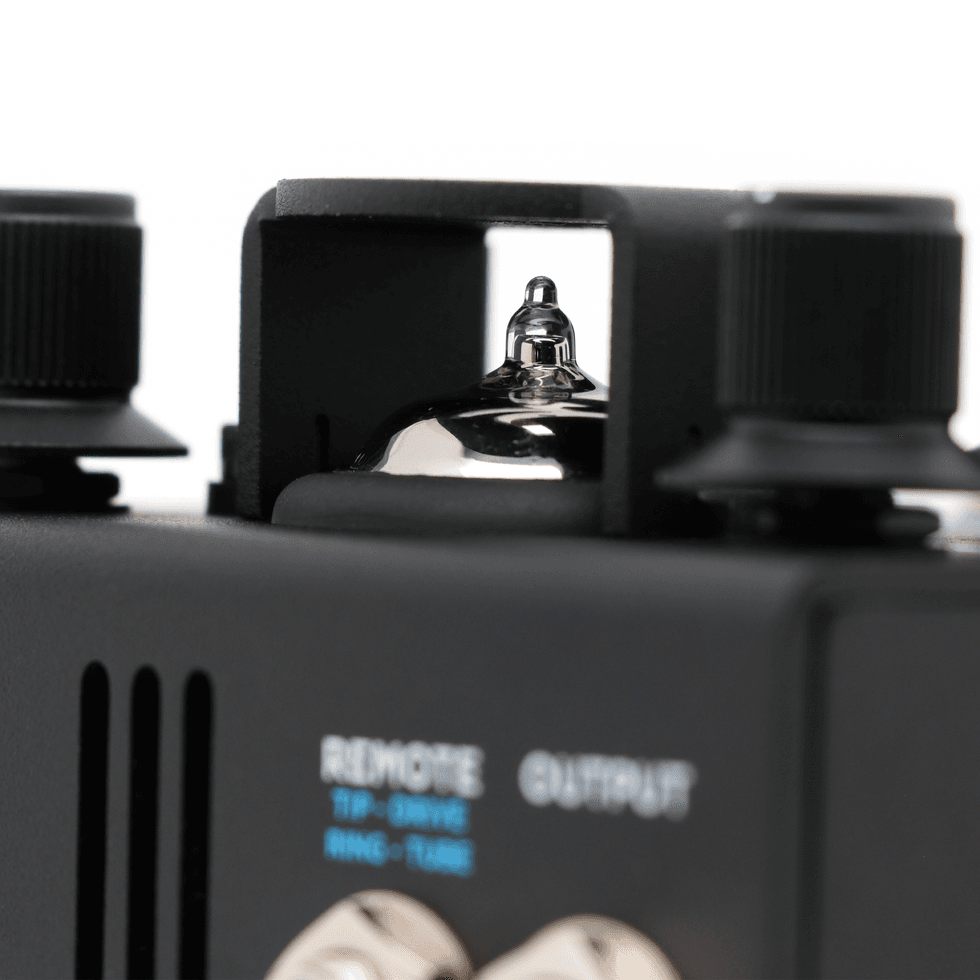
The tube is held in place with a rubber grommet, so it’s always securely protected, and microphonics are minimized. “The rubber grommet keeps all the microphonics out of the signal,” Keeley says. “And even when you put it in a position where the drive channel’s gain comes after the tube—using the tube circuit feeding into the drive circuit—it’s still very microphonic free.”
If necessary, owners can easily replace the tube themselves. No need to take it to a tech—it’s fully self-service. But Keeley notes that it’s unlikely you’ll ever need to replace a worn-out tube. “I fully expect our tubes to last 10,000 hours. That’s 3,300 three-hour jams. I mean, you could have three-hour jams every night for 10 years before I expect these tubes to go bad. And I’m offering a two-year warranty on all our tube products.”
This Ain’t Keeley’s First Tube Rodeo
Robert Keeley’s first experience with tubes came before he even launched his pedal company. “In about 1996 or 1997, I got a book by Gerald Weber of Kendrick Amplifiers. I read it and was hypnotized by tube amps. And long before I ever thought about pedals, I got into modifying Fender tweed amps according to Weber’s books. That’s how I eventually came up with modding for pedals. Tube amps are where it all started. Eventually, an idea came to me in April of 2001. I thought, ‘Hey, I should build my own compressor since I can't afford these Ross compressors on eBay.’ I got parts from the military surplus and hand-wired a little Radio Shack perf board. That’s how it all began. I was into tubes way before pedals.”
The release of the Tube Drive and his return to the world of vacuum tubes represent a full-circle moment in Keeley’s journey—as well as a new chapter in his pedal design process. “This pedal comes out September 1, 2026, and that's the 25th anniversary of the company, which I launched in September of 2001. It’s funny how that works out.”
As Keeley Electronics begins its next 25 years of innovation, the new Tube Drive pedal offers a perfect bridge between the past, present, and future—combining classic tube technology with cutting-edge design and construction.
Do yourself a favor and rev up a Tube Drive and take it for a spin. Your ears will thank you.
Fender Introduces Squier Paranormal Troy Van Leeuwen Telecaster XII
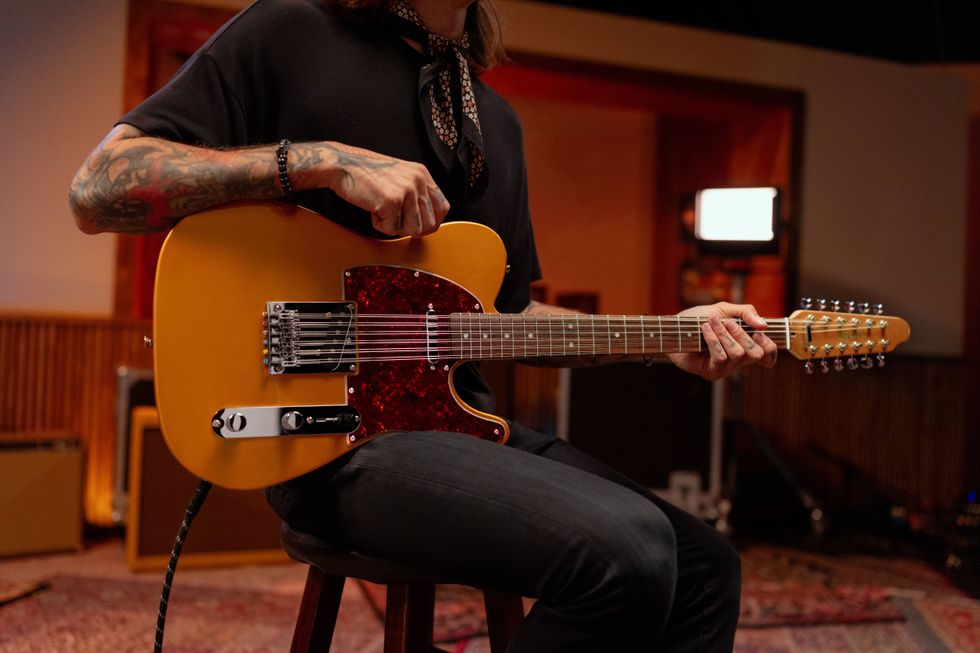
Fender has introduced the Paranormal Troy Van Leeuwen Telecaster® XII, a new Squier® signature model developed with the acclaimed guitarist to bring the expansive sound and unmistakable character of a 12-string Telecaster to a new generation of players. Inspired by Van Leeuwen's genre-defining work with Queens of the Stone Age, A Perfect Circle, Failure, Gone Is Gone and The Armed, the guitar captures the shimmering ambient textures, layered harmonics and unmistakable bite that have become hallmarks of his playing.
For more than three decades, Van Leeuwen has built a reputation as one of alternative rock's most inventive and versatile guitarists. His second signature model with Fender captures that creative approach, offering players a unique instrument designed to inspire everything from expansive textures to powerful, chord-driven riffs.
“When creating my second signature with Fender, I wanted an instrument at an affordable price point that could inspire anyone who’s ever been curious about playing a 12-string,” said Troy Van Leeuwen. “Having worked with the team for over a decade, they easily connected with my vision for a guitar that’s designed for functionality, aesthetically striking, and would sound great right out of the box.”
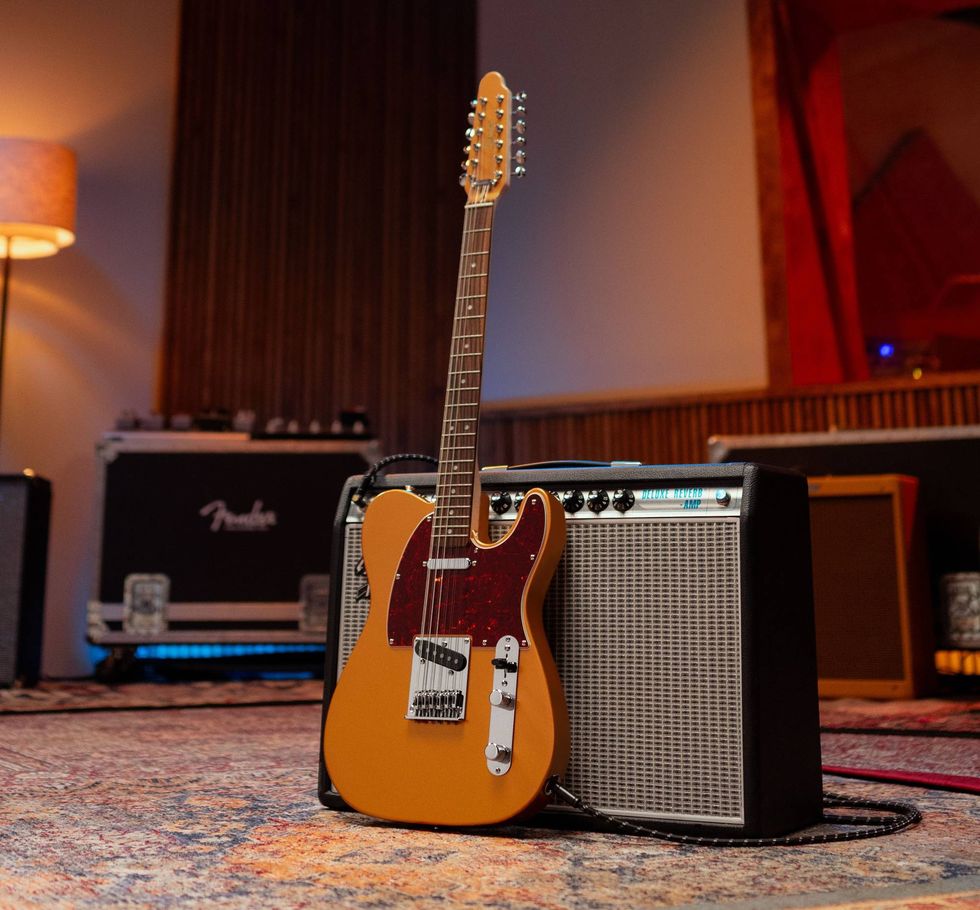
“Troy has always approached the guitar differently. He hears texture, harmony and space in a way that’s uniquely his own — and with Troy’s impeccable sense of style, we knew the guitar had to look every bit as cool as it sounds,” said Justin Norvell, Chief Product Officer, Guitar. “It captures his creative spirit from every angle while making the magic of a 12-string Telecaster more accessible than ever for the next generation of players.”
The Paranormal Troy Van Leeuwen Telecaster® XII takes inspiration directly from his own Paul Waller Fender Custom Shop Masterbuilt 12-string Telecaster, combining signature styling with thoughtful, player-focused design. Finished in a striking custom Copper Age finish, the guitar features a resonant Nyatoh body, a custom Telecaster® XII headstock and a player-friendly 12-string top-load/string-through bridge that makes restringing easier while improving tuning stability.
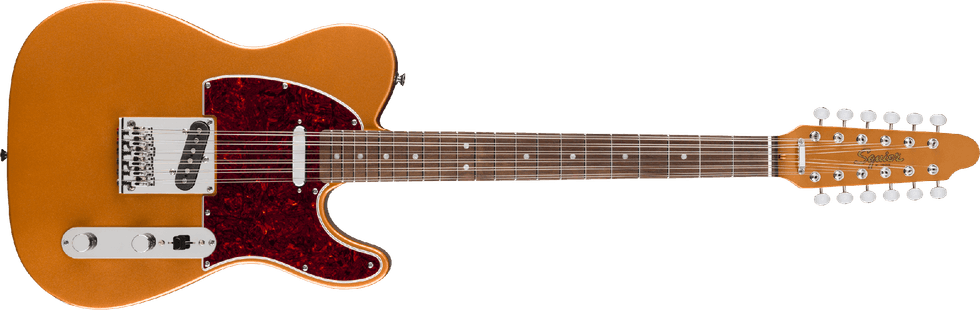
Key Features Include:
- Custom Copper Age Finish: A distinctive custom finish that gives the instrument a bold visual identity worthy of Van Leeuwen's unmistakable style.
- Fender Designed Alnico Telecaster single-coil pickups for expanded sonic range – all without sacrificing that signature Tele bite.
- Custom Telecaster® XII Headstock: A unique headstock design that pays homage to the classic Telecaster XII while immediately setting this signature model apart.
- Player-Friendly 12-String Bridge: A top-load/string-through bridge makes restringing easier while improving tuning stability—addressing one of the biggest pain points for 12-string players.
- Nyatoh Body: Provides a resonant foundation that complements the guitar's rich harmonic character and dynamic response.
- Signature 12-String Voice: Delivers shimmering harmonics, layered textures and unmistakable Telecaster attack, making it equally suited for atmospheric soundscapes and powerful rhythm playing.
The Squier Paranormal Troy Van Leeuwen Telecaster® XII carries a street price of $599.99. For more information visit fender.com.
The Warning: Falling Into Place

Twelve years ago, few could have predicted that Daniela Villarreal’s teenaged hobby would one day see her commanding the stage in major rock capitals around the world. Back then, the Warning were three sisters in Monterrey, Mexico—singer-guitarist Daniela (“Dany”), bassist Alejandra (“Ale”) and drummer Paulina (“Pau”)—having a School of Rock-style good time knocking around on Metallica covers. Soon enough, their homemade YouTube videos caught fire, and it wasn’t long before the group began appearing on international TV shows. Fast-forward to today, and the Warning are big-time stuff—they’ve issued a string of knockout albums and EPs, and they’re touring pros holding their own on bills with the likes of Muse, Foo Fighters, Def Leppard and Yungblud. Their newest album, Everything’s Falling, is a super fuzzed-out, industrial-tinged hard-rock doozy that could raise their stock even higher.
For Dany, looking back on those early daydreams makes her current reality seem both heady and deeply grounding. “There’s so much going on all the time, every day, so when I get a chance to think about it, it’s like, ‘Whoa, I can’t believe how far we’ve come,’” she says. “We’re visiting all these places and having fun, but at the same time, it’s so much work. That’s what surprised me the most, how overwhelming it feels.”
She pauses, then adds, “But we wouldn’t want it any other way. We know what it takes to make it, and we’re ready to take it all the way.”
hat ambition puts a massive weight on Dany’s shoulders. As the sole guitarist in a power trio, she’s tasked with creating the bulk of the band’s sonic footprint, all while stepping up to the mic as their primary vocalist. She admits that taking on a new member—or even a touring guitarist—would free her up to focus on singing and performing, but it’s not something the band is considering for the time being. “To bring in somebody else who isn’t a sister would feel very unnatural,” she says. “Doing what I do takes a lot of concentration, and I’d love to make things easier, but I kind of like the challenge, and I’m stubborn.”
“When we’re meeting in the middle—Ale’s trying to sound like me, and I’m trying to sound like her—that’s the sassiest part of the record.”
A practice routine just shy of punishing keeps Dany in tip-top performance shape. “I rehearse my guitar parts over and over till I don’t have to think about them,” she says. “I want everything to be automatic so I can get into the emotions I’m trying to convey.” Another solution is writing what she calls “festival songs,” built around mega-sized riffs and anthemic choruses geared toward maximum audience impact. “On this record, we asked ourselves, ‘How is this going to feel live? Is it going to make people jump up and down?’” she says. “That solved a lot of problems for the future me once we got out of the studio.”
There’s nothing subtle about Everything’s Falling—“Kerosene” is a high-velocity banger and “Ritual” froths and rages, while the Spanish-language “Ego” gnashes and snarls—yet there’s no rigidity in its bold power moves. It’s all delivered with the kind of intuitive finesse one would expect from a trio of siblings who are 100 percent dialed in.

Dany Villarreal’s Gear
Guitars
- PRS Custom 24 (standard tuning)
- PRS Custom 24 (drop-D tuning)
- Backup PRS Customs 24s in each tuning
- PRS Dany Villarreal Custom 24 Signature Astryx
- Fender Stratocaster baritone w/ black finish (B-standard tuning)
- Fender Stratocaster baritone w/ white finish (drop-A tuning)
- (Both Strats are loaded with Seymour Duncan JB/59 sets)
Amps & Cabinet
- Orange Pedal Baby 100 power amp
- Kemper Profiler Stage
- Mesa/Boogie 4x12 slant cab
Effects
- Mission Engineering EP1-KP-GN expression pedal
- One Control Looper
- Tallon Electric x Alphawolf The Noise
Wireless
- Shure Axient ADX5D receiver
- Radial SGI TX/RX line driver system
- Levy’s Leathers Wireless Bodypack Holder
Strings, Picks, & Straps
- D’Addario NYXL .010–.046 (for PRS Custom 24s)
- D’Addario NYXL .014–.060 (for Fender Strats)
- Custom-made guitar picks
- Gruv Gear straps
That telepathic creative shorthand is all the more impressive when you consider the fact that the band recorded their parts entirely separate from one another. “Usually, people record drums first, but I laid down my guitars and vocals to drum demos,” Dany explains. “It was funny because I’d stand up and move all around, just to get the excitement going like I was playing onstage.”
Some of the record’s harshest guitar sounds were, in fact, produced by Ale on bass, while various booming bass tracks were generated by Dany’s guitar. “When we’re meeting in the middle—Ale’s trying to sound like me, and I’m trying to sound like her—that’s the sassiest part of the record,” Dany enthuses. It turns out you don’t need to be in the same room to stand shoulder to shoulder.

“It’s really something to have a guitar that’s literally me. I see it as my twin.”
The better part of her guitar collection is present and accounted for on Everything’s Falling—there’s a Strat, a Tele, a Les Paul Standard, and a PRS Custom 24. One instrument she’s added since is particularly close to her heart—her newly announced first-ever signature model, the limited-edition PRS Astryx. “From the time I visited the factory and we started talking about it to the time we were done, the whole process took well over a year,” she says.
“There’s so much I love about the Custom 24, but I put my own spin on it,” Dany continues. This means a custom color fade and her signature on the truss rod cover, alongside core Custom 24 specs like a maple top, mahogany back, and DMO humbuckers. “There’s also an inlay of the sun on the 12th fret, and it says, ‘Solecito,’ which is Spanish for ‘little sun,’” Dany says. “That’s what everybody calls me on the internet, so it was nice to include my fans in this guitar.”
She laughs. “I changed my mind a couple times while we were planning things out, but the PRS people were so understanding about everything.”
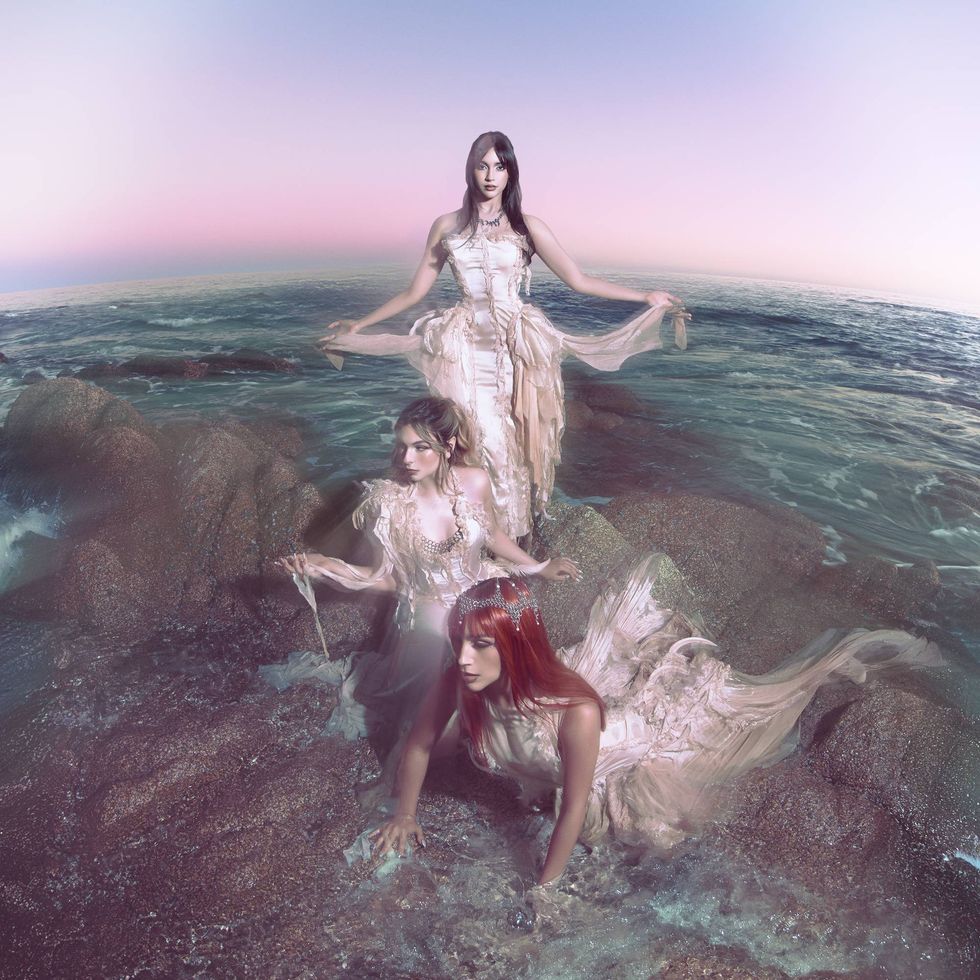
Onstage, Dany’s idea of sonic bliss is when her guitar sound is “big and chunky and heavy,” with just enough high-end to cut through Ale’s bass tone. To that end, she plays through a Kemper Profiler as well an Orange Pedal Baby 100 power amp. Both units respond beautifully to her PRS Astryx, which she recently took possession of on tour.
“Nobody told me I’d be getting the guitar, so it was a total surprise,” she says. “There’s always that thing when you get a guitar and you have to break it in, but from the second I started playing it, it felt and sounded amazing. It’s really something to have a guitar that’s literally me. I see it as my twin.”
Seymour Duncan Introduces Joe Bonamassa “Pawn Shop Special” 1961 P90 Set
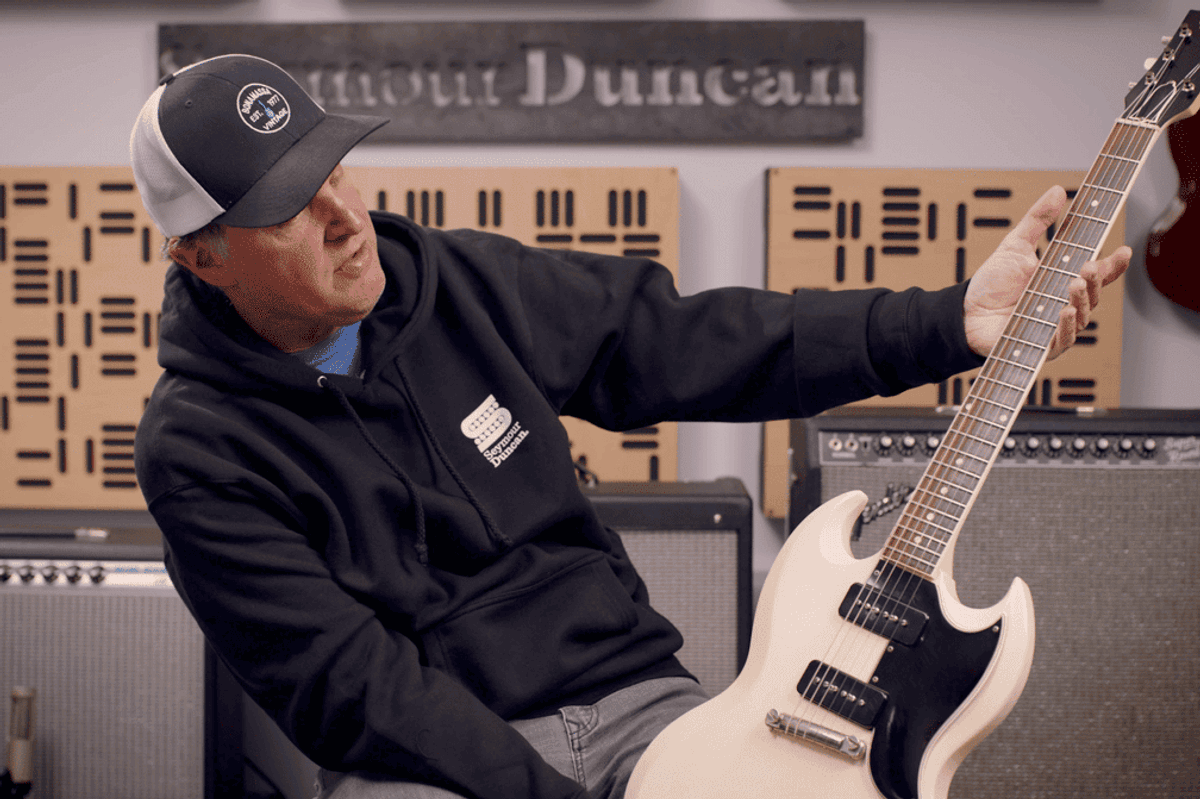
Seymour Duncan, has unveiled The Joe Bonamassa “Pawn Shop Special” 1961 P90 pickup set. These Custom Shop P90s replicate the vintage pickup set that sparked Joe Bonamassa's love affair with P90s, delivering airy highs, expressive midrange, and snarling overdrive response. Alnico 4 magnets, a custom wind, and historically accurate components bring this coveted Nerdville tone within reach of every P90 aficionado.
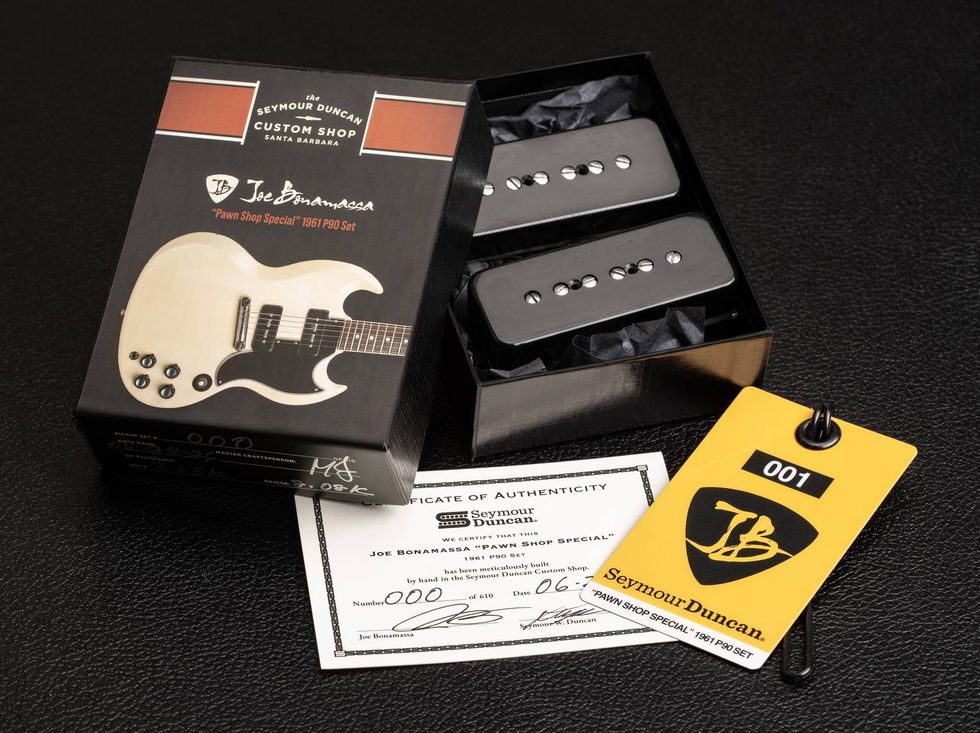
Key features include:
- First P90 collaboration between Joe Bonamassa and the Seymour Duncan Custom Shop
- Directly replicates the exact tone of the soapbar P90s from Joe's own 1961 SG Special
- Alnico 4 magnets and custom wind capture the airy top end and sizzle of the original pickups
- Vintage style output: Bridge 8.4k / Neck 7.8k DC resistance
- Historically accurate dimpled P90 bottom plate, covers, and period-correct details
- Wax potted per Joe's preferences for reliable live performance
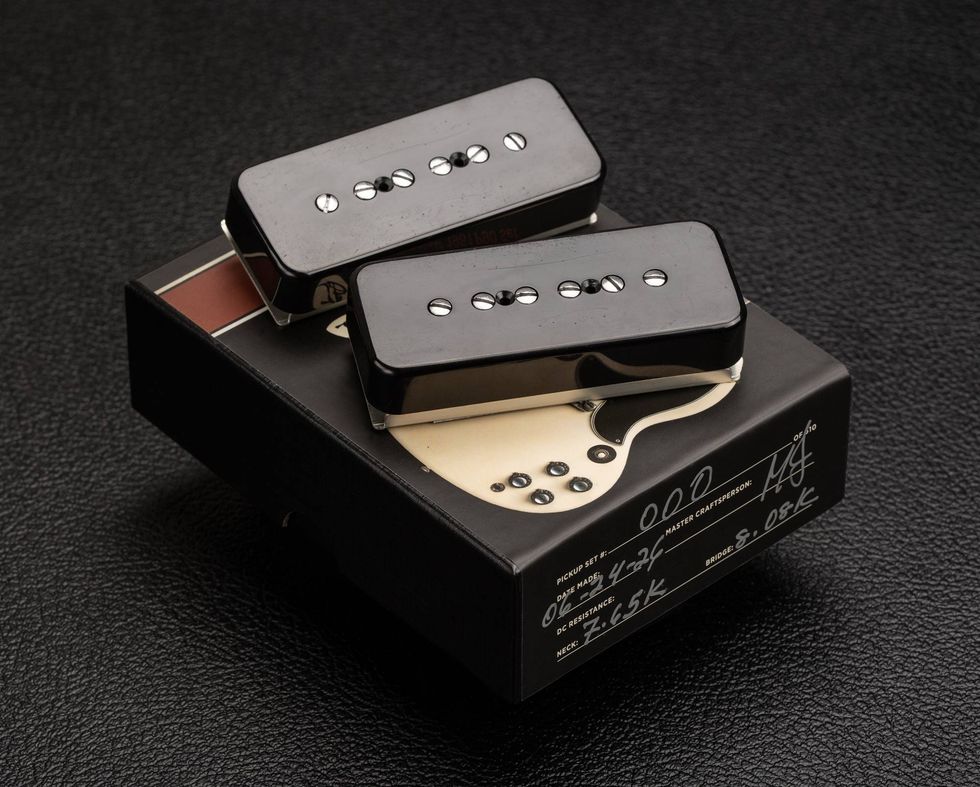
First 610 sets include a Nerdville #001 luggage tag, certificate of authenticity signed by Joe Bonamassa and Seymour, and limited-edition packaging
Most guitar players have had the experience of walking into a pawn shop, hoping to strike gold, only to find a limited selection of instruments that are far from inspiring. But sometimes with the right combination of luck, a great guitar can be found hanging on the wall of your local pawnbroker. Joe Bonamassa found one such gem, a 1961 Gibson® SG™ Special, at a pawn shop while on tour in 2010. Not only was it a pristine example of a first-year SG Special, but it also had a set of pickups that marked the beginning of Joe’s love affair with P90s. The pickups in this guitar exemplified the tone of his heroes who played these pickups in the ‘60s. Players like Pete Townshend, Carlos Santana, and Leslie West.
After many years of recreating pickups from some of Joe’s favorite instruments, Seymour Duncan and Bonamassa have teamed up to replicate the soapbar P90 pickups from this very special guitar as the Joe Bonamassa “Pawn Shop Special” 1961 P90 Set – the Custom Shop’s first P90 collaboration with Joe.
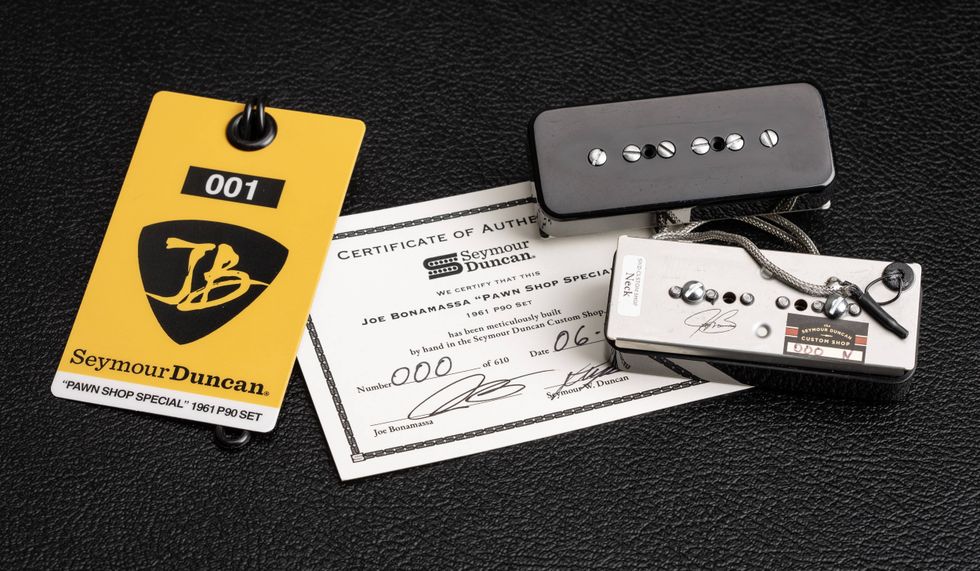
Sonically, these vintage P90s sit somewhere between a single coil and a humbucker: articulate and responsive, but with plenty of bark, especially when overdriven. The output specs are: Bridge 8.4k / Neck 7.8k DC resistance.
The “Pawn Shop Special” 1961 P90 Set is built with Alnico 4 magnets and a custom wind to duplicate the airy top end and sizzle that make the pickups in Joe’s guitar so captivating. Seymour Duncan created a historically accurate dimpled P90 bottom plate specially for this project, taking care to replicate the covers and other intricacies of pickups from this era. These P90s are wax potted per Joe’s preferences and are ready for any live performance (no matter how many Overdrive Specials™ and Silver Jubilees™ are turned up behind you).
The Pawn Shop Special occupies a unique place in Joe's extensive guitar collection. As he began to log and inventory his instruments, this guitar was the very first instrument to be cataloged thus garnering an inventory tag as item #001. To celebrate this, the first 610 sets will come with a Nerdville #001 inventory tag, similar to the ones Joe uses to catalog his own instruments. Other features exclusive to the first 610 sets include a certificate of authenticity signed by Joe and Seymour, as well as limited edition packaging.
The Joe Bonamassa “Pawn Shop Special” 1961 P90 Set carries a street price of $375. For more information visit seymourduncan.com.
Hagstrom Megin Review
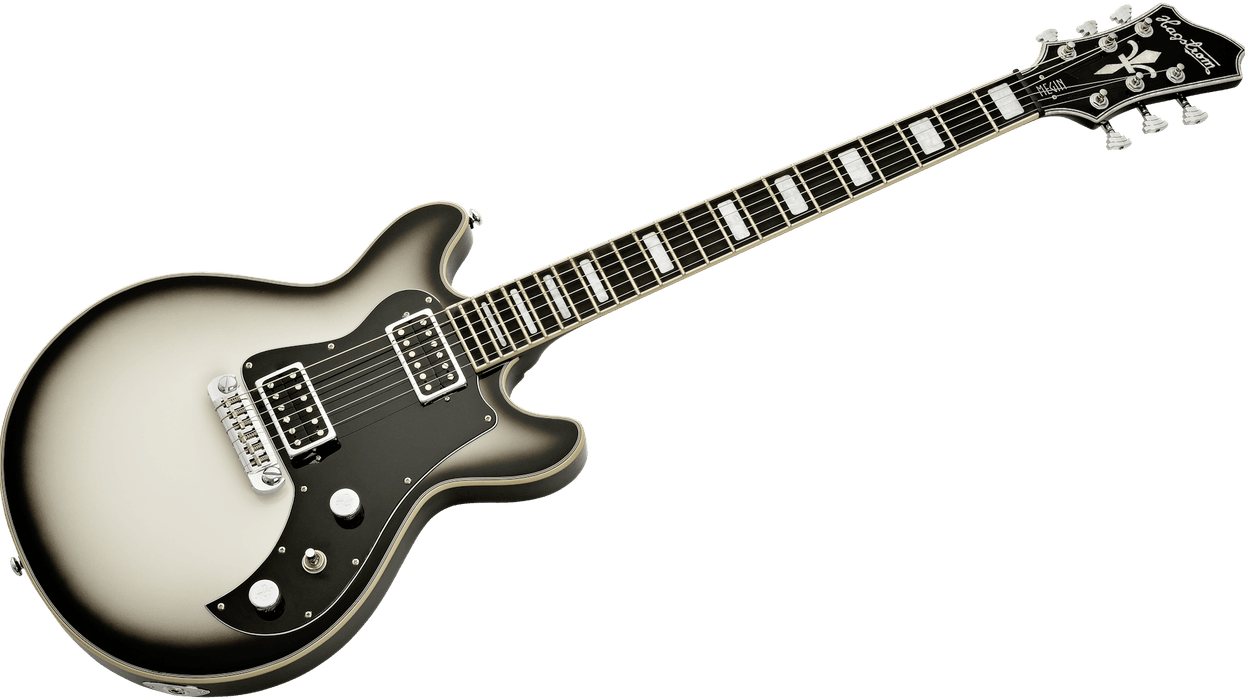
Though they never made major inroads into the North American guitar market, Swedish maker Hagstrom’s guitars have always had cool cred to spare. Hagstroms in the hands of ABBA’s Bjorn Ulvaeus and Rutger Gunnarsson might not surprise anyone. But they were also used by a range of icons spanning from Jimi Hendrix, David Bowie, Frank Zappa, and Elvis Presley, to Nels Cline, Mark Arm of Mudhoney, and Pat Smear of the Germs, Nirvana, and Foo Fighters. Hagstroms are often unique in sound and feel. The thin necks on many 1960s models, for example, make them favorites among players who like to riff at speed.
The new China-made Megin isn’t quite as quirky as, say, a 1960s Hagstrom III. It’s closer to a traditional rock machine and priced for what you could call the quality-entry-level range of the market, selling for a sum just south of a grand, including the tweed-style hardshell case.
Arctic Charm
At a glance, the Megin evokes thoughts of Gibson’s Les Paul DC, as well as Hagstrom’s own very Les Paul-like Swede, though there are plenty of departures from those formulas that give the Megin a unique identity and personality. What’s familiar here? Well, there’s a set neck, two humbuckers, and a mahogany body and neck. Unlike a Les Paul, though, there’s no maple cap. And the extra space and stretch you feel is the Megin’s 25.5" scale length, which translates to tighter bass tones on the wound strings and a little more shimmer on the higher strings.
The neck is carved to a slim-C profile that tapers only slightly as you climb it, and although the bound fingerboard looks like a slice of ebony, it’s actually a composite material Hagstrom calls “resonator wood.” Hagstrom’s unique H-Expander truss rod encloses the adjustable round rod within an H-shaped sleeve of lightweight alloy that increases stability—and, Hagstrom claims, the guitar’s resonance. The 22 medium-jumbo frets are smoothly dressed, and the guitar plays easily from nut to joint.
“The Megin cuts straight to the beefy humbucker rock tones that its looks suggest.”
The Megin has a lot going on in the style department, and deluxe details abound, including 5-ply body binding and rounded block inlays. The headstock is classically Hagstrom—ornate and bristling with Art Deco touches, including the Empire-style tuners. Our test guitar came in a grey burst finish that’s happily reminiscent of Gibson’s circa 1979 silverburst, which is one of four options including black gloss, crème, and sky blue. Taken as a whole, it’s fancy without being over the top.
Northern Lights
Hagstrom loads the Megin with a pair of the company’s own Custom 62 humbuckers, including a medium-output unit at the neck measuring 8.2k-ohms resistance and a high-output bridge pickup rated at 13.8k ohms. They’re routed through a simple 2-knob volume and tone setup, which includes a treble-bleed network on the volume control. A 3-way selector switch is positioned between the knobs.
Played through a 1964 Fender Bassman head and 2x12" cab, a recent Vox AC15, and a Fractal FM9 modeler, the Megin projects beefy humbucker rock tones, just as its looks—and those pickups’ resistance ratings—suggest. Guitars like this one have a way of sparking big leads and riffs, and the Megin excels in these rowdy musical settings. There’s lots of sizzle, tons of girth, and sustain enough for any situation I can imagine. Generally speaking, this might sound like a very same-old-humbucker-meets-mahogany-solidbody formula, but the Megin’s 25.5" scale adds articulation that cuts more effectively though distortion and lends the guitar a distinct personality.
Rock modes may be this guitar’s primary mission. Even so, I wonder about the need for such a high-output bridge humbucker. It ramps up dirt and saturation—often in a welcome way— but also makes it tougher to dial in pristine clean tones. A lot of the appeal in less potent humbuckers is that they make it easier to remove distortion and retain a big, clear signal. On the Megin, reducing the guitar’s volume control doesn’t always add up to crystal clear notes.
The Verdict
At $949, you start to expect a lot from a guitar in terms of quality. On that front, the Megin delivers. It’s extremely well put together and exhibits impressive care from just about every design and assembly perspective. That translates to easy playability and a lively resonance.
Guitarists familiar with Gibson-like 24.75" standard scale length might have to adjust to the slightly stiffer feel that comes with the longer scale, but the tone payoff from the extra chime and tight low end can be worth the sacrifice, depending on your style and preferences. The other factor to consider is the pickups. The high output may not be for players who work outside hot-rocking realms, and it can offset the charms of that extra chime and tight bass. But if that’s your lane, the Megin can be magical.
ESP Unveils New Guitar Models and Overhaul of LTD Black Metal Series
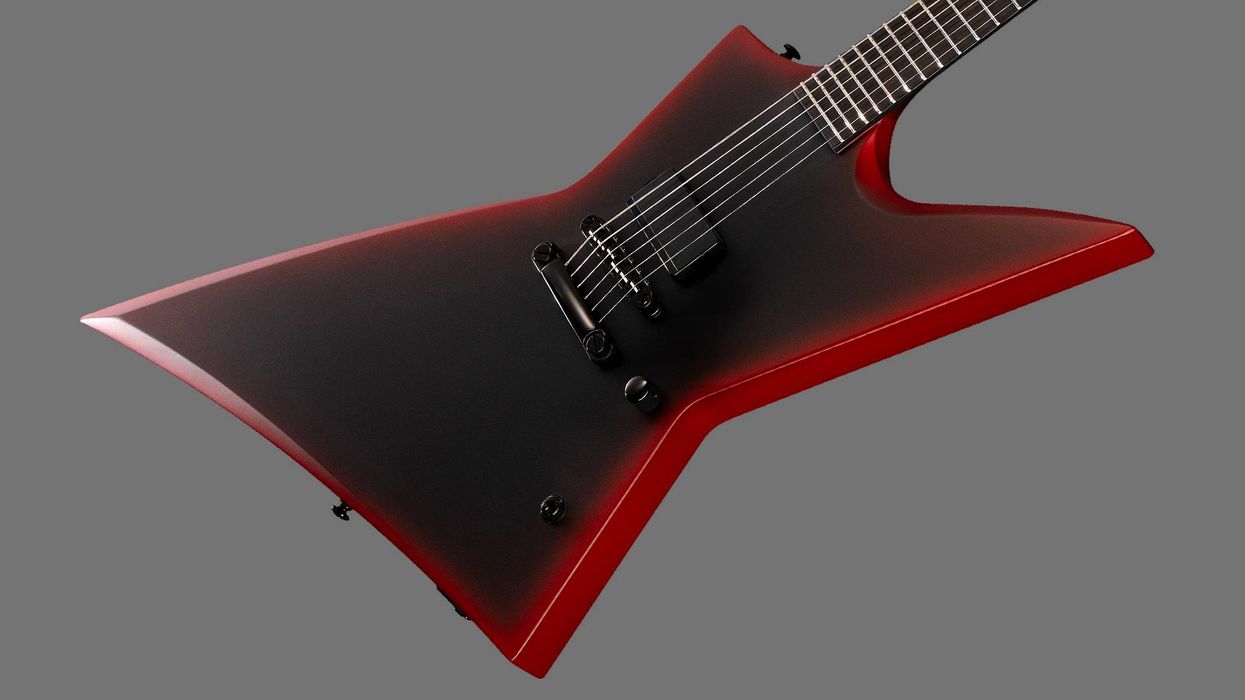
ESP Guitars has unleashed a surprise mid-year batch of new guitar models. These include six new guitars in the completely updated LTD Black Metal Series, as well as two new value-priced seven-string guitars and a new Signature Series model.
“The new Black Metal Series delivers everything that extreme metal guitarists have been asking of us over the years,” says Tony Rauser, Director of Marketing and Artist Relations for the ESP Guitar Company. “They offer more aggressive shapes, streamlined control layout, and a variety of tones from a single pickup design.”
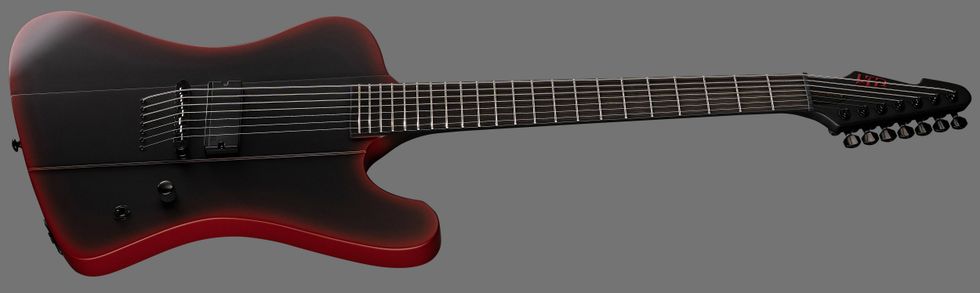
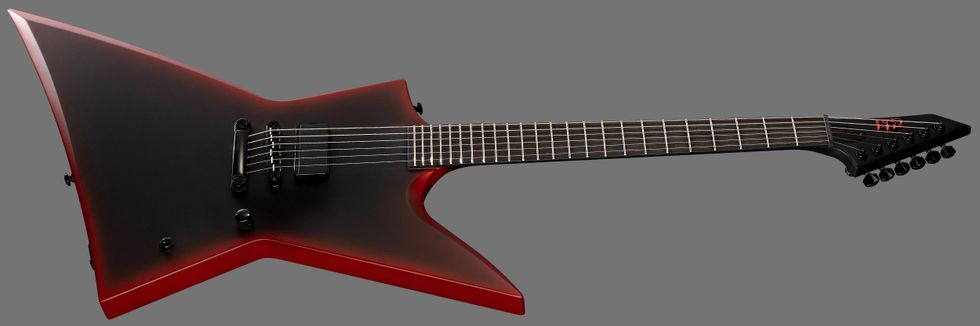
The six completely updated LTD Black Metal Series guitars include the Arrow Black Metal, the EXL-7 Baritone Black Metal, the EXL Black Metal, the M-7 Baritone Black Metal, the M-6 EverTune 30 Black Metal, and the Phoenix-7 Baritone Black Metal. All of these newly-released guitars come in Black Red Burst Satin finish with black hardware, and feature matching red LTD metal headstock logos.
The LTD Arrow Black Metal offers neck-thru-body construction at 25.5” scale with a three-piece extra-thin u-shaped maple neck, mahogany body wings,Macassar ebony fingerboard, 24 extra-jumbo stainless steel frets, precise Grover tuners, a Floyd Rose 1000 double-locking tremolo bridge, and a Seymour Duncan MortalCoil 3-Voice active bridge pickup with a 3-way toggle to select voices.
The LTD EXL Black Metal and EXL-7 Baritone Black Metal make use of ESP’s EX body shape with slightly larger dimensions. They offer set thru construction, mahogany body, thin u-shaped three-piece maple neck, Macassar ebony fingerboard, 24 extra-jumbo stainless steel frets, and a TonePros locking TOM-style bridge and tailpiece. The EXL Black Metal is offered in 24.75” scale and features a Seymour Duncan MortalCoil 3-Voice active bridge pickup with selectable voices. The EXL-7 Baritone Black Metal is a 7-string, 27” scale guitar that features a Seymour Duncan MortalCoil 7 String 3-Voice active bridge pickup with a 3-way toggle to select voices.
Two new M Series models are also part of the new Black Metal Series. Perhaps the most extreme guitar in the collection is the LTD M-6 EverTune 30 Black Metal, a six-string guitar with a 30” scale that’s tuned a full octave down from standard tuning. This guitar includes the innovative EverTune constant tension bridge system, and features bolt-on construction, a mahogany body with maple cap, an extra-thin u-shaped three-piece maple neck, Macassar ebony fingerboard, 24 extra-jumbo stainless steel frets, and a Seymour Duncan MortalCoil 3-Voice active bridge pickup with a 3-way toggle to select voices.
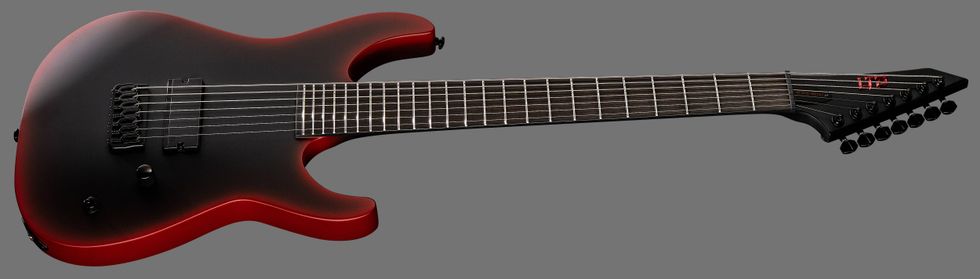
The LTD M-7 Baritone Black Metal is built with neck-thru-body construction at 27” baritone scale, with a comfortable alder body paired to a fast extra-thin u-shaped three-piece maple neck. Features include a Macassar ebony fingerboard, 24 extra-jumbo stainless steel frets, a Hipshot hardtail bridge with string-thru-body design, and a Seymour Duncan MortalCoil 7 String 3-Voice active bridge pickup with a 3-way toggle to select voices.
Another seven-string baritone in the updated series is the LTD Phoenix-7 Baritone Black Metal, with with neck-thru-body construction at 27” scale, a thin u-shaped three-piece mahogany neck, mahogany body wings with a maple cap, Macassar ebony fingerboard, 22 extra-jumbo stainless steel frets, a TonePros locking TOM-style bridge with string-thru-body design, and a Seymour Duncan MortalCoil 7 String 3-Voice active bridge pickup with a 3-way toggle to select voices.
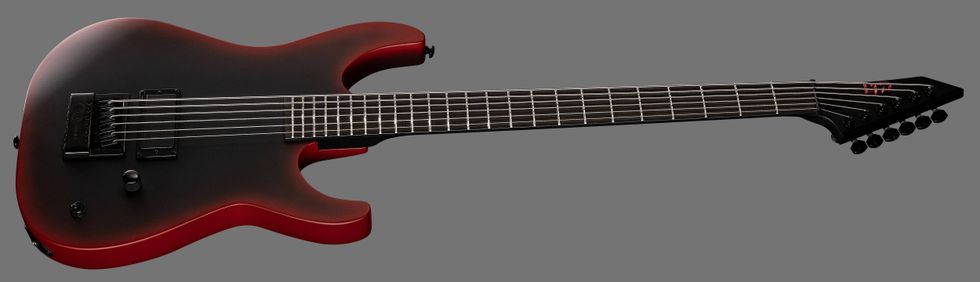
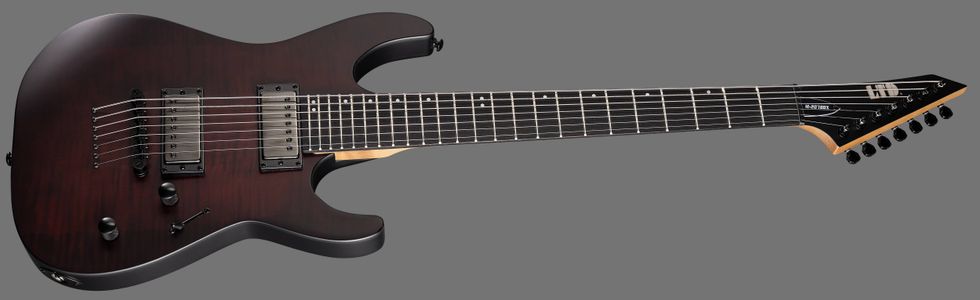
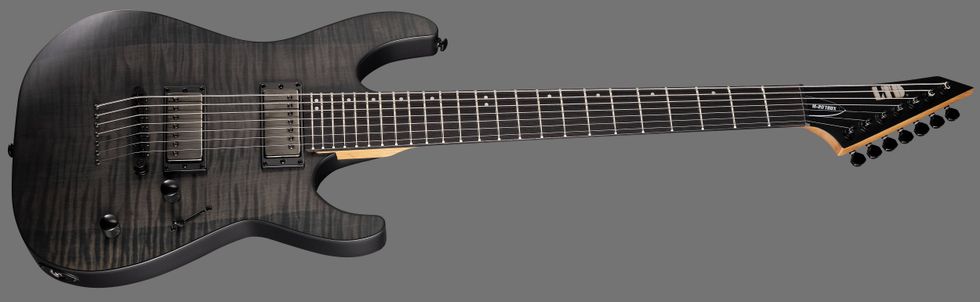
ESP has also announced two new guitars in its value-packed 200DX Range. The LTD M-207DX Baritone is being offered in Crimson Satin and See Thru Black Satin finishes. These seven-string baritone guitars have bolt-on construction at 27” scale, a poplar body with flamed maple top, an extra-thin u-shaped roasted maple neck with rosewood fingerboard, and 24 extra-jumbo frets. Components include LTD tuners, a TOM-style bridge with string-thru-body, and a set of ESP’s LH-150 humbucking pickups with matching black chrome covers, with single-coil tones offered by a push-pull switch on the tone knob.
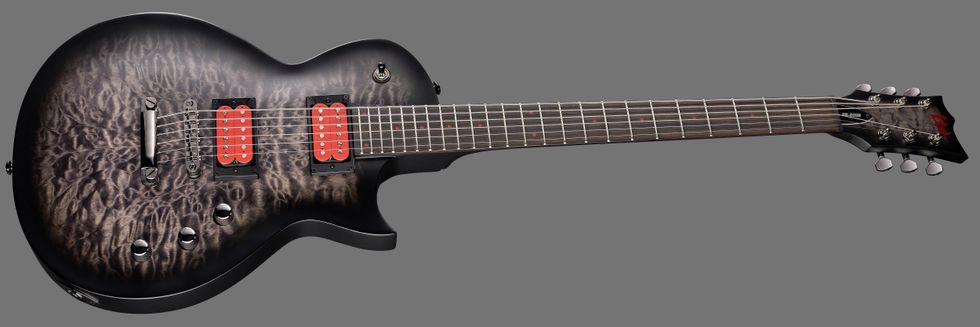
Finally, the company announced a new version of their Signature Series guitar for Ben Burnley, founder of the rock/alt-metal band Breaking Benjamin. The LTD BB-200 Baritone is a more affordable version of this popular signature guitar, and is offered in See-Thru Black Sunburst Satin finish. It includes set-neck construction at 27” scale, a mahogany body with quilted maple top, and a three-piece maple neck with rosewood fingerboard, red dot inlays, and 24 extra-jumbo frets. Components include black nickel hardware, LTD tuners, a TOM-style bridge and tailpiece, and a set of ESP’s LH-150 humbucking pickups with red covers that can be split for single-coil tones.
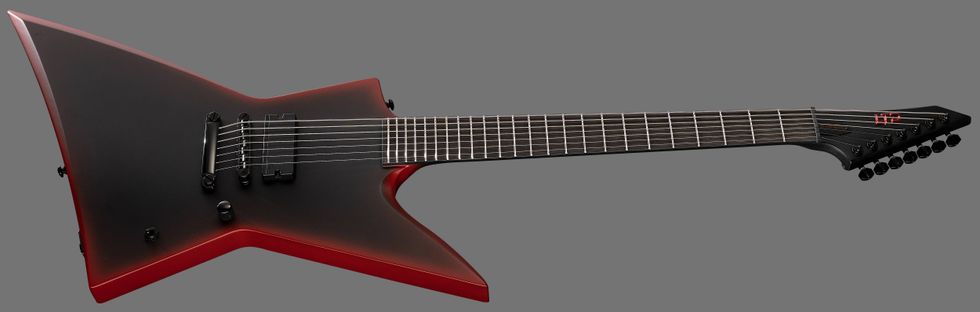
Street prices for each of the new models are:
LTD Arrow Black Metal - $1,299
LTD EXL-7B Black Metal - $1,299
LTD EXL Black Metal - $1,199
LTD M-7 Baritone Black Metal - $1,299
LTD M-6 EverTune 30 Black Metal - $1,399
LTD PHX-7 Baritone Black Metal - $1,299
LTD M-207B DX Crimson Satin - $499
LTD M-207B DX See-Thru Black Satin - $499
LTD BB-200 Baritone - $799
More information visit www.espguitars.com.
Keeley Tube Drive Review
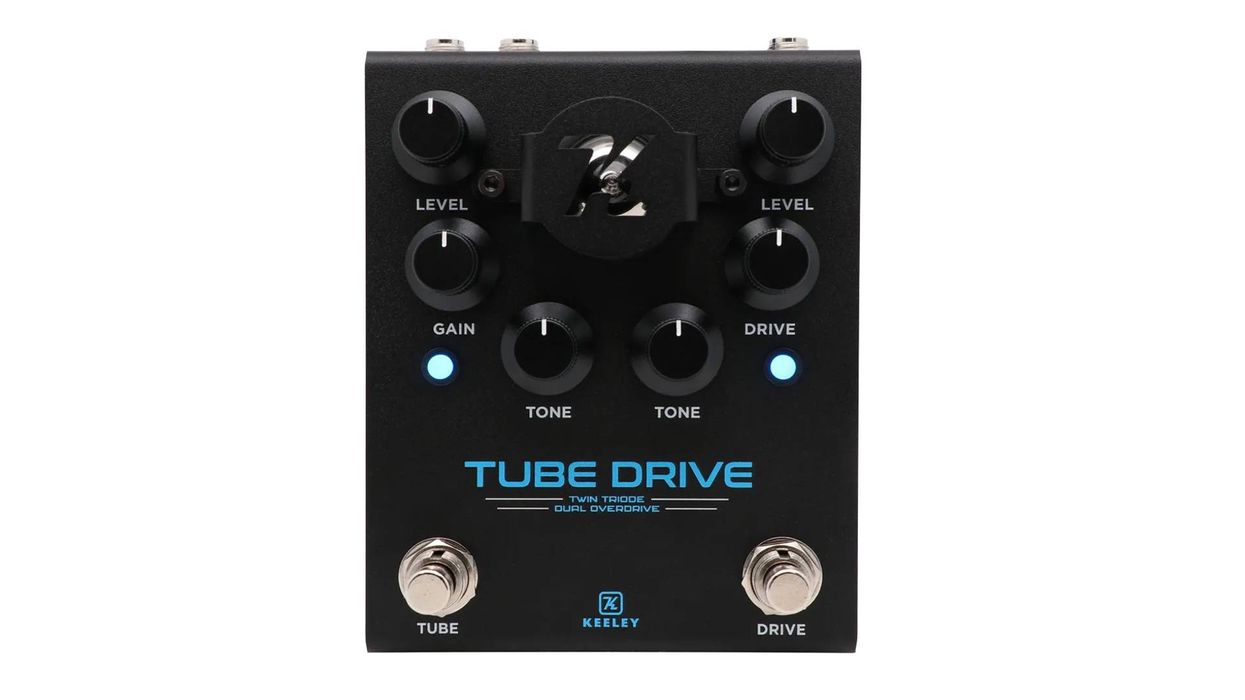
When I see an overdrive powered by a real tube, I’m predisposed to think about all those things that you associate with glowing tubes and overdrive—low-to-medium gain, warm, toasty, maybe even mellow tones. Keeley’s Tube Drive (which was originally issued in a limited edition of 100 fitted with 76-year-old Sylvania 12AT7s) dishes drive tones that are all those things, and sounds beautiful doing it. But the Tube Drive is made up of two sections. One is powered by a 12AX7 (alas, no ultra-rare antique tubes in this version.) The other is Keeley’s Phat Mod, a riff on the JFET Boss BD-2 Blues Driver, another circuit regarded as warm and responsive. Together, though, the two drive circuits expand each other’s range exponentially—right up to wicked saturated sounds that make a low-wattage combo more akin to a big British stack.
Glow Bug
So, two drives, six knobs. Seems simple, just like a dual drive should be, right? Well, not so fast. On the tube side, the controls include a 5E3 tweed Fender Deluxe-style tone stack after the tube. In a real tweed Deluxe the tone stack, and its effect on the amplifier's output, can be difficult to grasp in practice. A technical outline of its function, meanwhile, would take up a significant part of this review. In practical terms, though, the use of a 5E3 tone stack in the Tube Drive means that the tube side tone control shifts the pedal’s gain profile more profoundly than the tone control on your Tube Screamer might. The Tube Drive’s version of this setup does not make the pedal a tweed Deluxe. And thankfully, it’s much simpler to dial in. But it does lend the tube side a more complex range of voices, as well as a dynamic range that a lot of overdrives cannot touch.
The tube side’s drive tones are, predictably, a lovely combination of smooth and gritty. If you’re disinclined to use your guitar’s tone and volume controls, you can dial up low-to-mid-gain drive tones that sparkle with a Telecaster and a Deluxe Reverb—even at fairly advanced gain settings. But the real beauty of the tube side is how it sounds, feels, and functions when you set the level, gain, and tone controls in the latter third of their range, and use guitar volume and tone to shape the output. The clean tones you can access via this technique are beautiful stuff. They are alive, meaty, and sparklingly clear. But when you open up your guitar volume and tone, the output turns savage and nasty, dispensing distortion that’s thick, rich, and loud—and, more critically, tends to sound like an extension of your amplifier’s natural voice. At these settings, very small, incremental adjustments to guitar volume and tone can reshape this distortion in myriad ways between full-bore and clean.
Beyond Blues Driven
Adding additional gain from the drive side at aggressive tube side settings can be deadly—erasing any pretense of the Tube Drive being a polite OD, and transforming the pedal into a rabid distortion machine. By itself, it can be pretty mean. And compared to the tube side, the drive side feels hotter, grittier, and more abrasive in a way that, at times, makes its BD-2 Blues Driver origins seem many miles distant. But this contrast makes the Tube Drive exceptionally versatile.
The Verdict
On the surface, spending almost 400 bones on what’s ostensibly a two-channel overdrive does not sound like a very appealing proposition. But the Tube Drive’s genuine tubiness makes the pedal more than the sum of its parts. Its nastiest stuff can be intense. But set up right, these aggressive tones can be an amazing baseline to work backward from—happily ranging to sparkling clean, if you’re crafty about your guitar settings.

Tube Drive
Dual Overdrive Guitar Pedal, with Per-channel Level, Tone, and Gain Controls, FX Order Switching, 12AX7 Vacuum Tube, TRS Remote Jack, and True/Buffered Bypass - Black
IK Multimedia Launches TONEX Board
The complete TONEX rig on a single pedalboard, combining AI-captured tone, AmpliTube effects, advanced routing, and professional performance control.
IK Multimedia today launches TONEX Board, its most advanced TONEX hardware platform to date and the centerpiece of the expanding TONEX ecosystem. Combining IK's award- winning AI Machine Modeling™ technology with AmpliTube studio-grade effects, dual signal paths, advanced routing, extensive connectivity, and intuitive touchscreen control, TONEX Board puts one of the most advanced and best-sounding complete guitar and bass rigs into an extremely powerful, ultra-low-latency compact pedalboard.
At its heart, TONEX Board delivers the sound, feel, and response of real amps, cabinets, and pedals, with the flexibility to run up to four Tone Models simultaneously across two independent signal paths. Players can combine these with 76 effects from AmpliTube and TONEX, plus all- new processors, using up to 12 effect slots to create everything from streamlined traditional rigs to sophisticated dual-amp, parallel, stereo, and wet/dry setups.
A 5-inch high-resolution color touchscreen and six hands-on controls make building and editing complete rigs fast and intuitive, while flexible performance modes, independent stereo outputs, an assignable stereo effects loop, MIDI, and expression control provide the connectivity and control needed for recording, rehearsal, and the stage.
Key Features
- Incredible amp sound - The sound, feel, and response of real amps, cabinets, and distortion pedals, powered by AI Machine Modeling™
- Studio-grade effects - 76 total effects, including 51 derived directly from AmpliTube 5, 15 from TONEX, and 10 brand-new studio-grade guitar and bass effects, with more to come
- Complete rig building - Combine up to four Tone Models across flexible dual signal paths with 12 slots and flexible routing
- Effortless control - Intuitive touchscreen editing and flexible performance modes keep everything immediately accessible
- Connect to any rig - Professional routing and comprehensive I/O for amps, FRFR, front of house, studio setups, and more
- A universe of tone - 2,000 Premium Tone Models included, plus tens of thousands more to discover on ToneNET
- A complete, evolving ecosystem - Capture, create, edit, record, perform, share, and expand your sound across TONEX hardware and software.
One Board. A Complete Rig. TONEX Board takes the core technology behind TONEX further with a dual- signal-chain architecture capable of running up to four Tone Models simultaneously, combined with 76 studio-grade effects across nine categories. The effects collection includes 51 processors derived from AmpliTube, 15 from TONEX, 10 all-new effects, and more to come. Up to 12 Tone Model and effect slots can be freely positioned and routed across flexible signal paths to create dual-amp stereo rigs, wet/dry setups, two-instrument configurations, sophisticated parallel chains, and more.
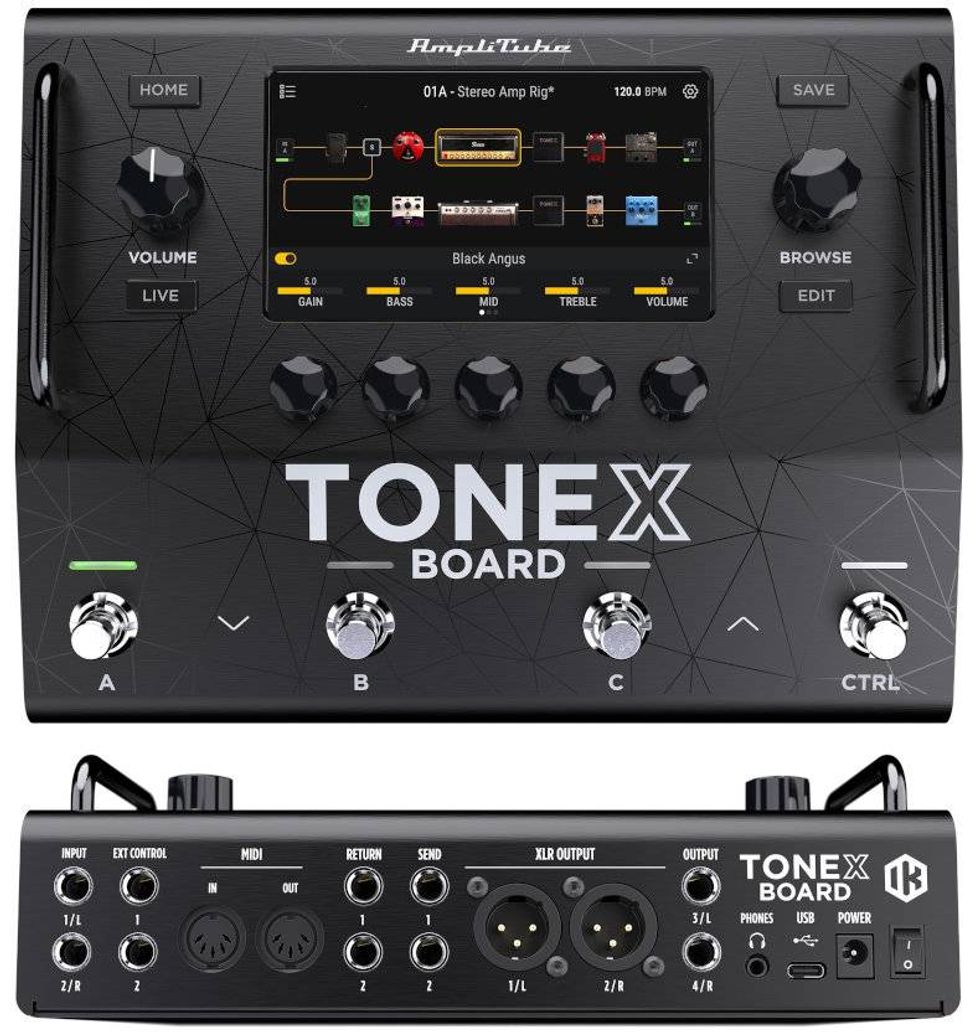
From authentic captured amps, cabinets, and pedals to drives, dynamics, modulation, delay, reverb, and creative processing, TONEX Board gives players the freedom to build the exact rig their music requires - all on a single pedalboard.
Control Without Complexity TONEX Board combines the depth and connectivity of a professional rig with fast, intuitive hands-on control. Its large 5-inch high-resolution color touchscreen provides immediate visual feedback, while six precision push-rotary controls make building and editing complete presets fast and direct.
Preset, Scene, and Stomp modes provide flexible control onstage, from recalling complete rigs and changing multiple settings at once to controlling individual effects directly from the footswitches.
TONEX Board also adapts to virtually any rig or performance environment. Players can split and merge signal paths, integrate external pedals with the movable stereo effects loop, or divide the loop into two independent mono paths. Two independent stereo output pairs (one with balanced XLR connectors), individual output EQ, MIDI, expression control, and four-cable method support provide the flexibility to connect to traditional amplifiers, FRFR systems, recording setups, or directly to front of house (4-in/2-out USB audio interface functionality with configurable routing and direct monitoring will be available October 1, 2026, via a free firmware update). Whether recording, rehearsing, or performing live, TONEX Board keeps the focus on playing rather than programming.
A Universe of Tone TONEX Board includes 2,000 Premium Tone Models, spanning sought-after vintage amplifiers and essential classics to modern high-gain rigs, pedals, and more. The collection combines the original TONEX MAX library, a selection from the latest TONEX ONE+ Signature Collection, and new TONEX content made exclusively for TONEX Board.
Nearly 200 of the included captures were contributed by a curated group of leading TONEX Tone Partners, including, in alphabetical order: Amalgam Audio, Big Hairy Guitars, Core Tone Captures, Drums And Tones, Gitarrenlehreronline, Jason Sadites, Juca Nery, Live Ready Sound, Mad Steex, Massimo Varini, Matt Fig, Passion For Tone, Signal Theory, The Studio Rats, The Tone Shepherd, Tone Factor, Tone Junkie TV, Tone Wars, and XOG.
And the included library is only the beginning. Through ToneNET, TONEX Board users can explore more than 60,000 additional Tone Models and presets from IK, Tone Partners, artists, brands, and a growing worldwide TONEX community.
A Full Software Ecosystem TONEX Board is the centerpiece of the complete, connected TONEX ecosystem. Capture gear with TONEX Modeler, discover sounds through ToneNET, shape and organize them with TONEX software, transfer Tone Models and presets with the dedicated TONEX Board Editor, and record with the TONEX plug-in.
Existing TONEX users can import their presets into TONEX Board and pick up where they left off, providing a seamless path from other TONEX hardware and software. And with new content, effects, and capabilities planned through future updates, TONEX Board is built to evolve along with the TONEX ecosystem.
TONEX Board at release includes the following software:
- TONEX Modeler to capture amps, pedals, cabinets, and full rigs
- TONEX software to import, download, and play Tone Models as a standalone or plug-in version
- TONEX Board Editor to transfer existing Tone Models and presets to TONEX Board
Additionally, TONEX Board users will have exclusive access to TONEX Player 2.0 Beta (version 2.0.3), which will offer complete dual-rig editing with all 76 included effects, TONEX Board preset saving, and full bidirectional transfer of Tone Models and presets between Mac or PC and TONEX Board using TONEX Board Editor.
Presets created with TONEX Board will be available to share with the community on ToneNET beginning October 1, when TONEX Player 2.1 is officially released. Full real-time editing in TONEX Board Editor will be implemented in Q4 2026.
Pricing & Availability The TONEX Board is now available for $/€999.99 (tax excluded) from the IK Multimedia online store and authorized IK dealers worldwide.
For more information, audio demos, videos, and availability, visit: www.ikmultimedia.com/tonexboard
LR Baggs Unveils Next Era as Baggs, Welcomes Second-Generation Leadership

As the company celebrates its 50th anniversary, LR Baggs has changed its name and unveiled new branding. The company is now simply Baggs, and has announced that Jenny Luckett, daughter of founder Lloyd Baggs, has joined the leadership team as Creative Director.
A Pepperdine University graduate with a BA in Art and Multimedia Design and a successful entrepreneur, Luckett recently sold her January Moon children’s brand to join Baggs full-time. She has led and directed a year-long development of Baggs' core visual identity and brand message.
"Removing the LR isn't about removing Lloyd from the story," says Luckett. "It's about expanding the story. It takes something that began with one person and makes room for all the people who have become part of it. To us, Baggs is the family, and that family is much bigger than Lloyd's actual family. It includes all the people who have helped build this company and all of the people who will be part of where it goes next."
Baggs began with one person: luthier Lloyd Baggs, one of the most influential innovators in acoustic amplification. Over the past five decades, most people have simply started calling the company "Baggs." Lloyd himself introduced the shorter name three years ago on the AEG-1 guitar, where "Baggs" appears on the headstock to represent the entire team behind it. The new name makes that philosophy official.
"I'm thrilled beyond words for Jenny to be joining the company and helping guide it into the future," says Lloyd Baggs. "Not only is she amazingly talented and driven to do the right things, but she's thoughtful, kind and joyful. She's a born leader and a joy for all of us to work with."
Lloyd's role isn't changing. He remains focused on product design and innovation, with a strong management team overseeing day-to-day operations.
The new identity follows a year-long, top-to-bottom examination of how Baggs presents itself and communicates its identity today. The result: a cleaner, more legible logo, vibrant and warm color palette, and all-new original photography that reflect the company's blend of craftsmanship and innovation. A distinctive orange icon incorporates Lloyd's personal "chop," the signature he used as a fine-art master printer before becoming a luthier, connecting his history to the company's future.
"We know our products are world-class, and we want the brand around them to perform at that same level," says Luckett.
For more information visit baggs.co.
Cort Introduces the CR300MT Electric Guitar
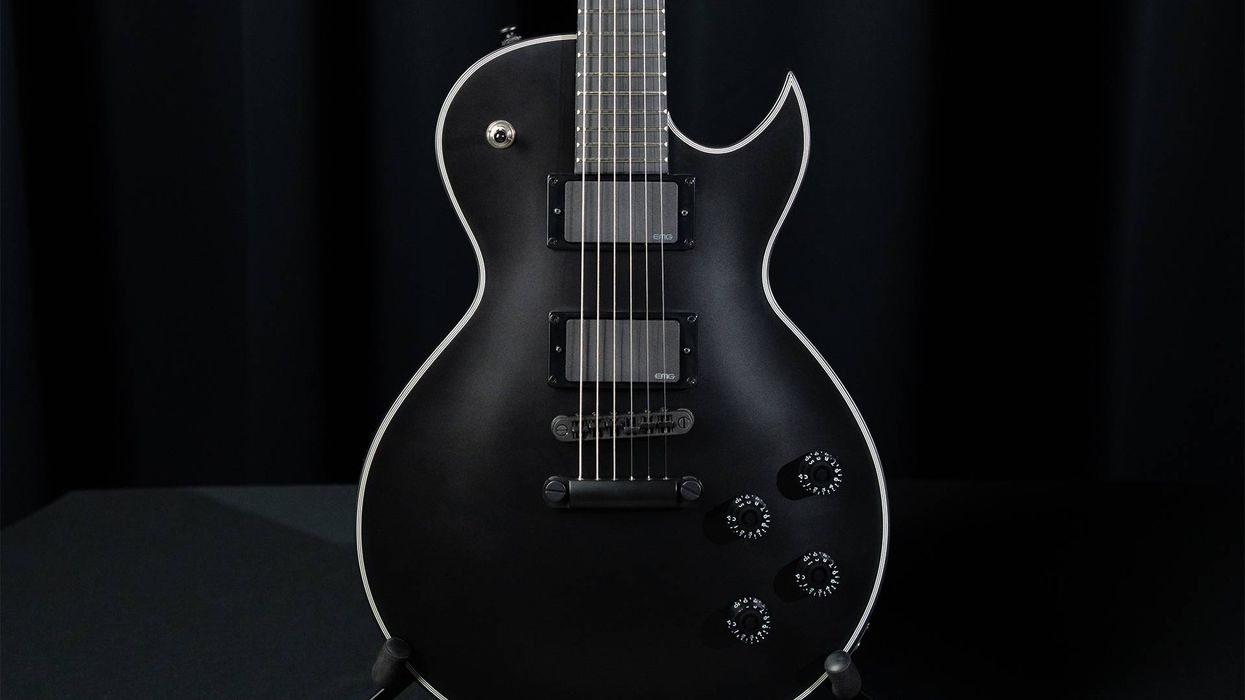
Cort announces the expansion of its single cut lineup with the introduction of the CR300MT electric guitar. Developed to fulfill the evolving preferences of contemporary guitarists, this guitar unites a highly requested combination of components and materials in a classic design.
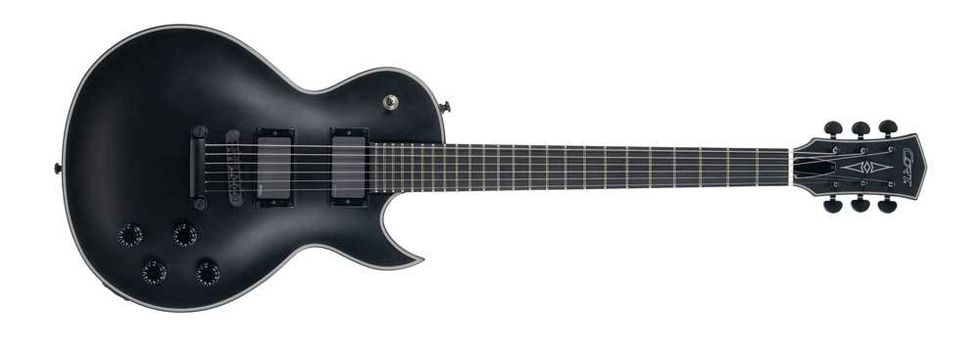
Built with a focus on traditional material choice, the CR300MT features a solid mahogany body configured to deliver sustained resonance and low-end warmth. The instrument is finished in a modern, streamlined Black Satin (BKS) finish, highlighting a clean aesthetic highlighting the physical architecture of the guitar body without distraction. The multi-ply white-and-black binding wraps the perimeter of the body and headstock, serving as a stark architectural outline against the deep satin color.
The guitar layout relies on a traditional set-neck construction, seamlessly pairing the mahogany body with a robust mahogany neck. This configuration refines mechanical stability and string-vibration transfer across the entire length of the instrument. Built to a classic 24.75-inch (628mm) scale length, the neck is capped with a durable Micarta fingerboard carved to a comfortable 12-inch (305mm) radius. The fretboard hosts a full 24-fret layout with nickel-silver frets. At the headstock is a premium Graph Tech® TUSQ nut, measuring a standard 1-11/16 inches (43mm) in width to ensure comfort and tuning stability.
The electronic architecture of the CR300MT is powered by a high-output EMG® 81 and 60 active humbucker pickup set to provide tonal versatility. This iconic pickup pairing is wired into an intuitive, control array consisting of two individual volume knobs, two individual tone knobs, and a standard 3-way toggle switch. This layout gives musicians precise control over their output shaping, allowing for immediate switching and independent adjustments between the neck and bridge pickup positions.
Rounding out the specifications, the CR300MT is equipped with Grover® Rotomatics™ tuning machines for reliable tuning stability and micro-adjustment precision. On the body, string tension and height are regulated by a classic Tune-O-Matic-style bridge paired with a secure stop tailpiece.
For more information, please visit the official Cort website at www.Cortguitars.com
Street Price: $899.99 USD
SatchVai: Joe Satriani And Steve Vai New Single “Mayhem” out Today!
After more than five decades of friendship, musical exchange and separate careers that helped redefine what the electric guitar could do, Joe Satriani and Steve Vai have finally made a record together. The Sea of Emotion, the first studio album from SatchVai, will be released November 6, 2026 via earMUSIC. The announcement arrives alongside the release of “Mayhem,” the album’s blistering new single, out today.
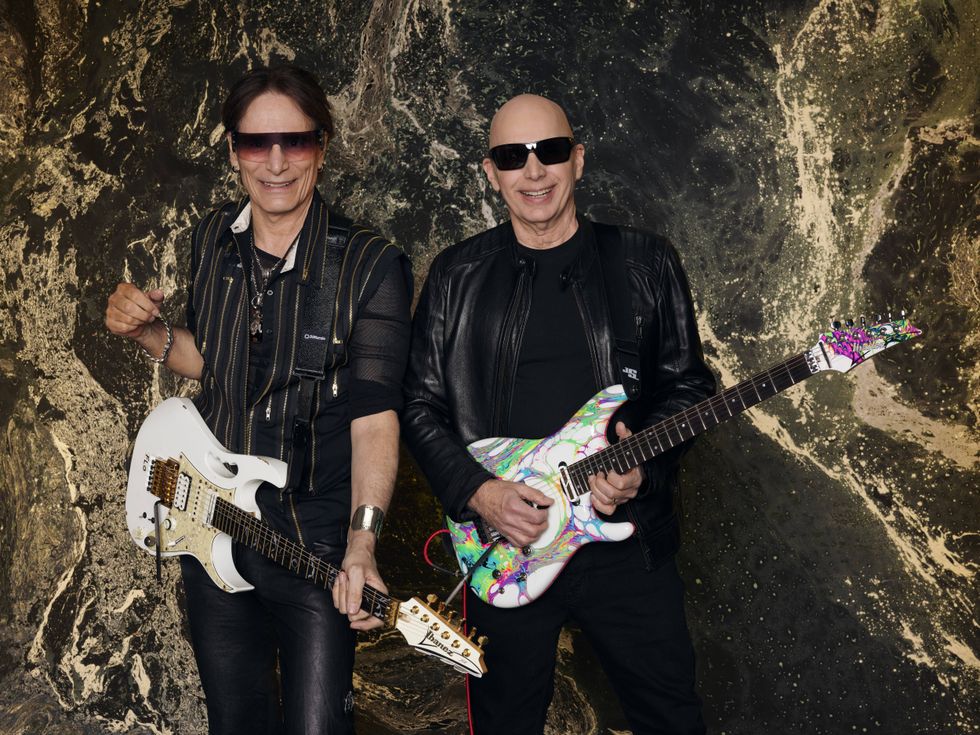
The story began in 1973, when 13-year-old Steve Vai began taking guitar lessons from his 17-year-old teacher, Joe Satriani, in Long Island. Neither could have known where that shared obsession with the guitar would lead. More than 50 years later, after establishing themselves as solo artists and sharing stages around the world through the legendary G3 tours, they have brought their musical histories together on one album.
“We’ve been planning this since 1973,” Vai says with a laugh. “Just unconsciously.”
The album came together after a G3 reunion tour created an unexpected opening in their schedules. What began as a suggestion to record a single track quickly expanded when Satriani sent Vai two finished pieces, “The Sea of Emotion, Part 1” and “Part 2.” Vai knew immediately that the time had come.
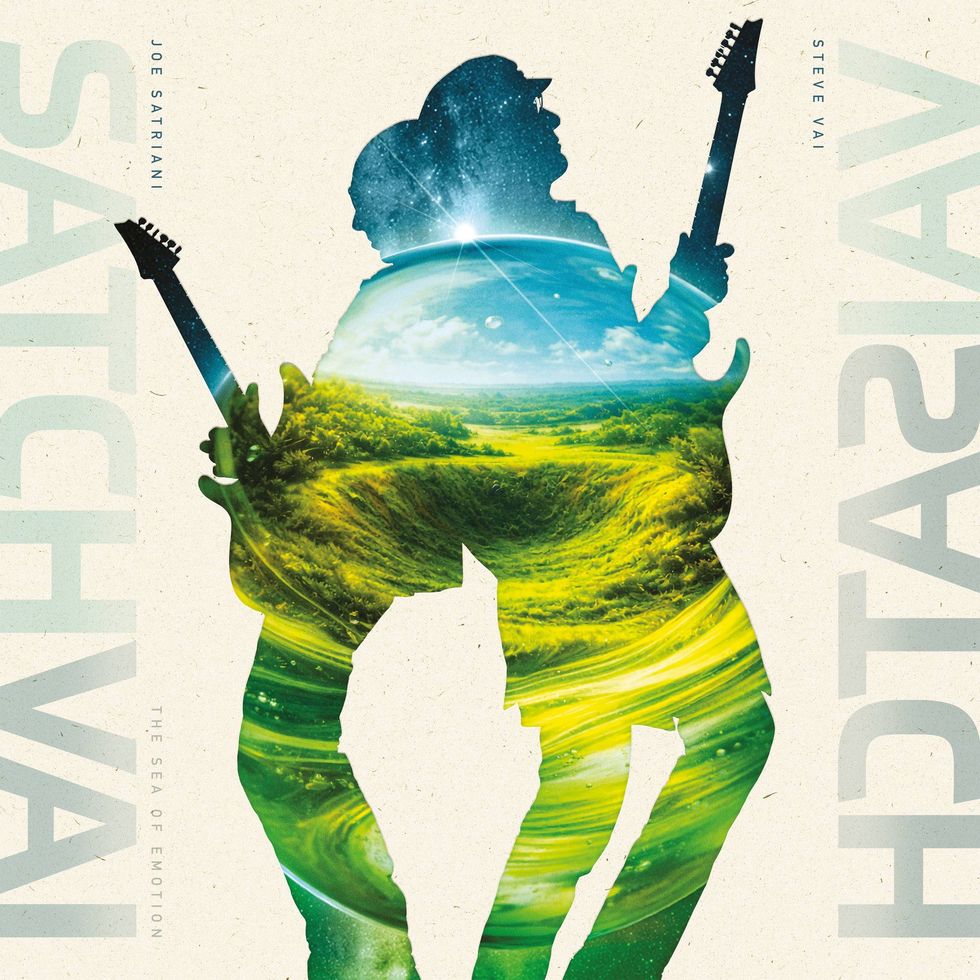
The process was anything but predictable. Although the two musicians share a deep musical history, similar influences and a lifelong understanding of the guitar, they discovered that they write very differently. That contrast became one of the defining elements of the record, with ideas moving back and forth as the songs took unexpected turns.
“The biggest surprise was that we write in completely different ways,” Satriani explains. “And that’s what made the project so fun and interesting.”
The album brings together two musicians who have spent decades developing unmistakable individual voices, while giving each the freedom to push the other somewhere new. Producer and keyboardist Eric Caudieux helped keep the process honest, while a formidable group of longtime collaborators supplied the rhythm section, including drummers Gregg Bissonette, Jeremy Colson, Kenny Aronoff, Matt Chamberlain and Mike Mangini, and bassists Billy Sheehan, Bryan Beller, Philip Bynoe, Matt Bissonette, Marco Mendoza and Henrik Linder.
Across The Sea of Emotion, SatchVai move from the raw rock ’n’ roll of “Mayhem” and “Bronco Freight Train” to the darker, cinematic “Old Sins Have Long Shadows,” the unruly swing of “Zoot Suit Riot” and the arena-sized “I Wanna Play My Guitar,” featuring legendary singer Glenn Hughes.
At the center of the album is the three-part “The Sea of Emotion” suite, which reaches back to the Carle Place school field where the two teenage musicians once spent time dreaming about music. “The Sea of Emotion, Part 3” even begins with a vintage reel-to-reel recording from one of Vai’s early lessons with Satriani, a glimpse of two young guitarists still searching for their voices.
“It illustrates just how far we’ve come,” Satriani says. “We’re these two kids who haven’t found our sound yet, but we’ve got enthusiasm. We’re chasing something, and we’re determined.”
For Vai, the album ultimately represents something more personal than a meeting of two celebrated guitarists.
“That’s when I really feel, like, wow, we really did it,” he says. “It’s a beautiful coming together of me and my friend in a very intimate musical way. That was the reason we did the record.”
THE SEA OF EMOTION TRACKLIST
- Mayhem
- Bronco Freight Train
- Dancing
- The Feeling I Know
- Zoot Suit Riot
- Old Sins Have Long Shadows
- I Wanna Play My Guitar
- The Sea Of Emotion Pt. 1
- The Sea Of Emotion Pt. 2
- The Sea Of Emotion Pt. 3 / Reflections On A Year And A Half
SATCHVAIBAND.COM
Rig Rundown: Seth Lee Jones
John Bohlinger drove out to Seth Lee Jones’ home in Tulsa to see the guitars the luthier and slide player builds for himself, plus the barn-find Leslie and the pedalboard behind one of the more distinctive sounds going. Have a look at some quick highlights below, and tune into the new Rig Rundown for all the details.
Brought to you by D’Addario.
Born of a Bad Neck
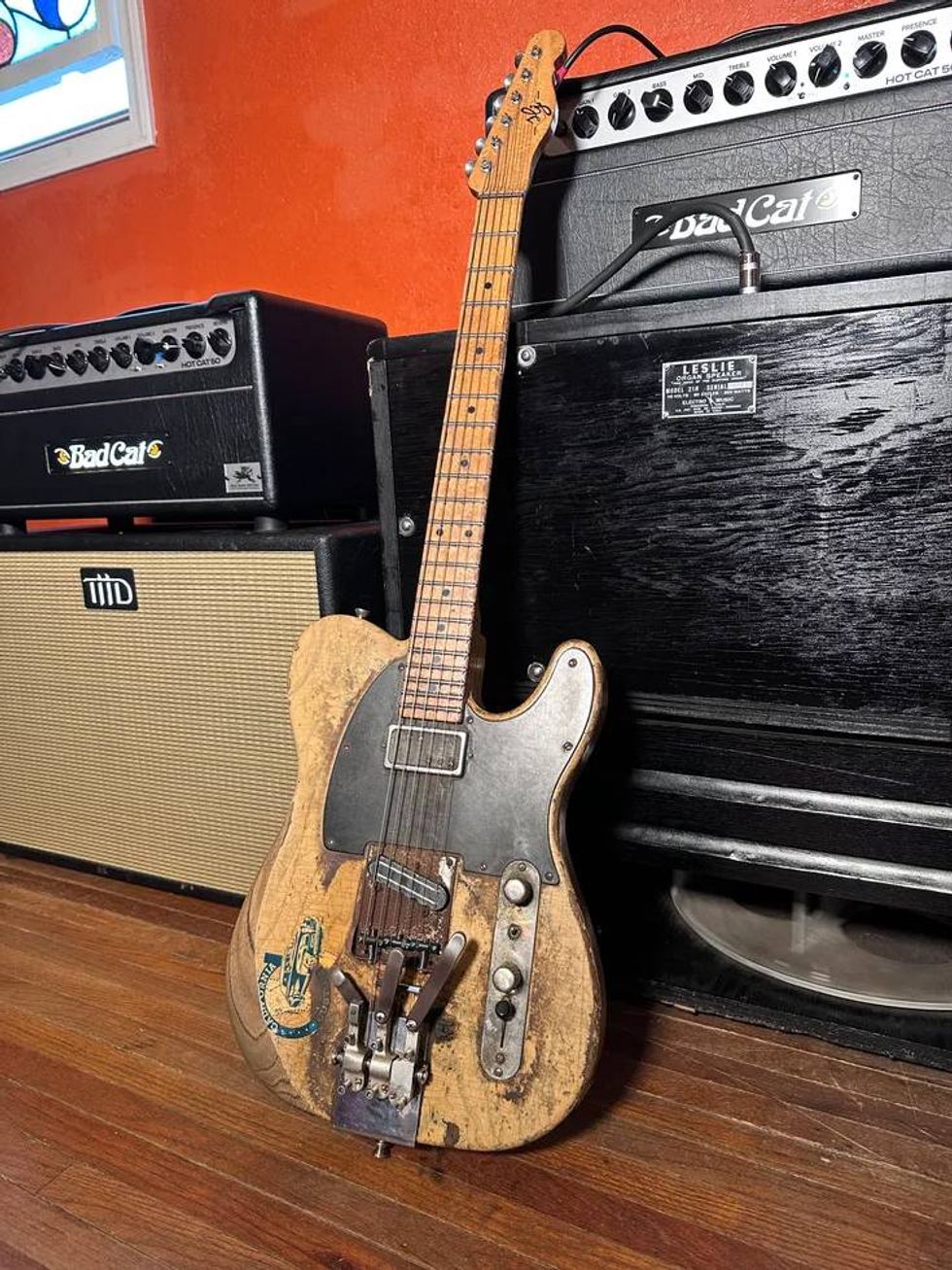
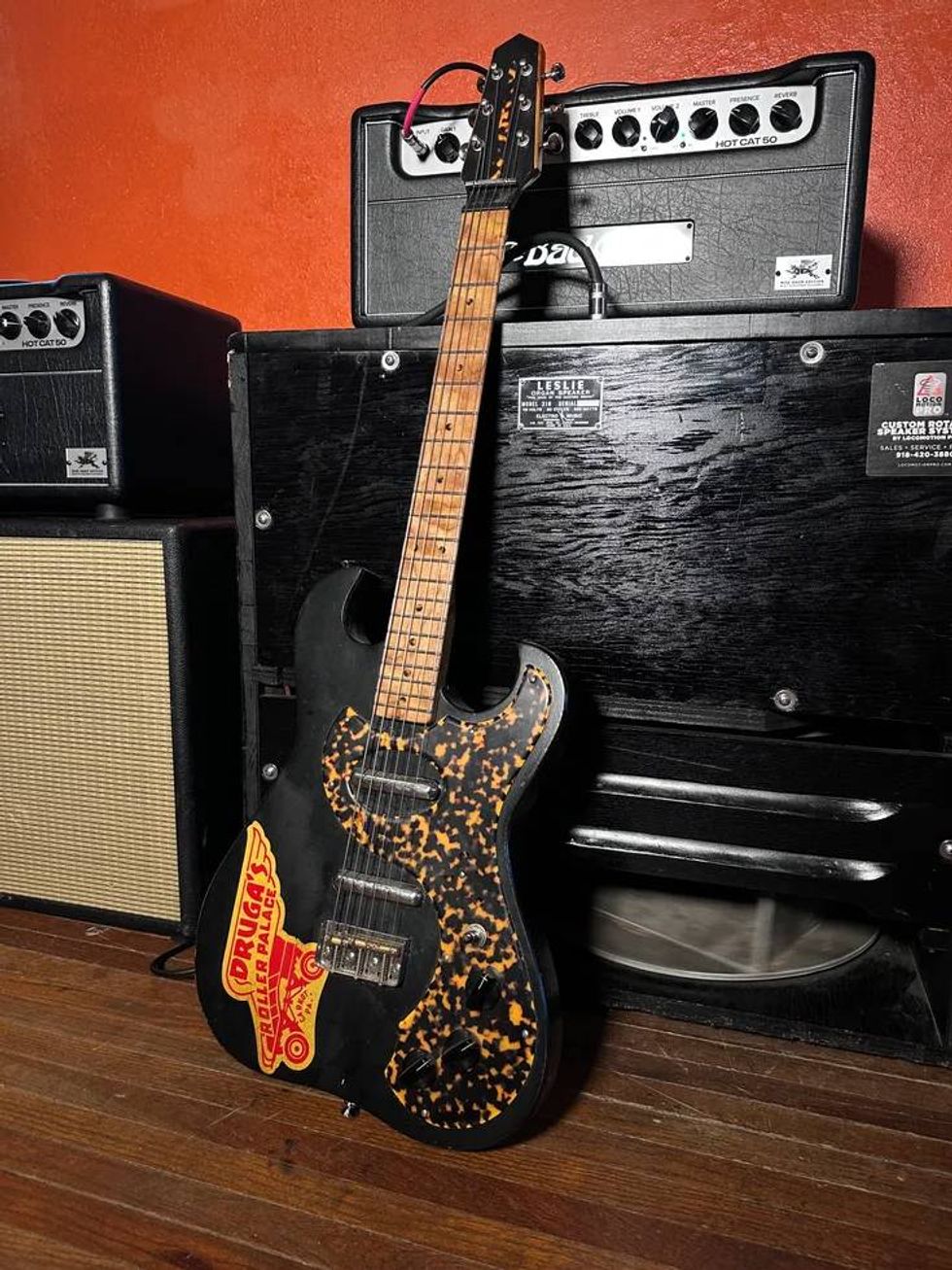
Jones calls this T-style a story based in failure. Fresh out of luthier school, he built a neck that back-bowed past saving, so he made another, strung it with heavy lap steel strings, pushed the levers and heard it go from a I to a IV, “and the light bulb came on.” He carved the body in 2006 with routers, chisels, and gouges—no CNC—and this is the fourth or fifth neck it’s worn.
Sunny Side Up
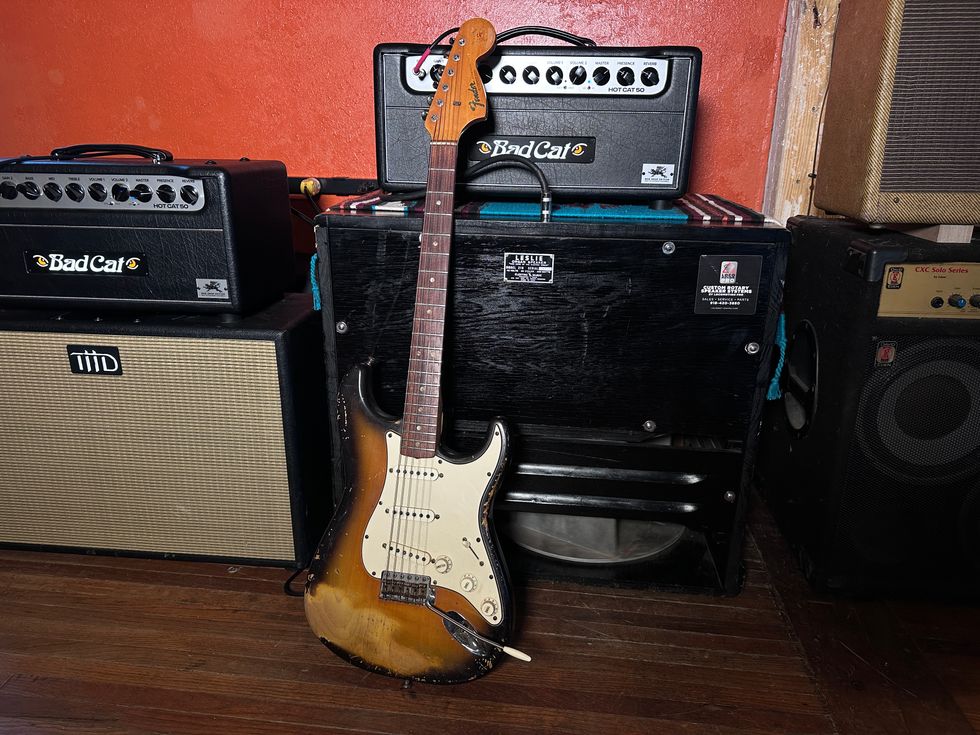
Jones picked up this 1966 Stratocaster, mostly original, from Guitar House of Tulsa last year. It came out of Florida with all the red bleached out of the front of the sunburst and none out of the back. The neck has a reverse taper—thicker at the first fret than at the 12th — which Jones figures is a Friday-afternoon mistake, and loves. He keeps the three-way switch, floats the trem, and tunes it to standard D with a set of .011s.
Seventy-Five-Dollar Question
This one arrived at the shop in a trash bag, with its neck whittled to ruin and its Tolex stripped. Jones built a new short-scale cherry neck with a headstock shaped in tribute to Rick Turner, added a guard, oven knobs, and a Tele bridge, and rewired the lipsticks to two volumes and a tone. It’s tuned to C with flatwounds, and nothing else he owns sounds like it.
Cat Pack
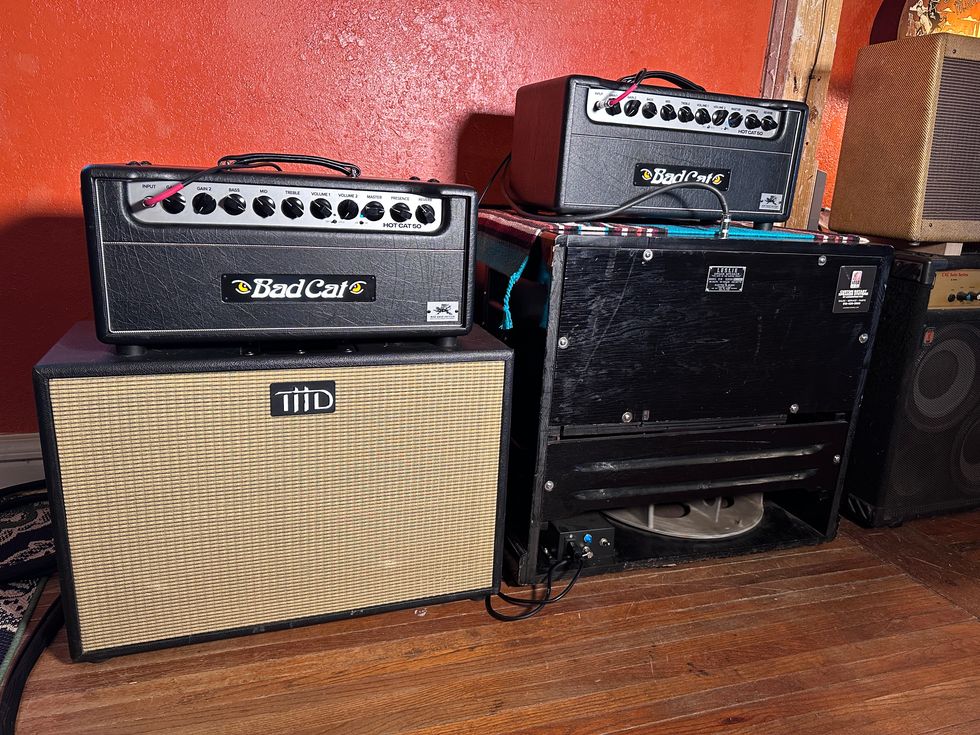
Jones runs a pair of Bad Cat Hot Cat 50s with the master up and the gain low—he’d rather get his dirt off the floor and ride it with his volume. A GigRig Humdinger allows the two amps to work together, and he says it does the job cleaner than anything else he’s tried. One head sits on a THD 2x12", and the other amp feeds a Leslie that Jones built from a 21H that survived a barn fire.
Seth Lee Jones’ Pedalboard
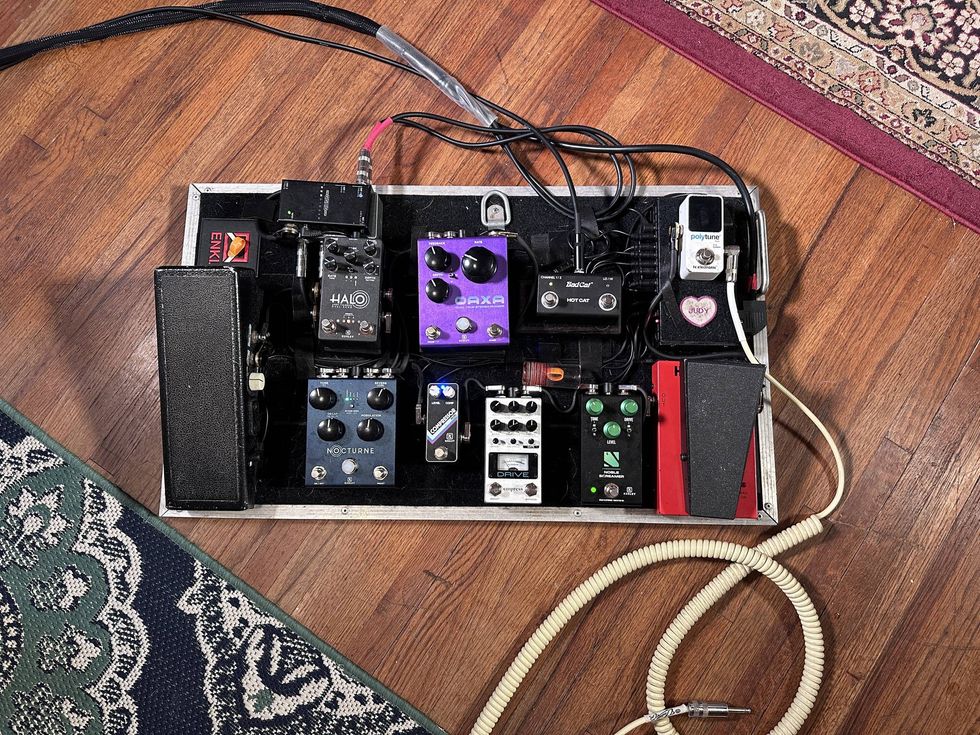
A TC Electronic PolyTune starts things off, into a Morley wah, then a Keeley Noble Screamer, an Empress Drive, and a Keeley Mini Comp — which he runs after the drive, and has been told repeatedly is the wrong way around. From there is a Hilton volume pedal and three Keeleys—a Nocturne, Halo, and Oaxa.
Blackstar Offers Free Moises Integration into Beam products
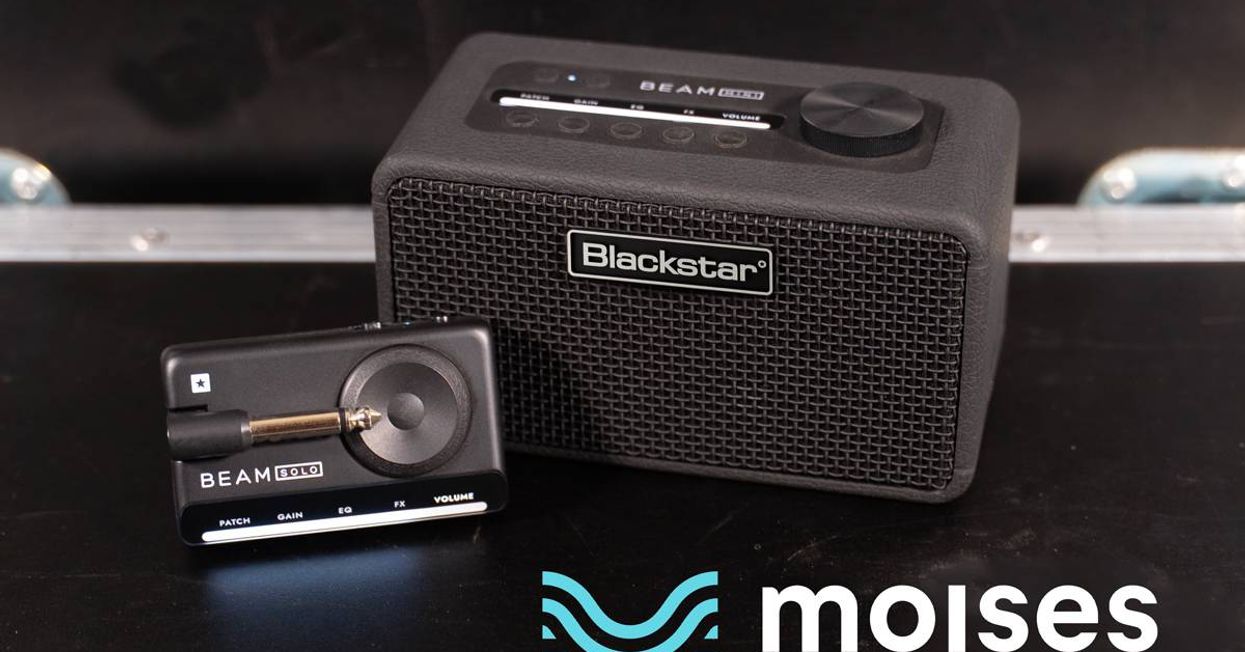
Blackstar has announced a major free update for Beam Solo and Mini on iOS, introducing seamless integration with Moises’ industry-leading real-time stem separation technology.
With this Moises integration, using the Blackstar Beam app you can separate guitars from the rest of the mix from virtually any song streamed or played from your device in real-time.
With simple, intuitive volume controls, you can instantly mute the guitar and step into the shoes of your favourite players, isolate guitar parts to hear every nuance or turn down the vocals and perform the entire song yourself. Whether you’re learning difficult passages, practising with your favourite artists or simply enjoying music in a completely new way, Moises opens up an entirely new playing experience with Beam.
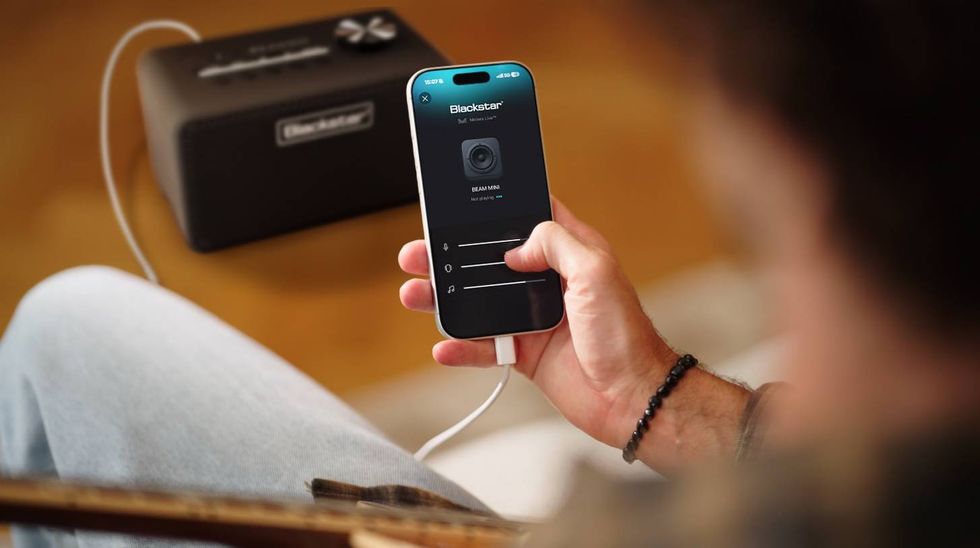
There’s no complicated setup or editing required. Simply connect your Beam, start your music and adjust the mix in real time with a few simple sliders. Professional stem separation has never been this easy.
Android users will receive this free update on the 30th September.
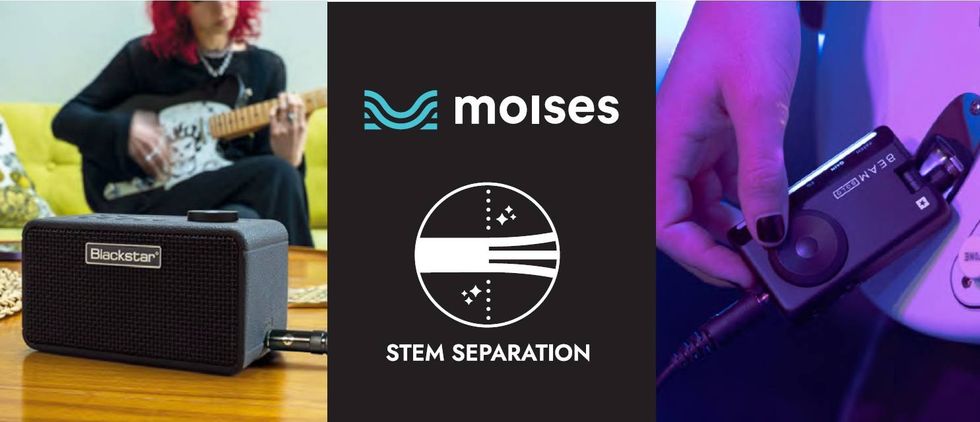
Moises Integration – Key Features:
- Premium stem separation free for all Beam users.
- Compatible with Beam Solo and Beam Mini.
- Works with streamed or stored music - Requires an active music streaming subscription where applicable.
- Instantly isolate or remove guitar parts completely.
- Vocals and the other instruments in the track can be turned down to 25%.
- Perfect for learning songs, practising solos and playing along with your favourite artists.
- Simple real-time control with intuitive volume sliders.
- Available as a free update from 28th August to iOS users.
Available as a free update from 30th September to Android users.
For more information visit www.blackstaramps.com.
Josh Klinghoffer’s Spare Time
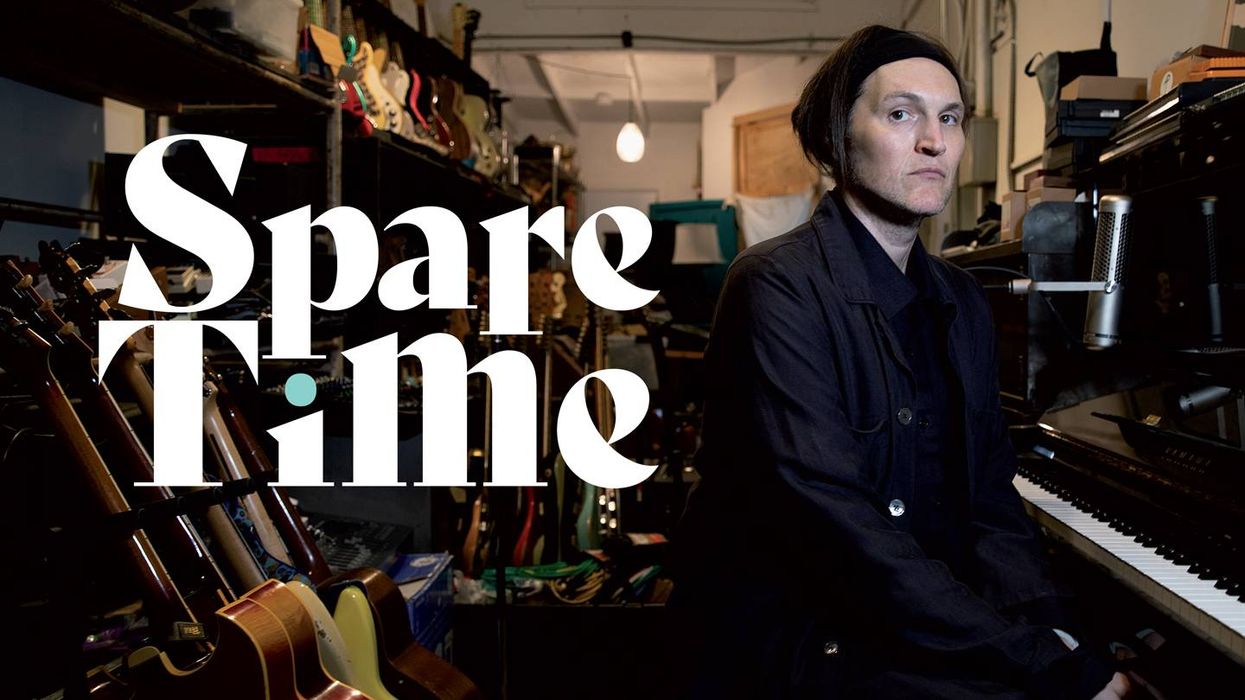
For most of his career, Josh Klinghoffer has been the alt-rock wiz kid. His career began as a Los Angeles-area teenager, and his talents caught the attention of Bob Forrest, who enlisted him in his band, the Bicycle Thief. Since then, he’s had stints with the Forrest-led Thelonious Monster, Dot Hacker, and Gnarls Barkley, and toured with Jane’s Addiction, PJ Harvey, and Sparks. Most famously, he was a member of the Red Hot Chili Peppers from 2007 to 2019 (with whom he was inducted into the Rock & Roll Hall of Fame in 2012). Since 2020, Klinghoffer has been a touring member of Pearl Jam, serving as a multi-instrumentalist.
While he’s had a charmed career playing with some of the giants of rock, the 46-year-old has also, for nearly a decade, pursued a solo career under the Pluralone moniker. In that span, Klinghoffer released several albums, EPs, and singles, the most recent of which was 2022’s This Is the Show. A history aficionado, the album touched on historical tensions beginning with World War II through the present day. Also that year, he teamed with Pearl Jam’s Jeff Ament to compose the score for the FX television show Under the Banner of Heaven.

Now, Klinghoffer has released his fourth and newest Pluralone album, A Drop in the Ocean, through his longtime label, Org Music. Produced by Eric Palmquist, the seeds for the sparse, 10-song collection were planted at the end of the This Is the Show sessions. But as he started to sketch out a new album, his “other” jobs called—in particular, Pearl Jam toured on and off, as did its frontman, Eddie Vedder, in whose solo band, the Earthlings, Klinghoffer also plays. Add to that his ongoing session work with superproducer Andrew Watt, and it’s a wonder Klinghoffer had any time to himself (he jokes that he didn’t), let alone time for his own material.
Yet that was only part of the reason A Drop in the Ocean took as long as it did.
“I was recording it during the writing process, which was probably the problem,” Klinghoffer tells Premier Guitar, ahead of a private show in New York with Watt, Red Hot Chili Peppers drummer Chad Smith, and others. “I wasn’t fully done writing some of the songs. While I was trying to build these recordings, half of me was thinking that they were only demos, and then I grew to like them.”
“I’m always trying to simplify and put less on.”
Working at what he calls a “relaxed” pace, Klinghoffer began recording A Drop in the Ocean in earnest last May and had it finished by October. Like its predecessor, the new album carries a thematic thread: The cover art—a trash can and trash bags—nods to the waste we dump into the ocean. For Klinghoffer, though, the symbolism extends to music.
“Lots and lots of music gets dumped into the world,” he says. “Lots of art gets dumped into the world, and it’s an enormous ocean, it’s an enormous sea of stuff.”
Josh Klinghoffer’s Gear
Guitars
1946 Martin 00-17
Vintage koa Martin
1959 Fender Stratocaster
1960 Fender Stratocaster
Pedals
Boss TB-2W Tone Bender
Boss JB-2 Angry Driver
Boss DM-2 Delay
Boss VB-2 Vibrato
Boss CE-2 Chorus
Boss DD-3 Digital Delay
Boss DD-6 Digital Delay
Ibanez WH10 Wah
Klon Centaur
Robot Pedal Co. MS-20 Brain Freeze
Origin Effects Cali76
JHS 424 Gain Stage
Red Panda Context
Red Panda Particle
Red Panda Tensor
Pianos & Synthesizers
Steinway upright piano
Therevox ET-5 analog synth
Roland Juno 106 polyphonic synth
Korg MS-20 analog monophonic synth

The album’s spare aesthetic came from an unlikely source: Tony Allen. When the Nigerian drummer died in 2020, Klinghoffer posted an Instagram cover of “Poison,” a song by Rocket Juice & the Moon—the trio of Allen, Damon Albarn, and Klinghoffer’s former Chili Peppers bandmate Flea. The response to the sparseness of his version pushed him toward that sound, even if it didn’t fully manifest until A Drop in the Ocean.
“I needed that suggestion,” he says. “I’m always trying to simplify and put less on, and double my voice less. It’s what I’m interested in listening to these days, just smaller stuff, less production.”
“Lots of art gets dumped into the world, and it’s an enormous ocean.”
In 2024, Klinghoffer dipped his toes into producing when he helmed Redd Kross’ first full-length in five years. The well-received effort, which featured Klinghoffer on drums, taught him several lessons that informed A Drop in the Ocean—mainly, getting out of his own head and thinking about what a listener can actually latch onto.
“With Redd Kross, I had an easy job as the producer because they had done all the writing, and I didn’t have to make a single adjustment to the songs,” he says. “For me, it was just a matter of making sure they had the best time and were as satisfied and happy with the result as they could be. When I was doing it for myself, I included things that allowed for most people to connect to it.”

Calling himself “not much of a professional hustler,” Klinghoffer says he enjoyed producing for friends but doesn’t see himself doing it for artists outside his orbit. When Andrew Watt calls, though, he’s always game. Recently, Watt brought him in on new songs for Yungblud and tracks for singer Charlotte Lawrence. Working with Watt, he says, is “always a lesson”—in this case, staying open to new ideas and not clinging to a conviction when it’s clear it isn't moving things forward.
Klinghoffer has no plans to tour in support of A Drop in the Ocean, which he sees as a blessing. He has a few projects on the horizon—a potential follow-up to the Redd Kross album, and music from 2023 and 2024 that he’s finishing with Eric Palmquist—but is otherwise taking things slowly. It’s a career path he keeps in perspective.
“I get to work with people that are, for the most part, really open and supportive,” Klinghoffer says. “I’ve been lucky throughout my whole journey.”
Win an EHX Pico Atomic Cluster
Electro-Harmonix's newest Pico pedal breaks your signal down to its atomic level: glitchy lo-fi textures, ambient synth pads, and everything in between. We've teamed up with EHX to give one away. Enter below.
EHX Pico Atomic Cluster Giveaway
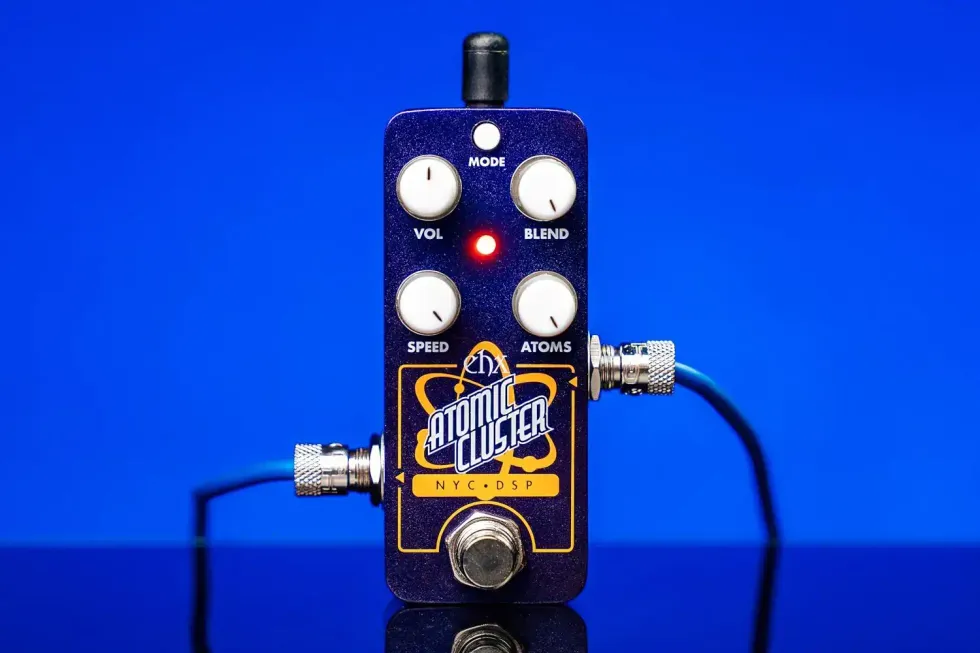
Pico Atomic Cluster
Deconstruct your tone to an atomic level with the Atomic Cluster Spectral Decomposer. Unlike any effect Electro-Harmonix has made before, this compact glitch and synth pedal breaks down your signal and interpolates it into a variety of musical and whimsical sounds. Using a unique algorithm to reduce the frequency resolution of your instrument, it creates a wide range of unique effects from rhythmic lo-fi glitch and auto-arpeggio tones to ambient synth pads and more!
Fender Unveils John Osborne Signature Telecaster Pickup Set
Fender has introduced the John Osborne Signature Telecaster pickup set. Designed to replicate the tone behind Osborne’s signature sound, these custom Telecaster® pickups are specially designed to deliver enhanced clarity and punch, perfectly balanced to cut through the mix with sparkling highs, focused mids, and tight bass response. The open-coil neck pickup adds an extra touch of high-end sparkle, while Alnico 5 beveled magnets and Formvar magnet wire bring added focus, dynamics and brightness.
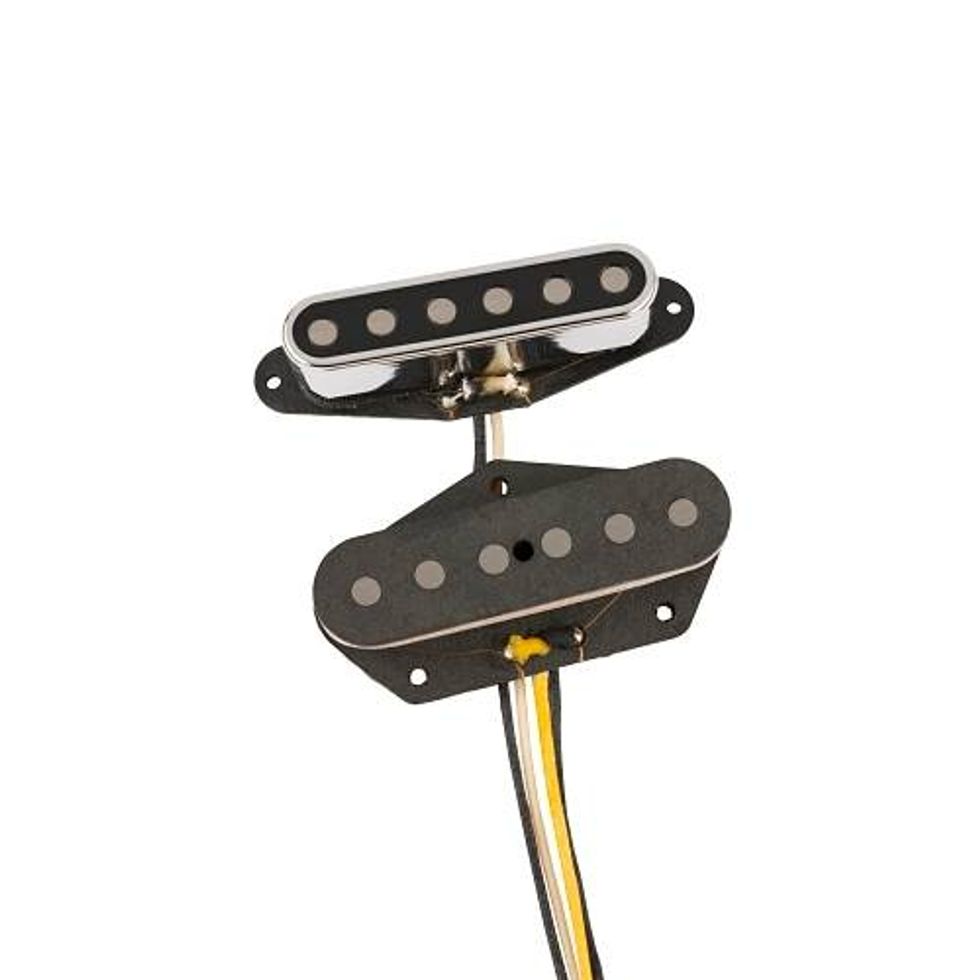
Built with vintage-inspired details including flush-mount polepieces, period-correct cloth wire and fiber bobbin construction, the pickups blend classic Tele character with Osborne’s modern, hard-driving voice.
Key features include:
- Alnico 5 beveled magnets add more focus and enhanced dynamics
- Formvar coated magnet wire for brighter tone with enhanced high-frequency response
- Flush-mount polepieces create vintage-style string-to-string blending
- Wax potted to resist feedback and protect internal wiring
- Period-correct cloth wire and fiber bobbin construction
- Installation hardware included
- Bobbin Material: Fiber
- DC Resistance: Neck: 6.26k, Bridge: 8.2k
- Inductance: Neck: 2.58H, Bridge: 4.6H
- Lead Wire: Cloth-covered
The John Osborne Signature Telecaster pickup set carries a street price of $149.99 . For more information visit Fender.com.
John Osborne Signature Telecaster Pickup Set
September 1, 2026 – Fender has introduced the John Osborne Signature Telecaster pickup set. Designed to replicate the tone behind Osborne’s signature sound, these custom Telecaster® pickups are specially designed to deliver enhanced clarity and punch, perfectly balanced to cut through the mix with sparkling highs, focused mids, and tight bass response. The open-coil neck pickup adds an extra touch of high-end sparkle, while Alnico 5 beveled magnets and Formvar magnet wire bring added focus, dynamics and brightness.