
Music is the universal language
“Glory to God in the highest heaven, and on earth peace to those on whom his favor rests.” - Luke 2:14
Premier Guitar


EarthQuaker Barrows Review
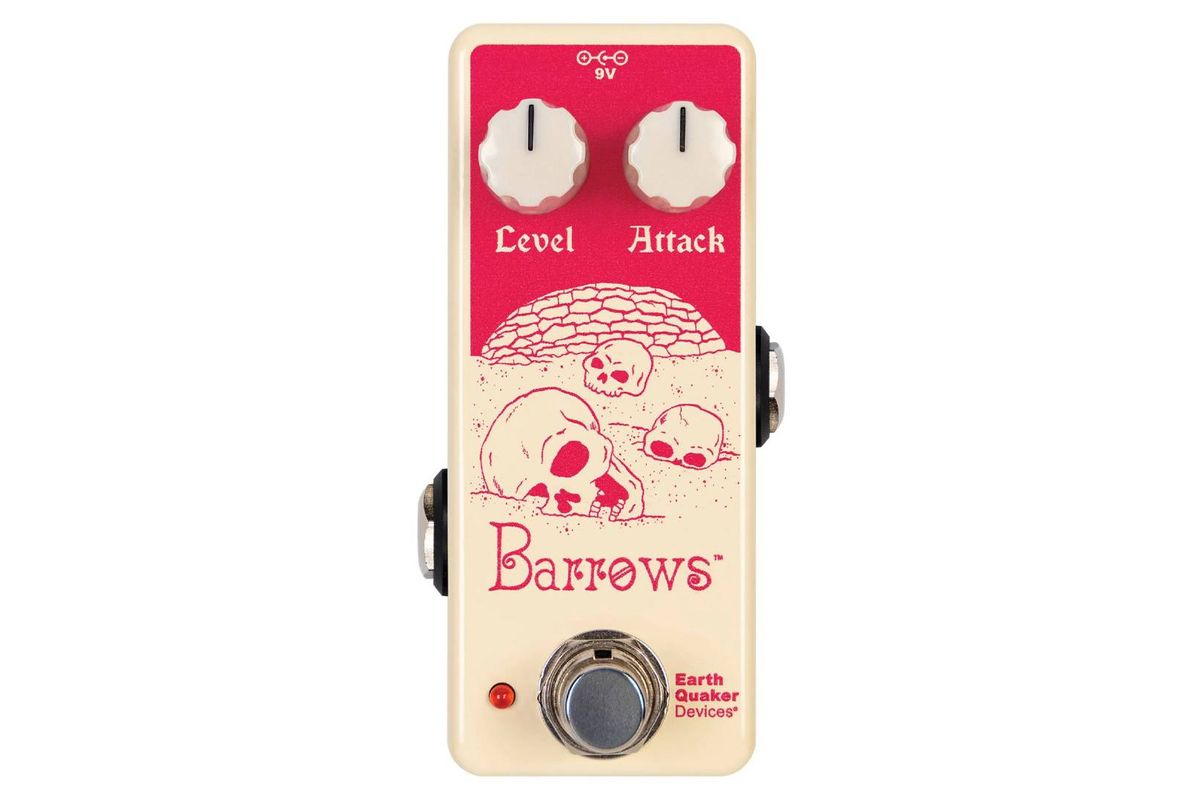
Among the many fuzz pedals to carry the Tone Bender name, the MkII might be the one that rips the most. And though not as common as the Vox Tone Benders that American psych-punk fans wrestled with for decades—which were generally Mk1.5 or MkIII versions—it might have been the Tone Bender version that people experienced the most thanks to Jimmy Page. As Page superfans and fuzzspotters outed the MkII as the sound of Led Zeppelin, it came to embody what a Tone Bender should be. Consequently, a lot of builders jumped on the bandwagon.
There is a practical, musical upside to the MkII that transcends the Jimmy Page associations. Some desert, doom, and stoner rockers, for instance, love its ability to sound huge and evil while occupying less mix space than a Big Muff. And while not as sweetly sensitive to input dynamics as the Fuzz Face (or the very Fuzz Face-like Tone Bender Mk1.5 and first-generation Vox Tone Bender), its germanium transistor topology makes it responsive to guitar-volume attenuation. EarthQuaker’s new take on the MkII, the Barrows, shares all these attributes. And between its very convenient size and refinements that make it less noisy, Barrows represents a ceratin sonic, functional, and practical ideal of what a vintage-style germanium fuzz can and should be in 2025.
Savage, Sassy, and Sweet
Doctrinaire thinking around germanium fuzz usually states that it sounds good only at maximum volume and gain levels and that any variation must come from the fingers and guitar controls. The Barrows reveals the cracks in this view. While the Barrows is positively searing at wide-open settings, and most receptive to input dynamics at these levels, it shines at many different gain and level settings. There are heaps of cool, smoky, more subdued fuzz sounds lurking in the middle third of the gain range that can be useful for simultaneously creating mystery and generating menace and mass in a recording situation without blowing the room apart with volume. The Barrows is not as touch-sensitive here, but guitar-volume adjustments can create dark, compelling fuzz voices that are equally interesting with a 50-watt amp and a 2x12 cabinet or a practice amp.
MkII Tone Bender-style circuits have always been regarded as second-best to the germanium Fuzz Face when it comes to gnarly-to-clean range. That dictum remains mostly true in the Barrows, at least as far as clean tones go. But if the Barrows can’t quite equal a Fuzz Face’s capacity for airy clean sounds at reduced guitar volume, its near-clean sounds still have abundant clear, bell-like resonance and detail that will suffice for most. The Barrows’ dynamic range is most evident in its touch sensitivity. You can generate many beautiful, spooky, and smoldering gain shades just by varying picking intensity. It’s especially impressive if you ditch your pick and use your fingers to generate these tone variations. And if you want to go super old-school and string up your guitar with flatwounds, the Barrows reveals many beautiful, round, and vocal fuzz colors. More than once, I was moved to think that if Sinatra was a psych-punk he would have adored the atmospheric, verge-of-exploding moods Barrows can produce in these environs.
“If Sinatra was a psych-punk he might have adored the atmospheric, verge-of-exploding moods Barrows can produce.”
The Verdict
For a fuzz nut, the Barrows—for its small size and big sound—might as well be candy. Players that use fuzz more infrequently, though, will dig its simplicity, small dimensions, and the fuzzy classicism exuded by its punchy, straight-ahead voice. The pedal is intrinsically limited by the same factors that limit any germanium fuzz with 1960s lineage. And by the standards of modern gain devices that can be tuned in small increments to match very specific distortion needs, the Barrows can, at times, seem unruly and one dimensional. But if you’re willing to use guitar volume and tone and touch dynamics to re-shape the fuzz, you’ll uncover many less aggro tones ranging to light drive and near-clean sounds—applications made even more rewarding thanks to a low noise floor. Best of all, the petite Barrows comes with an equally petite price tag of $129. For germanium-fuzz newbies, that makes a plunge into the unknown a lot more palatable. But even seasoned fuzz and Tone Bender users are bound to be impressed by the quality and flexible vintage voice Barrows delivers for the money. PG
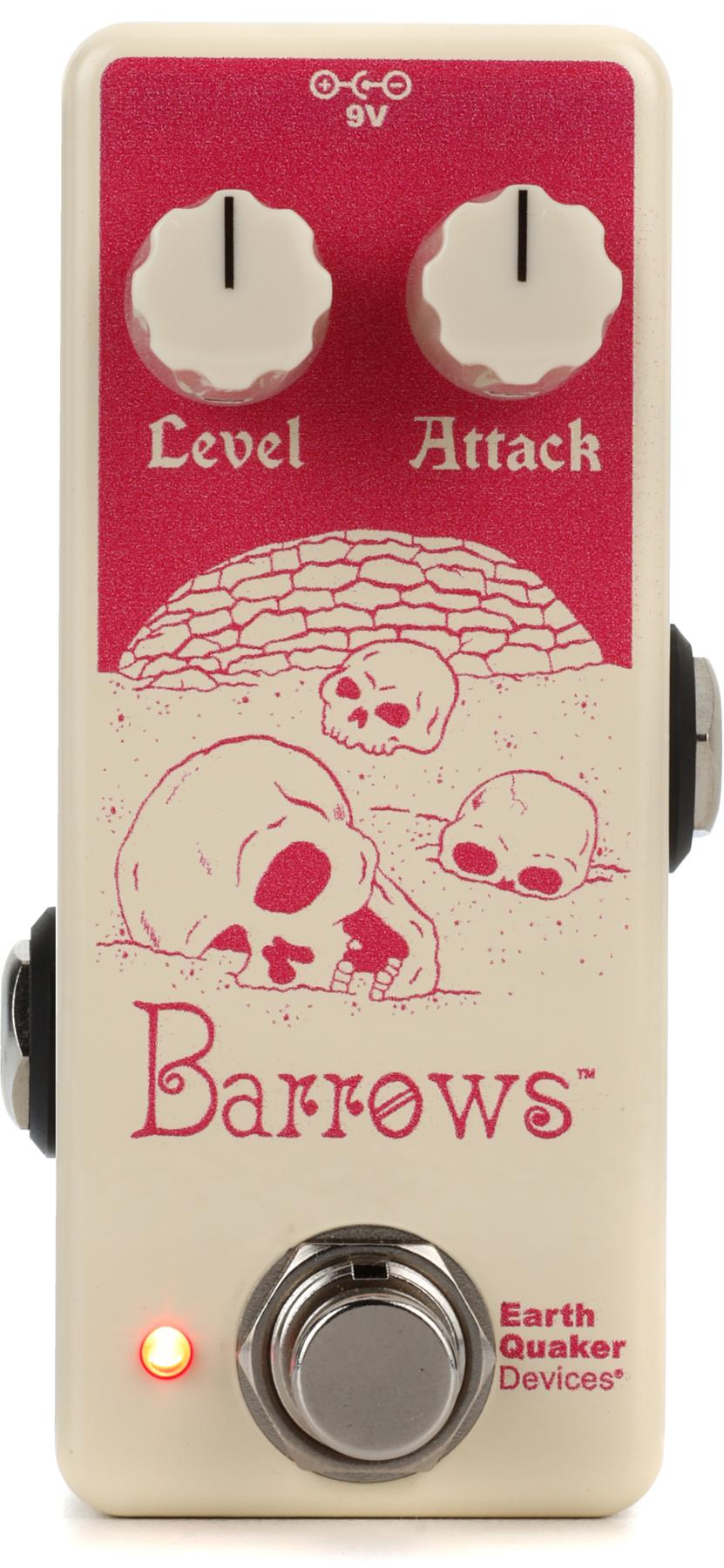
EarthQuaker Devices Barrows Fuzz Pedal - White
Mod Garage Tonewood Teardown: Upgrading Hardware
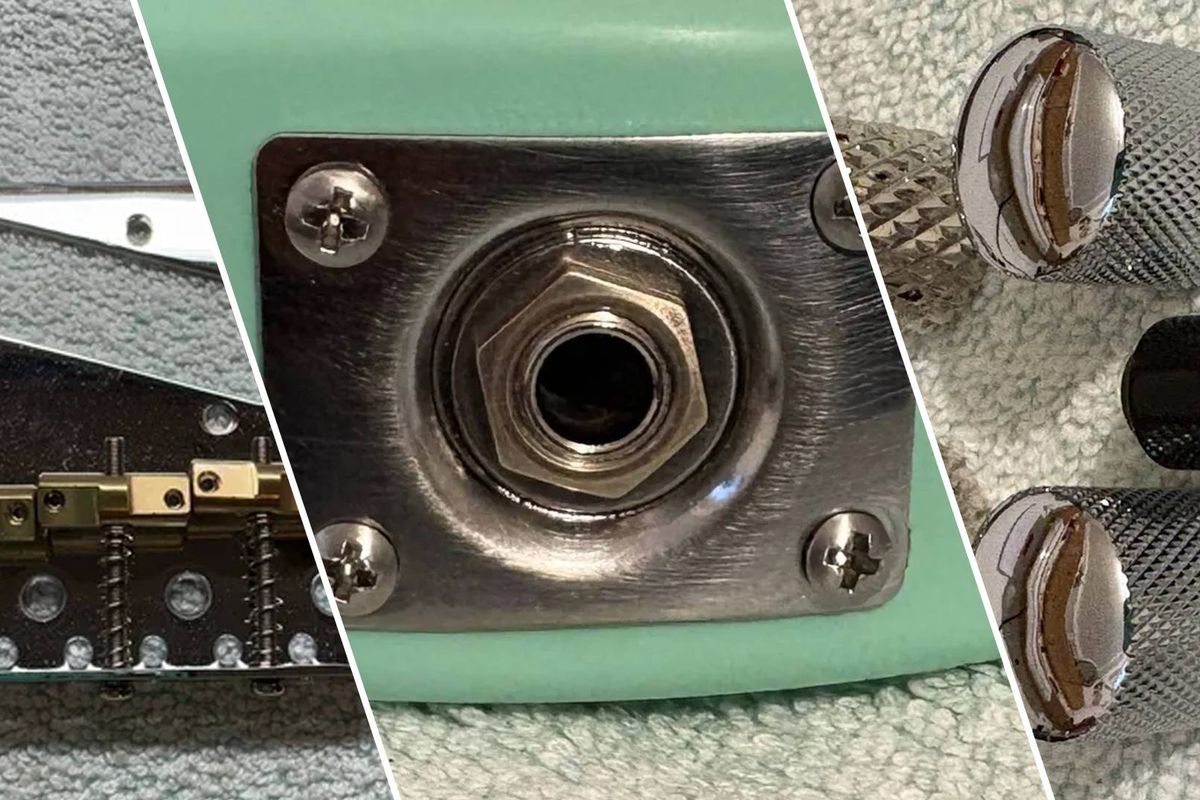
Hello, and welcome back to Mod Garage. In this month’s edition of our ongoing tonewood teardown, we’ll continue working on our guitar’s body and hardware. That means we’ll be spending a chunk of the $305 remaining in our $500 budget to make some worthwhile improvements.
After inspecting the stock hardware, I decided to keep the neck mounting plate, control plate, and jack plate. Below is a quick rundown of the individual parts.
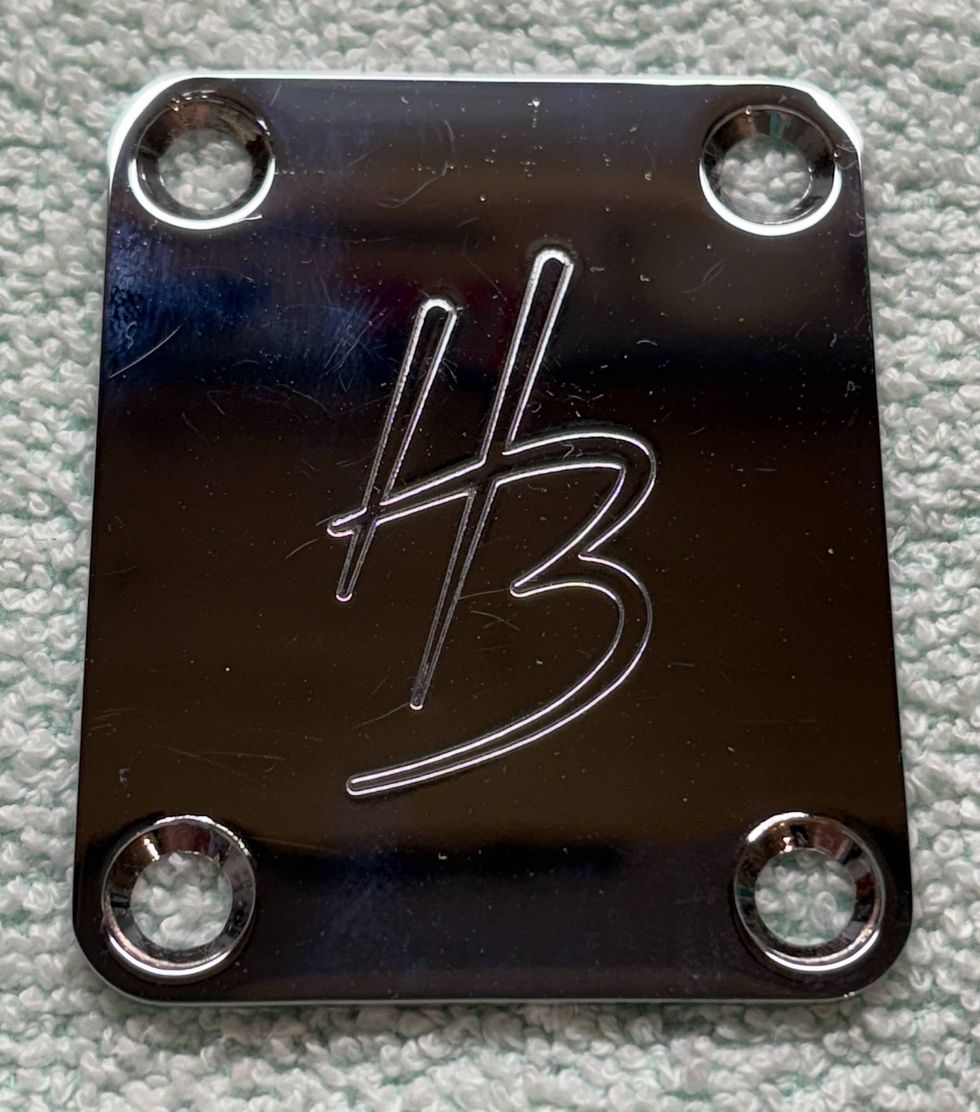
The neck mounting plate is perfect as it is, and I really dig its snazzy Harley Benton engraving. It has the typical Fender dimensions, so I see no need to change it. I will, however, replace the four soft, tiny neck attachment screws with regular-sized, stainless-steel screws, but we’ll get to more details on that later. If you want to customize this part of your guitar, by the way, you have plenty of choices regarding color, thickness, materials, and, of course, custom engravings of all kinds. If you want to save some weight, look for one made out of aluminum or titanium. You can put a custom paint job on the plate, put a plastic neck-plate guard underneath, or whatever you have in mind. Stick to metals, though; other materials are too weak.
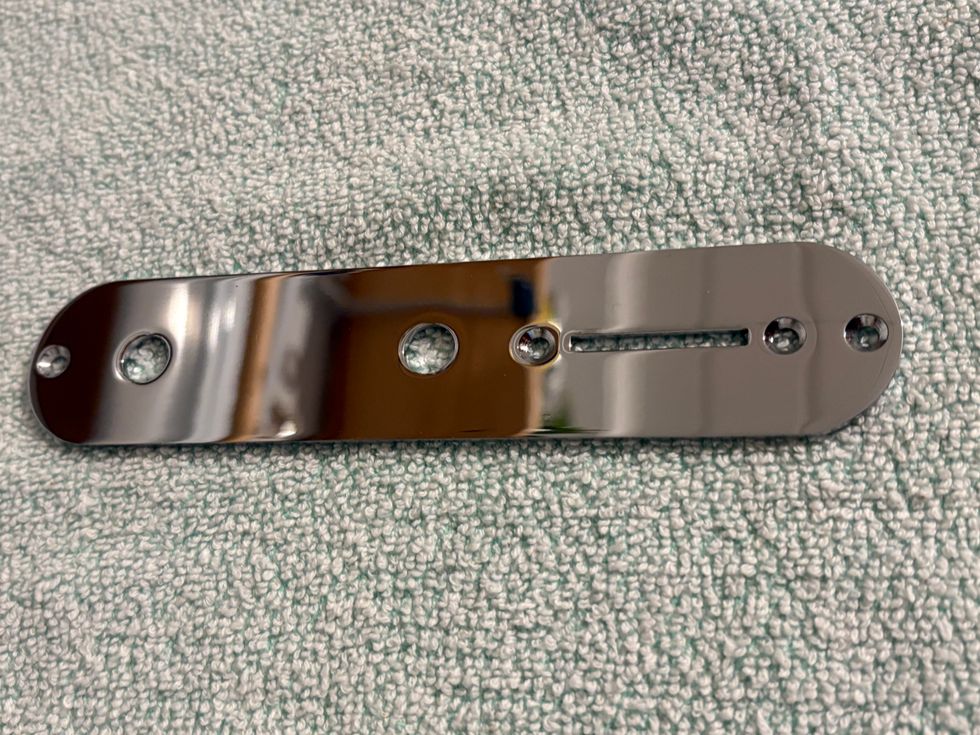
The stock control plate is a typical Telecaster control plate with openings for two pots and a pickup selector switch. It has the typical modern 2 mm thickness to match 3-ply pickguards—the thinner 1.5 mm control plate (aka the vintage version) is the right choice for single-ply pickguards. Keep this in mind if you want to change your pickguard. I fashioned my own new pickguard out of material that is 2 mm thick, so the stock control plate works perfectly for me. Later, when we talk about the wiring of this guitar, you will see that tiny metric parts were installed. I checked the diameter of the two holes for the pots, and to my surprise, they’re drilled for U.S.-standard, 3/8"-inch hardware. Same goes for the slit for the pickup selector switch: An average-quality import switch was installed, but a regular U.S. inch switch fits perfectly. These screws, too, will be replaced with stainless steel ones.
If you want to change the control plate on your guitar, you can choose between wood, metal, and plastic options with all kinds of configurations. You have countless choices here to customize your guitar.
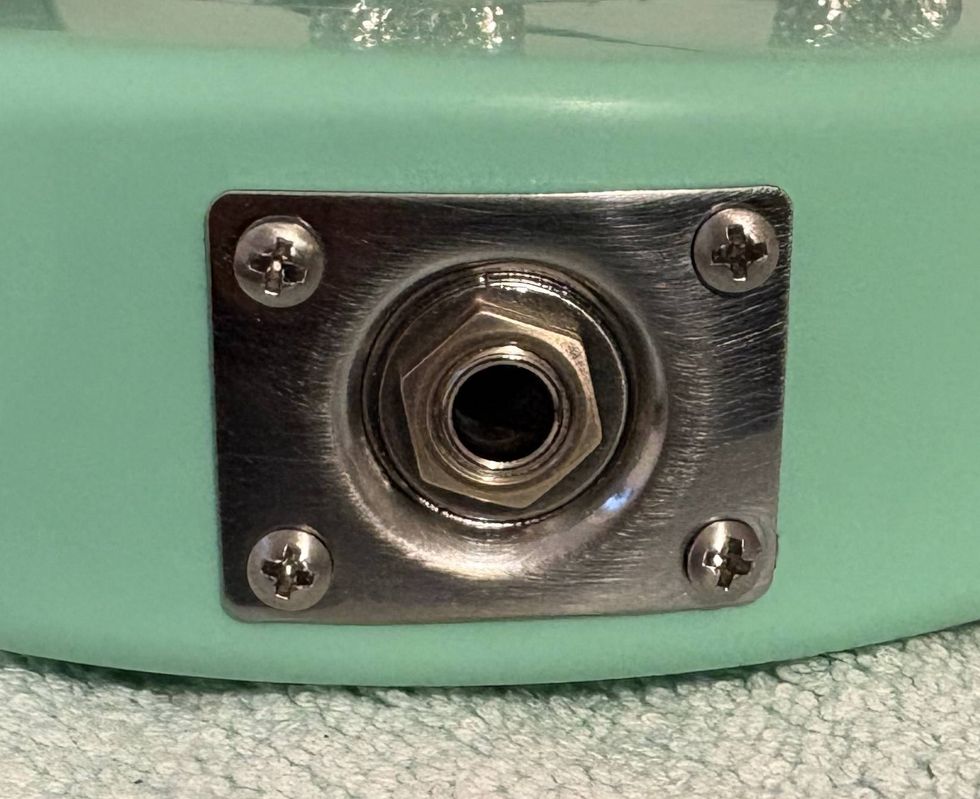
The jack plate is not the typical Telecaster jack cup construction, but a Les Paul-style rectangular plate that is held by four screws. For me, this is one of the best improvements one can do to any Telecaster style guitar. No matter what you are doing, it’s only a matter of time until the classic jack cup comes loose. You might even pull out the whole thing including the output jack when trying to unplug your cable. To reinstall and fasten it, you need a specialized tool. I have done this modification to all of my own Telecaster-style guitars, and encourage you to do the same.
The jack cup is held by four screws, resulting in a very strong connection. I’ll swap in four stainless steel screws, but otherwise, it’s perfect as is. A tiny metric import output jack was installed, but again, the hole is 3/8" inch, so we can use a quality output jack. If you want to downgrade to a classic Telecaster jack cup, you can do so, but you’ll have four visible holes in the body around it. If you like this update but not the stock plate, there are alternatives available—for example, oval ones made from wood, plastic, and metal held by only two screws (aka a cat-eye plate), square (classic Les Paul-style), or rectangular like the stock version in different types and finishes.
Let’s break the aggressive shine of these three parts by putting them into the stone tumbler for a few minutes, creating some wear and random scratches. Now, we’ll continue with the knobs for the two pots and the pickup selector switch.
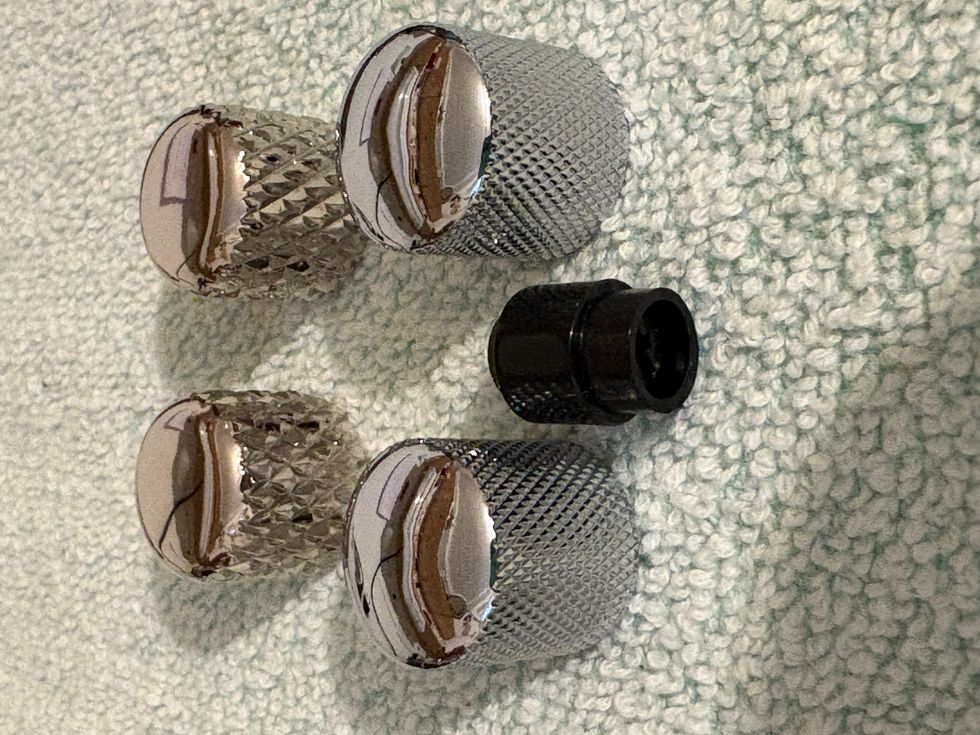
The stock knobs are ’50s vintage-correct, with two typical Telecaster dome knobs for the pots and a round, plastic barrel switch tip. Because I wanted to keep a slightly worn vintage look, only the switch tip made it back to the guitar. The two dome knobs are slightly oversized and fairly heavy—I can’t remember having such bulky knobs on a guitar before! Plus, they’re not made with the set screw for the typical Tele solid-shaft pots.
To add some early Tele flair, I ended up with two heavy knurled dome knobs that Fender used in the very early days. I really like their somewhat raw look, and I bought two knobs that are made out of nickel-plated aluminium—they have virtually no weight at all, and they’re the correct size. They are made for U.S.-inch solid shaft pots with the typical set screw to lock them, and I paid $18 for a pair of two. Before I sent them to the stone tumbler for a few minutes, I used a mid-grade abrasive cloth to smooth out the heavy knurled surface a bit so it feels more comfortable. They turned out great, and I really like the look.
Another great way to create a unique look for your guitar is to use custom knobs made from metal, wood, plastic, bone, or any other material. But take care to choose the right ones. Knobs for metric hardware will not fit U.S. components and vice versa, and knobs for push-on split-shaft pots will not fit their solid-shaft counterparts. I always choose the pots first, because performance is much more important than appearance.
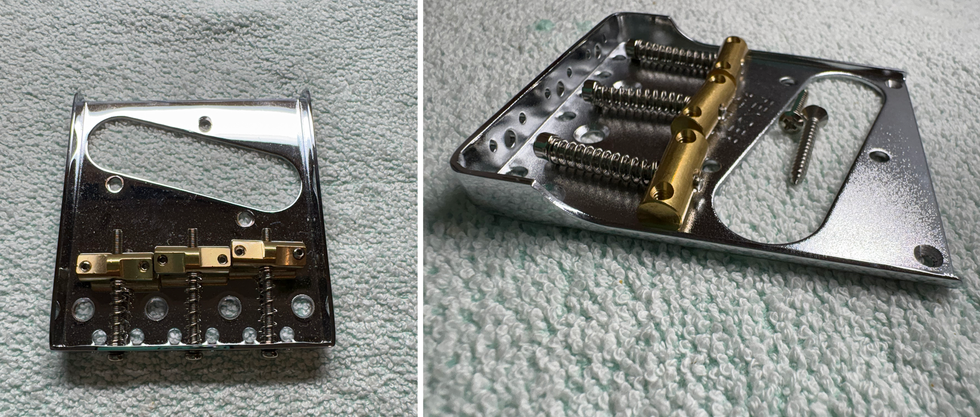
The stock bridge has the typical Telecaster string-through-body construction and shape, with three compensated brass saddles—a great update for any Telecaster. Because of the overall construction, I’m pretty sure it’s either an unbranded Wilkinson-made bridge, or a knock-off of one. For some reason, very tiny screws have been used to fasten the heavy, brass-construction bridge. The Wilkinson compensation system uses saddles that are not slanted but have relocated edges on top, resulting in a somewhat irritating appearance and a not-very-comfortable surface with some sharp edges and spots. I don’t like either of these quirks, so it was clear that the bridge had to go.
There is a massive range of Telecaster bridges from various companies, with different construction, materials, shapes, and, of course, functionality. I wanted a bridge with a classic look, very light weight, and compensated saddles that feel smooth and comfortable. To stay within our budget, I decided to look for a used bridge on eBay, Reverb, and similar platforms. I ended up with an excellent used bridge for $28. It’s very lightweight and has a thin baseplate and double-cut “tapered walls,” compensated round brass saddles, two additional countersunk holes towards the neck, and double functionality regarding the strings. Besides the classic string-though-body option, it can also act as a top-loading bridge so you can choose which you like best, or even mix and match to your taste.
That’s it for now! Next month, we will continue with the bridge and saddles before working on the wiring. Our budget is down to $259 for future investments, but I’m still hopeful that we will not break our $500 barrier, so stay tuned.
Until then ... keep on modding!
RC Davis Launches New Performer Line With The Beast 2-Channel Head
RC Davis Amplification, known for its award-winning boutique tube amplifiers, has launched their new higher-wattage amp series called the Performer line, debuting with a two-channel amp head dubbed The Beast.
Brandishing 65 watts of output power, The Beast features a clean channel with reverb and an overdrive channel, both with individual EQ controls and a 30dB tone stack. The amp’s clean channel offers a balanced, crisp tone with plenty of headroom, radiant reverb and rewarding note bloom. The amp’s footswitchable overdrive channel is capable of kicking out sizzling grind, harmonics, and presence. Dual EQ controls allow each channel access to the trademark RC Davis 30dB-sweep mid control, providing players with a wide spectrum of vintage-inspired tonality.
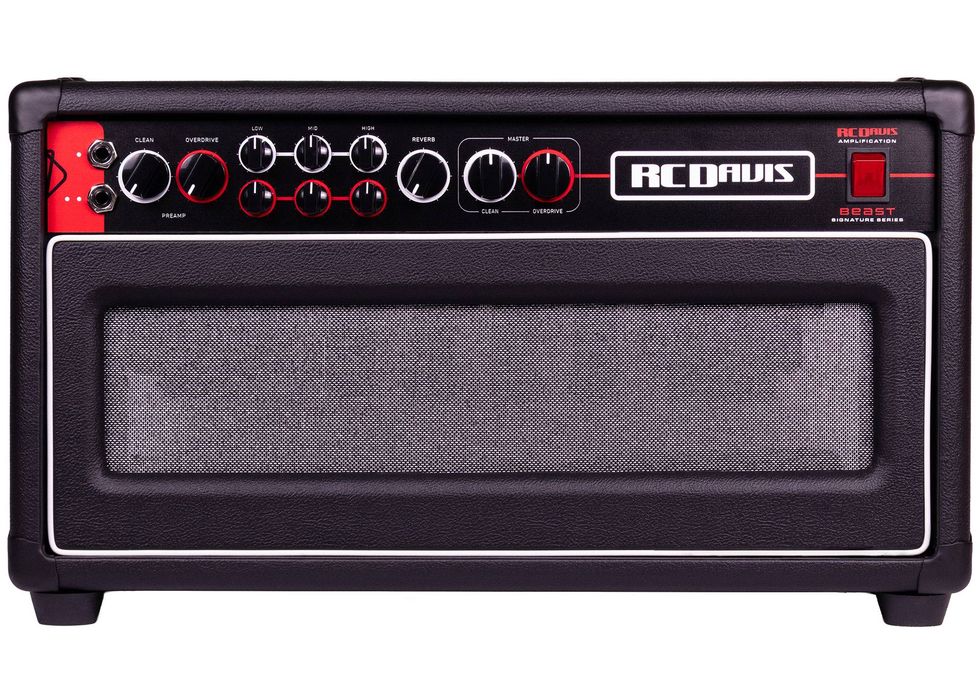
The new model showcases RC Davis’ knack for reimagining vintage tube technology to provide modern stage versatility. After creating an acclaimed series of lightweight tube combo models, Rob Davis developed the Performance line when players such as James DePrato, Ronny North, Joe Bergen, Carl Verheyen and Eric McFadden requested a more powerful amp that still featured the RC Davis signature tone.
- 65 watts of cathode-bias tube-driven power including (4) 6L6GC power tubes
- Dual channel operation, selectable via footswitch: a clean channel (with reverb) and an overdrive channel, both with individual EQ controls
- Hand-wired, point-to-point circuitry for improved tonality and reliability
- Effects loop
- 4/8/16 ohm speaker out with load loop (use virtually any extension cab)
- Box-jointed sturdy, lightweight 13-ply Baltic Birch cabinetry
- Time-tested Heyboer and Hammond transformers
- PRP/Dale resistors, Mallory 150 film capacitors, Vishay 716 film capacitors (orange drops) and solid core silver wire (PTFE) for optimum performance and longevity
- Premium coverings and hardware
The Beast carries a $2995 street price and will debut at the January 2026 NAMM Show in Anaheim at the RC Davis booth #4447. For more information visit rcdavisamps.com.
Overloud Adds AIR to THU
ILIO, leading distributor of virtual instruments and audio processing software, and Overloud, renowned for their innovative audio plug-ins, are pleased to announce the release of AIR or "Amp In Room." This new feature is included in the latest version of THU, Overloud’s flagship guitar amp simulation suite. Available now as a free update for all THU users, AIR brings a new dimension to amp simulation by recreating the feeling of standing in front of a real amp in a real room, adding subtle reflections, room resonance, and air movement that go far beyond a close-mic’d speaker.
Explore the AIR Feature - https://www.ilio.com/overloud-thu#air
AIR Is Free for All THU v2 Users
Whether you own a single Rig Library or the full THU Premium suite, AIR is included at no cost. This continues Overloud’s ongoing commitment to support the THU community with high-value feature updates without subscriptions.
Every Overloud purchase includes a perpetual license, free lifetime updates, and authorization on three computers, with no subscription required.
Browse All THU Plugins - https://www.ilio.com/products/overloud/thu-guitar-effects
What is AIR?
THU is already the most powerful amp simulator in its class. Now, with AIR, it includes a key feature for delivering a finished, authentic guitar tone in one plugin. By modeling how a speaker cabinet interacts with its physical environment, AIR introduces a sense of spatial realism, one that’s rarely captured through traditional cabinet IRs or static mic placements. The result is a tone that feels more lifelike, three-dimensional, and truly “in the room."
How to Use AIR
AIR lives in the Cabinet section of THU and includes:
- An AIR knob that controls the amount of room interaction and spatial detail.
- A dropdown menu offering several ambience types in both Normal and Wide stereo modes.
- Normal mode provides tight spatial cues while Wide mode expands the stereo field for an even more immersive tone
- AIR is also integrated into the SuperCabinet, allowing users to apply room interaction while building their own custom IR blends.
- AIR can be enabled globally from the Master Control section to apply across all presets.
- Transformer: Authentic low-end thickening and high-end sparkle through accurate transformer emulation.
Reader Guitar of the Month: A phoenix rises, with inspiration from Jimmy Page
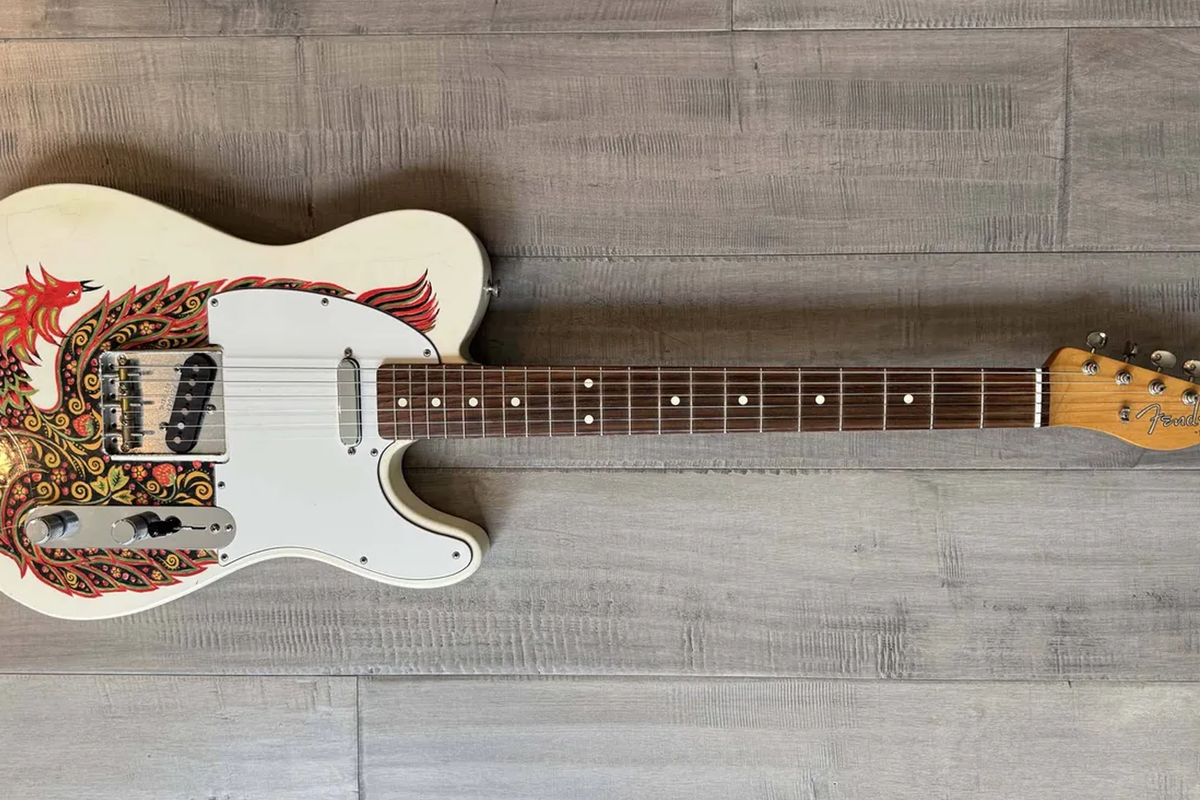
The Phoenix began life as a 2016 Mexico-made Fender Telecaster. But the real inspiration for the guitar came from Jimmy Page’s legendary Dragon Telecaster—the gift from Jeff Beck that Page played in the Yardbirds, on Led Zeppelin’s 1969 debut, and for the solo on “Stairway to Heaven,” among many other moments. I built this guitar a few years before Fender issued their own tribute model, so I knew I’d have to create my own version from the ground up.
I’d always been fascinated by the Dragon and its storied history. And after watching the band’s 1969 television appearances on Supershow and Danmarks Radio (collected on Led Zeppelin DVD) with Page wielding his psychedelic Tele through blazing renditions of “Communication Breakdown” and “Dazed and Confused,” I knew that’s what I wanted my number-one Telecaster to look like. At the time, I owned five different Telecasters, but none had that visual impact. None were truly personal.
“I approached my Russian mother-in-law, who has an art background, with an unconventional request: Could she paint something in the traditional Khokhloma Russian folk-art style?”
Given my performing outlet at the time, there was a certain irony to desiring Page’s Telecaster. Here I was, playing in a busy Bay Area cover band focused primarily on r&b, country, and pop covers, yet dreaming of a guitar that screamed psychedelic rock rebellion.
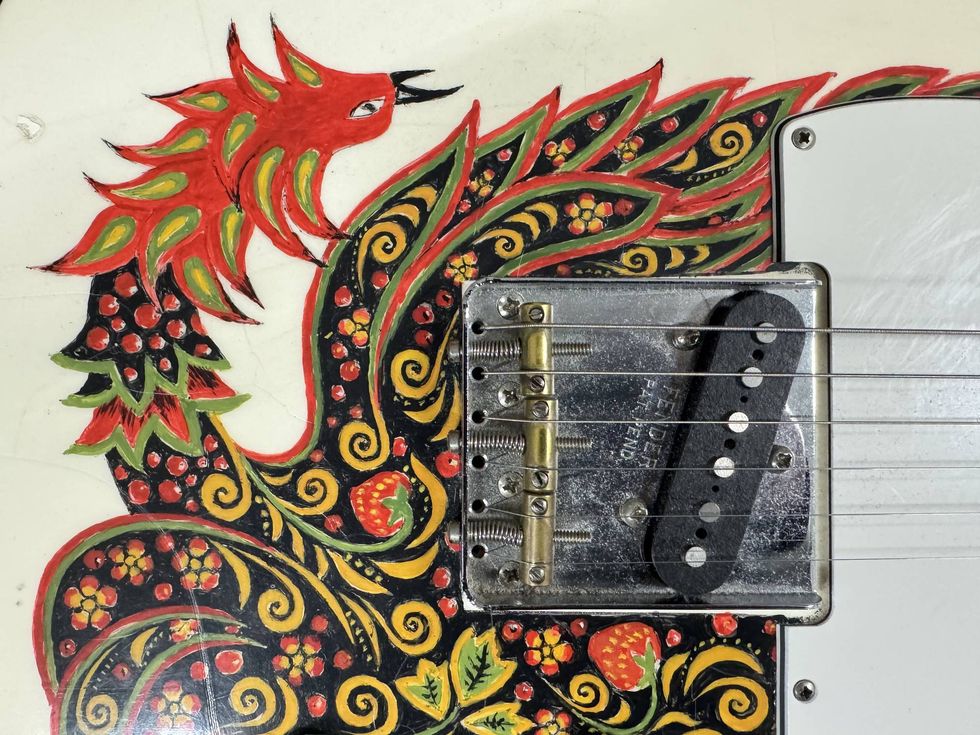
But rather than copying Page’s design, I wanted a twist on the dragon theme. So, I approached my Russian mother-in-law, who has an art background, with an unconventional request: Could she paint something in the traditional Khokhloma Russian folk-art style? And instead of Page’s psychedelic dragon, she painted a fiery Phoenix in brilliant reds, golds, and blacks—the signature colors of Khokhloma decorative painting. At the time, I didn’t realize how apt a depiction of the “rising from the ashes” fable would be for this guitar. Early Telecasters like Page’s, after all, were crafted from ash lumber. The symbolism was too perfect to be intentional.
To complete the transformation, I fitted the Phoenix with a Fender Classic Series ’60s Telecaster neck and Fender Pure Vintage ’51 Telecaster pickup set, giving it a vintage look and voice. The result is a unique confluence of old-world Russian and mid-century American design. It also honors an important moment in rock history, while celebrating my wife and Russian in-laws’ rich cultural heritage. Every time I pick it up, it reminds me that the best guitars aren't just instruments, they’re stories— connections between past and present, between different worlds and traditions, all speaking the universal language of music.
Flight Introduces New Ukulele Models
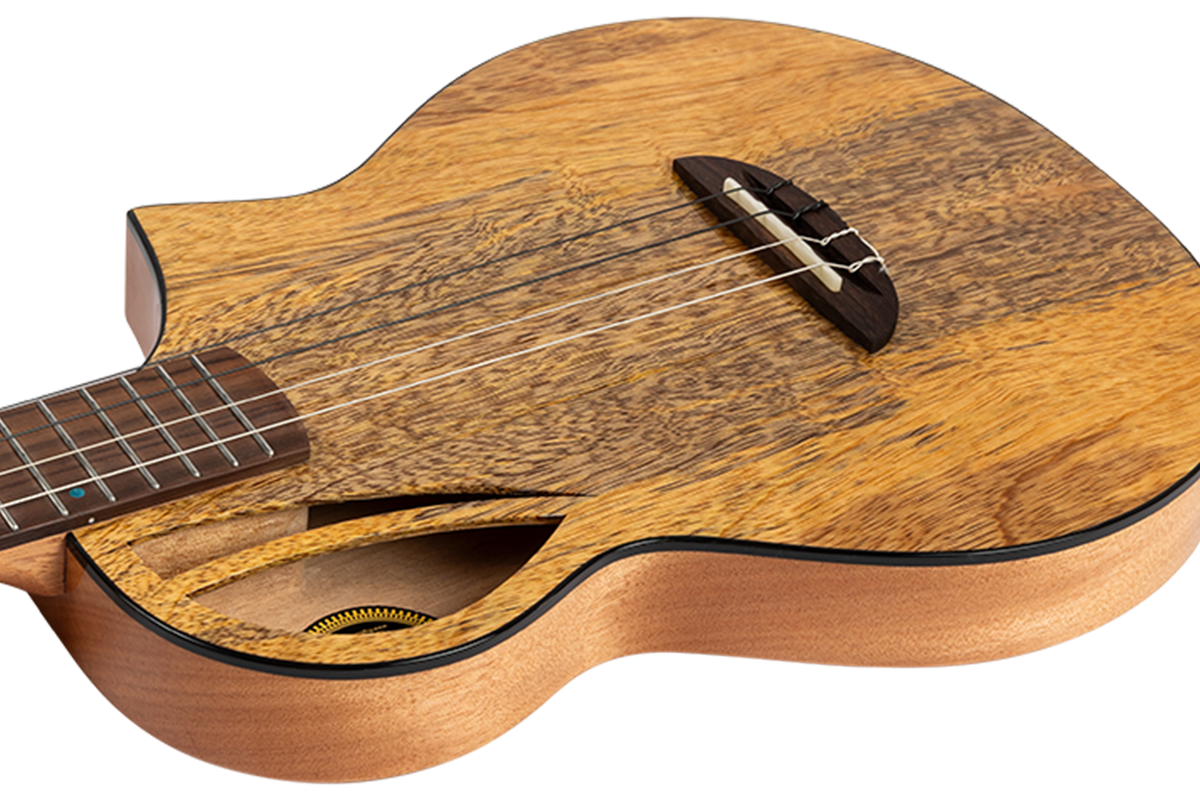
Adding to the company’s diverse array of acoustic instruments, Flight has introduced multiple new ukulele models to their product line.
Leading the way is the Aviator, a new slim ukulele model available in tenor and baritone sizes. The instrument features a solid mango top with solid okoume back and sides, producing a warm, resonant sound with notable sustain. Its slim body profile is designed for comfortable playability while still providing the projection expected from a full-bodied instrument.
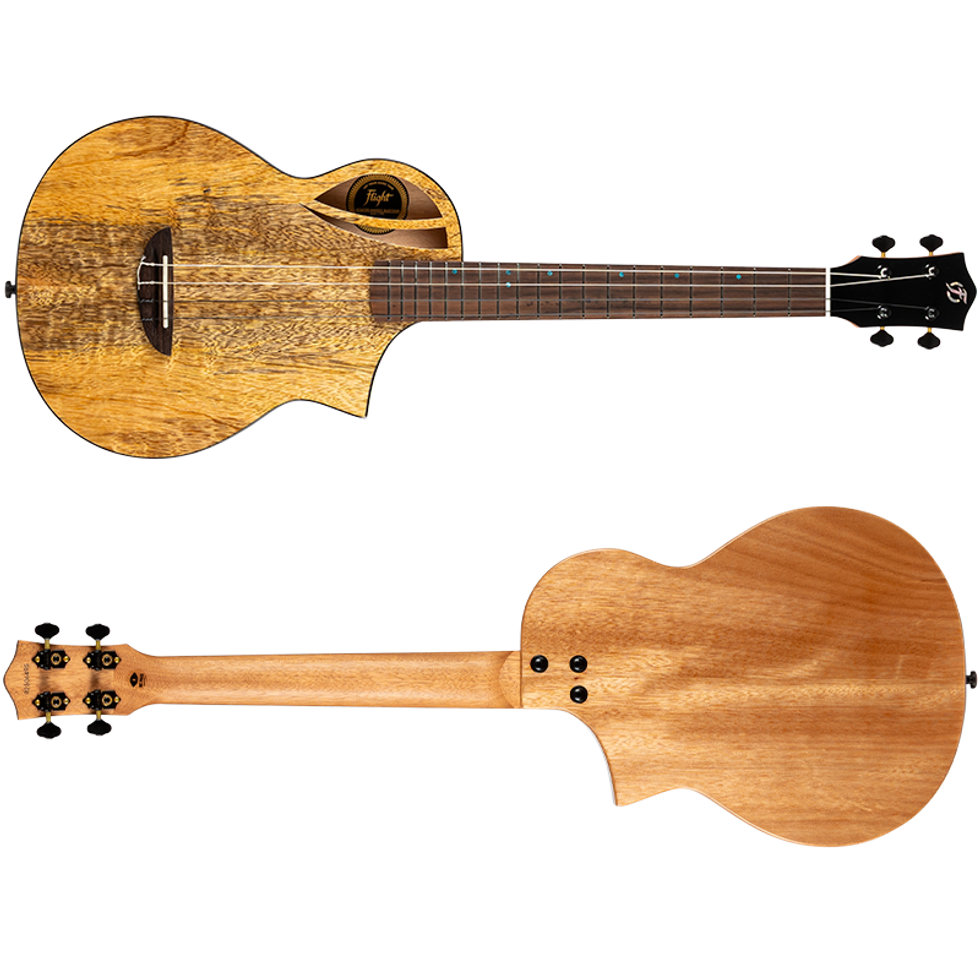
The Aviator includes a rosewood fretboard, bone nut and saddle, and a gloss-finished black headstock. Its construction emphasizes clean lines, natural materials, and balanced ergonomics, supported by the tonal qualities of mango and okoume. Each model comes with Flight’s Deluxe Gig Bag in royal burgundy.
The tenor version is factory-strung with a Low-G setup to extend its lower range, while the baritone provides a deeper register suited for players who prefer a broader tonal spectrum. Together, these models bring well-crafted additions to Flight’s solid-wood lineup.
The Flight Aviator Tenor Mango Ukulele carries a US street price of $379. The Flight Aviator Baritone Mango Ukulele carries a US street price of $416.
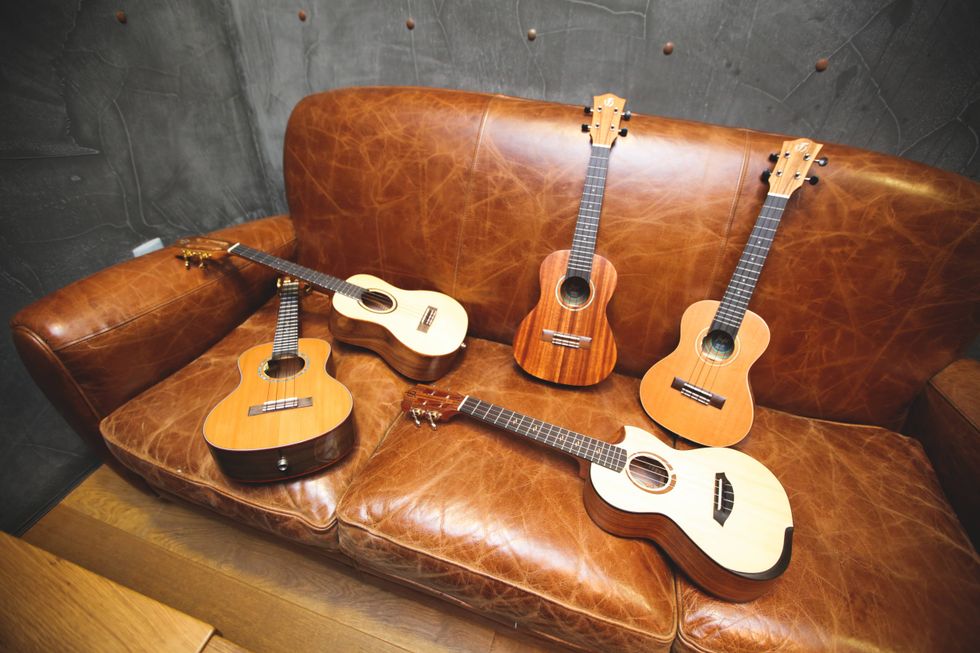
Flight has added two new solid top additions to the Princess Series with its first-ever Calantas models: the Iris Calantas Concert and Iris Calantas Tenor. Each ukulele features a solid calantas top paired with laminate mahogany back and sides, introducing a warm, balanced new tone to the Iris family while offering an affordable solid-top option for players looking for great value.
Calantas is a Southeast Asian hardwood known for its smooth response and distinctive natural grain, adding both character and clarity to these instruments. The familiar Iris appointments remain: slotted headstock, offset front markers, white binding, thin rosette, and fluorocarbon strings. Every model includes a padded gig bag, instructional booklet, and Flight sticker pack.
The concert offers a clear, focused sound, while the tenor adds depth and projection, together marking an elegant new chapter for the Iris lineup.
The Flight Iris Calantas Concert carries a $179 US street price and the Flight Iris Calantas Tenor carries a $189 US street price.
Flight has also expanded its Princess Series with the Iris Tinta, an all-solid mahogany model available in concert and tenor sizes, offering players an affordable way to enjoy the richness of an all-solid build. The line adds a striking stained gloss finish in four colors: Natural, Transparent Black, Transparent Blue, and Transparent Purple. Each shade brings out the wood grain differently, offering players a choice that ranges from classic to bold.
The Iris Tinta features a slotted headstock, rear-facing tuners, offset position markers, fluorocarbon strings, and a padded gig bag. Its solid mahogany build delivers a warm, balanced tone suited to many musical styles, while the glossy stained finish and colorful rosette give the instrument a fresh, fun look.
With these new models, Flight offers bright, colorful options for players who want an all-solid mahogany ukulele with an eye-catching, modern finish.
The Flight Iris Tinta Concert carries a US street price of $219 and the Flight Iris Tinta Tenor carries a US street price of $229.
For more information about the Flight ukulele line visit flightmusic.com.
Presets Are Not a Prescription
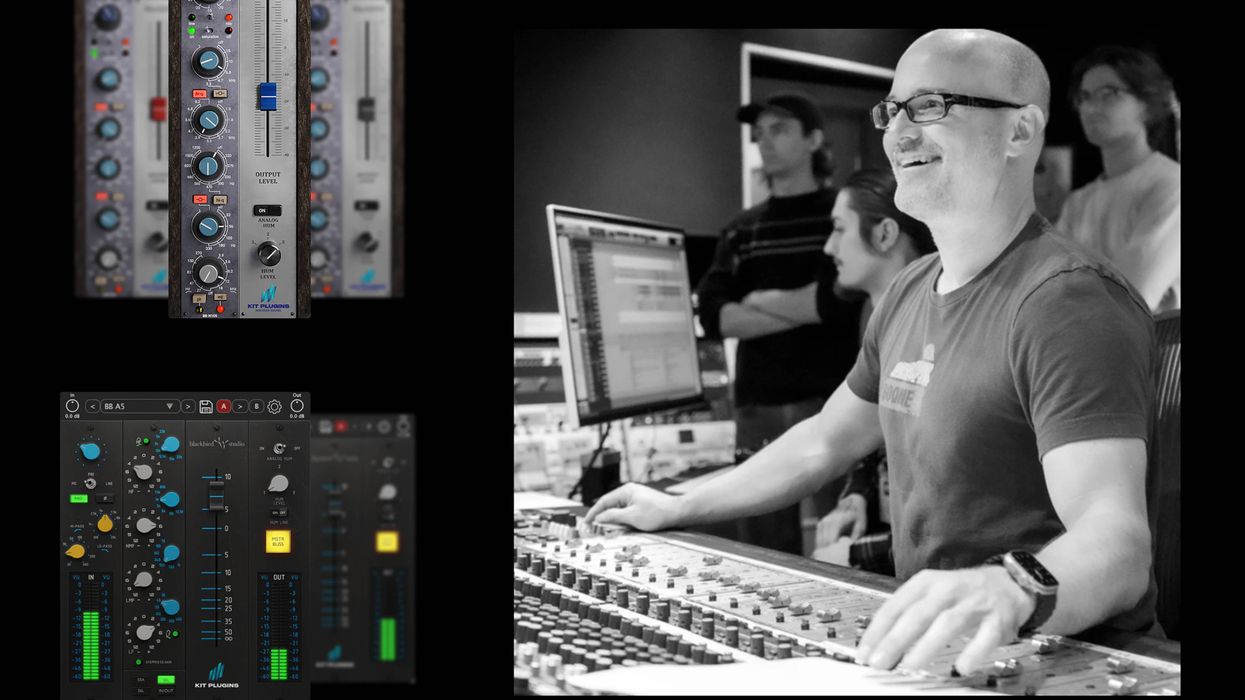
In the modern DAW world, every plugin comes with a buffet of presets promising instant results: “Vocal Gold.” “Drum Bus Glue.” “Radio-Ready Mix.” The implication is that these settings are the magic sauce separating amateurs from professionals. Just load the preset, and you’re done. Right?
Not quite.
Presets can be powerful tools, but only if you understand what they really are: starting points, not finish lines.
I’ve spent years inside some of the best studios in the world, working with world-class players, gear, and engineers, and I’ve seen how subtle context drives every EQ, compressor, and fader move. That experience shapes how I approach presets—and how I think they should be used.
Designing Presets with KIT Plugins
I’ve had the privilege of working closely with the team at KIT Plugins almost since their beginning—as an early beta tester and collaborator on nearly every product they’ve released. When they asked me to design some of the included presets for the BB A5 (a modern interpretation of a 96-channel Legacy API console, $199 Street) and the BB N105 (modeled after Blackbird Studio’s world-famous Neve 8078 console - $99 Street), I felt genuinely honored.
I’d spent years recording and mixing through those very consoles and EQs at Blackbird, and now I had the chance to help translate that analog DNA into the digital world.
When creating my presets, I didn’t approach them as “ready-made sounds.” Instead, I thought of them as guides—compass points that could help an engineer or musician quickly find a tonal direction. Each one reflects a real-world scenario from my own sessions: a slightly edgy vocal that needed midrange presence, a bass guitar fighting for space in a dense mix, a snare that needed to punch through without losing body.
Every preset I made came from that practical place. My goal was to share a bit of the process—how I think about frequency balance, gain staging, and energy within a mix—not to hand anyone a “paint-by-numbers” result. That distinction matters.
The “Preset Mismatch”
Imagine: you open a plugin, scroll through the options, find something like “Vocal Gold,” and think, “Perfect, that’s exactly what I need.” You load it—and suddenly your vocal sounds worse.
What happened?
Every preset, whether it’s mine or someone else’s, was born in a very specific context. Maybe the original source was a male singer with a soft top end and a ragged low midrange. Maybe he was singing into a vintage Neumann U67 through a Neve 1105 preamp, hitting a “Blue Stripe” 1176, inside a mix stacked with distorted guitars and busy drums.
But if you’re recording a lo-fi shoegaze female vocal with an SM57 in a bathroom through an Apollo X2, that same EQ curve will likely make your singer sound potentially worse. (Or will it?)
“Every preset, whether it’s mine or someone else’s, was born in a very specific context.”
The preset didn’t “fail”—it just wasn’t meant for your signal chain.
There are layers of invisible context behind every EQ decision: the performer, the instrument, the mic, the preamp, the compressor, the room, the genre, and the emotional target of the mix. When you remove a preset from that ecosystem, you have to re-interpret it. Otherwise, you’re comparing apples to lava lamps.
How to Use Presets the Right Way
Presets are at their best when you treat them as teachers. Here are four ways to get the most out of them:
- Start, Don’t Stop
Load a preset, listen, and then move a few knobs. Ask yourself why it sounds the way it does. Does it bring clarity, weight, excitement? Or does it tilt things too far? You’ll learn more by adjusting than by accepting. - Reverse-Engineer the Intent
Solo each band or section. If it’s an EQ, sweep the frequencies. If it’s a compressor, change the attack and release. Try to imagine the sound that inspired those moves. That’s how you train your ear. - Ignore the Labels
“Vocal Gold” might be perfect on a snare drum. “Drum Bus Glue” might breathe life into an acoustic guitar. Don’t let the category box you in. Think in terms of function, not title. - Trust Your Ears Over Everything
No preset designer, even the most experienced one, can hear what you’re hearing in your room with your monitors. The final call always belongs to your ears.
The Value of Presets
When I sit down to make presets, I’m not trying to predict your sound—I’m trying to invite you into the process. A well-made preset can accelerate learning, spark curiosity, and remind you that every mix decision has a reason behind it.
They’re saying, “Here’s how I started; now make it yours.” Used that way, presets become more than convenience—they become education. They let you peek over the shoulder of another engineer for a second and understand why a particular setting works.
So, the next time you load one of my KIT Plugins presets, don’t treat it like a rulebook. Twist the knobs, push it too far, pull it back, and most of all, listen. Because presets aren’t prescriptions—they’re invitations.
Winzz Guitars Unveils the WGT100 Electric Guitar
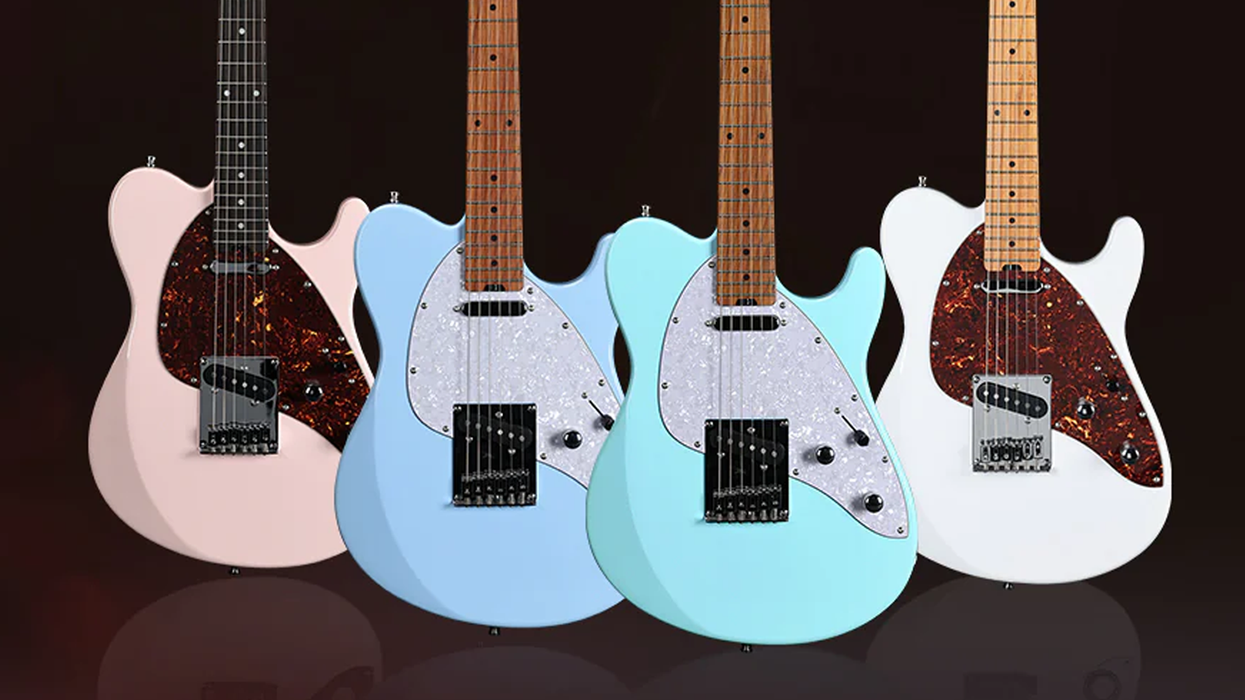
Winzz Guitars announces the WGT100, a new electric guitar designed to blend classic inspiration with modern refinement. The WGT100 introduces a unique combination of ergonomic shaping, upgraded playability, and versatile tonal performance. Built for musicians seeking comfort, stability, and expressive sound, it delivers a fresh interpretation of the electric guitar while staying rooted in time-tested design principles.
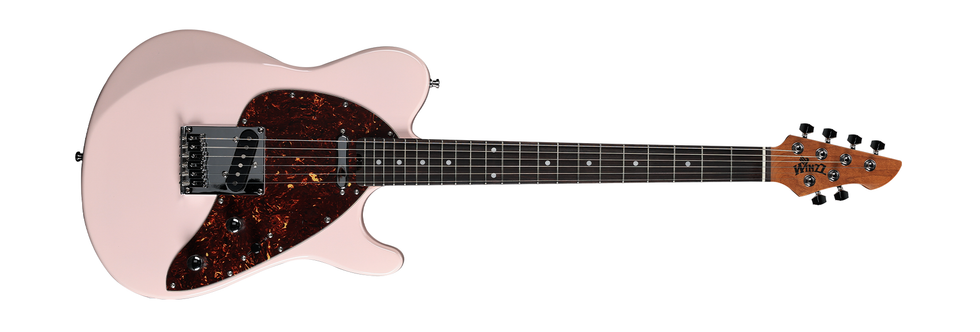
Featuring a selected alder body, the WGT100 pairs a classic silhouette with a delicate offset contour and smooth curved edges that enhance both comfort and visual appeal. A seamless and asymmetric ergonomic neck-body joint ensures easy access to higher frets. The instrument employs a 25.5” scale, roasted maple neck topped with either a rosewood or maple fingerboard and 22 stainless steel, medium frets. The guitar’s signature “glider neck” C+D profile and satin finish make for a fast, fluid feel. This combination, along with a stable five-bolt construction and Luminlay side dots provide comfort and confidence when playing under any circumstances.
For electronics, the WGT100 is fitted with custom ceramic single coil pickups, offering a versatile tonal palette that stays faithful to traditional single-coil clarity while supporting a wide range of modern styles. The upgraded pickups are designed to respond dynamically to picking nuances and playing intensity, providing both warmth and precision. Controls and switching work in a familiar, intuitive layout, allowing players to easily shape their sound onstage, in the studio, or at home.
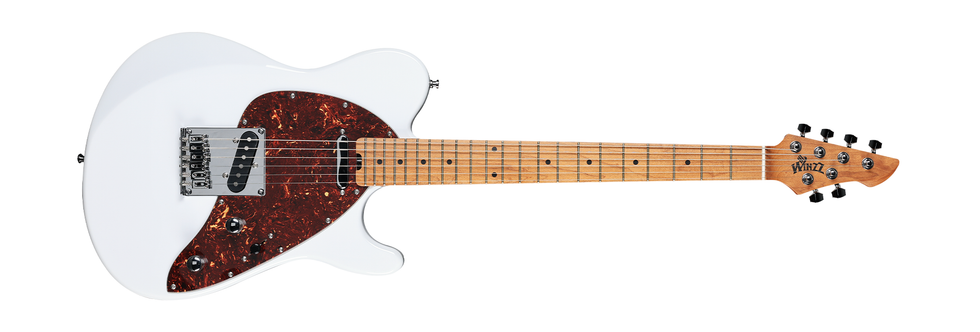
The guitar’s hardware emphasizes tuning stability with modern steel bridge saddles and locking tuners working together to enhance accuracy, performance, and reliability. The instrument’s 4+2 tuner layout further contributes to balanced string tension and improved intonation. A spoke adjustable truss rod provides setup flexibility and playing comfort.
Born from a partnership between passionate guitar builders from Germany’s village of Winz and Aileen Music in China, Winzz Guitars blends German precision with Chinese industriousness — a union that celebrates both artistry and innovation. Guided by the belief that music should be accessible to everyone, Winzz creates instruments that invite players to “find their voice and make every stage their own.” The WGS150 embodies that mission, offering a professional instrument that welcomes beginners, creators, and seasoned musicians alike.
For more details about the WGT100 or to explore more instruments from Winzz Guitars, please visit www.winzzguitars.com
Street Price: $339.99 USD
Diver Down Gets No Respect at All

Just the other day, I was thinking, “Diver Down gets no respect.” (You have to imagine Rodney saying it.)
This lesson is a lighthearted look at one of the David Lee Roth era’s most maligned albums. Does it have too many covers? Probably. Does it seem kinda just thrown together? Sort of. Do I love it? Well, no. Do I like it a whole lot? Yes. Yes, I do. And, as with every VH record, there are some inspired Eddie Van Halen moments. The following is a look at just a few of them, and, if you don’t walk away at the end with at least a couple of fun ideas, well, we won’t ever mention this again.
Not Those Kinds of Pedals
Here’s the scintillating EVH riff that begins “Hang ’em High”:
This unique riff finds Eddie using an inverted pedal point—a re-articulated or sustained note above an accompanying melodic figure. Ex. 1 is inspired by this barnburner; it ends with a Van Halen-style flourish of natural harmonics.
Ex. 1
The opening two beats’ picking pattern incorporates string skipping, which can open up a new world of ideas involving wider intervals. Here that interval is a minor seventh, so, to spark some new ideas, let’s take the B Dorian scale (B–C#–D–E–F#–G#–A) and play it in sevenths, as in Ex. 2. B Dorian is simply A major, but with B as the root or “home base.” Try experimenting with these and other wide intervals in your own playing.
Ex. 2
Just a few bars later, Eddie hints at another pedal (below, this time) to kick-start his nimble fill at 0:10; Ex. 3 expands on his idea. Begin with a mini-barre on the top two strings, allowing the F# on the second string to ring over the pull-offs. The lick ends with a bluesy flourish, as Eddie’s does. So often, he would ground phrases that are a bit off the beaten path by balancing them with something bluesy and down to earth.
Ex. 3
“Secrets” finds Eddie applying a pedal in yet another way, allowing a slightly palm-muted open D-string drone to gently linger below shimmering, melodic chords. Check him out here as he plays the song’s intro on the 12-string neck of his rarely-seen Kramer doubleneck guitar:
Ex. 4 is along the same lines. If you have an ’80s-style chorus pedal, now’s the time to add it back to your pedalboard.
Ex. 4
The Pick’s the Thing (Or Is It?)
My favorite of Diver Down’s covers is VH’s bouncy version of the Motown classic “Dancing in the Streets” by Martha and the Vandellas. The lick that always catches my ear is the wicked descending line Eddie plays at the 2:57 mark of his solo.
The song is in the key of D, and that lick (Ex. 5) is played over an F#m chord. Eddie uses the basic 14th position F#m pentatonic box (F#–A–B–C#–E), but cunningly adds most of the chromatic notes in between those pitches. But he summons even more magic from how he uses his pick. Starting on beat 2, Eddie is using upstrokes only, scratching the edge of his pick along the string to create a grinding squeal. Be sure to play these notes short (as indicated by the staccato dots) by quickly resting your pick back on the string right after the scratching motion. Great stuff.
Ex. 5
More of Eddie’s pick-based antics—likely inspired by ZZ Top’s Billy Gibbons—are found in “The Full Bug.” Over a nasty two-note boogie riff, Eddie conjures a subtle high-pitched countermelody using pinch harmonics.
Pinch harmonics are sounded by lightly touching the string with the flesh of your picking-hand thumb immediately after striking it. In the same way an open string offers harmonics of varying pitches, depending on where you touch it with a fretting-hand finger along its length, the same holds true for your picking-hand thumb, as illustrated in Ex. 6. To match the pitches in the example, begin with your pick about an inch from the bridge pickup—about halfway between the middle and bridge pickups if you’re using a standard Strat. This produces a pitch three octaves and a fifth above the fretted notes. On beat 3 of the third bar, slowly begin moving your picking hand towards the headstock to produce the remaining pitches. But this is rock ’n’ roll, so better to just go for it and find the harmonics that sound good to you.
Ex. 6
Okay, but how about not using your picking hand at all? “Cathedral” has Eddie doing just that, hammering notes with his fretting hand while creatively employing a dotted-eighth-note delay setting. Since a dotted-eighth is equal to three 16-notes, every time a note is played, it repeats itself three 16-notes later. (Eddie sets his delay at approximately 380 ms with just one repeat and Mix set at 100%.) If you swell the volume at a straight eighth-note pace, the repeats will create the bouncy 16th-note pattern of the tune.
Ex. 7 is inspired by “Cathedral” and illustrates how Eddie uses both triads and scales to create classical-sounding melodies.
Ex. 7
Happy Trails…
Let’s close with a look at “Little Guitars,” a Diver Down highlight that Eddie was inspired to write after picking up a pint-sized Les Paul. In the song’s verses, Eddie employs hybrid picking—simultaneously plucking three strings by using the pick, index, and middle fingers.
Eddie again creates drama by playing staccato, quickly resting his pick and fingers back onto the strings after plucking each chord. Ex. 8 is inspired by his approach. (Note you can also play it fingerstyle, if you prefer.) Eddie’s mini Les Paul is tuned up one and a half steps from standard; the example approximates this by using a capo, but feel free to omit it if you prefer. Lastly, try turning down your guitar’s volume knob a bit to reduce the amount of distortion, and note that the final three chords are strummed with the pick.
Ex. 8
In the end, Diver Down may not arguably be Van Halen’s greatest album, but even after all of these years, it still holds its own, bolstered by Eddie’s cleverness and creativity.
Diver Down Gets No Respect at All

Just the other day, I was thinking, “Diver Down gets no respect.” (You have to imagine Rodney saying it.)
This lesson is a lighthearted look at one of the David Lee Roth era’s most maligned albums. Does it have too many covers? Probably. Does it seem kinda just thrown together? Sort of. Do I love it? Well, no. Do I like it a whole lot? Yes. Yes, I do. And, as with every VH record, there are some inspired Eddie Van Halen moments. The following is a look at just a few of them, and, if you don’t walk away at the end with at least a couple of fun ideas, well, we won’t ever mention this again.
Not Those Kinds of Pedals
Here’s the scintillating EVH riff that begins “Hang ’em High”:
This unique riff finds Eddie using an inverted pedal point—a re-articulated or sustained note above an accompanying melodic figure. Ex. 1 is inspired by this barnburner; it ends with a Van Halen-style flourish of natural harmonics.
Ex. 1
The opening two beats’ picking pattern incorporates string skipping, which can open up a new world of ideas involving wider intervals. Here that interval is a minor seventh, so, to spark some new ideas, let’s take the B Dorian scale (B–C#–D–E–F#–G#–A) and play it in sevenths, as in Ex. 2. B Dorian is simply A major, but with B as the root or “home base.” Try experimenting with these and other wide intervals in your own playing.
Ex. 2
Just a few bars later, Eddie hints at another pedal (below, this time) to kick-start his nimble fill at 0:10; Ex. 3 expands on his idea. Begin with a mini-barre on the top two strings, allowing the F# on the second string to ring over the pull-offs. The lick ends with a bluesy flourish, as Eddie’s does. So often, he would ground phrases that are a bit off the beaten path by balancing them with something bluesy and down to earth.
Ex. 3
“Secrets” finds Eddie applying a pedal in yet another way, allowing a slightly palm-muted open D-string drone to gently linger below shimmering, melodic chords. Check him out here as he plays the song’s intro on the 12-string neck of his rarely-seen Kramer doubleneck guitar:
Ex. 4 is along the same lines. If you have an ’80s-style chorus pedal, now’s the time to add it back to your pedalboard.
Ex. 4
The Pick’s the Thing (Or Is It?)
My favorite of Diver Down’s covers is VH’s bouncy version of the Motown classic “Dancing in the Streets” by Martha and the Vandellas. The lick that always catches my ear is the wicked descending line Eddie plays at the 2:57 mark of his solo.
The song is in the key of D, and that lick (Ex. 5) is played over an F#m chord. Eddie uses the basic 14th position F#m pentatonic box (F#–A–B–C#–E), but cunningly adds most of the chromatic notes in between those pitches. But he summons even more magic from how he uses his pick. Starting on beat 2, Eddie is using upstrokes only, scratching the edge of his pick along the string to create a grinding squeal. Be sure to play these notes short (as indicated by the staccato dots) by quickly resting your pick back on the string right after the scratching motion. Great stuff.
Ex. 5
More of Eddie’s pick-based antics—likely inspired by ZZ Top’s Billy Gibbons—are found in “The Full Bug.” Over a nasty two-note boogie riff, Eddie conjures a subtle high-pitched countermelody using pinch harmonics.
Pinch harmonics are sounded by lightly touching the string with the flesh of your picking-hand thumb immediately after striking it. In the same way an open string offers harmonics of varying pitches, depending on where you touch it with a fretting-hand finger along its length, the same holds true for your picking-hand thumb, as illustrated in Ex. 6. To match the pitches in the example, begin with your pick about an inch from the bridge pickup—about halfway between the middle and bridge pickups if you’re using a standard Strat. This produces a pitch three octaves and a fifth above the fretted notes. On beat 3 of the third bar, slowly begin moving your picking hand towards the headstock to produce the remaining pitches. But this is rock ’n’ roll, so better to just go for it and find the harmonics that sound good to you.
Ex. 6
Okay, but how about not using your picking hand at all? “Cathedral” has Eddie doing just that, hammering notes with his fretting hand while creatively employing a dotted-eighth-note delay setting. Since a dotted-eighth is equal to three 16-notes, every time a note is played, it repeats itself three 16-notes later. (Eddie sets his delay at approximately 380 ms with just one repeat and Mix set at 100%.) If you swell the volume at a straight eighth-note pace, the repeats will create the bouncy 16th-note pattern of the tune.
Ex. 7 is inspired by “Cathedral” and illustrates how Eddie uses both triads and scales to create classical-sounding melodies.
Ex. 7
Happy Trails…
Let’s close with a look at “Little Guitars,” a Diver Down highlight that Eddie was inspired to write after picking up a pint-sized Les Paul. In the song’s verses, Eddie employs hybrid picking—simultaneously plucking three strings by using the pick, index, and middle fingers.
Eddie again creates drama by playing staccato, quickly resting his pick and fingers back onto the strings after plucking each chord. Ex. 8 is inspired by his approach. (Note you can also play it fingerstyle, if you prefer.) Eddie’s mini Les Paul is tuned up one and a half steps from standard; the example approximates this by using a capo, but feel free to omit it if you prefer. Lastly, try turning down your guitar’s volume knob a bit to reduce the amount of distortion, and note that the final three chords are strummed with the pick.
Ex. 8
In the end, Diver Down may not arguably be Van Halen’s greatest album, but even after all of these years, it still holds its own, bolstered by Eddie’s cleverness and creativity.
Shnobel Tone Introduces Dumbbell Boost Pedal
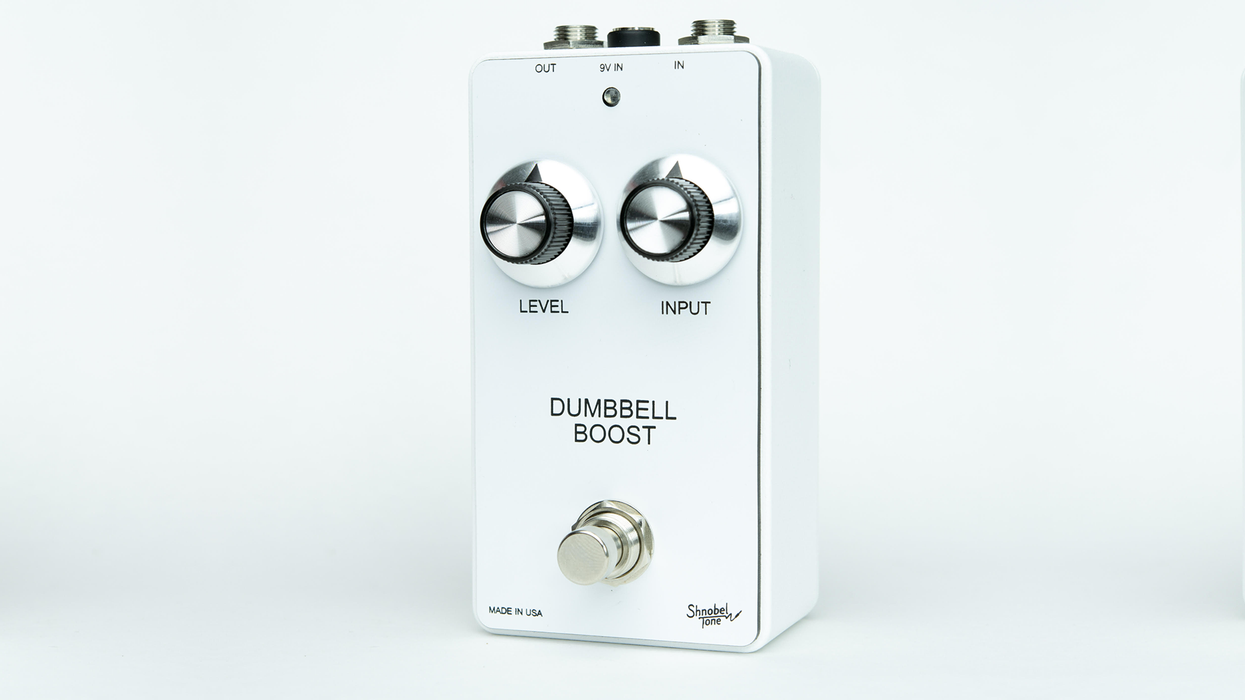
Shnobel Tone has introduced the latest addition to its line of premium guitar effects: the new Dumbbell Boost offers a Dumble® BBC-1 circuit in a compact two knob pedal.
Available in either black or white finishes, it’s a dead-simple way to fine-tune your tone, add some grind and help your guitar stand out in the mix.
The Dumbbell Boost’s Input knob controls the input impedance and impacts your tone and grit. When turned fully to the left (counterclockwise) it gives you a brighter, less bassy sound. Turned all the way to the right (clockwise) you’ll get a full range sound with rich harmonics and Dumble® like tones. The pedal’s Level knob controls the pedal’s overall output volume.
Hand soldered with the best through hole components for maximum tone and reliability. Shnobel Tone’s Dumbbell Boost includes these features:
- Simple two-knob control set: Input and Level
- True-bypass on/off footswitch
- Top mounted power and in / out jacks for easier pedalboard placement
- Available in Black or White finish
- Hand-built in the USA with through-hole components
- Standard 9v center negative power – no battery compartment
Shnobel Tone’s Dumbbell Boost carries a street price of $179 and can be purchased at shnobeltone.com.
Cort Guitars Introduces the New KX500 Pale Moon
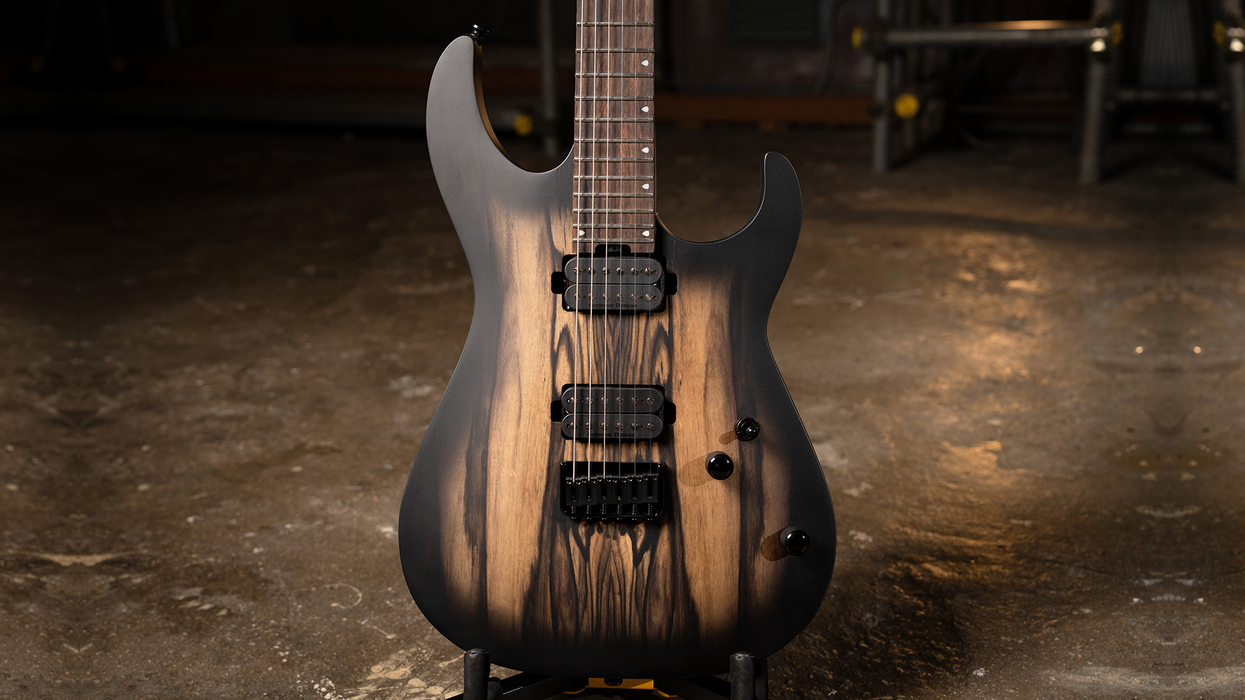
Cort Guitars announces the KX500 Pale Moon, an electric guitar designed for players who demand both uncompromising performance and standout style. Available worldwide through local and online retailers, the KX500 Pale Moon delivers aggressive tone, surgical precision, and a visually striking Pale Moon ebony top that ensures players stand out both sonically and on stage.
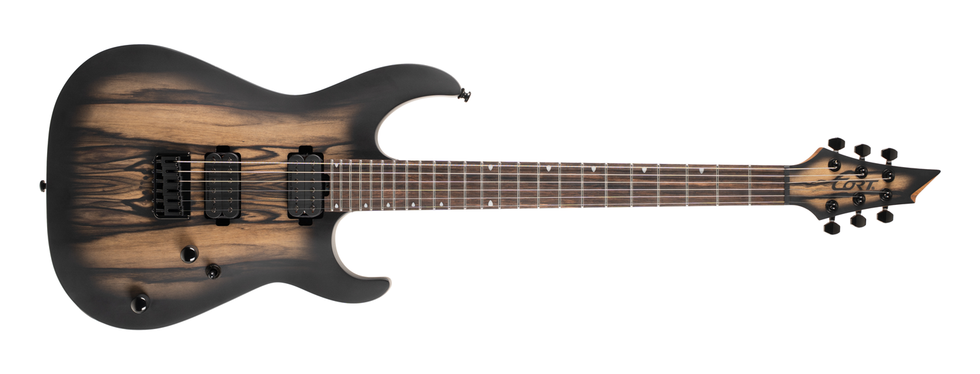
The KX500 Pale Moon features a mahogany body producing warm, rich tones with strong midrange and low-end response. Its Pale Moon ebony top adds a dramatic and unique aesthetic, while the matte open-pore Natural Black Burst finish highlights the natural beauty of the wood. A bolt-on, 5-piece roasted maple and walnut neck improves resonance and durability, paired with a comfortable D-shaped profile measuring 19.5mm at the first fret and 21.5mm at the twelfth. The 25.5-inch scale length neck is topped with a Macassar ebony fingerboard featuring 24 jumbo stainless-steel frets, a 15.75-inch radius, luminous, glow-in-the-dark side dots, and teardrop inlays. A Graph Tech® Black TUSQ® nut (43mm) and two-way truss rod with spoke nut enhance performance, comfort, tuning stability, and sustain.
Loaded with a Seymour Duncan® Sentient and Nazgul humbucker set, the KX500 Pale Moon excels in both high-gain aggression and expressive dynamics. The Nazgul bridge pickup delivers crushing low-end response, sharp attack, and saturated tone, while the Sentient neck pickup provides smooth, articulate cleans and fluid leads. Electronics are kept intuitive with a 1-volume, 1-tone control layout and a 3-way selector switch.
The guitar’s hardware includes Cort® locking tuners for fast, precise tuning and stability, while the new Cort® hardtail bridge with string-through-body construction enhances sustain and resonance. The instrument comes factory-fitted with D’Addario® EXL110 strings, rounding out a feature set designed to meet the demands of modern players.
For more information about the new Cort KX500 Pale Moon and other Cort Guitars instruments, please visit www.cortguitars.com.
Street $929.99 USD
Summer School Electronics and Supercool Pedals Collaborate on Distortion Pedal
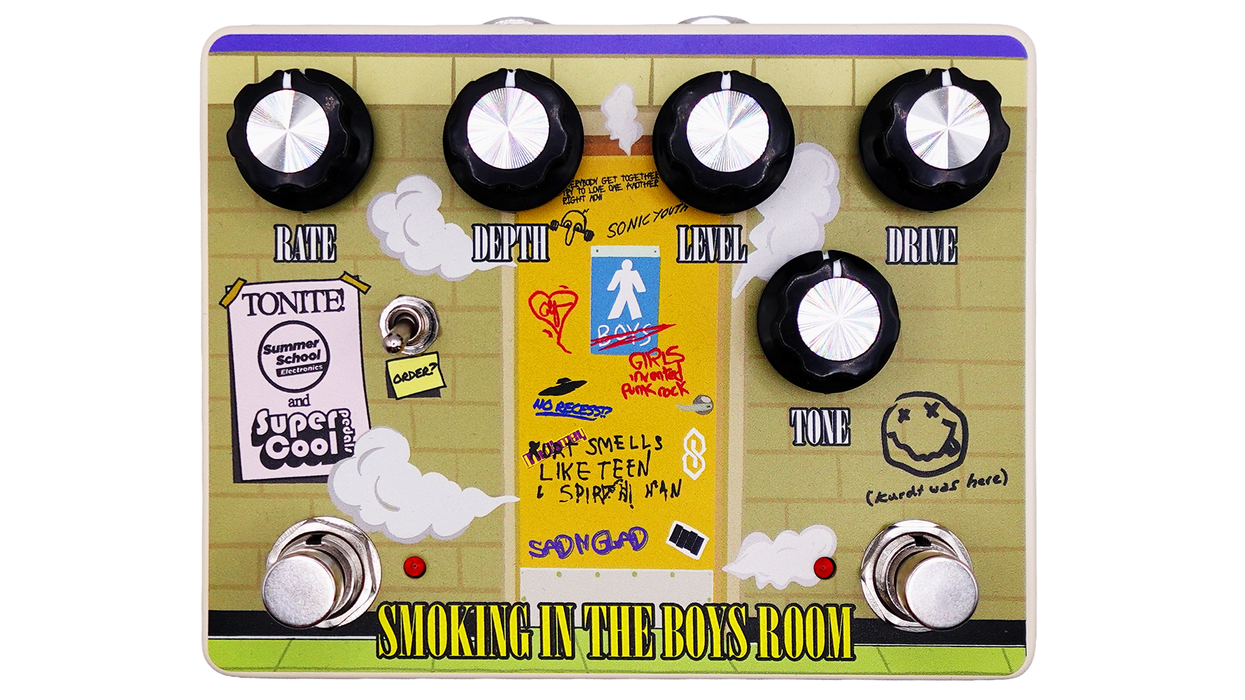
“Smoking in the Boys Room” is a collaborative two-in-one distortion and chorus pedal created by Summer School Electronics and Supercool Pedals – A cross-border team-up that delivers unmistakably 90’s grunge tones with a refreshed modern bite and artful design.
Smoking In the Boys Room artfully fuses a Summer School Electronics DS-1-inspired distortion – complete with classic buzzsaw edge and a modernized mid-range snarl – with Supercool Pedals’ organic and watery Small Clone-style analog chorus. This tribute to the legendary Seattle Grunge pioneers Nirvana is unmistakable and loving, summoning classic tones but delivering original spins on sound and circuit to bring this iconic sound into the 21st century.
Smashed into a single thoughtfully designed enclosure (with art that is SATURATED with deep 90’s and Nirvana lore), each effect can be run independently or simultaneously for a classic cacophony of flannelled saturation, with an all-important external order switch to determine the effect chain sequence.
Each pedal offers the following features:
- Buzzsaw distortion tones with a revamped easy to use tone circuit.
- Watery chorus with adjustable rate and depth.
- Internal order swap accessible by an external toggle switch.
- Nostalgic and 90’s-rich art and design (with full colour manual, printed fabric bags, and plenty of box candy).
- Hand-built across borders by two independent builders: Summer School Electronics (Syracuse, NY) and Supercool Pedals (Peterborough, ON).
- True mechanical bypass on both circuits (no more BOSS buffer woes).
- 9-volt operation with a stranded DC input.
Smoking In The Boys Room is available at Supercool Pedals and Summer School Electronics dealers, at a street price of $299.99 as well as online at www.summerschoolelectronics.com and www.supercoolpedals.com
Chris Stein on Guitars, Vintage Gear, and Blondie’s Sound
The Blondie co-founder talks early Stratocasters, fingerpicking punk riffs, CBGBs-era New York, and the cultural truth of electric guitars.
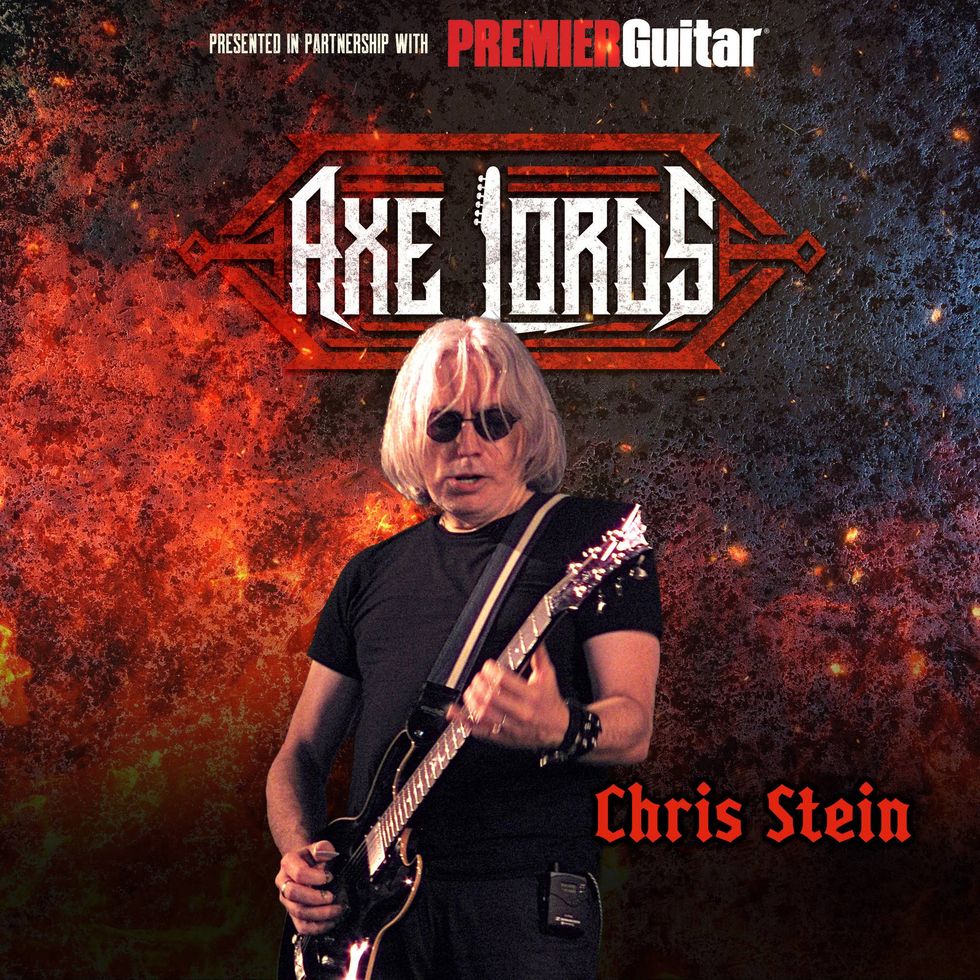
Chris Stein of Blondie joins the Axe Lords for a deep conversation about tone, technique, and the guitars that shaped Blondie’s sound from their early years at CBGBs to today. The Rock & Roll Hall of Famer also explains why he dislikes relic guitars, how he came to his very un-punk fingerpicking picking technique and reveals that some of the band’s most iconic “synth” sounds were actually produced by guitars. A thoughtful, opinionated, and unrelentingly wise-cracking look at creativity by a punk and new wave legend who Dave says is basically his best friend. Make sure to stick around through the end of the episode for a deep dive into the design and build of Cindy’s D&D guitar.
Cindy's D&D Guitar!

Tech 21 Announces SansAmp Classic Limited Run for Early 2026
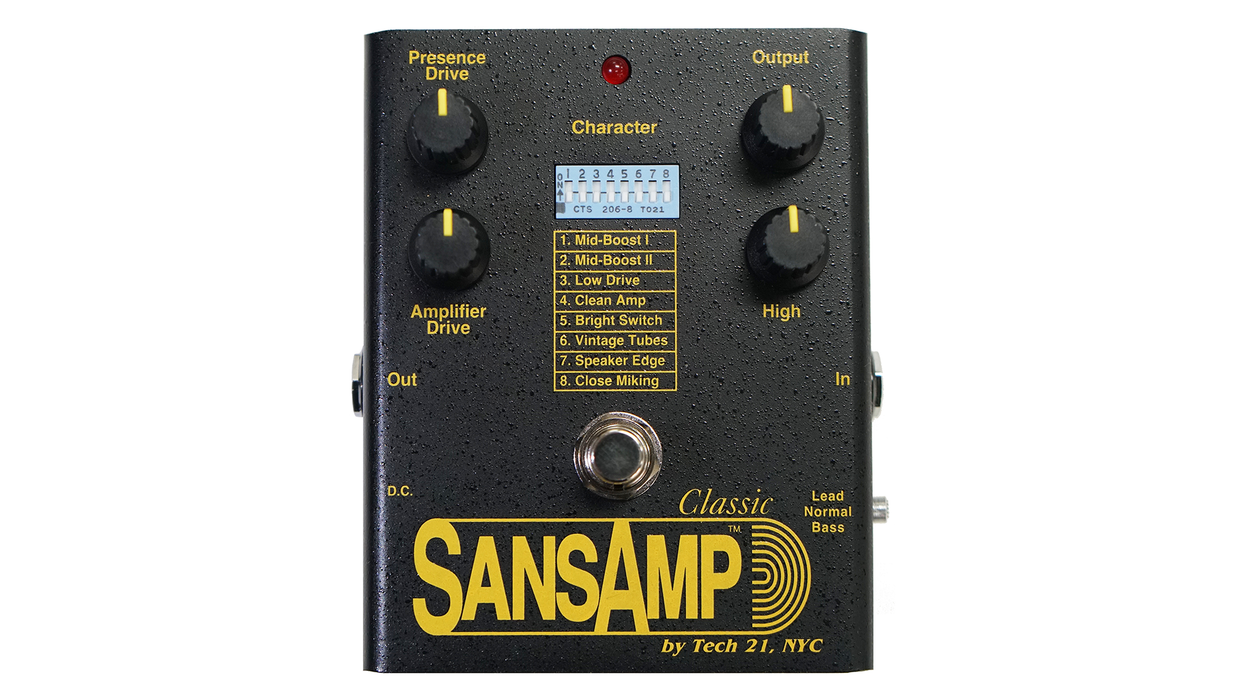
The original SansAmp Classic, introduced 37 years ago, was in constant production for 27 years until 2016. After a 5-year hiatus and a surge in popular demand, it was reissued in 2021. Once again, its enduring popularity has prompted Tech 21 to do another release of a limited quantity scheduled for early 2026.
Virtually unchanged and still made in the USA, the all-analog SansAmp Classic pedal design is B. Andrew Barta's unique invention that was the catalyst for the whole “going direct” movement way back in 1989. Since then, SansAmp evolved into an extensive line of pedals and racks, as well as being the essential element of Tech 21’s Fly Rig series.
Of the pedal formats, SansAmp Classic is the most sophisticated. There is a bank of eight Character switches to adjust tonality, harmonics and dynamics; a 3-position input switch offers a choice of pre-amp styles; and four knob controls to shape pre-amp contours, power amp contours, volume and final tone.
It is rare an electronic music-related product can withstand such a test of time. For over almost 40 years, the SansAmp Classic has been used for every kind of music style from death metal to commercial jingles, in countless pro studios, on tours around the globe, on a vast variety of major releases (including Grammy Award-winning records), and by hundreds of thousands of everyday players, producers, and engineers.
While all SansAmps are flexible, user-friendly, robust devices that deliver the warm, rich, natural tones of the most desirable tube amplifiers on the planet, the SansAmp Classic is the original. Not just for guitar and bass, everything from industrial samples to maracas have been saved from atonal death by its analog magic. It has defied the odds and to this day, remains the standard of the industry.
The New Breed: A Complete Guide to the Nuno Guitars Lineup
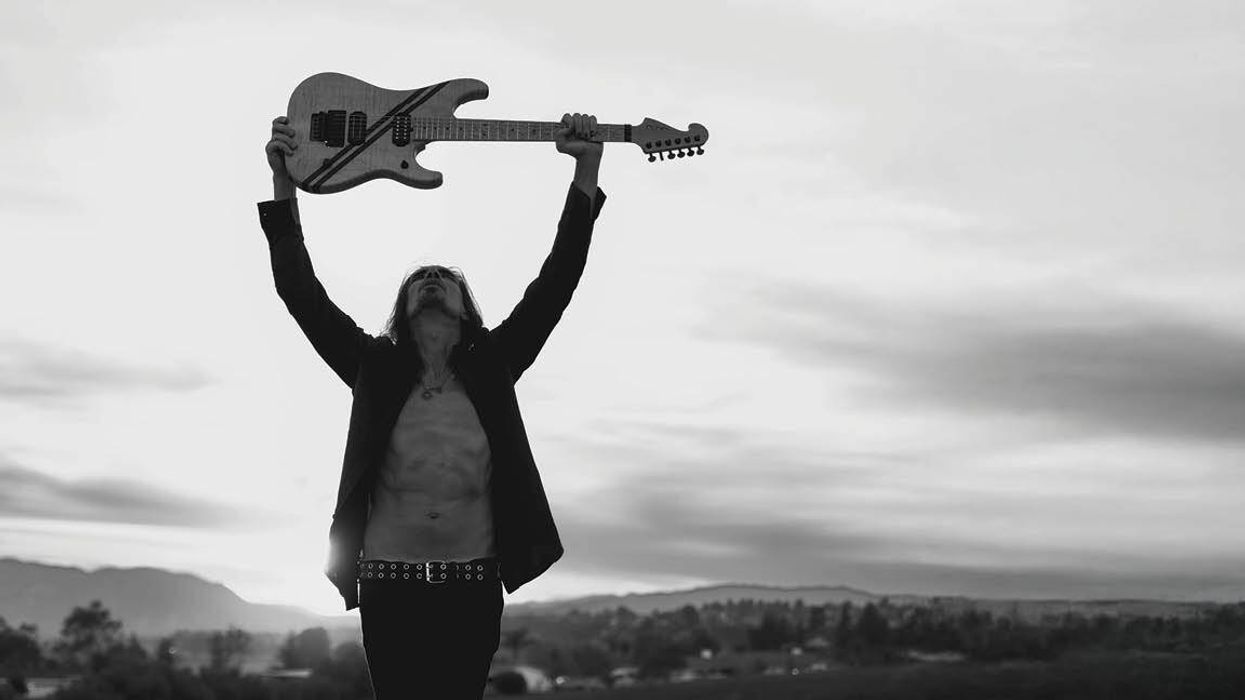
After decades of playing guitars bearing the Washburn logo, Nuno Bettencourt has launched a line of instruments under his own name. But Nuno Guitars isn’t just about slapping a famous name on a headstock, and it’s not merely another signature line. The new venture is a hands-on operation that lets him oversee everything, from tonewood selection and hardware choices to the way each model is built and brought to market.
The brand is launching with three distinct ranges. At the top sits the Thoroughbred Series—Masterbuilt guitars hand-crafted by longtime N4 builder Chris Meade in his Cincinnati shop. This series consists of the Dark Horse and White Stallion models, featuring exotic wood combinations chosen by Bettencourt. “I wanted to switch it up,” Bettencourt says. “I didn’t want to just go, ‘Well, here’s a Washburn with the Nuno logo on the headstock.’” The Dark Horse boasts an alder body with a ziricote top, while the White Stallion has a three-piece avodire (white mahogany) body and a curly maple top. The ziricote caught his eye, he says, because it creates the illusion of a paint job while being entirely natural wood, with each guitar’s grain pattern being completely unique.
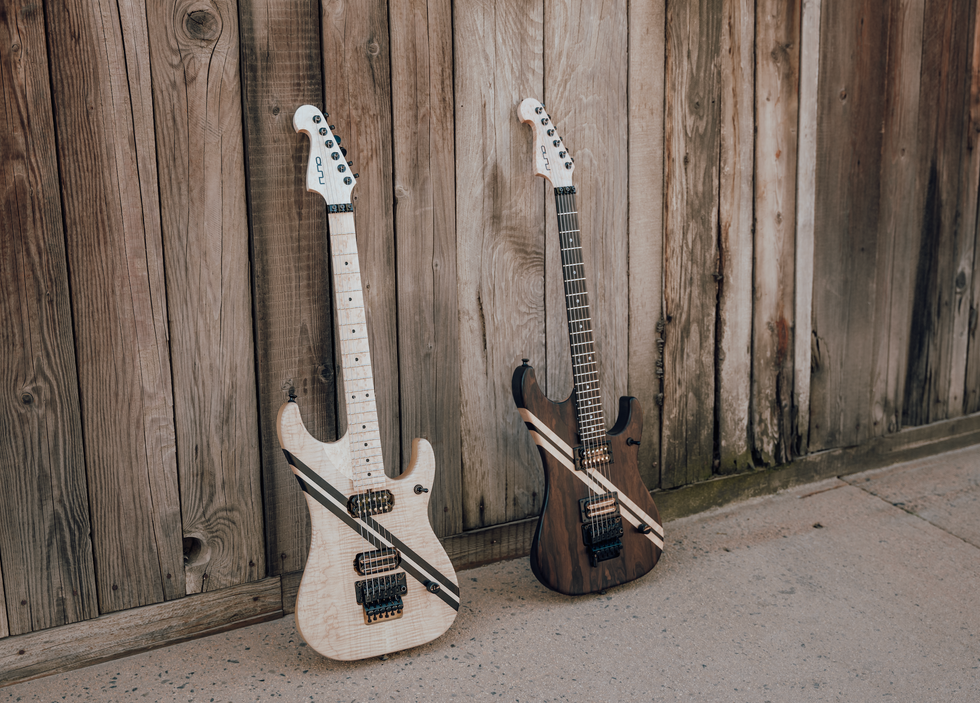
Adding to the arresting visuals on the Dark Horse and White Stallion is the wood striping across the body. Inspired by the B.C. Rich Mockingbird Nuno’s older brother Luís owned growing up, these aren’t painted stripes, but rather actual contrasting woods, ebony and maple, inlaid into the instrument. On the Masterbuilt models, these stripes run completely through the body. “When I drew the design, I really connected with it because of what I remembered from my childhood,” Bettencourt says. “It felt like me, and it felt like a great way to go into this new era of guitars.”
The second range, the Stable Series, represents the U.S. production line built in Oxnard, California. This series offers the Dark Horse, White Stallion, and N4 models, all maintaining premium quality—alder bodies with wenge (Dark Horse) or swamp ash (White Stallion) tops, genuine Floyd Rose bridges, and the same U.S.-made Nuno signature pickups found in the Masterbuilts. The differentiator isn’t quality, but exotic versus traditional materials. “The Masterbuilt is like the Ferrari of the guitars,” Nuno says. “But still, you’ve gotta be able to jump into a Mercedes, and take that thing onstage and say, ‘I could play this all day.’ That’s the U.S.A. guitars.”
“I didn’t want to just go, ‘Well, here’s a Washburn with the Nuno logo on the headstock.’”
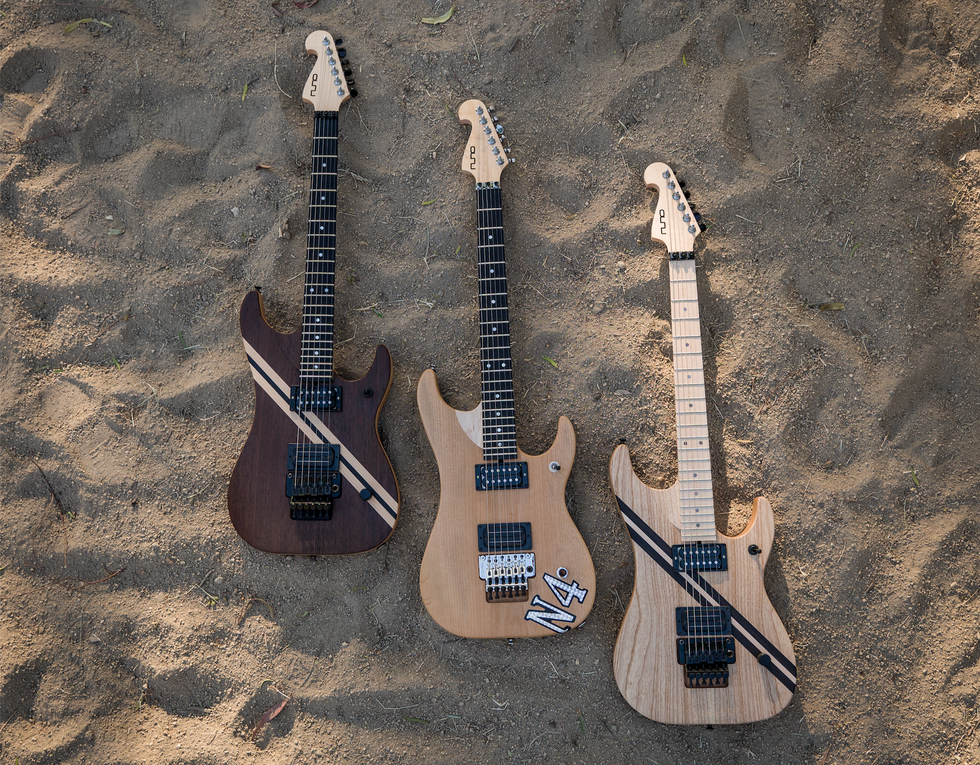
The Colt Series rounds out the line as the import offering, manufactured in China. All three models—Dark Horse, White Stallion, and N4—are available in this series with woods including alder and swamp ash for the bodies and rock maple for the necks. While these guitars also use budget-friendly components—licensed Floyd Rose-style hardware rather than genuine Floyd units, Korean-made Nuno pickups—Bettencourt stresses that they are not mere entry-level instruments. “With the stuff that’s coming from overseas, everybody’s always like, ‘Yeah, those are beginner guitars, whatever.’ No. It was like, who are the best of the best [builders], where they can fool you into going, ‘Wait—this was made where?’”
All electric models feature the Extended Cutaway neck joint—a 5-bolt design that’s been Nuno’s signature for decades and provides exceptional upper-fret access—as well as Floyd Rose tremolo systems: Original Floyd Rose units on the Masterbuilts, genuine Floyd Rose bridges on the U.S. production models, and licensed Floyd Rose-style systems on the imports.
A point of interest is the fingerboard options, which include a flamed maple offering on the White Stallion—Nuno’s first maple board in many years. Limited signature runs with Washburn occasionally featured maple fretboards, and he famously played one in Extreme’s 1990 video for “Decadence Dance.” “That was an N3,” he recalls. “And stupidly, in the last shot in the video, I dove into water. You see me splashing around like an idiot.” He laughs: “I think I ruined the guitar, but then it got stolen, anyway.” Years later, just the body resurfaced at a Hard Rock Cafe in Asia—the neck was gone, but the shadow of the N3 sticker remained.
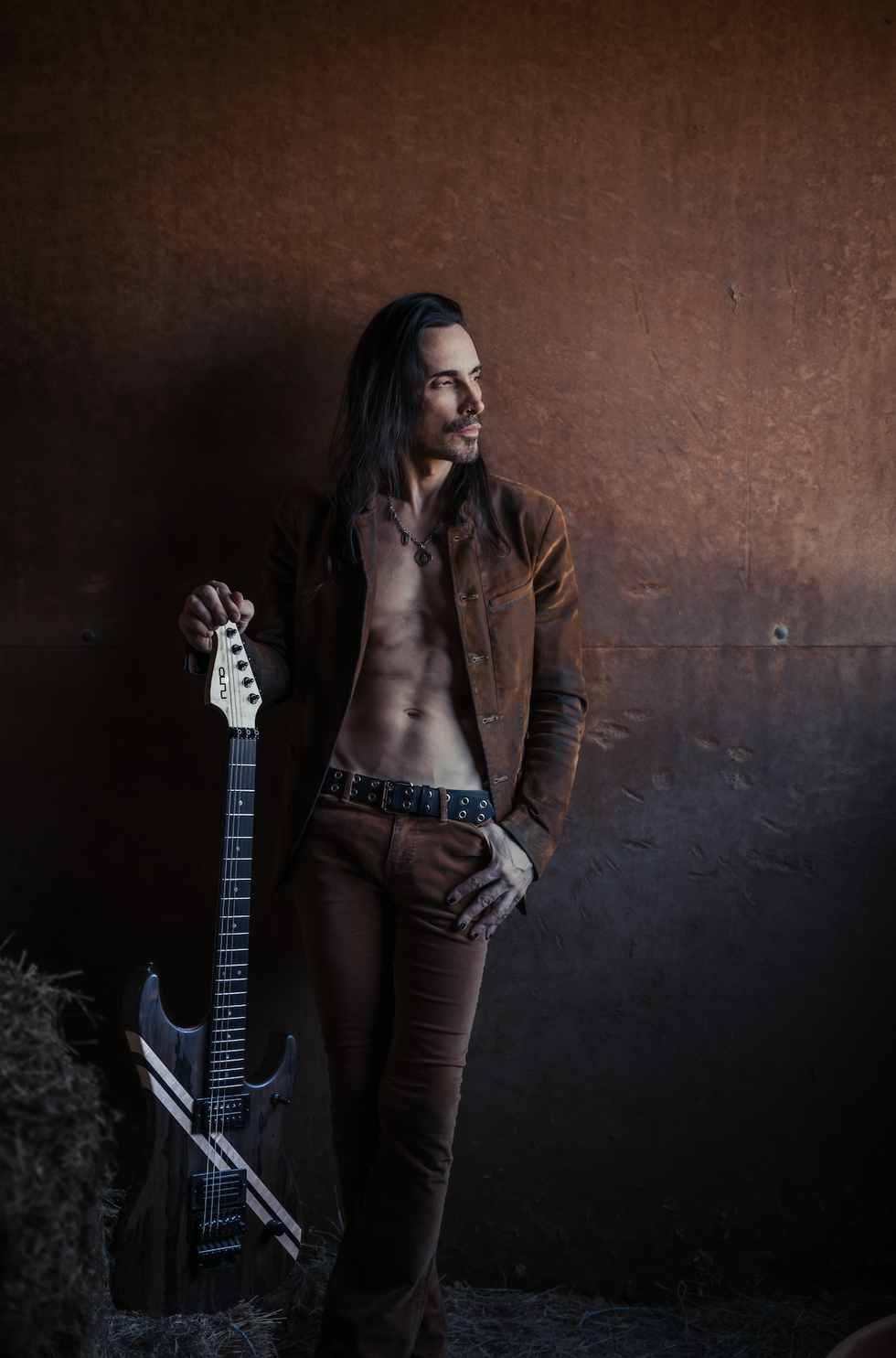
While all White Stallions feature flamed maple boards, the Dark Horse models and N4s stick with ebony fretboards. All models maintain the 25.5" scale length, 22 frets, and dot inlays that have been Nuno hallmarks. The necks themselves are birdseye maple on Masterbuilt models, hard maple on U.S. production guitars, and rock maple on imports.
Nuno’s classic N4 tone came from a Seymour Duncan ’59 in the neck paired with a Bill Lawrence L-500 in the bridge, and the new guitars feature custom Nuno signature humbuckers designed to capture that trademark sound. U.S.-made versions of these pickups appear in both Masterbuilt and U.S. production models, while Korean-made versions populate the import line. All models feature the same minimalist control layout Nuno has always preferred: one volume knob, a 3-way toggle, and no tone pot.
The N4 itself remains in the line, and since it was always Nuno’s design—and one that he controls—it has come over to Nuno Guitars virtually untouched. Notably, the N4 is the only model that features chrome hardware; the Dark Horse and White Stallion models all sport black hardware regardless of production level.
“I didn’t want anything super extravagant. I didn’t want a ton of guitars. I just wanted ‘mine.’”
Additionally, Nuno Guitars will offer an acoustic model—the Lusitano, which features a grand auditorium body with a solid spruce top and mahogany back and sides, with custom f-holes alongside a traditional soundhole. It’s fitted with a soundhole-mounted preamp and an under-saddle Piezo pickup system, chrome hardware, ebony fretboard, and 20 frets, with a 12th fret inlay of the Portuguese national emblem, a nod to Nuno’s heritage. “It’s full black, with white trim all around,” he says of the Lusitano. “We also do some different things with the neck, because I’ve always wanted an acoustic that plays more like an electric. Why wouldn’t you?”
Across all three electric series, and the acoustic, the quality approach remains consistent. From the Masterbuilts with their exotic woods and premium finishes to the U.S. models to the imports to the Lusitano, each guitar has its place. “I didn’t want anything super extravagant,” Nuno says. “I didn’t want a ton of guitars. I didn’t want a big line. I just wanted ‘mine.’”
Getting to that point wasn’t easy. “It was really hard for me to do this,” he admits. “The main reason was because of my name on the headstock. It felt really, really egotistical and self-serving.” But after a lifetime of playing, he realized it was time. And that means being involved in and fully committed to every aspect, from Chris Meade’s Cincinnati workshop to the factories in Oxnard and overseas. It’s the same philosophy he brings to the stage—the work ethic doesn’t change whether it’s a small club or a stadium, and it extends from his playing to the instruments themselves. “I’ve never done anything but be all in on everything,” Nuno says. “It’s either you’re that or you’re out. And when it comes to that passion for the instrument, I’m all in. That’s why I did this.”
Rig Rundown: Gary Rossington Collection
PG brings you a hands-on look at some of the gear that the late Skynyrd guitarist used to change rock history.
While our Rundown team was in Chicago in November, they spent some time at Chicago Music Exchange with CEO Andrew Yonke and vintage inventory and purchasing manager Daniel Escauriza. In 2023, they were contacted by Gary’s daughter Mary Rossington to help manage the gear that belonged to her late father, the legendary Lynyrd Skynyrd guitarist Gary Rossington. With the help of friends and crowd-sourced knowledge, Yonke and Escauriza embarked on a months-long saga to learn about Rossington’s guitars and amps.
PG’s John Bohlinger met up with Yonke and Escauriza inside CME’s Vault to learn about the adventure, and to get up close and personal with some of Rossington’s most treasured pieces of kit. Check out some of the highlights below, and after the photos, we have an exclusive interview with Mary Rossington, so keep scrolling!
Brought to you by D’Addario.
Rossington’s Reds
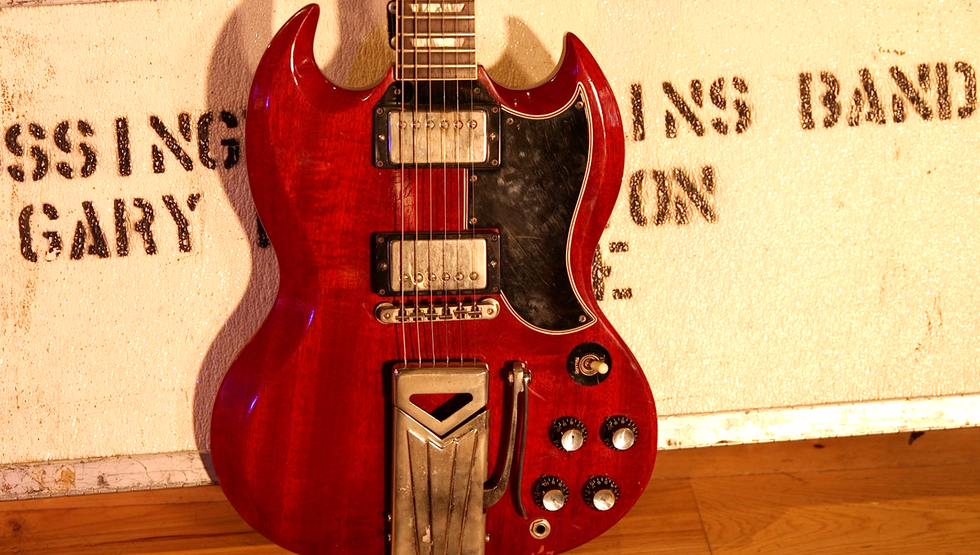
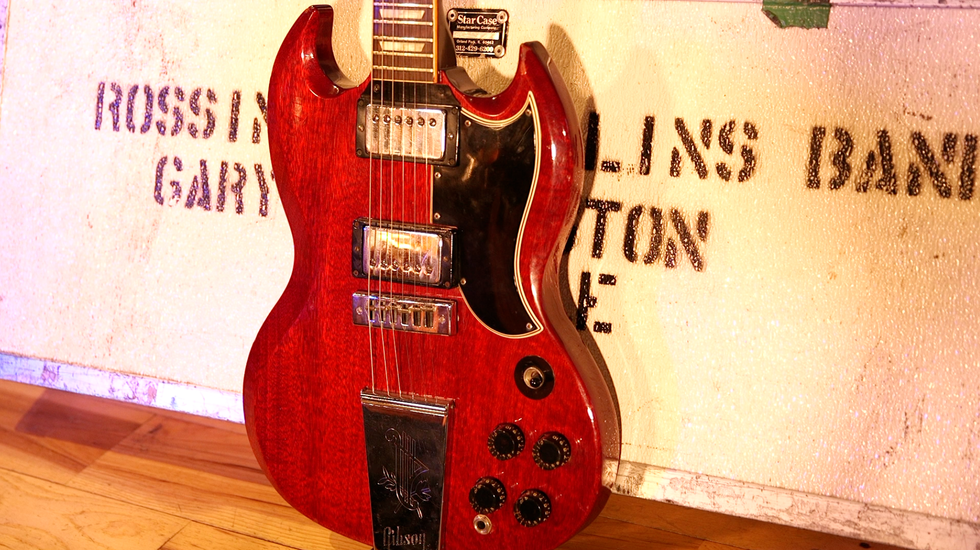
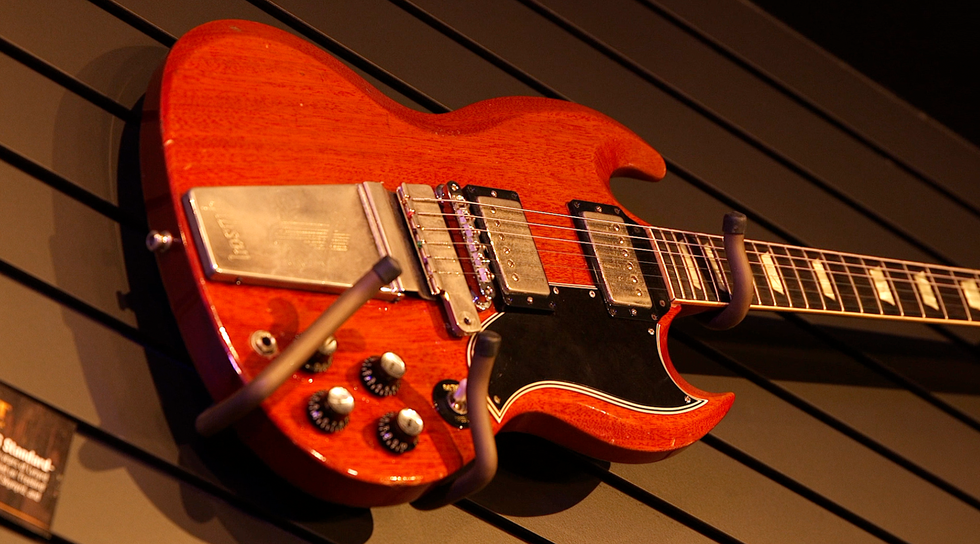
Rossington’s iconic Gibson SGs, some of which he owned from high school, were among the most prized and recognizable instruments in his arsenal. They’re gathered together on display now at CME.
Bernice’s Twin
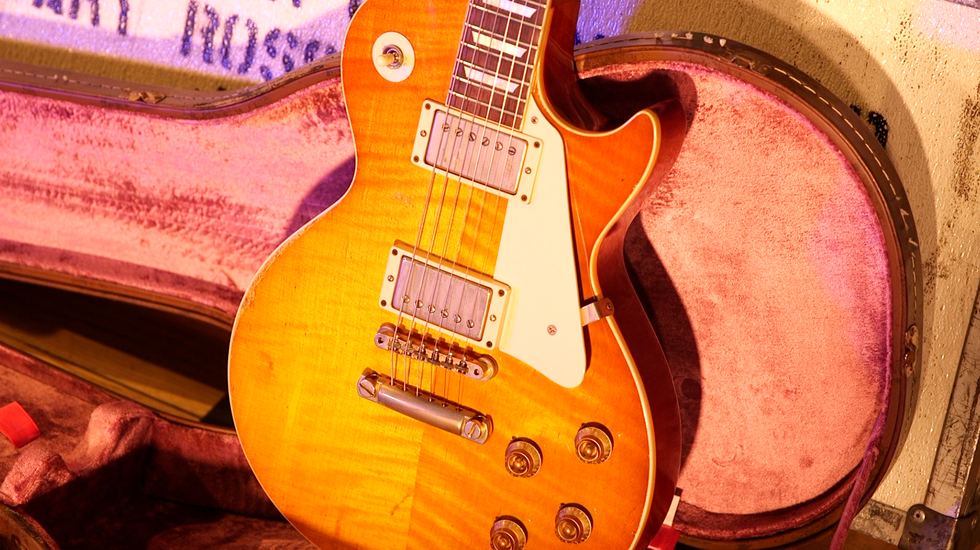
This is the first prototype of Gibson Custom Shop’s Gary Rossington '59 Les Paul Standard, a replica of his infamous 1959 LP named “Bernice,” dated to the early 2000s.
Southern Sounds
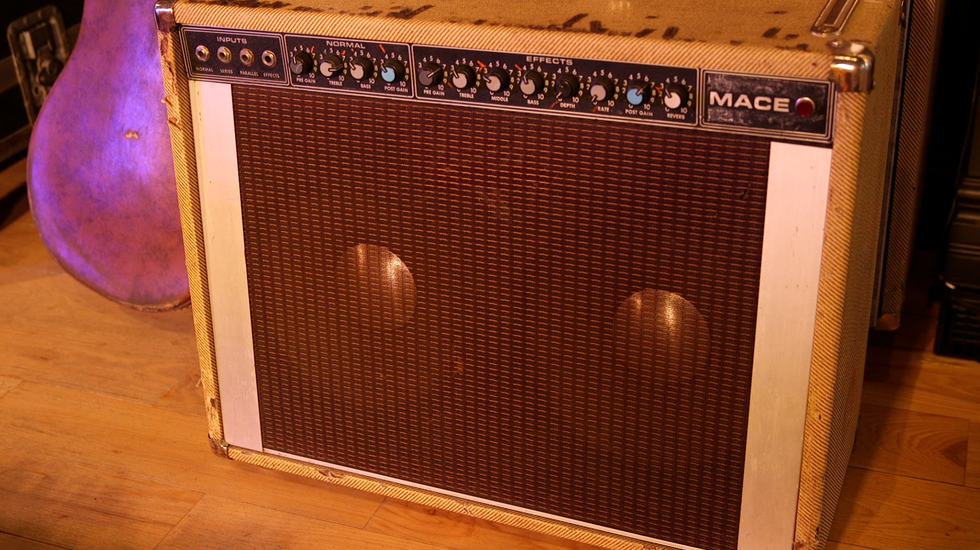
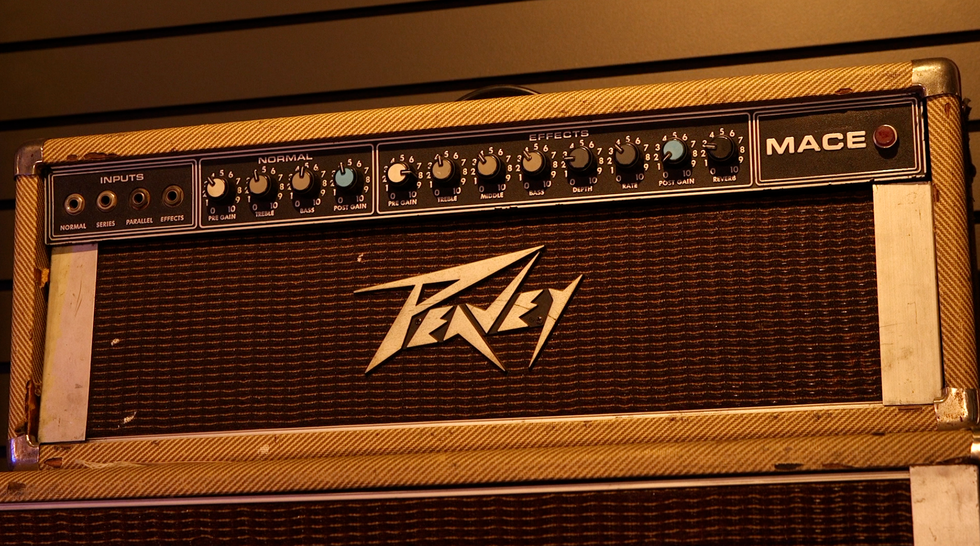
When word got out that Rossington’s rig had resurfaced, Yonke fielded calls from dozens of guitarists wondering one thing: Were his Peavey Maces going to be going on the market? These old Mississippi Marshalls were a cornerstone of Rossington’s tone.
A Bit of British
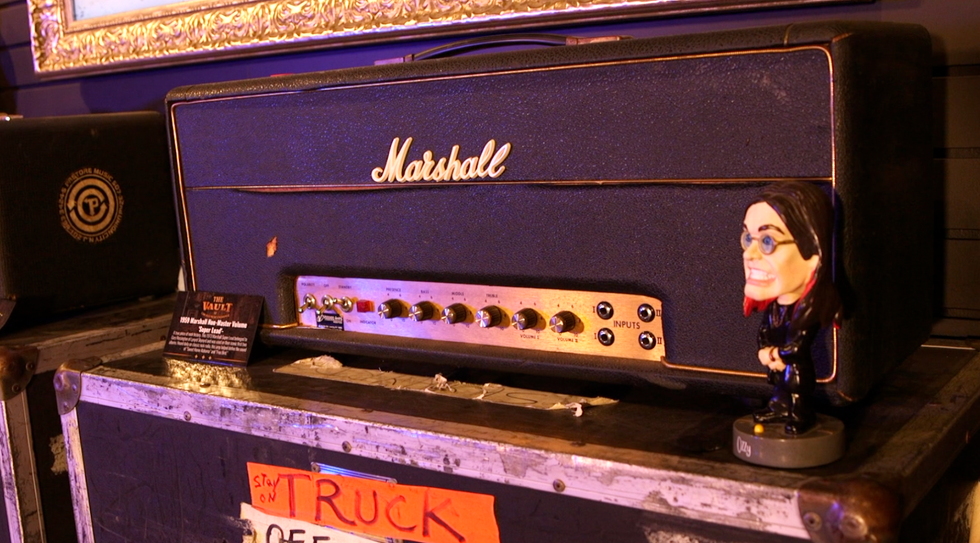
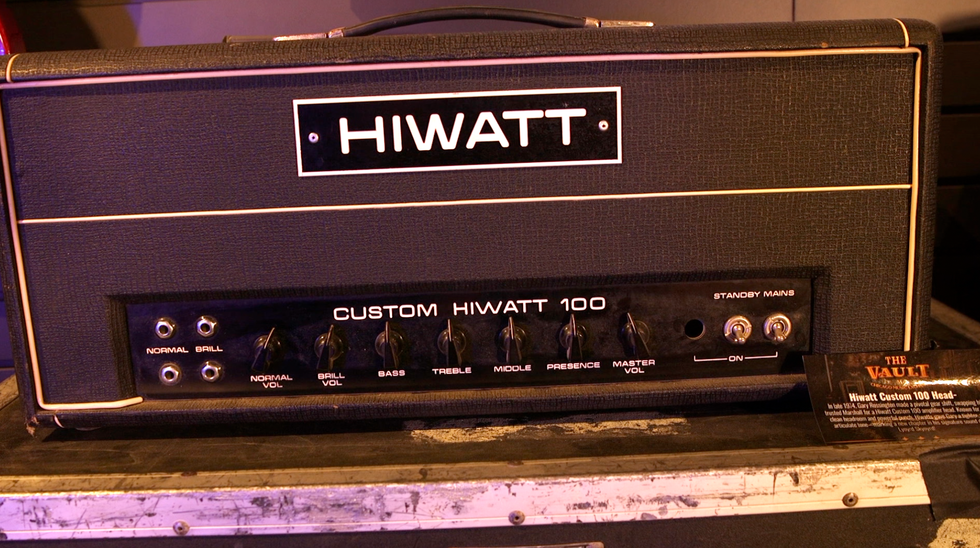
This Hiwatt Custom 100 and non-master-volume 1959 Marshall Super Lead head were also key components of Rossington’s sound.
We spoke with Gary’s daughter, Mary Rossington, about her father’s legacy, the importance of honoring his influential impact through the Collection, and how Chicago Music Exchange became the ambassadors to this awesome musical history.
Did Gary ever speak about what he’d want done with his instruments after he was gone?
Rossington: Gary never spoke about what his wishes were as far as his collection. These were his tools he used and was as humble a man as there ever was. I don’t think he really even grasped how truly special he was and how impactful his contribution to the music was (and always will be). He was just doing what he loved and knew how to do it.
Gary was known for valuing guitars as tools rather than trophies. How did that philosophy shape your decisions when evaluating how to preserve his gear? I know Rickey Medlocke made the suggestion/introduction, but when did CME seem like the right fit for your vision?
Rossington: Two weeks after dad’s passing we asked Rickey following the CMT tribute what on earth were we to do now? He directed us to Andrew Yonke and the CME family having every faith they would be the one to guide us in the next steps. Upon speaking with Andrew, which honestly is a blur for us due to the timing, we went about setting up the first meeting for Andrew and Daniel to come down to Atlanta and go through the collection with us. We had no idea where we wanted to go with anything but knew we needed help in every way.
We instantly fell in love with their passion and energy for the project. We just stood in the doorway and watched as they meticulously and carefully opened each and every case and examined each guitar. At times we didn’t have a clue as to what they were saying, and at one point after about two pots of coffee, they paused and said ‘Ok, we're really trying to be cool but this is blowing us away!’
Mom and dad had sat down a few years prior and wrote a little note for each one describing where each guitar came from and the story behind it. Their enthusiasm for what we could potentially do with all these instruments and their knowledge made us feel so comforted and we trusted them. All dad ever wanted to do was keep the music alive for his brothers that passed and we feel the need to do the same for him.
We want to share his legacy with the world and that starts with the instruments that made the music come alive. They had met dad over the years and respected him as not only an artist but as the amazing man he was—that was all we needed to know to this was the right fit. Andrew never made mention of money or selling anything, so we knew he was in this to assist in preserving his legacy and it was not about a payday for him.
What part of the process brought you the most comfort?
Rossington: We knew very little about dad’s collection, but it was very apparent they knew exactly what they were talking about. We prayed on it and knew this was God putting us with exactly who we were meant to be paired with. Their dedication, knowledge, and enthusiasm to preserve the pieces and further dad’s legacy meant the world to us. Many people would’ve only been interested in selling the collection and that’s never been a concern with Andrew, Daniel, and CME.
Allowing other players to use these instruments is a powerful gesture. How did you arrive at that decision?
Rossington: We again just want to keep his music and legacy alive and by allowing others artists to touch a piece of history while furthering his name and contribution to music that has shaped and inspired generations. I'll never forget how excited dad was when he got to hold Duane's guitar and we want that for other musicians as well.
Was there one guitar that symbolized Gary to you more than any other? Why?
Rossington: Of course Bernice was the standout guitar and dad thought it was the coolest thing ever that the Rock & Roll Hall of Fame would want to not only house the piece, but that it was displayed right next to Duane's. It blew his mind!
All of his Les Pauls were so special and the SGs were the sound of “Freebird.” Every time we hear the guitars played it resonates in our hearts and souls.
Were there any specific guitars that Gary insisted should continue to be played? Why?
Rossington: Dad never really discussed his instruments with us. When he was home it was all about the family and he kept most of that knowledge to himself.
You’ve mentioned hoping younger musicians feel inspired when they hold or hear these guitars. What do you hope they learn about Gary from this collection? Is there a message Gary tried to pass down to the next generation that CME is helping carry forward?
Rossington: Our hope is that through the continued exposure of his collection and hearing the guitars onstage that those experiences will inspire others to explore not only what an amazing musician and songwriter he was, but what a humble and beautiful man he was. He would have given the shirt off his back to anyone in need. He would’ve said to always work hard and never give up no matter what life may throw your way.
He tried every day of his life to honor and further the music the guys wrote together when they were so young. Those songs were written from the heart and performed with such accuracy and dedication that they will stand the test of time.
Do you envision the CME vault becoming a long-term home, or is it the beginning of a larger legacy project—documentaries, books, exhibitions?
Rossington: For now we are so very pleased that his collection survived the early days in the Hell House in Florida and everything that happened, and they are protected, secure, and in loving hands. We have hopes in the future for documentaries and are exploring the possibility of an exhibition in the future.
We would love to see a portion of his collection travel the world so more people could enjoy them and feel that they were a piece of this amazing history, too. It will come down to logistics and safety ensuring that the instruments remain in their current condition so there’s peace of mind for everyone.
Taking the Reins: Nuno Bettencourt on Why and How He Built His Own Guitar Company
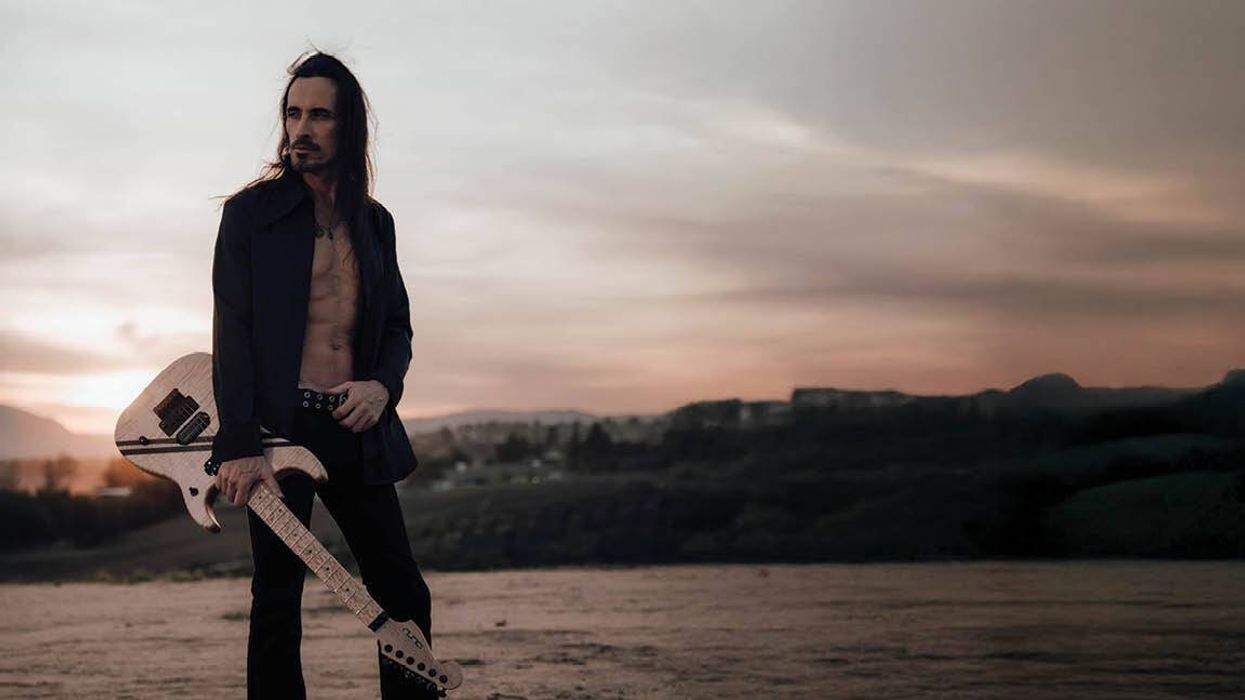
The guitar showed up first in an Instagram video. Nuno Bettencourt in the back of a cab on his way to Villa Park in Birmingham, England, for Black Sabbath’s Back to the Beginning benefit concert on July 5, playing the solo to Ozzy Osbourne’s “Bark at the Moon” on an instrument nobody recognized. Dark wood body with light stripes running through it. And on the headstock: NUNO.
Then he brought it onstage at the event in front of 45,000 people, serving as one of the MVPs in an all-star supergroup that tackled Ozzy and Sabbath classics. The instrument was clearly visible in videos that hit the internet immediately afterward, and the guitar community began speculating about what they’d just seen. But Bettencourt stayed quiet.
A few months later at the MTV Video Music Awards, where he appeared alongside Steven Tyler, Joe Perry, and Yungblud in an Ozzy tribute, he performed with two versions of the unidentified model—the dark one for “Crazy Train,” and a blonde variant for “Changes.” Another high-profile moment, more online chatter, but no further details on the guitars.
Finally, on September 30th, the speculation ended. Bettencourt announced the launch of Nuno Guitars, his own company, marking the end of a 35-year partnership with Washburn. The brand included the Dark Horse and White Stallion—the mystery models from the taxi video and the shows—along with the N4, his signature design that has defined his sound since the early ’90s. For the first time, the N4 would carry his name instead of Washburn’s. (For Bettencourt's full rundown of the Nuno Guitars line, head here.)
It’s a significant move for a guitarist whose influence has stretched across multiple generations. Bettencourt first turned heads in 1989 with Extreme’s self-titled debut album and 1990’s Pornograffitti, albums that showcased both his funky, acrobatic playing and his songwriting versatility. While the latter’s “More Than Words” became an acoustic phenomenon, it was his electric work that made him a guitar hero. He was an explosive guitarist who recalled the best of Eddie Van Halen—incredible rhythm chops, lightning-fast technical dazzle, and genuine melodic songcraft. He could blend funk grooves with shred-level technique, throwing in tapped runs, off-time phrases, and blistering alternate picking lines without ever losing the pocket. He could match any virtuoso, but had the taste to know when to serve the track and when to let loose.
Decades later, that guitar-hero status was reaffirmed when Extreme released Six, their first album in 15 years. The opening track, “Rise,” featured a solo that stopped the guitar universe cold—not an easy thing to do in 2023. YouTubers analyzed it, guitar legends called to congratulate him, and forums lit up with players trying to decode the insane runs that capped the performance. It wasn’t just technical—it was emotional, physical, and undeniably fun. Once again, Bettencourt had reminded people what guitar playing could be.
Through it all, the N4 was his constant. Introduced in the early ’90s, it became one of the most recognizable and longest-running signature guitars in the industry. The design was distinct: a Strat-inspired body with a unique curved cutaway neck joint, fitted with dual humbuckers and a no-frills control layout. It was a workhorse—a term Bettencourt used repeatedly over the years—built for players craving versatility, speed, reliability, and tone. The N4 wasn’t just his guitar; it became the guitar for countless players who grew up idolizing his sound and style.
Which makes the move to his own company significant. The N4 has been in production for over three decades, and walking away from the Washburn partnership means taking full responsibility for everything: design, production, quality control, and the relationship with guitarists who’ve played his signature instrument for years.
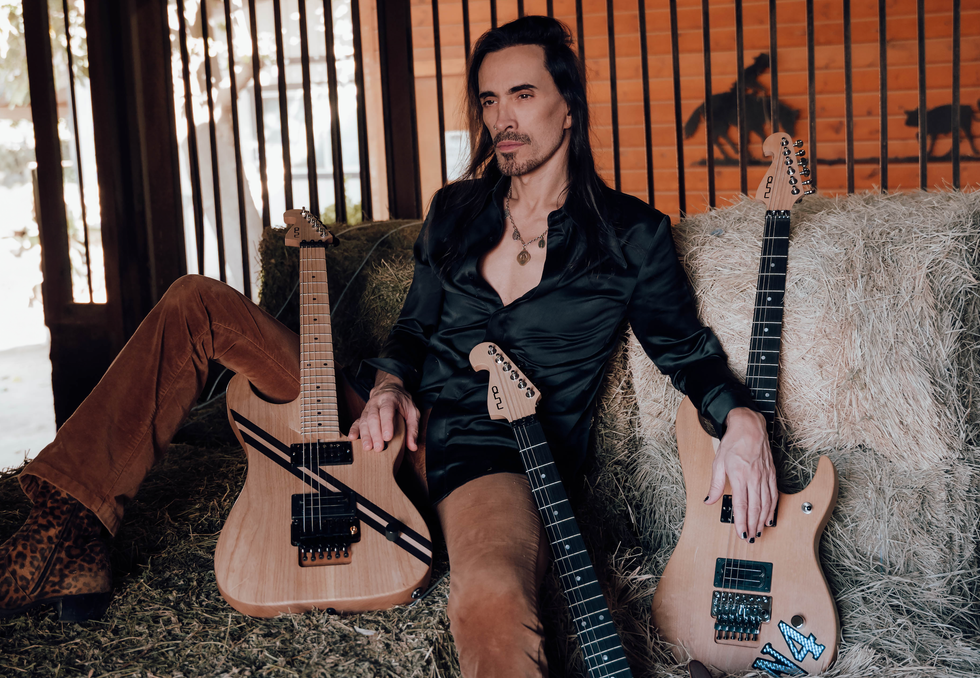
The new brand is structured around three lines: the Thoroughbred Series (Masterbuilt guitars with exotic woods and custom shop-level craftsmanship), the Stable Series (U.S.-made instruments), and the Colt Series (import models). Currently, it’s a direct-to-consumer operation, cutting out traditional retail in favor of a model that lets Bettencourt communicate directly with the people buying his guitars. And he wants every one of those guitars, regardless of price point, to feel like something he’d play himself.
At 59, after four decades of playing, touring, and recording—from Extreme’s platinum records to Generation Axe tours with Steve Vai, Yngwie Malmsteen, Zakk Wylde, and Tosin Abasi, from the Super Bowl halftime show with Rihanna to Black Sabbath’s final concert—Bettencourt is, in one respect, starting over. Not out of necessity, but because he wants to pursue his unfiltered vision and foster a closer connection to the people playing his instruments.
What follows is an exclusive conversation—Bettencourt’s first about Nuno Guitars—about why he finally made the leap, what went into designing these instruments, and what it means to put your name, literally, on what you believe in.
Let’s start with that moment everyone noticed—you were in the cab on the way to the Sabbath show, playing a guitar nobody had seen before. Was that part of a planned rollout?
Nuno Bettencourt: Not at all. To be honest with you, it probably wasn’t a good idea to play that guitar at all. I’d been thinking about this for a long time, and Washburn didn’t know I was leaving. So for them to see not only a guitar they’d never seen, but then to see not their name on the headstock—to see mine—was probably a really fucked up thing to do. [laughs]
But I didn’t really have a contract with them. It was more of a gentleman’s agreement that had been up for so long. After a while, especially after Six came out, I just felt nothing from them. Guitars were back ordered, no press, nothing.
“When someone buys one of these guitars, I want them to feel like it’s something that’s directly from me.”
But the reason I pulled the guitar out that day is because when I got it, I played it and was like, this feels like the best N4 I’ve ever played. I was super excited. I just wanted to play it onstage. It wasn’t marketing or teasing. I was just authentically excited. I was blown away by how the neck felt. It just felt right.
Even if you were leaving Washburn, you could have gone to another established company. What made you decide to start your own?
I’ve always wanted to do it. When Washburn first called, I stayed loyal to them because nobody else gave a shit about me when I first came out. It was only after “More Than Words” that other companies started asking.
But I didn’t want to endorse. I love Les Pauls, I love Strats. I sat down with B.C. Rich, many companies through the years, and it wasn’t because they weren’t great—it just never felt like “me.” So it felt natural to do my own thing now. And without sounding like a hippie, it was time. Everything was happening organically—the Six album, the attention with “Rise,” that solo, the Back to the Beginning concert—all these dominoes were tipping. I felt like the universe was saying, “Here are a few opportunities for you. You’ve worked your ass off, you’ve hustled for 40 years. This is it.”

Walk us through the different lines you’re offering—the Thoroughbred Series, the U.S.-made Stable Series, and the import Colt Series.
I’ve always played lighter woods—alder mostly, which I’ve always had in the N4. But with the Masterbuilts, which we’re calling the Thoroughbred Series, I wanted something fresh. I started searching for woods that looked cool, especially darker woods. I found ziricote, and the cool thing about ziricote is every guitar can look a little different. Very personalized. But the wood happened to be really heavy. So we did it as a top. And so the Dark Horse is an alder body, black stained, with a ziricote top. The White Stallion is a white mahogany body with a curly maple top.
And you know, once you get involved in your own company, you’re not just like, “Okay, put out my guitars, good luck.” I’m actually going to these factories. I got sent Stable Series guitars, the U.S. models, and I have to tell you, if you hand me that guitar on stage, no problem. Obviously, once you go into the Thoroughbred Series, yeah, okay, I feel that difference of why it costs this much and not that much, but man, it’s close. It’s so well done.
So even in the Stable Series, I still want it to feel like the Masterbuilts. Don’t fuck around. Don’t give me frets that are all jaggedy. I want it to be smooth. I’m going in and tweaking. I’m not trying to set a world record of selling as many guitars as possible. I don’t want anybody to be bummed and think, “Ah, I gotta pay an extra thousand bucks just for the frets to not hurt my fingers.”
How about the Colt series?
The same thing. I wanna believe that if I’m playing at Back to the Beginning and my guitars don’t make it, and somebody has one of the imports, I better be able to bring that up on stage and still sound like me. That neck better feel like me. That’s the bar. I don’t want it to be like, “Oh, Nuno is just using those expensive ones and the rest are garbage.” That is not the case. And if anybody knows me and the way I work, they know that’s not the case.
“It felt natural to do my own thing now. And without sounding like a hippie, it was time.”
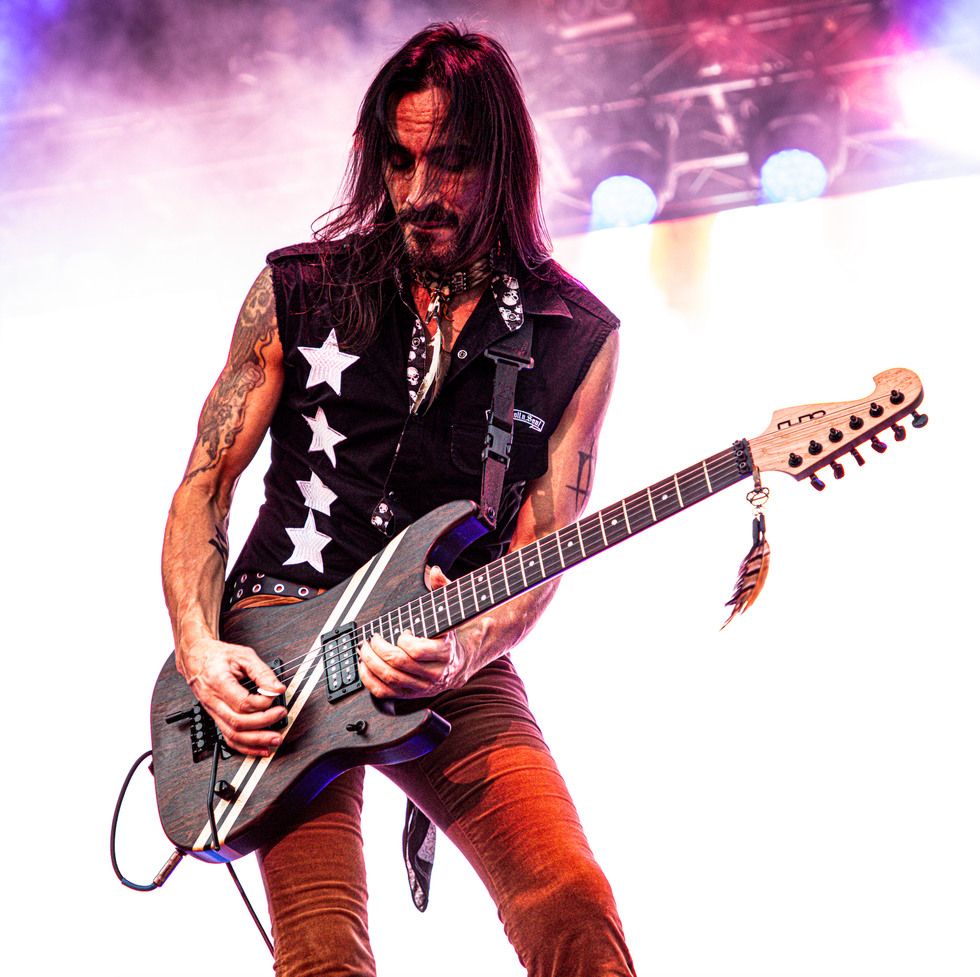
The N4 is part of this new chapter as well. What does that model mean to you now?
I really want it to be what it always was for anybody who wants that guitar. I want people to be able to say, “I want the one that Nuno played, the one that got him everywhere.” I don’t want that to go away.
The Stephen’s Extended Cutaway, which allows greater access to the upper frets on the neck, has always been a signature feature of your guitars. Will it still be present on the N4 and new models?
Yes. We actually reached out to Stephen [Davies, the original designer] about it, and he told us he’s not doing it anymore. The patent, everything about it—he’s moved on. But we asked, “Are you okay if we use the cutaway?” And he said, “Have at it.” So it won’t have his logo or his name or his patent on it, but it’s there as part of the guitar.
One of the things you’re doing with Nuno Guitars is going direct to consumer. What’s the thinking behind that?
I feel there’s a disconnect when you go through traditional channels. There are these platforms and people talking about the guitars amongst themselves. I felt like an outsider. I’m like, I want to get in on that. It’s my guitar. I want to hear what people are talking about. I want to put something up on the website where I can hear what they think. I want them to post videos of them playing—the good, the bad, the ugly.
I’ve always wanted to engage more. I used to ask Washburn, why am I touring all over the world and there are no music stores I’m going to, to play or talk or meet dealers? I always loved having conversations with people, and I felt like nobody else was interested.
“With the Masterbuilts, which we’re calling the Thoroughbred Series, I wanted something fresh.”
Eddie Van Halen has always been one of your idols, and he made his name with a guitar that he built himself, one that became almost an extension of his creative being. While you’re not literally hand-building every Nuno guitar, you are forging a more direct line between your ideas and the guitars themselves.
You actually just made me realize something about Edward. Like him, I did make my first guitar. I put it together from parts. I didn’t buy a company guitar. It was Warmoth parts, and it had a Bill Lawrence pickup that was just a blade. So in a way, you’re right. It’s come full circle where I’m like, “Well, I want to be involved in putting the pieces together.” That’s what I did from the beginning. That’s what I’ve been selling from the beginning, even though somebody else has been manufacturing it. It’s always been Nuno guitars. Now it just has a cool logo. [laughs]
Chris Meade built your Washburn signature model for years, and he now handles your Masterbuilt line. Why was he the guy for this?
It had to be him. The good news was, I didn’t steal Chris from Washburn. Chris was a third-party hire, and all he made was my guitars. I just said to him, “Man, I’m leaving Washburn, and I think that means you might not have a chunk of work anyway.” And Chris is the best. He’s meticulous. He makes guitars that players want to play, not just guitars that look good. It’s like an old baseball glove you put on.
So I’m so excited that he agreed to continue working with me. When I sent him my ideas and I got the guitar back, he surpassed what I imagined. When you get that guitar and it’s not only visual, but the playing and quality are there, you’re like, “Oh, hell yeah.” Chris is amazing. I wouldn’t want anybody else there. It would’ve been hard to find somebody as mental as I am about detail.
“I don’t want it to be like, ‘Nuno is just using those expensive ones and the rest are garbage.’ If anybody knows me and the way I work, they know that’s not the case.”
When you first saw your name on the headstock of these guitars, how did it feel?
It was wild. I felt like, you play Gibsons, you play Fenders—you don’t play your own. I felt uncomfortable with it for a while. Because everybody was like, “Well, what are you gonna call it? Is it gonna be Bettencourt guitars?” And I thought, yeah, maybe it should be Bettencourt Guitars. I almost felt better about that, because that didn’t feel so first-person. That feels like a guitar company. We could write it in cursive, like Fender and Gibson. But then everybody looked at me and said, “No, no, your name is Nuno. There’s nobody else named Nuno. It’s gotta be Nuno.”
What did you think about that?
It took me a minute to wrap my head around it. But then I was like, you know what? You’re 59 years old. Everybody knows who’ve you played with and what’s been going on with you. It should be Nuno. It felt right. It felt like me. And when someone buys one of these guitars, I want them to feel like it’s something that’s directly from me.My Favorite Tele Tones
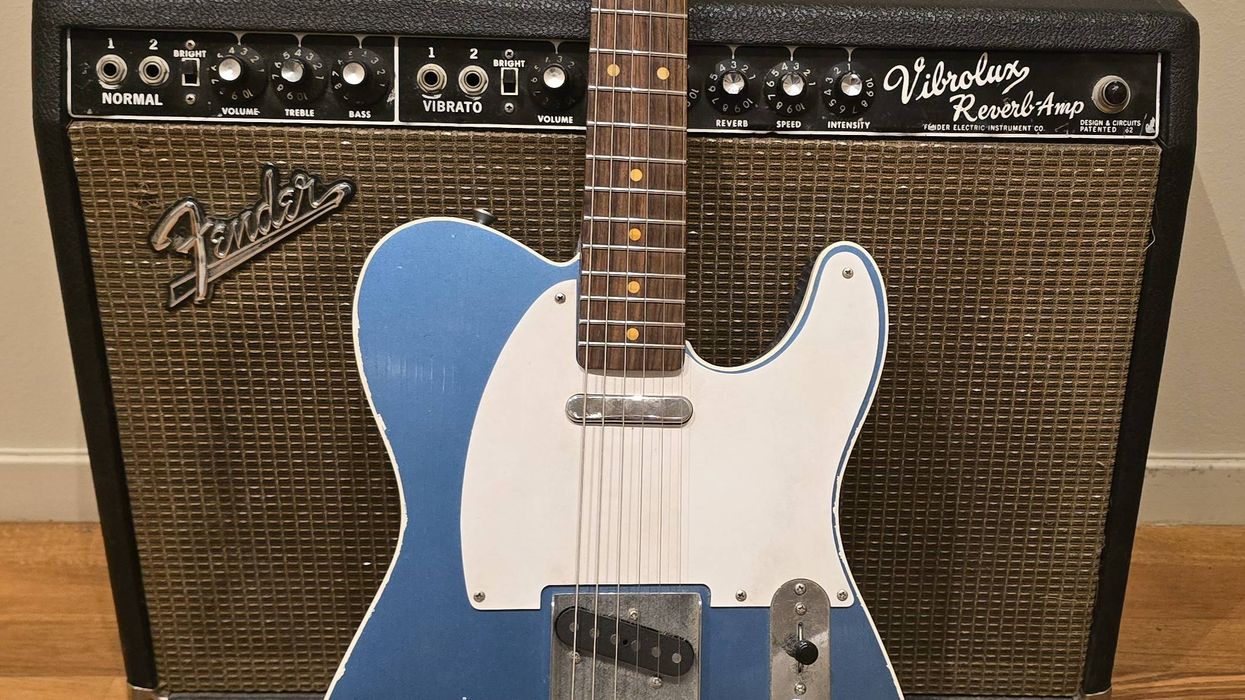
In this column, I’d like to focus on one of the fundamental guitar tones, the sound of a Fender Telecaster plugged into a vintage Fender amplifier. I’m most interested in the sound of a Telecaster’s bridge pickup and the bridge/middle position. For me, these are immediately recognizable. I like how the relatively hot-wound pickups and the metal bridge construction make single notes sound strong and stingy while chords and licks involving multiple strings are “creamy” and saturated.
Let’s start with a simple live stage scenario with a single guitar amp. Let’s assume the venue and stage is large enough for us to crank the amp. I’d like to nominate the Fender Vibrolux Reverb as a great Telecaster match. The strong mids from the Telecaster’s bridge pickup pair nicely with the scooped Fender black-panel tone from the two 10" speakers. At 35-watts, it’ll deliver both firm lows and enough sparkle to cut through, which is critical for the mid position to not sound muddy. It’s essential that we can set the volume high enough to achieve beautiful dynamics, compression, sag, and hairy, distorted tones when we hit the strings hard. Depending on the treble response from the speakers, guitar string gauge, pickup-style, and proximity to the strings, I carefully decide if the amp’s bright switch needs to be enabled. By disabling it, I can turn up the treble knob and get more upper mids, which is essential for clear rhythm chords. For solos and lead guitar parts, I sometimes use a delay and an OD pedal that adds a little more volume, treble, and dirt.
Let’s take it up a notch and add a second amp. A 2x12" Pro Reverb is a nice complement to a Vibrolux Reverb. I recommend warm-sounding speakers and flipping the bright switch off.
A well-known mod with the Pro Reverb is to install a 25k mid pot mod for more distortion and mids. I would dial the 25k mids high and the bass to zero, and if the volume gets too loud, I’d disengage one of the speakers. The role of this amp is to provide warm, sustaining cranked tones with burning mids and just a little reverb. The Vibrolux will be dialed into clean operation to provide clarity and attack with firm, modest bass and clearly pronounced treble. If the song requires reverb, it comes mainly from the Vibrolux.
“The strong mids from the Telecaster’s bridge pickup pair nicely with the scooped Fender black-panel tone from the two 10" speakers.”
For recording, the first problem is: What you hear in the room is not necessarily how the guitar sounds on tape. You therefore need to dial in your amp(s) based on how the guitar track will sound on tape and not in the room. Second problem: The guitar will sound different depending on your listening device. And problem number three: What sounds good on its own does not necessarily sound good in the mix. I am often surprised how narrow, trebly, and nasal a well-mixed guitar tone sounds on its own. Given all those obstacles, you need to listen to the final end result, and then go back and change what needs to be changed, pedals, amp EQ, microphone techniques, mixing, effects, compressors, EQ, and mastering. Since you can never re-create something that wasn’t there from the beginning—for example a clean tone, a particular overdriven tone, attack or nuances from finger tips—my strategy is to have amps that provide enough of these things.
My primary Telecaster amp for studio purposes is my 1966 Princeton Reverb with a bright cap mod. The added 47–100 pF bright cap brings back the top-end frequencies that I want for clean fingerstyle tone. On recordings, my Princeton Reverb’s clean tone sounds like a big 4x10" Super Reverb but with the practicality and breakup level of a small 12-watt amp.
As a second amp for cranked tones, I bring my Pro Reverb with only one speaker enabled. I spend some time EQing and mixing the guitar tracks in the entire mix. It’s important to be careful with high bass settings on the amp, because it can lead to muddiness that’s impossible to clean up afterwards. Same goes with reverb—I use only a little from the amp. It’s better to add more reverb and delay afterwards. The amps are traditionally miked up in front and further away and above for ambience. Having different amp tracks, clean and dirty, I can tweak the balance and tone afterwards. If I want more dirt I increase the level of the dirt amp track, or vice versa.
I hope this was inspiring for you to find your favorite Telecaster tones with Fender amps.
A New Voice for Acoustic Guitars: Fishman Fluence
PG contributor Tom Butwin demos the new Fishman Fluence Acoustic multivoice pickups, breaking down the nondestructive design, dual-voice control, and three distinct models built for everything from solo fingerstyle to full-band stages.
FLUENCE ACOUSTIC: ROCK ICON
All eras of rock have leveraged the driving sound of an acoustic guitar for depth and counterpoint. The Rock Icon delivers punch and clarity, with a killer second voice that sits above the mix.
Voice 1: Solos and clean picking. Dynamic and forward.
Voice 2: Vintage-inspired, riff-centric voicing. This is the acoustic tone that created legends.
FLUENCE ACOUSTIC: SPOTLIGHT
When all eyes are on you, the Spotlight is there to help you shine. Its two voices provide warmth and articulation, making it well-suited for the solo artist or small ensemble.
Voice 1: Sweet and mellow, perfect for vocal accompaniment and more intimate arrangements.
Voice 2: Articulate and clear for solos or breaks, whether picking or playing fingerstyle.
FLUENCE ACOUSTIC: NASHVILLE LEGEND
The Nashville Legend’s two voices provide you with ultimate versatility, ideal for flatpicking or fingerstyle whether performing on stages big or small.
Voice 1: Forward, clear, and articulate. A natural, well-balanced tone.
Voice 2: Up-front, percussive, round, and clear. Great for cutting through the mix.