
Music is the universal language
“Glory to God in the highest heaven, and on earth peace to those on whom his favor rests.” - Luke 2:14
Norse Guitar Feeds
“The band cannot invoke Brent’s identity when it is commercially useful, while denying the continuing relevance of his contributions”: Brent Hinds’ estate makes statement amid ongoing Mastodon lawsuit

Earlier this month, it was revealed that the estate of late Mastodon guitarist Brent Hinds was suing his former bandmates.
Their claim revolved around the assertion that Hinds’ commercial interests in the band had not been officially separated from its remaining members prior to his tragic death in August last year, just months after he had exited the group. It also mentioned the use of Hinds’ likeness on the cover of their latest studio album, Marrow Deep.
Shortly afterwards, Mastodon issued a public statement in response to the lawsuit, writing: “We will vigorously defend what we believe is a meritless lawsuit,” before vowing to do so in private, so as not to taint “Brent’s memory or the legacy of his musical gifts”.
Now, Hinds’ estate has given a followup statement clarifying its position and why it chose to file the lawsuit in the first place.
“Unfortunately , public discussion has largely focused on Mastodon’s inclusion of Brent’s image in artwork for a new album and has sometimes portrayed the lawsuit as an effort by his family to obtain a windfall,” the statement reads [via Guitar World]. “That is not what the case is about.”
It continues: “After Brent was excluded from Mastodon, he sought an accounting, valuation, and orderly separation of interests he held in entities owned by the founding members. He passed away before that process was finished… Brent had not yet received any compensation for any of his interests.”
While Hinds’ estate highlights that much of the online discourse surrounding the lawsuit pertains to the use of his image on the cover of the band’s new album, it clarifies that this is just a small part of its claim. The estate says it “illustrates a broader commercial issue related to merchandising revenues”, adding: “Specifically, it relates to whether Brent’s exclusion from the band discontinued his, and now his Estate’s entitlement to share in Mastodon’s merchandising revenue.”
“The remaining members maintain that Brent did not participate in Mastodon’s new album, yet the band chose to use a recognisable image of him to market that album and did so without the estate’s consent. This illustrates that Brent remains relevant to Mastodon’s brand even after his exclusion and death.”
Hinds estate says “the band cannot fairly invoke Brent’s identity when it is commercially useful, while simultaneously denying the continuing relevance of his contributions when accounting for his interests.”
The statement concludes by saying the estate is not requesting “anyone to choose sides or diminish what Brent and his bandmates created together. Nor does it ask the public to judge anyone’s grief or intentions.”
Away from the ongoing legal battle, the surviving members of Mastodon have reflected recently on their time with Brent Hinds.
“It isn’t easy to talk about Brent, he was our family, someone we all loved wholeheartedly. He was a wild man, our wild man and that came with some challenges,” the band wrote in July.
“Both things are true and we aren’t interested in chasing one truth over the other. Losing him has meant sitting with a type of grief we never expected. No more hugs, no more high fives, no more disagreements, no more making up. That part has been hard, it’s real.”
The post “The band cannot invoke Brent’s identity when it is commercially useful, while denying the continuing relevance of his contributions”: Brent Hinds’ estate makes statement amid ongoing Mastodon lawsuit appeared first on Guitar.com | All Things Guitar.
Does Sammy Hagar really mean he’s “done with being the Van Halen guy”?

For the last two years, Sammy Hagar’s Best Of All Worlds project has breathed new live into Van Halen classics. Every night of tour has been a love letter to Hagar’s past, aided by the likes of ex-bandmate Michael Anthony, Joe Satriani and other top talents in his backing band. However, the I Can’t Drive 55 singer is now keen to put Van Halen firmly in the rear-view mirror, and move on.
In a new interview with SiriusXM‘s Eddie Trunk, Hagar explains that, while the tour has been “so damn successful”, he doesn’t want to dwell on the past forever. “I’m kinda done with being ‘the Van Halen guy,’” he says [via Ultimate Classic Rock].
Of course, that doesn’t mean that Hagar is ashamed of his musical history; he’s proud of his Van Halen legacy, and vows to “always keep some [Van Halen tracks] in my show”. However, his Best Of All Worlds project was only meant to be a one off – he never intended it to grow into two years of touring. “Originally, the Best of All Worlds tour with Joe Satriani was supposed to only be once in 2024,” he says.
Hagar hadn’t anticipated just how much the masses wanted more Van Halen. It lead to touring across the US, Canada, a (downsized) UK tour, and even a five night Las Vegas residency. But, even if people will keep begging for Van Halen, Hagar knows that it’s best to quit while he’s ahead.
The tour has also put Hagar’s creativity on hold. Back in 2024, Hagar teased that his Best Of All Worlds band were keen to track some new songs, and that’s still not happened. And, even outside of that, Hagar is keen to get in the studio and make some music for his own band, Montrose. “I’ve got so much Montrose – great songs and fun stuff,” he reveals.
He also takes a second to call out all the music that’s been pushed to the sidelines by focusing on Van Halen. Because he’s not just “the Van Halen guy”. He points to his 1977 debut album, as well as all his work pre-Van Halen, as well as his releases with Geffen Records. “I want to do so many things, I don’t want to just go out there and just do Van Halen!” he says. “Mike and I are kind of obligated. I like it, but I feel like I owe my old fans more than that.”
Hagar’s interest in moving on from Van Halen comes at a very interesting time. Alex Van Halen is currently working on a new Van Halen record, unearthing fully tracked demos (which feature full, unheard Eddie Van Halen riffs) in order to release them in the near future.
In 2025, Hagar previously wondered whether Alex was upset over him touring with his ex-Van Halen bandmate, Michael Anthony. “He doesn’t want to play drums or can’t play drums anymore, and he can’t go write a new record…” Hagar told Rolling Stone. “I think that really bothers him that Mike and I are still out there doing it. I would feel bad. If I put myself in his shoes, I would feel terrible if I couldn’t do it anymore.”
Even beyond music, Hagar is keen to do more outside of music – like writing a “science fiction” rock opera, apparently. “I don’t know how many shows I’ve got left in my life – but I wrote this space opera when I left Montrose in 1975,” he explains. “Every album I ever did had a space song on it. Silver Lights, Someone Out There, Space Station #5, Space Age Sacrifice. Crack in the World was the one that really predicted what’s going on in 2025… even in Van Halen: Love Walks In.”
The post Does Sammy Hagar really mean he’s “done with being the Van Halen guy”? appeared first on Guitar.com | All Things Guitar.
“If the surgery is successful, and I can play again, hallelujah”: Dave Mustaine on his worsening hand condition affecting his ability to play guitar

Megadeth are currently in the midst of their final-ever tour, a worldwide trek that sees Dave Mustaine bow out in style following a multi-decade career that has shaped the world of metal as we know it today.
The thrash metal outfit released their self-titled swansong album in January this year, and embarked upon their massive farewell world tour shortly after. The band are currently in the US, and the trek is scheduled to last until April 2027 when they’ll bow out in Lisbon, Portugal.
Dave Mustaine’s decision to call time on the band is no doubt in part due to his degenerative hand condition, Dupuytren’s contracture, revealed last year, which is making it progressively more difficult for him to play guitar. The frontman is aware that he may need to undergo surgery to treat the condition – but if all goes well, could there be life left in the Megadeth tank just yet?
In a new interview with YouTube channel Tv War, Mustaine is questioned on his worsening hand condition.
“God willing, something will happen,” he says. “And there’ll be a news break some day. And I’m hoping that when the time comes when I have to stop, at that point it’s going to be like a knife in the ground, and I will have to make up my mind: ‘Do you wanna get surgery, or do you not?’
“And if I get surgery, and the surgery is successful, and I can play again, hallelujah. But I wanna go out on top, and until I know that I can’t play anymore, I’m gonna play my best and my hardest.”
Is that a veiled suggestion that if his hand is repaired he’d consider keeping Megadeth going? It’s not clear, but in the meantime, Mustaine’s playing ability is strong enough to continue touring for the best part of another year.
Included in the tracklist of Megadeth’s latest album is a cover of Ride the Lightning, which Dave Mustaine helped write during his tenure with Metallica. Following its release, Mustaine said that his inspiration to cover the track was to help bury the hatchet following years of public feuds with his former bandmates.
“This was about showing respect to a man that I don’t believe thinks I respect him,” he said, referencing Metallica frontman James Hetfield.
In other news, Dave Mustaine recently launched his new memoir, In My Darkest Hour, which explores his “harrowing” experience following his diagnosis with stage three throat cancer in 2019.
Megadeth are on tour now. See a full list of dates at their official website.
The post “If the surgery is successful, and I can play again, hallelujah”: Dave Mustaine on his worsening hand condition affecting his ability to play guitar appeared first on Guitar.com | All Things Guitar.
“The most positive and creative force in any room he walked into”: Pop-punk’s elite pay tribute to Chad Gilbert, founding New Found Glory guitarist who has died at 45
![[L-R] Chad Gilbert and Mark Hoppus](https://guitar.com/wp-content/uploads/2026/09/Chad-Gilbert-hero@2000x1500.jpg)
The news hit over the weekend that Chad Gilbert – founding guitarist of Florida pop-punk stalwarts New Found Glory, and former husband of Paramore’s Hayley Williams – had tragically died aged just 45.
Announcing Gilbert’s death on social media, his bandmates say they are “devastated and shocked by how quickly he left us”.
“On the morning of 20 September, Chad Everett Gilbert passed away peacefully in his sleep,” their post reads. “He left this world surrounded by friends and family and took his final breaths with his wife and mother by his side, just as he wished. We are devastated and shocked by how quickly he left us, yet so grateful for how peacefully and smoothly he went.”
They go on: “The amount of visitors that crowded the hospital lobby at a moment’s notice is a testament to how beloved and cherished Chad was, and always will be. He was a legendary musician, but his favorite accomplishment was being a husband and father. His biggest dreams came true. He is survived by his wife, Lisa, his daughter, Lily, his mother, Jackie, and his brother, Brian.
“Chad’s guitar playing, songwriting, humour, and relentless drive helped shape New Found Glory for nearly three decades. Through more than a dozen albums, endless tours around the world, and more accolades than we ever could have imagined, Chad challenged all of us to grow as musicians, performers, and human beings.
“While we are devastated to lose him, we are so grateful for the incredible life he lived, the memories we shared, and the brotherhood we had. His influence will always be part of New Found Glory and his spirit will be felt on every stage we stand on, with every note we play.”
Born in Coral Springs, Florida in 1981, Chad Gilbert founded New Found Glory in 1997 when he was just 16 years old – alongside frontman Jordan Pundik, rhythm guitarist Steve Klein, bassist Ian Grushka and drummer Joe Moreno. The wheels quickly got going, with the band releasing their debut EP It’s All About the Girls the same year, followed by their debut full-length Nothing Gold Can Stay two years later in 1999.
Gilbert’s infectiously upbeat pop-punk riffs appeared across all 11 of New Found Glory’s studio albums, with the band’s most recent release, Listen Up!, landing in February of this year. He also served as frontman of Florida metalcore/hardcore act Shai Halud on and off until 2013.
But the guitarist had a battle with ill health as far back as 2010, when he underwent thyroid surgery to remove “suspicious cells”. In 2021, Gilbert was found unresponsive in his home, and had to have emergency surgery to remove a rare cancerous tumour. He revealed the following year that he’d been diagnosed with cancer again, this time another tumour in his spine.
Earlier this year, Gilbert reportedly collapsed during the launch party for Listen Up!, and subsequently confirmed that he’d undergone emergency brain surgery following the discovery of three brain tumours. In April, the guitarist confirmed his cancer had changed from metastatic pheochromocytoma to stage 4 adrenocortical carcinoma.
Since the news of his passing was announced, tributes have been flooding in from across the music world.
Blink-182’s Mark Hoppus – who has collaborated with New Found Glory on numerous occasions, and who himself battled cancer in recent years – calls Gilbert the “best friend to every person he met”.
“The most positive and creative force in any room he walked into,” Hoppus writes. “These past years he fought his sickness with the soul of a joyous, courageous warrior. With dignity, love, and gratitude. He never complained once, only kept saying how lucky he was. For everything. Today we lost a good one, and the world won’t be the same. Rest easy now, my friend. And thank you for just being. You’ll be sorely missed by more people than you could ever imagine. See you on the other side.”
Responding to New Found Glory’s post sharing the news of Gilbert’s death, fellow pop-punkers Simple Plan write: “Sending our deepest condolences to all his friends and family.” Dashboard Confessional add: “I’ve never seen anyone carry themselves through something like this with such positivity and strength. What an example to us all.” My Chemical Romance’s Mikey Way, A Day to Remember’s Jeremy McKinnon and Neck Deep’s Ben Barlow also shared their admiration for the late guitarist.
Meanwhile, singer-songwriter LØLØ – who got a big career break when Gilbert found her on a Spotify playlist and invited her to open for New Found Glory – says she is “devastated” by the news of his passing.
“I almost didn’t do it, because I was scared,” she writes. “But Chad convinced me that it would be amazing (and it was, he was right). That’s just who Chad was… He had this incredible way of making you believe in yourself. He hyped up everyone around him, and even in the darkest moments, he somehow found a way to bring a little light in and make things feel less scary.”
Ryan Key – frontman of fellow Florida pop-punk legends Yellowcard – calls Chad Gilbert “the kind of friend most people don’t get to have in a lifetime”.
“I owe so much to him for encouraging me to keep going back in 2017 when Yellowcard broke up. The bear hugs I got every time I walked in his door will be around me forever. He brought me into the New Found Glory family at a time when I needed my friends so badly. I looked to Chad as an example of how to stay positive in the most difficult times. I watched him fight his illness in awe of his strength and desire for life.”
He continues: “I was able to get to Nashville yesterday to see him before he passed. I stopped at the card shop in Franklin TN where we would always go to get Magic cards and comics. I chose this card (last slide) to put in his hand because it has two special abilities. The first is that other cards can help to play this card. Chad’s friends and family walked through this unimaginable pain with him every step of the way. But once the card is played, it protects the other cards in the game from damage. I know that Chad will always be with us. Always protecting us. Always reminding us how hard a human being can love.”
The post “The most positive and creative force in any room he walked into”: Pop-punk’s elite pay tribute to Chad Gilbert, founding New Found Glory guitarist who has died at 45 appeared first on Guitar.com | All Things Guitar.
HeadRush x Tone3000 review: latest A2 NAM models meet simple-yet-effective hardware

There’s an argument that Neural DSP’s Quad Cortex hit the amp-modelling industry in the same way the iPhone hit the tech world back in 2007. Here was a very swish-looking alternative to the clunky old guard; so sleek and powerful that all its predecessors suddenly seemed quite outdated. The Quad’s design made the hefty cases and LCD screens of things like the Axe-FX and Kemper Profiler look positively prehistoric, without any compromise on power. And so, its general vibe would go on to set the tone for floor modellers in the years to come.
But, true to the iPhone comparison, going Neural comes with a pretty high price of entry, and the ecosystem is somewhat locked down – Neural captures work on Neural gear, and plugin support is limited to, well, Neural plugins. So that’s a more Apple approach – premium, straightforward and powerful – but those garden walls are a little high. What, then, is the guitar equivalent of a slightly hacked-together Android build filled with sideloaded, solo-developed .apks called things like “Alan’s PDF Scrumbler”? That would be the subject of today’s review: Tone3000, and the Neural Amp Modeler architecture – NAM.
Neural DSP’s and NAM’s models are both implementations of a similar approach, that is, training a neural network to behave like a real amplifier. The difference is that the NAM platform is open-source, and hence can be implemented however a third party sees fit. There are a bunch of hardware products that already support NAM models, some of which are very affordable, and they’re all technically cross-compatible. In the same way an IR file is just a .wav file, a NAM model is a .nam file you can chuck onto any USB stick you like, and load into a bunch of different multi-effects pedals and desktop plugins.
And this year, Tone3000 (the biggest central resource for distributing user NAM captures) announced the release of Architecture 2, or A2 for short – the latest iteration of the NAM standard. Tone3000 claims it’s more CPU-efficient than even the previous A1 architecture, and sounds better than literally anything else, including Neural DSP’s models
The new dedicated Tone3000 plugin is 100% free, and A2 models are now available on a few affordable practice amps, as well as HeadRush’s latest run of mid-to-high-priced effects units. Can the combination of open-source capture architecture and affordable hardware truly go toe-to-toe with Apple? I mean, Neural?
What hardware are we using?
Today we’re looking at the NAM A2 architecture as hosted by the HeadRush Flex Prime, the most affordable of the bunch at $499/£419. You may have noticed we already reviewed it early last year. As a quick note on the thing itself, I basically agree with reviewer Richard’s overall assessment – the screen’s a little cramped (a perhaps inevitable payoff for its frankly adorable little footprint), but the thing is otherwise easy to use, well-built and the basic models and effects sound pretty damn excellent.
It’s also worth noting that all of the latest generation of WiFi-enabled HeadRush modellers – Prime, Core, and Flex Prime – support the new A2 models. And that’s the full A2 version, too – there’s also A2 Lite, a version that uses even less CPU power for more budget gear, but HeadRush’s stuff runs the main, full-power version.
 Image: Adam Gasson
How does it work?
To get access to the Tone3000 hub, you’ll need to update the firmware of your HeadRush unit. I’m a fan of the approach taken to this side of things – the update tool is lightweight, easy to download and quick to use. You do need to find a USB-B cable, though, also known as a USB-are-we-still-using-this-wait-my-printer-has-one-I-think cable, but still, HeadRush’s straightforwardness is a nice change after I spent a literal afternoon installing UAFX firmware 2.0 on two pedals.
Once on the latest firmware and connected to your WiFi, you can browse the full Tone3000 library in the same way you can explore the standard HeadRush cloud. To integrate a new A2 model into a HeadRush preset, all you need to do is download the capture you want, tab back into editing the actual rig, and load the .nam file into a NAM block. It takes me a second to find where the NAM block actually is in the list of effects, mind, as it’s under the ‘clone’ sub-category, but once this is done, it’s treated much the same as another amp model.
Well – with one exception. An unfortunate limitation is that you can only load one NAM model per preset, whereas you can load multiple stock HeadRush amps. This nixes a few possibilities, such as running a NAM-captured overdrive into a separate NAM-captured amplifier, or creating a dual-amp stereo tone with two A2 models. However, for more straight-ahead sounds, it loads fine and leaves more than enough CPU headroom to build an otherwise complex patch.
 Image: Adam Gasson
How does A2 sound?
So, yes, upon launch the big claim was that these models sound better than all previous digital amp models, including Neural’s. Quantifying quite an abstract thing in a couple of bar charts does seem like some good old marketing bluster, but, having spent a lot of time with a lot of A2 models, I am quite inclined to believe said bar charts. These models don’t just sound good considering they’re free – they sound bloody fantastic, to the point where you’ll question every amp plugin and hardware modeller you’ve paid for up until this point.
First – some clean things. The library, as it goes with amp modelling, skews slightly towards the chugs – but after a little scrolling I find a Twin Reverb capture, and, well, it sounds like a good Twin – big headroom, clean but not sterile, and nice and bold and bassy. Adding some compression and ambient effects, and it eats them all up with aplomb. Feel goes a long way here, too, and the best clean sounds from amps like these have a certain chewiness that encourages a more dynamic approach. I’m pleased to say that feel is pretty well replicated here.
The feel stays chewy and approachable towards the mid-gain side of things, too – captures of cranked AC30s and vintage Marshalls are all a dream to play, really, and it’s startling to hear such consistent clarity and string separation when exploring the wider catalogue. Some captures are better than others (that’s the nature of the beast here as they are dependent on how well the amp was captured originally), and certain amp-head-only captures sometimes don’t gel with certain IRs, but broadly it’s very hard to find a bad sound here.
 Image: Adam Gasson
On the more metal side, I’ve been learning some Death riffs recently (a great way to find out just how much you don’t use your pinky) so I seek out something ragged and high-gain – and spot that Ola Englund has uploaded a capture of his Randall Satan. Frankly, it’s one of the best high-gain sounds I’ve heard come out of a digital device, being at least on par with everything I’ve tried from Neural, and with notably more clarity and punch than even something like the UAFX Anti.
I give a few different high-gain models a spin, the Satan and a few 5150 captures, plus a few Sunns and Oranges. What’s cool to see is these amps work well with HeadRush’s own virtual effects – as you’d hope, the Tube Screamer model does the thing when placed in front of a mid-gain 5150, and virtual RATs and Big Muffs also behave realistically when run into appropriately doomy A2 captures, without any artefact-laden digital nonsense coming through.
To go back to the Randall Satan, that particular model also demonstrates one of the neatest things about NAM: Ola demoed that capture in a video about the launch of the Tone3000 plugin, and, despite the fact he was running it in a completely different environment, I can easily dial in pretty much the exact same sound in my own rig. Preset-sharing is hardly new, of course, but what is new is virtual amps of this quality being so portable and cross-compatible, with Tone3000 operating as a truly central hub, rather than each brand of multi-effects being siloed into their own tone-sharing spaces.
There are some bugbears with the system. The previously-mentioned limitation of just one NAM block is one – the other is the fact that people capture NAMs with vastly different gain-staging – I blast my ears unintentionally a couple of times as some uploads kicked out far more dBs than others.
And speaking of gain – like most capture/profile tech, NAM does not offer ‘virtual device’ controls – A2 captures are still pre-set in their on-device EQ and gain settings. There is built-in post-EQ for the NAM block, and you can boost or underdrive things to adjust your saturation level as needed, but if you’re used to the flexibility of virtual amps that do have virtual controls, it feels like a bit of a step backwards.
 Image: Adam Gasson
Should I buy one?
If you’re looking to explore these sounds yourself, you can easily do so with the new Tone3000 plugin. As for the hardware implementation in the Flex Prime – it’s pretty darn good. Not faultless, and the limitation of just one NAM model at a time may be a deal-breaker. But its price and this limitation does court comparison with the Nano Cortex – the HeadRush’s NAM support now means that you’re very much not compromising on sound if you want to pay slightly less, and get similar IO, but add a screen and an expression pedal.
And regardless of whether the HeadRush’s implementation is for you specifically, it’s still gratifying to see a relatively notable chunk of the multi-effects world embrace a more open standard – even affordable, dinky practice amps like the Blackstar Beam Mini support A2 models! It’s only good for the industry as a whole if Neural, Kemper and Line 6 have to truly back up their higher prices and more walled-off ecosystems with sounds that are on par with A2 is. Or, at least install a door into their walled garden and offer NAM support, which they currently do not.
This is absolutely not to say that buying a Quad Cortex is now the equivalent of pouring cash into the toilet. Sure, the A2 amps sound great, but it’s not like they’re orders of magnitudes better than Neural’s. And the hardware has its own benefits – open-source software alone cannot replicate the effects processing headroom, the connective power or the live usability of a full-fat Quad.
But overall the A2 launch is still a very positive change for the industry. I am predisposed to bat for the more crunchy, open-source solutions anyway, pain points and all (I am very much the person from that Hard Drive article that will never shut up about installing emulators on a Raspberry Pi) – more open standards almost universally lead to good stuff for the consumer, and I think that holds true with NAM A2.
Headrush x Tone3000 alternatives
There are a few NAM-compatible hardware loaders of varying budgets that can use A2. The HeadRush stuff is probably still the most flexible in terms of offering a multi-effects signal chain, while the most stripped-back is perhaps the Valeton GP-5, a $76.99 mini pedal that currently uses the more limited Snaptone versions of NAM captures – but is set to get an update for A2 Lite support soon, according to the manufacturer.
For full A2 support, there’s also the DimeHead NAM player, a German unit that’ll set you back €595, and the pricier Darkglass Anagram, a bass-focused multi effects currently running at $1,199.99/£999 that has recently benefitted from an Andertons and Sweetwater-exclusive Guitar Essentials version (with the guitar software element set to be available separately for a fee). The most extensive loader when it comes to amps is the Sonulab StompStation PRO, a €475 unit (currently on sale) that can load a whole three full-resolution A2 files at once.
The post HeadRush x Tone3000 review: latest A2 NAM models meet simple-yet-effective hardware appeared first on Guitar.com | All Things Guitar.
Royal Blood Reveal New Track “Swallow The Bomb”
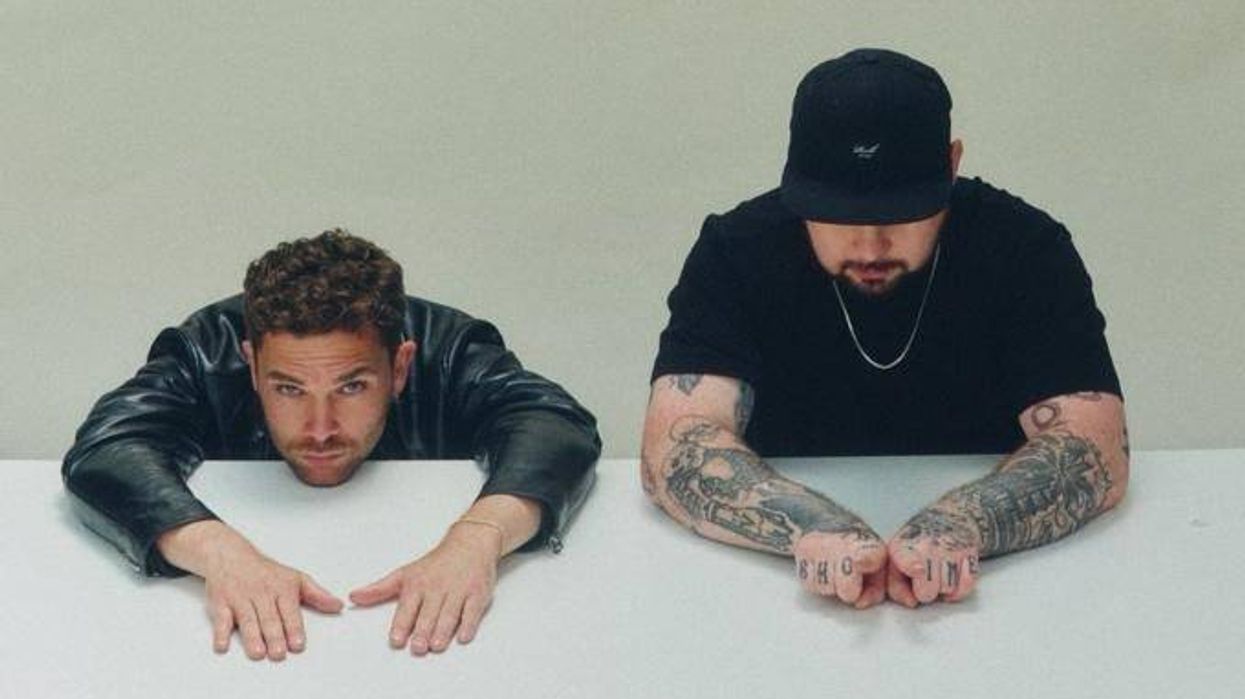
Royal Blood released a new track “Swallow the Bomb” alongside an exclusive interview with Zane Lowe. This is the second track to be revealed from their highly anticipated new album Dead Company out November 13 via Warner Records.
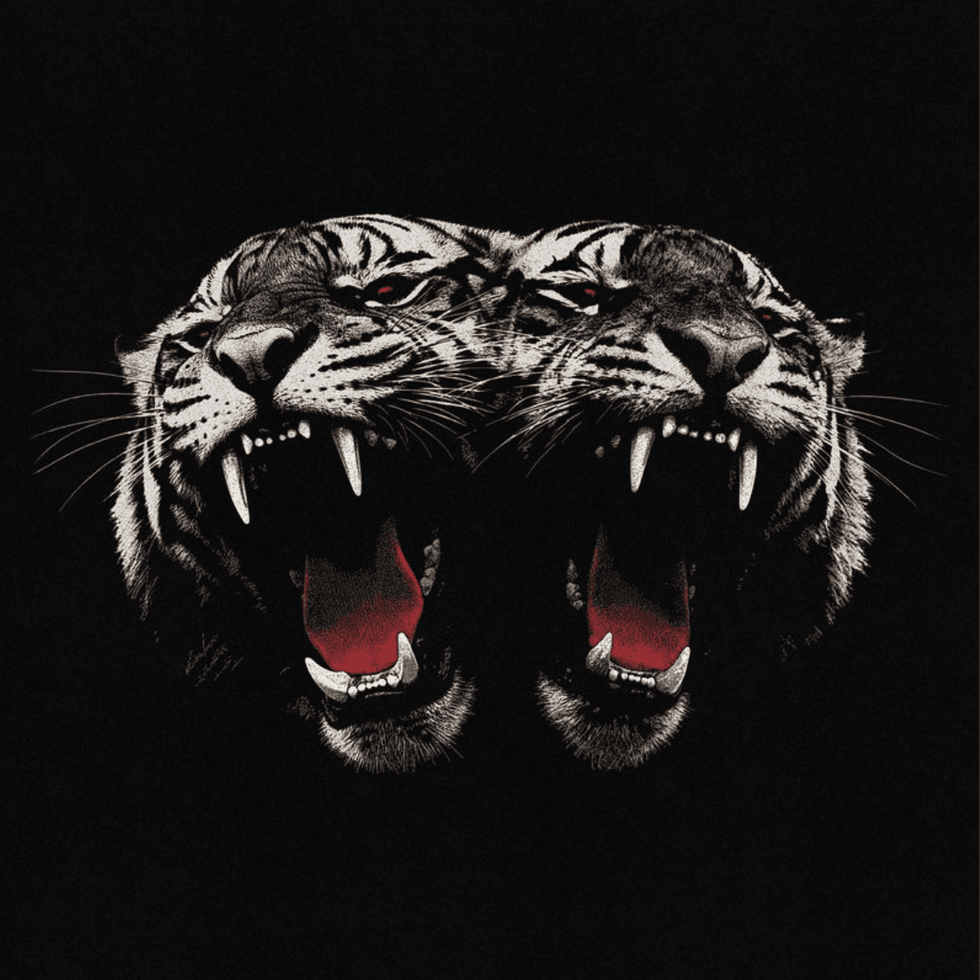
The band made a welcome return last month with album news, a single “Ten Over Ten” and reveal and some rapturously received live shows. Fans were treated to three sold out underplay shows across the UK, including a surprise Reading Festival appearance. They also announced a run of UK shows kicking off in November and featuring special guests, Unpeople and Xcerts across various dates. Click Here for ticket and tour details.
Dead Company marks a powerful new chapter for the duo, who last released BACK TO THE WATER BELOW in 2023. Following a period away from the spotlight, Mike Kerr (vocals, bass guitar, keys) and Ben Thatcher (drums & percussion) entered the studio in 2025 with no deadline, no distractions and a simple ambition: to see what was possible with two people, 12 notes and infinite outcomes.
Self-produced by Royal Blood, they set out to make an album as raw, human and visceral as possible. Dead Company strips everything back to its core. Immediate and uncompromising, it captures Royal Blood at their most powerful. U.S. tour to be announced soon.
Acoustic Guitar Couch Camp Is Returning This November!

Mile End Effects Sofort, Si Fort Review
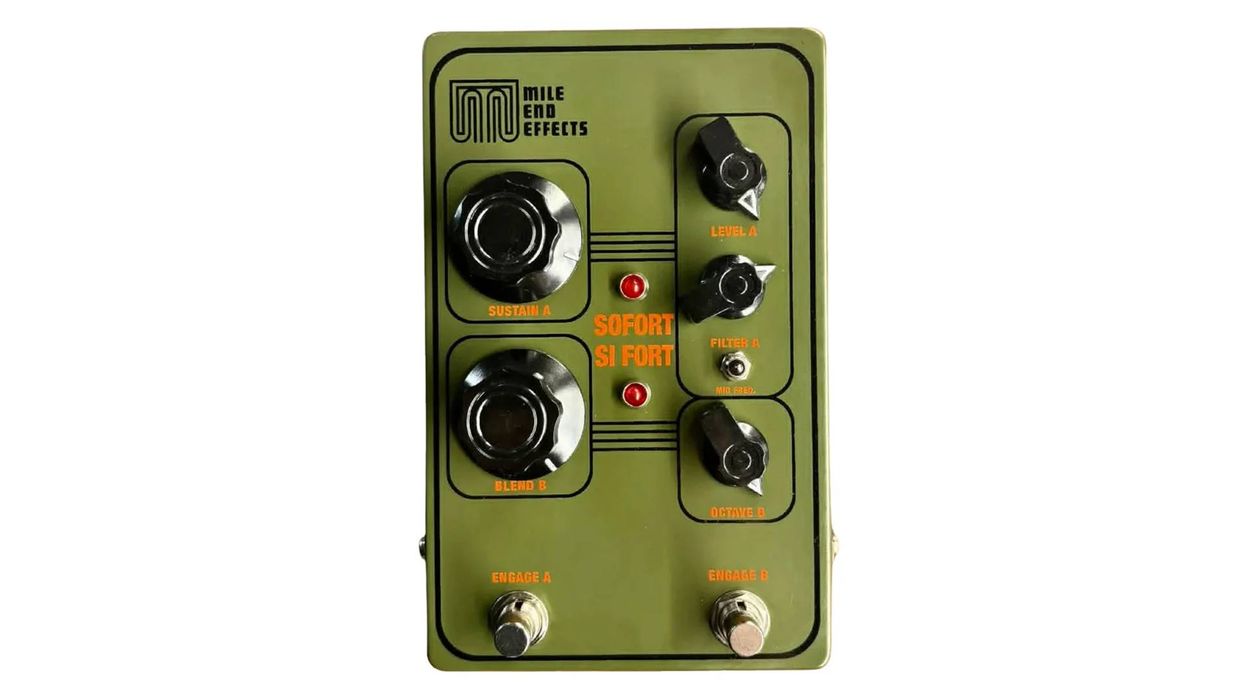
Mile End Effects does not do “subtle.” From art to enclosure to audio, Montreal builder Justin Cober’s pedals make big, bold statements. Even against a lineup of effect units that look and sound like Cold War-era machines of destruction, his latest creation, the Sofort, Si Fort, might just be the most devastating yet: a two-in-one design that combines a Sovtek Big Muff and Ampeg Scrambler elements.
Jolly Green Giant
Cober has demonstrated before that the visual aesthetic of his products is important enough that pedalboard-friendliness does not factor into his design decisions. Not surprisingly, this pedal is comparatively mammoth and beautiful. The giant, army-green slab is deliciously retro and Soviet, from its crisp screenprint art and font (handled by Tristan Lacombe, of Montreal psych-rockers Population II) to its chunky Pultec EQP-1-style knobs. (The Sofort, Si Fort continues the sharp orange/olive green color contrast introduced last year on Mile End’s Pique.) In a cultural moment obsessed with optimization at the expense of good ol’ fun, it’s heartening to behold a pedal that exists confidently on its own terms.
Each fuzz circuit has its own footswitch and controls. Section A is the green Russian Big Muff-style fuzz, with knobs for sustain (gain), level (volume), and filter (tone). A three-way switch just below the filter control toggles activates a mid-frequency bump. Paired with the filter knob, it unlocks drastically different EQ emphases that cover ground beyond simply making up for a Sovtek Big Muff's mid-scooped voice.
The B section is the Scrambler-style circuit, which is controlled with two knobs near the pedal’s bottom: blend and octave. Turned fully counterclockwise, octave allows just a hint of crispy harmonic content. At maximum, it shrieks and careens toward full ring-modulated madness. Blend lets you adjust exactly how much of that madness you want prickling the Muff circuit’s smooth-edged thundering. Each effect can be engaged independently. The only potential downside in the layout is that the chicken-head knobs for tone and level in the A section touch at certain settings. Just take care when you’re turning.
Immediately, and So Loudly
While two-in-one pedals are far from novel, the tones contained in these two circuits are so radically different that it’s almost perplexing to hear them emerge from the same pedal. The name Sofort, Si Fort combines German and French words meaning “immediately” and “so loud” and the pedal’s output is both of those things. As imposing as the Sofort, Si Fort’s physical stature is, it’s dwarfed by the enormousness and mass of its sounds.
Within seconds of plugging in and tweaking, I was conjuring Sunn O)))-worthy waves of low-mid bliss, and lively, whirling overtone chaos. The Green Sovtek Big Muff variant is celebrated for its bass presence, and Cober made sure that quality is preserved in the Muff-style circuit here. Engage the A section, and you’ve got a soft-edged, earth-shaking fuzz, with streaks of texture and graininess. The Scrambler-style section gouges and slashes at these massive low-end couch cushions. If you keep the octave low and the blend maxed out, the higher harmonic content will subtly scratch up your signal. As you crank the octave up, though, you'll eventually reach ring-mod meltdown. Utilizing your guitar volume knob at these settings is great fun, and uncovers all sorts of additional textures and tones.
I’m trying not to be too fawning here, but the combination of the smooth, enveloping Muff tones with the jagged yelp of the Scrambler is positively blissful. For me, it blows the RAT-into-Muff combo out of the water in terms of texture and harmonic possibility.
The Verdict
If you’re looking for low-end fuzz authority that never loses its fangs or clarity, and can reach more unusual highs, the Mile End Sofort, Si Fort is the ticket. There is a price to be paid for this much fun—it’s a very noisy pedal. But, like, duh? As we said, subtlety is not the goal here, and players who understand this will extract endless pleasures from the Sofort, Si Fort—which, at $213, feels like a steal.
Mile End Effects Sofort, Si Fort Review
Mile End Effects does not do “subtle.” From art to enclosure to audio, Montreal builder Justin Cober’s pedals make big, bold statements. Even against a lineup of effect units that look and sound like Cold War-era machines of destruction, his latest creation, the Sofort, Si Fort, might just be the most devastating yet: a two-in-one design that combines a Sovtek Big Muff and Ampeg Scrambler elements.
Jolly Green Giant
Cober has demonstrated before that the visual aesthetic of his products is important enough that pedalboard-friendliness does not factor into his design decisions. Not surprisingly, this pedal is comparatively mammoth and beautiful. The giant, army-green slab is deliciously retro and Soviet, from its crisp screenprint art and font (handled by Tristan Lacombe, of Montreal psych-rockers Population II) to its chunky Pultec EQP-1-style knobs. (The Sofort, Si Fort continues the sharp orange/olive green color contrast introduced last year on Mile End’s Pique.) In a cultural moment obsessed with optimization at the expense of good ol’ fun, it’s heartening to behold a pedal that exists confidently on its own terms.
Each fuzz circuit has its own footswitch and controls. Section A is the green Russian Big Muff-style fuzz, with knobs for sustain (gain), level (volume), and filter (tone). A three-way switch just below the filter control toggles activates a mid-frequency bump. Paired with the filter knob, it unlocks drastically different EQ emphases that cover ground beyond simply making up for a Sovtek Big Muff's mid-scooped voice.
The B section is the Scrambler-style circuit, which is controlled with two knobs near the pedal’s bottom: blend and octave. Turned fully counterclockwise, octave allows just a hint of crispy harmonic content. At maximum, it shrieks and careens toward full ring-modulated madness. Blend lets you adjust exactly how much of that madness you want prickling the Muff circuit’s smooth-edged thundering. Each effect can be engaged independently. The only potential downside in the layout is that the chicken-head knobs for tone and level in the A section touch at certain settings. Just take care when you’re turning.
Immediately, and So Loudly
While two-in-one pedals are far from novel, the tones contained in these two circuits are so radically different that it’s almost perplexing to hear them emerge from the same pedal. The name Sofort, Si Fort combines German and French words meaning “immediately” and “so loud” and the pedal’s output is both of those things. As imposing as the Sofort, Si Fort’s physical stature is, it’s dwarfed by the enormousness and mass of its sounds.
Within seconds of plugging in and tweaking, I was conjuring Sunn O)))-worthy waves of low-mid bliss, and lively, whirling overtone chaos. The Green Sovtek Big Muff variant is celebrated for its bass presence, and Cober made sure that quality is preserved in the Muff-style circuit here. Engage the A section, and you’ve got a soft-edged, earth-shaking fuzz, with streaks of texture and graininess. The Scrambler-style section gouges and slashes at these massive low-end couch cushions. If you keep the octave low and the blend maxed out, the higher harmonic content will subtly scratch up your signal. As you crank the octave up, though, you'll eventually reach ring-mod meltdown. Utilizing your guitar volume knob at these settings is great fun, and uncovers all sorts of additional textures and tones.
I’m trying not to be too fawning here, but the combination of the smooth, enveloping Muff tones with the jagged yelp of the Scrambler is positively blissful. For me, it blows the RAT-into-Muff combo out of the water in terms of texture and harmonic possibility.
The Verdict
If you’re looking for low-end fuzz authority that never loses its fangs or clarity, and can reach more unusual highs, the Mile End Sofort, Si Fort is the ticket. There is a price to be paid for this much fun—it’s a very noisy pedal. But, like, duh? As we said, subtlety is not the goal here, and players who understand this will extract endless pleasures from the Sofort, Si Fort—which, at $213, feels like a steal.
Joe Bonamassa and Sixthman Announce Lineup for Alaskan Cruise 2027
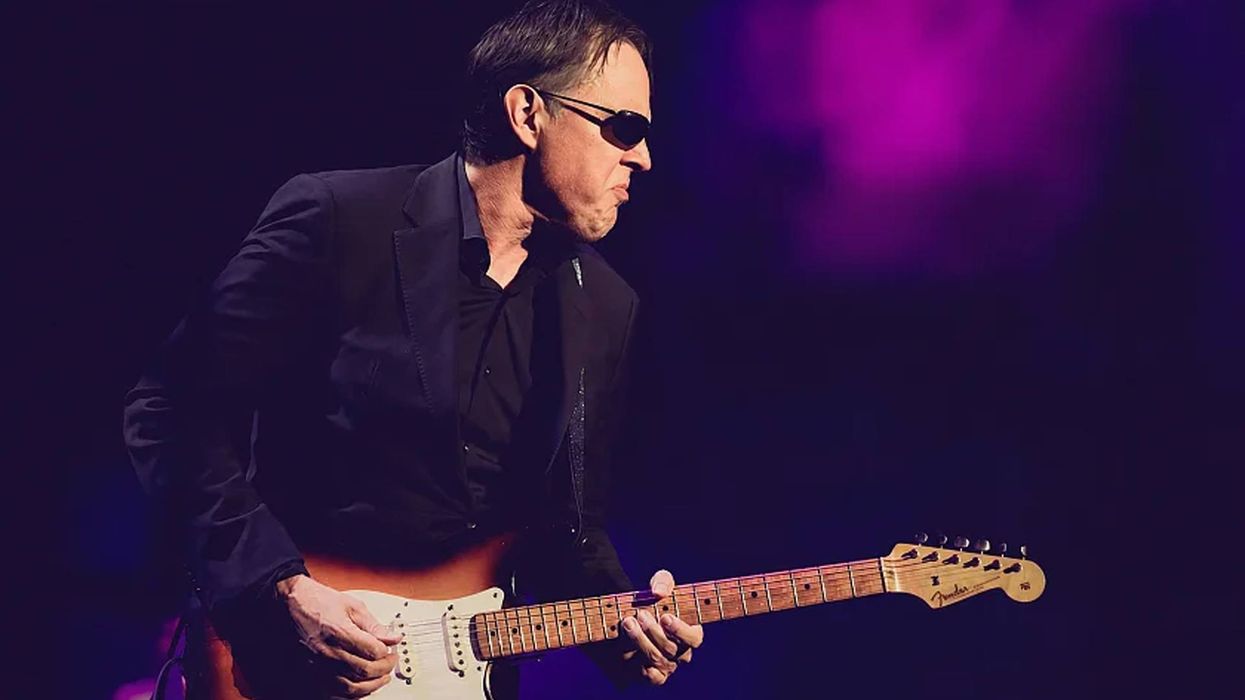
5x GRAMMY® Award-nominated guitar legend Joe Bonamassa and Sixthman, the leader in festivals and music cruises for more than 25 years, have announced a second northern edition of their world-famous blues-rock celebration, Keeping the Blues Alive at Sea Alaska II, sailing September 14-21, 2027, from Seattle, WA to Juneau, Skagway, Glacier Bay, and Victoria, BC, aboard the beautiful Norwegian Jade. Fans are urged to sign up for the presale now at www.bluesaliveatseaalaska.com to secure a cabin on this highly anticipated Alaska return.
Hosted and personally curated as always by the one and only Blues Titan himself, Joe Bonamassa, Keeping the Blues Alive at Sea Alaska II will present a celebration of music and community unlike any other, with powerful headline performances, exclusive collaborations, intimate jams, and unforgettable sets from some of the best in blues rock. The all-star lineup of artists includes Joe Bonamassa, Grace Potter, Larkin Poe, JJ Grey & Mofro, The Fabulous Thunderbirds, Ruthie Foster, Eric Gales, Jimmy Vivino, Robert Jon & The Wreck, Tommy Castro & The Painkillers, Danielle Nicole Band, D.K. Harrell and many more to be announced. In addition, the once-in-a-lifetime voyage will present an incomparable array of immersive activities and experiences, with autograph sessions, contests, and more.
Beyond the music, Keeping the Blues Alive at Sea Alaska II will sail through some of the region’s most iconic destinations, from the vibrant waterfronts and rich cultural attractions of Juneau, the Gold Rush history and mountain scenery of Skagway, and the awe-inspiring wonder of Glacier Bay National Park, with its towering glaciers, pristine wilderness, and abundant wildlife. The journey also includes a visit to the charming city of Victoria, BC, where picturesque harbor views, stunning gardens, and a vibrant culinary scene await. From breathtaking landscapes to watching whales from the deck amidst the unforgettable beauty of Alaska’s wild frontier, Keeping the Blues Alive at Sea Alaska II offers a new way to experience Alaska while reveling in the timeless power of live music and the camaraderie of the tight-knit blues community.
The Norwegian Jade will provide everything needed to make Keeping the Blues Alive at Sea Alaska II the most magnificent cruise adventure yet, with unique bars and lounges at every corner, a wide range of delicious specialty and complimentary dining options, the Pool Deck (with multiple hot tubs), the Jade Club Casino, Mandara Spa, Pulse Fitness Center, Basketball/Pickleball Courts, and so much more.

Keeping the Blues Alive at Sea Alaska II follows next year’s sold-out Keeping the Blues Alive at Sea XII, sailing March 15-19, 2027 from Miami, FL to Grand Cayman aboard the luxurious Norwegian Jewel. Though fully booked, Sixthman’s First Available Program releases staterooms in the months leading up to sailing that become available from cancellations or changes in operational needs every Friday. For more information, please visit www.bluesaliveatsea.com/firstavailable.
Keeping the Blues Alive at Sea Alaska II will once again proudly benefit the Keeping the Blues Alive® Foundation, Joe Bonamassa’s nonprofit dedicated to supporting music education by providing students, teachers, and musicians with essential resources and opportunities. While on board, guests will have the chance to take part in unique fundraising experiences, raffles featuring signed memorabilia, and other meaningful ways to support the foundation – all while enjoying the blues adventure of a lifetime. Founded by Bonamassa in 2011, Keeping the Blues Alive® Foundation (KTBA) is a 501(c)(3) non-profit organization with a mission to fuel a passion for music in younger generations by funding projects and scholarships to provide students and teachers the resources and tools needed to further music education.
Since its inception, KTBA has been able to fund music programs and initiatives that have impacted the lives of more than 147,000 students in all 50 states. KTBA accomplishes this by making weekly donations to music projects in schools, as well as funding merit-based scholarships and extracurricular programs all over the country. In 2020, KTBA took its mission a step further by forming the Fueling Musicians Program. This program was created as an emergency relief plan for touring musicians affected by the COVID-19 pandemic. By providing financial assistance for essential living expenses, the Fueling Musicians Program aims to help struggling musicians get back on the road again when it is safe. To date, the program has helped over 475musicians with immediate cash payments of $1,500. KTBA has made the Fueling Musicians Program a permanent part of the organization to help struggling musicians get on their feet and on the road. With donations of almost $3M in total from fundraisers, merchandise sales, and more, the Keeping the Blues Alive® Foundation has been able to help keep music education thriving. For more information, please visit keepingthebluesalive.org.
Luthier on Luthier: Andy McKee
Andy McKee exploded to prominence in 2006 with this video of his track “Drifting,” released on the nascent CandyRat record label.
Twenty years later, Andy’s career has taken him to audiences around the world, with collaborations ranging from Dream Theater to Prince.
I’ve been looking forward to sharing this episode of Life on the Fretboard since we recorded it during Andy’s latest world tour. But first let me set the scene…
A few weeks ago, I was in Japan, a country that I had not visited since my late teens. The first time I was there, I managed to blow almost all of my budget for the trip on a secondhand Fender Telecaster I found in Osaka…a Keith Richards-style ’72 Custom with a wide-range humbucker and the four knobs. (That was on day two of a two-week trip, and an indication of seventeen-year-old me’s value priorities and impulse control.) On this trip, I resolved to be more cautious.
This time, I was in Japan as producer for Australian fingerstyle guitar supremo Alan Gogoll. He’s a previous guest on this podcast and, to my mind, one of the most impactful and iconoclastic acoustic guitar voices of this century. That is no idle exaggeration.
Alan was playing a set at the Osaka Sound Messe show, the Japanese equivalent of the Fretboard Summit. After that, the plan was to get some peace and quiet in the historic city of Kyoto, where we would record an album (our sixth together). All of this has now happened.
Note: In the Fretboard Journal‘s 59th issue, you will find an article I wrote about my experiences on the producer’s side of the glass at the legendary Hansa Studios in Berlin for the recording sessions that would become Alan Gogoll’s album Lioness Lullabys.
The reason that I mention this is that, during my time in Japan, my guest for this episode, the mighty ANDY MCKEE, was also in Osaka. Despite the twin charms of tight schedules and crushing jet lag, we were able to get together one evening as a small group that included Alan, Andy and fellow guitarists Adrian Bellue (the acoustic one) and Japan’s own Kousuke Miura. We enjoyed a dinner together at an all-you-can-eat wagyu beef emporium in Osaka.
It was at dinner when I heard Alan Gogoll say that if it hadn’t been for Andy’s “Drifting,” he never would have picked up an acoustic guitar and would probably still be shredding on some sort of pointy Ibanez with a Floyd Rose.
That meant that, if it hadn’t been for Andy, neither Alan nor I would have been sitting at that table in Osaka; that Fretboard Journal article would never have been written, and none of the albums we had made together would exist!
This was quite a moment of realization for me – a sudden sense of time and place – and it made me stop and consider the impact that Andy McKee has had on the acoustic guitar world. He represents a true paradigm shift for instrumental acoustic players. He even toured with Prince as a solo acoustic guitarist…come on!
From my own point of view, Andy represents something of a duality: I first met him in Montreal some 15 years ago and every time I have had the pleasure of hanging out with him, he’s been affable, easygoing, and a genuine delight…the sweetest dude who is also a ferociously gifted guitarist, composer and performer.
We can learn a lot from Andy McKee. During the course of this conversation, I certainly did.
We talk about Andy’s early years in Topeka, Kansas; formative exposure to Eric Johnson’s “Cliffs of Dover,” which is how it all started for him; the deep influence of players such as Michael Hedges, Preston Reed and Don Ross; social media and the visual aspect of modern life as a musician; Prince; and the joy of working with celebrated acoustic guitar maker Michael Greenfield, who is also the sponsor for this episode.
This conversation actually took place several months before our meeting in Japan at a small hotel near Gatwick Airport, prior to Andy flying to the next leg of his world tour. There had been logistics and details and all manner of little moving parts that needed attending to, but Andy was handling it all with his typical good nature.
We had just had dinner when we recorded this and that’s where you join us during this podcast.
Life on the Fretboard is a Michael Watts production for Fretboard Journal.
Theme music by me with Dan Western on drums.
Branding by Michael Johnson.
Some links I mentioned:
Guitars of the British Isles with Martin Simpson (YouTube)
Andy McKee
https://andymckee.com
https://www.instagram.com/therealmckee
https://www.youtube.com/channel/UC4SlCAeLGLONquLmwYBkttA
Michael Watts
https://www.michaelwattsguitar.com
https://www.instagram.com/michael.watts.guitar/
https://www.youtube.com/@MichaelWatts
Sponsored by Greenfield Guitars.
Be advised that the conversation does contain some adult language.

The post Luthier on Luthier: Andy McKee first appeared on Fretboard Journal.
Fake blood stains, body glitter and chainmail rash: Castle Rat’s Riley Pinkerton shows off her Gibson SGs

“Hearing Black Sabbath for the first time, I was like, ‘I need an SG,’” Castle Rat guitarist and frontwoman Riley Pinkerton tells Guitar.com as she shows off her arsenal of battle-ready double cuts.
Castle Rat describe themselves as “Medieval Fantasy Heavy Metal”, so it makes sense that their leader be the valiant owner of an arms cache of double-horned six-strings.
And lucky for the team at Guitar.com – who are donning protective suits of armour behind the camera (we swear) – Pinkerton joins us for the latest episode of My Guitars & Me to talk us through some of the highlights from her SG collection.
First up, Pinkerton showcases her #17 SG, which she bought with her relief check during the COVID-19 pandemic. “I bought it used off Reverb,” she says. “When the pandemic hit, we got a check, so I was like, I’m gonna buy a guitar.’ So that’s what I did.”
Many guitars, especially if they’re used regularly during live shows fall victim to buckle rash – the pattern of scratches that can develop on the back of the instrument. The culprit of the relicing on the back of this guitar, though, isn’t a mere belt buckle, but rather the suit of chainmail she dons during Castle Rat’s live shows.
“It’s chainmail rash instead of buckle rash,” she says. “And everything I own is covered with sparkles, because I wear body glitter onstage, so that’s everywhere.”
Next up, we get a close-up look at Pinkerton’s ‘60s Gibson Tribute SG, which she received as a Christmas present when she was around 18 years old. “It’s great, it’s trustworthy. I played it on this whole tour, so it’s covered in dust from a lot of festivals that were very dry and very dusty,” she says.
A through and through SG player, it makes sense that Pinkerton counts Tony Iommi as one of her guitar heroes.
“There’s an ancient YouTube cover of me playing acoustic guitar – a version of N.I.B. that sometimes makes the rounds on the internet, which is funny. My eyebrows are crazy…”
The full episode of My Guitars & Me with Castle Rat’s Riley Pinkerton is available now.
The post Fake blood stains, body glitter and chainmail rash: Castle Rat’s Riley Pinkerton shows off her Gibson SGs appeared first on Guitar.com | All Things Guitar.
Guitar Center’s competition to open for Ed Sheeran has been flooded with Free Palestine memes

Ever fancied opening for a chart-topping artist like Ed Sheeran? Well, these days you might be alone in that camp. Following Macklemore’s removal from the Loop Tour on 14 September for his “free Palestine” speech, every support act – including Sheeran’s own backing band, Beoga – has dropped out. The collective withdrawal was an act of solidarity with Macklemore – and now, netizens are also showing their support by flooding a Guitar Center competition to open for Sheeran with false entries.
The competition in question, Open For Legends, was launched on the same day that Macklemore was dropped from Sheeran’s tour. Of course, the very next day on 15 September, all of Sheeran’s support acts dropped out, with the likes of Finneas stating on Instagram “artists should not be silenced when they speak up for the oppressed”, while Sheeran’s own band, Beoga, were strongly against the “silencing of Macklemore by zionist lobbies”. With Sheeran now in desperate need of new support, the competition took on a new significance.
For online supporters of Macklemore’s message, the competition came as a perfect opportunity to show their support. With the only rules being that you must be over 18 and hold a valid US passport, it was essentially a free for all; according to Entertainment Weekly, the Open For Legends submission site was “flooded with memes and pro-Palestine messages criticising Sheeran”.
With the voting system entirely in the hands of the public before going to a panel of judges, it also meant that netizens flocked to the site to vote for the ‘troll’ entries. It lead to the website being overran with meme posts, vastly overshadowing any ‘real’ entries. Think Taylor Swift’s 2012 contest where a public vote decided that she should perform at Horace Mann’s school for the deaf , or when an online poll in 2010 tried to send Justin Bieber’s North Korea…
For the internet, this Guitar Center competition was a way of voicing protest en masse. Since the onslaught of posts, however, Guitar Center has taken action and removed any ‘false’ entries… but you can still see an archived version of the contest homepage.
people are just submitting random videos, some captioned free Palestine https://t.co/Z4llkqPJQF pic.twitter.com/GC8fPqMImm
— jennine (@jennineak) September 16, 2026
“Guitar Center has long been committed to supporting musicians at every stage of their journey and creating opportunities for artists to share their talent with the world,” the company told Entertainment Weekly. “The Open for Legends competition series was developed months ago as part of that broader commitment and is designed to create opportunities for musicians to perform on major stages alongside a range of artists.”
“As with any open submission process, we received entries that were not legitimate applications to participate in the program,” the statement continued. “Those submissions will not be considered so that the opportunity can remain focused on musicians who are seeking to showcase their talent.”
“We’re continuing to review and manage the program in accordance with its intended purpose and look forward to recognising and supporting talented musicians through the initiative.”
@kaitlin_ml@Macklemore opening for @Ed Sheeran @MetLife Stadium #macklemore #edsheeran #friday #metlifestadium #fyp
In terms of the original ‘controversy’, Macklemore’s removal came as a result of him voicing his support for Palestine at two MetLife Stadium shows on the 4 and 5 September. On the first night, a TikTok clip shows Macklemore saying: “The truth is, a big part of the reason why I wanted to do this tour in the first place is so I can stand up in stadiums like this and say two words that are very near and dear to my heart: Free Palestine.”
The next night, Macklemore addressed campaign group StopAntiseminism’s critique of the protest [via the BBC], addressing his “Jewish brothers and sisters” who were in the crowd. “Criticism of Israel, criticism of apartheid, being against genocide, is in no way a criticism of you,” he explained.
The post Guitar Center’s competition to open for Ed Sheeran has been flooded with Free Palestine memes appeared first on Guitar.com | All Things Guitar.
Guitar.com deals of the week: these are the best discounts we could find at Thomann and Sweetwater

What with Thomann’s Guitar Days and Sweetwater’s Guitar Month, September is proving to be a fabulous month for savvy guitarists that love a discount. In some cases, prices have dropped by thousands – so it’s a great time to cash in and get plenty of bang for your buck. To help you out, we’ve even picked out some of the very best deals currently on offer.
First up, one of the biggest savings comes in the form of the ESP Alex Skolnick Signature. This single-cut Lemon Burst electric boasts a mahogany body, a 12” radius neck with rosewood fingerboard, Seymour Duncan Alex Skolnick signature humbuckers, and an absolutely mad discount of $2,000. That’s right, this guitar is down to $7,499 rather than its usual price point of $9,499.
Another high-ticket savings come in the form of PRS’ 40th Anniversary Custom 24 electric guitar. Available in classy brown and orange Tiger Eye, Tiger Eye Micro Wraparound Burst and blue Sub Zero, the guitar has dropped in price by $1,370 – meaning you can get it for just $5,480 instead of $6,850. It’s a great saving on a solid mahogany electric, offering a slim 10” radius ziricote fingerboard with Old School Bird inlays, PRS DMO humbuckers and a 5-way switch.
There are plenty of $200 price drops, too. Guild’s fuzzy, ‘60s-surf-rock-inspired Surfliner Solidbody Electric Guitar is currently $299.99 in its White Sage edition, while Fender’s marvellous American Professional II GT11 Stratocaster with upgraded 6-point tremolo and Fender Custom Shop Fat ’60s pickups is $1,899.99 instead of $2,099.99.
Of course, if you’re feeling more acoustic, $200 has also be cut from the price of the Martin Sweetwater Select 28 Style Herringbone Dreadnought Acoustic, making it just $3,999.99 instead of $4,199.99. Elsewhere, a Martin GPC-16E-01 has had a 29% discount, making it just $2075.81 – and, considering the 16 Series is one of Martin’s most exciting lines, this deal is definitely worth your consideration.
There’s even a really great Martin deal Sweetwater-exclusive bundle if you’re on the hunt for your first acoustic; you can get a comprehensive performance bundle, with a Martin 000 Junior Sapele Acoustic, a Positive Grid Amp, a Sennheiser e 825-S Cardioid Dynamic Vocal microphone, as well as a selection of cables, a mic stand and a guitar strap, all for $1,249.99. That’s a whopping $346.93 cheaper than the total cost of the products separately.
It’s not only guitars that have had a price cut, either. If you’re in the market for a new amp, PRS’ DGT 15-watt Combo Amplifier is currently available for just $999, a $450 drop from its usual price. There’s also plenty of deals across pedals and tech, like the 25% discount on Line6’s HX Stomp, allowing you to grab this super multi-effect stompbox for just $519.55.
25% has also been sliced off of DigiTech’s Whammy Hammer-On pedal, meaning that for around $207 you’ll reap the benefits of this polyphonic pitch shifter. With 16 intervals, seven different functions, a pair of pitches and a slew of other sequencing features, it’s a nifty little device. Meanwhile Behringer’s Octave Divider has also had a 25% drop, meaning for around $50 you can toy with its sub-octave, ringer and multi-note functions and effects.
To find more deals, head to Thomann and Sweetwater.
The post Guitar.com deals of the week: these are the best discounts we could find at Thomann and Sweetwater appeared first on Guitar.com | All Things Guitar.
Johnny Marr’s 7-figure payday, reflection from Fender’s CEO and 18-carat-gold Pink Floyd picks: here are this week’s guitar stories you need to know about
![[L-R] Johnny Marr, a Fender Stratocaster, and Pink Floyd 18-carat-gold guitar picks](https://guitar.com/wp-content/uploads/2026/09/Guitar-stories-hero@2000x1500.jpg)
Wish you could more easily keep up with everything that’s been happening in the world of guitar? Now you can. Welcome to Guitar.com‘s weekly roundup of top guitar stories and developments you need to know about.
This week, we’ve got the results from an auction selling the personal collection of a particular Mancunian guitar legend, a new update about Fender’s ongoing Stratocaster legal campaign, the bougiest guitar picks you’ll ever see and loads more. Read below to find out more.
Johnny Marr guitar collection rakes in £3.6 million at auction
 Credit: Christie’s
The sale of Johnny Marr’s personal guitar collection took place at London auction house Christie’s this week, and fetched the former Smiths man a pretty decent payday. All in all, the collection of over 100 lots comprising electric and acoustic guitars, amps and other memorabilia, yielded over £3.6 million in an auction lasting over five hours. A significant chunk of the proceeds are going to charity, though, split evenly between the Guide Dogs for the Blind Association and the National Autistic Society.
Take a look at some of the final figures from the auction.
Want to test the prototype from Guitar Center’s new in-house guitar brand? Here’s how you can
 Credit: Jeffrey Greenberg/Universal Images Group via Getty Images
Is the guitar industry crying out for some real innovation? Guitar Center CEO Gabe Dalporto certainly thinks so, and he’s so steadfast in this belief, in fact, that earlier this year he announced the launch of the retail giant’s new in-house guitar brand. Of course, the project caught a bit of flak for crowdsourcing design ideas without what the community believed was a robust compensation structure. But sidestepping that for a moment…
The time has come to test what Guitar Center’s been cooking, and the retailer is inviting guitarists to apply to test it themselves at its offices in Westlake Village, CA later this month. Want to be a part of guitar industry history?
Read more to find out how you can.
Fender CEO Bud Cole admits “we could have done this better” over Strat legal threats, but claims the campaign is working
 Credit: Adam Gasson [main], Naoki Tsuruta [inset]Fender’s cease and desist campaign against fellow guitar builders making Strat-reminiscent designs has shaken the industry, prompting widespread backlash and in some cases legal pushback, too. In a new interview, CEO Edward “Bud” Cole reflects on the company’s legal campaign to protect the Stratocaster, admitting “we could have done this better”. He does, however, claim the campaign is working…
Read the full story now.
MONO partners with Polyphia guitarist Tim Henson on signature dual-carry guitar case
 Credit: MONO
Accessory news, now… Polyphia mastermind Tim Henson has partnered with MONO to create his own signature version of the brand’s M80 Classic Dual guitar case, which is able to carry and keep safe two electric guitars at the same time. As far as guitar cases go, it’s got some real tech spec candy, with durable Sharkskin for reliable protection, MONO’s patented dual protection design and Headlock neck suspension system, and a metal Polyphia badge for the cherry on top…
Learn more about the MONO x Tim Henson M80 Classic Dual Electric Guitar Case.
You won’t believe how long it took Matt Bellamy’s guitar tech to capture all his amp sounds
 Credit: Daniel Knighton/Getty Images
Muse frontman Matt Bellamy is a true amp modeller convert, with a Fractal Audio Axe-Fx III making up the heart of his live rig. His features dozens of captures of his own collection of amplifiers from Vox, Diezel, Gibson and more, and his guitar tech Chris Whitemyer has revealed just how long and meticulous the process was when capturing them.
“All of those amp sounds [in the Axe-Fx III] are his amps,” Whitemyer says. “[We modelled] everything. 63 days, eight hours a day, left before dinner every day…” he says.
Learn more about Matt Bellamy’s monstrous Muse live rig.
Gibson and Baggs tackle muddy live performance sound with the new HiFi DNA acoustic pickup system
 Credit: Gibson / Baggs
Has Gibson just revolutionised acoustic guitar pickups? For the company’s latest project, it’s partnered with acoustic pickup specialist Baggs – formerly L.R. Baggs until a recent rebranding – to create the new HiFi DNA acoustic pickup system, designed to deliver “the most natural, studio‑grade live tone ever achieved from an acoustic guitar”.
Robi Johns, Sr. Product Development Manager at Gibson Acoustic, describes it as the solution he’s been chasing since the 1970s…
Find out more about the new Gibson x Baggs HiFi DNA acoustic pickup system.
Pink Floyd are releasing 18-carat gold picks worth nearly £6,000
 Credit: The Royal Mint
And finally, Alexa, play Money…
In perhaps the most ostentatious story of the week, Pink Floyd have partnered with the Royal Mint on a super limited line of guitar picks made entirely of 18-carat gold. Each pick is etched with the artwork from the band’s landmark 1973 album The Dark Side of the Moon, and described as “fully functional”. You’ve gotta be rocking some serious dollar to take one of these gigging though, as just one will set you back a princely £5,750.
Want flashy but not that flashy? In addition to the 10 gold picks up for grabs are 300 silver versions priced at £129.50 a piece.
Learn more about Pink Floyd’s limited run of gold and silver guitar picks.
The post Johnny Marr’s 7-figure payday, reflection from Fender’s CEO and 18-carat-gold Pink Floyd picks: here are this week’s guitar stories you need to know about appeared first on Guitar.com | All Things Guitar.
Reverend Guitars Releases Billy Corgan Infinite Sadness Models
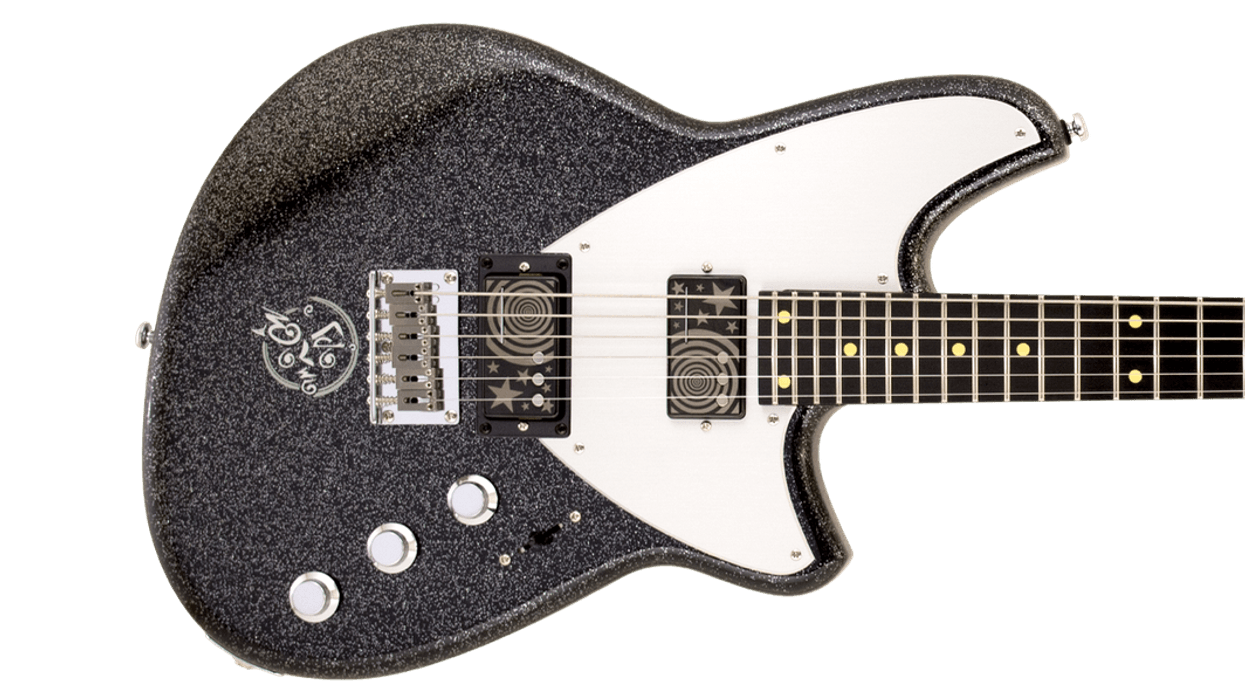
Reverend Guitars and Billy Corgan have launched the Reverend Guitars Billy Corgan Infinite Sadness models, just in time for the Smashing Pumpkins “Rat In A Cage Tour” celebrating the 30th Anniversary of the band’s epic double album Mellon Collie and the Infinite Sadness.
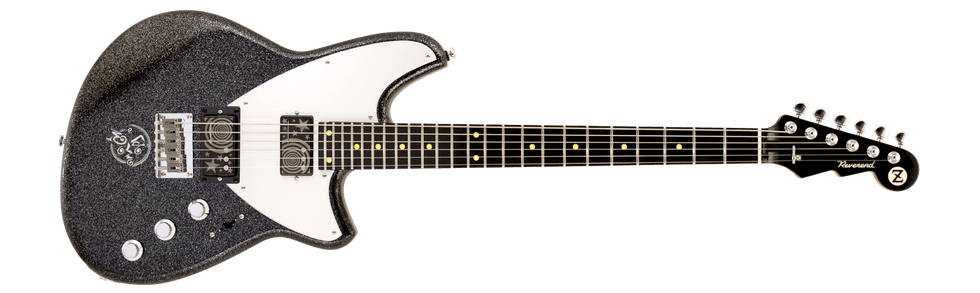
This special-run guitar is limited to 60 pieces. There are 36 Reverend Billy Corgan Z-Ones and 24 Reverend Billy Corgan Drop Z extended scale guitars, each in a Black Sparkle finish with an ebony fretboard and Mellon Collie moon graphic on the body. Every Infinite Sadness guitar comes in a Reverend two-tone soft case that includes a Certificate of Authenticity and a special edition poster from Billy Corgan called “Mellon Collie Moon.”
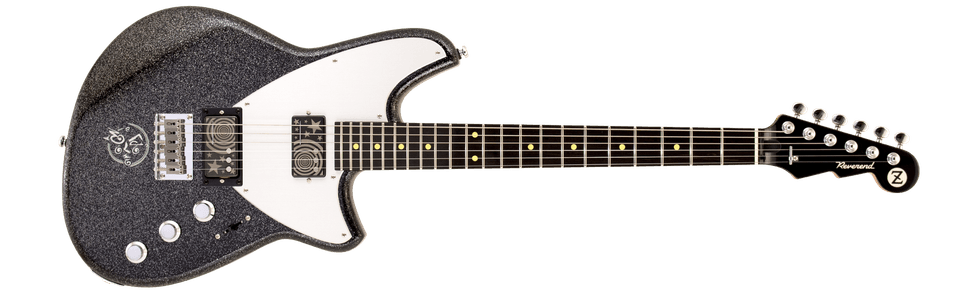
This is the same model that Billy played this guitar during the Pumpkins’ Lollapalooza set in summer 2026.
The Reverend Billy Corgan Z-One, a third signature collaboration between Billy Corgan & Joe Naylor, is inspired by the heavier songs in the Smashing Pumpkins Catalog. An alder body creates a thick tone, while deep cutaways provide easy access to the higher frets. Railhammer Z-One pickups have a fat midrange and a smooth top end, with custom artwork etched into the covers. An aluminum pickguard and a “Z” icon at the headstock make this one futuristic-looking guitar. The Billy Corgan Z-One is for anyone who wants to rip big rock solos with a thick yet smooth tone.
The Reverend Billy Corgan Drop Z combines the aesthetic features of his Z-One signature model and a longer 24-fret, 26.25″ scale neck designed for drop tunings. The long-scale neck provides appropriate string tension for down-tuning, so the tone stays deep and full while remaining punchy and clear. The Alder solid body paired with Railhammer Billy Corgan Z-One Pickups delivers higher output and velvety treble for a rich, weighty rock tone. The roasted Maple neck, ebony fingerboard, and medium oval profile are comfortable to play, even with the slightly longer scale length.
The Reverend Billy Corgan Infinite Sadness Z-One carries a $1899 street price and the Drop Z carries a $1999 street price. For more information visit reverendguitars.com.
Patreon Song of the Month: “El Manisero (The Peanut Vendor)”

Johnny Marr guitar auction brings in £3.6M – with several iconic Smiths instruments selling for six-figure sums
A Christie’s auction listing over 100 guitars and other items from Johnny Marr’s personal collection has raked in over £3.6 million, more than tripling its total estimate made prior to the event.
The auction took place over a period of five hours yesterday (17 September), with the final figure finishing up at a respectable £3,649,280. Highlights from the sale included Marr’s 1982 Rickenbacker 330 Jetglo – used across his time in the Smiths, including on their second single This Charming Man, and extensively on the band’s self-titled debut – which sold for £358,400, far exceeding its £60,000-£80,000 estimate.
There was also the Cherry Red 1960 Gibson ES-355, which was bought for Marr in early 1984 by Sire Records founder Seymour Stein, after Marr said jokingly that The Smiths would sign to his label if he was gifted a new guitar. With a pre-auction estimate of £100,000 – £150,000, this guitar smashed that figure, selling in the end for £204,800.


Other six-figure lots included the Cherry Gibson Les Paul Standard bought by Marr for the Smiths’ second album Meat is Murder, and which he professes to using on “more records than any other”. With a custom-installed Bigsby tremolo, this guitar also sold for £204,800.
Another highlight was the 1971 Martin D-28 acoustic used on many classic Smiths hits including Rusholme Ruffians (recently played by UK PM Andy Burnham in Ukraine, of all people) What She Said and Meat is Murder, smashed its £30,000 – £50,000 estimate, selling for £128,000.
Elsewhere, Marr’s “go-to rhythm guitar” between 1984 and ‘85 – a Roger Giffin-refurbished Fender Telecaster which sold for £121,600. Marr’s signature Comet Sparkle Fender Jaguar – which he used to record the James Bond theme for 2021’s No Time to Die – also sold for a solid £46,080.


Of the total money raised from the sale, proceeds from 31 lots spanning 10 guitars, 1980s concert posters, and sales awards, will be split equally between the Guide Dogs for the Blind Association and the National Autistic Society.
 Credit: Christie’s
“The auction has been a great experience and has exceeded all my expectations,” says Johnny Marr. “I’d like to thank everyone who made bids and special thanks to Christie’s for making it so memorable.”
Amelia Walker, Christie’s Specialist Head of Private & Iconic Collections, London, adds: “We are thrilled to have been able to partner with Johnny Marr for this landmark auction, the results of which reflect his groundbreaking and unparalleled musical influence.”
“We’re incredibly grateful to Johnny Marr for choosing Guide Dogs as one of the charities benefitting from this auction,” says Jo Stevenson, Head of Customer Experience at Guide Dogs.
“As a charity we’re almost entirely funded by donations; this will go a long way in helping people with sight loss live the life they choose. We’d like to say a huge thank you to Johnny for his generosity and for sharing his impressive guitar collection with his fans.”
Hayley Butler, Head of Fundraising at the National Autistic Society adds: “We are delighted by the success of the auction. The amazing funds raised will support our mission to create a society that works for autistic people. We’d like to say an enormous thank you to Johnny, and to everyone who bid on these iconic guitars.”
Iconic guitars continue to regularly command sky-high prices at auction. Billionaire Jim Irsay’s collection – which featured classic instruments once owned by Eric Clapton, Jimi Hendrix, Kurt Cobain and many others – brought in a total $94.5 million following his death in 2025.
That auction holds the record for the most expensive guitar ever sold at auction: David Gilmour’s legendary Black Strat, which raked in a staggering $14,550,000 on its own, over three times the total amount generated by the entire Johnny Marr auction. That auction also saw Jerry Garcia’s Tiger guitar sell for over $11 million, and Kurt Cobain’s Smells Like Teen Spirit Fender Mustang sell for nearly $7 million.
Take a look at the final results of Marr’s Guitars: The Johnny Marr Collection over at Christie’s.
The post Johnny Marr guitar auction brings in £3.6M – with several iconic Smiths instruments selling for six-figure sums appeared first on Guitar.com | All Things Guitar.
Positive Grid Spark Pedal review: The Spark ecosystem welcomes another box of tricks

It’s not an exaggeration to say that Positive Grid’s Spark completely redrew the guitar amp map when it burst onto the scene in 2019. Bringing studio-ready tones to the fingertips of guitarists everywhere was the mission, and what a successful ride it has been. The brand has gone from strength to strength in the years that followed, with the Spark now a family of amps that run the gamut from headphones to portable PA systems. Now, however, they’re taking a left turn into the speakerless world of pedals.
On paper, it seems like a very sensible move – pedalboard amps are increasingly popular, both for live use and for playing at home, and so having something compact that puts all the great sounds and ease of use of the amp into a smaller form factor is surely onto a winner.
At least, that’s what we’re all hoping anyway – trying to be both a practice amp, live solution and recording option in one is a lot of hats to wear, we’ll see if any fall off along the way…
What is it?
It won’t surprise people to learn that the Spark Pedal effectively distills the important bit from its amp brethren into a 6×4” floor unit. Now, it’s worth noting that the tech in here is the latest hotness – it uses PG’s HD Tone engine, the same architecture found in the latest Spark 2 amp.
Like its sibling, it comes loaded with 33 high-quality amp models and 43 effects as standard, and crucially that also means you get access to over 100,000 community-created presets courtesy of the hugely useful ToneCloud setup. If you’re a long-time Spark-user that has spent endless hours crafting perfect tones, fear not. You can easily load your saved presets from other Spark products and take them with you on the go. As with the other Sparks, it offers a relatively compact but useful array of bass and acoustic options for extra utility here too.
Sensibly for a floor-based option aimed at live players, it has the facility to be used purely as an effects unit – if you want to bypass the onboard amps, you can – and simply use it as a compact but powerful sound box.
The concessions to streamline its live use don’t stop there either – as with most Sparks, the Pedal has a built-in rechargeable battery, meaning that you won’t have to worry about plugging it into the mains or your PSU and in fact, you can’t – but more on that later. The battery life is promised to be up to seven hours, which is pretty impressive.
On the top you’ll find five chunky rotary knobs for on-the-fly tweaking, plus a trio of multi-function footswitches, while round the back you’ll find the upgraded I/O options that really set out the stall for this being a live tool. In addition to the usual mono input jack, headphone and USB-C output for silent practice and direct recording, you’ll find stereo outputs, an expression pedal socket, and in a first for a Spark product, MIDI in and out as well. Of course, being a Spark you’ll also need to hook this thing up to bluetooth to use the companion app, which is rather essential.
 Image: Adam Gasson
Usability and Build Quality
The concern with any multi-effects that doesn’t have a a screen is that all the useful functionality is going to be hidden in the companion app, and nobody really wants to be whipping their phone out mid-gig do they?
Thankfully, while the Spark app remains a standard setter for both its ease of use and consistent and straightforward connectivity in this sector, there’s plenty you can do on the pedal itself once you spend a little time familiarising yourself with the fundamentals.
The three foot switches are home to up to six presets across two banks. Editing them and saving them using the pedal itself is satisfyingly straightforward. Select the preset you want to modify, do your thing, then press and hold the foot switch to save. No 20-page guide, secret handshake, or ritual sacrifice is needed here – it’s all rather intuitive.
The multifunctional volume knob in the center is responsible for switching between the two operating modes. In FX mode, the knobs control drive type, modulation, delay and reverb. Click that centre knob and the color coded LED light will indicate you are now in Amp mode. This is where you sculpt gain, bass, middle and treble, just like a real amp. Hold the centre knob down and you will activate the basic but welcome built-in tuner.
The built-in 60-second looper is as uncomplicated as one gets. Pressing pedals one and two together activates Looper mode. Recording/overdubbing, play/stop, and undo/redo functions are all handily activated with a footswitch each. If you can count to four, you’re golden here.
It’s an undersold part of the Positive Grid experience that they clearly put a lot of thought into the physical usability of their devices as well as the app-based stuff, and that’s true again here. It would have been very easy to make this pedal look like a Boeing cockpit, but with some simple and intuitive paring back, they’ve kept all the features you’d need mid-show accessible.
 Image: Adam Gasson
That said, the Spark app is absolutely crucial to the experience here. Constructing signal chains and exploring ToneCloud is a total blast. However, on-the-fly adjustments in a live scenario from the pedal alone proved much more difficult. For example, you stomp into your meticulously crafted solo channel but the volume isn’t quite there? Reaching down to turn the main volume knob will sort that out. However, it turns up the volume across all your other channels too, like a master volume knob would. Not ideal.
The app isn’t a bonus feature here, it’s still the star of the show, and a necessary companion when you’re sculpting your sounds. I ended up having my iPhone in a cradle attached to the mic stand during rehearsals, but that’s really not what you wanna be doing during a performance is it?
There are some other compromises here to get it out at the very impressive $199 price point. Compared to the rugged unflapability of a Boss pedal, the Spark Pedal’s aluminium chassis and one-piece silicone cover are perfectly serviceable, but I would wonder how well that cover is going to last after a few months of being knocked about on venue floors and on street corners.
And knock it about you probably will. While the fact that this weighs just 0.58kg is very impressive – that’s significantly less than a Nano Cortex for example – there is a tradeoff there. It’s so lightweight, it’s quite easy for a stray foot to knock it away from where you want it to be – while the sturdy rubber footing stops it flying out into the audience, again I wonder how robust that would be long term.
The footswitches also don’t feel as premium as you’d like – they have resistance and lack that satisfying “click” of other stomp boxes. I’d probably think twice before stamping down on them with gay abandon in a pair of Docs, put it that way.
The pedal’s built-in battery is again both a boon and a potential issue. On the one hand, if you were a busker or were using it as your entire rig, the ability to run it without plugging into anything is potentially the killer app: especially with that seven-hour battery life.
On the flipside, if you wanted to use this alongside other pedals, or as a semi-permanent part of your pedalboard, the fact that it only runs on battery power – you can’t have it plugged into a pedal power supply or any other pass-through adapter – could be a real issue. Do you really want the hassle of having to make sure that one pedal is charged up before every gig? And then there’s the potential of battery degradation in the future that we’re all more than familiar at this point – seven hours at launch is great, but how long will that be in two years of heavy use, or five? This is obviously a problem with any guitar device with a lithium-ion battery in it, but it could be extra problematic for futureproofing with a device that’s designed to be used live without a net.
 Image: Adam Gasson
Sounds
The excellent sound produced by Positive Grid products is no secret in 2026 – if you’ve enjoyed the broad array of amps and effects in any other Spark product to date, expect the same here.
The consumer-friendliness of the entire ecosystem should also be applauded, and there’s a real sense of community here among the ToneCloud regulars. The variety of tonal possibilities never seems to end, and I found myself getting lost for hours just… playing. Headphones on, Metallica backing tracks, completely butchering album upon album’s worth of Kirk Hammett solos. Heaven. It’s also a great tool if you’re in a covers band – with so many song-alike and artist-alike tones in the ToneCloud, dialling in the sound you need is an absolute doddle.
If you’re after the crystalline Vox-adjacent tones of a Matchless or the punishing brutality of a cranked Peavey 5150, the Spark’s HD models do a fine job of recreating the whole gamut of amp types with a faithfulness that belies the Spark Pedal’s humble size – whether you’re running direct into a powered cab, a PA system or just going through headphones. That’s true with drop tunings, heavy riffing, almost anything that might cause a lesser modeller to get a bit glitchy and messy. This isn’t a level of sonic fidelity that can go toe-to-toe with the likes of Neural or Kemper, but remember that this is considerably cheaper than even some of the more affordable amp and effects units out there.
The effects are equally impressive, with the drives sounding thick and chewy, the fuzzes sputtering in the appropriate way, and the reverbs and delays sounding suitably cavernous. Again, this isn’t a HX Stomp, but that’s double the price!
If you don’t fancy that hassle of building a Spark signal chain yourself, the Spark AI tone-prompting feature has been updated to version 2.0 now, and while it’s certainly not foolproof, it’s clear that PG has learned some lessons from the Reactor amp and the results you get are more or less very usable. It’s not essential, but it’s a handy one to have if you’re trying to sketch out song ideas or find inspiration in a hurry.
 Image: Adam Gasson
Should I buy one?
At $199, the Spark Pedal represents a superb amount of functionality and versatility in a small, intelligently designed package. The combination of portability, solid tones, app features and straightforward usability makes this the perfect unit for buskers, jamming musicians, and bedroom players alike.
There are definitely a few drawbacks to consider if you’re a gigging musician looking for a credible live option however. While you can get by with most everyday needs with the on-pedal controls, the thought of having a mid-gig crisis that requires whipping a phone out and trying to pair with your pedal via Bluetooth fills me with a special kind of dread. I’m not wholly convinced by the build quality and long-term battery life either.
Also, if I was to indulge myself slightly, I would love to have a powered speaker output included, allowing the Spark Pedal to power a cab directly. Blackstar’s Amped pedal range has shown just how appealing a true “all-in-one” pedal-amp format can be.
Of course, adding a power-amp stage would demand a totally different power architecture, and likely ruin the Spark’s rechargeable portability, so perhaps I’m asking a Swiss Army knife to pack a chainsaw. Still, it would be dreamy.
Perhaps it’s inevitable that a product aiming to do so much at this price point is going to have some compromises here and there, but this is still a very impressive and fun to use product that ticks a lot of boxes.
If you’re happy to tinker with tones on your phone, and want the flexibility of a unit that can be at home both in the bedroom, the practice room or the street corner, this is a very compelling option. It doesn’t reinvent the wheel, but the Spark is mature technology at this point, instead, it’s trying to build on what it did so well half a decade ago – removing friction from the guitar playing experience.
Alternatives
This space in the market is home to some other excellent and affordable alternatives. Boss’s GX-1 ($229.99/£219) takes its tone DNA straight out of the flagship GX-100, and has a screen and a wah pedal built-in – I’m not convinced the amp models sound as good as the Spark’s though. Blackstar’s Amped 2 is a little more expensive and doesn’t have as many onboard sounds (£391), but the tones are legit and it really packs a punch, and can power a cab directly. The Line 6 POD Express ($179.99/£149) is even more compact than the Spark Pedal, and comes directly from the HX family of processors, but it’s got a limited palette of sounds comparatively.
The post Positive Grid Spark Pedal review: The Spark ecosystem welcomes another box of tricks appeared first on Guitar.com | All Things Guitar.
Gibson Unveils The Ultra-Rare, Limited-Run Des Series
Gibson today unveiled the DES Series, an ultra-limited collection of six guitars available worldwide exclusively through Gibson.com and Gibson Garage locations. The launch coincides with the Gibson Band’s return with the release of a new benefit single “Sanctuary,” written by Gibson board member and artist ambassador Cesar Gueikian. The recording features orchestration and keyboards by Dream Theater’s Jordan Rudess, lead guitar by Mateus Asato and guest vocals by Jagger Davies; Produced by Gueikian and Emery Dobyns. The song will support Save the Music Foundation in partnership with Gibson Gives Foundation , helping to restore, sustain and expand music education programs nationwide.
To celebrate the release, and raise additional funds benefitting Save The Music, a one-of-a-kind Gibson “Sanctuary” Soundwaves guitar featuring artwork based on the song’s actual soundwave pattern will be auctioned via RalyUp. The custom artwork was created in collaboration with visual artist Tim Wakefield of Soundwaves Art Foundation. Stream “Sanctuary” on major platforms at HERE , and bid on the Soundwaves guitar through RallyUp at https://go.rallyup.com/744876.
Above: Gibson Gives and RallyUp are auctioning a one-of-a-kind Gibson “Sanctuary” Soundwaves guitar featuring artwork based on the song’s soundwave pattern created in collaboration with Tim Wakefield of Soundwaves Art Foundation. Bid at https://go.rallyup.com/744876 .
Gibson DES Series

In partnership with philanthropic giving, the DES Series launches today and applies a bold new design and modern performance features to six Gibson body shapes: the Les Paul™, SG™, ES™, Explorer™, Flying V™, and Victory; and was developed by Gueikian, Gibson master luthier Jim DeCola and Gibson’s craftspeople.
Each model features a Ghost Burst finish, Super Split Block inlays, a compound-radius ebony fretboard, black nickel hardware and Gibson ELEV8 humbuckers with Alnico 8 magnets. A portion of each DES series guitar purchase supports Gibson Gives Foundation to further its efforts to spread the healing power of music. The Gibson DES Series is available now exclusively via Gibson.com and Gibson Garage locations.
Explore the Gibson DES Series of ultra-limited guitars, available worldwide today on Gibson.com.
Gibson ES DES in Ghost Burst
The Gibson ES DES in Ghost Burst, available exclusively on Gibson.com, is part of an ultra-rare, limited collection. Conceived by Gibson Artist Ambassador and Gibson Board Member Cesar Gueikian in collaboration with Master Luthier Jim DeCola and Gibson’s expert craftspeople, this modern semi-hollow guitar pairs a dramatic Ghost Burst gloss nitrocellulose lacquer finish with AAA figured maple, black nickel hardware, and distinctive uncovered zebra-coil pickups. Built for today’s technical players, it features a comfortable Rounded C mahogany neck, an ebony fretboard with a 10"–16" compound radius, 22 medium-jumbo frets, mother-of-pearl Super Split Block inlays, locking Grover tuners, and a Nashville Tune-O-Matic bridge. New Gibson ELEV8 humbuckers with Alnico 8 magnets deliver a powerful, articulate voice, while push/pull coil-tap controls expand its tonal versatility. Complete with a Gibson hardshell case, this limited-production instrument offers exceptional Gibson craftsmanship and modern performance, with a portion of the purchase supporting Gibson Gives.
Gibson Explorer DES, Ghost Burst
Own an exceptionally rare Gibson Explorer DES in Ghost Burst, part of an ultra-limited collection. Developed through a creative collaboration between Gibson Artist Ambassador and Gibson Gives Board Member Cesar Gueikian, Master Luthier Jim DeCola, and Gibson’s expert craftspeople, this bold instrument features an ’80s Explorer mahogany body topped with a multi-ply-bound AAA figured maple cap. A SlimTaper mahogany neck and compound-radius ebony fretboard provide fast, comfortable playability, while mother-of-pearl Super Split Block inlays, black nickel hardware, and uncovered zebra-coil pickups create a distinctive modern aesthetic. Gibson ELEV8 humbuckers with Alnico 8 magnets deliver powerful, articulate tones ideally suited to high-gain and progressive playing, complemented by intuitive master volume, master tone, and three-way selector controls. Finished in dramatic Ghost Burst gloss nitrocellulose lacquer and supplied with a Gibson hardshell case, this limited-production Explorer offers an extraordinary combination of collectible design, technical performance, and uncompromising Gibson craftsmanship, all while supporting the meaningful mission of Gibson Gives.
Gibson Flying V DES, Ghost Burst
Own an exceptionally rare Gibson Flying V DES in Ghost Burst, part of an ultra- limited collection. Conceived by Gibson Artist Ambassador and Gibson Gives Board Member Cesar Gueikian and brought to life in collaboration with Master Luthier Jim DeCola and Gibson’s expert craftspeople, this striking instrument pairs an ’80s-style mahogany Flying V body with a multi-ply-bound AAA figured maple top. Its SlimTaper mahogany neck, bound ebony fretboard, 10"–16" compound radius, 22 medium-jumbo frets, and mother-of-pearl Super Split Block inlays offer fast, refined playability. A pair of Gibson ELEV8 humbuckers with Alnico 8 magnets delivers a focused, high-output voice with tight lows, clarity, and dynamic articulation, while locking Grover tuners, a Nashville Tune-O-Matic bridge, black nickel hardware, and uncovered zebra pickups complete its bold aesthetic. Finished in dramatic Ghost Burst gloss nitrocellulose lacquer and accompanied by a Gibson hardshell case, this limited-production Flying V offers an extraordinary combination of collectible design, modern performance, and uncompromising Gibson craftsmanship, all while supporting the meaningful mission of Gibson Gives.
Gibson Les Paul DES, Ghost Burst
Own an exceptionally rare Gibson Les Paul DES in Ghost Burst, part of a n ultra-limited collection. Developed through a creative collaboration between Gibson Artist Ambassador and Gibson Gives Board Member Cesar Gueikian, Master Luthier Jim DeCola, and Gibson’s expert craftspeople, this performance-focused Les Paul features an Ultra-Modern weight-relieved mahogany body, a multi-ply-bound AAA figured maple top, and a SlimTaper mahogany neck with a Modern Contoured Heel for enhanced upper-fret access. Its bound ebony fretboard has a 10"–16" compound radius, 22 medium-jumbo frets, and elegant mother-of-pearl Super Split Block inlays. Gibson ELEV8 humbuckers with Alnico 8 magnets deliver a bold, high-output voice with exceptional clarity and articulation, while push/pull coil-tap, True Bypass, and Phase controls provide an expansive range of tones. Finished in striking Ghost Burst gloss nitrocellulose lacquer with black nickel hardware, uncovered zebra pickups, locking Grover tuners, and custom Epic/Epic+ switch-ring labels, this remarkable guitar arrives with a Gibson hardshell case.
Gibson SG DES, Ghost Burst.
This rare Gibson SG DES in Ghost Burst, is part of an ultra-limited collection. Developed through a collaboration among Master Luthier Jim DeCola, Cesar Gueikian, and Gibson’s expert craftspeople, this modern performance instrument features a sculpted double-cutaway mahogany SG body topped with AAA figured maple. Its fast SlimTaper mahogany neck, ebony fretboard with a 10"–16" compound radius, 24 medium-jumbo frets, and mother-of-pearl Super Split Block inlays provide an extended playing range and effortless access across the neck. Gibson ELEV8 and ELEV8 Plus humbuckers with Alnico 8 magnets deliver a tight, aggressive, and articulate voice ideal for high-gain and contemporary styles, while push/pull coil-tap controls expand the available tonal palette. Finished in striking Ghost Burst gloss nitrocellulose lacquer with black nickel hardware, uncovered zebra pickups, locking Grover tuners, and custom Epic/Epic+ switch-ring labels, this remarkable SG includes a Gibson hardshell case. Own a highly collectible, stage-ready Gibson while supporting the meaningful mission of Gibson Gives.
Gibson Victory DES, Ghost Burst
This exceptionally rare Gibson Victory DES in Ghost Burst, is part of an ultra-limited collection. Developed through a creative collaboration among Master Luthier Jim DeCola, Gibson Artist Ambassador and Board Member Cesar Gueikian, and Gibson’s expert craftspeople, this modern performance instrument features a double-cutaway mahogany Victory body topped with an AAA figured maple cap. Its fast SlimTaper mahogany neck, bound ebony fretboard with a 10"–16" compound radius, 24 medium-jumbo frets, and mother-of-pearl Super Split Block inlays provide exceptional playability and a refined appearance. Gibson ELEV8 and ELEV8 Plus humbuckers with Alnico 8 magnets deliver tight, aggressive, and articulate tones ideal for high-gain and contemporary styles, while push/pull coil-split and inner/outer coil-selection controls offer impressive versatility through a streamlined control layout. Finished in stunning Ghost Burst gloss nitrocellulose lacquer with black nickel hardware, uncovered zebra pickups, Grover tuners, and an Explorer-style headstock, this limited-production guitar includes a Gibson hardshell case. This is your opportunity to own a distinctive, highly collectible Gibson while supporting the meaningful mission of Gibson Gives.
Pages
