
Music is the universal language
“Glory to God in the highest heaven, and on earth peace to those on whom his favor rests.” - Luke 2:14
Norse Guitar Feeds
“I’d rather bomb playing my own stuff than shack up in my dad’s legacy and play Panama”: Wolfgang Van Halen on why his “artistic and personal integrity” won’t let him play Van Halen material

Since the passing of his father Eddie Van Halen in 2020 and the subsequent rise of his band Mammoth in recent years, some fans have been asking Wolfgang Van Halen if he’ll ever play Van Halen songs live. But the multi-instrumentalist has been steadfast in his decision not to dip his toe on that pond.
On many numerous occasions, Wolfgang has addressed the seemingly unending requests for him to dabble in performing Van Halen classics live, every time shutting them down and highlighting his determination to stay true to his own artistic integrity.
“I’m happy that people are beginning to take me seriously as my own artist and separate me from my family history,” he said in December.
But that doesn’t mean he doesn’t enjoy teasing said fans when the opportunity presents itself…
Like during Mammoth’s 1 April show in Cincinnati, Ohio, when he momentarily made fans believe he was about to give them what they’d been asking for for so long and play a Van Halen classic, only to rickroll them with the first verse and chorus of Rick Astley’s Never Gonna Give You Up.
“I always said, ‘Never say never,’ and I think tonight might be fun,” he told the crowd. “I don’t know if I’m gonna keep doing this. Maybe this can just be our little secret.”
Now, in a new interview with 105.7 The Point, Wolfgang reflects on the hilarious April Fools gag.
“If anybody’s been really paying attention, they know that I wouldn’t do anything like entertaining to play a Van Halen song,” he says. “I’ve been very forthright about [not wanting to play Van Halen songs.
“I’d rather bomb playing my own stuff than succeed by shacking up in my dad’s legacy and playing Panama every day. It’s just not what I’m interested in doing. I like to have a little bit more artistic and personal integrity than that.
“And so it was fun to kind of poke at like, ‘I’ve never done this before. This is something that people deserve.’ And you hear people start to get really excited. And then we went into Never Gonna Give You Up. We even got the thumbs up from Rick Astley himself. So at that point nobody else matters to me. He appreciated it, and that’s pretty badass.”
View a list of all of Mammoth’s upcoming tour dates via their official website.
The post “I’d rather bomb playing my own stuff than shack up in my dad’s legacy and play Panama”: Wolfgang Van Halen on why his “artistic and personal integrity” won’t let him play Van Halen material appeared first on Guitar.com | All Things Guitar.
The best guitar pedals for beginners: distortions, tuners and more

There’s nothing quite like pressing the footswitch on an effects pedal and hearing how your guitar sound is transformed. You can get fuzzes, distortions and overdrives that add gain to your signal, or time-based effects like reverb, delay and chorus that add character and texture, functional pedals including tuners and EQs, and countless other types and sub-types. Awww yeahhh, you might think, after activating each one.
It’s been suggested that guitarists love effects pedals even more than guitars themselves. Don’t get hooked on impulse-buying them, as it’s best to choose carefully, as you can only accumulate so many pedals before you overcomplicate your sound and setup – especially as a rookie guitarist.
To help you set off on the right foot, we’ve ranked ten of the best guitar effects pedals for beginners below. Most of the Guitar.com team are seasoned, callused-in-the-fingertip guitarists, but we were all newbies once, and both of these sides to our experience were factored into our recommendations. Each of the pedals below is just the right mix of great-sounding, fairly priced and technically accessible.
Remember that you’ll need a way to power your pedals. Keen guitarists who are in this for the long haul can save time and effort by getting a power supply that will deliver current to multiple pedals, while 9V batteries are a beginner-friendly choice that will work with most entry-level effects, as long as they’re not mini-pedals.
At a glance:
- Best overdrive for beginners: Boss BD-2 Blues Driver
- Best distortion for beginners: Pro Co RAT 2
- Best tuner for beginners: Behringer TU-300
- Best loop pedal for beginners: TC Electronic Ditto 2
- Best reverb for beginners: Walrus Audio Fundamental Ambient
- Best budget distortion pedal for metal: Teisco Mini Metal
- Best delay for beginners: Earthquaker Devices Silos
- Best chorus for beginners: Catalinbread Wake
- Best effects processor for beginners: Mooer GE-100
- Best budget multi-FX: Gear4Music Guitar Multi-Effects
- Why you can trust Guitar.com
Best overdrive for beginners: Boss BD-2 Blues Driver

This Blues Driver has been a staple overdrive pedal for all sorts of guitarists – not just blues players – since its introduction in 1995. It’ll help make your lead parts cut through beautifully for as long as you play guitar, but it’s a particularly good pick for beginners thanks to its straightforward controls and quintessential overdrive sounds.
There are just three knobs on the top of the pedal to suss out: volume, gain and tone. Using the tone control to adjust the level of treble is the trick to getting a good sound (or a prominent one) out of this classic overdrive.
Best distortion for beginners: Pro Co RAT 2
 The RAT 2
From a little added buzz to a thrilling wall of noise, the RAT 2 opens up a world of gnarly sounds via three foolproof knobs. This is often heralded as the definitive distortion pedal, which makes it all the more remarkable that the RAT 2 costs far less than many of its lower-profile rivals.
While the volume and distortion knobs shouldn’t give you too much of a headache (at least not in the figurative sense), it’s worth studying the filter control, as this makes the difference between controlled rock distortion and completely feral fuzz. Either sound is world-beatingly great in the right context.
Best tuner for beginners: Behringer TU-300
Until you’re already Jimi Hendrix, get a tuner pedal so that you can be sure you’re playing in tune. This one’s affordable and effective, with a digital display that tells you which note you’re tuned to, and LED indicators that show whether the string is flat, sharp or perfectly natural.
Behringer is undoubtedly a budget brand, but the quality of its pedals often means they’ll stick around on a guitarist’s pedalboard for years on end. The TU-300 has some features that will come in handy as you branch out musically, including flat, double-flat and chromatic tuning modes, and reference tone adjustment (so you can tweak the definition of an ‘E’).
Best loop pedal for beginners: TC Electronic Ditto 2

A loop pedal can be a brilliant tool for practice and composition, allowing you to capture parts of what you’re playing and then jam along to them as a looping backing track.
The only snag is that loopers are often intimidating for beginners, but this TC Electronic model is as simple as they come, with a clever ‘LoopSnap’ feature that can slightly adjust your loops to rectify errors in timing – not that you’ll make any of those, of course.
Controlling the Ditto 2 is mercifully easy via the multi-functional footswitch on the top, and there’s a level control so that you can adjust the volume of a loop while (or before) you play along to it.
Best reverb for beginners: Walrus Audio Fundamental Ambient
 Image: Walrus Audio
Psst… Did you know that reverb is basically the third dimension to your guitar sound? Affordable and feature-packed, the Walrus Audio Fundamental Reverb brings out the joy in exploring this sense of space in your playing, with controls for the reverb duration (‘decay’), tone, and prominence (‘mix’).
There are three reverb types to play around with: ‘Deep’, ‘Lush’ and ‘Haze’. These are aptly named, but they have some nuances that you might not expect. The ‘Deep’ mode adds a lower octave to your sound, fattening up the bass, while ‘Haze’ introduces a dash of distortion. As with any good reverb pedal, much of the fun lies in tweaking the controls to find the sounds you relish.
Best budget distortion pedal for metal: Teisco Mini Metal
 Credit: Teisco
This plug-in-and-slay metal distortion pedal from Teisco sounds just as massive as its enclosure is small. Its high-gain sound makes classic rock and metal riffs sound their beastly best, and it’ll also be a great choice for rhythmic chugging, once you’ve gotten the knack of the playing style.
The on-unit controls let you dial up the distortion, adjust the volume and tweak the tone. There’s also a three-position ‘boost’ switch that can give you some extra high-end cut-through, which comes in handy when you’re finding your frequency range at a band practice or gig.
Best delay for beginners: Earthquaker Devices Silos

From The Edge to Omar Rodríguez-López, many guitarists consider delay to be one of the key effects on their pedalboard. This Earthquaker Devices model is both straightforward to use and packed with sounds, and its dedicated tap-tempo footswitch lets you control the timing of repeats by simply pressing to the beat with your foot.
Between the three delay styles bundled into the pedal – analogue, tape and digital – you can probably find the sound in your head (and on some of your favourite songs) via the Silos. This is a slightly more complicated pedal than some of the others featured in this guide, but if you’re in the market for quality delay sounds, this is as accessible as they come.
Best chorus for beginners: Catalinbread Wake
 Credit: Catalinbread
Chorus is another fun modulation effect that will colour your playing, a la Kurt Cobain or Johnny Marr. This Catalinbread option gives you plenty of parameters to tweak and comes at a sensible price.
Our correspondent described this as the perfect tonal thickener for lush, atmospheric sounds. There’s certainly depth to its offering, with eight chorus voicings to play around with and octave control that can fill out the low end of your tone. Despite providing all these options, it’s a simple enough pedal for beginners to use, with just the four knobs to get your head around. Hit the footswitch and bliss out.
Best effects processor for beginners: Mooer GE-100
A cost-effective and convenient way to access lots of different guitar effects is to get an effects processor, like the Mooer GE100. It’ll take a while to suss it out, but this unit is a valid alternative to effects pedals for beginner guitarists, with 66 effects to explore. Overdrive, chorus, delay, reverb – it’s all here, albeit in less artisanal forms than what you’d tend to hear out of a quality effects pedal.
In addition to its many digital effects, the GE100 has various features that could come in handy for guitar practice, including a loop function, drum machine and scale lessons.
Best budget multi-FX: Gear4Music Guitar Multi-Effects
An even simpler shortcut to enjoying a vast array of effects is to use a mutli-effects pedal, like this super-affordable model from Gear4Music. This unit really is plug-in-and-play, with 36 presets to help you access the full gamut of its modulation effects, plus manual controls enabling you to sculpt each sound.
It’s worth noting that this multi-effects pedal is focused on delay, reverb, chorus, tremolo and a handful of other effects such as noise gating. So, it’s not an all-in-one solution for guitarists who want everything on a single pedal (especially if you need some overdrive or distortion options), but it’s a great way to broaden your sonic horizons at a stroke.
Why You Can Trust Us
Every year, Guitar.com reviews a huge variety of new products – from the biggest launches to cool boutique effects – and our expert guitar reviewers have decades of collective experience, having played everything from Gibson ’59 Les Pauls to the cheapest Squiers.
That means that when you click on a Guitar.com buyer’s guide, you’re getting the benefit of all that experience to help you make the best buying decision for you. What’s more, every guide written on Guitar.com was put together by a guitar obsessive just like you. You can trust that every product recommended in those guides is something that we’d be happy to have in our own rigs.
The post The best guitar pedals for beginners: distortions, tuners and more appeared first on Guitar.com | All Things Guitar.
“I was scared to death with the situation I was in”: Peter Frampton explains why the incredible success of Frampton Comes Alive was the “scariest thing”

Peter Frampton had already tasted success across his time with Humble Pie, but when he released his revered live album in 1976, Frampton Comes Alive!, a whole new wave of pressure overcame him.
Frampton, who is now 76, has just released a documentary all about his ups and downs with fame, and has been reflecting on the fears that came along with such triumph. He recalls being treated like “a commodity”, and the pressures of following it up with another record of the same success.
He tells People, “I’ve never been driven by money, only by music and the playing of it. Unfortunately, there was at least one [person], maybe more, that saw me as the golden goose and stopped caring about me and treated me more like a commodity, ‘He’ll do this, he’ll do that.’ I was scared to death with the situation I was in.”
He adds, “When we became the biggest album of all time in America and Canada, that was the scariest thing for me, because it took me six years to write those songs. I’m a perfectionist, and that’s why I wasn’t thrilled with following up the live album at all.”
Frampton ended up following the record with 1977’s I’m In You, which was well received: “I didn’t want to make that album then… [but] I thought, ‘Well, all these people that are advising me, they know much more. They’ve all had big acts.’ And then I suddenly thought, ‘Not as big as me.’ So that’s when I started taking control.”
The pressures didn’t fade, leading to other struggles in Frampton’s life, including a serious car accident in 1978. Fastforward to the present day, Frampton has released his first body of new material in 16 years with the launch of new album Carry The Light last May.
Watch the trailer for his new documentary below:
Find out more about Peter Frampton and his new record via his official website.
The post “I was scared to death with the situation I was in”: Peter Frampton explains why the incredible success of Frampton Comes Alive was the “scariest thing” appeared first on Guitar.com | All Things Guitar.
Alex Lifeson admits he felt “resentment” towards Geddy Lee when he began putting more keyboards into Rush’s sound in the ’80s: “The keyboards went before the guitar”

In the mid 1980s, Rush pivoted to keyboard-heavy records, leaving guitarist Alex Lifeson perplexed as to how he could fit into their music.
It all began with 1982’s Signals, and continued through until 1989 when they returned to a base of guitar work with Presto. According to Lifeson, he felt a little bit resentful towards bandmate Geddy Lee for his decision to implement more keys and synths, but he figured one change could help him cut through and be heard: a new guitar.
Speaking to musician and YouTuber Rick Beato, Lifeson looks back on the struggle, and how he overcame it (via Ultimate Guitar): “When we got to the mid-’80s, when we were doing those dense keyboard records, it was really a challenge for me. ’Cause, when we recorded those records, the keyboards went before the guitar.
“I would sit around, waiting, waiting, and waiting to do guitar stuff. And the more keyboard stuff I heard, the more layers, it was almost impossible for me to figure out how am I gonna fit in here. And by the way, I’m the guitar player in this band. What happened?”
He goes on to question, “Did I resent that? Maybe a little bit, but I took it as a challenge, and it became a task. I had to figure out how I was gonna get around this.
“The frequencies occupied by keyboards are similar to heavy guitars, so you can’t really take that approach to fit something in. So, I switched guitars. Instead of playing something like a Les Paul, or a PRS, I got a single-coil active guitar. Now, it was bright, very clear, and it could cut through all of that stuff. And that ended up being the primary guitar sound for those records, because that was the only way I felt I could fit in.”
You can watch the interview below:
Alex Lifeson and Geddy Lee will reunite as Rush to commence their Fifty Something world tour this June. Celebrating 50-something years of Rush music, the pair will be joined by drummer Anika Nilles, who will play in place of the late Neil Peart. Lee and Lifeson have said they will pay a nightly tribute to Peart on the tour.
Lee told National Today, “We’ve been talking about certain songs that we feel really, really give us the vision of Neil. Twice a night we will pick a song to play sort of for him and we’ll present a visual tribute behind us, to Neil, whether it be to his lyrics or just to his playing or whatever.”
Find out more information about the Fifty Something tour via the official Rush website.
The post Alex Lifeson admits he felt “resentment” towards Geddy Lee when he began putting more keyboards into Rush’s sound in the ’80s: “The keyboards went before the guitar” appeared first on Guitar.com | All Things Guitar.
“It reminds me of monkeys w**king in full view of the people standing around their enclosure”: Chrissie Hynde slams “entitled” fans who film during concerts

If you’re heading to a Pretenders concert anytime soon, you may want to keep your phone firmly in your pocket. Or better still, just forget it exists for a couple of hours – because Chrissie Hynde has made it very clear she’d rather not see it at all.
In a lengthy note shared to social media, the Pretenders frontwoman says there is an “unpleasant fog hanging over the heads of all artists” caused by concertgoers who insist on filming and photographing live shows instead of simply experiencing them in real time.
“Question: What is it with people and their phones?” Hynde writes. “But my real question is: why do people have to film or take pictures at concerts or museums? Why???”
The singer-guitarist argues that even when artists explicitly ask audiences to put their phones away, those requests are routinely ignored.
“You can plaster a venue with signs requesting ‘No cameras,’ but people don’t respect it. It’s as if people feel entitled, even though the artist clearly has asked them not to do it.”
Hynde also points to Bob Dylan’s well-known phone-free concerts as an example of how difficult such rules are to enforce in practice.
“Bob Dylan ensures that phones are sealed in a bag before a show,” she writes. “You would think an artist of his stature could make a simple request, and the audience would respect it. No chance. People will still sneak in a camera or a phone. It’s like a weird compulsion that people can’t control.”
“It reminds me of monkeys wanking in full view of the people standing around their enclosure, and frankly, in that case, people deserved to be wanked at because monkeys should not be in an enclosure in the first place… However, an artist on a stage?”
“No one seems to understand why artists don’t like it,” Hynde continues. “If you’ve ever had a mosquito buzzing around your head when you’re trying to go to sleep, you will get a vague idea of what it’s like to have people filming your show or taking photos while you’re on stage.”
“If Jesus Christ were to walk into a room, the first thing everyone would do would be to pull out their phone,” she concludes. “Can someone please explain?”
The sentiment isn’t abstract for Hynde either. She recounts a recent moment at the Royal Albert Hall, where she attended Emmylou Harris’ London show after having dinner with the singer – only to find herself seated beside a fan filming the entire performance. When another concertgoer asked him to stop, he simply told them to “Mind your own business.”
Hynde’s latest comments tap into a long-running divide in the music world over phones at gigs.
While some artists, such as Steve Vai, have no issues with fans filming gigs (even describing it as “great”), plenty others – including Jack White and Tool – have scorned the practice and implemented strict no-phone policies in an attempt to preserve the live experience. Kate Bush and Ghost have also both discouraged or restricted device use at shows.
The post “It reminds me of monkeys w**king in full view of the people standing around their enclosure”: Chrissie Hynde slams “entitled” fans who film during concerts appeared first on Guitar.com | All Things Guitar.
“Once John’s back in the picture, it’s like the other records don’t exist”: Josh Klinghoffer on the “disrespect” given to Red Hot Chili Peppers albums without John Frusciante
![Josh Klinghoffer [main image] and John Frusciante [inset image]. Both are pictured playing guitar with a focused expression.](https://guitar.com/wp-content/uploads/2026/06/josh-klinghoffer-john-frusciante@2000x1500.jpg)
Josh Klinghoffer feels the Red Hot Chili Peppers’ records made without John Frusciante are slightly disrespected.
Klinghoffer left the Chili Peppers in 2019 when Frusciante, who has been famously on and off within the lineup ever since he joined in 1988, came back to the fold. Klinghoffer first joined the band in 2009, and recorded two albums with them, I’m With You and The Getaway. Guitarist Dave Navarro also filled in for Frusciante from 1993 until 1998.
Klinghoffer spoke of feeling “creatively stifled” during his time with the band after his departure. These days he’s playing for Pearl Jam and Jane’s Addiction, and is due to release a new solo record, A Drop In The Ocean, under his Pluralone moniker.
In an interview with Guitar World, Klinghoffer is asked if it bothers him that the records he made are overlooked by the band itself: “It’s a funny thing. I guess it’s particular to the way John views the band when he’s not in it, and it makes sense to me. They have enough music that they don’t need to look to some of the other records.
“For anyone who connected with those albums, like One Hot Minute [made with Navarro], or the two I made with them… I imagine it’s a little weird for me to be banished from the catalogue and the live performance.”
He goes on to add, “I guess it’s just something unique to that band, you know? Having such a revolving door there, and such a strong presence in John. He’s kind of the preeminent guitar player, you know? He’s the one who made the work with them where they experienced their global fame…
“They have their thing, their formula. I guess it’s so much more definitive to the main amount of Chili Pepper fans; you know, that’s just what the Chili Peppers are. It’s probably a testament to them that they can step out of that and do a good record with Dave Navarro. I like that record too.”
Klinghoffer concludes, “The records that we made together… The only thing I would say – and I don’t know if it’s spoken or unspoken – is that there’s a little bit of a slight disrespect to the records that aren’t the John records. Once John’s back in the picture, it’s like the other records don’t exist. That’s the only weird thing to me, because those records were important at the time. They were important enough to go and play them around the world.”
Klinghoffer’s new record, A Drop In The Ocean, lands on 12 June.
The post “Once John’s back in the picture, it’s like the other records don’t exist”: Josh Klinghoffer on the “disrespect” given to Red Hot Chili Peppers albums without John Frusciante appeared first on Guitar.com | All Things Guitar.
Paul McCartney’s advice to young bands: “Don’t rely too much on gadgetry. Just play it all, learn it all, write it all”

Paul McCartney has cautioned young bands against over-reliance on music-making “gadgetry”, noting that musicians should instead focus on the fundamentals of playing, learning, and songwriting.
Speaking to Apple Music’s Zane Lowe ahead of the release of his new solo album, The Boys of Dungeon Lane, the Beatles star shares how different recording conditions once forced musicians to commit to their ideas in ways that are less common today.
Citing the 4-track as an example, McCartney says, “With the four-track, you’ve got to wipe things because there’s only four tracks and you may want to do eight things. You take two tracks where you’ve got, let’s say, drums and bass, and you reduce them to one track, which frees up these tracks so you can keep recording.”
He explains that that added constraint was not a drawback but part of the creative process.
“That’s actually a great thing,” says Macca. “I say to young bands nowadays, don’t rely too much on the sort of gadgetry. Just play it all, learn it all, write it all because it’s better.”
While he remains open to experimentation (“I like odd things. I like tape loops,” says the musician), McCartney notes that there is a difference between using technology as a tool and depending on it as a substitute for musicianship.
“What will happen is a lot of people rely on it,” he says. “So you get records that sound like they’ve been made by gadgets. I don’t like that.”
That said, McCartney also acknowledges that modern conveniences like the smartphone have transformed the way he captures and develops musical ideas. Having a recording device in your pocket at all times, he says, means unfinished songs can be saved instantly and revisited later.
“[In the past] you always had to finish a thing because there was nowhere to put it. You had to put it in your mind. So you had to finish it. So you did.”
“Now I must have over a couple of thousand sketches on my phone because I’ll put it down and think, oh yeah, okay, I’ll come back to that. I’ve saved it. It’s okay,” he says. “Because of the luxury of a phone, if you don’t have long but you got an idea, you’ll put it down.”
Watch the full interview below.
The post Paul McCartney’s advice to young bands: “Don’t rely too much on gadgetry. Just play it all, learn it all, write it all” appeared first on Guitar.com | All Things Guitar.
Positive Grid Reactor review: does your guitar amp really need an AI chatbot?

$349, positivegrid.com
Hands up if you’re sick of hearing about AI? It is the two letters everyone seems to be getting increasingly fed up of here in 2026, as promises of generative AI solving all the world’s problems a year or so back seem to have ended up with a reality where the technology’s primary application seems to be driving your friends to psychosis, rendering your job obsolete or, at best, ensuring that your next phone or laptop is going to cost dramatically more than it should do.
Obviously, not everyone feels that way, but if there’s one group of people who seem to be inclined to be even more sceptical about the benefits of large language models than the general population, it’s musicians.
Wholly AI-created music and art is straight up bad, and morally suspect along with it – you won’t find too many real musicians dying on that particular hill – but is it always a bad thing, necessarily? Are we still capable of detaching the useful and non-sketchy uses of machine learning from the attention-grabbing stuff that everyone seems to hate?
All of which is a long-winded way of observing that it’s a pretty interesting time for smart amp king Positive Grid to be launching its first real foray into creating a proper for-purpose gigging guitar amp… and one that has AI quite literally written on the control panel.
The Reactor is that amp, but PG is at pains to point out that the ‘AI’ in this case actually stands for “Amp Intelligence” – and it promises a wholly new way for guitar players to go about crafting their guitar tones…
 Image: Adam Gasson
Positive Grid Reactor 50 – what is it?
It’s important to point out right at the top that the Reactor is deliberately and intentionally NOT a Spark product. Positive Grid’s revolutionary smart amp family has spent half a decade building up goodwill amongst the guitar community – and with good cause given how impressive the Spark is and remains as a platform.
The Spark has, on several occasions now, attempted to break away from the confines of bedroom practice – the Spark Cab made any Spark amp gig-ready, while the Spark Edge and Spark Live portable PA systems were designed to cater to whole bands.
The Spark could never fully escape its roots as a pure home practice solution, however, and so it makes sense that Positive Grid has now created a bespoke new platform that combines some of the best bits of both Spark and its BIAS X amp software, and put it into an affordable proper guitar amp.
But, Positive Grid being Positive Grid, they were never going to put out yet another affordable modelling combo into the great Katana-killer bun fight. To their credit, the brand always tries to come to the party with something new and innovative, and in this case it’s the aforementioned Amp Intelligence.
Amp Intelligence is, says PG, “a new type of sound engine that builds guitar tone on demand”. They’re keen to call it an “intelligent tone engine”, but in real terms that’s an AI chatbot that has been trained on over 200 different amplifiers at a component level – gain stages, transformers, bias points, harmonic response; the lot – and can use that in-depth knowledge of how amps work to build a tone for you on demand.
So the theory goes, that knowledge enables you to have a chat with your amp – via the accompanying Reactor smartphone app – describing the tone you want via text, an image or a sound clip. The AI will then analyse what you’ve given it, and spit out some suggested tones that you can then tweak either on the app or using the controls on the amp itself, and save forever. Like most chatbots, Amp Intelligence can apparently learn your preferences sound-wise over time, and so the more you use it, the better it’ll get at creating sounds you like.
Away from the high-tech stuff, the amp itself is impressively kitted out for one in this price point. The base 50-watt version features a 12-inch custom-designed speaker, with switchable power scaling down to 25w and 1w. Round the back you’ll also find a cab-simulated line out, USB-C for direct recording, MIDI, headphone out, power amp input and effects loop. The amp features built-in Bluetooth; both for communicating with the app, and also for streaming music directly to the unit.
Under the hood and away from the AI, you’ll find 24 different onboard amps to choose from, as well as 28 different effects types. The control panel is fully featured in a way that no other PG amp has been before – you can select from six different amp types using a classic Line 6 Spider-style rotary (from Clean to Extreme) or override them by choosing one of eight onboard signal chain presets.
You get full control of your tone stack, plus the ability to tweak the level of whatever effect is in one of the six different effects blocks. If you want hands-free control, the Reactor pairs with optional Reactor Control Bluetooth controller ($149), which offers you full wireless control of your presets, or the ability to run it in stompbox mode – if you run out of battery the switch can be plugged in, so you don’t have to worry about a lack of juice ending your gig.
 Positive Grid Reactor Control Bluetooth controller. Image: Adam Gasson
Positive Grid Reactor 50 – build quality and user interface
Upon removing the Reactor from its box, I’m reminded that not every modelling amp can be as back-friendly as the trusty Tone Master Princeton that sits in its usual testing spot – though at 10.4kg, it’s still a good kilo lighter than the Katana 50, though a little heavier than the Blackstar ID:X.
Like all of Positive Grid’s amps, the weight is reflected in a reassuring overall build quality. The wood cabinet feels solid and well put-together, the simple black tolex and black and gold grille cloth are understated and professional, and the control panel is clearly laid out with premium-feeling knobs, switches and buttons.
As I’ve come to expect from Positive Grid, the app connection experience is pretty seamless. I downloaded a test version of the new Reactor app to my iPhone 16 and within a few seconds it had connected the amp and was displaying the signal chain for the preset the amp was currently set to. You can adjust everything in real time both on the app or on the device, and changes are reflected instantly.
We’re 30 years into amp modelling at this point, and so you’d think there wouldn’t really be much to say about the user interface and signal chain given that it’s all rather standardised at this point. Except, for some reason, rather than represent each amp and effect using easily recognisable graphical depictions of said amp – a Tube Screamer, a Marshall amp etc – they’ve opted to use incredibly ugly AI art instead.
 Positive Grid Reactor app effects. Image: Guitar.com
For a variety of reasons, this sucks. For one, it sucks that the creative humans at Positive Grid don’t deem the labour of a fellow creative human artist something that’s worth paying for. For another, as a product that’s aimed at newer players, the fact that none of the amps and effects are easily recognisable as themselves makes the whole thing harder to navigate on the fly. Thirdly, they look – and I must allow myself to speak plainly here – total shit. Amps with knobs where knobs would never be, pedals with classic GenAI gibberish written all over them… who wants this?
Anyway, that aside, it’s all pretty straightforward – in fact, if you’ve ever used a Spark amp, the signal chain stuff is basically identical; it’s all very simple.
The app lacks the SmartJam and similar home practice-focused tools of the Spark app, because this is obviously a gig-focused bit of hardware, but you do still get access to the ToneCloud platform, which allows you to search and download user-generated presets. Obviously, I’m reviewing a pre-release demo version, so it’s pretty quiet in there at the moment, but if the Spark version is anything to go by, this could soon become a hugely deep library of sounds.
The last part of the app is the ‘Creator Hub’ and this is the bit where we can delay no further, we must prostrate ourselves at the feet of the Amp Intelligence.
 Positive Grid Reactor app Creator Hub. Image: Guitar.com
Positive Grid Reactor 50 – does Amp Intelligence actually work?
Tapping on the Creator Hub takes you to a user interface with four options, displayed with – don’t think you’re getting away that easy – more ugly GenAI art. The options presented let you either describe your tone using text, take a photo of something you want it to create a tone out of, and the ability to upload or record a song for it to analyse.
The text one is probably the one that most of us will go to first, and so it’s where I start first, and instantly I find the hype bumping into the reality of the hardware. Perhaps it’s my fault, but when reading the blurb accompanying Amp Intelligence, I was struck by the claim that “any tone imaginable can be delivered on demand, from the familiar to never-before-heard”. That sounds pretty exciting, doesn’t it? Especially when you combine that with the claim that it has “decoded over 200 amp designs at the circuit level”.
With that in mind, I don’t think it was wholly unreasonable to expect that Amp Intelligence would be able to use that circuit-level knowledge to, y’know… create a new amp sound? One that combined, say, the glassy cleans of a Fender with the full-throated roar of a Marshall? But alas no, despite various attempts to get it to mash up amp circuits in an unholy Frankenstein’s monster of tone, it always just gave me one of those 24 amp models with some EQ or other tools to make it sound like I asked for. The future, eh?
The experience of using the chatbot input will be familiar to anyone who’s tried to get any other kind of AI chatbot to do something mildly tricky. Sometimes it works like a charm and gives you what you want straight away, other times it’s massively wide of the mark.
It has a bad habit (just like BIAS X) of responding to my requests to tweak a tone by adding more stuff to the chain – if I asked it to tweak the tone stack, for example, rather than adjusting the settings on the amp, it seemed to want to always chuck an EQ pedal into the mix.
It also seems to do that thing that anyone who’s used an AI image generator will be familiar with – the more you ask it to tweak a thing, the messier the whole thing gets. In practice, it’s easier just to tweak things yourself once Amp Intelligence has got you most of the way there.
It also occasionally just completely ignores what you’re telling it, then telling me that it had, in fact, done what I asked – HAL style. After the second or third go-around in this situation, it led to me having what effectively amounted to an argument with a guitar amplifier – a situation that edified nobody involved, least of all me.
If you keep things simple and clear, however, it has a pretty good hit-rate for providing usable sounds. It also broadly knows what you’re talking about when it comes to artists, albums and the like. You can raise your own eyebrows about exactly what kind of training data the AI has been gobbling up to be able to do that, but from a user perspective – especially for a beginner-focused product – it’s a really handy tool.
Playing a song into it seems to generate more precise results than talking to the damn thing, and I imagine this would be my preferred means of input were it my daily driver. Clearly having a precise sense of what sound you’re trying to get helps it to deliver a more accurate tone out the other end.
The picture-taking option feels like a bit of a gimmick – it is quite fun to see what it thinks would be an appropriate tone for the various tchotchkes I have scattered around my desk, or indeed the handsome cat that wandered into our kitchen (“a tone that captures his playful, agile character” if you’re interested).
It is actually pretty good if you give it something less random to work with – for instance, if you take a photo of a real amp, it’ll do its best to emulate it. Equally, I was impressed with the tones it would suggest based on a picture of a guitar: I snapped a shot of the Klang DC aluminium-necked guitar Cillian recently reviewed and it suggested a bunch of heavy, doomy tones that would be a perfect companion for it.
The final option is the Fix My Tone – basically, you ask the amp to analyse your current sound, tell it what you don’t like about it, and it suggests helpful ways you could change it. While again, the results were not always flawless, the way that it explains what it’s changing and why I think is super useful if you’re a relative newcomer trying to understand how and why a signal chain sounds the way it does. It helps you understand real-world gear in a way that something like this could obscure – and that’s really useful.
What it isn’t, however, is quick. The blurb claims that the AI will spit out a tone for you in ‘seconds’ and while that’s technically true… it is quite a lot of seconds. Especially for the image prompts, I was waiting a good minute or two for it to come back with something.
That said, I’m using a TestFlight version of an app that is still in development at the time of writing, so I’d hope that when things are fully up and running, they might be able to speed things up.
 Image: Adam Gasson
Positive Grid Reactor 50 – sounds
All the talk about apps and Amp Intelligences and what a cat would sound like if he was a signal chain does rather obscure the fairly basic questions that we should be asking about any amp – does it actually sound any good? Well, yes actually – very.
Firstly, let me get this out of the way – for a 50-watt digital combo, this thing is loud – organ-botheringly loud – especially at close range and with the amp running at full power. This is a box that could easily make itself heard in a small band, and it does so with plenty of clarity even with the master volume maxed out. It’s still punchy enough for a lot of people on 25-watt mode, while the one-watt is home practice suitable without being totally weedy – in fact it retains the punch, warmth and character of the amp even at late-night practice volumes.
If you can get past the godawful visual representations of the amps in question, the sounds here are very impressive indeed. They feel like a definite step up from the (very good) sounds found in the Spark amps, and are much closer to the studio-ready tones found in BIAS X – that 12-inch speaker does a nice job of putting them into the world, too.
Another handy bit of tone sculpting comes in the shape of two toggle switches – Heat and Smooth/Push. The former is designed to give you six different degrees of playing feel and harmonics without altering the volume of the amp. In practice this is more noticeable with high-gain tones, and it’s subtle, but a nice one to have.
Smooth/Push is basically a mid control from what I can tell – in push mode it’s sharper and easier to cut through in a mix, smooth is rounder and better suited to rhythm playing. If you’ve used the similarly named control on a Boss Katana you’ll know the deal – it’s a really useful bit of tone-shaping to have at the flick of a switch though.
 Image: Adam Gasson
The effects are broadly very good without being totally spectacular – the dirt pedals have always been a strength of PG’s offering and they are the standout performers here. But you’ll find most of the usual suspects represented in some fashion here, though you’re limited to just one dirt, one modulation, one delay etc.
You might find yourself wondering why on earth there’s only one reverb – click on the relevant effects block and it appears that the only option is “studio reverb”. Thankfully, this is just some uncharacteristically bad UX – there are eight different reverb modes hidden on the ‘mode’ switch of the pedal itself that cover the bases of room, hall, plate and chamber. It’s weird to not have a spring reverb in there, though.
You can, however, move the blocks in the signal chain around at your leisure – something that’s not always the case with entry-level amps – and that’s especially useful if you want to use the effects loop. You can plug your board in and stick it anywhere you like in the chain, really opening up the sonic possibilities.
In terms of how well it takes pedals, well… it’s not going to replace the aforementioned Tone Master as my digital pedal platform of choice, but it acquits itself well, even when faced with the glitchiest fuzzes and the most cavernous reverbs.
 Image: Adam Gasson
Positive Grid Reactor 50 – should I buy one?
There’s a part of me that wishes that the Reactor didn’t build the polarising and variably successful Amp Intelligence stuff so heavily into the marketing razzmatazz, because you sense that it is invariably going to be labelled the “AI amp” and prejudged on that basis.
Because in truth, you could never even glance at the Amp Intelligence section of the companion app, and this would be one of the very best affordable modelling amps on the market.
The sounds are genuinely some of the best in class, the usability and functionality is better than many of the big-hitters in this sector, and it is bloody loud along with it. You could, in the finest traditions of the Spark, spend an afternoon getting your presets set up in the app to your liking, close it down and gig for the rest of your natural life without ever once having to open it again – everything you need to tweak is right there on the amp itself.
But we live in 2026 here, and so the Amp Intelligence thing is very much a key plank of this whole endeavour – no matter how unnecessary it might be for a lot of players. That means that I have no choice but to factor it into my opinions about the product as a whole.
And look… it’s… okay? It’s better than the AI features in Spark, and probably a bit worse than the ones in BIAS X. Most of the time it does a pretty good job of crafting tones for you, and sometimes it makes you pray for the asteroid to hit the earth. Anyone who has had to use an AI chatbot for any kind of serious purpose will understand this feeling.
There is, of course, the ethical elephant in the room. Positive Grid has never provided a satisfactory answer regarding what they’re using to train their AI models with, and there is of course the environmental impact of running LLMs like this. And that’s before we get into what we were talking about up top in this review – that a large swathe of musicians are reflexively hostile to anything that attempts to inject AI into music creation.
It would be a real shame if people wrote the Reactor off on the basis of two letters printed on the control panel, because this is an impressive and serious new contender in the affordable gigging amp world.
Positive Grid Reactor 50 – alternatives
There is perhaps no sector of the guitar amp world more competitive than the one in which the Reactor is wading into. The king of the sector currently is the identically priced Boss Katana-50 Gen 3 ($349 / £269) – it’s simple to use and has a wealth of good onboard sounds. Blackstar’s ID:X 50 ($349 / £289) is an impressive recent attempt to take on the Katana, but if you want something that’s a bit more straightforward and – I cannot stress this enough – comically loud, the all-analogue Orange O-Tone 40 ($399 / £329) is a gig-ready monster. If you like Reactor’s smart amp elements but don’t need the gigging power, the Positive Grid Spark 2 ($349 / £279) is a fantastic home practice tool with less sounds overall, but a much more fleshed-out home-playing experience.
The post Positive Grid Reactor review: does your guitar amp really need an AI chatbot? appeared first on Guitar.com | All Things Guitar.
“Electric Gypsy” – LA Guns Live From the Guild Theatre Album (July 30)
Press Release
Source: ABC PR
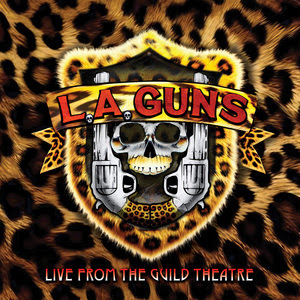 July 3 sees the release of one of the most anticipated live albums of the metal year, a full all-format release for Live From The Guild Theatre, recorded almost exactly one year earlier at the onstage launch of L.A. Guns’ most acclaimed album in years, the mighty Leopard Skin.
Rockpit.net described Leopard Skin as “a hook-filled, melody-drenched delight—perfectly mixed and balanced from start to finish. If you’re a diehard rocker who still worships the ’80s glory days, this one’s for you. But don’t get it twisted: this isn’t some nostalgic retread. L.A. Guns aren’t stuck in the past—they’ve evolved naturally, delivering a record that feels fresh while staying true to their roots.”
MetalPlanetMusic.com said the Guns are “still churning out bangers,” and Maximumvolumemusic.com applauded them for still having “a way of sounding filthy.” In fact, that review continued, “The best thing about L.A. Guns is how unapologetic they are, and ‘Hit and Run’ nails it. ‘We’re just having fun,’ sneers [vocalist Phil Lewis], as only he can.”
It nails it here, too, sliding in between “Hellraisers Ball” and “Like A Drug,” but Live From The Guild Theatre is explosive from start to finish, the Gunners firing off killer versions of fan favorites tracing as far back as the band’s debut album – “Sex Action,” for example, probably hasn’t featured in the repertoire since the eighties, but it’s alive and kickin’ here.
Sophomore set Cocked and Loaded, meanwhile, spits out some of the most powerful shotgun blasts in the band’s entire arsenal – “I Wanna Be Your Man,” “The Ballad of Jayne,” “Rip and Tear,” and the set-ender, “Never Enough.” And Leopard Skin gets both a triumphant airing and a delirious response.

In fact, longtime vocalist Phil Lewis and the man who put the Guns in L.A. Guns, Tracii Guns, have never sounded better – quite an achievement for a band that’s been tearing up the stages of the world since 1983! Ace Von Johnson (guitar), Johnny Martin (bass) and Shawn Duncan (drums) complete the line-up.
The first single from the album, “Electric Gypsy” which is now available to stream and download HERE, is another from the self-titled debut, and it sounds as fresh now as it did way back then…drop it into your streaming playlist and it won’t simply wake up the neighbors, it’ll have them hammering on your door, demanding to know what you’re listening to.
Watch the video for “Electric Gypsy” HERE
Yes, you’ll tell them it’s L.A. Guns – who else could it be? But you can also tell them that it’s not only coming out on CD and vinyl, but there’s a DVD and a cassette.
CD/DVD/VINYL/CASSETTE: https://cleorecs.com/search?q=l.a.+guns+live+from+the+guild+theatre
DIGITAL: https://orcd.co/laguns_livefromtheguildtheatre
Here’s the track listing for LIVE FROM THE GUILD THEATRE:
1. Intro – Taste It
2. Cannonball
3. Electric Gypsy
4. Sex Action
5. Hellraisers Ball
6. Hit and Run
7. Like a Drug
8. Speed
9. One More Reason
10. Theremin Jam
11. Over the Edge
12. Guitar Solo
13. I Wanna Be Your Man
14. Lucky Motherfucker
15. Never Enough
16. The Ballad of Jayne
17. Rip and Tear
Podcast 553: Ryan Salm and the Home Team String Band
On this week’s Fretboard Journal Podcast, we’re joined by photojournalist and musician Ryan Salm.
When the 2026 World Cup descends on North America, Salm and his group of friends, The Home Team String Band, will hit the road in a converted school bus, visiting match sites to play music and bridge cultural divides.
It’s a fun tale of soccer fans using music to open doors and make friends.
Follow the Home Team String Band and their adventures here:
https://hometeamsoccerbus.com
https://www.instagram.com/hometeamstringband
Join us at our 2026 Fretboard Summit in Chicago for three days of guitar demos, concerts, workshops and podcast tapings with some of our favorite artists: www.fretboardsummit.org.
This year’s Summit has over 80 luthiers and brands showcasing their new and prototype gear!
Subscribe to the Fretboard Journal’s quarterly print magazine: https://shop.fretboardjournal.com/products/fretboard-journal-annual-subscription
We are brought to you by Peghead Nation: https://www.pegheadnation.com
(Get your first month free or $20 off any annual subscription with the promo code FRETBOARD at checkout).
Mike & Mike’s Guitar Bar: https://mmguitarbar.com




The post Podcast 553: Ryan Salm and the Home Team String Band first appeared on Fretboard Journal.
Fender issues firmware update for Tone Master Pro – introducing tonnes of new amp and effects models

Fender has launched a sprawling new firmware update for its multi-effects guitar processor, the Tone Master Pro.
The update brings an abundance of new amp and cab models plus effects – eight amps, eight cabs and 15 effects, to be precise – as well as a number of new features and “user-friendly enhancements”, including a second page of footswitch button assignments, a new search function and an improved looper.
There’s also a new Strobe Tuner option, a new global setting to enable Tap Tempo for Delays, a range of new footswitch assignment types for EZ Looper, Play/Stop, Record/Overdub and more, a new Song Mode footswitch shortcut, and a redesigned interface for the IR edit screen.
The Tone Master Pro now features over 100 amp and effects models, and over 6,000 Fender-captured impulse responses. A full list of the new amps and effects can be seen below:
Amps
- ’57 Champ
- ’68 Custom Deluxe Reverb
- ’68 Custom Princeton Reverb
- ’65 Twin Custom 15
- Rumble 800
- EVH 5150 III 50W 6L6 Green
- EVH 5150 III 50W 6L6 Blue
- EVH 5150 III 50W 6L6 Red
Cabs
- 1×8 ’57 Champ
- 1×10 ’65 Princeton GB
- 1×10 ’68 Princeton
- 1×12 ’65 Deluxe GB
- 1×12 ’68 Deluxe
- 1×15 Twin Custom
- 1×12 EVH 5150 G12H
- 4×12 British G12H
Effects
- Lightyear – inspired by the Greer Lightspeed
- Pinions – inspired by the Earthquaker Devices Plumes
- Runes – inspired by the Earthquaker Devices Blumes
- Integrator Boost – inspired by the TC Electronic Integrated Preamp
- Grunt – inspired by the Fortin Grind
- Rockbox 100 – inspired by the Scholz R&D Rockman X100 headphone amp
- Step Tremolo – Fender original
- Prismatic Delay – Fender original
- Step Filter Delay – Fender original
- Spectral Reverb – Fender original
- Cirrostratus Reverb – Fender original
- Cirrostratus Synthverb – Fender original
- Seventy Sixer Compressor – inspired by the UA 1176 compressor
- Step Filter – Fender original
- Pitch Sequencer – Fender original
To install the latest firmware update for your Tone Master Pro, follow these steps:
- Head to fender.com/tonemaster_pro to download the latest firmware.
- Connect your Tone Master Pro to your computer via USB-C.
- Hold down the firmware update button for 10 seconds while powering on.
- Your Tone Master Pro will display a “USB Firmware Update Mode” screen.
- Drag and drop the downloaded firmware update file onto the “FENDER_AMP” drive on your computer.
- Your Tone Master Pro will display “Applying Updates” on the screen.
- Your Tone Master Pro will read “Update Complete” once the firmware update is complete. Then simply restart your Tone Master Pro and you’re good to go.
The Tone Master Pro is available now for £1,589. We gave it a solid 8/10 in our 2023 review. Learn more at Fender.
The post Fender issues firmware update for Tone Master Pro – introducing tonnes of new amp and effects models appeared first on Guitar.com | All Things Guitar.
Europe Release The Cult of Ignorance From Upcoming Come This Madness Album
Press Release
Source: ABC PR
 Europe release the hook-laden new single, “The Cult of Ignorance,” the second track unveiled from their highly anticipated forthcoming studio album, Come This Madness, set for release on September 25 via Silver Lining Music. Pre-orders are available now.
Driven by an instantly memorable hook and an anthemic chorus, “The Cult of Ignorance” combines undeniable catchiness with a message that resonates in today’s fast-moving world, delivering moments of reflection without losing its positive, feel-good energy.
As well as featuring Europe, the accompanying star-studded video showcases cameos from high-profile friends of the band, including renowned actress Malin Åkerman, former World No. 1 and multiple Grand Slam champion tennis player Stefan Edberg, astronaut Christer Fuglesang, Howling Pelle (The Hives), Mikael Åkerfeldt and Fredrik Åkesson (Opeth) and E-Type, alongside many other notable personalities from the world of music, film, fashion, sports and science.
“I love this track! It’s a straightforward rock anthem with lyrics reflecting the times we live in, written slightly tongue in cheek” says Europe’s founding member and frontman Joey Tempest. “Mic (keyboards) came to me with this song idea while on tour in South America – I thought it was crazy good! We finished it together and it’s become a real banger! The title was inspired by a phrase coined by author and biochemist Isaac Asimov. It reflects some of the negative tendencies emerging in our world today, though it is written in a slightly light-hearted tone.”
Watch/Listen to “The Cult of Ignorance” here – Video by Patric Ullaeus.
Europe’s new studio album, Come This Madness, signals a powerful new chapter for one of rock’s most enduring acts. Across songs like “One on One,” “The Cult of Ignorance,” and the title track “Come This Madness,” the band channel tension, truth, and raw energy into a record that feels both deeply personal and globally resonant.
Watch and listen to Europe’s recently released and celebrated single, “One on One,” here. The song is accompanied by a cinematic video featuring acclaimed actor Peter Stormare (Fargo, The Big Lebowski, Minority Report, 8MM, Armageddon) and directed by Patric Ullaeus.
Come This Madness was recorded at RMV Studio, the Stockholm-based recording facility founded by Benny Andersson and Ludvig Andersson. The album features special guests Tobias Forge (Ghost) and Mikael Åkerfeldt (Opeth) on backing vocals and was produced by acclaimed producer Tom Dalgety (Ghost, Rammstein, Pixies, The Cult, Opeth), who became a true creative force throughout the process, deeply embedded in the band’s writing and recording, shaping the album’s sound from the ground up. To bring the project to its final stage and complete their vision, the band turned to one of rock’s most respected recording legends Mike Fraser (AC/DC, Van Halen, Metallica, The Cult, Loverboy) to mix the record.
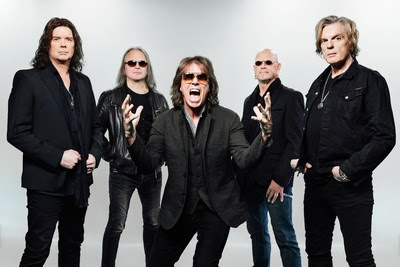
With Come This Madness, Europe deliver a landmark record that finds them fully realized and present, confronting the realities of the modern world with conviction and creativity. Building on the momentum surrounding the album’s release, the band will also embark on an extensive run of live dates, including numerous festival appearances and a major tour to celebrate the 40th anniversary of The Final Countdown. Kicking off in Glasgow on September 30, “The Final Countdown 40th Anniversary Tour” promises to unite the legacy that defined them with the renewed energy, driving them forward today. For a full list of dates and ticket information, please visit: www.europetheband.com
2026 Dates:
6 Jun – North Festival, Maia (PT)
21 Jun – Graspop Metal Meeting, Dessel (BE)
25 Jun – Rock Pod Kameňom Festival, Bela Nad Cirochou (SK)
28 Jun – Retro Trop C, Tilloloy (FR)
5 Jul – Summer Festival Piazza Castello, Marostica (IT)
7 Jul – Cavea-Auditorium Parco della Musica, Roma (IT)
8 Jul – Arena Campo Marte, Brescia (IT)
9 Jul – Villa Bertelli, Forte Dei Marmi (IT)
25 Jul – Son Do Mar Festival, Meaño, Pontevedra (ES)
30 Jul – Wacken Open Air, Wacken (DE)
29 Aug – Stonedead Festival, Newark (GB)
30 Sep – SEC Armadillo, Glasgow (GB)*
2 Oct – Civic Hall, Wolverhampton (GB)*
3 Oct – Eventim Apollo Hammersmith, London (GB)*
5 Oct – Musis Arnhem, Arnhem (NL)*
6 Oct – Olympia, Paris (FR)*
8 Oct – Poble Espanyol, Barcelona (ES)*
9 Oct – Bilbao Arena Mirabilla, Bilbao (ES)*
10 Oct – La Cubierta, Madrid (ES)*
12 Oct – Salle Métropole, Lausanne (CH)*
13 Oct – Volkshaus, Zürich (CH)*
14 Oct – Alcatraz, Milan (IT)*
16 Oct – Liederhalle, Stuttgart (DE)*
17 Oct – Gasometer, Wien (AT)*
19 Oct – Admiralspalast Theater, Berlin (DE)*
20 Oct – COS Torwar, Warszawa (PL)*
22 Oct – Falkoner, Frederiksberg (DK)*
23 Oct – Film Studios, Gothenburg (SE)*
24 Oct – B-K, Stockholm (SE)*
26 Oct – Sentrum Scene, Oslo (NO)*
15 Nov – Malta Metal Weekend, St. Julians (MT)*
21 Nov – Ostravar Aréna, Ostrava (CZ)*
25 Nov – Aalto Hall @ House of Culture, Helsinki (FI)*
27 Nov – John Smith Rock Frozen Paviljonki, Jyväskylä (FI)*
28 Nov – Unholy Winter Festival Joensuu Areena, Joensuu (FI)*
*The Final Countdown 40th Anniversary Tour
Come This Madness album artwork by Storm Studios (Pink Floyd, Led Zeppelin, and Muse).
Come This Madness track listing:
- One on One
- The Cult of Ignorance
- Come This Madness
- This Time of Year
- In a Different World
- Scandinavian Eyes
- Takin’ It Back
- In the Absence of Grace
- The Angels Must Have Flown
- The Devil’s Back
- Nothing Can Follow This
Come This Madness will be available on vinyl, CD and digital formats. Pre-orders can be placed HERE
EUROPE are:
Joey Tempest – Lead Vocals
John Norum – Guitars
John Levén – Bass
Mic Michaeli – Keyboards
Ian Haugland – Drums
www.facebook.com/europetheband
www.instagram.com/officialeuropetheband
www.youtube.com/europethebandtv
www.tiktok.com/@europethebandofficial
“This isn’t a diss, but it could be anyone”: Why Phil Collen isn’t convinced by a Def Leppard Sphere residency

With a spherical roof packed with 1.2 million programmable LED puck lights, the Las Vegas Sphere is one of the most innovative live venues on Earth, capable of bringing the most ambitious of artistic visions to life.
But while many artists have been keen to bring their stage show to the Sphere – including Eagles, Metallica, U2 and Dead & Company – others have dismissed the idea out of fear the visuals would take away from their performance as a band.
- READ MORE: Metallica Sphere residency CONFIRMED
Paul Stanley recently revealed why Kiss refused to play at the venue, saying: “You’re not going there to see a band – you’re going to see screens,” adding, “The truth of it is, the Sphere minimises a band.”
And Iron Maiden frontman Bruce Dickinson has shared similar scepticism, saying last year: “We just do a lot of stuff: we run around, we go around, and at the Sphere, what’s the point? What’s the point? In fact, what’s the point of even being there, if you’re a band?”
And now, Def Leppard guitarist Phil Collen has spoken to SiriusXM’s Trunk Nation with Eddie Trunk about his views on the Sphere, revealing that he’s attended shows there as a fan, but isn’t sure about Def Leppard’s place on the stage.
“This isn’t a diss or anything,” he says [via Blabbermouth], “but it seems that it’s the Sphere featuring whatever band it is. It could be anyone. And that’s what we’d be a bit scared of. I mean, I’d love to play there – it’d be awesome, it’s incredible, and it’d be a great experience – but I think that people focus on just the production as opposed to the band.
“So we’ll see. I don’t know. I mean, I could be wrong. But, yeah, I’d love to play there, absolutely. We definitely would. So we’ll see.”
Collen confesses he hasn’t seen a rock band at the Sphere, and has only attended the venue to watch The Wizard of Oz.
“It’s fascinating. It’s amazing,” he says. “I just wondered [what it would be like to see a band there], ‘cause I wasn’t quite sure. I haven’t seen a band in there, and that’s always a concern that you’d come out there and it’d be like, ‘Yeah, the Sphere was great. Oh, yeah and I saw U2 or the Eagles there as well,’ type of thing.
“Or it doesn’t matter, whether the whole experience kind of overshadows one or the other. It depends. But, yeah, I guess we’ll find out.”
Metallica will become the first large metal band to play at the Sphere when they arrive for four no-repeat weekends on their Life Burns Faster residency. Learn more at Metallica.com.
The post “This isn’t a diss, but it could be anyone”: Why Phil Collen isn’t convinced by a Def Leppard Sphere residency appeared first on Guitar.com | All Things Guitar.
Here’s how GuitarTek by StewMac’s new cleaners make pro-level guitar care easier than ever

The importance of proper guitar maintenance can’t really be overstated. If you’ve ever found your guitar drifting in and out of tuning, or breaking strings every time you bend enthusiastically, you’ll have found this out the hard way. But alongside mechanical and electrical maintenance, keeping your guitar clean and polished, and its fretboard oiled, is essential to ensuring it looks, feels and plays its best.
Guitars are in contact with a lot of stuff all the time, particularly human bodies. Playing for two hours before chucking your guitar straight back into its case, covered in sweat, finger grime, beer and decades-old venue dust is less than ideal. We perhaps don’t pay as much attention to this aspect of guitar maintenance as we should – maybe because things like broken tuners and dodgy output jacks are far more immediate in how they affect things.
However, polishing, cleaning and condition are no less important! On a surface level – quite literally – it just doesn’t look or feel particularly great. But more crucially, not cleaning your guitar can actually lead to corrosion damaging your finish, hardware and frets over time. And not oiling your board can make it more prone to damage, and susceptible to moisture-based cracking.
For decades guitarists have been wiping their instruments down with one-size-fits-all cleaners. But not all surfaces are the same – and many cleaning products can contain silicone or petroleum, which can damage more delicate nitrocellulose finishes, and irritate your skin as you clean.
This is where StewMac’s new GuitarTek line of guitar care products comes in. The brand has been a leader for a while when it comes to the wider world of maintenance and modding – and has brought its experience in keeping guitars performing their best to three new core cleaning products.
The line consists of the Gloss Max high-shine polish, the Clean Axe total care cleaner, and the Board Oil fretboard cleaner and conditioner. Each product is engineered to perform its best in different applications, depending on what your guitar’s finish needs – and has been made from the ground-up with guitars in mind. Let’s explore what makes this new range of care products a game-changer when it comes to making pro-level instrument polishing, cleaning and conditioning easy and accessible.
Gloss Max
Gloss Max is a high-shine polish designed specifically for glossy finishes. If you’ve got a gloss-finished guitar, it can be hard to restore it to a mirror-like shine – particularly if it’s a sensitive lacquer finish. Going at something a little more delicate with a lot of elbow grease can mean you risk damaging your guitar’s look, even taking off a layer of finish depending on what product you use. But the formula of Gloss Max makes it easy for you to get a truly radiant shine on even the most sensitive of lacquers.
Clean Axe
Clean Axe is a super versatile all-in-one cleaning product that’s designed for any finish – gloss, satin and matte included. It’s able to safely remove heavy grime build-ups from your guitar’s body, neck and hardware without you having to resort to an old toothbrush and washing up liquid. It’s available as a spray bottle for easy cleaning, or as very case-friendly wipes – perfect for keeping your guitar in great condition in-between tour stops!
And as it’s designed to work with all kinds of finishes, satin and matte included, Clean Axe won’t lead to you accidentally polishing in shiny spots into your nice tasteful finish. Similarly it won’t leave a dull residue on glossy finishes, as some cleaners can be tricky to fully get rid of once you’ve applied them.
Board Oil

We all love a good open-pore fretboard, however it’s super important to keep a board like this clean and conditioned. GuitarTek’s board oil both cleans finger grease and sweat away, and at the same time hydrates and conditions dry wood – and to make things easier, it comes in a new applicator formula with a thin edge, perfect for actually fitting between frets, particularly in the upper registers.
Pro-level care matters
A broken guitar is one thing – but it’s perhaps worse to accidentally damage your prized instrument with incorrect care, and it’s even worse to be too anxious that a cleaner might affect your finish, and to leave it to sweat, dirt and dryness to do the damage instead. GuitarTek’s new line of cleaners make keeping your instrument in great condition easier and safer than ever.
Each product is formulated with Amazonian Rosewood oil and is free of harmful silicone and petroleum – this is great news for your guitar, and for your hands. If you have sensitive skin and have spent an afternoon spraying and wiping down your guitars, you’ll know that guitar cleaners aren’t often particularly friendly to your skin – but the whole GuitarTek range has been dermatologically tested to be as kind to you as to your guitar.
If you’ve been grabbing a one-size fits all cleaner for your whole guitar collection up until now – or worse, chucking your sweat-covered guitar back in its case after every gig without giving it the TLC it needs – it might be time to check out GuitarTek’s new range.
Find out more at StewMac.com.
The post Here’s how GuitarTek by StewMac’s new cleaners make pro-level guitar care easier than ever appeared first on Guitar.com | All Things Guitar.
How strings, tension, tuning and intonation really effect your guitar’s tone

So much of the sound of your guitar or bass comes before it’s even hit a pedal, let alone an amp. Technique plays a huge role, of course, as does the construction, assembly and quality of your instrument. A huge factor is the strings themselves, both the material and gauge of strings affecting the resulting sound. While there’s recommended tensions for different tunings, you can explore different tensions for both feel of the instrument as well as the tone they produce.
- READ MORE: What does it mean when your guitar’s pickup is “out of phase”? It’s not magic, it’s science…
Heavier gauge strings pull harder on the neck, closing the gap between the headstock and the bridge, and require the truss rod that runs along the neck to counteract that tension. Lighter gauges do less, and as such might cause your truss rod to be pulling too hard to counteract the tension. A little know-how, some practice and self-diagnosis can have you confidently exploring different string materials and gauges to find the sweet spot!
Raw Materials
String material has a huge effect on the tone. For electric guitars, nickel has been a common material and provides a bright, responsive tone, assuming your strings aren’t too old! Increasingly popular are coated strings, that help to reduce dirt, grime, sweat and build up getting into the core of the strings and affecting structural integrity.
Nickel and bronze alloys have always been popular, and coated strings have come a long way to preserve the brightness of an acoustic guitar. Bass guitar strings are generally pretty long life, yet there is a range of coated strings that preserve the life of even them.
Roundwound strings are generally more prone to dirt and debris, as the gaps between the string’s winds actually create more space for dirt to get in. As such, flatwound strings provide a mellow, warm sound for both guitar and bass, and are less susceptible to dirt and debris.
 Image: Adam Gasson
Cable Tied
String gauge is a huge player. Traditionally you’d move up and down gauges to get the same feel and tone from different tunings, but you can use them to give your sound a unique signature as well. Heavier strings possess a punchy, low-mid presence that make them a great option for recording sessions specifically.
They’ll take a little practice to get used to, but their rigidity can also help reduce tuning issues. Simply striking strings causes them to vibrate to produce a note, and lighter strings vibrate more which can push the resulting note out of tune. A heavier gauge string can produce the same note but is harder to bend out of shape, so it’ll be more consistent.
The opposite end of the spectrum is also true and can be used to great effect for unparalleled control over vibrato, bending and expression. E Standard tuning often works well with 0.009 or 0.010 gauge strings (referring to the size of the highest string), but 0.008 gauge strings are also available. These provide an ultra-light feel, requiring very little pressure to both fret notes or bend, allowing players to bend very easily.
It’s important to keep in mind that set-up aside, your strings as a set need to balance each other out. For this reason, extreme heavy gauges on the bottom strings and ultra-light strings won’t play nice without buzz.
 Image: Adam Gasson
Perfect Balance
Unbalanced tension can be a real guitar killer, the same as long term storage can on a guitar without strings strung. The truss rod that runs along a guitar’s neck is designed to counteract the pull of the strings. Heavier gauge strings offer more tension and the aforementioned punch, clarity and tuning stability, but the strings pulling harder require the truss rod to be adjusted to retain a flat fretboard.
Understanding this, as well as making small, incremental adjustments can help to navigate setting up a guitar with different strings. When using lighter gauge strings, you might find that your previous truss rod tension is too much for the light strings, and it gives the fretboard a convex shape. Here, the truss rod needs to be loosened to ensure the tension is all balanced as you explore different strings.
This exploration is all good and well, but at extreme ends of the spectrum you’ll need to keep an eye on how much your guitar can take. Low tunings and big, fat strings are common in heavier genres, but standard, factory machine heads may struggle to accommodate the thickness of strings that are 0.60 or higher.
The bridge of your guitar is the same story, with the added break angle and recessed string guides being designed for more standard sizes. Ultra-light strings are much more flexible, but are more susceptible to break because of their tiny size, especially with a sharp machine head edge or bridge; so safety goggles might be a good idea when really going for it in that solo!
 Image: Adam Gasson
All The Way Up
Finally, while intonation isn’t as huge a deal here as different tunings, the subtle differences here are enough to shift those octaves out of whack, so it’s important, as always, to check it!
Heavier gauge strings might sometimes require the length of the string to be lengthened to ensure intonation is correct, while lighter strings might require the saddles to be moved forward and the string shortened. Lighter gauge strings will also vibrate more than heavier, as such be super careful to ensure the string isn’t vibrating itself out of tune while checking your intonation or the whole measurement will be off!
Much like exploring pedals, amps, pickups and technique, the strings you use can have a huge effect on your sound. Heavier gauge strings are extremely stable, but require more pressure to fret. There’s an added punch to their tone, but you’ll need to punch those notes out with a strong picking and fretting hand to get ‘em out.
Lighter gauge strings offer supreme flexibility and expression, added spank, but can vibrate themselves out of tune entirely, as well as being more susceptible to breakages before of their small size. Balance is the name of the game here, but your choice of strings in material, gauge, design and tension all play a part in giving you a unique result.
The post How strings, tension, tuning and intonation really effect your guitar’s tone appeared first on Guitar.com | All Things Guitar.
“It’s honestly really amazing”: Tube amp aficionado Joe Bonamassa has been “beta testing” a Fender Tone Master on tour – and he’s impressed

Is renowned vintage gear enthusiast Joe Bonamassa coming around to the idea of digital amp modelling?
As the custodian of one of the most extensive personal vintage and analogue gear collections on the planet – housed in two locations, Nerdville East and West in Nashville and Los Angeles, respectively – it might sound hard to believe, but it seems even JoBo is beginning to the see the benefits of digital…
Among that gear collection sit a host of top-shelf tube amps, including a selection of Dumbles, and a new addition as of November 2025, Gary Moore’s old Soldano SLO-100, which he bought for $25,000.
But aside from his analogue-focused gear collection, Joe Bonamassa has been vocally critical of amp modellers as of late, recently questioning whether Eddie Van Halen would have been seen as the ultra-cool guitar icon he was were he to have played a Neural DSP Quad Cortex.
But his views may be shifting, after he revealed in April he’s been using amps from Fender’s Tone Master range – all fully digital – on tour.
In an Instagram post made on 24 April (via Guitar World), the blues ace shared a photo of two Fender Twin Amps, urging fans to spot the (pretty obvious) difference.
“Well, Well, Well! What do we have here?” he wrote next to the photo, which showed a Fender Twin alongside its digital Tone Master counterpart. “Fresh in from the Arizona territory of Scottsdale. Beta testing something new and exciting on this tour. Spot the difference and you might win a prize. (Prizes will not be honored.)”
And it seems like his affinity for Fender’s digital Tone Master range surprised even himself. Responding to a comment made by Americana guitarist Jason Isbell under the post, Bonamassa confessed he “wanted to dislike it”, saying: “It’s honestly really amazing what they did digitally.”
Fender’s Tone Master range arrived in 2019, promising convincing tube-inspired tones in a totally digital format. The line consists of digital versions of many of Fender’s most classic amp designs, including the Deluxe Reverb, Twin Reverb, Princeton Reverb and more.
Joe Bonamassa’s Instagram post explicitly states he has been “beta testing” a Fender Tone Master Twin – but his praise suggests they may soon make a permanent fixture of his touring rig.
Learn more about the Tone Master range at Fender.
The post “It’s honestly really amazing”: Tube amp aficionado Joe Bonamassa has been “beta testing” a Fender Tone Master on tour – and he’s impressed appeared first on Guitar.com | All Things Guitar.
How Apollo Picks Founder Nik Monnin Turned a Pandemic Experiment into a Dream Job

“Eddie Van Halen ruined rock guitar”: The Jesus and Mary Chain’s Jim and William Reid think “guitar players should never learn scales” because it gets in the way of making music

Scottish alt-rock brothers Jim and William Reid of The Jesus and Mary Chain have offered a hot take on rock guitar orthodoxy, arguing that Eddie Van Halen “ruined rock guitar” by inspiring a wave of imitators.
In a new interview with Stereogum, the pair discuss everything from guitar technique to genre labels, and why, in their view, too much musical knowledge can sometimes get in the way of making music.
The idea that technique is somehow the enemy of feel is a familiar argument in indie rock circles. Whether that always holds up is debatable, but the Reids are very much in the “less is more” camp.
Reflecting on his own approach to the guitar, vocalist Jim Reid says that keeping things deliberately minimal is key to the creative process.
“Not having a lot of equipment actually forces you to be more inventive,” he explains. “I can play guitar, but only just. It’s kinda deliberate. I play guitar to the level that I need to play guitar. And sometimes knowing too much about making music gets in the way, and it ends up back to Eddie Van Halen again, do you know what I mean?”
William, meanwhile, takes the argument further, rejecting the idea of technical study altogether.
“I think guitar players should never learn scales,” he says. “I think the worst guitar players in the world – like Eddie Van Halen. I can’t stand Eddie Van Halen’s guitar playing. I think he ruined rock guitar all through the ‘80s and ‘90s ‘cause so many people copied him.”
“And I just couldn’t get any of that playin’ as fast as you fuckin’ can and crammin’ as many notes in one second as you could,” William continues. “And I listen to Peter Hook’s bass riffs, and I think that’s as thousand times better than anything Eddie Van Halen could ever come up with.”
Elsewhere in the interview, Jim Reid also takes aim at one of indie rock’s most persistent genre labels.
“Shoegaze, I’ve got a problem with that just because it doesn’t actually exist,” he says. “‘Cause it was some clown at the NME [who] made that up.”
The post “Eddie Van Halen ruined rock guitar”: The Jesus and Mary Chain’s Jim and William Reid think “guitar players should never learn scales” because it gets in the way of making music appeared first on Guitar.com | All Things Guitar.
“He would go, ‘What riff?’” Geddy Lee says he had to record all of Rush’s songwriting sessions because Alex Lifeson would forget “great” riffs just minutes after playing them

Geddy Lee has opened up about the chaotic way he and Alex Lifeson wrote music in Rush – and why capturing ideas with the “spontaneous genius” guitarist often meant keeping a cassette recorder running at all times.
Speaking in a recent interview with Rick Beato, Lee reflects on the band’s long-running creative dynamic, where ideas were often born, lost, and rediscovered in the space of a single jam session.
“Al and I lived always in the same town. So, usually he would come over to my place, and we would bang out songs together, and we would jam. Then, he would go sit on the couch behind me and fall asleep,” says the bassist [via Ultimate Guitar].
“And I would methodically go through every inch of our jam, and cut and paste until I had assembled something really nonsensical, or something that he thought was a great riff and [had] a great feel, and then I would start adding beats and removing beats, and make it impossible to play and learn and remember.”
Once those ideas were shaped into something usable, the pair would pass them on to drummer Neil Peart for feedback.
“Once we got those things sorted out, we would send it to Neil, and then he would give his opinion, and we would go on from there,” says Lee.
While such a “methodical” approach worked well for him, Lee says it sometimes came at the expense of the raw, in-the-room energy of the band.
“You kind of miss the three guys in a room bashing away and those spontaneous ideas that come up,” he explains. “So, it gets a little too methodical, which is probably why I like those programs so much because I’m methodical. [Lifeson’s] the opposite of methodical. He’s spontaneously brilliant.”
That spontaneity, however, also meant Lifeson would often forget what he had just played. Lee says that’s why a cassette recorder became essential in early writing sessions.
“I learned really early on, working with him, that I have to have a cassette player. I always have the cassette on when we’re writing. In those earliest days, there was nothing more than literally a little beatbox.”
“I would just turn it on, and Al would play something great, and we would be jamming, and then I’d go, ‘Hey, Al, let’s go back to that riff,’ and he would go, ‘What riff?’ and I’d go, ‘You know, that fucking riff that was just so awesome that you played five minutes ago!?’”
The musician adds that Lifeson would often have already moved on by the time he tried to revisit an idea.
“And he had no recollection,” Lee says, “and so I’d wind the tape back, play it for him, and then he’d have to try to figure it out; he’d already moved past it into some other brilliant riff. And he had the patience to listen to me when I found something that excited me, and he would go, ‘Okay, I think he liked that,’ so he would indulge me, and that’s a lot of times how songs got written with us.”
Watch the full interview below.
The post “He would go, ‘What riff?’” Geddy Lee says he had to record all of Rush’s songwriting sessions because Alex Lifeson would forget “great” riffs just minutes after playing them appeared first on Guitar.com | All Things Guitar.
Blues legend Eric Bibb on why you should learn classical guitar first: “It told me that the guitar really can be an orchestra”

Eric Bibb reckons every guitarist can benefit from a little classical training.
The GRAMMY nominated singer-songwriter and blues veteran recently reflected on his early guitar lessons, explaining how studying classical technique opened his eyes to the instrument’s full potential – and helped lay the foundations for the fingerstyle approach that would later become a hallmark of his playing.
Speaking in the latest issue of Guitarist, Bibb was asked how his childhood classical guitar lessons influenced his acoustic technique.
To which he replies, “What it told me right from the start was that the guitar really can be an orchestra, and if you use your thumb and three fingers on your right hand, you can arpeggiate and you can create all kinds of different sounds and textures.”
Those lessons proved particularly useful when Bibb later discovered fingerpicking blues players such as Mississippi John Hurt.
“It really helped me when I started discovering fingerpicking – you know, John Hurt kind of stuff,” he explains. “I started out with Carcassi [Matteo Carcassi, 1792 to 1853, author of arpeggio studies still in use today], so all of that stuff sort of came together at a certain point.”
“When I really focused on my own style of playing, I knew I wanted to fingerpick, I knew I wanted to arpeggiate. So all of that has come into my technique,” Bibb continues. “I tried fingerpicks at one point, and thumbpicks, but they’d fly off. I’d get excited and sweaty, and they’d just fly off. But Ry Cooder once said there is really no better tool for the guitar than your right hand. There are so many ways you can approach the guitar with just your bare hands.”
That said, that doesn’t mean his picking hand is entirely maintenance-free. Bibb reveals he uses “acrylic nail enhancements” on three fingers of his right hand to avoid a fingerstyle player’s nightmare scenario.
“I found that, without it, I’m risking breaking a nail and then things get kind of complicated,” he says. “I discovered the hard way that if I chipped a nail in the middle of a show, it was really going to affect my playing in a negative way. And you can cover your nails with hard polish, but I find that the best thing for me is the acrylic. I’m not sure it’s really great for your health, but you sacrifice all for art.”
The post Blues legend Eric Bibb on why you should learn classical guitar first: “It told me that the guitar really can be an orchestra” appeared first on Guitar.com | All Things Guitar.
Pages
