
Music is the universal language
“Glory to God in the highest heaven, and on earth peace to those on whom his favor rests.” - Luke 2:14
Norse Guitar Feeds
"Captain" Kirk Douglas: The Roots, Ozzy, Tonight Show, Gibson SGs & More
“Captain” Kirk Douglas joins the Axe Lords for a wide-ranging conversation about how guitars shape a life—musically, culturally, and sometimes, literally. The longtime guitarist for The Roots (who also serve as the house band on the Tonight Show) traces his path from growing up with reggae, church music, metal, and soul to finding a musical voice that incorporates them all.
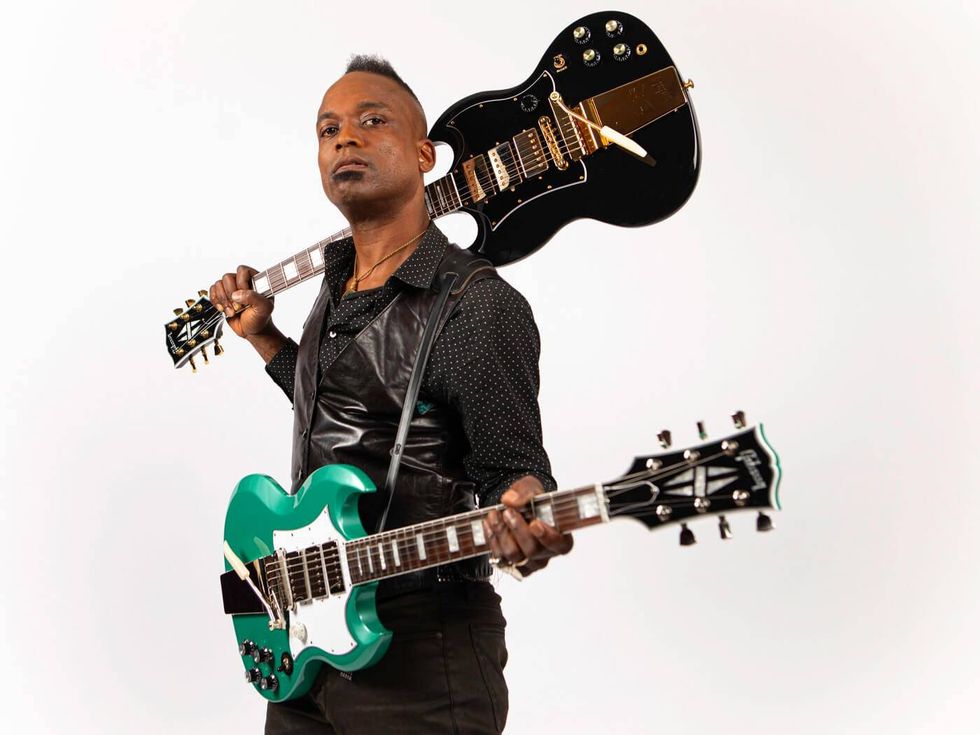
Along the way, he reflects on the profound effect that Ozzy Osbourne had on his young psyche, how the music that we consume in our youth has an impact that never really fades, real amps versus modeling rigs, and the many wonders of Gibson SG. As an excruciating bonus, the episode also includes the unbelievable story of the vintage Epiphone Crestwood Prince borrowed from him for a live performance on the Tonight Show—and then proceeded to destroy right in front of Douglas’ eyes in an astonishing display of music royalty privilege run amok. Beam us up!
Axe Lords is presented in partnership with Premier Guitar. Hosted by Dave Hill, Cindy Hulej and Tom Beaujour. Produced by Studio Kairos. Executive Producer is Kirsten Cluthe. Edited by Justin Thomas (Revoice Media). Engineered by Patrick Samaha. Recorded at Kensaltown East. Artwork by Mark Dowd. Theme music by Valley Lodge. Follow @axelordspod for updates, news, and cool stuff.
Follow Captain Kirk @kirklloyd
Follow @axelordspod for news, updates, and cool stuff
EarthQuaker Devices & Dr. Z Amplification Announce the ZEQD-Pre Tube Pre Amp
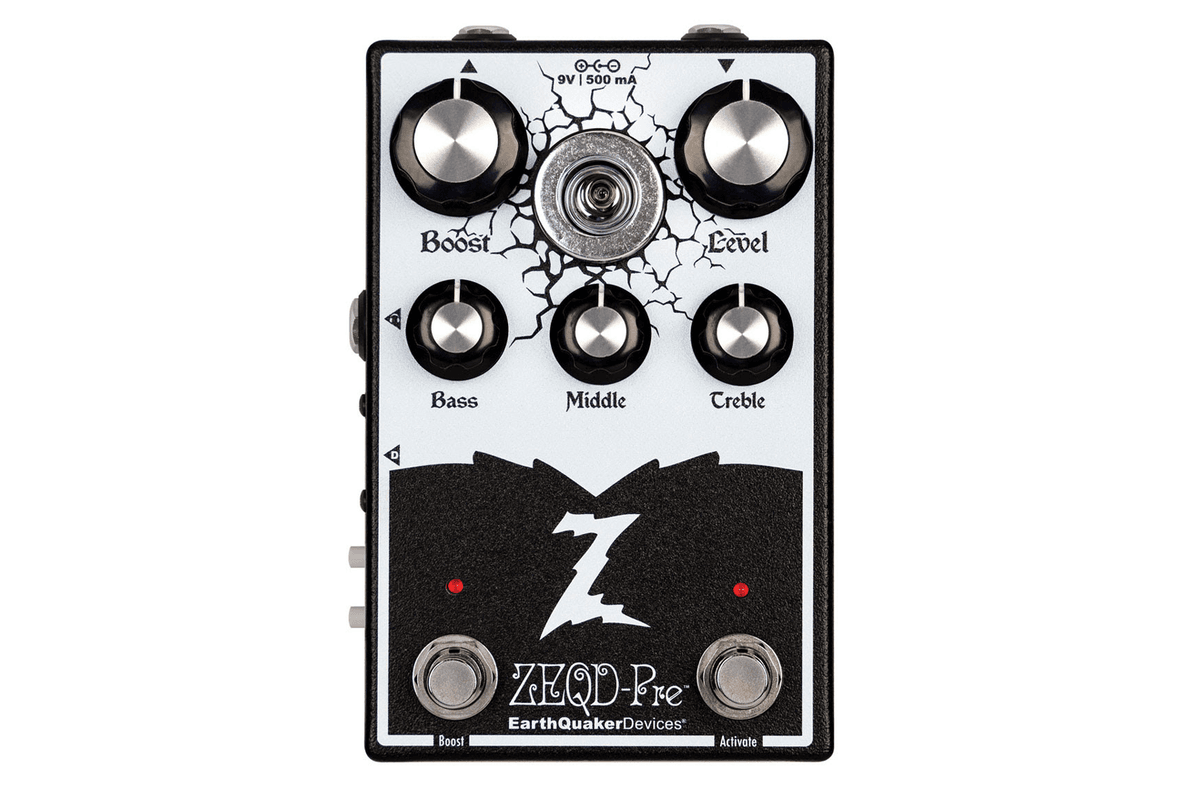
When it comes topedals aimed at replicating the sound, feel, and response of an all analog tube amplifier, the only options at a guitarist’s disposal are typically limited to digital approximations or boutique offerings that sound great, but are financially out of reach for many musicians.
It’s a predicament that’s prompted two of Northeast Ohio’s most renowned sonic engineering firms–EarthQuaker Devices of Akron and Dr. Z Amplification of Cleveland–to join forces to formulate a compact, affordable, all-analog thirst quencher for parched tone purists who have spent years wandering through the digital desert.
“Dr. Z, having been an amp manufacturer for nearly 40 years, really has an ear for these kinds of circuits and recognizes the impact digital modeling amps is having on tube amp sales,” President and Founder of EarthQuaker Devices Jamie Stillman explained. “The digital modelers do a pretty good approximation of emulating an amp, but they always lack a certain depth and warmth, so I was quick to embrace the idea of developing a product with Dr. Z that would reintroduce some tube-like sound into a signal chain–even when used in front of a modeling amplifier.”
Designed to live at the end of a signal chain, the ZEQD-Pre adds classic tube character to everything upstream. Its passive Three-Band EQ provides precise tonal control enabling users to fine-tune their amp's voice, push its preamp into rich harmonic overdrive, or breathe dimension and life into their modeling setup.
The pedal is a simple, modern tool devised to give you all the organic sonic character and dynamic response of a tube amp in a compact and convenient form factor. There are no menus to dive through. No IR loading. No firmware updates. No 0s, 1s, or any other pesky digital artifacts to get in the way of a player and their tone.
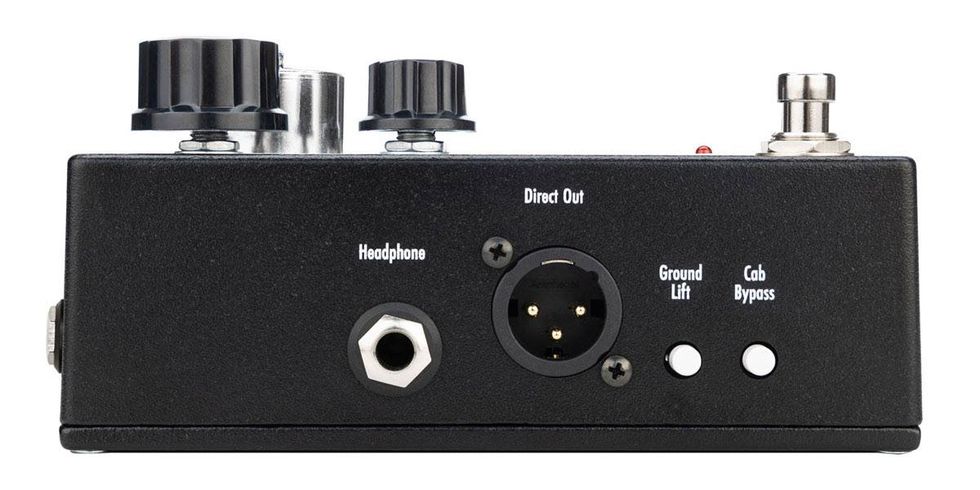
The ZEQD-Pre features a built-in analog cabinet simulation for realistic amp feel during quiet practice sessions to deliver full tube character without disturbing the neighbors. This feature is handily disengaged via the Cab Bypass switch enabling users to send a pure signal to their preferred IR loader or modeling software and making it perfect for direct recording, backline-free gigs, or hybrid rigs with multiple signal paths.
When the Boost footswitch is engaged the Three-Band EQ drops out completely. This function unlocks Dr. Z’s initial design for the circuit, and provides a full-range boost with its own dedicated level control.
At the heart of the ZEQD-Pre is the EF86 pentode—the same tube that gives many Dr. Z amplifiers their pristine HiFi tone and makes them such responsive pedal platforms. For the player, this means dynamic and nuanced touch sensitivity, full frequency clarity, and a balanced signal that is both predictable and highly responsive.
“You hit this pedal on and your amp becomes huge,” Mike “Dr. Z” Zaite, Owner and Founder of Dr.Z Amplification explained. “And it's not just distorted and clipped, it's just this big, big sound that is produced with this [EF86] tube."
There are a few characteristics inherent in the ZEQD-Pre that Stillman says customers should consider when purchasing the pedal.
"Part of what makes the ZEQD-Pre interesting is its simplicity. Stillman explains. “People shouldn’t get it thinking they’re going to be able to do all the stuff they can do when using a tube amp. They won’t be able to make it break up into a crunchy overdrive like a classic British tube amp for example, but they should get it knowing that it’s a really good HiFi clean platform to run pedals into.”
He says users should also know that the ZEQD-Pre requires a supply of 500 milliamps (mA) of power in order to function as advertised and that the direct signal from the onboard balanced XLR output is very hot and best used with a pad engaged on the user’s interface or mixing console.
Though designed with guitarists in mind, the ZEQD-Pre’s broad range of EQ voices and tube warmth can enrich the sonic color and harmonic content of just about any instrument a musician could dream of plugging into it, including, but not limited to, bass, synthesizers, electric pianos and keyboards, and microphones.
Ultimately, Stillman hopes the pedal will be adapted by younger players who haven’t had the opportunity to ever own a tube amplifier.
“It’s starting to bother me that there is a whole generation of kids that have never plugged a guitar into a tube amplifier in their life because they're expensive and they have a free one on their laptop,” Stillman said. “And I hope a pedal like this could be a turning point for players and make them realize that there is something special about analog technology that they’ve been missing. It just thickens up the signal in a way that just feels a little more organic to the player and familiar to the listener.”
Each ZEQD-Pre is built by one sophisticated droid and many kind-hearted flesh and blood artisans in the tropical metropolis of Akron, Ohio USA.
Features:
- Three Band EQ
- Boost
- Balanced XLR Direct Out (With Ground Lift)
- All Analog Cabinet Simulator (With Bypass Switch)
- Headphone Out (TRS ¼”)
- True Bypass Switching
- Lifetime Warranty
- Input Impedance: 10 MΩ
- Output Impedance: Variable
- Headphone Out Impedance: 39Ω
- Direct Out Impedance: 100Ω
- Current Draw: 500mA
- Retail Price: $399.00
Taylor’s 2026 acoustic refresh brings new neck tech, new pickups – and an expanded Gold Label collection

Taylor has announced two major releases for 2026: a Next Generation update to its flagship Grand Auditorium guitars, and an expansion of the Gold Label Collection that adds square-shoulder dreadnoughts plus a pair of ultra-premium 900 Series models.
“As guitar makers, we see the ever-wider variety of players and styles,” said Andy Powers, Taylor’s Chief Guitar Designer and CEO. “This means different types of sounds, feels and aesthetic presentations—all in step with the creative world of today’s players.”
Next-Generation Grand Auditorium guitars
Taylor’s Grand Auditorium has long been its Swiss-army-knife acoustic. Rolling out across the brand’s best-selling 300, 400 and 800 Series models — including both Standard and Builder’s Edition versions — the updated Grand Auditoriums introduce three main upgrades: a new Action Control Neck, a scalloped version of Andy Powers’ V-Class bracing, and Taylor’s all-new Claria pickup system.
The Action Control Neck is a particularly player-friendly change. A long-tendon neck joint helps the neck and body work together so the guitar feels warmer and more alive, while the shimless action control feature lets you adjust string height with a simple turn of a bolt through the soundhole.
Inside the body, Taylor has refined its V-Class bracing with a scalloped design that allows the top to move more freely. The result is a warmer sound with more low-end response, while still keeping the pitch accuracy and sustain that V-Class fans appreciate.
Finally, there’s Claria, Taylor’s latest pickup system. Designed with live players in mind, Claria pairs a reimagined under-saddle piezo pickup with a new proprietary preamp, eliminating traditional piezo harshness. Simple soundhole-mounted Volume, Mid-Contour, and Tone controls also make it easy to dial things in quickly, whether you’re playing a coffeehouse gig or a larger stage.
Next Generation Grand Auditoriums start at $2,499 and include the following models: 314ce, 414ce, 814ce, Builder’s Edition 324ce, BE 814ce Indian Rosewood/Adirondack Spruce, 324ce, 454ce, 854ce, BE 814ce Honduran Rosewood/Sinker Spruce, BE 814ce Indian Rosewood/Adirond.
 Credit: Taylor Guitars
Gold Label expands with square-shoulder dreadnoughts
One year after the line’s debut, Taylor has introduced square-shoulder dreadnoughts with deeper bodies, aimed squarely at players who want more thump, warmth and projection.
The new lineup features three tonewood pairings: the mahogany/torrefied Sitka spruce Gold Label 510e, the Indian rosewood/torrefied Sitka spruce Gold Label 710e, and the Honduran rosewood/torrefied Sitka spruce Gold Label 810e. Prices begin at $2,799.
New Gold Label 900 Series models
Rounding things out are two new Gold Label guitars at the top of Taylor’s range: the Super Auditorium Gold Label 914e and the Grand Pacific 917e.
Both pair Honduran rosewood with Adirondack spruce and feature exquisite paua-shell trim across the top, fretboard and headstock, in natural or golden-brown sunburst finishes. As with all Gold Label models, both guitars feature the collection’s signature innovations: fanned V-Class bracing, the Action Control Neck, and heritage-inspired aesthetics.
“It’s like players are stepping into a different musical skin with our Gold Label guitars,” says Powers. “Songwriters, bluegrass players, Americana players, rhythm players, weekend strummers, worship leaders, all kinds of different players saying, ‘Wow, I love this sound. This is a whole different face of Taylor.’”
Learn more at Taylor Guitars.
The post Taylor’s 2026 acoustic refresh brings new neck tech, new pickups – and an expanded Gold Label collection appeared first on Guitar.com | All Things Guitar.
“I finally said, ‘Where the f**k are these guys?’ and set my guitar down”: How Dave Mustaine got the Metallica gig just by warming up

How much of an audition do you actually need to land a gig? A blistering solo? A perfectly memorised setlist? Or, if you’re Dave Mustaine, maybe a few minutes of warming up is all it takes.
Following the recent revelation that the band’s next album will be their last, the Megadeth frontman has been revisiting the unlikely beginnings of his Metallica tenure, sharing how his very first jam with James Hetfield and original bassist Ron McGovney ended before it had really begun.
Looking back on the trip to Norwalk, California, where it all kicked off, Mustaine admits he had no idea what to expect: “When I went to Norwalk the day that I met James Hetfield and Ron McGovney, I didn’t know what was gonna happen,” he tells Premier Guitar. “Nobody did. But I had my style, and it was based around the riff.”
“I went in there and I didn’t have any Marshalls yet because I was just starting to get serious,” he continues. “I had these Risson amps – they were tan, so from the moment I set up my stack, I was different.”
“I plugged in my guitar and I started warming up, and I kept warming up and warming up,” says Mustaine, who recalls being puzzled by Hetfield and McGovney’s absence.
“And I finally said, ‘Where the fuck are these guys?’ I set my guitar down and switched my amp to standby. And then I went out there and I said, ‘Man, where’s my audition?’ They said, ‘You got the gig.’ So I got my job just by warming up.”
And while he has previously described himself as one of the four “best rhythm guitar players in the world”, alongside James Hetfield, AC/DC’s Malcolm Young and Scorpions’ Rudolf Schenker, Mustaine admits he much prefers to be called “a guitarist that sings”.
“The term ‘rhythm guitar player’ seems a little diminishing for me,” he says. “I love the riff.”
The post “I finally said, ‘Where the f**k are these guys?’ and set my guitar down”: How Dave Mustaine got the Metallica gig just by warming up appeared first on Guitar.com | All Things Guitar.
“I played it like a baby giraffe on roller skates – but it was heaven”: Steve Vai recalls surreal encounter with the Brian May as he celebrates his own custom Red Special guitar

Steve Vai has told the story of his long-running admiration for Brian May after receiving a custom-built reimagining of the Queen guitarist’s iconic Red Special.
Built by master luthier Andrew Guyton of Guyton Guitars, the instrument channels the spirit of May’s original DIY classic while introducing a series of bold, Vai-approved updates, including a quilted maple top, jumbo EVO-gold frets, a mahogany neck and a striking translucent green finish.
The original Red Special is, of course, one of the most famous handmade guitars in rock history. Constructed in the early 1960s by a teenage Brian May and his father Harold using repurposed materials, it became central to Queen’s sound and a constant presence at the band’s most historic performances.
Describing May as one of his “absolute heroes” when he was “a kid in Carle Place trying to figure out how to play anything in tune”, Vai says the Red Special was never “just a guitar” to him, but “a mythical object, an alchemical wand built by a young genius and his dad”.
“I studied every photo and rumour I could find,” he recalls. “That guitar planted the seed that maybe someday I could build my own, which thankfully never happened, due to a total lack of expertise.”
That mythology became reality in 1980, when a 20-year-old Vai – newly arrived in Los Angeles and working with Frank Zappa – crossed paths with May at the Rainbow Bar and Grill.
“One night I walk in… and see Brian just standing there. Alone. Like a normal human. I thought I was hallucinating,” he says. “Brian was incredibly kind to this unknown kid and then did the unthinkable, he invited me to a Queen rehearsal at Zoetrope. Sitting in a room with the entire band was already unreal enough, but then I saw the Red Special. I pointed and said, ‘Is that it?’ Brian said, ‘Yup. Want to try it?’ Time definitely slowed down.”
“After idolising that guitar my whole youth, holding it was seismic,” Van continues. “I thought, ‘This is it, I’m finally going to sound like Brian May.’ But much to my chagrin, I didn’t of course. I sounded like me. And between the gauge .08 strings, ultra-low action, and a neck the size of a small tree, I played it like a baby giraffe on roller skates. Still, it was heaven.”
Years later, after Passion and Warfare had cemented Vai’s legacy, another full-circle moment arrived. While working with May on a Guitar Legends concert in Seville, the Queen guitarist recalled a young player he once invited to try his guitar.
“Brian told me the story about a young guitarist he once let play his guitar at rehearsal, a kid who was in town working with Zappa and who played amazingly well,” says Vai. “I let him tell me the whole story and then said… ‘Brian, that was me.’ This stands as one of the most satisfying full-circle twists the universe has offered me.”
Vai says he is now “truly humbled” to own the ‘Green Red Special’, describing the instrument as “beyond beautiful” and praising Guyton’s work as “devotion made tangible”.
“I own a lot of guitars, but this one stands alone,” he adds. “Its soul and history are baked into it and topped with a healthy smattering of love. I will treasure it for the rest of my life, and yes, I’m taking this one to the grave with me.”
The post “I played it like a baby giraffe on roller skates – but it was heaven”: Steve Vai recalls surreal encounter with the Brian May as he celebrates his own custom Red Special guitar appeared first on Guitar.com | All Things Guitar.
Mark Tremonti admits he doesn’t really listen to modern guitar music – he’d rather listen to Frank Sinatra

Let it be known that Mark Tremonti is not doomscrolling Spotify’s New Guitar Music playlists. If given the choice between checking out what today’s guitar heroes are up to or dropping the needle on a Frank Sinatra record, the Alter Bridge guitarist already knows which one he’s choosing.
In a new interview with New Noise magazine, Tremonti opens up about the band’s upcoming self-titled album – due 9 January via Napalm Records – while offering a candid take on songwriting, inspiration, and why he doesn’t feel much pressure to keep up with modern rock trends.
Dishing on his creative process, Tremonti explains that for him, the music always comes first: “Usually, the riffs come first and then the lyrics and melody follow suit,” he says. “Intuitively, you spit out or pull out what the music is drawing out of you.”
That approach was put to the test while working on the new album, which saw Alter Bridge head to the legendary 5150 Van Halen Studios in Los Angeles for writing sessions and pre-production, with the help of longtime friend Wolfgang Van Halen.
According to Tremonti, the challenge wasn’t a lack of ideas, but rather, avoiding repetition after two decades as a band.
“For us, it’s a constant journey,” he says. “It becomes more challenging along the way because we try not to repeat ourselves. There are so many songs written in the band that you have to make sure you’re not hitting similar song structures, progressions, melodies, or lyrics.”
To keep things fresh, Tremonto says he tries to “approach things differently whether it’s writing a song using a different instrument or using some weird software program or a drum loop or a different guitar tuning, getting inspiration from different angles.”
The guitarist also speaks of the distinct challenges of writing experimental tunes and radio-friendly music: “Sometimes the simplest, straight-forward songs are the hardest to write,” he says. “They might sound like they’re easy, but to make something commercially successful that doesn’t have any fat or dead space and has hook after hook, is way more difficult than it sounds.”
And while Tremonti acknowledges that rock music spent a long time operating under a ‘don’t bore us, get us to the chorus’ philosophy – and is now becoming more experimental again – he admits he doesn’t spend much time monitoring what’s currently dominating the airwaves.
“I don’t spend too much time keeping up with what’s getting played right now because I can just tap in and play a Frank Sinatra record, that’s what I’ll do,” he says. “Back in the day, you had no choice. You either had a CD player or the radio; you listened to the radio. Now it’s one of the many things you can do.”
Back in 2022, Mark Tremonti teamed up with surviving members of Frank Sinatra’s band – as well as other musicians – to create his Sinatra covers album, Mark Tremonti Sings Frank Sinatra, even performing a handful of shows promoting the project.
The post Mark Tremonti admits he doesn’t really listen to modern guitar music – he’d rather listen to Frank Sinatra appeared first on Guitar.com | All Things Guitar.
Your choice of plectrum can make a huge difference to your guitar playing – this is why it matters

Pursuing the sounds we hear in our head, be it an avenue like sprawling pedalboards, vintage guitars or handwired tube amplifiers, can feel like an endless journey. While effects and preamplifier circuits can have a huge effect on our sound, of course, they’re also merely processing their input.
Good technique, choice of strings, pickups and the guitar’s wood itself have a more drastic effect than any pedal or amplifier, the auxiliary effects serving as tools to augment our good playing, rather than fix it.
One overlooked tool is your choice of plectrum, be it the factory manufactured plastic and nylon picks many of us use today, or found picks like Brian May’s sixpence coins. There’s more special-use picks like the felt options for use with ukulele, as well as a growing number of companies producing boutique guitar picks.
Like the addition of a new pedal or a different amplifier, the choice of material has a drastic effect on the sound the strings produce when struck, and as such, the resulting sound as it travels through pickups, tone pots, pedals and amplifiers is also radically effected.
Many of us have a go-to pick selection, but understanding why we like it and how it affects our tone can be really helpful to performing different songs, styles and techniques.
Material Matters
Many modern plectrums are made from various types of plastic including nylon, delrin and celluloid. More esoteric options include metal, carbon fibre and even wood.
Dunlop’s Tortex is one of the most widely used materials – a proprietary acetal-based invention that closely mimics the texture and feel of tortoiseshell picks. Yes, back in the day people actually used to use plectrums made from the shells of the endangered Hawksbill sea turtle. As well as being morally wrong, making picks from real shell has been banned since the 70s, and so alternatives have been developed such as Tortex.
Tortex provides a consistent picking experience, sounding similar regardless of where the pick strikes the string, whereas nylon and cellulose provide a warmer sound as long as you’re picking correctly. The edges and sides of cellulose can be used to create a scratchier sound, which can be used to great effect or expose bad technique.
Nylon picks are generally softer and more flexible, even at the thicker end of the range, and provide a little attenuation to the brightness of your guitar for a more rounded sound. Because of the zingy, bright character of steel string acoustic guitars, nylon picks are a common choice for players to help balance out the tonality on the whole.
Metal picks, as you’d expect, provide a metallic zing that really demands pick control at the mercy of scratchy, noisy playing, and otherwise provide little to no resistance from the pick. Great for some styles, but not for all!
Felt picks are common for classical guitar and ukulele that both have nylon strings, and provide a nice, muted tone. While they’re entirely usable to great effect on an electric guitar, they won’t last long up against a nickel or steel string, so they’re often just used for a specific sound, technique or moment in a song.
Many guitarists find themselves coming back to same style or pick, having built their technique around the feel of it, though it can be good practice to experiment with different picks, you’d be surprised what a big difference they make to the resulting tone— even with a handful of choice pedals distorting and processing your sound!
All of these materials are available in different thicknesses that provide different levels of resistance, allowing you to further control the dynamics of your playing, which leads me to the next point in choosing your pick.
On bass guitar, for example, your pick can be used to great effect to balance out your playing like a compressor would. With a thinner nylon pick, picking harder causes the plectrum to fold and bend more, ultimately attenuating the resulting sound. Softer picking retains dynamic, but as you begin to dig in, the loudest notes are saved from being picked overtly hard, acting like a soft limiter to balance out of your tone overall.
All Out Attack
While we’re on the subject of having some different sonic options at our fingertips, they’re the next subject. Fingerstyle guitar isn’t always the right choice for every genre, but our fingers also provide a warm and balanced response, even capable of popping and slapping for more attack. Like softer materials, fingerstyle picking can tame the brightness of a steel string acoustic guitar, or warm up a bass part.
Slapping and plucking your bass yields an entirely different attack than a pick does, falling somewhere between the warmth of fingerstyle and the punch of picked sounds. Guitar players like Brian Setzer switch seamlessly between chicken pickin’ and more articulate picked stuff, Setzer himself tucking the pick away with his thumb when he switches to fingerstyle, ready for when he jumps back to picking.
All in all, your choice of plectrum is as important as your choice of guitar, pickups, strings and technique. While effects and amplifiers can do a lot to change and process the incoming signal, they’re only able to process what they’re fed, and you can do a little or a lot to process that on the way through.
A sound really is the sum of all its parts, a huge piece of that coming before there’s even an amplified sound. Pedals are fun, as are amps and circuits, but their input can be changed drastically by your technique as well as the pick itself. Different materials yield different timbres, and even influence the way you play and feel out notes. A go-to option is great, but a handful of alternatives to build on a great sound will help to round out your sound.
The post Your choice of plectrum can make a huge difference to your guitar playing – this is why it matters appeared first on Guitar.com | All Things Guitar.
New EarthQuaker Devices Tube Pre Amp
Diatonic Harmonies In A Tiny Pedal
Drunk Beaver Launches Two New Pedals On NotPedals.com
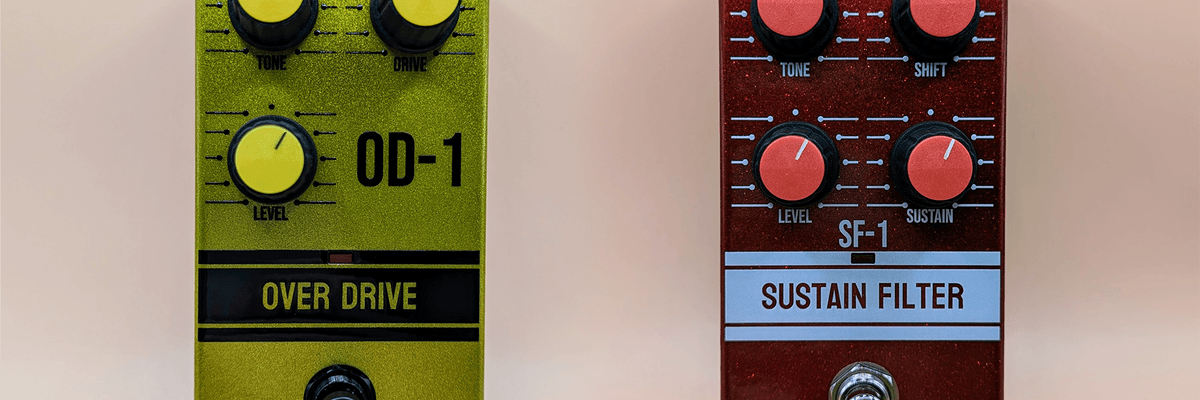
NotPedals.com has announced the listing of two new pedals from Drunk Beaver Pedals, a cult-favorite Ukrainian builder currently based in Poland.
The newly listed pedals – the Drunk Beaver XR Series OD-1 and the XR Series SF-1 Sustain Filter – represent Drunk Beaver at their best: highly flexible, meticulously built, and unapologetically adventurous.
Both XR Series pedals feature extensive clipping options, vintage-inspired components, and striking custom enclosures, offering players everything from familiar tones to wildly expressive textures, all within a single unit.
The XR Series OD-1 delivers a broad spectrum of overdrive voices, from tight and articulate to saturated and aggressive, while the XR Series SF-1 Sustain Filter explores sustain, filtering, and texture in ways that reward experimentation and hands-on tweaking. Both pedals run on a standard 9V DC external power supply (no battery compartment) and feature true bypass switching.
Built in Drunk Beaver’s workshop in Wysoka, Poland, the pedals are the product of Ukrainian transplants with a reputation for taking classic circuits and pushing them right to the edge - and sometimes beyond.
Drunk Beaver joins a growing roster of independent builders from around the world featured on NotPedals.com; a curated marketplace built to make discovering boutique gear easier for players, and global sales more accessible for small makers.
“At NotPedals.com, Drunk Beaver represent a perfect example of the kind of small builder we want to tell everyone about,” said Alex Bray, Founder of NotPedals.com. “High-quality, handmade gear, exciting new ideas, and stunning design. I want people to know this brand, and all the other independent builders we platform, exist, because this is where some of the most interesting sounds in modern guitar are coming from.”
Drunk Beaver’s XR Series OD-1 and the XR Series SF-1 Sustain Filter pedals are available now via NotPedals.com for a street price of $90 USD, with worldwide shipping. For more information visit NotPedals.com.
Rig Rundown: John 5 [2026]
John 5, the Tele-slinging guitarist, known for his solo work as well as time spent with Rob Zombie and Marilyn Manson, put out his latest record, Ghost, last year. On tour behind it, he stopped at Memphis’ Minglewood Hall, where PG’s John Bohlinger caught up with him for this new Rig Rundown. Check out the highlights below, and watch the whole Rundown for much more, including a custom mandolin!
Brought to you by D’Addario.
I Ain’t Afraid of No Ghost
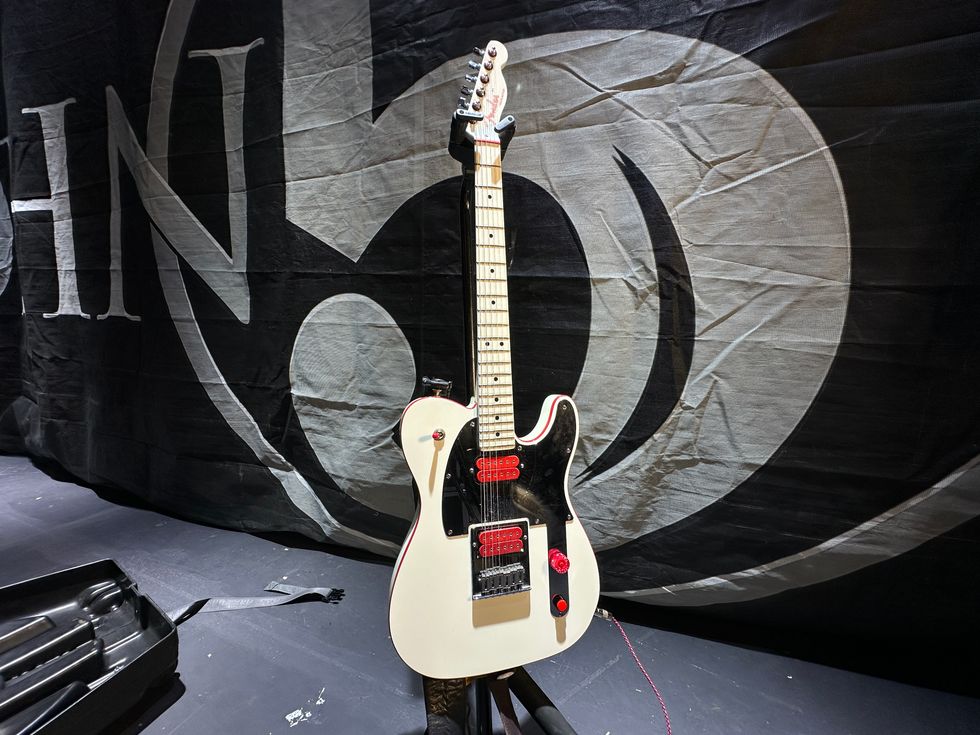
John 5’s obsession with Telecasters dates back to his days watching Hee Haw, seeing Buck Owens and Don Rich playing the classic Fender 6-strings. Influenced by aesthetics from Buckethead and Supreme, 5 created his signature John 5 Ghost Telecaster, with DiMarzio D Activator and Super Distortion pickups in the neck and bridge, respectively.
Meyers’ Monsters
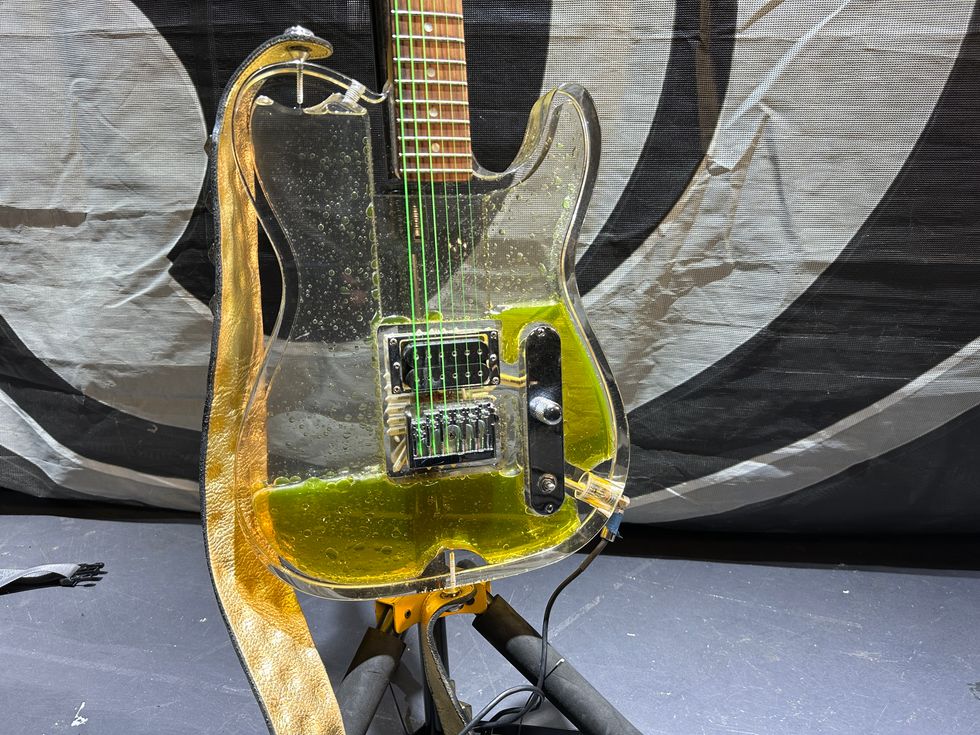
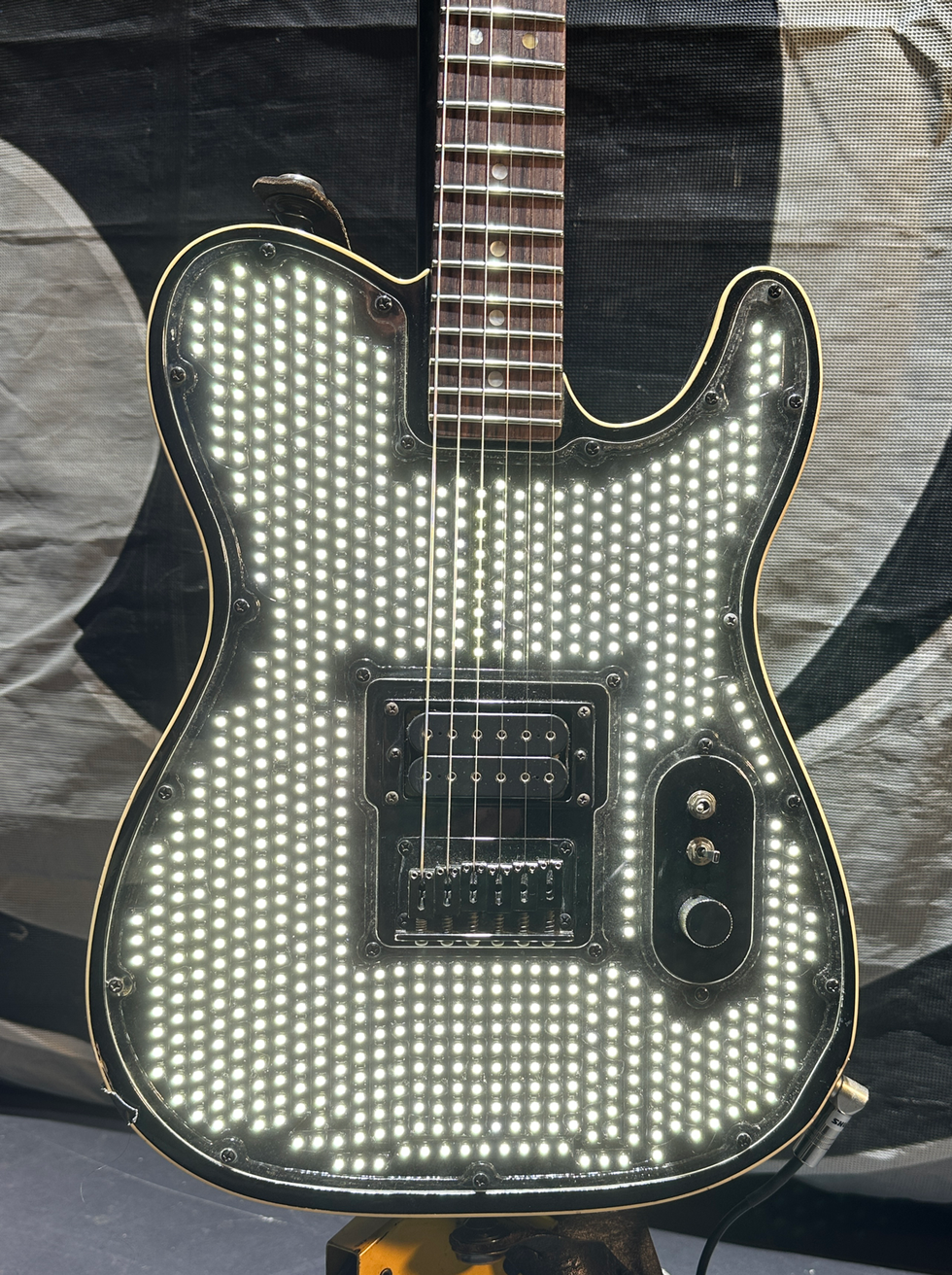
Ken Meyers created these oddball instruments for John 5 after running into the guitarist at NAMM and offering to build a guitar for him. 5 requested a light-up guitar, and Meyers delivered, then outdid himself with the queasy-green “Lava” T-style. After a below-zero mishap with a previous model, this one’s been filled with antifreeze.
5’s 5150
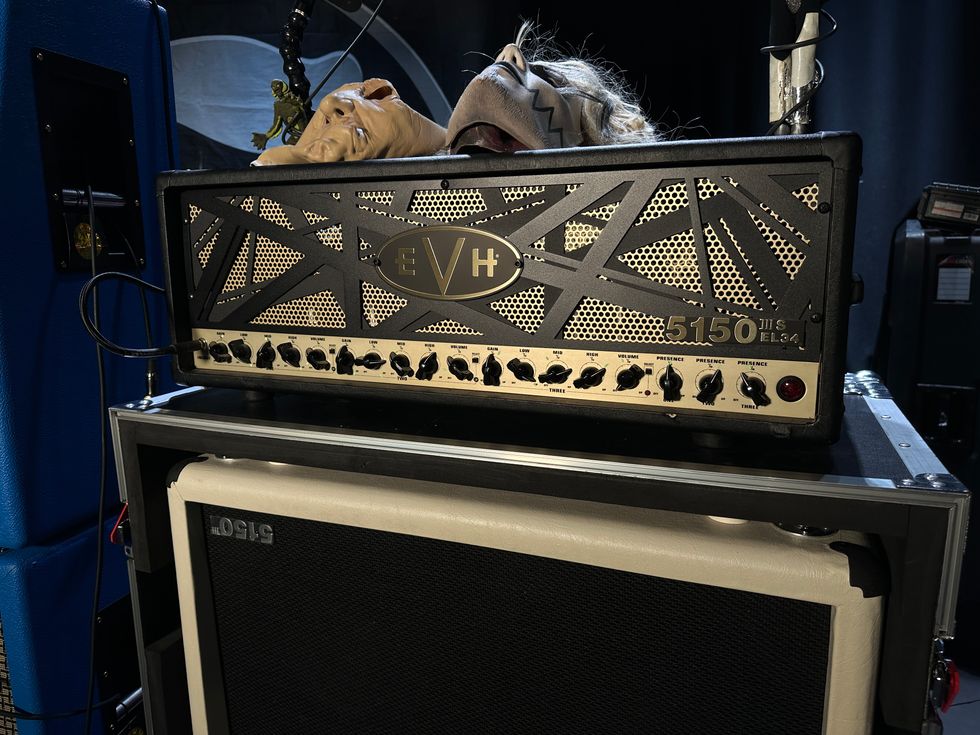
Eddie Van Halen himself gifted John 5 one of the first 5150s. He still has it to this day, but on the road he plays this EVH 5150 III S EL34 with a matching cab.
John 5’s Pedalboard
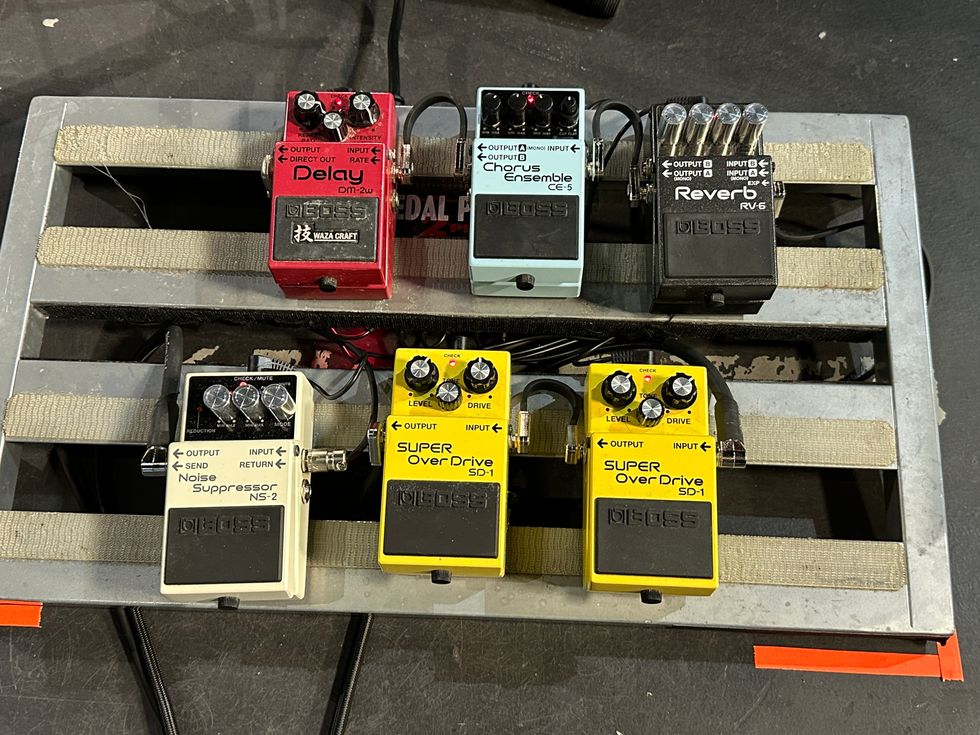
John 5 likes to run with gear that he can replace at a moment’s notice from any local music store, so on his all-Boss board, he runs a pair of SD-1s, an NS-2, RV-6, CE-5, and a DM-2w.
Brian May believes it should be “impossible” for someone who has a “love of art and music” to be cruel to others

In these difficult times, Brian May thinks we should all be a little kinder to each other, and that spending less time online and a little more time making music or “looking at the stars” would make all the difference.
May, who is also an animal rights activist and astrophysicist, released a new book titled Islands in Infinity: Galaxies in 3-D back in November, marking the first publication to present galaxies in three-dimensional form. In an interview with Radio Times, the Queen guitarist explains why art and science are far more connected than most think, and why he feels increasingly “despondent” about the planet he inhabits all while being fascinated about others more far away.
“Most of the most famous astronomers were musicians, from Isaac Newton onwards. It’s not unusual to have this connection in your brain,” he says. “I’ve always thought that art and science were part of the same thing, although I was told as a kid, ‘You have to choose one.’ I’ve fought that all my life. I think appreciating the beauty of the universe is a big part of finding out how it works.
“I feel despondent about the world of humans,” he adds. “It keeps me awake at night. The cruelty, the ignorance, the lies, the rewriting of history. I think an understanding and love of art and music make it impossible to be the kind of person who wants to go out and be cruel to others.
“There’s so much suffering in the world, why would we want to add to it? We’ve lost the ability to discuss things and respect other people’s point of view, we have a horrendous polarisation. If people spent more time looking at the stars and making music, none of this would be possible.”
Brian May’s book, Islands in Infinity: Galaxies in 3-D, is out now.
The post Brian May believes it should be “impossible” for someone who has a “love of art and music” to be cruel to others appeared first on Guitar.com | All Things Guitar.
Producer thinks John Mayer “might be better than George Harrison” when it comes to creating distinctive guitar tones: “It ain’t gonna sit well with people”

Producer Don Was thinks John Mayer’s ability to create unparalleled guitar tones sets him apart from other players, even The Beatles’ George Harrison.
As he acknowledges himself, it’s a hot take that may rile up a large sum of Beatles fanatics. But not only has Was worked with Mayer across three of his successful records – Born and Raised, Paradise Valley, and Sob Rock – but he also worked with Harrison on Bob Dylan’s Under the Red Sky, when he contributed a slide guitar solo for its titular track.
- READ MORE: Neural DSP Archetype: John Mayer X review – is this the Mayer tone plugin we’ve been waiting for?
During an interview with Everything Mayer on YouTube, Was is asked if there are any elements to Mayer’s work that might be missed by a casual listener, and Was notes his copious amounts of ideas and warm guitar tones as the key aspects that make his work unique.
He begins [via Guitar World], “He’s a great arranger. The thing that separates John from everybody else that I’ve worked with, in terms of the process we go through, is I’ve never seen anyone with that many ideas for arrangements.”
Was adds, “His guitar tones are unparalleled. They’re not just evocative, cool sounds, but they’re thick and they’re warm and they jump out of speakers – and I’m not sure how he does it.
“Yes, he’s got the best gear you can have, but I’ve played his guitars and I don’t sound like him. I think people might take that for granted… George Harrison was good at stuff like that, getting distinctive sounds that you only hear once on a certain song. That’s a strength of John’s. It’s the same thing.”
He concludes, “I was loath to say John’s better than George Harrison. It ain’t gonna sit well with people, but he might be better than George Harrison.”
Check out the full interview below:
The post Producer thinks John Mayer “might be better than George Harrison” when it comes to creating distinctive guitar tones: “It ain’t gonna sit well with people” appeared first on Guitar.com | All Things Guitar.
Cleartone Introduces Power Series Electric Guitar Strings
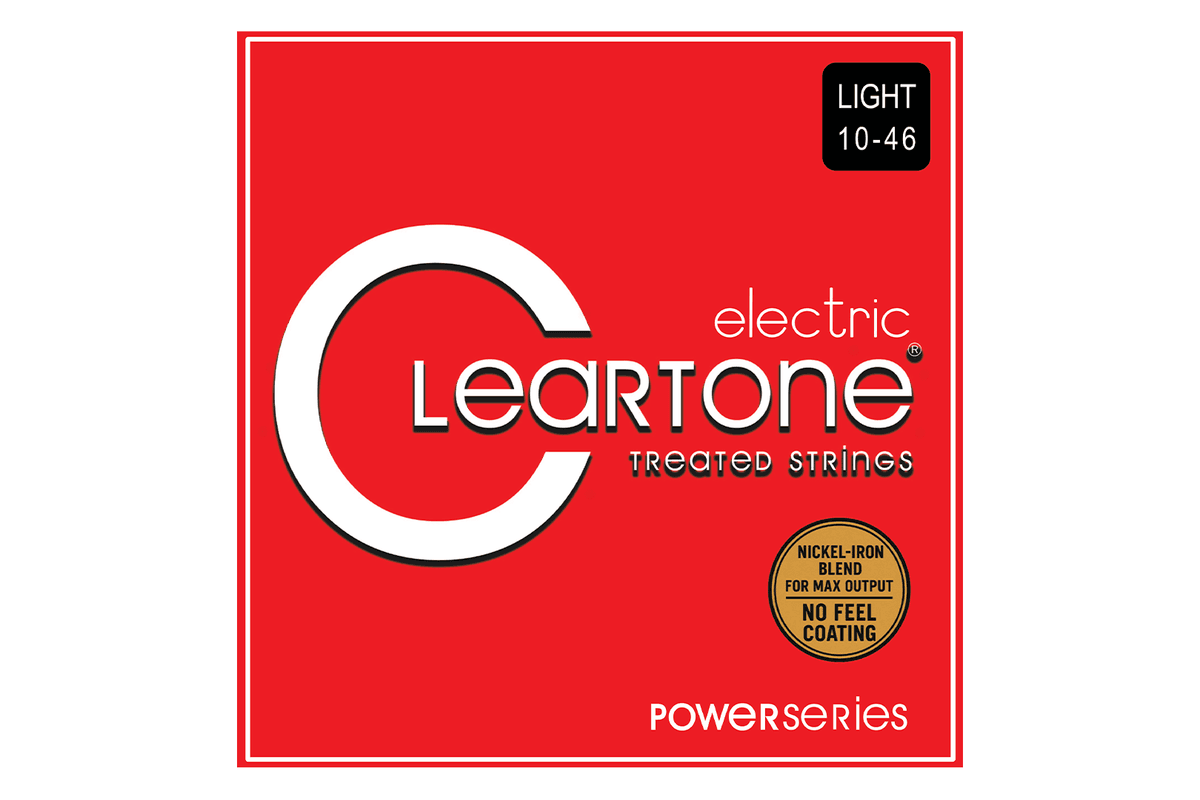
Cleartone Strings has introduced the all-new Power Series string sets, engineered for players who are seeking more power, clarity, and endurance from their strings.
Built on a reformulated nickel-iron blend, the Power Series is Cleartone’s longest-lasting string ever, designed to deliver a natural “clean boost” directly from your guitar—no pedals required.
The higher magnetic response of the nickel-iron alloy increases pickup sensitivity, tightening the lows and adding presence and articulation without altering your amp settings. It’s not distortion or EQ—it’s pure, natural gain and frequency enhancement, giving your tone that alive, dynamic feel you get from a transparent boost pedal.
The launch marks the culmination of a long, intensive development process: after a year of testing and fine-tuning countless alloy variations, Cleartone’s engineers have now finalized the Power Series formulation that they feel offers the best balance between power and clarity. Each set includes Cleartone’s twice patented “No-Feel” coating for extended life and consistent tone.
Cleartone’s Power Series string sets are available in gauges 9-42, 9-46, 10-46, 10-52, and 11-48. The sets carry a $19.99 street price. For more information visit cleartonestrings.com.
Review: On ‘Ipsa Corpora’ Nathan Salsburg Builds a Solo Guitar Suite Around Tone, Space, and Silence

Gillette once offered Billy Gibbons $1M to shave his beard – the ZZ Top guitarist’s reason for refusing makes lots of sense

Ever wondered what Billy Gibbons looks like under that mighty beard? Well, it seems he’s not so sure either. In fact, the entirety of ZZ Top were once offered pretty big bucks to shave their facial hair off on TV – an offer they refused.
Though Gibbons and Dusty Hill were the most bearded of the trio, Frank Beard (more so associated with a moustache, despite the apt surname) was seemingly included in the offer too. Gibbons claims they were offered a whopping one million dollars each.
Gibbons was asked about the rumour on the Mohr Stories podcast, and said that it was Gillette who offered them the deal, though he claims the company deny ever doing so.
“It’s true. They deny it,” he states. “They wanted us to [for a Super Bowl commercial]. It was a million dollars per man. We called [publicist] Mr. Merlis and I said, ‘Bob, we got this offer.’
“I said, ‘We’ve been offered a million dollars each to shave on TV.’ He said, ‘Well, the money’s good.’ He said, ‘You might as well consider doing it, but I’m not so sure any of you guys know what’s under there.’ So, we passed. We passed and our fans loved it. Word got out,” he says with a smile.
Last year, Gibbons looked back on his first meeting with Dusty Hill, after he was recommended by Frank as a replacement for Billy Ethridge. Gibbons told Rock & Roll High School, “Frank said, ‘Hey, I want to introduce you to Dusty.’ He’s coming over at three this afternoon. Around four o’clock, then five o’clock, no Dusty. At 6pm, I said, ‘Well, where’s this guy Dusty?’ And, I guess around seven o’clock, there’s a knock on the door. I went and opened it, and this guy was standing there.
“He had a gallon jug of wine, and he stepped in and he said, ‘Hey, man, I wanted to let you know, I’m Dusty.’ And with that, he fell on the floor and passed out. This is going to be my guy! But the next day, we picked up, and we started saying, well, ‘Let’s jam a number or two.’ And we wound up three hours on a shuffling speed. And I said, ‘Man, this is going to work.’”
The post Gillette once offered Billy Gibbons $1M to shave his beard – the ZZ Top guitarist’s reason for refusing makes lots of sense appeared first on Guitar.com | All Things Guitar.
“I don’t want to go hear a bunch of C and D tracks”: Should bands play their biggest hits live? Nikki Sixx thinks so – and here’s why

Should bands predominantly play their greatest hits at live shows? Or should they be free to delve into the deeper cuts of their catalogue and serve fans a show they’re not expecting? It’s a debate that sparks strong opinion on both sides.
On one hand, metal titans including Metallica and Avenged Sevenfold have expressed a disinterest in leaning entirely on the hits during live sets. In 2024, Metallica frontman James Hetfield spoke of the importance of “challenging” fans to enjoy deeper cuts from their catalogue at shows.
“We know that people wanna hear the best stuff, and you gotta challenge them to listen to the new stuff as well,” he said. “Because we certainly don’t wanna be a legacy band that just plays the greatest hits and then that’s it, you know? It’s all part of it.”
But some musicians think playing the hits is important in putting on a good show and having the fans leave happy. In a recent interview with Utah’s 103.5 The Arrow, Mötley Crüe bassist Nikki Sixx hints that during the band’s upcoming summer tour, they’ll be leaning heavily on the hits.
“We get in, and we know the fans want to hear the hits,” Sixx says [via Ultimate Guitar]. “I hate it when a band goes out and doesn’t play their hits. I just remember [David] Bowie doing that, and I was like, ‘He’s one of my favourite artists. I don’t want to go hear a bunch of C and D tracks off of records that I love. I want to hear songs like Rebel Rebel. At that point, he was like, ‘I’m so tired of playing the same songs.’”
Where most artists seem to agree is on playing the hits to keep the fans happy, but also interspersing the setlist with some lesser known tracks, too.
“We’re not tired of playing those hits,” Sixx goes on, “but we are excited about getting into a set list and diving into some songs that we maybe never played, or haven’t played in a long time, and shaking it up.
“If you’re playing a song from the first album, that’s going to dictate a lot of what production looks like, you know? So for us, it’s like this moving creative ball of energy. It’s super exciting.”
Elsewhere, shortly after the release of their latest album Life Is But a Dream… in 2023 – which came seven years after The Stage in 2016 – A7X vocalist M. Shadows explained his stance on staying artistically fresh as opposed to prioritising giving the fans a hit-packed setlist.
“I don’t even know how I’d feel if we had to go up there and play all of our old songs after five years of being off. I would feel like I’m stuck in the mud…
“Not only will bands veer away from new stuff live, because they’re worried – they want that pure energy setlist – but they also start allowing the fanbase to dictate, like ‘I paid money, I wanna see all the hits.’
“There’s bands like Metallica and Iron Maiden that continually play new stuff and reinvent themselves. And it pisses people off, but it allows them to be interested in what they’re doing.”
Meanwhile, Queens of the Stone Age frontman Josh Homme isn’t shying away from playing the band’s biggest tracks.
“I understand that I’m always going to play No One Knows because I still like playing that song and that’s something that it’s an agreement with the audience,” he said in 2023. “I assume that this is a part of coming here to see us, and here you go.”
The debate will surely rage on, but what do you think? Should artists cater to the fans and fill their setlists with their biggest tracks? Would you be happy to pay money to see your favourite artist play a set predominantly loaded with deeper cuts?
The post “I don’t want to go hear a bunch of C and D tracks”: Should bands play their biggest hits live? Nikki Sixx thinks so – and here’s why appeared first on Guitar.com | All Things Guitar.
“If I had known the grief that was coming my way, I would have stayed in real estate!”: Robert Fripp on facing the backlash to King Crimson’s Red

Robert Fripp has been reflecting on King Crimson’s most misunderstood album, 1974’s Red.
The seventh album from the band followed successful records like 1969’s In the Court of the Crimson King, 1973’s Larks’ Tongues in Aspic, and Starless and Bible Black, which landed in early 1974. But tensions were bubbling among the band as they began to make Red, and though much more broadly appreciated in retrospect, it became their lowest charting album upon release.
The line up at the time consisted of drummer Bill Bruford, vocalist and bassist John Wetton, and Fripp, with violinist David Cross having been voted out of the group. The band ultimately split at the end of 1974 after the launch of Red, and despite its rocky release, it’s regarded by many as a formative proto-metal treasure.
Speaking to Guitar World in its new print edition, Fripp says that “the strength of Red is that the power is in the music”. Looking back on its conception, he explains, “It was very, very open. But it’s a very difficult and uncomfortable place to be.
“If someone comes in with a pretty well-written piece of music and says, ‘Let’s play this’, then it’s relatively safe and straightforward. But the problem is, when you know what you’re doing, if you know where you’re going, you might get there, and that’s not an interesting place to be. Where you wish to arrive is where you could never possibly know you might be going. But that is a very difficult tension to hold together.”
Fripp also has a pretty accepting stance on Red, and that has seemingly come with time: “I would’ve stayed as an estate agent in Wimborne, Dorset, if I had known the grief that was coming my way. I would have stayed in real estate!” He jokes. “My approach has been, if you read your press, you read all of it. And if you read all my press, there have been — by and large — as many people who hated it as who enjoyed it.”
The post “If I had known the grief that was coming my way, I would have stayed in real estate!”: Robert Fripp on facing the backlash to King Crimson’s Red appeared first on Guitar.com | All Things Guitar.
Ghost Note Audio Swirls review – much more than a chorus pedal

£160, ghostnoteaudio.uk
The 1980s haven’t been this big since, well, the 1980s. Blame Stranger Things, blame a few viral TikTok videos, blame the ever-shortening cycles of trend repetition engendered by the accelerating death-spiral of western culture under quasi-oligarchical free-market capitalism, but the fact is this: people are using chorus pedals again.
The Ghost Note Audio Swirls, however, is not just a chorus pedal: it’s billed as “an entire 80s rack in a pedal”. That includes two modulation effects, a built-in compressor and true stereo output. Seems like pretty good going for £150 when you consider it’s made in the UK… and has a radical shape-shifting trick thrown in.
 Image: Press
Ghost Note Audio Swirls – what is it?
You might want an introduction to Ghost Note first. Based in West Sussex, this maker of guitar pedals, studio gear and software plugins recently launched a range of three digital stompboxes called the Daedalus Series, of which the Swirls is one. Or is it, in a sense, all three?
Because you see, the Swirls, the 3 Bit Fuzz (a bitcrusher) and the Amverb (a rack-style stereo reverb) are all built on the same hardware platform – and if you want to change one of them into another, all you have to do is download the firmware and pipe it in via USB-C. Interchangeable faceplates are £20 each, but the firmware is free.
I tested out the brain-swap process and it worked without any issues… so here goes with a couple of micro-reviews: the bitcrusher is excellent, offering tight yet belligerent fuzz with lots of control over the EQ; and the reverb is equally nice but, a little weirdly, not suitable for use with guitar amps.
And what was the other one? Oh yeah, the Swirls! Inspired by old rackmount devices, specifically the Dyno-My-Piano Tri Stereo Chorus, this is a pedal for people who like their modulation rich and syrupy enough to serve for dessert at a Roman orgy. It includes a ‘detune’ effect that can be added to the main three-channel chorus and controlled separately, plus a compressor that Ghost Note describes as “very fast and aggressive”. It has mono and stereo ins and outs, and can store two user presets.
 Image: Press
Ghost Note Audio Swirls – is it easy to use?
It doesn’t look easy to use, does it? Not for those of us who generally like our chorus pedals with a maximum of two knobs and maybe, if we’re feeling really extravagant, a switch for vibrato mode. And indeed, this is a tricky stomper to navigate at first.
The key is to see the six knobs as two lines of three: the top row controls the main chorus, and the bottom row is for the detune effect. Secondary functions are accessed by holding down the button in the middle: now the top row gives control over the left, centre and right channels of the chorus, and the bottom row runs the compressor.
In summary, this is not your Boss CE-2. But the good news is, it should be able to do a whole lot more than any basic chorus pedal…
 Image: Press
Ghost Note Audio Swirls – what does it sound like?
It’s tough to break the sound of the Swirls down into its constituent parts, because the overall effect is such a seamlessly integrated audio concoction. The short version is that it sounds every bit as retro-tastically sweet and shiny as you might hope.
By modern chorus standards you might find it ever so slightly cold in tonality, because the emphasis here is all on the shimmering trebly sheen. The two modulation types are broadly similar in character, except that the detune has a much less pronounced ‘wave’ effect, but the real magic happens when you mix them together… and then press the stereo button.
With any chorus pedal, you can get a nice stereo effect by sending a dry signal to a second amp; what you get from the Swirls’ dual outputs, though, is a sense of scale and immersion that’s on a whole different level. It can sound like the Cocteau Twins, it can sound almost like a Leslie speaker, and it can sound so overwhelmingly luscious that after a while you start to feel a bit queasy.
And the compressor? It will add a gentle thump to the transients if you want it to, but mostly it just does what compressors do best: making everything seem louder than it really is. And is this context, that just means more lushness and more hugeness.
 Image: Press
Ghost Note Audio Swirls – should I buy it?
The Swirls prodded my nostalgia glands much more forcefully than I was expecting it to. It did also remind me of why I ended up getting sick – quite literally – of the chorus effect, but that’s not the pedal’s fault: you just need to show some restraint when working with this kind of ultra-sweetness.
For simply adding a bit of wobble to a clean guitar, there are simpler options that will do just as well or better – and without generating anything like as much background hiss. But if you want to go all-in on the whole immersive 80s thing, this is where it lives.
Ghost Note Audio Swirls alternatives
A couple of other options for that extra-swirly multi-chorus effect are the Eventide TriceraChorus ($279/£249) and Free The Tone Tri Avatar (¥39,500/£269). Or if you really want to feel like a time-traveller from 1984, try the combined chorus, compression and distortion of the MXR Rockman X100 ($245.99/£249.99).
The post Ghost Note Audio Swirls review – much more than a chorus pedal appeared first on Guitar.com | All Things Guitar.
Last Call: How Record Labels Survived the Digital Apocalypse
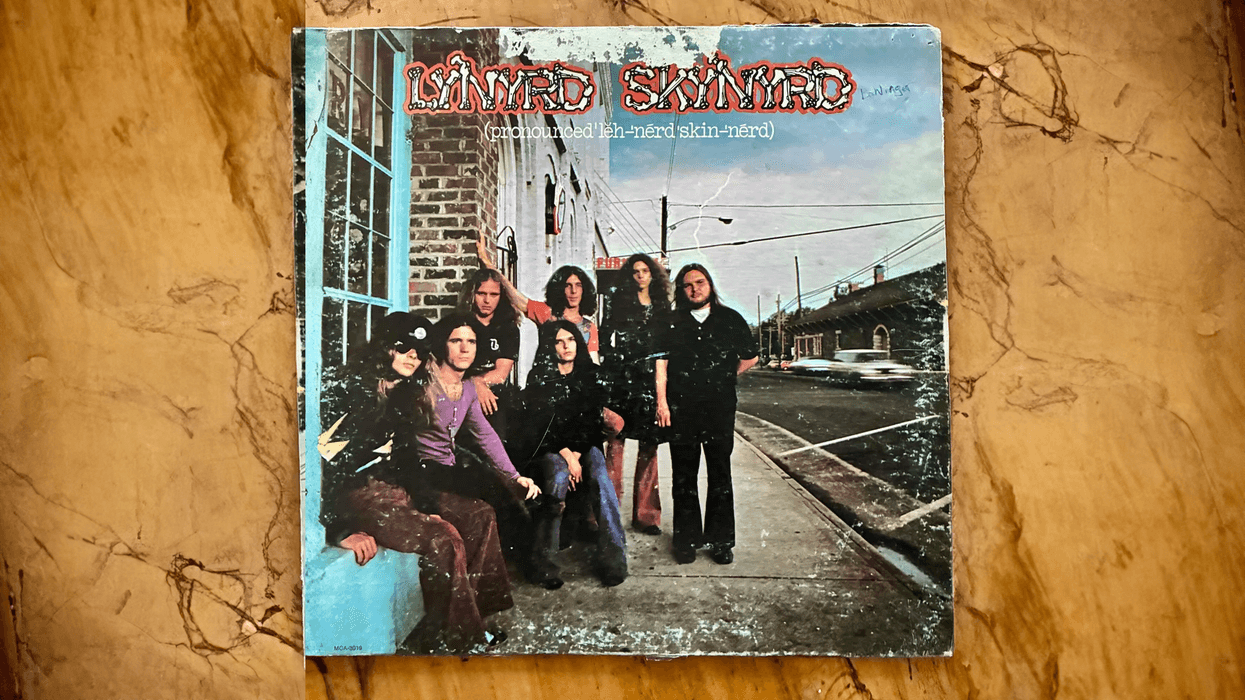
As we gather ’round the fire and stare at the ashes of what used to be the record business, I’m reminded of Nick Hornby’s 1995 novel (and later, movie) High Fidelity. In one iconic speech straight from the book, John Cusack says: “But the most important thing is … what you like, not what you’re like. Books, records, films—these things matter. Call me shallow, it’s the fuckin’ truth.”
Commercial record stores first appeared in the 1920s, but mass marketing did not kick in until 1948, when Columbia invented the 33 1/3 rpm long-playing (LP) record, and 1949, when RCA countered with the 45 rpm single.
In the mid 1950s, rock ’n’ roll exploded with Elvis, Chuck Berry, and Little Richard, and records were everywhere. By the time I came along in the ’60s and ’70s, even in remote Montana, our grocery store, pharmacy, and gas station all had a record section. There were also several dedicated record stores around town where you could hang out, listen to music, and occasionally buy records, black light posters, rock ’n’ roll t-shirts, and even a bong, if you wanted. By 1999, global recorded-music revenue crested at roughly $40 billion, with CDs costing a stiff 18 bucks. We were buying the same albums we already owned on vinyl, just shinier. From the first commercial phonograph cylinders in the early 1900s to the absolute peak in 1999, the whole glorious scam ran 100 years; shorter than the Ottoman Empire, longer than MySpace. But not by much.
Then two things happened almost simultaneously: Shawn Fanning gave every dorm-room genius the power to copy anything, and Steve Jobs sold us the radical idea that maybe we didn’t need “Smells Like Teen Spirit” permanently welded to 12 other tracks. Napster lit the fuse; iTunes handed us the à la carte menu.
But the big bad record labels didn’t die. Rather, they molted. They stopped selling plastic and started renting you the same songs forever, ten bucks a month, please and thank you. Today, streaming constitutes 84 percent of U.S. recorded-music revenue. Your Spotify subscription gets carved up like a pizza: the platform keeps about 30 percent for servers and the like, the rights holders split the remaining 70 percent, and the label—owner of the master recording—walks away with roughly 55 percent of the total pool before the artist sees a dime. Same old middlemen, new religion.
Labels began to diversify like a hedge fund. Sync licensing is the golden ticket now—one 30-second needle-drop in a Netflix trailer can out-earn a billion streams. Performance royalties still trickle in every time your song plays in an Applebee’s. Weirdly, vinyl in 2024 finally outsold CDs in units. Labels press lavender-swirl limited editions for $300 a pop and the superfans line up like it’s 1973. The game isn’t dead; it just learned to stop relying on a single point of failure.
“One 30-second needle-drop in a Netflix trailer can out-earn a billion streams.”
Record labels today operate like venture capitalists: professional gamblers who bet other people’s money on startups that usually have no revenue, no profits, and a 70–90 percent chance of going to zero. The job is to find the one or two out of 100 that become Airbnb, Uber, or Jelly Roll. Write and record your songs, work social media, put money and time into promotion to get on playlists, play gigs, and, if you’re talented and lucky enough to stand out amongst the crowd of wannabes, a label will message you on Insta and maybe roll the dice on your project.
Will the major label disappear? Please. Labels survived Napster, survived the CD crash, survived having to pretend they like mumble rap, shoegaze, and Hillbilly Vanilli. They’ll just keep evolving into something that looks less like a record company and more like a private-equity firm. The next decade will be about superfans and algorithms. Exclusive fan clubs, direct-to-consumer box sets, virtual meet-and-greets where you pay 50 bucks to watch an artist unmute himself on Zoom—labels will own that if the indies don’t get there first. And AI? It’s already picking singles, buying ads, and probably writing half the choruses you hate but can’t stop humming.
Meanwhile the indies will keep carving out the weird corners—hyper-specific genres, local scenes, anything too prickly for the algorithmic blender. The pie is bigger, the slices are thinner, and nobody’s starving unless they’re lazy.
So yeah, the era of walking into Tower Records with a crumpled 20-dollar bill and walking out with physical proof you love something is deader than disco. But the labels? They just changed their wardrobe and learned to live on micro-transactions and attention.
For artists wanting to be stars, the music industry, like the rest of the world, has the mega rich, the struggling poor, and not a lot in the middle. But if you have talent and an instrument, you can always find a way to monetize it. You might survive by busking or living from a tip jar in a bar, but you will survive. Personally, if I have music and my basic needs met, I’m cool.
Pages
