
Music is the universal language
“Glory to God in the highest heaven, and on earth peace to those on whom his favor rests.” - Luke 2:14
Norse Guitar Feeds
StewMac Valve Factory 18 Review
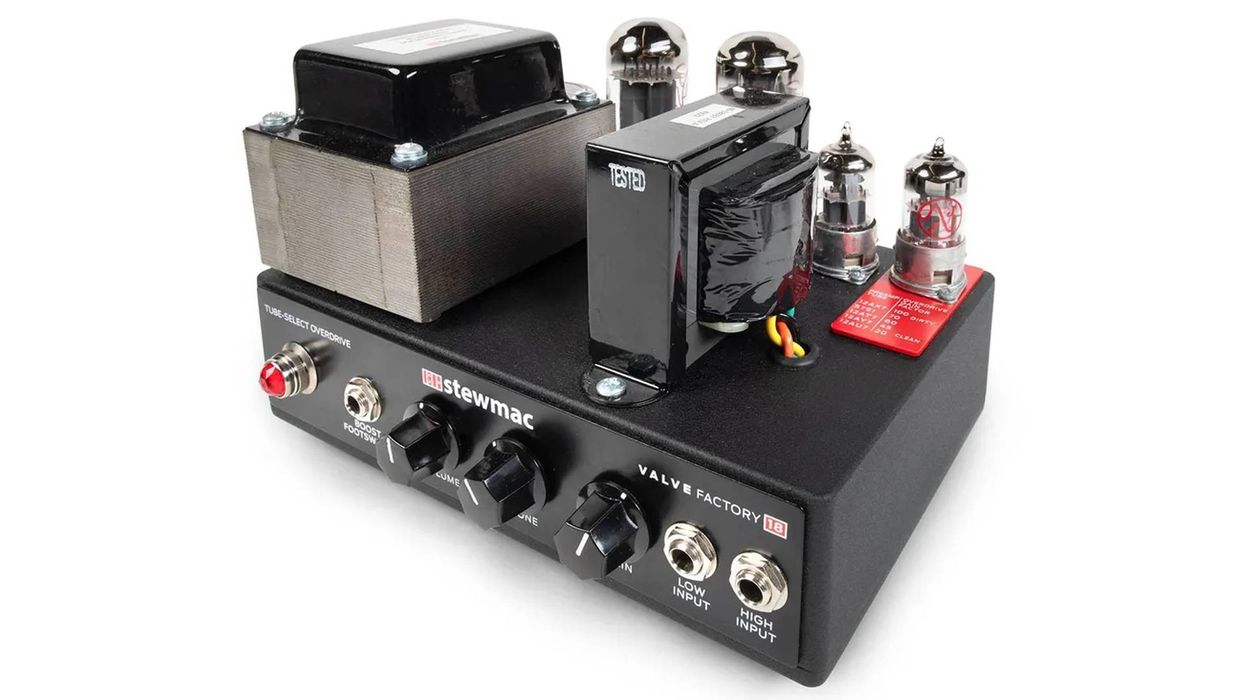
Most amp kits are Fender flavored, typically recreating historic 5F1 Champ, 5F2-A Princeton, or 5E3 Deluxe tweed-style circuits. And since an actual late-’50s Princeton, for example, costs about $3,000, at well less than a third of that price a DIY kit is an affordable alternative for any guitarist with soldering skills and the patience to follow instructions. But what if Fender isn’t exclusively the taste you’re looking for? What if Valco, Ampeg, Marshall, or modern takes on classic tones also float your rubber raft?
Enter StewMac’s mighty little Valve Factory 18 head kit, a 12-pound beast that punches above its weight class, offers a variety of classic-inspired sounds, and hints at modern boutique amp voices.
Flexible Fryer
Part of the Valve Factory 18’s versatility is due to the two preamp tube options provided in the kit: a 12AX7 or a 12AY7. But it’s mostly the result of a concise-but-flexible set of controls. On the front panel, there are volume, gain, and tone dials, but the way they shape sound depends on whether your guitar is plugged into the low- or high-input jack. The low input is the clearer of the two and hews close to Fender tweed world. But the high input offers gentle breakup that, to my ears, gets into gnarlier old amp voices. Both channels offer plenty of headroom and work well with pedals, but if your primary sources of tone color are stompboxes, the low input may be best for you. Both also benefit from a clean boost footswitch that pumps up the volume without altering the tones in play too much.
On the back, there’s an impedance switch with 4-, 8-, and 16-ohm settings, so the Valve Factory 18 can be used with most cabinets. There’s a single speaker-out jack, and on/off and standby toggles. And as its name implies, the amp delivers 18 watts, and it’s a loud 18 watts at that—fitting for today’s small-amp sweepstakes.
Brick By Brick
Confession: StewMac sent me an immaculate, pre-assembled review model rather than a kit. But I still settled into a meticulous reading of the highly detailed and lavishly illustrated instruction book. It begins with a menu of the included parts, which are metal film and metal oxide resistors, plus a single wire-wound resistor, two 1N5408 diodes, nine various capacitors, a pair of custom-built Pacific Trans transformers (power and output, naturally), wire, heat-shrink tubing, sockets and tubes (more on the tubes later), the fuse and fuse holder, the pilot lamp, screws and locknuts, input jacks, control pots, front and rear faceplates, the fully assembled footswitch for the boost, and a very solid anodized metal chassis.
Point-to-point assembly begins with the filter cap and works through the sockets on up to populating the circuit board, and so on. It’s advisable to have a digital multimeter handy to check each resistor before installation. Our test Valve Factory 18 arrived ready to go save for installing the tubes, which was easy, since this amp does not have a cabinet, so, it's merely a matter of plugging the tubes into the slots on the top of the chassis. Two JJ 6V6s live atop the amp’s crown next to the filter cap, which is also adjacent to the 18-watt power amp. I inserted the provided 12AT7 phase inverter tube and then decided whether to plug the 12AX7 or 12AY7 into the preamp slot.
Totally Tubular
Those aren't the only tubes that can be swapped in the preamp slot. The amp will function happily with 7025, 5751, 12AT7, and 12AU7 valves. But I stuck to the provided 12AX7 and 12AY7. Both performed true to their tendencies. I used the Valve Factory 18 to power a Sam Hill Custom 1x12 cab with a 50-watt Eminence Private Jack and plugged in a two-humbucker Les Paul, a PRS SE Silver Sky, a Dean electric resonator with a lipstick pickup and a piezo, and a Steinberger Spirit. In all these combinations the 12AY7 yielded a little more headroom than the 12AX7, little breakup when pushed, and a cleaner sound profile overall. That is not to say the 12AX7, my favorite of the two, lacks headroom—especially when I plugged into the low-input jack. But playing through the high-input side, the 12AX7 gave me exactly what I want from an amp: enough clean tone to stay articulate along with a gritty patina that speaks the language of rock and blues.
For me, that sound sings best with the tone between 10 and 2 o’clock and the gain between 10 and 12 o’clock which generates genuine old-school breakup. The tone control has great range. Turned hard to the left, it creates a booming, bass dominated voice; hard right, it’s bright and cutting, but never piercing. I did not find an unsatisfying sound within its scope. Dialing the gain to the top and the tone to about 8 o’clock, visions of doom rock danced in my head. With the tone at noon and higher, and the gain all the way up, I could hear the hard rock and metal applications, though the Valve Factory 18 isn’t a 5150 by any means. The volume dial simply makes things louder without significantly impacting the tone, which is ideal.
The Verdict
Short story: I dig this amp in all its sonic variations. Although the Valve Factory 18 is simple to use—and seems relatively easy to build—it is cleverly designed too. Playing it is a joy. So much so that I am disappointed that it’s not gig-ready. Without a cabinet or some cover to protect the tubes, transformers, and filter cap, it’s easily damaged. That said, the power, versatility, tonal range, and sense of accomplishment in building a point-to-point packed with character seems well worth $599.
Orangewood Del Sol Baritone Review
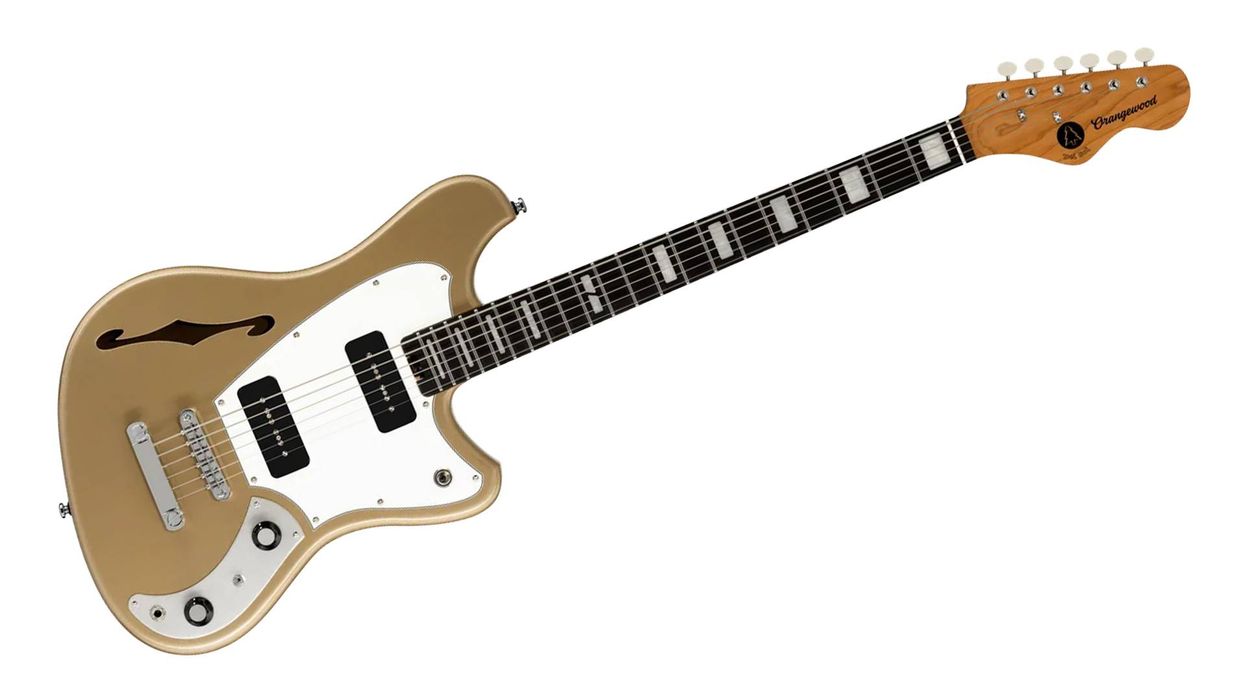
Connecticut builder Josh Forest’s TreeTone Guitars specializes in retro-inspired designs with hip offset bodies, classic inspired color combos, and an array of electronic options. He’s teamed up with Orangewood to offer an imported version of his Del Sol model—which he produces in a standard-tuning version under his own name—as a baritone. Although the Orangewood Del Sol Baritone hits a price point well below a domestic build, it’s a solidly crafted, handsome guitar that punches well above its $795 tag.
Comfy Feels
The Del Sol Baritone’s slick, unique offset mahogany body evokes retro Fender vibes, but on its own terms. It’s a sleek look, and thanks to its chambered design—with a bass-side f-hole—it’s lightweight.
Playing while seated, the bari has a nice weight distribution and offers a comfortable playing experience. Its 27 1/2" scale length is close enough to a standard scale to feel familiar, giving it a more guitar-like feel than, say, a Danelectro’s 29 3/4" scale or a Bass VI’s 30", which makes it easy to get acquainted with.
Without checking price data first, I guessed it was priced a few hundred bucks above its $795 cost direct from Orangewood.”
A pair of P-90s sit nicely in the 3-ply parchment pickguard. Controls include a master volume and tone with pickup selector, plus a phase switch. Characteristically, the P-90s tend toward warmth more than clarity, but together they have a wide range, from bridge-position twang to thick neck tones. They certainly lean dark, and digging in will push their output enough to drive the amp if you’re already heading in that direction. That’s particularly the case with the neck pickup, though tamping down the bass control on my Deluxe Reverb helped keep it cleaner longer. But the P-90s performed great once overdriven, whether from the amp or with the help of a dirt box, with plenty of sonic space for well-articulated arpeggios and dynamic strumming. I preferred the middle position most, and the phase switch—located on a brushed aluminum control plate between the volume and tone knobs—opens up the possibilities. It’s a helpful control, especially for navigating bass response and finding the line between heaviness and twang.
Jack of All Trades
The Del Sol’s roasted maple neck has a smooth satin finish and a soft C profile. Combined with the 12" radius on its rosewood fretboard, the neck feels great. A rounded heel offers easy access to the upper frets, and has a spoke wheel for truss rod adjustment, which I always find to be a thoughtful and welcome feature. The 43 mm nut width feels naturally spaced for the .013–.072 strings that come stock.
As far as build quality goes, my demo model arrived set up and ready to go. The frets are even and nicely dressed across the neck, and seem to have received a fine level of attention. In fact, from top to bottom, the Del Sol’s build is flawless. Without checking price data first, I guessed it was priced a few hundred bucks above its $795 cost direct from Orangewood.
Though its offset aesthetic gives a bit of a surfy vibe, the Del Sol Baritone is more of a rocker—though I suspect replacing the Tune-o-matic-style bridge with a JM-style vibrato could push it in the former direction. It’s definitely capable of heavier sounds and plays well with distortion. The resonance of the chambered body lends some sustain across its range, and that helps this bari sing. The easy playability of the neck and fretboard open it up to all styles, and knotty, technical passages are easy to execute. That makes the Del Sol a specifically versatile instrument. The other side of versatility, though, is that if you’re looking for specialized sounds—let’s say a Dano-with-lipstick-pickup kind of thing, or a tic tac bass sound—you might not find it. But as a do-it-all baritone under $1,000, the Del Sol is one to consider.
The Verdict
The Orangewood brand model delivers attention to detail in cool aesthetic packages at easy-to-reach prices. Yes, there are less expensive baritones than the Del Sol on the market. But many of those cater toward more specific, if not a bit quirky, tastes. Instead, the Del Sol Baritone can cover a breadth of stylistic ground both sonically and, thanks to its easy playability, from a technical perspective. With a build quality that’s more consistent with a higher price point, it delivers both musical and financial value. If you want a well-rounded bari, this may be all you’ll ever need.
Boss OC-5 review: what makes a great octave pedal?

What makes a great octave pedal? That question is a bit of a pandora’s box, but we can at least prop the lid open for a bit with one of the most popular modern octave pedals out there: the Boss OC-5, which folds in nearly 40 years of Boss octave history, while remaining a lot more accessible than octave workstations like the Pog 3.
The OC-5 was released in 2020, superseding the very vintage (and analogue) OC-2 Octaver from 1982, and 2003’s OC-3 Super Octave. The OC-3 was notable as it was the first polyphonic octave pedal – meaning it could accept chords without completely destroying its ability to track. The OC-5 contains a more modern polyphonic mode, as well as a recreation of the OC-2’s glitchy, dual-sub-octave tracking.
OC-5 control overview
The OC-5’s controls are pretty straightforward, with the exception of the multi-function range/-2 oct knob on the right. This varies its function depending on if you’re in vintage or poly mode – in vintage mode, it blends in an ultra-low sub-sub octave, while in poly mode, it controls how the -1 octave signal tracks. On its lowest range, this sub-octave will only follow the lowest note of a given chord – turn it up, and more of your signal will join the low-octave mix. Other than this control, there’s dry blend, which ranges from completely killing the signal to a fairly hefty boost, the blend for the upper octave and the blend for the sub octave.
Vintage mode
True to the goal of recreating the OC-2’s rudimentary tracking, the Vintage Mode is purely monophonic. But even with single note inputs, it can struggle to find what you’re actually playing, resulting in glitchy artefacts as the octave sound jumps about. This mode is still a lot of fun, although unless you’re in a two-piece, the -2 octave sound is absolutely bound to get lost in a full band mix.
Poly Mode
This is the main event, really, and realistically the far more usable of the two modes. The improved tracking makes it obviously much more tight and responsive to play – and thanks to that cleaner tracking, the mix controls are a lot more useful in dialling in what output you want.
The upper octave here is a lot of fun, especially on leads – one of the main uses of an octave pedal is to make your guitar sound like a synth or an organ, and while the OC-5 isn’t quite as built for that approach as, say, the new Pog 3, there are still plenty of big synthy sounds on tap, especially with some gain and power chords.
Some aggressive use of the upper octave is perhaps the most fun you can have with the OC-5, though – especially on leads, adding a screaming, Jack White-style edge to things.
Digital vs analogue octave pedals
While the original OC-2 was analogue, the power of the OC-5 comes from its digital nature. But if you’re in the market for a compact octave pedal, you may well have come across a modern analogue option like the EQD Tentacle, an updated version of the Dan Armstrong Green Ringer, or something like MXR Blue Box.
These pedals rely on the fact that you can do some very simple maths with analogue equipment – either folding the signal over to double its frequency, or using flip-flop circuits to recreate every other wave peak to half the frequency. This leads to a much more chaotic and fuzzy sound, hence vintage octaves are so closely associated with octave fuzzes rather than cleaner “pitch-shifting” units.
A/Bing the OC-5 (with only its upper octave engaged) and an EQD Tentacle is particularly illuminating in this regard – even with an amp set clean, the Tentacle introduces audible distortion – and while it “handles” chords, anything more complex than a power chord gets messy – even basic thirds get crunched apart.
On the other hand the OC-5 in its modern Poly mode introduces no distortion at all, with a sparkly-clean recreation of the exact same sound, only one octave higher, blended in. So keep this in mind if you’re looking to make a decision between an analogue and a digital octave pedal in 2025.
Can you stack the OC-5?
The OC-5 is an excellent pairing with some heavy full-spectrum distortion – especially something super-saturated like a Big Muff. If you’re a fan of, say, Jack White, you may already know that a digital octave run into a Big Muff Pi is one of the best sounds out there – and thanks to the OC-5’s clean tracking, big riffs will gain a synthy, powerful character rather. We’ve seen this sound get a lot of love recently with Keeley’s Octa Psi and Eventide’s Knife Drop, the latter a collaboration with White himself.
But combined with impedance-sensitive fuzzes, however, things are less ideal – the Boss buffer will present problems even in bypass, and the digital nature of the tracking is not a fond pairing with the more uncontrolled nature of a raspy, vintage-voiced fuzz.
Another trendy pairing in recent years has become an octave pedal and a RAT, a combo made famous by Sunn O)))’s albums Life Metal and Pyroclasts, immortalised in the band’s signature Life Pedal. This sound is definitely doable with the OC-5 – run into a RAT, you get a thick but harmonically complex wall of sound. However, the cleanliness of the OC-5 means that, in comparison to using an analogue octave up, things don’t quite develop and shift over the course of a (very long) note – arguably the appeal of that sound.
Who is the OC-5 for?
The world of pitch-shifting is a massive and expansive one – and the OC-5 only represents a small part of it. The clean, full sound of an octave harmony is a very distinct thing to the more evocative sound of a scale-based harmoniser, or the free-form pitch ramps of something like a Whammy. And the OC-5 offers a good amount of control, but nowhere near as much as some of the bigger workstation pedals out there – but for guitarists looking to explore the benefits of cleanly mixing in octave-shifted sounds into the mix, whether that’s for otherworldly synth parts or for massive Jack White impressions, the OC-5 is a great, affordable compact option.
OC-5 alternatives
We’ve already mentioned a lot of the different styles of octave pedal already, but for posterity let’s establish some directions to go – using the OC-5 as a starting point. Given its affordable and compact nature, a starting point is a good way of looking at it – for many, it’ll be all they need – for others, a gateway drug into the world of octaves.
If the OC-5 is too clean for you, and you want raspy unpredictability, you can go for the Earthquaker Devices Tentacle for an analogue upper-octave sound. In the other pitch direction the MXR Blue Box is a sub-octave fuzz, and is completely gnarly.
If you want more control over your octaves, most iterations of EHX’s POG line will give you that – not least the incredibly extensive new POG 3. Until boss makes an OC-200, it’s probably the most fully-featured octave pedal you’ll be able to find – but keep in mind its price and its size make it a pretty big commitment.
The post Boss OC-5 review: what makes a great octave pedal? appeared first on Guitar.com | All Things Guitar.
Merry Christmas, Everyone!
Merry christmas!
Though there is no snow
for northern new mexico
this christmas,
i hope you have a wonderful time
with friends and family!

Rig Rundown: Marc Ford and Doug Pettibone (The Lucinda Williams Band)
The country legend’s bandmates bring a range of low- to high-end gear to Nashville’s Basement East.
Ahead of Lucinda Williams’ fundraiser show on December 15 at Nashville’s Basement East, PG’s John Bohlinger spent some time with guitarists Marc Ford and Doug Pettibone, and bassist David Sutton, at the venue for this special holiday Rig Rundown. Tune in for all the goods, and check out the highlights below!
Brought to you by D’Addario.
Gretschy Guild
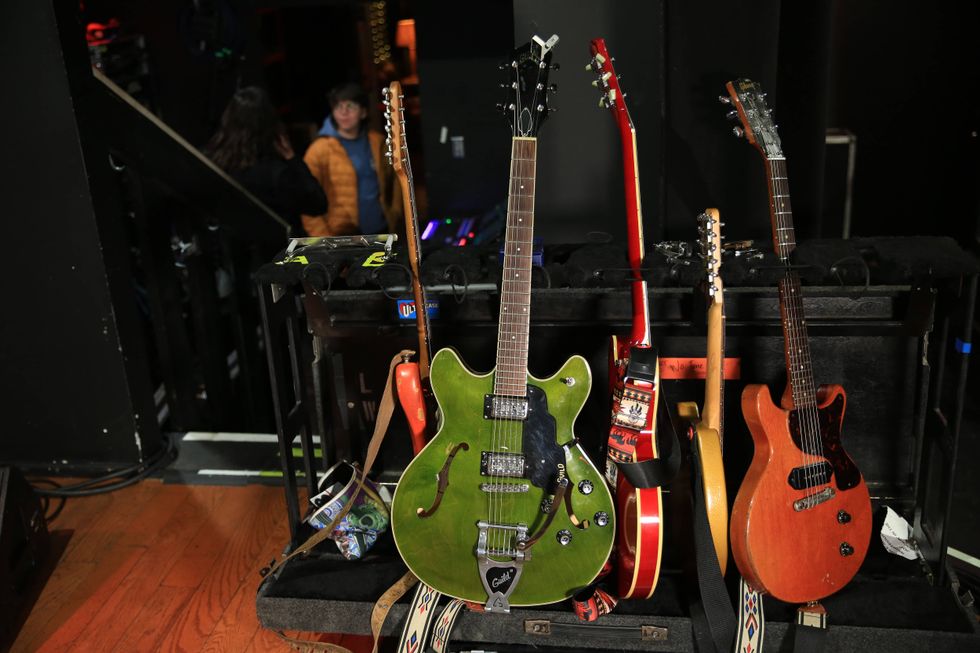
Pettibone plucked this off the wall of a guitar shop in Philly to demo an amp and ended up walking out with it. Its Seymour Duncan pickups are coil-split, and Pettibone gets some good, old-timey Gretsch tones out of it. Plus, after having a load of gear stolen on tour a while back, Pettibone prefers to bring out less precious instruments.
Tok-ibson
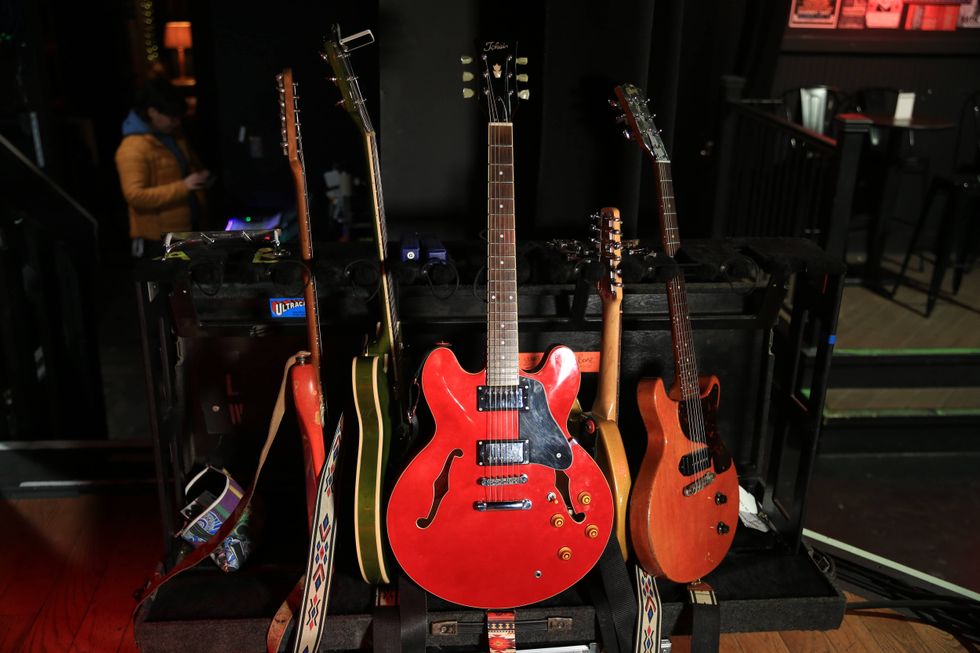
Pettibone snagged this Japan-made ES-335 knockoff, built by Tokai, while touring Australia earlier this year.
A Jewel of a Pedal Steel
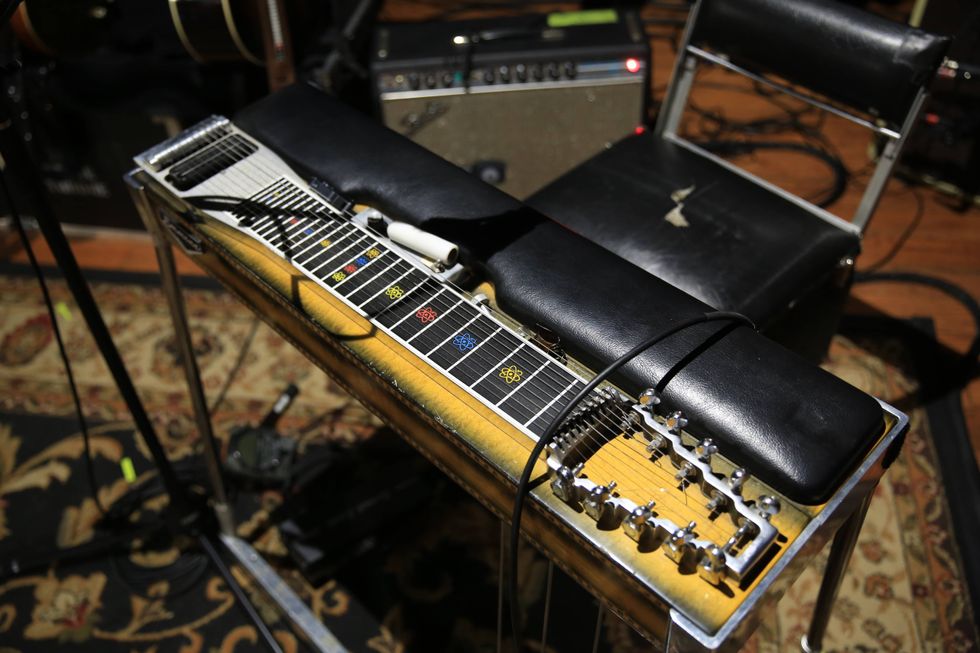
Pettibone’s main pedal steel is this 1999 Emmons, which he ordered brand-new when he was playing with Jewel.
Fender Friends

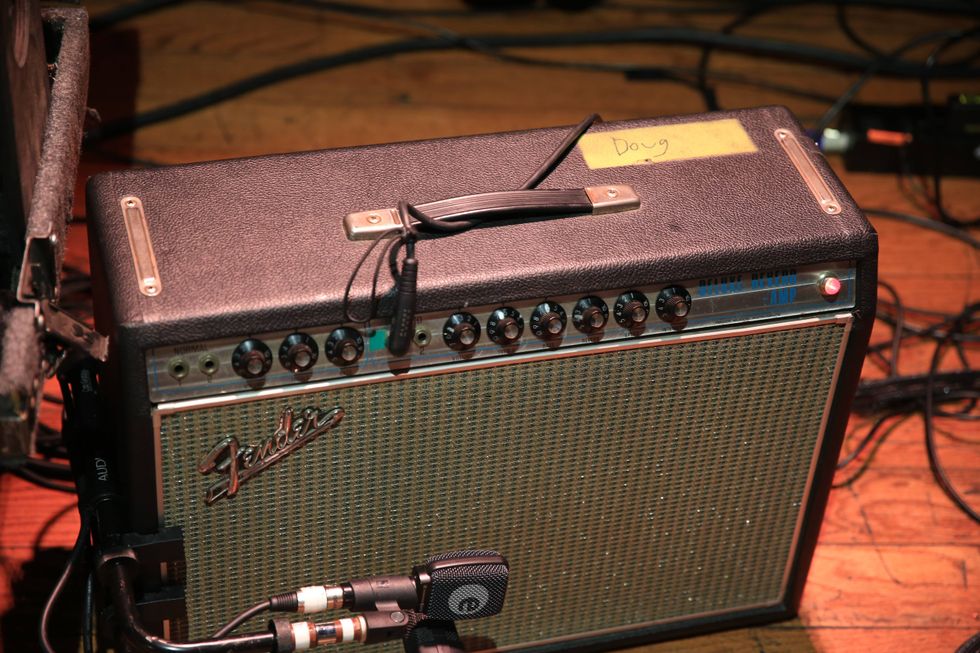
Pettibone runs the Emmons pedal steel through a ’64 Fender Twin Reverb, with a ’70s JBL 15" speaker. A Strymon El Capistan adds delay, if desired. His 6-strings run into a ’68 Fender Deluxe Reverb, loaded with a Celestion Greenback speaker.
Doug Pettibone’s Pedalboard

Pettibone runs a Sarno Earth Drive, Durham Electronics Crazy Horse, Keeley-modded Boss BD-2, Boss TR-2, Mad Professor Silver Spring Reverb, and a Catalinbread Belle Epoch. A Strymon Zuma powers them.
Thou Shalt Not Covet
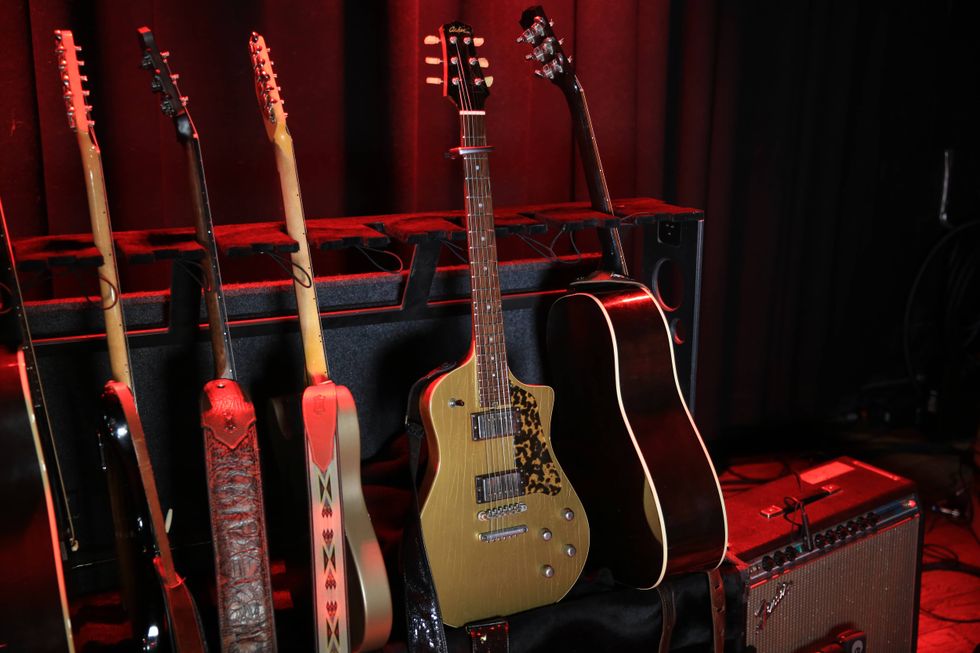
After “coveting” it for a long while, Ford borrowed this humbucker-equipped 6-string from Bill Asher, and after a bit of time with it, decided that he couldn’t give it back—even though he has an Asher signature model.
Nashing of Teeth
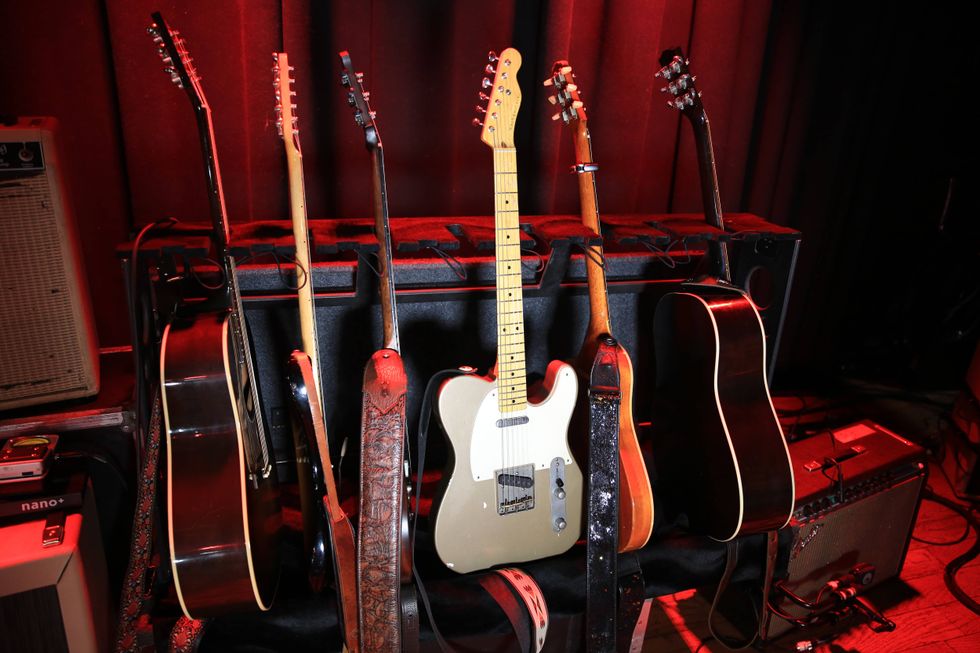
Ford was on the hunt for a Telecaster with a maple neck, and snagged this Nash T-style just a few weeks before this Rundown.
Hurtling Through Space

This custom Satellite amp has two 10" speakers and pumps out roughly 20 to 25 watts.
Marc Ford’s Pedalboard
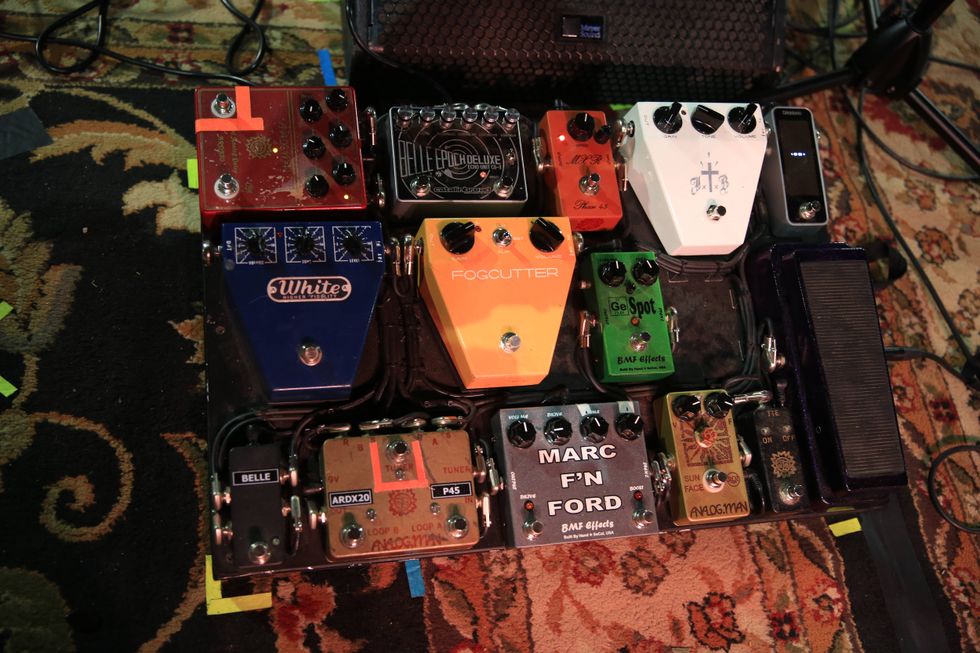
On his board, Ford runs a D’Addario tuner, BMF Effects Marc F’n Ford and Ge Spot, Analog Man Sun Face, Satellite Fogcutter, White Amp Emulator, and Jonny Two Bags, a Catalinbread Belle Epoch Deluxe, MXR Phase 45, and Analog Man ARDX20.
Ghost of Christmas Past
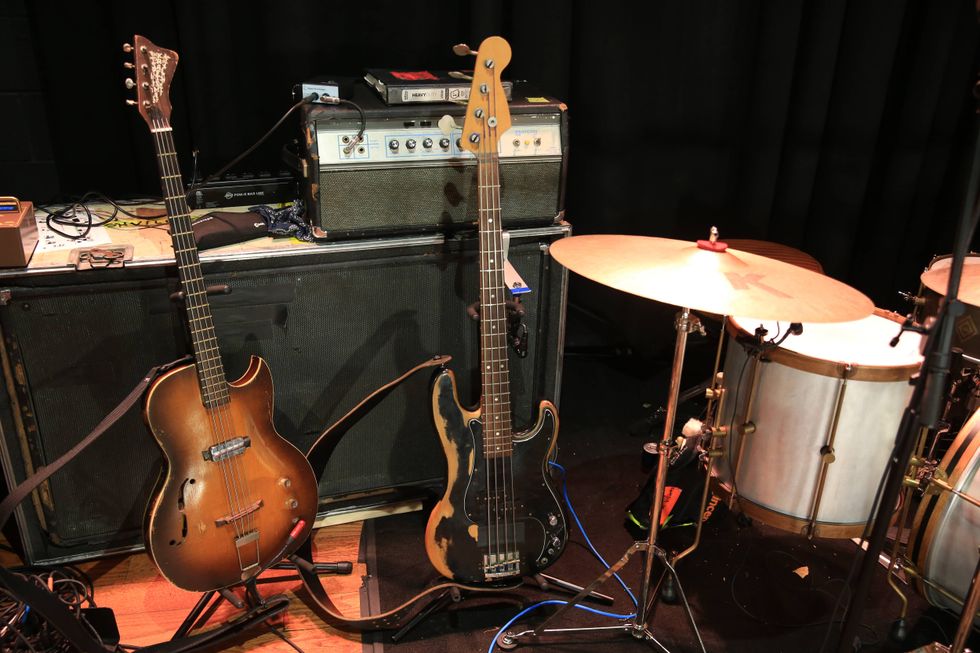
There’s a lot of history in this picture. The P-bass on the right was a gift that Sutton received on Christmas morning when he was 16. The body is the only original part left, and he strings it with La Bella flatwounds. On the left is an old Kay/Kraftsman bass, which he plays with old roundwounds strings. Sutton has owned the Ampeg SVT and cab, at rear, since he was 18.
David Sutton’s Pedalboard

At his feet, Sutton runs a TC Electronic PolyTune, Radial Loopbone Master Loop Controller, Boss TR-2, SansAmp Bass Driver DI, and ACT Entertainment Panic Button, all powered by a Voodoo Lab Pedal Power 2 Plus.

Tech 21 SansAmp Bass Driver DI
The Truth About Vintage Amps, Ep. 158
Episode 158: Chris Benson of Benson amps and Bryan Sours of Soursound transformers make their long-awaited returns to the Truth About Vintage Amps. Why? They want to tell us all about the logging truck of an amp they are currently building, a 700-watt(!) all-tube beast dubbed Babylon!
The Babylon will feature 14 KT88 tubes, 16 total speakers, three knobs, and two power cords. It’s literally the most powerful tube amp they could make without requiring a dryer outlet.
Check our Instagram for a sneak peek at the creation.
and honorable mention to…
https://bottosbbq.com/
Hear the Babylon in person at the 2026 Wood, Wire & Volts festival (or anywhere within a mile or two radius of the show).
https://www.woodwirevolts.com/
Deep cuts: Bryan’s first appearance on our show can be found here (it’s pretty epic) and Chris originally appeared on our 30th episode.
Thank our sponsors: Grez Guitars; Emerald City Guitars and Amplified Parts. And happy holidays to all of our listeners and Patreon members for their support! We’ll be back in 2026.
Want amp tech Skip Simmons’ advice on your DIY guitar amp projects? Want to share your top secret family recipe? Need relationship advice? Join us by sending your voice memo or written questions to podcast@fretboardjournal.com! Include a photo, too.
Hosted by amp tech Skip Simmons and co-hosted/produced by Jason Verlinde of the Fretboard Journal.
Don’t forget, we have a Patreon page. Support the show, get behind-the-scenes updates and get to the front of the line with your questions.


The post The Truth About Vintage Amps, Ep. 158 first appeared on Fretboard Journal.
Mod Garage Tonewood Teardown: Chasing the “Closet-Classic” Look
Hello! Welcome back to Mod Garage, and our “Tonewood Teardown” series. After finishing our work on the body of our Telecaster, let’s move on to the hardware and electronics, starting with the pickguard.
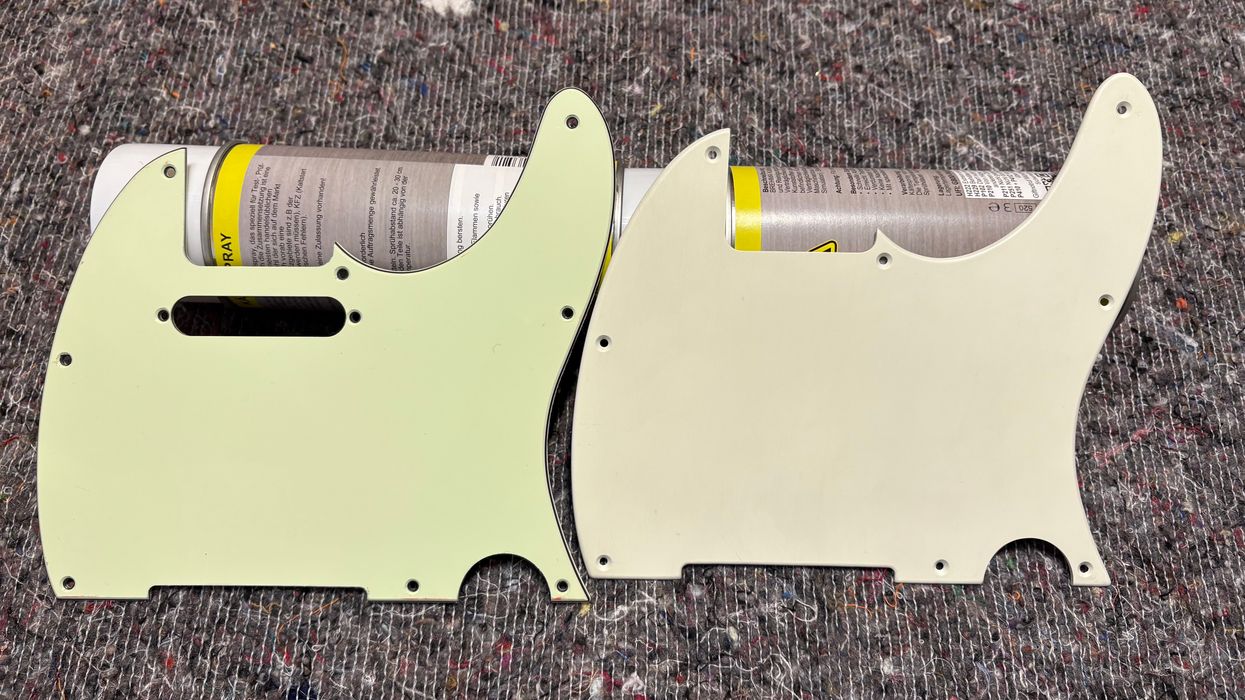
The factory-stock pickguard on this guitar is a 3-ply mint green one, and as they say, there’s no accounting for taste! In my book, a greenish pickguard on a green body isn’t an appealing look, so it had to go. Because I want to transform the guitar to Esquire specs, I had to replace it anyway, and this is a perfect field to let creativity flow and create a custom look: There are countless choices when it comes to materials, from plastic to metal to wood to acrylic glass to leather and beyond. Find the color and pattern you like best, or simply leave the original pickguard with the neck pickup removed for a serious DIY aesthetic. You can cover the hole for the neck pickup with some tape (maybe in a third green color, like neon green!) or simply remove the pickguard for the ultimate outlaw look, exposing the neck pickup routing.
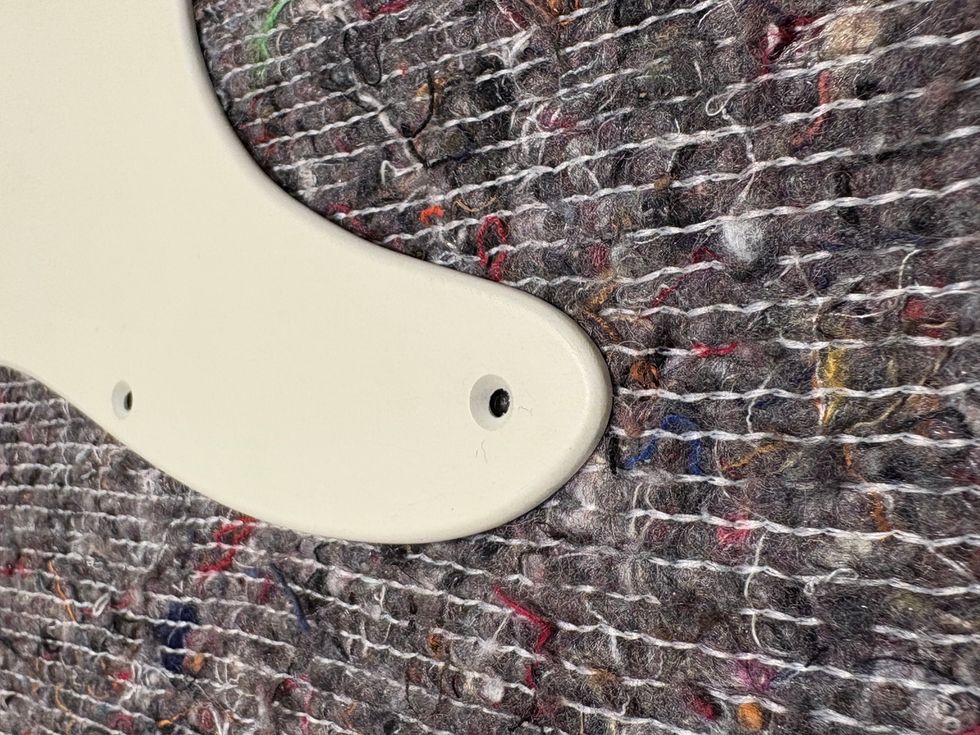
I decided for a classic vintage look, with a twist. After comparing several different pickguard colors, I decided to use a 1-ply nicotine-white guard, which perfectly matches the now-matte look of the surf-green body. The color is also often referred to as parchment, offset white, eggshell white, or vintage white—not white, not cream, but somewhere in between. (Wow, an accidental rhyme!)
You can buy replacement pickguards from plenty of companies, but if you want to keep it strictly DIY, you can purchase an uncut sheet of the material. I already had some nicotine-white blanks in my storage room, so I used the old pickguard as my pattern and a simple jigsaw with different saw blades to carve out the new one. For the curvatures, I like to use a superfine round saw blade, and a standard straight one for even lines. Put some self-adhesive foil on the surface to keep you safe from any accidents.
An Esquire pickguard without the neck pickup opening is easy to fashion, and a perfect beginners’ project for pickguard-making—so be brave! It took me about 20 minutes, plus a few more minutes to drill and countersink the holes for the pickguard screws. After another 10 minutes with some sandpaper and files, the new pickguard was ready, and it looked so much better on the surf green body compared to the stock mint green.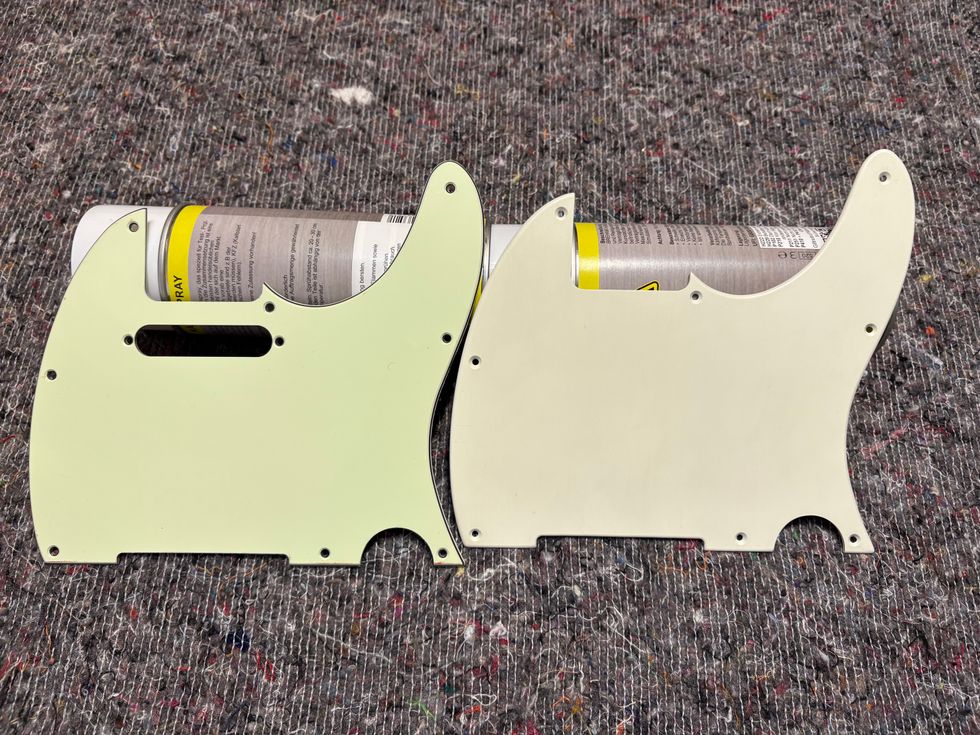
To give the new pickguard a custom-shop twist, I decided to break the shine and make it matte like the body, which was done in just a few minutes by using some fine 0000-grit steel wool and abrasive cloth. This easy step makes it look slightly used, and by applying different grades of steel wool and pressure, you can decide on your own exactly how “used” it will look. I decided for a moderate used look that Fender would call “closet classic.”
“Do yourself a favor and replace the tiny screws with heavier ones—better safe than sorry!”
To take it the extra mile, I decided to round all the edges to give it a rolled-edge feeling—very smooth and a pleasure to touch. I thought this would be done in no time, but I was mistaken; it took me almost an hour to look and feel great! That said, rounding the edges isn’t a complicated task, since all you need is some sandpaper wrapped around a wooden rod. The hard part is getting all of the edges totally even, so if you decide to give it a try, prepare some strong coffee and take your time. It was absolutely worth the time, effort … and swearing. I found that the trick was to always get the same angle with the sandpaper, and to stay away from rotating tools like a Dremel.
Now, for the rest of the body. In general, I have a problem with all the screws used on this guitar. The diameter is always smaller compared to the standard, and the material is very soft, which is flirting with stripped-screw-head disaster. Besides this, the chromed surface is super shiny, so I decided to replace all screws with stainless-steel screws in standard sizes. I really like the typical matte look of most stainless-steel screws; they appear a little bit worn right out of the box and are easy to work with. All you need to do to give them the “closet-classic” look is rub the head of the screws with some sandpaper to produce artificial scratches. You can buy matching stainless-steel screws in any guitar or hardware store.
Next, let’s take a look at the factory-stock strap buttons. They’re chromed and standard Fender-sized, so no need to replace them if you want to keep the classic ’50s look. The stock screws are tiny, so I’ll replace them with thicker stainless steel ones. Here, too, you have plenty of options to customize your guitar by using the strap buttons you like best, or, alternatively, removing them. You can use smaller Gibson-style ones made of aluminium, locking buttons, custom buttons made out of wood, graphite, etc ... it’s your guitar, and you decide what to use. But do yourself a favor and replace the tiny screws with heavier ones at this spot—better safe than sorry! The stock strap buttons came with a small ring of black felt to protect the body from any imprints, so it’s your call whether you reinstall or remove them. For a more classic look, I decided to remove them.
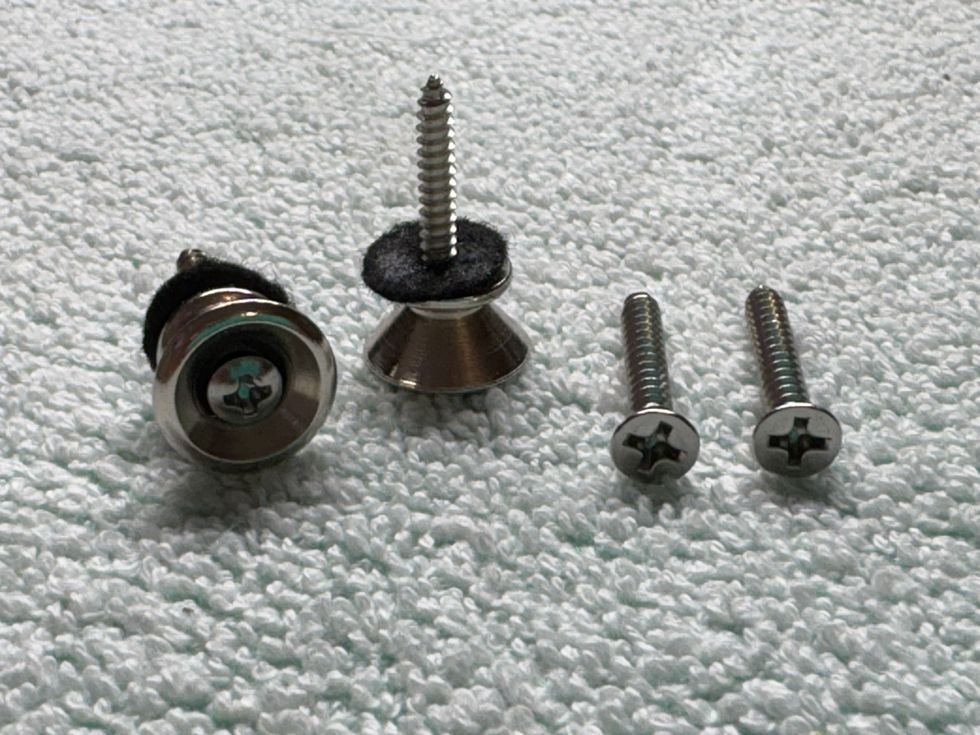
To break the shiny chromed surface of the stock strap buttons, you can again use some steel wool, abrasive cloth, or go the chemical route. Here are two other easy techniques you can use on chrome or nickel guitar hardware.
1. Alternative mechanical methods
Collect a nice mixture of nails, metal parts, broken glass, gravel, sand, little stones, etc., and put this mixture into a small box or a bucket with a lid. Put the hardware inside, close the lid, and shake the hell out of it for a couple minutes to create some nice random scratches, dings, and bumps on the metal parts. The longer you shake, the more weathered it will look. Check the result after a few minutes, and if you want more scratches, keep on shaking.
If you don’t want to shake by hand or plan to do this regularly, I recommend a small stone tumbler like we have in the shop. Usually, they’re used for polishing, which is exactly the opposite of what we want to do, but loading it with our mixture from above will work perfectly for relic’ing metal hardware. When you’re pleased with the result, take the hardware out of the box or tumbler tube, and use a soft brush to clean off any dust.
2. Alternative chemical method
Place the hardware on some old newspapers, put on some gloves and goggles, and put iron (III) oxide (ferric oxide) liquid on the hardware with a Q-tip. Watch carefully, and if you like what you see, stop the process by wiping the liquid off the object with a wet cloth or paper towel, or run it under cold water.
Next month, we’ll work on the rest of our Telecaster’s hardware. I calculated $25 for a new pickguard and another $10 for the stainless-steel screws, so our budget is down to $305 for future investments. Stay tuned, and until then ... keep on modding!
The legendary guitarist that Wolfgang Van Halen calls “the Malcolm Young of metal”

Wolfgang Van Halen is inspired by a number of modern metal players, but his love for Tool runs deep, and his admiration of Adam Jones’ guitar work perhaps even deeper.
WVH’s band Mammoth released their third studio album, The End, back in October. Though it departs from the sound established by the band on their first two albums, the influences of his favourite players still jump out.
Alongside the likes of Foo Fighters and Intervals, Wolfgang has shared his love of Tool a number of times across his music career, and feels that Jones’ approach to guitar echoes that of AC/DC’s Malcolm Young.
He tells Guitar.com, “I think, in terms of every instrument I play – bass, guitar, drums and singing – each member of Tool is on the respective Mount Rushmore for their instrument.
“The first song I heard from them was Third Eye [from 1996’s Ænima], which is funny, because it wasn’t a single or anything. It kind of opened my mind – opened my third eye, so to speak – regarding what music can be. I was like, ‘This is a 13-minute song! Not just a four-minute thing!’ It blew my mind when I was in seventh grade. There’s power in its simplicity: when Adam just holds down the rhythms and almost lets Justin [Chancellor, bass] take the lead, they have such a great connection.”
He adds, “When it comes to rhythm playing, Adam is almost like the Malcolm Young of metal. He is such a fucking awesome rhythm guy, and he’s a great lead guy, too. Things like the talkbox solo on Jambi are just the best.
“In Mammoth, the influence of bands like Tool and Meshuggah will come out in places you don’t expect. If you listen to [the song] The End, the very end of it, there’s this double-kick, half-time, metal-ey thing. They just pop up… It’s never intentional.”
Mammoth’s third album The End is out now. They head out on tour in March – find out more via the official Mammoth website.
The post The legendary guitarist that Wolfgang Van Halen calls “the Malcolm Young of metal” appeared first on Guitar.com | All Things Guitar.
Guitar Talk: Why Trey Hensley Leans on Old Martins and New Taylors—and Why He’s Stepping Out as a Solo Artist

Jason Isbell thinks his Martin guitars are sort of “like a laptop” – and his justification actually makes sense

Jason Isbell has made a rather strange comparison, but it kind of makes sense – his beloved Martin guitars are somewhat “like a laptop”.
Isbell teamed up with Martin for the launch of two signature models back in October, both of which take after his beloved pre-war 0-17 model used across his latest record, Foxes In The Snow.
Speaking to Guitar.com about the guitars, as well as the Grammy nominations for his new album, Isbell likened his use of Martin models to the use of a laptop – not necessarily due to any jazzy technical specifications, but because of how versatile he finds them to be. With a Martin in hand, he gets stuff done.
“I’ve never felt like I could do something that a Martin couldn’t do,” Isbell explains. “You know, it’s kind of like my laptop. Especially with the really good old ones or the nice Custom Shop new ones. It’s like I’m doing emails on here, and this thing could operate a city or an automobile, y’know?”
He adds, “You don’t want your tools to create the ceiling. You want your creativity to create the ceiling and the tools should be able to follow you there. And that’s always been the case for me with Martins.”
The launch consisted of the super limited Martin 0-17 Jason Isbell, with just 50 made available, and the slightly “more accessible” 0-10E Retro Jason Isbell. Speaking of the two variations, he says, “This time around, I felt like a version that was more accessible would be a good idea because I didn’t want to split the difference.
“I feel like there wouldn’t be as much of a purpose in making one that was sort of in the middle of the road. I wanted one version that was as close to the old guitars we could get and then, one version that sort of had the spirit of that guitar, but was a lot more affordable.”
Find out more about Jason Isbell’s signature models via Martin Guitar.
The post Jason Isbell thinks his Martin guitars are sort of “like a laptop” – and his justification actually makes sense appeared first on Guitar.com | All Things Guitar.
“I buried myself in my own coffin”: Matt Heafy opens up on mental health struggles

Matt Heafy has opened up on his struggles with burnout and mental illness, sharing how in 2024 he juggled around 30 projects at the same time.
His band Trivium released a new EP, Struck Dead, in October, which explores his confrontation with his own mind. Though still super busy balancing the writing of the band’s 11th album with fatherhood, Twitch streaming, and more, Heafy has a new perspective on his mental health, and is trying to scale things back.
In an interview with Guitar.com, he shares: “[Last year] I was doing 15 to 20 to 30 projects at the same time. I was producing bands, I was managing bands; I was making all these different products and trying all these different things, like scoring video games and scoring a movie and starting a pop-up restaurant.”
The pressure became too immense, and his bandmates and loved ones staged an intervention. Heafy went on to attend counselling and cognitive behavioural therapy: “What we determined through therapy is that I’m naturally very low on serotonin,” he explains.
“I have to be on SSRIs to help my very low serotonin. Once I corrected that, we realised that I’ve got intense ADHD, anxiety and OCD. I wanted to figure out what makes me tick. Why do I think this way? How can I stop going to such an extreme point every single time?”
Track Six Walls on the new EP is potent with brutal honesty about the darkness that overcame him. He tells us, “I buried myself in my own coffin, and the six walls of this wooden coffin are what I pictured. I’m finally trying to break free. It took, like, a year. It was in January [2025] when I started coming to. On the first tour after treatment – after 38, 39 years of living the same way – I was like, ‘Holy shit! I’m having so much fun!’”
Hear the track below:
Trivium’s new EP, Struck Dead is available now to buy or stream. Find out where you can get support if you’re struggling with your mental health.
The post “I buried myself in my own coffin”: Matt Heafy opens up on mental health struggles appeared first on Guitar.com | All Things Guitar.
The secret difference that Tom Morello uses to tell his original Arm The Homeless guitar apart from his new signature model

Tom Morello’s Arm The Homeless guitar is featured on 22 albums and has accompanied him on every tour from 1998 to the present day. Now, thanks to Fender, you can now get one of your own.
The guitar’s origin story begins sometime around 1986 and 1987. Morello had just moved to LA having graduated from Harvard, and splashed out on a custom guitar from LA’s Performance Guitar USA. Luthier Kenny Sugai had made guitars for Frank Zappa, Joe Walsh and Steve Vai, but there was a problem with Morello’s finished model – he thought it was “crappy”.
Sugai was not to blame for his disappointment, though. As Morello has admitted, he had ordered a custom made instrument with “no idea” what he was doing. He began to completely modify the guitar, changing everything apart from the body wood, leading to the creation of one of the most recognisable and unique guitars of our time.
The model has now been fully replicated by Fender, and proceeds from each sale of the instrument go towards supporting the work of Midnight Mission in Los Angeles, and Covenant House, a charity that helps homeless teenagers across the US.
In a new interview with Guitar.com, Morello assures us that the real Arm The Homeless guitar will still come out for special occasions and remains in the studio “always ready”, but says this new replica is now the one he takes out on the road.
It faithfully emulates the original so closely, that even Morello’s son has struggled to tell them apart. But there is one identity marker on the original guitar that was not included in Fender’s rendition.
“If you look closely you can tell, because a dog chewed the headstock of the Arm The Homeless guitar at some point in the past. And we did not recreate because I did not think that was important to the sound! But you will always be able to tell the real one because it’s been chewed!” Morello explains.
Of the charitable aspect of this guitar collaboration, Morello adds: “It was important that in making a guitar that has spent so many decades on the front lines, fighting for the oppressed and fighting for justice, that there be a justice component to this as well.
“While this guitar is made up of scraps and shards, to get it just right is not necessarily an inexpensive process. And so I want to make sure that there’s a Robin Hood component, where when you purchase this guitar it does filter back into people who really need it.”
You find out more or shop the guitar now over at Fender.
The post The secret difference that Tom Morello uses to tell his original Arm The Homeless guitar apart from his new signature model appeared first on Guitar.com | All Things Guitar.
Universal Audio Paradise Guitar Studio review – all the classic tones you need for home recording?

$199, uaudio.com
Glossing over a period towards the end of the 20th century when it slightly didn’t exist, Universal Audio has been making studio equipment since 1958. It’s also been doing effect plugins since 2002 and amp emulator pedals since 2022, so there aren’t many companies with better pedigree when it comes to creating an entire guitar recording chain in the software realm.
- READ MORE: Neural DSP Archetype: John Mayer X review – is this the Mayer tone plugin we’ve been waiting for?
A plugin for your DAW of choice, Paradise Guitar Studio includes virtual stompboxes, amps, cabs, mics and studio effects – everything you need, in theory, to record high-quality tracks without any hardware except a guitar, a cable and an audio interface. OK, and maybe a pick.
 Amps. Image: Press
UA Paradise Guitar Studio – what is it?
I’ve reviewed most of the aforementioned UA amp pedals, and there’s been something of a common theme: the user experience isn’t always perfect but the tones are fabulous. And the good news is, the amps in this plugin are built on the same software. At least, on some of it…
The thing is, Paradise Guitar Studio is not the sort of ultra-comprehensive offering that will keep you scrolling through dozens of models before you even record a take. UA describes the gear it’s included as a “golden unit” collection, which I think is another way of saying “not very big”.
Three of those pedals were made available as individual plugins over a year ago: the Dream ’65 (based on a black-panel Fender Deluxe Reverb), Ruby ’63 (Vox AC30) and Lion ’68 (Marshall Super Lead). They’re joined here by the Woodrow ’55 (tweed Fender Deluxe) and Enigmatic ’82 (Dumble Overdrive Special), plus another black-panel Fender modelled on the more headroomy Showman. That’s a total of six, which is enough to cover most bases but does mean neither of UA’s recent high-gain amp emulators – the Knuckles and ANTI – is on board. Perhaps these are being held back for a rock and metal add-on?
In terms of effects, there are six drive/distortion options, seven modulation types, four delays and four reverbs, plus two compressors and two EQs. The speaker cabinet selection is a lot more generous – I counted 34 – but each has its own mic (or pair of mics) and you can’t change these or move them around.
Hardcore recording nerds will already be sneering at these limitations, but if you’re new to this sort of thing – or just crave simplicity – it’s still an impressively well-appointed tonal toolbox. And there are loads of user presets to get you started.
 Preset. Image: Press
UA Paradise Guitar Studio – is it easy to use?
Guitar plugins like this have been around long enough now that there’s no excuse for making one that’s difficult to use. Luckily, Paradise Guitar Studio doesn’t need any excuses because it’s as clear and intuitive to navigate as it could possibly be.
The carefully curated selection of models certainly helps with this: there’s no need to go scrolling in search of an amp, because they all fit on one page. But UA also deserves credit for some fine UX design, with everything just where you’d expect it to be and no unpleasant surprises.
There is one more limitation that might bother some shoegazers, soundscapers and ambient drug casualties: you can only use a maximum of five stompboxes in front of the amp. It’s also a bit of a faff to remove a pedal from your virtual pedalboard, except by replacing it with another one. Not a real issue, just an annoyance for neat freaks like me.
 Cabs. Image: Press
UA Paradise Guitar Studio – what does it sound like?
Those fabulous amp tones I mentioned earlier? They’ve made it safely across from the real world to the virtual one. All are beautifully realistic and three-dimensional, with special mention going to the rich chiming midrange of the Vox model and the sweetly thick scuzz of the tweed Deluxe. Side-scrolling through the cabs brings instant access to all the options you could want for that all-important final stage of tone shaping, and you’re then free to play around with EQ, compression and reverb.
Both black-panel Fender amps work well as clean platforms for the pedals – and this, lest we forget, is another field where UA has plenty of experience. Its range of standard effects boxes is now 14-strong, so it’s no surprise that the delays and reverbs in particular are well up to scratch.
This is one area where you might find yourself longing for more choice, though. The six dirt options are a Muff, a Rat, a Klon, a Tube Screamer, a Fuzz Face and a Nobels ODR-1 – solid picks. But when it comes to modulation, three of the seven models are choruses – what is this, 1985? – along with a tremolo, a vibrato, a flanger and a phaser. This latter has just a single knob for speed, MXR-style, and a switch for vintage or modern voicing.
Still, you do have the option of going hybrid – combining your own real pedals with Paradise Guitar Studio’s virtual amps. So maybe it isn’t time to toss all your trusty old hardware onto a giant bonfire just yet.
 Dirt. Image: Press
UA Paradise Guitar Studio – should I buy it?
There are two very clear reasons not to buy this plugin. If you’re a metal fan looking for your next fix of high-gain chuggage, you’re not going to find it here; there are plenty of other plugins for that, though. Or if you’re a dedicated tone-sniffer who demands hundreds of options and complete control over every imaginable parameter, you’re not going to find that either. For everyone else, UA’s impeccable tones should prove more than enough.
 Mod. Image: Press
UA Paradise Guitar Studio alternatives
If varied options is your bag, the one to beat in this race is IK Multimedia AmpliTube 5 Max V2 (€99.99), which includes a huge array of pedals, amps, cabs, mics and virtual recording spaces. Its many challengers include Positive Grid Bias X ($149); but if you fancy something even simpler than UA’s offering, try the MixWave JHS Loud Is More Good Collection ($179) with its five pedals and one amp.
The post Universal Audio Paradise Guitar Studio review – all the classic tones you need for home recording? appeared first on Guitar.com | All Things Guitar.
Why Is Rhythm Guitar So Hard?
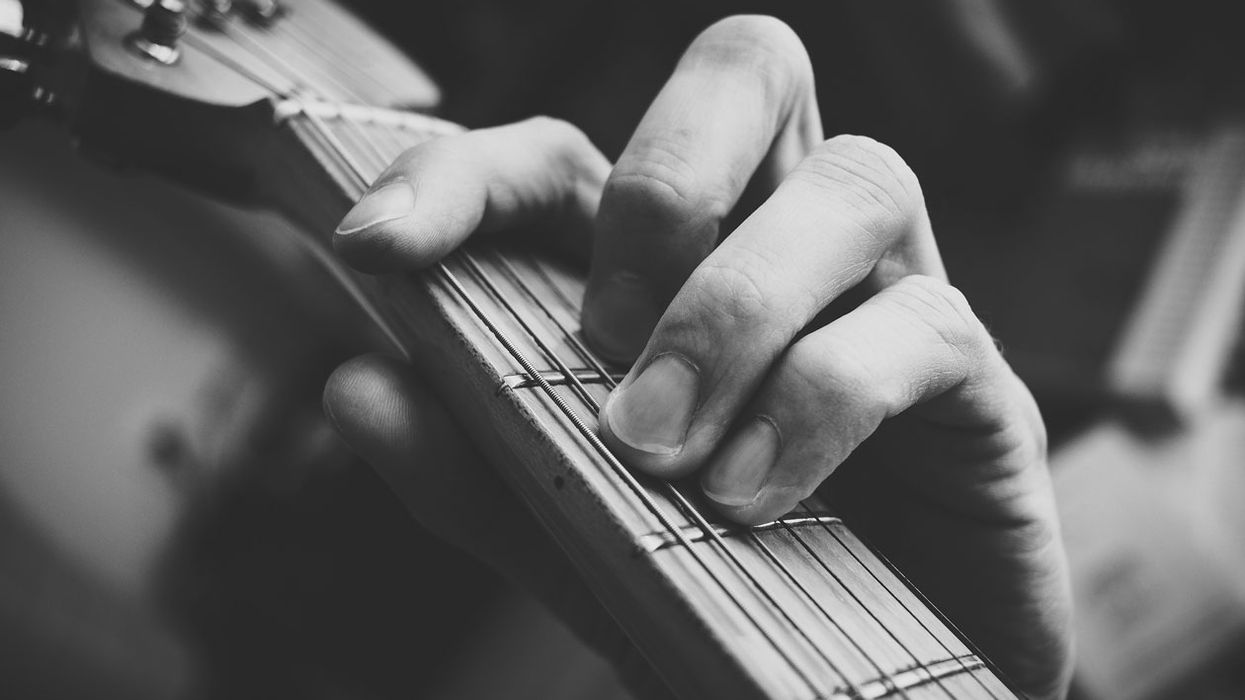
Rhythm guitar is arguably the most important aspect of guitar playing, and it’s also one of the most challenging skills to develop. The discouragement many players feel when working on rhythms forces too many of them to oversimplify the nuances, and this can reduce a performance from exceptional to fine. In this lesson, we’ll investigate why rhythm guitar can be so puzzling and look at a few ways to keep yourself motivated enough to persevere and improve.
Why So Hard?
In my many years of teaching I have found that students can learn the basic open-position chord shapes relatively quickly. The same goes for the pentatonic and major scale patterns. Even riffs and hooks like “Smoke on the Water,” “Crazy Train,” and “Oh, Pretty Woman” come relatively quickly to beginners. The biggest challenge for most guitar players is mastering rhythm guitar.
I’m not referring to the basics, such as four down strums in a measure of 4/4, a down and up eighth-note strum, or even the slightly syncopated strum of Ex. 1.
Ex. 1
Rather, I’m talking about the rhythms in countless classic rock, folk, and pop songs, which are the mainstays—for better or worse—of every oldies station, cover band’s setlist, and many aspiring beginners’ guitar dreams. Why are these rhythms so challenging for most players?
Dictionary.com defines idiosyncratic as “something peculiar to an individual.” Well, there’s your answer. Many of our favorite songs and guitarists, such as Neil Young, Malcolm and Angus Young, Joni Mitchell, David Gilmour, Jimi Hendrix, and Prince, possess idiosyncratic strums. How can something peculiar to an individual be easily reproduced? It can’t. Imitation takes hard work, hours of practice and refinement, and highly developed listening skills. That is not to say that idiosyncratic strums can’t be reproduced, only that they can’t be imitated easily.
What Can Guitar Players do to Improve Their Rhythm?
The first priority is to confirm that you genuinely know how the rhythm was originally performed. In this day and age, with reliable, professionally created guitar transcriptions and instructional videos (as well as an abundance of isolated rhythm guitar tracks on YouTube), there is ample opportunity to both hear and see accurate rhythms. This doesn’t make the rhythm immediately easier to play. It will help you avoid practicing it incorrectly and allow you to generate modifications based on the original, rather than through guesswork.
Play the Part Correctly and Slowly
The second step I recommend is to endeavor to play the part correctly and slowly. This requires playing the rhythms with slower tempos and one measure at a time rather than the more common four-measure patterns. This second aspect is important as many idiosyncratic strums vary from measure to measure. Such a lack of uniformity adds to the artistry of the music, but it can be frustrating to imitate.
For instance, look at Ex. 2, which is similar to Pink Floyd’s “Wish You Were Here.” While the chords themselves, G–C–D–Am, are easy enough to fret, the strum pattern is a nightmare of mixed rhythms, with each measure not only containing a different pattern, but different string choices as well. (To make it even more tricky, David Gilmour continues to vary his rhythms throughout the song.) Let’s consider just the first measure. There’s only one chord, but three different rhythmic figures. It gets even worse than that. Sometimes the strum includes all six strings, other times one note, two notes, or three notes. Maddening! This is one of the most challenging aspects of idiosyncratic rhythm. And these types of variations show up over and over again in accurate portfolio transcriptions. Yes, it is correct, but it’s an ordeal to decipher.
Ex. 2
Here’s a tip. First work on the strum, not the individually plucked notes and strings. Strum the entire G chord (Ex. 3). Next, isolate the lowest note in the chord (Ex. 4). If you can play this correctly then you can begin mixing it up with a combination of full chords, single bass notes, and partial chords. Trust me, Gilmour wasn’t thinking, “Gotta play just the top three strings on the 16th-note upbeat of beat two and the two bottom strings on the ‘and’ of beat four.” It’s idiosyncratic! Once you have measure one correct, move on to measure two, which is slightly different. Measures three and four are also marginally altered.
Ex. 3
Ex. 4
Hopefully you’ll find that one new rhythmic pattern on its own is relatively manageable. Having to generate four different patterns in the space of four measures? In that situation, strums become exponentially more complex. As this lesson moves forward, all the examples will be variations on this theme, in different contexts, and citing different specific artists. The idea here is to demonstrate the vast complexity idiosyncratic playing can generate.
Neil Young's Strumming Patterns
In my experience, Neil Young has some of the most seemingly random strums one can find. He’ll play a song with only four chords but there will be 16 different strum patterns. It’s both inspiring and infuriating. Ex. 5 is an example of such an exasperating figure, based on “Heart of Gold.” There are four chords in two measures, each with a different strum, followed by variations on the same four chords! Brilliant and unbearable.
Ex. 5
Ex. 5
To make mastering this a bit more tolerable, as with the previous Gilmour-esque pattern, break it down into smaller parts. You’ll also want to add full chord strums on the Em and C. Ex. 6. and Ex. 7 demonstrate measures three and four of Ex. 5, isolated and repeated. Do this for the first two measures as well.
Ex. 6
Ex. 6
Ex. 7
Joni Mitchell's "Big Yellow Taxi"
Another icon of individuality is Joni Mitchell, who deserves a lesson all to herself. For now, Ex. 8 will suffice. In this example, based on “Big Yellow Taxi” (although the original is performed in open-E tuning), there is the added complication of muted strums.
Ex. 8
If these muted strums are new to you, I recommend you focus on the mutes, as shown in Ex. 9. Once that is comfortable, return to Ex. 8 and incorporate the barre chords into the pattern. As with all our examples thus far, break them down, making sure each measure is solid before moving on to the next. At the risk of belaboring the point, these strums are demanding—there is no instant gratification here. “Practice and refine” should be your mantra.
Ex. 9
Let's Talk About Jimi Hendrix
It would be impossible to write about either guitar icons or 6-string idiosyncrasy without mentioning Jimi Hendrix. Jimi’s use of his thumb to fret chords is alone worthy of attention. For now, let’s stick with his eccentric strumming patterns. A good place to start is probably Hendrix’s version of “Hey Joe.” It consists of a three-and-a-half-minute loop of the circle of fourths chord progression C–G–D–A–E, yet Jimi finds a new way to play the pattern every time. Ex. 10 offers one of countless variations you can attempt. Ex. 11 demonstrates how to break it down.
Ex. 10
Ex. 11
While it’s true that most AC/DC songs feature the same riff or chord pattern played repetitively, you’ll also find that many of those patterns are four measures long, with multiple, highly syncopated rhythms found within each measure. “You Shook Me All Night Long,” “Bad Boy Boogie,” and “Highway to Hell” are all excellent examples of this. Ex. 12 demonstrates Malcolm and Angus Young’s penchants for such patterns by imitating the rhythms of “For Those About to Rock (We Salute You).” As you can hear, there are four measures with an immense amount of space in them and four different rhythmic figures. The key to perfecting this sort of rhythm is to not rush. Either tap your foot or use a metronome to keep your tempo steady.
Ex. 12
Our final example isn’t exactly idiosyncratic, though the referenced artist is. While Prince’s music and personal style is incredibly diverse, he often wears his influences on his sleeves, whether those be James Brown, Jimi Hendrix, or Joni Mitchell. Nevertheless, he habitually put his own spin on the source inspiration.
Ex. 13 provides you with a funky rhythm that will improve your playing, no matter what genre you specialize in, as it features muted strings (similar to those in our Joni Mitchell example), a fast syncopated 16th-note strum, and a four-measure pattern that requires you to focus on the subtle variations found in the pattern. Once again, I’ll remind you to practice such patterns one measure at a time. Goodness, any one of these measures is funky enough on its own and would satisfy most funk musicians: It’s the idiosyncratic nature of Prince to go beyond.
Ex. 13
Ex. 14 is measure three of Ex. 13 isolated and repeated. I’ve chosen this measure because for me it’s the easiest to play (always start with what’s easiest for you). Note that in Ex. 14, I removed the muted strums. We know they’re in the original and we can add them in soon enough, as demonstrated in Ex. 15.
Ex. 14
Ex. 15
Finally, let’s play all four measures without the mutes, as demonstrated in Ex. 16. It is this sort of compartmentalized, methodical, attention-to-detail practice that will improve your playing.
Ex. 16
Words of Encouragement
Ironically, one of the best things I can tell you about practicing the guitar is, “Learning to play guitar is hard!” I don’t say this to discourage, but to give perspective. If it’s taking you a week to learn a certain rhythmic pattern, guess what? It might take you a month to really get it down. Still, the rewards are worth the effort. Good luck with your rhythms!
Get Slash Tones Without Breaking The Bank
Slash’s tone is often regarded in gear circles like buried treasure—elusive, highly coveted, and shrouded in the mystique of modified vintage Marshalls and “Holy Grail” '59 Les Pauls. For most aspiring players, achieving that sound feels unattainable due to the specificity of the gear and the level of precision required to capture his Appetite for Destruction-era tone. In the first installment of a new video series, Blueprints, PG contributor Tom Butwin demonstrates that the "blueprint" isn't a locked vault; it’s a set of principles you can follow using modern, accessible tools.
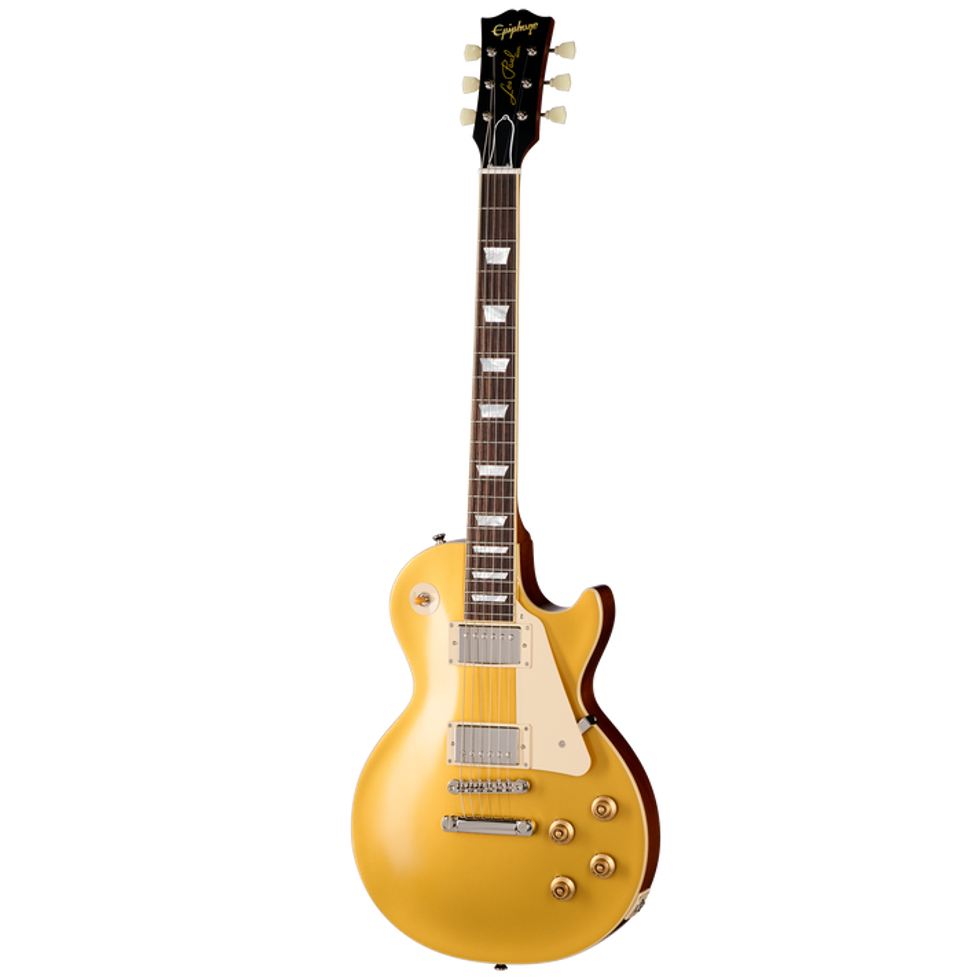
IGC 1957 Les Paul Goldtop Reissue, Double Gold
An Inspired by Gibson Custom reissue of the classic humbucker-equipped ’57 Goldtop –
1957 was the year that the Les Paul™, as most players think of it today, truly came into its own. It was the first full year that it had Patent Applied For humbucker™ pickups installed. The humbuckers, along with the ABR-1 Tune-O-Matic™ bridge and Stop Bar tailpiece that first appeared on a Les Paul with the introduction of the Les Paul Custom in late 1953 and on the Goldtop in late 1955, were defining features that many players still prefer over the earlier models that had a wraparound bridge/tailpiece and P-90 pickups and made the Les Paul into a true fire-breathing rock icon. Now, Epiphone, in collaboration with Gibson Custom, is very proud to introduce the 1957 Les Paul Goldtop Reissue, a stunningly authentic Inspired by Gibson Custom reissue of those early humbucker-equipped Les Paul Goldtops that delivers vintage Les Paul looks and performance at an accessible price. The 1957 Les Paul Goldtop Reissue isn’t just a guitar; it’s a bridge to a symphony of possibilities, willing and ready to help you make your own mark on music history.
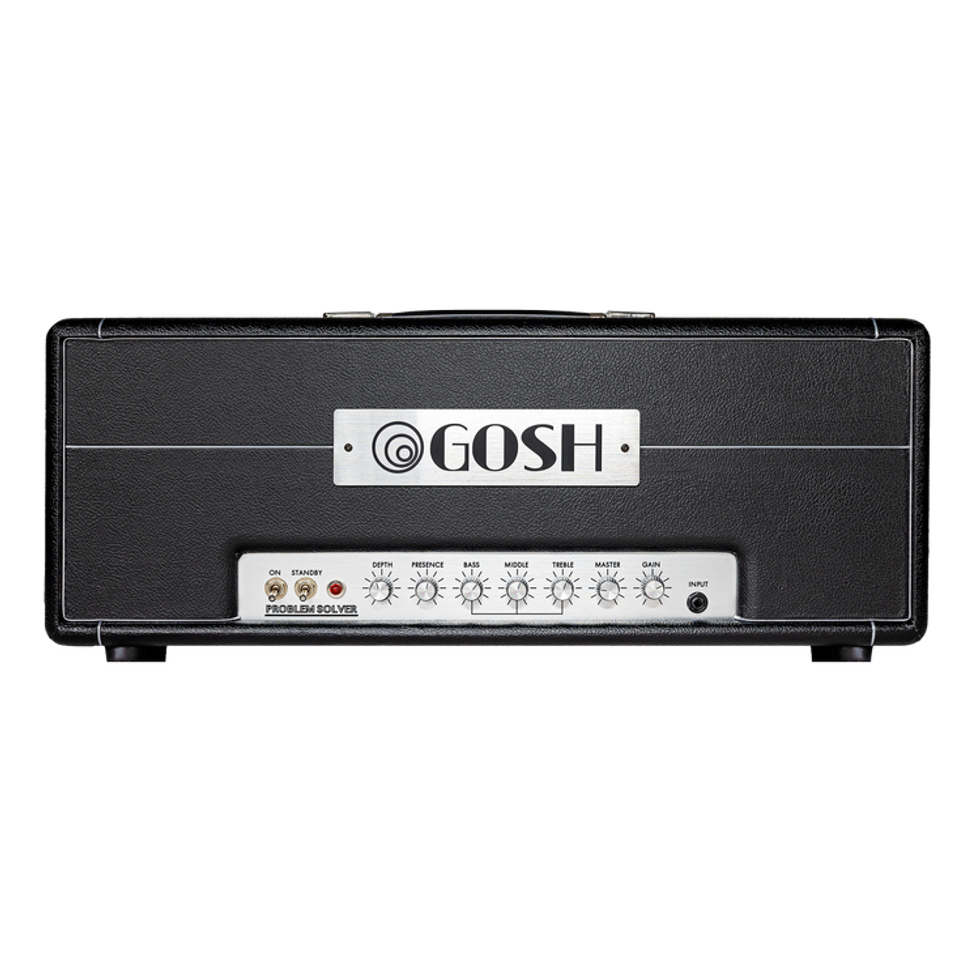
Problem Solver 50
What sets the Problem Solver apart is its thoughtful array of features, carefully curated to empower your creativity. The AGE switch lets you tailor your tone stack to different eras – whether you crave the cutting-edge brilliance of 1963, the aggressive bite of 1966, the mid-heavy roar of 1981, or the warmth of 2023, it's all at your fingertips.
The Mid Boost switch elevates your highs and mids, ensuring your solos cut through the mix with unparalleled clarity. The Depth control allows you sculpt the low-end frequencies. And the revamped EQ controls provide a logical, intuitive layout, ensuring that you can sculpt your sound effortlessly, straight out of the box.
In the end, the Problem Solver Amplifier isn't just an homage to the past—it's a celebration of timeless tone, reimagined for the demands of today's musicians. Join us on this journey and discover a new era of sonic possibilities. Plug in, play, and let the music do the talking – the Problem Solver has arrived.
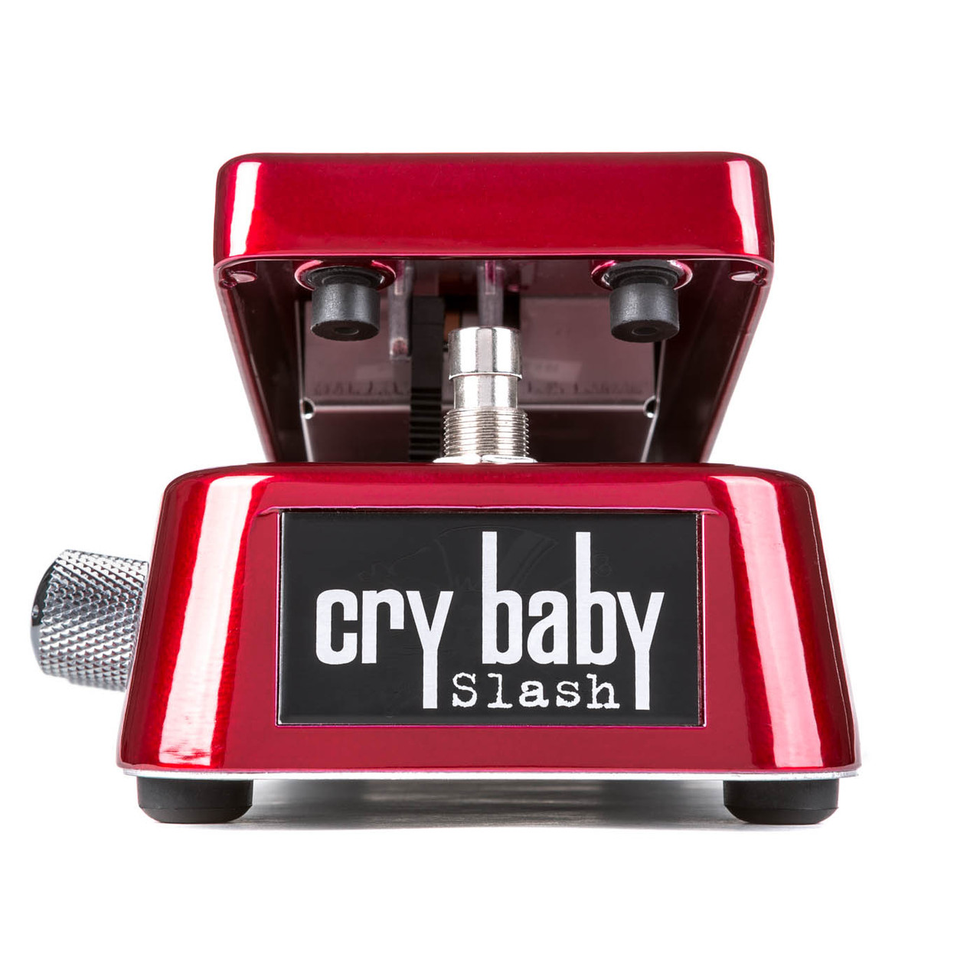
SLASH CRY BABY® WAH
This Cry Baby Wah combines high gain distortion with the Classic circuit for Slash's cutting lead tone, with LEDs to indicate effect status.
This pedal can be powered by two 9-volt batteries, a 18-volt adapter or the DC Brick™, Iso-Brick™ and Mini Iso-Brick™ power supplies.
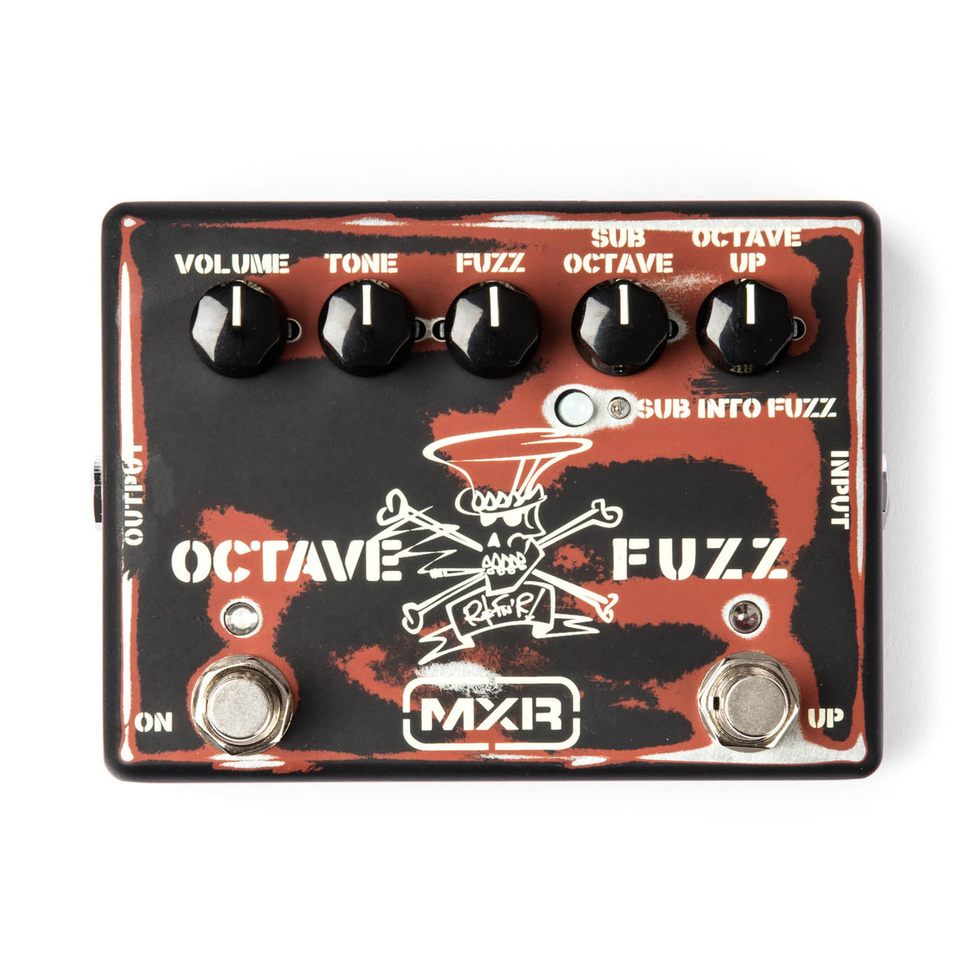
SLASH OCTAVE FUZZ
The Slash Octave Fuzz combines searing fuzz with a sub octave grow and an array of controls for fine-tuning your sinister sound.
This pedal can be powered by a 9-volt battery, a Dunlop ECB003 9-volt adapter, or the DC Brick™, Iso-Brick™, and Mini Iso-Brick™ power supplies (not included).
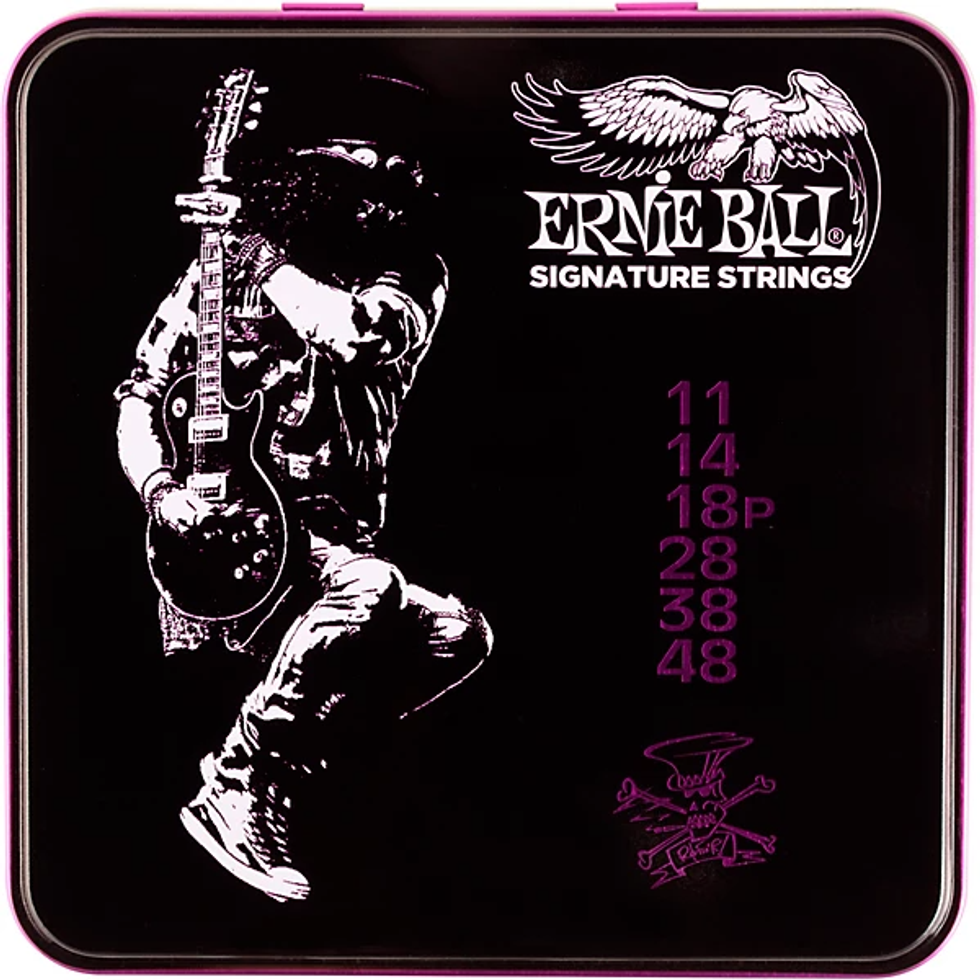
Limited-Edition Slash Signature Strings Set .011-.048
Ernie Ball introduces a limited-edition set of custom-wound Slash signature Slinky strings. Slash’s signature string sets are the culmination of over three decades of Slash and Ernie Ball’s ongoing pursuit to create strings that provide more durability and tuning stability without sacrificing tone or feel. These sets consist of Slash's preferred 11-48 gauge Slinkys wound with Paradigm core wire and plasma-enhanced nickel-plated steel wrap wire, while the Paradigm plain strings are constructed with a heavier brass wire reinforcement at each of the ball ends for better tuning stability and strength. These limited-edition string sets are highly collectible and conveniently packaged in a three-pack embossed tin for easy storage.
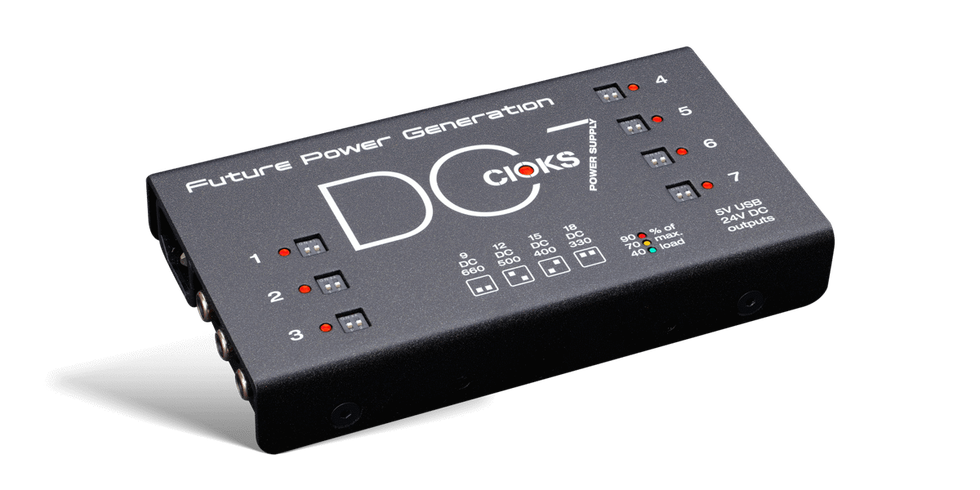
DC7
The groundbreaking DC7 has a one-inch (25,4mm) profile and weighs 1.1 pound (500 grams) thanks to the pure 2-stage switch-mode technology inside. The profile may be low but the power ratings are certainly not – the DC7 puts out a maximum of 48W and allows the user to connect multiple high-current effects such as devices from Effectrode, Line 6 and Eventide without noise of any kind.
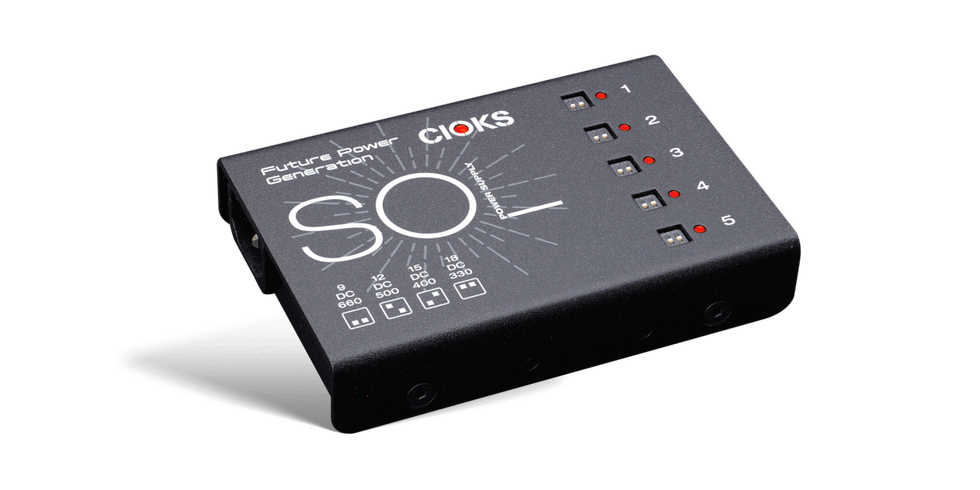
SOL
SOL is the ultimate solution for bringing life to a small to medium-sized pedalboard setup, especially if you are using power-hungry pedals. SOL is the smallest mains-powered switch-mode power supply we make at CIOKS (no wall-warts here) and the no-frills design plus massive power will leave you free to focus on your creative spark.
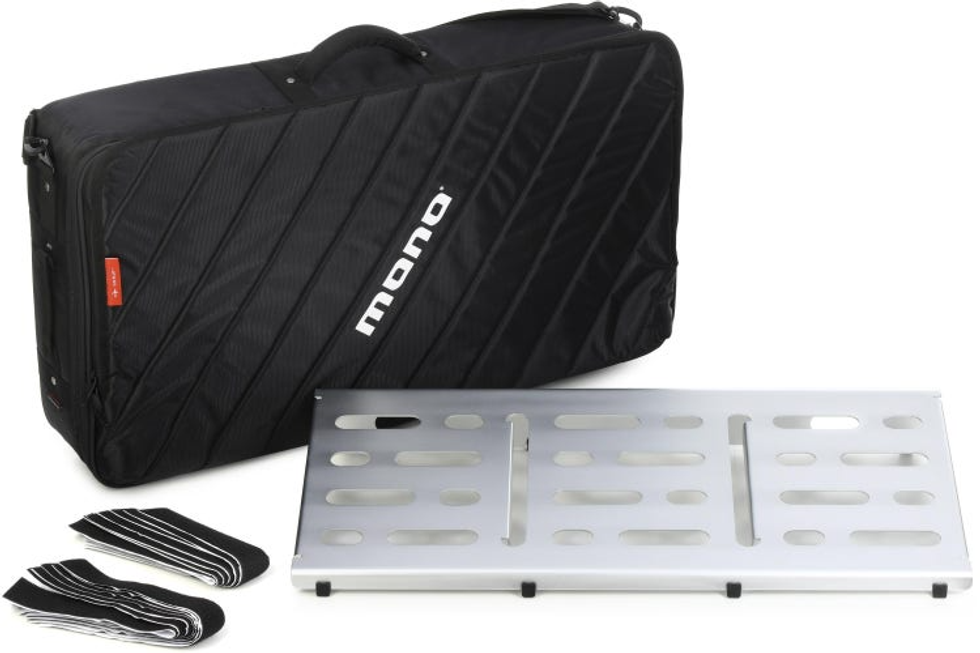
Pedalboard Large with Pro Accessory Case 2.0
This is it — the granddaddy of Pedalboard series. The MONO Pedalboard Large is a pro-sized and -featured pedal solution that won't weigh you down in size or cost. The Pedalboard Large is cut from a single piece of anodized aluminum for superior strength, light weight, and an elegant textured surface. Cutouts along the surface hide pedal jumpers and power cables for a streamlined, professional look. Rubber feet on the bottom absorb shock and prevent the Pedalboard Large from sliding across hard surfaces as you stomp.
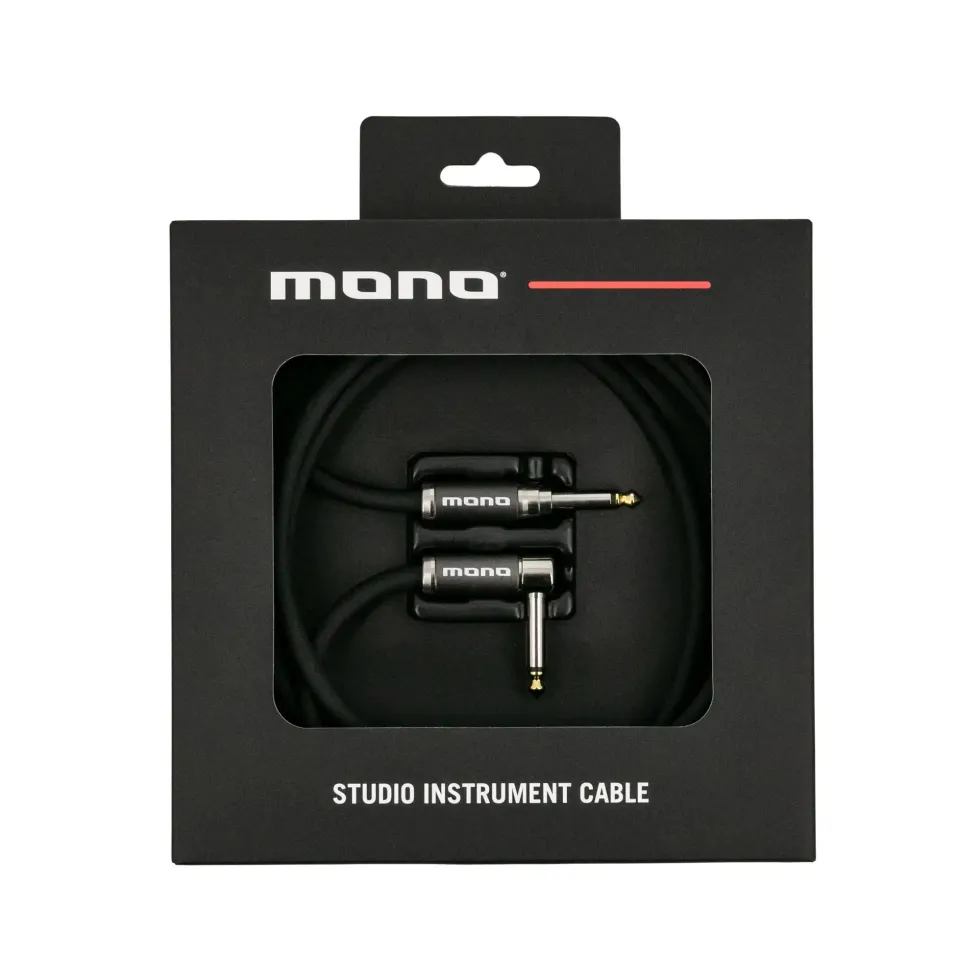
Studio Instrument Cable
Built for musicians chasing studio-grade clarity, the MONO Studio Instrument Cable delivers pure tone and zero compromise. Inside, 150 strands of 0.08 mm oxygen-free copper give you detailed highs, tight lows, and everything in between. Precision insulation keeps your signal clean from the first take to the final mix.
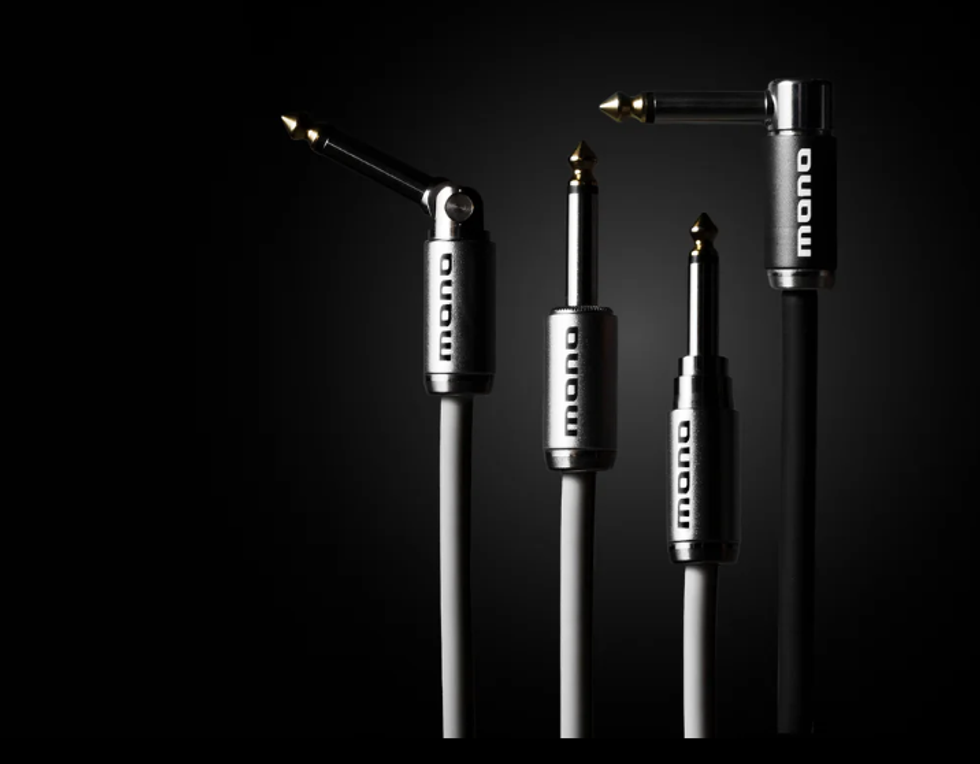
Instrument Cables
Engineered for clarity with oxygen-free cores with precision insulation and shielding to reduce interference and keep signal clear.
Slash Blueprints Giveaway!

Want to sound like Slash? Grab your chance with the Slash Blueprints Giveaway!
Slash Blue Prints Giveaway
See it in action!
Welcome to our new video series, Blueprints. In the first episode, PG contributor Tom Butwin features Slash and explores the architectural DNA of the top-hatted rocker's legendary sound.
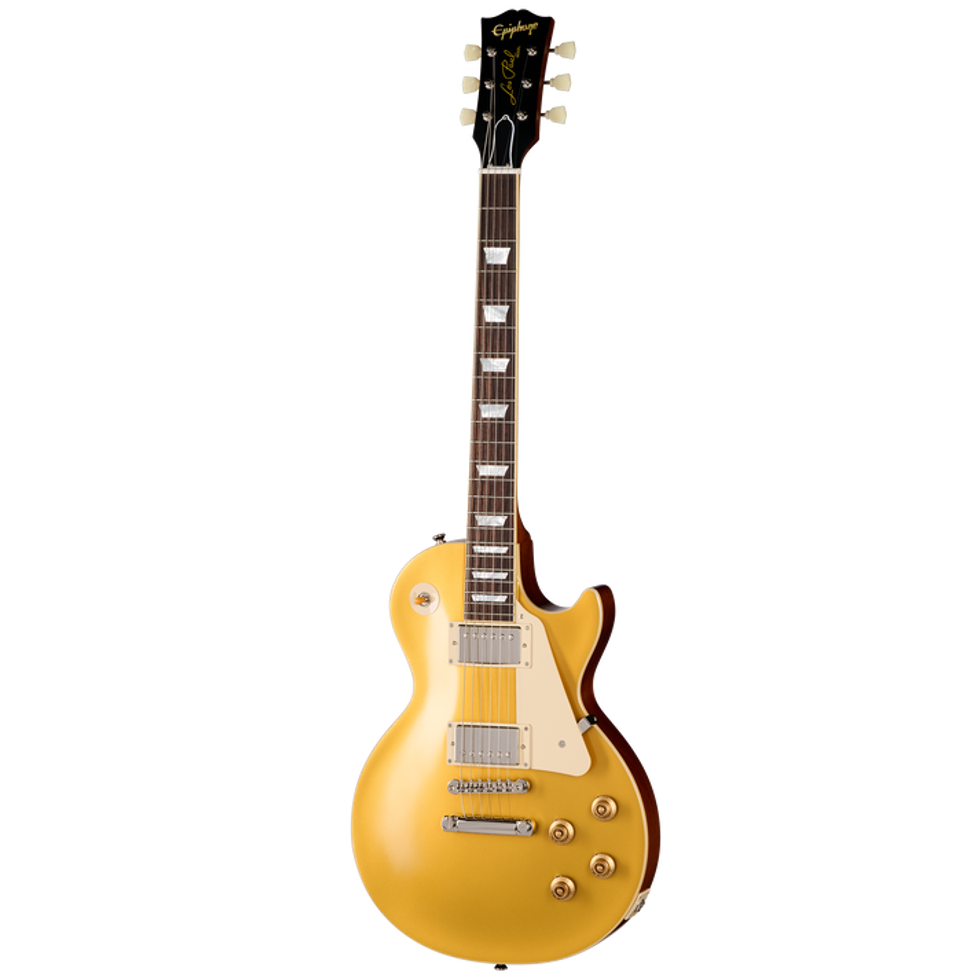
IGC 1957 Les Paul Goldtop Reissue, Double Gold
An Inspired by Gibson Custom reissue of the classic humbucker-equipped ’57 Goldtop –
1957 was the year that the Les Paul™, as most players think of it today, truly came into its own. It was the first full year that it had Patent Applied For humbucker™ pickups installed. The humbuckers, along with the ABR-1 Tune-O-Matic™ bridge and Stop Bar tailpiece that first appeared on a Les Paul with the introduction of the Les Paul Custom in late 1953 and on the Goldtop in late 1955, were defining features that many players still prefer over the earlier models that had a wraparound bridge/tailpiece and P-90 pickups and made the Les Paul into a true fire-breathing rock icon. Now, Epiphone, in collaboration with Gibson Custom, is very proud to introduce the 1957 Les Paul Goldtop Reissue, a stunningly authentic Inspired by Gibson Custom reissue of those early humbucker-equipped Les Paul Goldtops that delivers vintage Les Paul looks and performance at an accessible price. The 1957 Les Paul Goldtop Reissue isn’t just a guitar; it’s a bridge to a symphony of possibilities, willing and ready to help you make your own mark on music history.
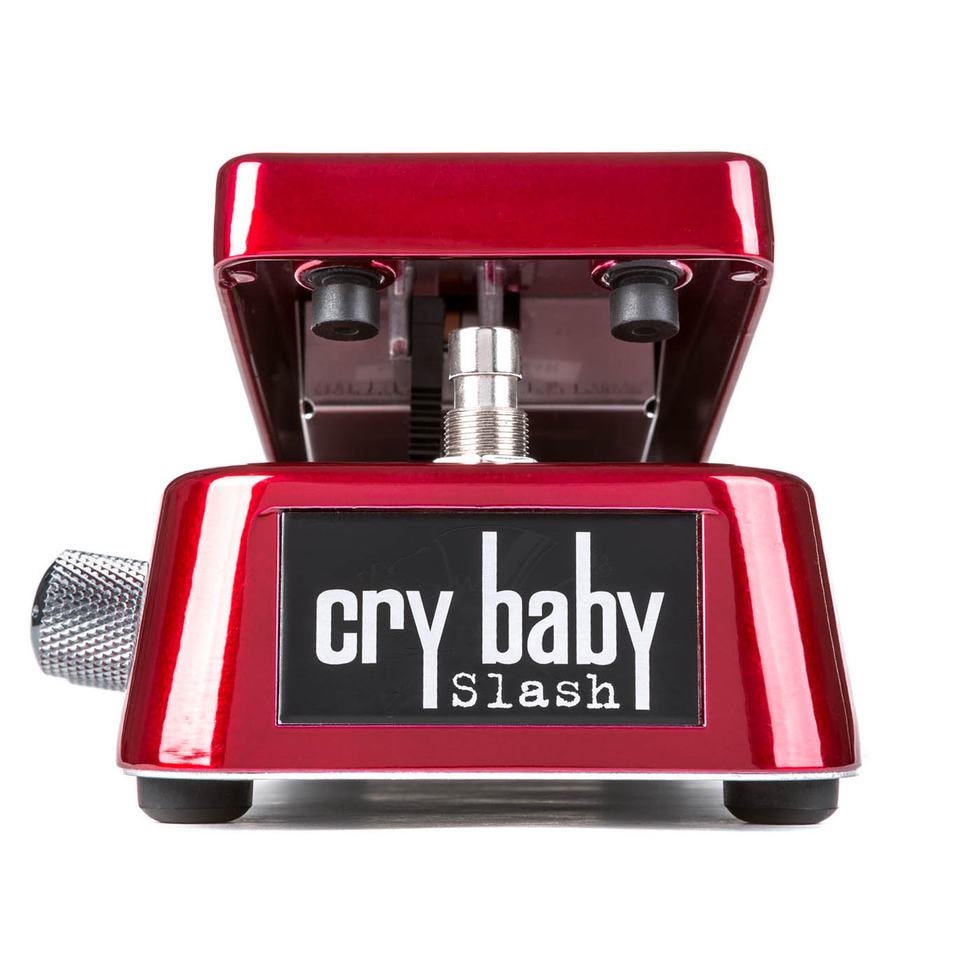
SLASH CRY BABY® WAH
This Cry Baby Wah combines high gain distortion with the Classic circuit for Slash's cutting lead tone, with LEDs to indicate effect status.
This pedal can be powered by two 9-volt batteries, a 18-volt adapter or the DC Brick™, Iso-Brick™ and Mini Iso-Brick™ power supplies.
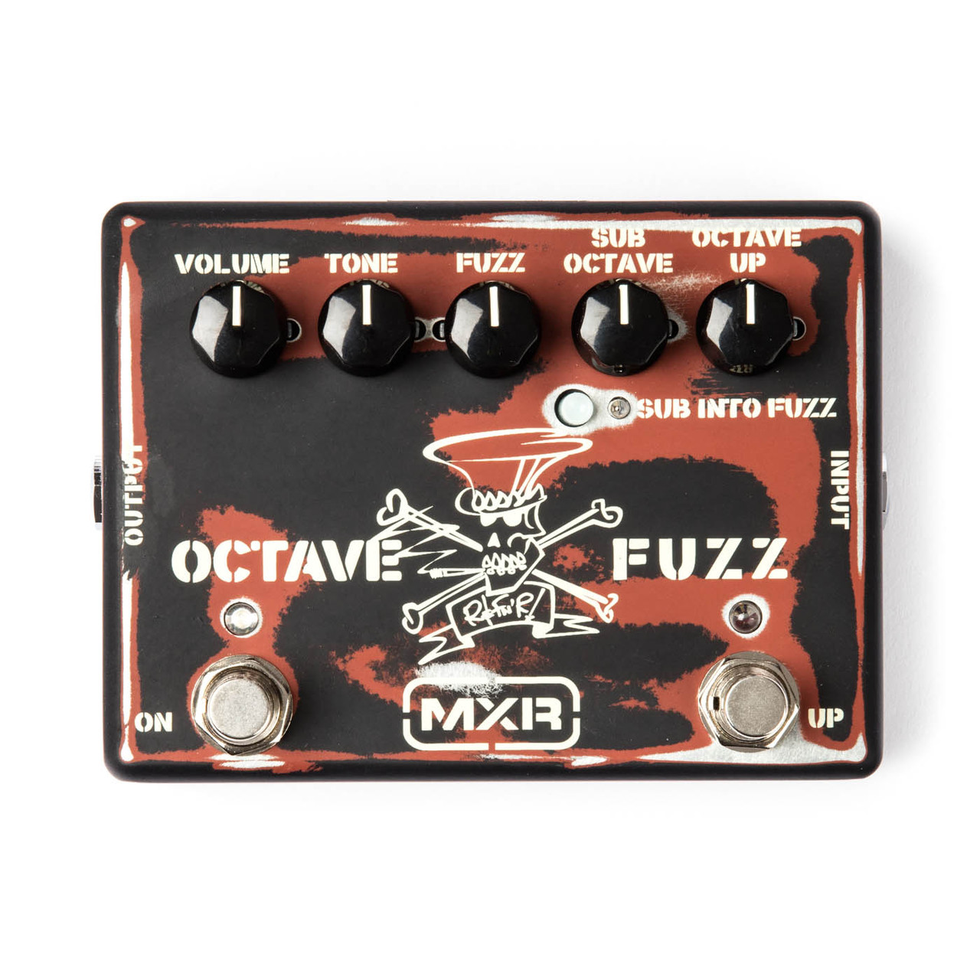
SLASH OCTAVE FUZZ
The Slash Octave Fuzz combines searing fuzz with a sub octave grow and an array of controls for fine-tuning your sinister sound.
This pedal can be powered by a 9-volt battery, a Dunlop ECB003 9-volt adapter, or the DC Brick™, Iso-Brick™, and Mini Iso-Brick™ power supplies (not included).
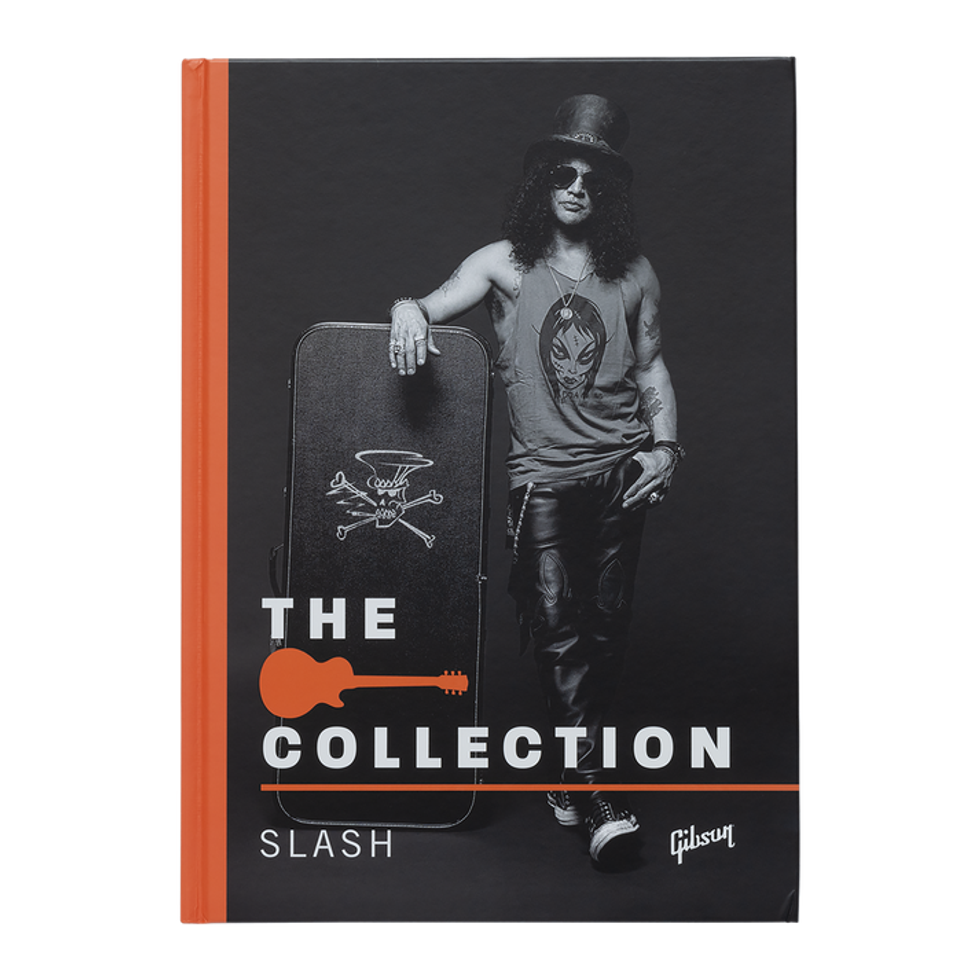
The Collection: Slash, Standard Edition
This premium coffee table book explores in unprecedented detail the instruments Gibson Global Brand Ambassador and rock legend Slash has used on countless hit records and on stages worldwide, in front of millions of adoring fans.
Gibson Publishing, headquartered in Nashville, Tennessee, is the next major step from Gibson Brands, contributing to the evolution of collaborative artist partnerships and promoting music and music-related topics to fans worldwide. As with the recently launched Gibson Records, the first project for Gibson Publishing is a collaboration with Gibson Global Brand Ambassador and rock legend, Slash.
EarthQuaker Barrows Review
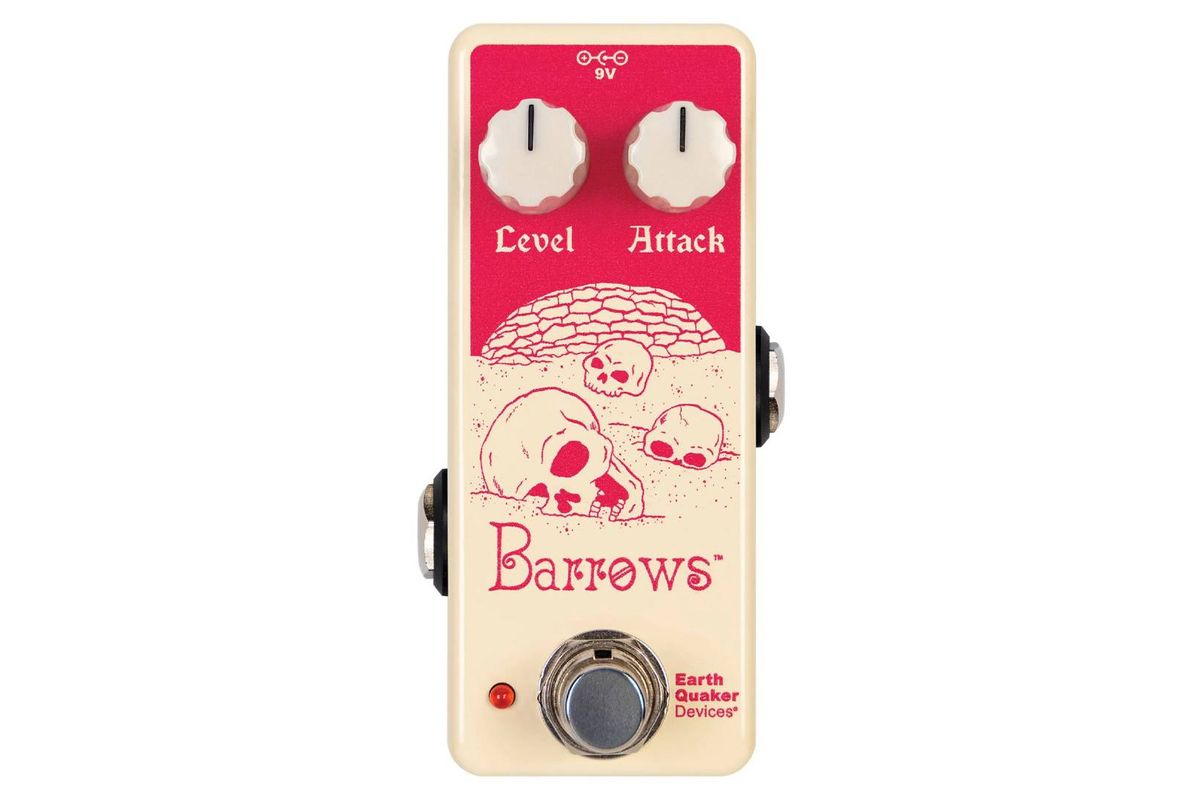
Among the many fuzz pedals to carry the Tone Bender name, the MkII might be the one that rips the most. And though not as common as the Vox Tone Benders that American psych-punk fans wrestled with for decades—which were generally Mk1.5 or MkIII versions—it might have been the Tone Bender version that people experienced the most thanks to Jimmy Page. As Page superfans and fuzzspotters outed the MkII as the sound of Led Zeppelin, it came to embody what a Tone Bender should be. Consequently, a lot of builders jumped on the bandwagon.
There is a practical, musical upside to the MkII that transcends the Jimmy Page associations. Some desert, doom, and stoner rockers, for instance, love its ability to sound huge and evil while occupying less mix space than a Big Muff. And while not as sweetly sensitive to input dynamics as the Fuzz Face (or the very Fuzz Face-like Tone Bender Mk1.5 and first-generation Vox Tone Bender), its germanium transistor topology makes it responsive to guitar-volume attenuation. EarthQuaker’s new take on the MkII, the Barrows, shares all these attributes. And between its very convenient size and refinements that make it less noisy, Barrows represents a ceratin sonic, functional, and practical ideal of what a vintage-style germanium fuzz can and should be in 2025.
Savage, Sassy, and Sweet
Doctrinaire thinking around germanium fuzz usually states that it sounds good only at maximum volume and gain levels and that any variation must come from the fingers and guitar controls. The Barrows reveals the cracks in this view. While the Barrows is positively searing at wide-open settings, and most receptive to input dynamics at these levels, it shines at many different gain and level settings. There are heaps of cool, smoky, more subdued fuzz sounds lurking in the middle third of the gain range that can be useful for simultaneously creating mystery and generating menace and mass in a recording situation without blowing the room apart with volume. The Barrows is not as touch-sensitive here, but guitar-volume adjustments can create dark, compelling fuzz voices that are equally interesting with a 50-watt amp and a 2x12 cabinet or a practice amp.
MkII Tone Bender-style circuits have always been regarded as second-best to the germanium Fuzz Face when it comes to gnarly-to-clean range. That dictum remains mostly true in the Barrows, at least as far as clean tones go. But if the Barrows can’t quite equal a Fuzz Face’s capacity for airy clean sounds at reduced guitar volume, its near-clean sounds still have abundant clear, bell-like resonance and detail that will suffice for most. The Barrows’ dynamic range is most evident in its touch sensitivity. You can generate many beautiful, spooky, and smoldering gain shades just by varying picking intensity. It’s especially impressive if you ditch your pick and use your fingers to generate these tone variations. And if you want to go super old-school and string up your guitar with flatwounds, the Barrows reveals many beautiful, round, and vocal fuzz colors. More than once, I was moved to think that if Sinatra was a psych-punk he would have adored the atmospheric, verge-of-exploding moods Barrows can produce in these environs.
“If Sinatra was a psych-punk he might have adored the atmospheric, verge-of-exploding moods Barrows can produce.”
The Verdict
For a fuzz nut, the Barrows—for its small size and big sound—might as well be candy. Players that use fuzz more infrequently, though, will dig its simplicity, small dimensions, and the fuzzy classicism exuded by its punchy, straight-ahead voice. The pedal is intrinsically limited by the same factors that limit any germanium fuzz with 1960s lineage. And by the standards of modern gain devices that can be tuned in small increments to match very specific distortion needs, the Barrows can, at times, seem unruly and one dimensional. But if you’re willing to use guitar volume and tone and touch dynamics to re-shape the fuzz, you’ll uncover many less aggro tones ranging to light drive and near-clean sounds—applications made even more rewarding thanks to a low noise floor. Best of all, the petite Barrows comes with an equally petite price tag of $129. For germanium-fuzz newbies, that makes a plunge into the unknown a lot more palatable. But even seasoned fuzz and Tone Bender users are bound to be impressed by the quality and flexible vintage voice Barrows delivers for the money. PG
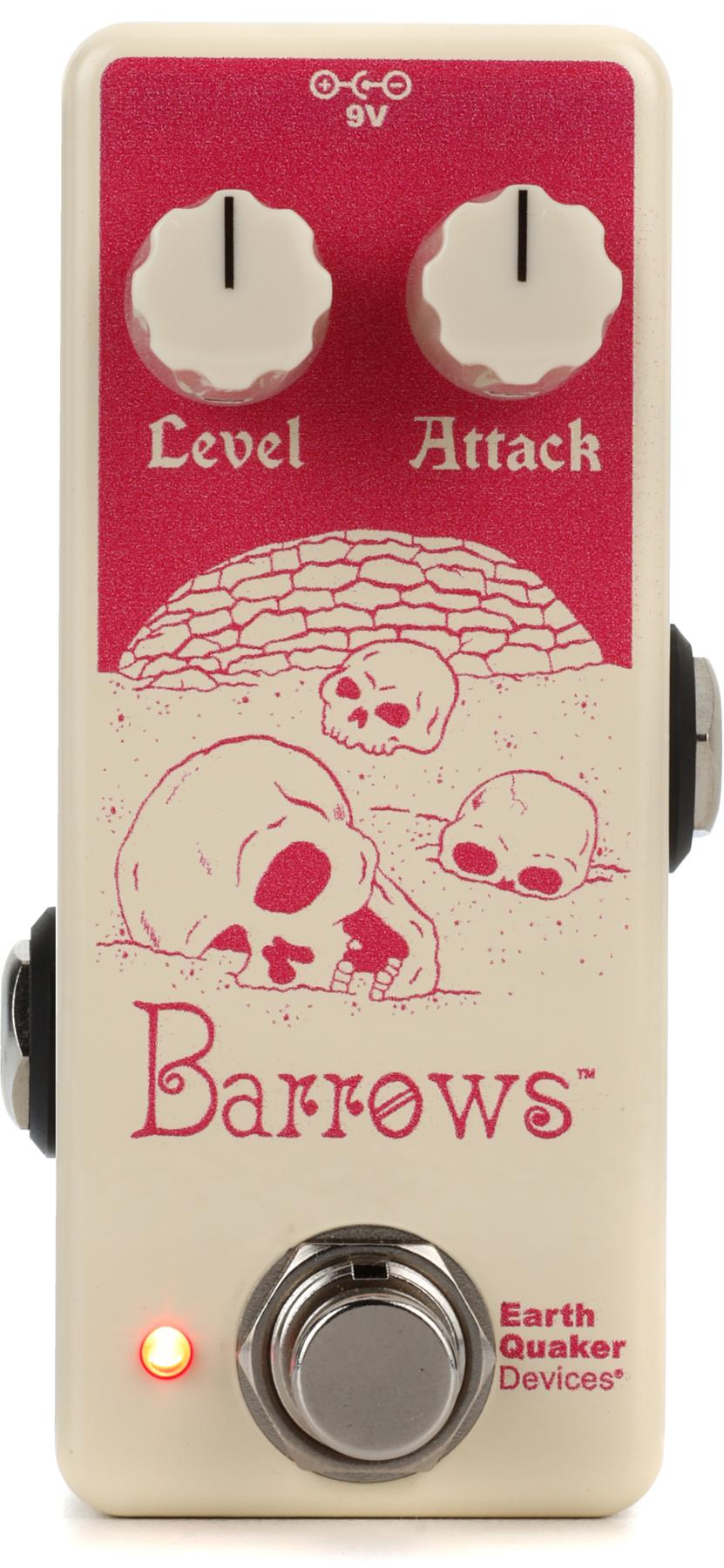
EarthQuaker Devices Barrows Fuzz Pedal - White
Mod Garage Tonewood Teardown: Upgrading Hardware
Hello, and welcome back to Mod Garage. In this month’s edition of our ongoing tonewood teardown, we’ll continue working on our guitar’s body and hardware. That means we’ll be spending a chunk of the $305 remaining in our $500 budget to make some worthwhile improvements.
After inspecting the stock hardware, I decided to keep the neck mounting plate, control plate, and jack plate. Below is a quick rundown of the individual parts.
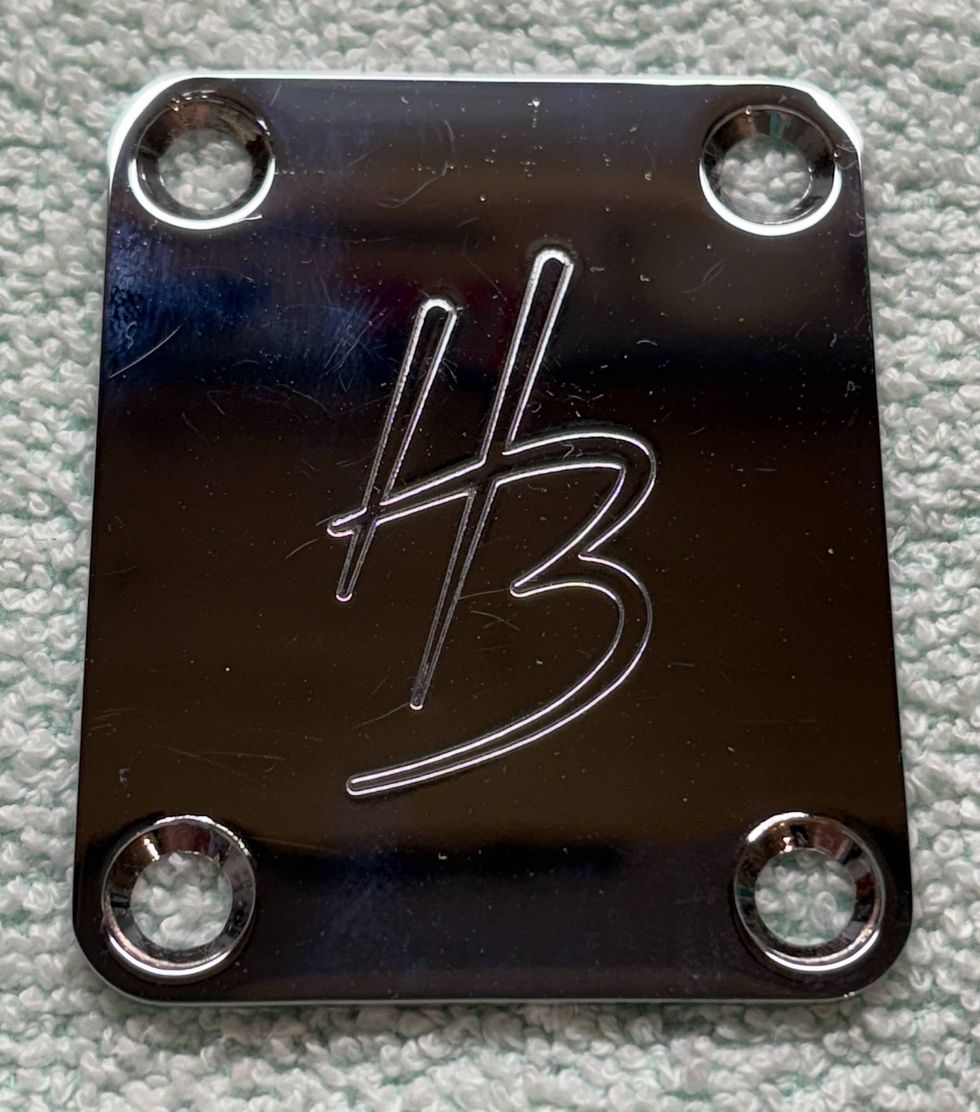
The neck mounting plate is perfect as it is, and I really dig its snazzy Harley Benton engraving. It has the typical Fender dimensions, so I see no need to change it. I will, however, replace the four soft, tiny neck attachment screws with regular-sized, stainless-steel screws, but we’ll get to more details on that later. If you want to customize this part of your guitar, by the way, you have plenty of choices regarding color, thickness, materials, and, of course, custom engravings of all kinds. If you want to save some weight, look for one made out of aluminum or titanium. You can put a custom paint job on the plate, put a plastic neck-plate guard underneath, or whatever you have in mind. Stick to metals, though; other materials are too weak.
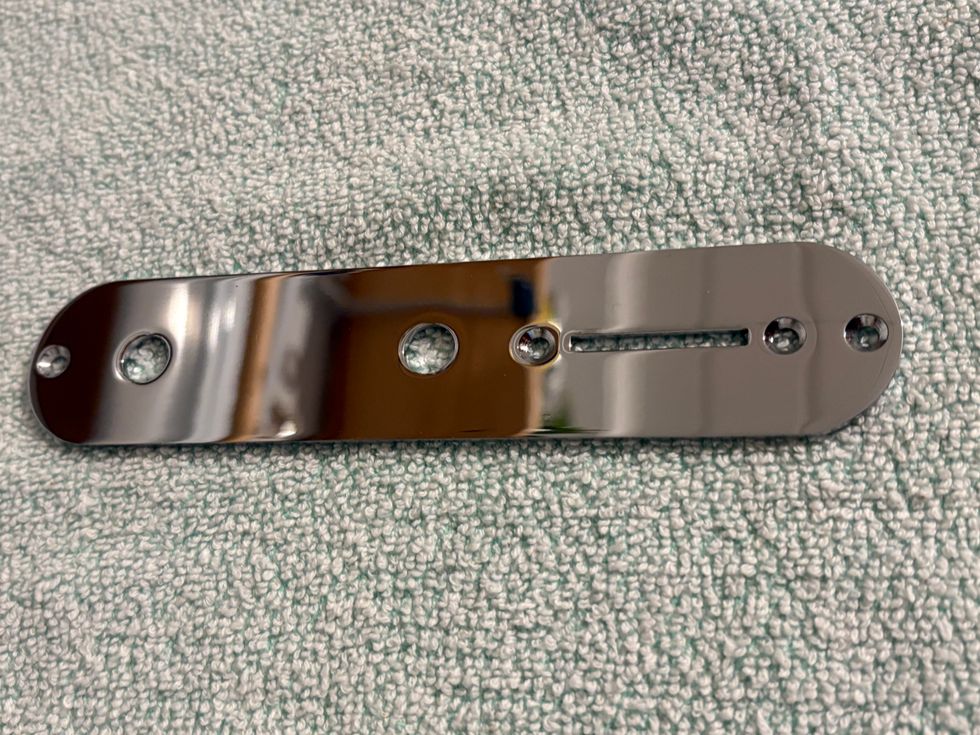
The stock control plate is a typical Telecaster control plate with openings for two pots and a pickup selector switch. It has the typical modern 2 mm thickness to match 3-ply pickguards—the thinner 1.5 mm control plate (aka the vintage version) is the right choice for single-ply pickguards. Keep this in mind if you want to change your pickguard. I fashioned my own new pickguard out of material that is 2 mm thick, so the stock control plate works perfectly for me. Later, when we talk about the wiring of this guitar, you will see that tiny metric parts were installed. I checked the diameter of the two holes for the pots, and to my surprise, they’re drilled for U.S.-standard, 3/8"-inch hardware. Same goes for the slit for the pickup selector switch: An average-quality import switch was installed, but a regular U.S. inch switch fits perfectly. These screws, too, will be replaced with stainless steel ones.
If you want to change the control plate on your guitar, you can choose between wood, metal, and plastic options with all kinds of configurations. You have countless choices here to customize your guitar.
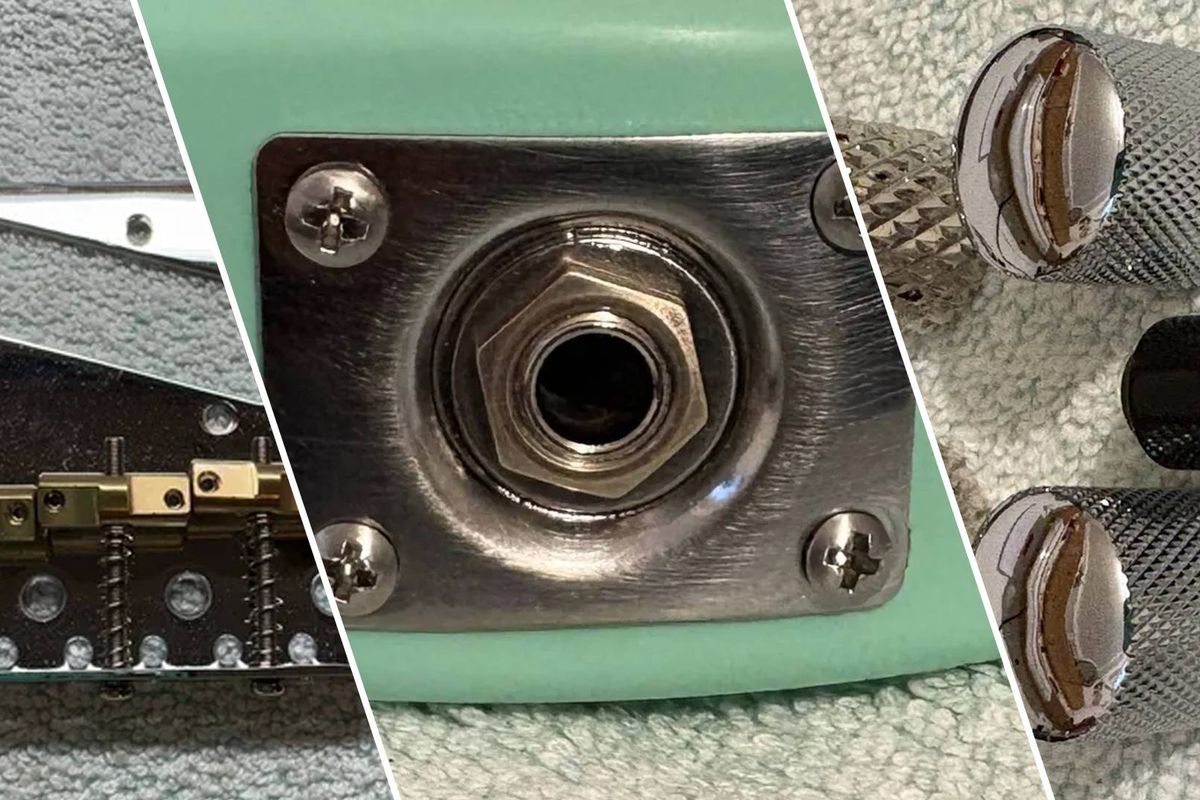
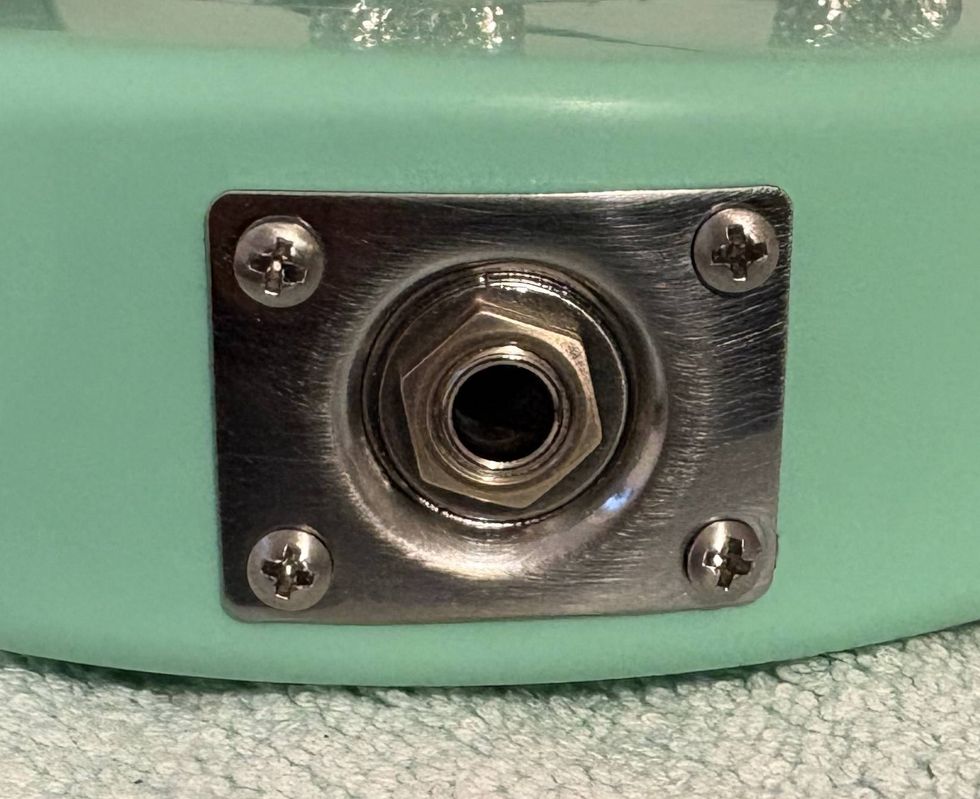
The jack plate is not the typical Telecaster jack cup construction, but a Les Paul-style rectangular plate that is held by four screws. For me, this is one of the best improvements one can do to any Telecaster style guitar. No matter what you are doing, it’s only a matter of time until the classic jack cup comes loose. You might even pull out the whole thing including the output jack when trying to unplug your cable. To reinstall and fasten it, you need a specialized tool. I have done this modification to all of my own Telecaster-style guitars, and encourage you to do the same.
The jack cup is held by four screws, resulting in a very strong connection. I’ll swap in four stainless steel screws, but otherwise, it’s perfect as is. A tiny metric import output jack was installed, but again, the hole is 3/8" inch, so we can use a quality output jack. If you want to downgrade to a classic Telecaster jack cup, you can do so, but you’ll have four visible holes in the body around it. If you like this update but not the stock plate, there are alternatives available—for example, oval ones made from wood, plastic, and metal held by only two screws (aka a cat-eye plate), square (classic Les Paul-style), or rectangular like the stock version in different types and finishes.
Let’s break the aggressive shine of these three parts by putting them into the stone tumbler for a few minutes, creating some wear and random scratches. Now, we’ll continue with the knobs for the two pots and the pickup selector switch.
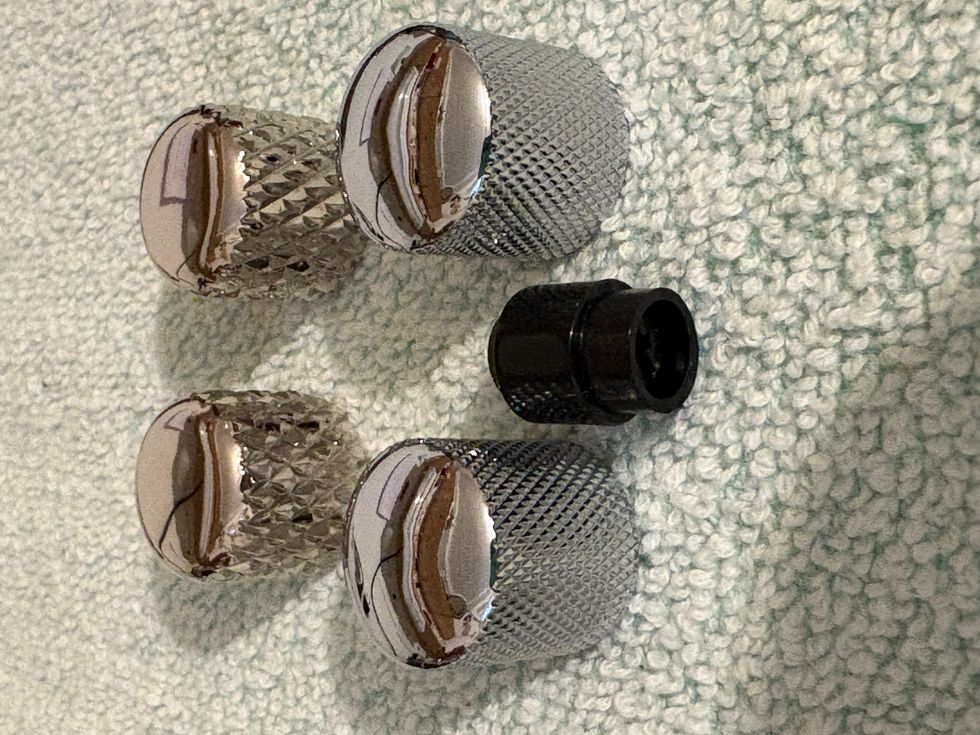
The stock knobs are ’50s vintage-correct, with two typical Telecaster dome knobs for the pots and a round, plastic barrel switch tip. Because I wanted to keep a slightly worn vintage look, only the switch tip made it back to the guitar. The two dome knobs are slightly oversized and fairly heavy—I can’t remember having such bulky knobs on a guitar before! Plus, they’re not made with the set screw for the typical Tele solid-shaft pots.
To add some early Tele flair, I ended up with two heavy knurled dome knobs that Fender used in the very early days. I really like their somewhat raw look, and I bought two knobs that are made out of nickel-plated aluminium—they have virtually no weight at all, and they’re the correct size. They are made for U.S.-inch solid shaft pots with the typical set screw to lock them, and I paid $18 for a pair of two. Before I sent them to the stone tumbler for a few minutes, I used a mid-grade abrasive cloth to smooth out the heavy knurled surface a bit so it feels more comfortable. They turned out great, and I really like the look.
Another great way to create a unique look for your guitar is to use custom knobs made from metal, wood, plastic, bone, or any other material. But take care to choose the right ones. Knobs for metric hardware will not fit U.S. components and vice versa, and knobs for push-on split-shaft pots will not fit their solid-shaft counterparts. I always choose the pots first, because performance is much more important than appearance.
The stock bridge has the typical Telecaster string-through-body construction and shape, with three compensated brass saddles—a great update for any Telecaster. Because of the overall construction, I’m pretty sure it’s either an unbranded Wilkinson-made bridge, or a knock-off of one. For some reason, very tiny screws have been used to fasten the heavy, brass-construction bridge. The Wilkinson compensation system uses saddles that are not slanted but have relocated edges on top, resulting in a somewhat irritating appearance and a not-very-comfortable surface with some sharp edges and spots. I don’t like either of these quirks, so it was clear that the bridge had to go.
There is a massive range of Telecaster bridges from various companies, with different construction, materials, shapes, and, of course, functionality. I wanted a bridge with a classic look, very light weight, and compensated saddles that feel smooth and comfortable. To stay within our budget, I decided to look for a used bridge on eBay, Reverb, and similar platforms. I ended up with an excellent used bridge for $28. It’s very lightweight and has a thin baseplate and double-cut “tapered walls,” compensated round brass saddles, two additional countersunk holes towards the neck, and double functionality regarding the strings. Besides the classic string-though-body option, it can also act as a top-loading bridge so you can choose which you like best, or even mix and match to your taste.
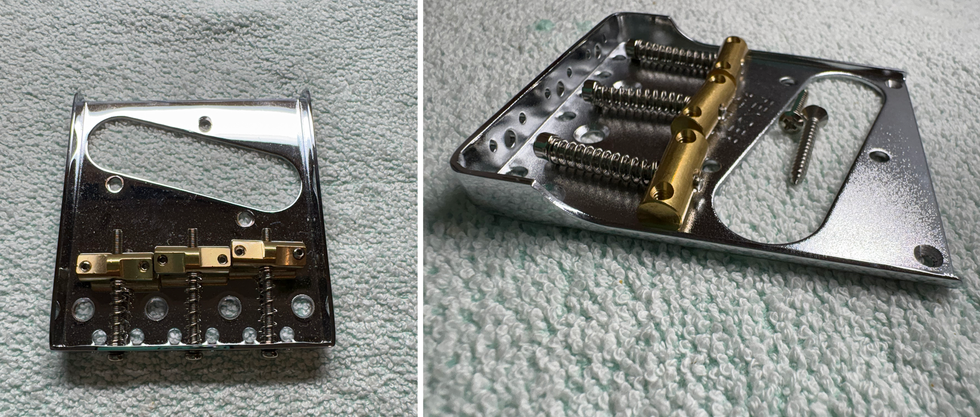
That’s it for now! Next month, we will continue with the bridge and saddles before working on the wiring. Our budget is down to $259 for future investments, but I’m still hopeful that we will not break our $500 barrier, so stay tuned.
Until then ... keep on modding!
The biggest news stories from the world of guitar in 2025

One thing’s for sure: the world of guitar and rock music is still very much popping, with millions of you visiting Guitar.com over the past year to stay up to date with the latest news – from gear launches to the hottest takes from your favourite artists. And as Guitar.com’s News Editor, it’s been my distinct pleasure keeping you informed…
Now, as we wrap up 2025 and get ready to celebrate the festive season, I thought we’d take a quick look back at some of the biggest news stories from the past year that had you all clicking the most. No further beating around the bush – you probably have plenty more gifts to wrap (or, like me, buy…). Enjoy!
Metallica guitar tech on how ditching real amps helped the band improve the spectacle of their live shows
 Credit: Steve Jennings/Getty Images
When many of us think of a rock show, part of the image in our heads is a wall of Marshalls at the back of the stage. For many years it was. But now, many of the world’s biggest bands are turning to amp modellers for their tones, thus freeing up space on stage to play around with set design. And Metallica guitar tech Chad Zaemisch says the switch has led to “a lot more opportunities” when it comes to providing a spectacle for the fans.
“The people in set design realised that if we don’t have this wall of speakers anymore, we have all of these other things available to us,” he said.
“Everybody’s all about content these days, and not a lot of people want to watch a band stand in front of their amp line with nothing else going on. Now we can use large video screens. It opens up a lot more opportunities to do different things.”
What do you think – should it be mandatory for a rock band to be seen in front of their amp line, or does it not really matter anymore?
We said goodbye to some rock legends
![[L-R] Brian Wilson, Ozzy Osbourne and Ace Frehley](https://guitar.com/wp-content/uploads/2025/12/Brian-Wilson-Ozzy-Ace@2000x1500.jpg) Credit: Getty ImagesThere’s no getting around it – some of our biggest rock heroes are getting older, and this year we’ve had to say goodbye to some of the genre’s most legendary figures.
Credit: Getty ImagesThere’s no getting around it – some of our biggest rock heroes are getting older, and this year we’ve had to say goodbye to some of the genre’s most legendary figures.
In June, we lost Beach Boys legend Brian Wilson at the age of 82, prompting a flood of tributes from far and wide, including from the likes of Paul McCartney, Sean Ono Lennon, Bob Dylan and Ronnie Wood. Wilson’s influence on the world of pop music cannot be understated, his creative vision and keen ear for melody shaping the sound of the genre in the decades following the formation of the Beach Boys in 1961.
It was hard to believe the news when it came – particularly as Black Sabbath had played their monumental farewell show in Birmingham just two weeks prior – but the metal world mourned in July when Prince of Darkness Ozzy Osbourne passed away aged 76. His death prompted thousands of tributes from across the music world, with bandmate Tony Iommi calling it “such heartbreaking news that I can’t really find the words”.
The guitar world was also stunned when it was confirmed that founding Kiss guitarist Ace Frehley had passed away at the age of 74. His former Kiss bandmates called him an “essential and irreplaceable rock soldier”.
Tobias Forge comments on Ghost’s phone ban for their 2025 tour
 Credit: Mariano Regidor/Redferns
We’re all more glued to our phones than ever, and some artists have been looking for solutions to make their shows feel more organic and connected. Swedish metal powerhouse Ghost – a troupe of Nameless Ghouls led by frontman Tobias Forge – were one of the most high-profile acts this year to instate a ban on mobile phones at their 2025 shows.
This year, fans have been forced to seal their devices in Yondr pouches, designed only to unlock when outside the venue so fans are more present while watching the show. “If you have 10,000 people at a concert and 8,000 of them are holding a phone, there’s something deeply disconnected,” Forge said while justifying the ban.
It ignited considerable debate this year, with many commending the ban for making shows feel more “connected”, while others took issue with certain logistical challenges, like not being able to contact others while inside a venue, or not being able to take videos.
Machine Gun Kelly revealed how he once accidentally stole a Martin guitar from a hotel room
 Credit: Norman’s Rare Guitars/YouTube
Rockstars and hotel rooms have never really been a match made in heaven, and Machine Gun Kelly revealed how he once got on the wrong side of hotel staff when he accidentally swiped a Martin guitar from his room. Believing it to be a gift for playing his show in LA, he told Norman’s Rare Guitars that he took the instrument on the way out, and later received a call from his label saying the hotel had alerted them of the theft.
“I took the guitar out of the room, we exited the building, and Interscope called me 20 minutes later. They said, ‘The Ace Hotel just called us and said that they have you on camera leaving with the guitar,’ and I was like, ‘Oh yeah, well, I thought it was a gift for doing the show!’ They were like, ‘Yeah, well, it wasn’t a gift, that’s just what they put in their hotel rooms,’” he said.
MGK decided he didn’t want to give the instrument back, as he had already developed an attachment. “I love the guitar, just tell them I have to have it,” he told the Interscope rep. “The hotel billed me for $5,000.”
Cory Wong kicked up some dust with this opinion…
 Credit: Kieran Frost/Redferns
Is it necessary as a guitarist to know every single note on the fretboard? Cory Wong definitely thinks so, and wasn’t shy in sharing his opinion back in March. In an Instagram Reel, the jazz-funk maestro said: “Gentle call out to the folks that consider themselves advanced guitarists. You should know where all the notes are on a guitar!”
As it does best, the guitar world erupted in debate, with many refuting Wong’s claim and saying it’s not essential to know your fretboard inside out after all.
Wong was undeterred by the furore spurred on by his comments, though, later saying: “Didn’t know this would trigger so many folks,” he writes. “I’m here for it.”
The post The biggest news stories from the world of guitar in 2025 appeared first on Guitar.com | All Things Guitar.
The Guitar.com staff picks: this is the best new gear of 2025

2025 is nearly over – across the last 12 months we’ve seen some seriously impressive guitar products arrive, ranging from overarching software suites to gorgeous metal guitars, from innovative utility pedals to gorgeous ambient delays. Over the last few days myself and the rest of the Guitar.com team have been collating our favourites from the whole year – let’s dive into our picks!
Best premium acoustic: Taylor 314ce

[products ids=”2pp28xiqcMHnhGFMJwrwsR”]
News Editor Sam: “Forget the scene when Jack lets go of the door and Rose watches him fade into the icy abyss of the Atlantic Ocean. A real tragic end to a beautiful love story came earlier this year when the UPS courier came to collect the Taylor 314ce Studio I had spent months developing an intimate bond with. I’ve never quite felt heartbreak like seeing that van – carrying what I can only describe as the love of my life – fade into the distance. I won’t be judged for being dramatic.
“The Taylor 314ce is among a small crop of the finest instruments I’ve ever played. Everything, to me, is exactly how I want it to be. The action is set up pristinely, which, paired with Taylor’s “easy-playing” neck profile – and satin-finished neo-tropical mahogany neck and West African Crelicam Ebony fingerboard – makes for one of the most luxurious acoustic guitar playing experiences imaginable. The guitar also delivers a stunningly balanced and earthy tone, with satisfying low end projection plus gorgeous sparkly highs, making everything from simple chord strumming to intricate fingerstyle playing an utter delight. I must also note that I had this guitar for months and played it regularly, and somehow the strings still sounded brand-new.”
Best affordable acoustic: Martin 000 Jr Sapele

[products ids=”6TjYw4atqgk5G677nW7vyV”]
Commissioning editor Josh: “I am not a small person. I am big and broad enough that I will begrudgingly accept that I do look rather silly playing any kind of student or parlor guitar. And yet… I bloody love a small-bodied acoustic. Especially as the entirety of my acoustic playing life is now at home, I don’t really care about the power and projection of a big-bodied guitar at this point. I just want something that’s comfortable, plays well and sounds good.
That said, I was not expecting to get on with the Martin 000 Jr quite as much as I did – but something about the whole recipe really did just click with me in a way that made it a very, very hard guitar to say goodbye too.
“That scaled-down 000 body shape doesn’t feel as dainty as a parlor-sized instrument, and the full-size scale length certainly combines with that to make it feel every inch a ‘proper’ guitar, but just a big more ergonomic and compact. It also sounds and looks great too, and with its stained sapele finish, it just looks at home in any space you put it in – a killer instrument and a killer price too.”
Best gigging amplifier: Orange Tour Baby 100
 Image: Orange
[products ids=”1Wm3RZH94Qmcv7woe2mJ3D”]
Senior Staff Writer Cillian: “It’s no secret I love Orange amps, and I’ve recently been having a very good time with the brand’s solid-state offerings. Late last year I bagged myself a used Super Crush 100, which is essentially a JFET version of the Rockerverb preamp running into a Pedal Baby power amp. It’s a great amp and I love how it sounds and looks, but I was really impressed with one of Orange’s more compact solid-state offerings this year – the Tour Baby.
“The Tour Baby is the same size as the Pedal Baby, but adds two preamp channels and a built-in compressor for the cleans. Given its miniscule size but beefy 100-watt power stage, it’s a really compelling option for small gigs where you don’t want to load the boot of your car to bursting but still want to kick out some serious dBs on stage. Its overdrive sounds were great too, and it took dirt pedals amazingly – in all, a very Orange take on the solid-state thing, with some added versatility and portability, all for under £400. What’s not to like?”
Best practice amplifier: Orange O Tone

[products ids=”7IswkZ25Qr6bBFgWpEN5ig”]
Commissioning editor Josh: “I didn’t actually review this one in the end, Richard did, but the O Tone 40 spent a few weeks in my house while it was waiting to be photographed and man, did I have a good – and extremely loud – time with it sitting in for my trusty Princeton over that time. Because, as the O Tone 40 proves, nobody really designs amps like Orange’s design guru Ade Emsley. Here’s a solid-state, non-modelling amp that sounds absolutely fantastic, responds like a tube amp in all the best ways and is unapologetically and unreasonable loud with it.
“I am a paid up member of the ‘most people play at home we need amps that sound great at bedroom levels’ club, but I love that there are people out there like Orange building these uncompromising machines in 2025 – it’s a dying art and we should appreciate it.”
Best utility pedal of 2025: Boss PX-1

[products ids=”4oqjJvcO30hZzQWjyXF2dk”]
Commissioning editor Josh: “A confession, before we start: I think we might have reached something of a saturation point in terms of pedal innovation in 2025. That’s not a particularly original thought I know – my esteemed colleague Cillian said much the same last year – but it’s something I’ve been coming back to a lot this year. It’s not that there aren’t still good and interesting pedals being made all the time of course. But I think we’ve reached the point in the curve where the ‘surprise and delight’ aspect has started to wear off. Pedals are a bit like iPhones now – what would have blown your mind a decade ago is kinda normal now, and it takes a lot to really inspire much strong emotion.
“Which is why I found the reaction – and dare I say the backlash – to the Boss PX-1 so interesting. There’s no doubt that what Boss is trying here is quite different – creating a pay-as-you-go archive of classic and rare stompboxes from the brand’s illustrious past is not what anyone had on their bingo cards I don’t think. And while I think that the discussion and debate it provoked was actually quite useful and important – I’ll be very surprised if anyone tries a subscription-based pedal thing any time soon on the back of it, for example – it did rather obscure what the pedal itself was about.
“And taken on its own merits, the PX-1 is a very fun thing to have around – a living library of Boss rarities to pull out as and when the mood strikes. And judging by how quickly they flew off the shelves, a lot of you agreed with that sentiment.”
Best guitar software of 2025: Positive Grid Bias X

[products ids=”2vXLD0BRrjfb1BKeBMm9Jy”]
News editor Sam Roche: “My colleagues Cillian and Josh started their year-end gear picks lists with their favourite guitars, and I’ll get to mine, but first I have to highlight BIAS X, the groundbreaking new AI-powered amp and effects suite from Positive Grid. Essentially an evolution of the brand’s long-adored BIAS FX 2, BIAS X blew the in-the-box tone market wide open when it landed in September, bringing with it an AI assistant, on hand to turn the tone in your head into a reality, in some cases in seconds.
Creativity should be the ultimate goal, and the tone-making process taking too long can be a hindrance to that end. With BIAS X, you can enter any prompt (“give me a high-gain tone for modern metal”), and the AI assistant conjures a signal chain from the platform’s vast amp and effects library to best match the vibe you’re going for. Like any AI, it’s not always perfect, but almost always offers a solid starting point which you can then tweak to your heart’s content. For the record I’m not a fan of any AI which takes creativity out of the hands of humans. But this is an application which expedites the tone-chasing process, and ultimately keeps you in your creative flow, so it’s a big A+ in my book.”
Best vintage-style electric of 2025: Fender Road Worn 50’s Jazzmaster
[products ids=”UXwapbo8d1FF5n4EL48Tc”]
Commissioning editor Josh: “Okay, I’m going to cheat slightly here because, frankly, this is my article and you can’t tell me what to do. Yes, you will probably have noticed that Guitar.com hasn’t quite got round to publishing our review of Fender’s latest Road Worn return… but I’ll let you in on a little secret: I’ve had one in my house for the last month and it is K-I-L-L-E-R killer.
“That might be somewhat spoiling the review when it comes out early next year, but time is a construct and I will not be constrained by such trivialities. I love a Jazzmaster at the best of times, but the Road Worn Vintera II is such a wonderfully bang on version for the money.
“I remember the first RW Jazzmaster Fender made over a decade ago, and while it was cool, it did very much look like a factory-aged guitar. The subtle ageing and lacquer checking on the 2025 variant is so much more believable. The only thing that’s lacking is the colour options – Fiesta Red and Sunburst? Come on guys, give us some custom colour options – Sonic Blue, Seafoam Green, Shoreline Gold… who cares if it’s vintage-correct, live a little!”
The best rock/metal electric of 2025: Jackson Lee Malia LM-87
 Jackson Lee Malia LM-87 guitar. Image: Press
[products ids=”5iJIvQ0gmrg79ARQ4QBSdw”]
Senior Staff Writer Cillian: “Is it a metal guitar for offset nerds? Or an offset guitar for metal nerds? Who knows, but either way, Jackson’s new Lee Malia signature is absolutely my top pick of 2025’s new guitar releases. Firstly: it looks cool as hell, and in a super classy way. This is not the kind of heavy guitar that, aesthetically, screams “mettuuull”, shotguns a beer and stage-dives into the moshpit – instead the dark, open-pore finish, the offset shape and the weird tune-o-matic nabbed from Malia’s love of weird vintage Gibsons make it appealingly minimalist but still mean looking. Sonically, the combo of a subtle P90 in the neck and an absolute jackhammer of a bridge humbucker makes it great for doing things that aren’t just drop-A chugs – but it does still excel at those.”
Best modern electric of 2025: Sterling By Music Man Kaizen

[products ids=”1PABXW1k2Kq2cAXKBsLNrI”]
News editor Sam: “I’m fortunate enough with this job to have many guitars across my desk, and every now and then there’s one which has me tempted to get my wallet out to persuade the powers that be to let me keep it. When I was delivered the Sterling by Music Man Kaizen 6 last month, it was one of those moments.
“I love to experiment with jazz, blues and all manner of other genres, but really I’m a metal player through and through. And the SBMM Kaizen – an affordable take on its Ernie Ball Music Man counterpart, developed in partnership with Animals As Leaders visionary Tosin Abasi – is genuinely up there as one of the best guitars I’ve ever played. Much is often made of a guitar’s ergonomics, and for good reason. The way it sits in your lap and contours against your body will often be the defining factor in whether you play it casually for 10 minutes or get lost in it for two hours. And when I say I couldn’t put the Kaizen down, I mean I actually couldn’t put it down. I had plans on the evening of the day I received it which I was late for because I was so consumed.
“It’s so lightweight and thin that it quickly starts to feel like an extension of yourself – which in my mind is the perfect recipe for creativity. Oh, and I’m not even mentioning the high-gain and clean tones offered up by its duo of ceramic humbuckers. And add to that a floating trem? Take my money.”
The best ambient pedal of 2025: Old Blood Noise Endeavours Bathing
 Image: Press
[products ids=”2ziixnJ6HWsWKgGJSPIDi9″]
Senior Staff Writer Cillian: “A lot of guitar gear is rooted in what was – but it’s hard to level that accusation at Old Blood Noise Endeavour’s Bathing. It’s a delay with a totally unique signal chain that shunts the feedback through a variable-stage and variable-LFO phaser – which is a whole lot of jargon to say it sounds utterly unique, totally gorgeous and, true to OBNE’s stated goal, very ‘liminal’. While it’s by no means for everyone, it’s hard to think of a pedal release I was so intrigued by this year, and I have a lot of respect for the approach of aiming for a totally new, uncharted feeling with a pedal – the art of the thing is in the driving seat, and it’s the sort of thing I’d love to see more pedal companies do.”
The post The Guitar.com staff picks: this is the best new gear of 2025 appeared first on Guitar.com | All Things Guitar.
Pages
